Jury Instruction - Mail Fraud - Depriving Another Of Intangible Right Of Honest Services
About this form
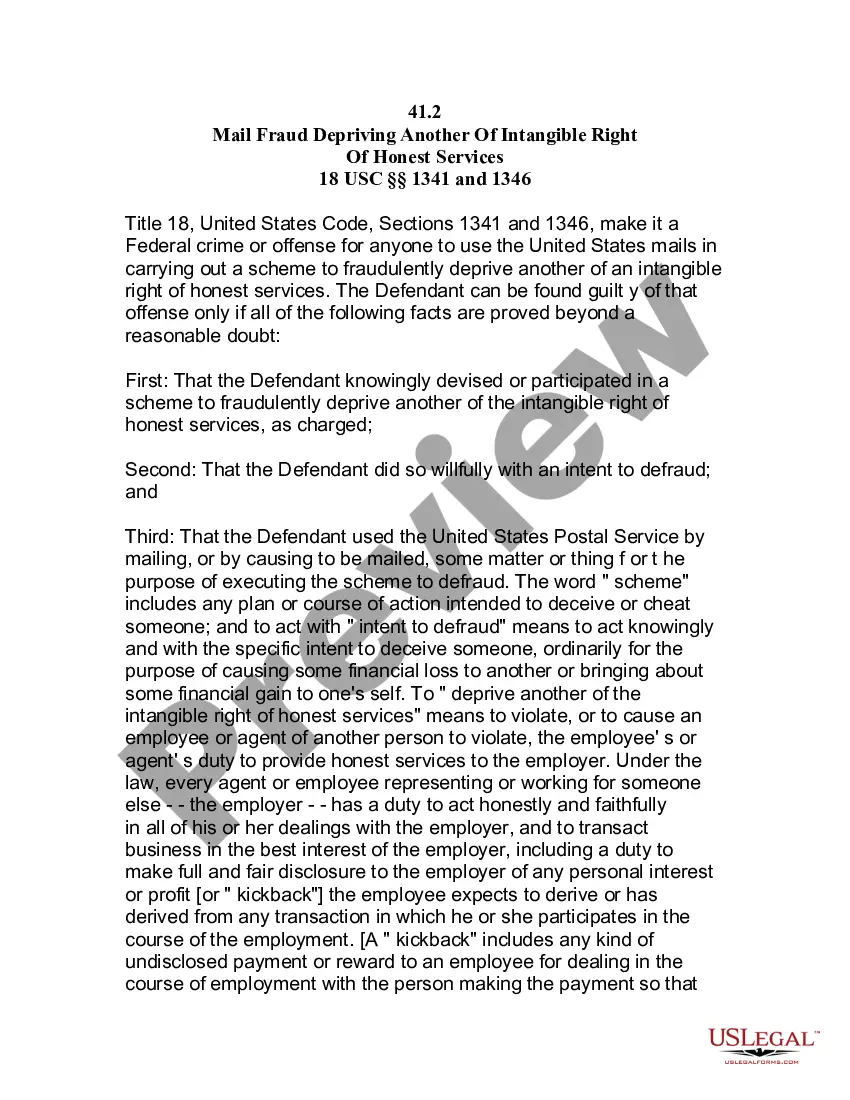
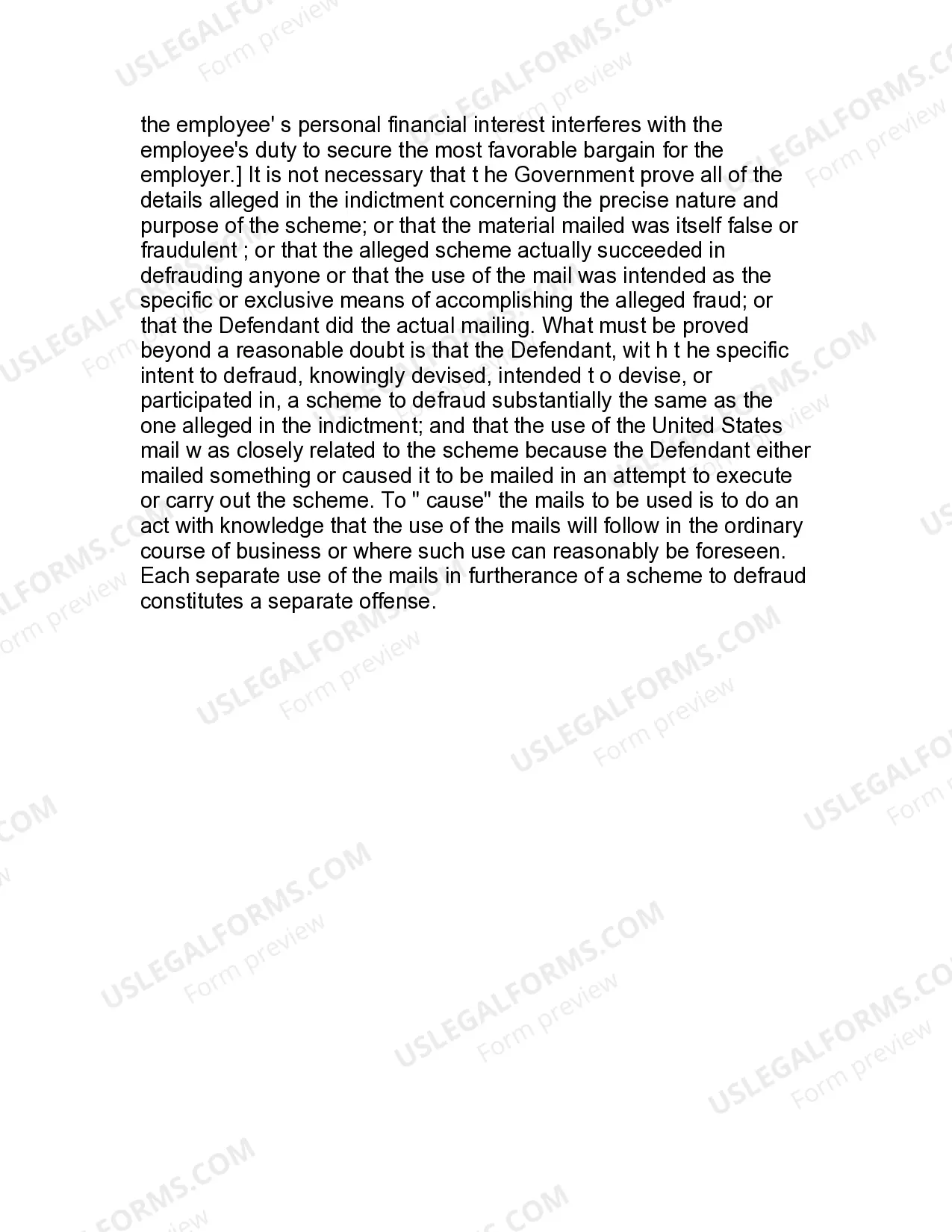
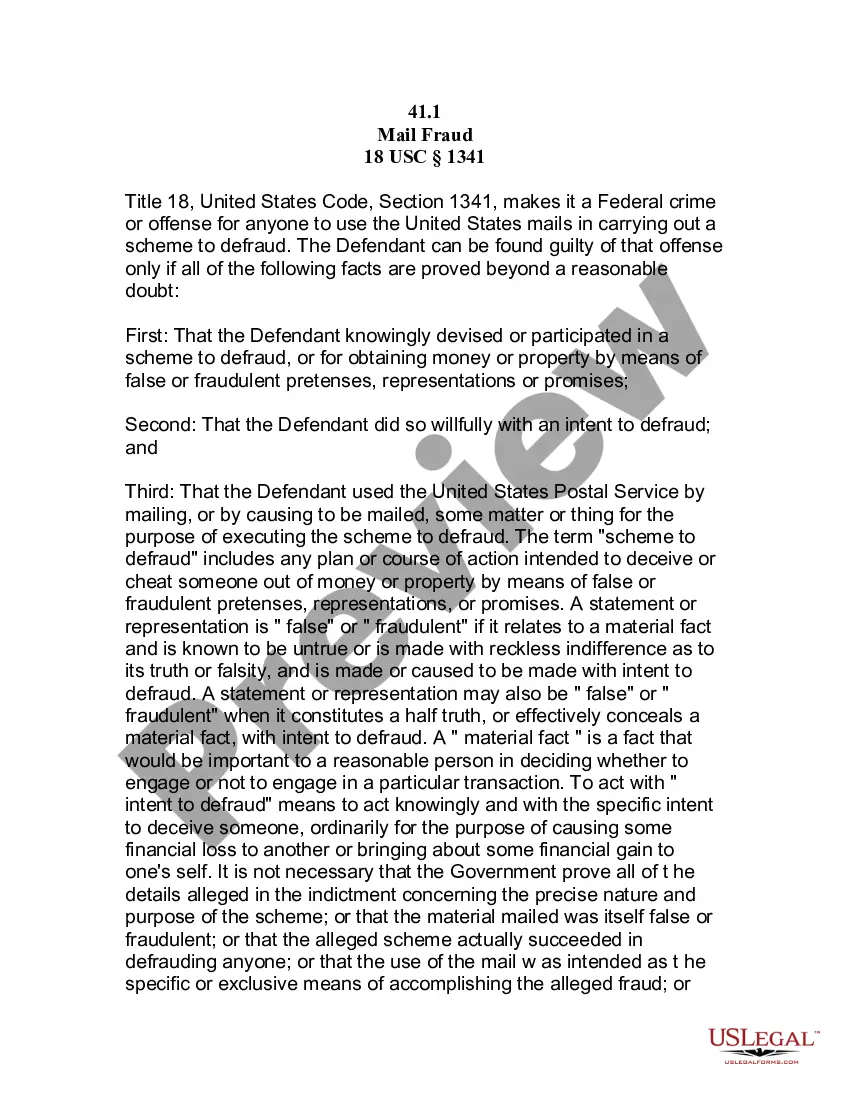
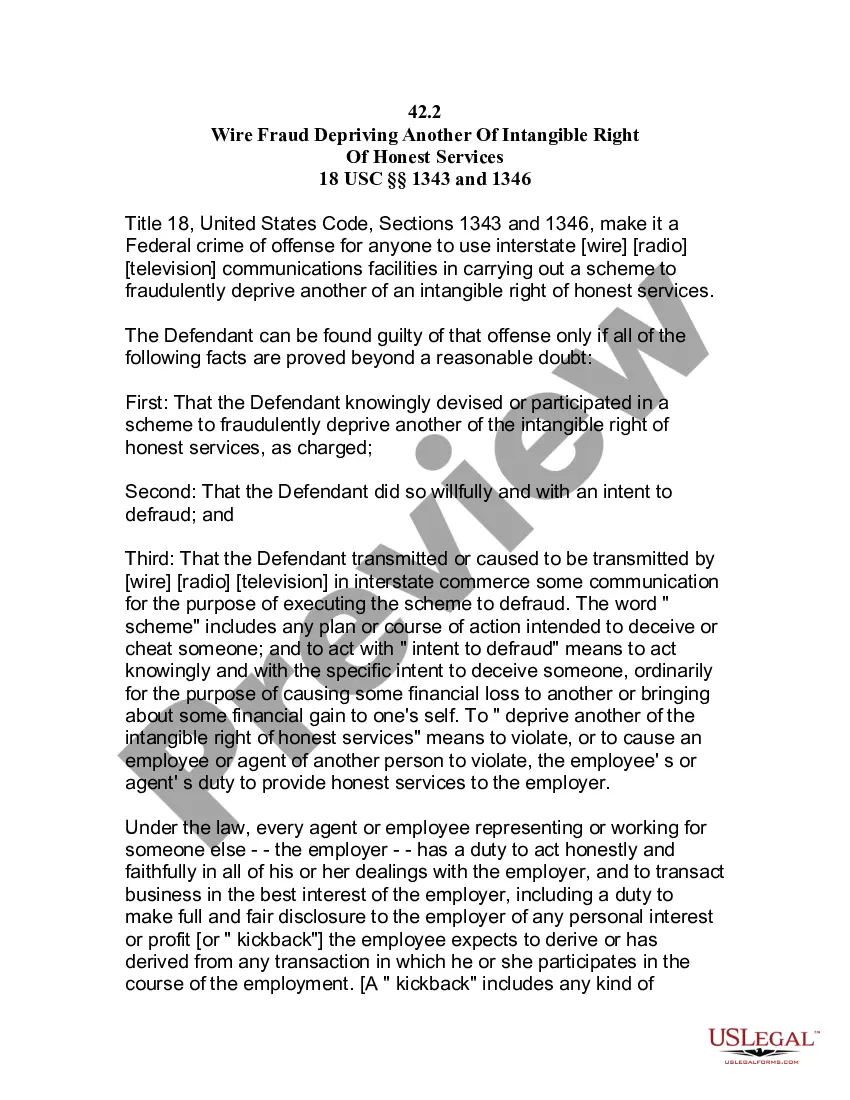
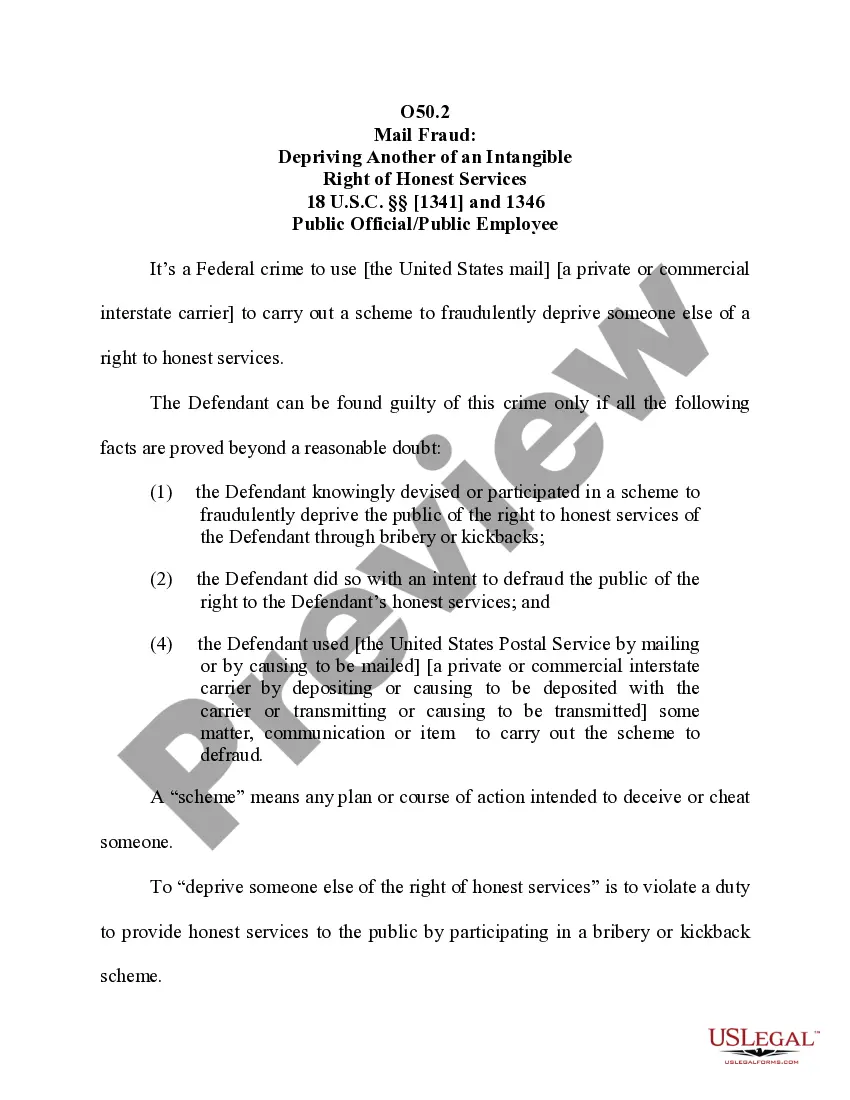
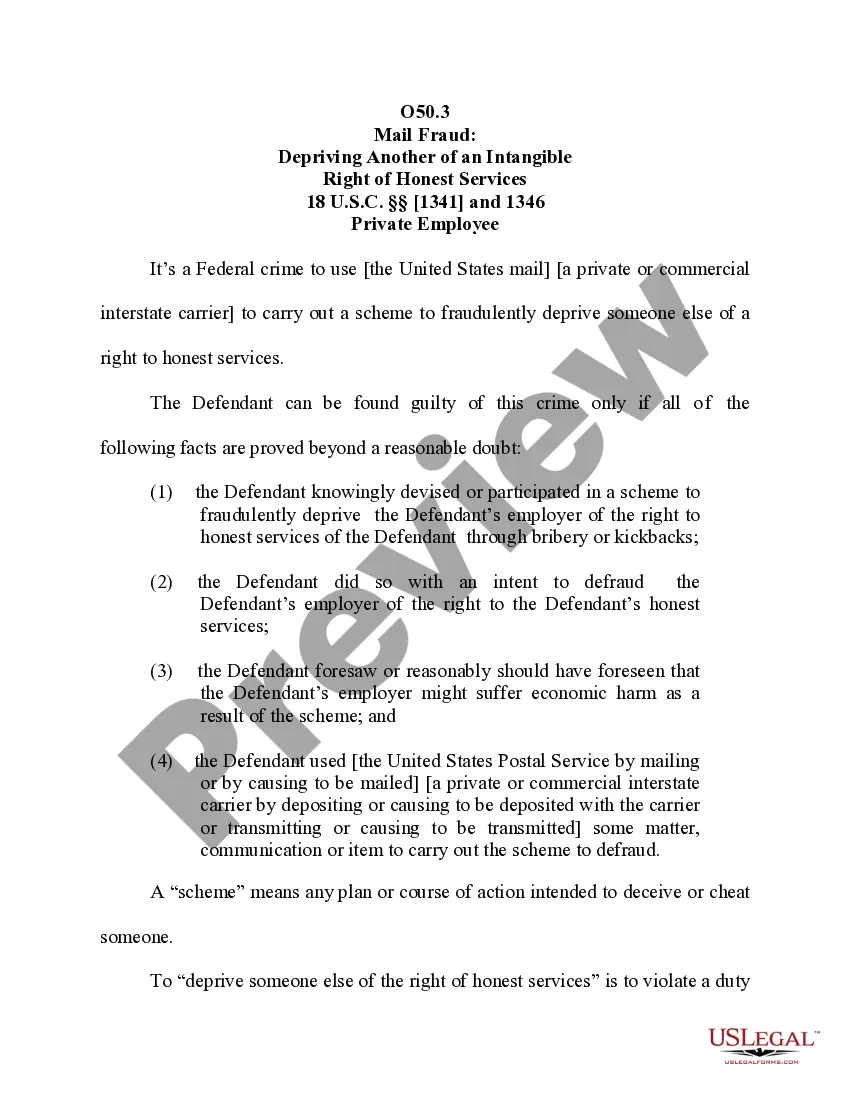
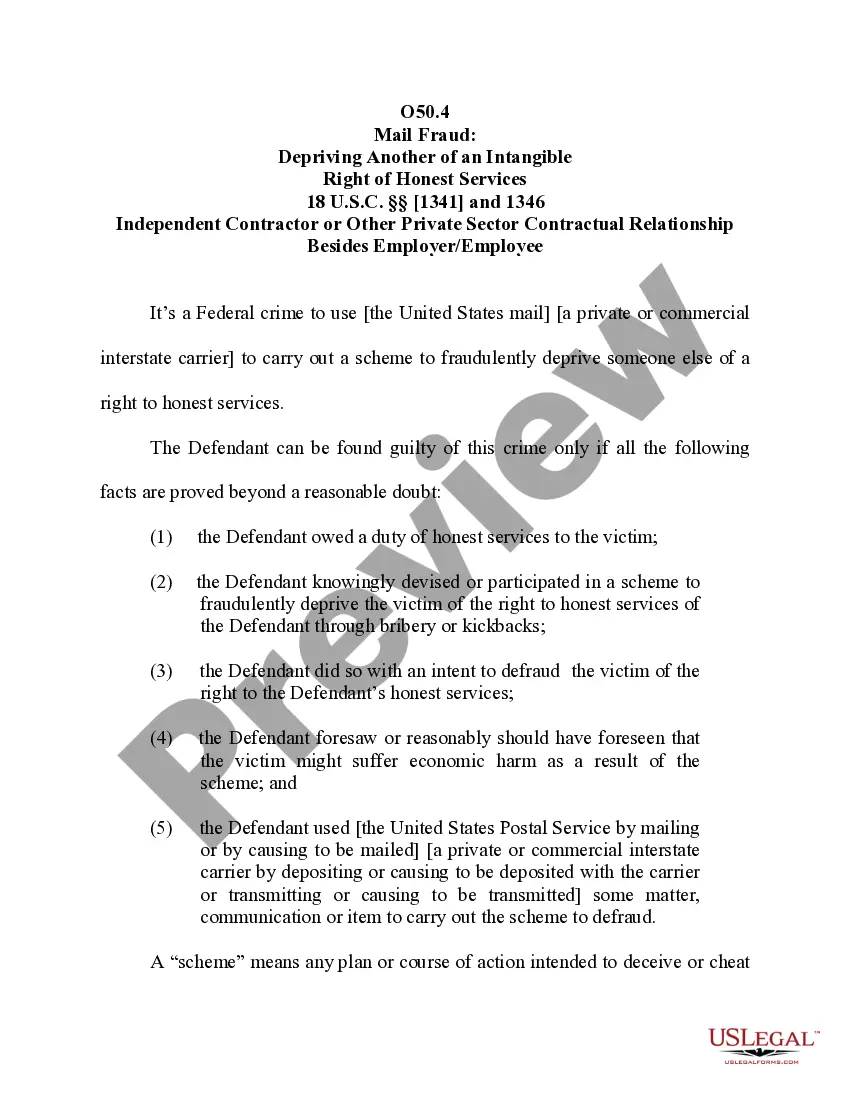
This form provides sample jury instructions related to mail fraud, specifically focused on depriving another of the intangible right of honest services. It is designed to assist attorneys and legal professionals when preparing for a trial involving related charges under Title 18 of the United States Code. Unlike other jury instruction forms, this one specifically addresses the nuances of mail fraud linked to honest services, highlighting the requirements that must be proven in court.
Main sections of this form
- Definition of mail fraud as it pertains to intangible rights.
- Criteria that must be met to establish the defendant's guilt.
- Clarification of the term "scheme" in the context of intended deception.
- Details on the obligation of employees to provide honest services.
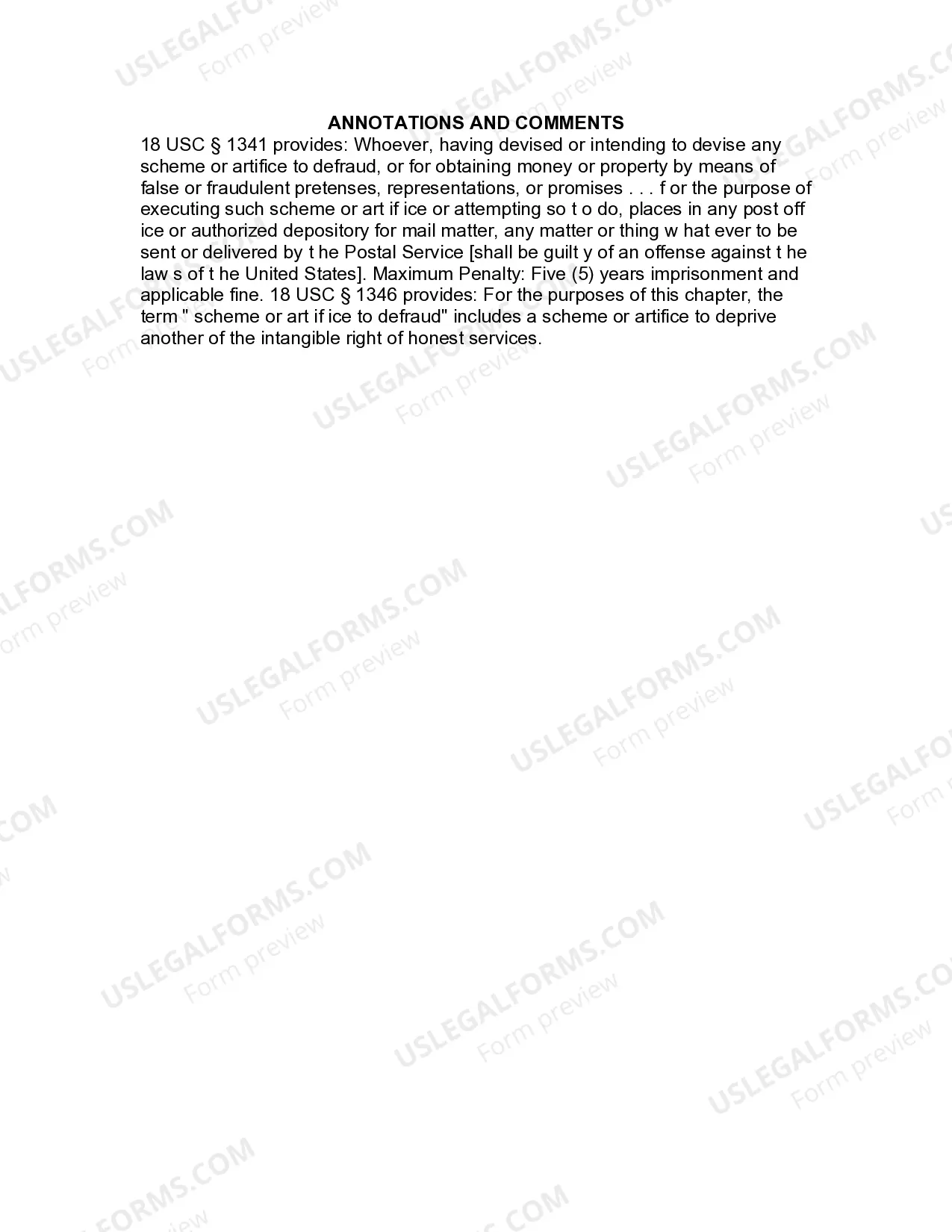
- Explanation of the potential penalties for violations.
When to use this form
This form should be used in cases where there are allegations of mail fraud involving an individual's failure to provide honest services. This includes situations involving employees or agents who may have conflicts of interest or who have engaged in deceptive practices that financially benefit themselves at the expense of their employer or client. It can also be used during jury trials to effectively instruct jurors on the legal standards necessary for a conviction on these charges.
Who can use this document
- Attorneys preparing jury instructions for cases involving mail fraud.
- Legal professionals working with clients accused of fraud related to honest services.
- Judges seeking a framework for presenting jury instructions in related trials.
- Law students studying legal proceedings in mail fraud cases.
How to prepare this document
- Review the charges against the defendant to ensure appropriate applicability of the jury instructions.
- Customize the sample instructions to align with the specifics of the case being tried.
- Confirm that all elements of the charges, including the definition of "scheme" and "honest services," are accurately represented.
- Include relevant evidentiary links to the actions of the defendant as they relate to the case.
- Finalize the instructions and ensure they are formatted according to the court's requirements.
Notarization guidance
This form usually doesn’t need to be notarized. However, local laws or specific transactions may require it. Our online notarization service, powered by Notarize, lets you complete it remotely through a secure video session, available 24/7.
Get your form ready online
Our built-in tools help you complete, sign, share, and store your documents in one place.
Make edits, fill in missing information, and update formatting in US Legal Forms—just like you would in MS Word.
Download a copy, print it, send it by email, or mail it via USPS—whatever works best for your next step.
Sign and collect signatures with our SignNow integration. Send to multiple recipients, set reminders, and more. Go Premium to unlock E-Sign.
If this form requires notarization, complete it online through a secure video call—no need to meet a notary in person or wait for an appointment.
We protect your documents and personal data by following strict security and privacy standards.

Make edits, fill in missing information, and update formatting in US Legal Forms—just like you would in MS Word.

Download a copy, print it, send it by email, or mail it via USPS—whatever works best for your next step.

Sign and collect signatures with our SignNow integration. Send to multiple recipients, set reminders, and more. Go Premium to unlock E-Sign.

If this form requires notarization, complete it online through a secure video call—no need to meet a notary in person or wait for an appointment.

We protect your documents and personal data by following strict security and privacy standards.
Common mistakes
- Failing to customize the jury instructions to the specific details of a case.
- Overlooking the need for clear definitions of "intangible rights" and "honest services."
- Neglecting to provide sufficient evidence linking the defendant's actions to the alleged fraud.
- Using outdated or incorrect legal language that may mislead jurors.
Why complete this form online
- Convenient access to legally drafted instructions at any time.
- Editable templates that can be customized to meet specific case needs.
- Instant download enables quick preparation and submission to the court.
- Drafted by licensed attorneys, ensuring reliability and adherence to legal standards.
Legal use & context
- Instructions must adhere to both federal law under Title 18 and the standards set by the relevant court.
- They are generally used in federal trials involving mail fraud cases.
- Parties must present evidence supporting the claims of fraud and intent to deceive.
What to keep in mind
- This jury instruction form is essential for cases involving allegations of mail fraud regarding honest services.
- Understanding the requirements for proving intent and deceit is crucial for effective legal representation.
- Customization of the form to fit specific case facts is necessary for its effectiveness.
Key terms explained
- Intangible rights: Non-physical rights, such as the right to receive honest services from an agent or employee.
- Scheme: A plan or course of action designed to deceive or cheat someone.
- Fraud: Wrongful or criminal deception intended to result in financial or personal gain.
Looking for another form?

Form popularity
FAQ
A person commits mail fraud when he engages in a scheme to defraud, with intent to defraud, and uses the mails in furtherance of that scheme. A scheme to defraud means depriving someone of property by deceitful or dishonest means.It's enough if the mailing is incidental to an essential element.
Mail fraud and wire fraud are federal crimes in the United States that involve mailing or electronically transmitting something associated with fraud. Jurisdiction is claimed by the federal government if the illegal activity crosses interstate or international borders.
Under US Code 18 Section 1708, mail theft is defined as taking any piece of mail that is not your own for any purpose. A piece of mail can be any letter, postal card, package, box or bag. Mail theft can result from stealing from private mailboxes, collection boxes, postal workers or mail trucks.
Definition. Makes it a crime for executives and government officials to deny the perople they serve the intangible right to honest services.
Common examples of criminal fraud include: Mail fraud. Wire fraud. Racketeering.
Mail fraud is punishable by a fine and imprisonment of up to 20 years. If the crime involves benefits connected to a presidentially declared major disaster or emergency, or affects a financial institution, there are enhanced penalties that include fines of up to $1 million and imprisonment for up to 30 years.
Federal criminal penalties for mail fraud / postal fraud in California.Mail fraud is punishable with up to twenty (20) years in prison, a fine, or both. If the fraud involves a federal disaster or a financial institution (like a national bank), then the maximum sentence increases to thirty (30) years in prison.
Mail fraud, a felony, carries a sentence of up to five years in prison and/or fines of up to $250,000 when individuals are involved and up to 30 years in prison and/or $1,000,000 in fines when a financial institution is involved.
A conviction for mail fraud can result in a 20 year sentence, restitution to any victims, and fine determined by the judge. If the fraud involves federal disaster relief funds or a financial institution, a conviction can result in up to 30 years in prison.