Jury Instruction - False Statement To Federal Agency
What is this form?
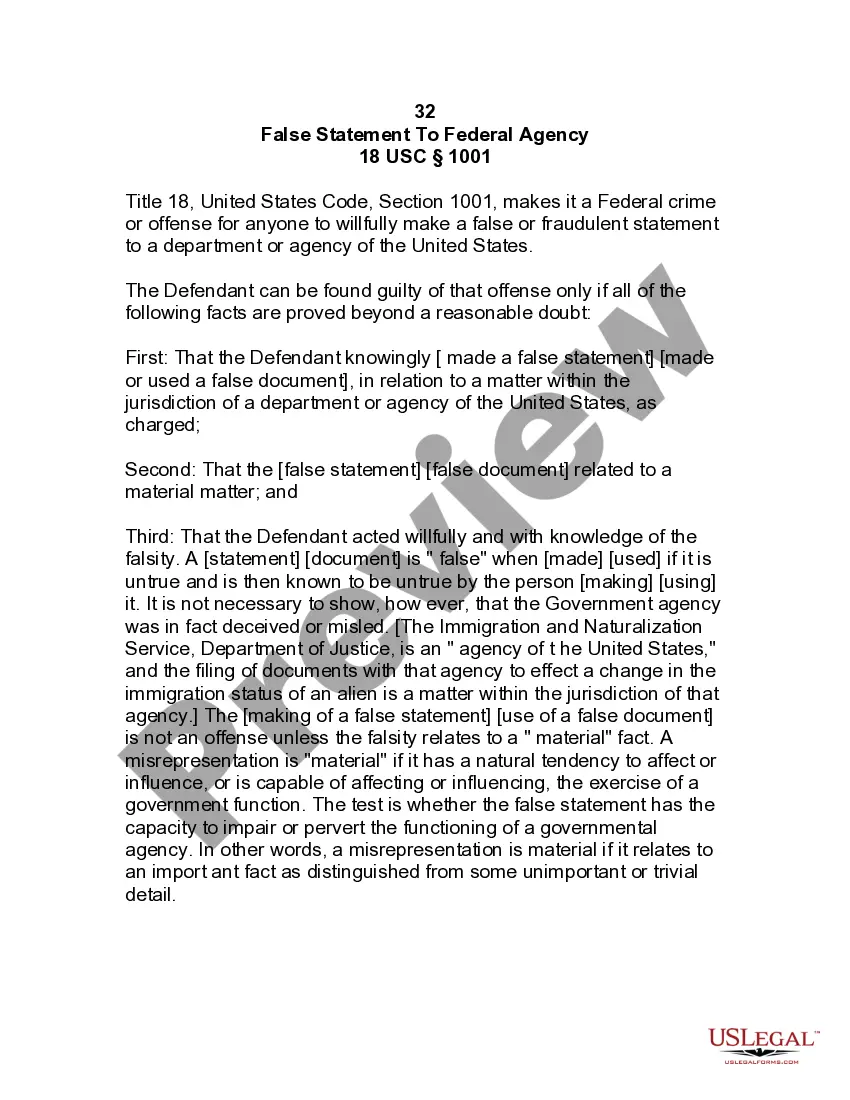
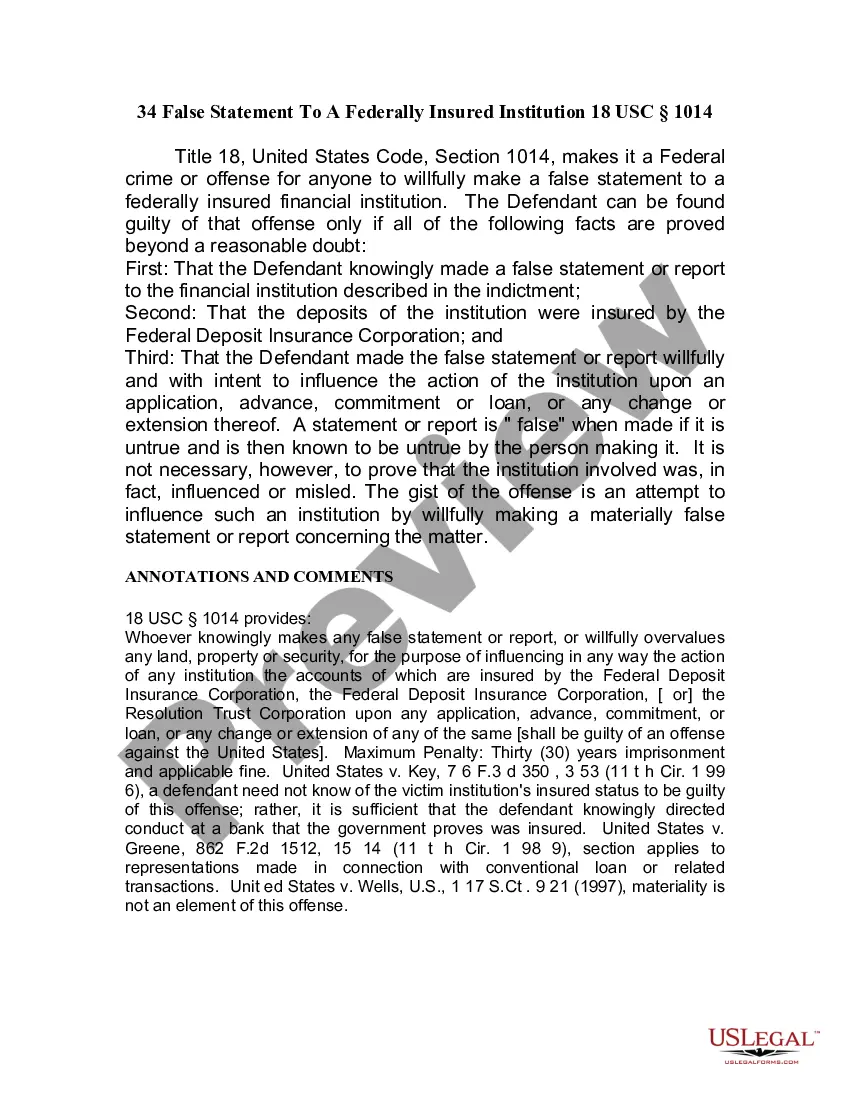
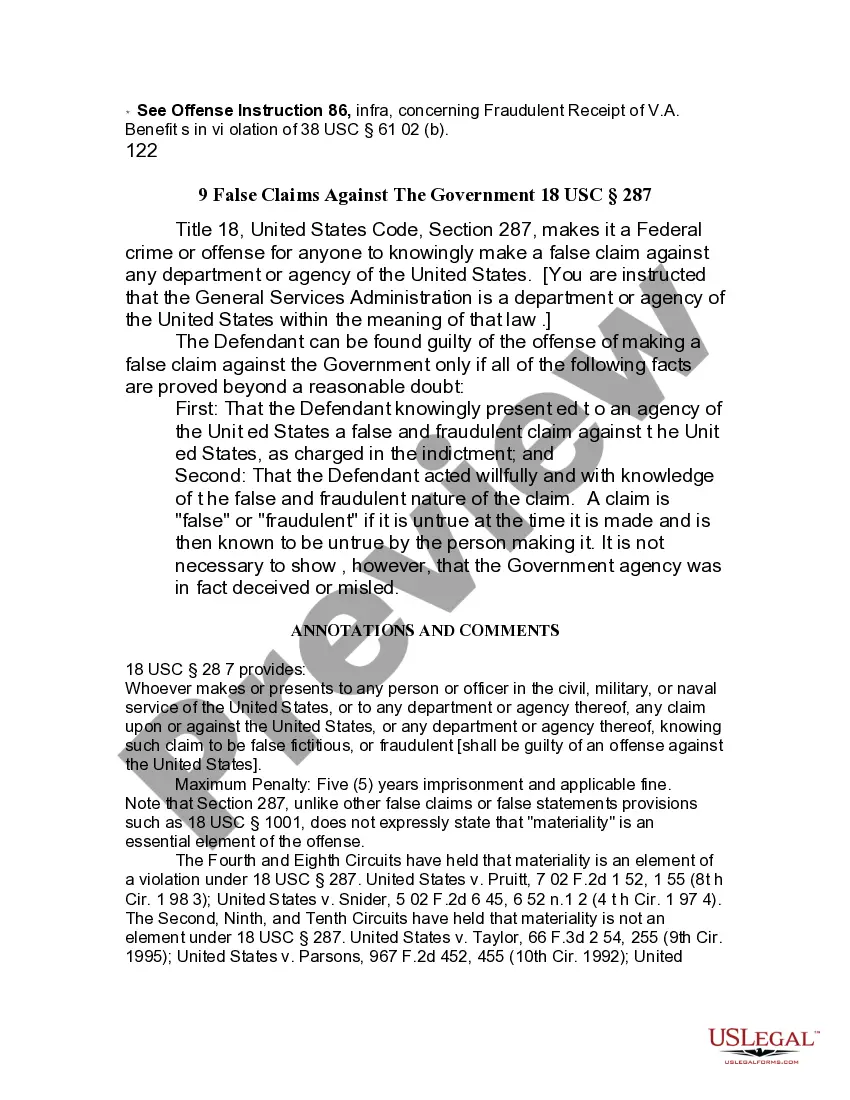
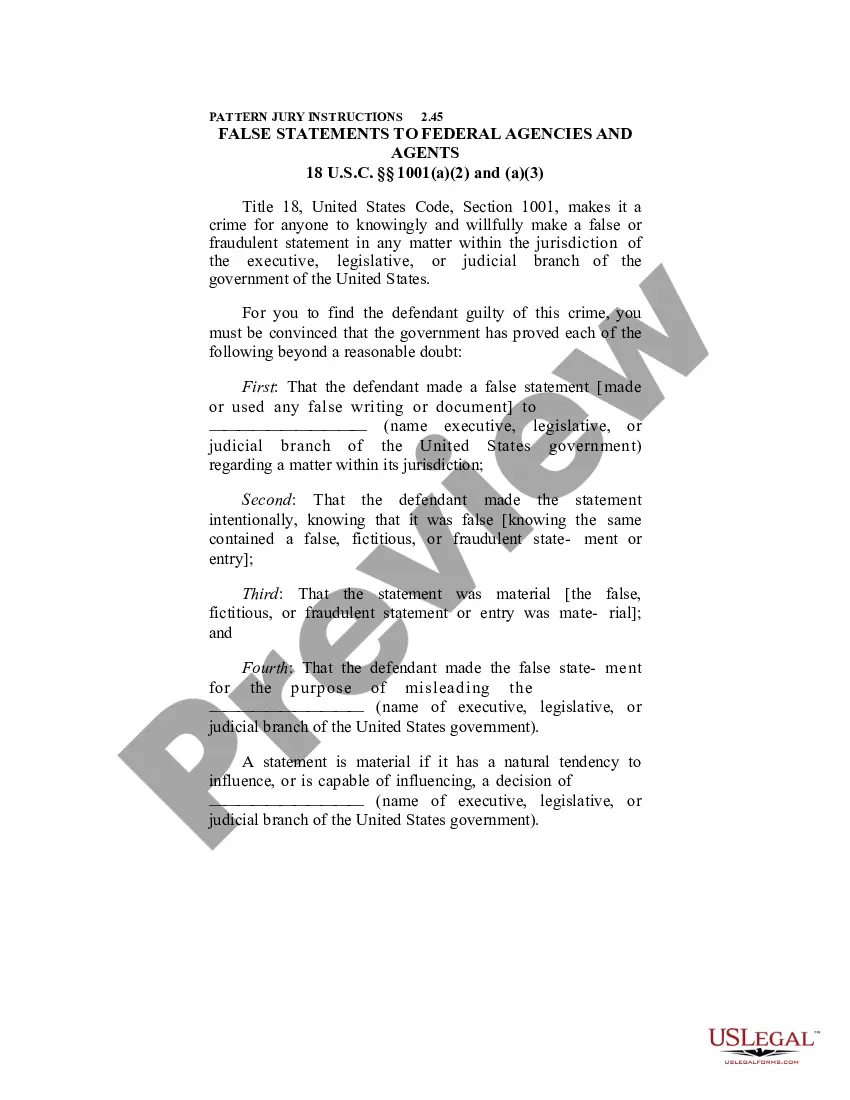
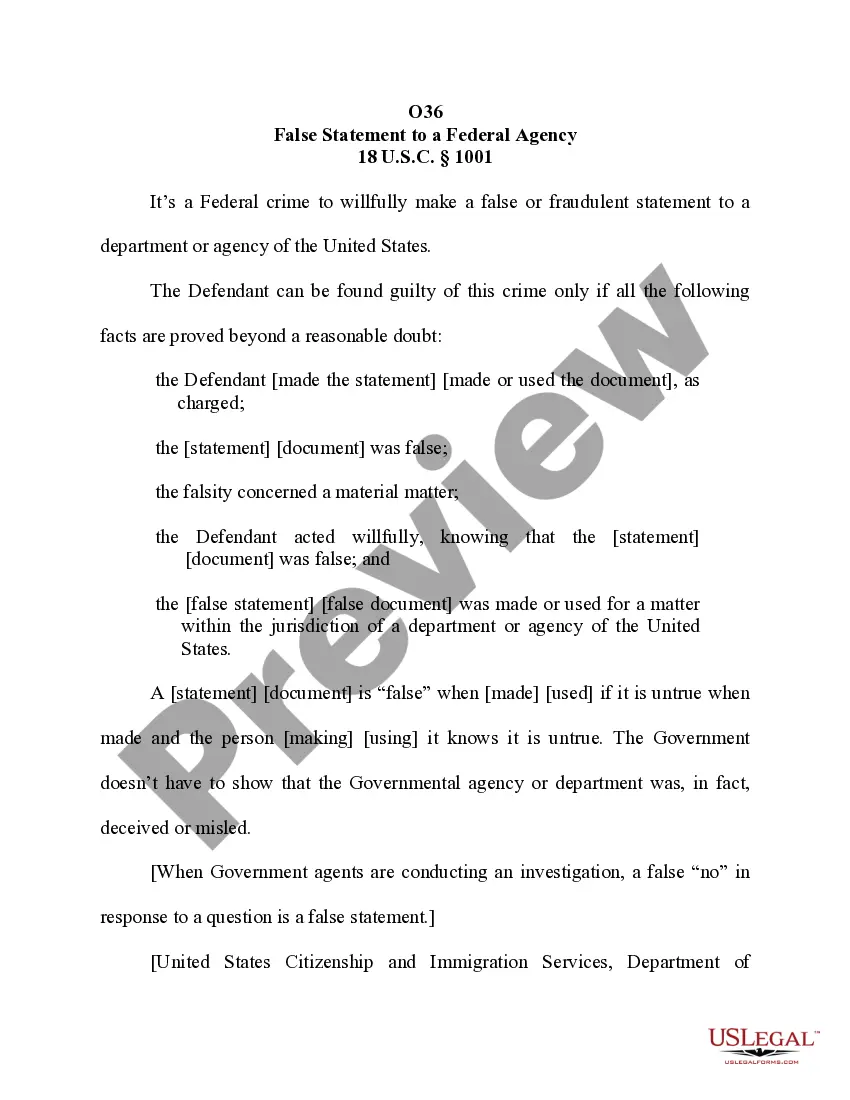
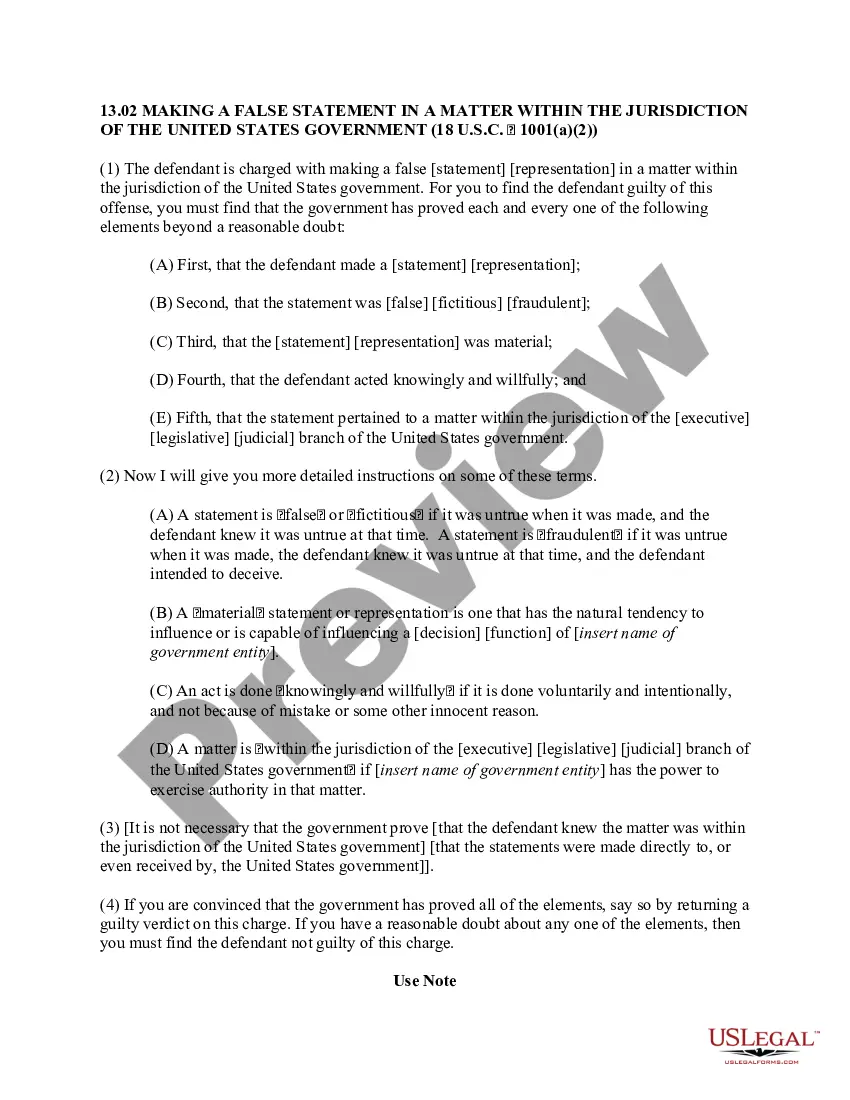
The Jury Instruction - False Statement To Federal Agency form provides sample jury instructions relevant to false statements made to federal agencies, as defined under 18 USC 1001. This form is crucial in understanding the legal criteria for establishing criminal liability when a defendant is accused of making false statements or using false documents in relation to matters under the jurisdiction of U.S. federal agencies.
Form components explained
- Definition of making a false statement or using a false document.
- Criteria for proving willfulness and knowledge of falsity.
- Explanation of what constitutes a material fact.
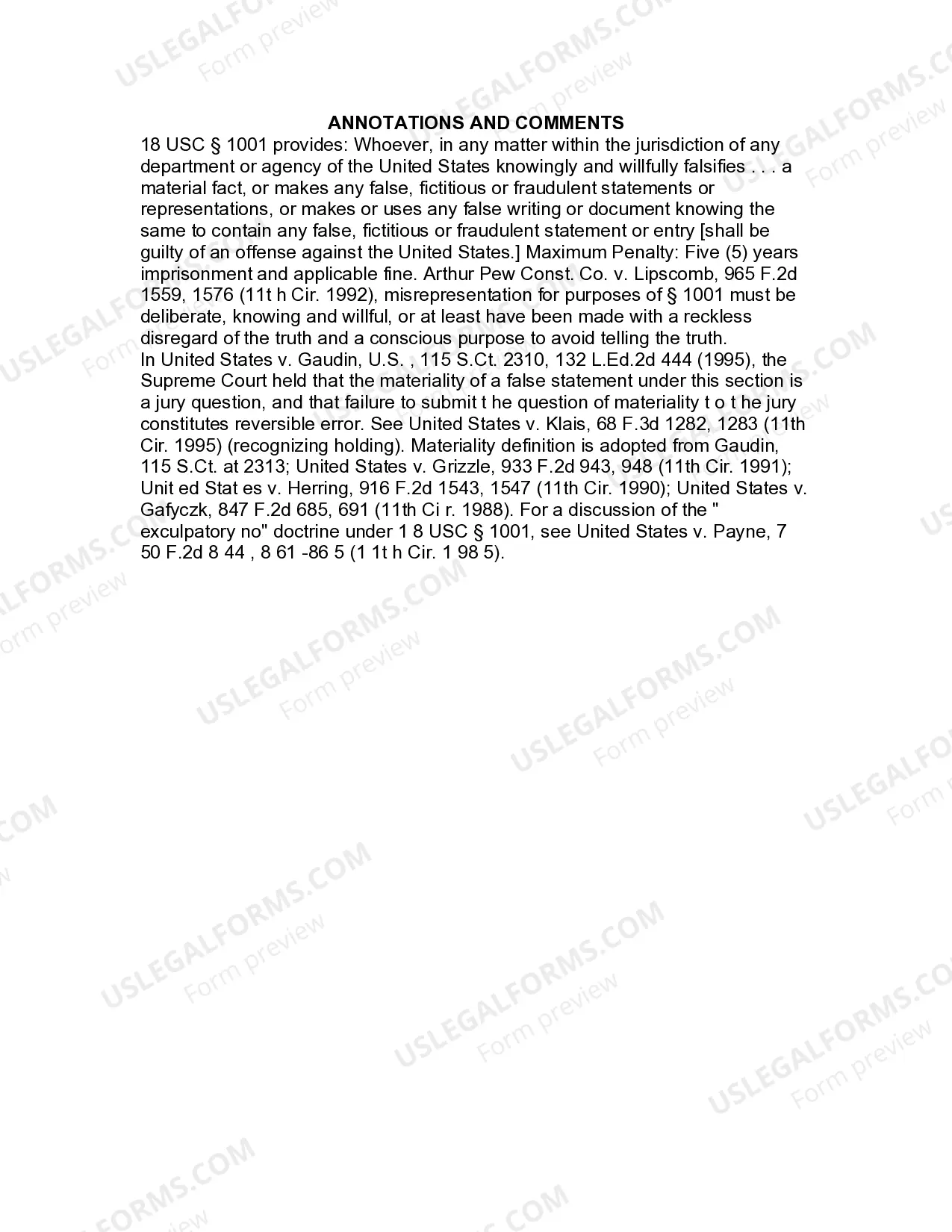
- Relevant case law that addresses materiality and its requirement for jury consideration.
- Maximum penalties for violations under 18 USC 1001.
When to use this form
This form is necessary when preparing jury instructions in cases involving charges of making false statements to a federal agency. It helps guide the jury in understanding the elements of the offense and assessing whether the defendant acted with the requisite intent and knowledge. This instruction is particularly relevant in federal criminal cases related to immigration status changes or other federal agency interactions.
Who this form is for
- Attorneys representing defendants accused of making false statements to federal agencies.
- Prosecutors handling cases related to fraud or false statements under federal law.
- Judges requiring standard jury instructions for federal criminal cases.
- Legal scholars studying the elements of federal offenses under 18 USC 1001.
Completing this form step by step
- Identify the specific charges against the defendant related to false statements.
- Outline the elements of the offense, including willfulness and materiality.
- Draft the jury instructions to clearly convey the legal standards involved.
- Ensure the instructions are tailored to the facts of the case at hand.
- Submit the completed jury instructions to the court for approval before trial.
Does this document require notarization?
Notarization is generally not required for this form. However, certain states or situations might demand it. You can complete notarization online through US Legal Forms, powered by Notarize, using a verified video call available anytime.
Get your form ready online
Our built-in tools help you complete, sign, share, and store your documents in one place.
Make edits, fill in missing information, and update formatting in US Legal Forms—just like you would in MS Word.
Download a copy, print it, send it by email, or mail it via USPS—whatever works best for your next step.
Sign and collect signatures with our SignNow integration. Send to multiple recipients, set reminders, and more. Go Premium to unlock E-Sign.
If this form requires notarization, complete it online through a secure video call—no need to meet a notary in person or wait for an appointment.
We protect your documents and personal data by following strict security and privacy standards.

Make edits, fill in missing information, and update formatting in US Legal Forms—just like you would in MS Word.

Download a copy, print it, send it by email, or mail it via USPS—whatever works best for your next step.

Sign and collect signatures with our SignNow integration. Send to multiple recipients, set reminders, and more. Go Premium to unlock E-Sign.

If this form requires notarization, complete it online through a secure video call—no need to meet a notary in person or wait for an appointment.

We protect your documents and personal data by following strict security and privacy standards.
Avoid these common issues
- Failing to include all elements required to establish a false statement under federal law.
- Using vague language that may confuse jurors about the legal standards.
- Neglecting to address the requirement of willfulness and knowledge in the instructions.
Why complete this form online
- Convenient access to legally vetted templates drafted by licensed attorneys.
- Editable format that allows users to customize instructions to fit specific cases.
- Immediate download so users can quickly prepare for court proceedings.
Legal use & context
- The form ensures that the jury has a clear understanding of the legal standards they must apply when evaluating a defendant's actions.
- Using structured jury instructions can help avoid reversible errors in federal criminal cases.
- This form reflects established legal principles that guide the juror's decision-making process in false statement cases.
Looking for another form?








Form popularity
FAQ
Under 18 U.S.C. Section1001, the penalty for making false statements is a maximum sentence of up to five years in prison. However, if the false statement is related to an act of terror, human trafficking, or certain sex offenses, the maximum sentence increases to eight years.
Under Section 1001 of title 18 of the United States Code, it is a federal crime to knowingly and willfully make a materially false, fictitious, or fraudulent statement in any matter within the jurisdiction of the executive, legislative, or judicial branch of the United States.
Materially false statement means any false statement, regardless of its admissibility under the rules of evidence, which could have affected the course or outcome of an official proceeding, or the action or decision of a public servant, or the performance of a governmental function.
Although the word fallacy is sometimes used as a synonym for false statement, that is not how the word is used in philosophy, mathematics, logic and most formal contexts.A false statement need not be a lie. A lie is a statement that is known to be untrue and is used to mislead.
Any claimant or representative of a claimant who knowingly and willfully makes a false statement or representation for the purpose of obtaining a benefit or payment under this chapter shall be guilty of a felony, and on conviction thereof shall be punished by a fine not to exceed $10,000, by imprisonment not to exceed
Penalties Upon Conviction Anyone convicted of making false statements in violation of federal statute faces a prison term of up to five years and a fine of up to $250,000. If the offense involves terrorism, anyone convicted of making false statements faces up to eight years in prison.
A false statement is a statement that is not true. Although the word fallacy is sometimes used as a synonym for false statement, that is not how the word is used in philosophy, mathematics, logic and most formal contexts.A lie is a statement that is known to be untrue and is used to mislead.