Jury Instruction - Counterfeit - Possession with Intent to Defraud
What this document covers
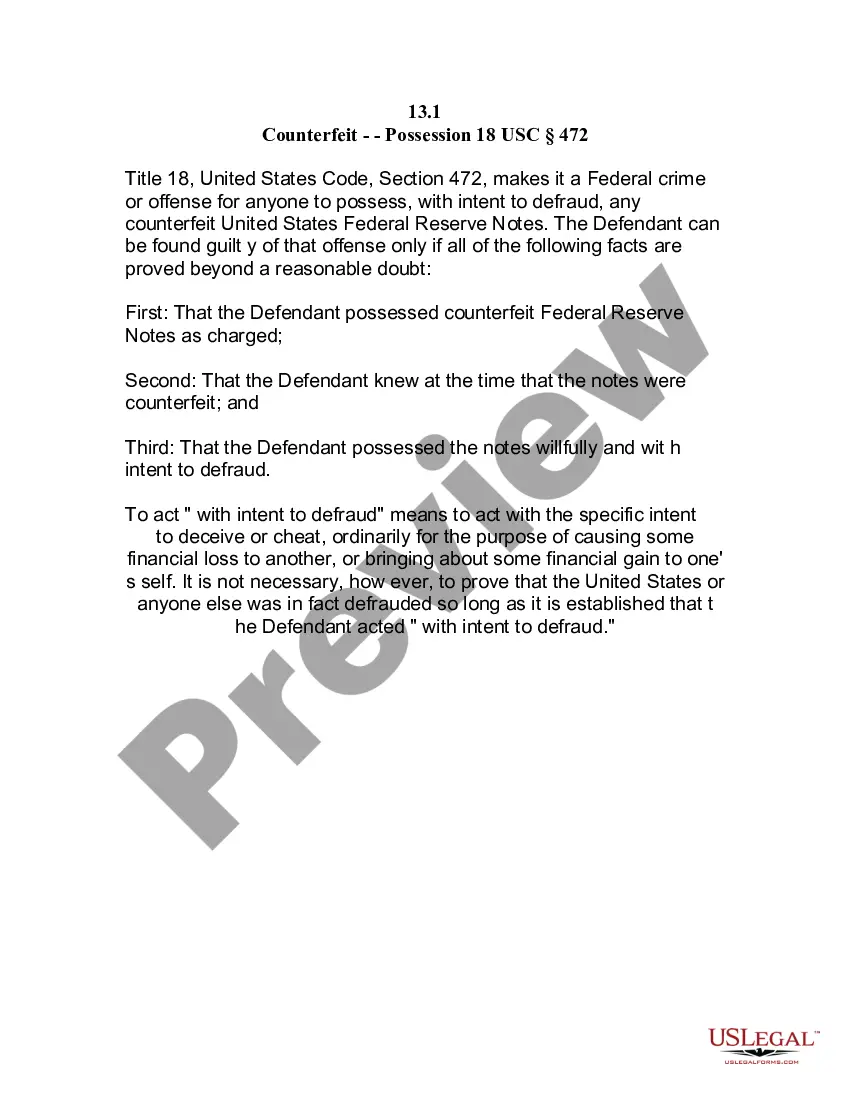
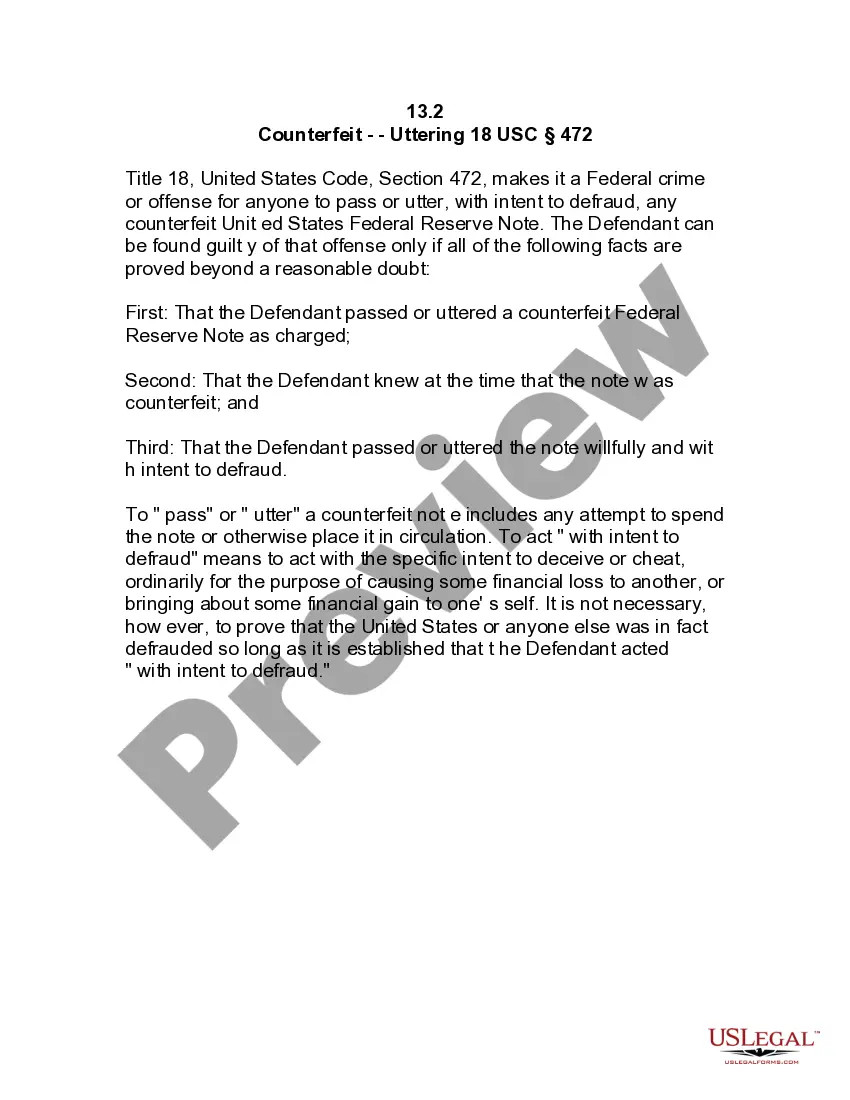
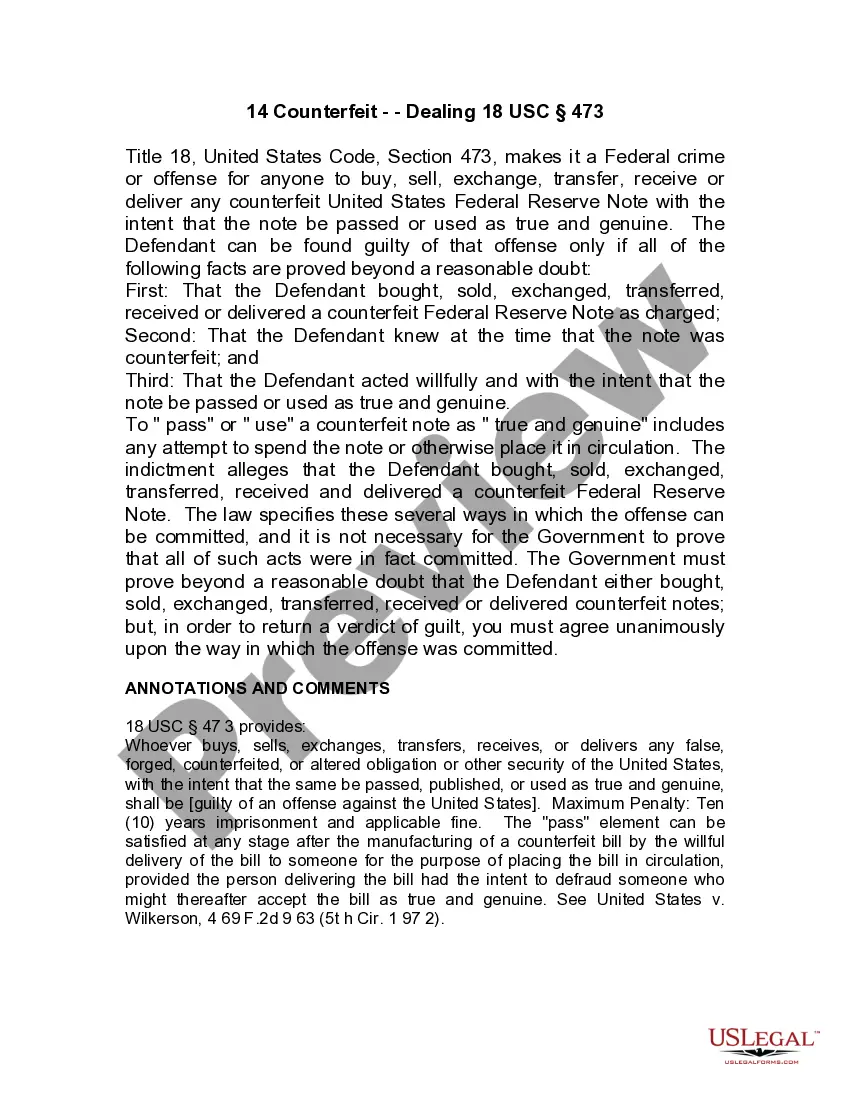
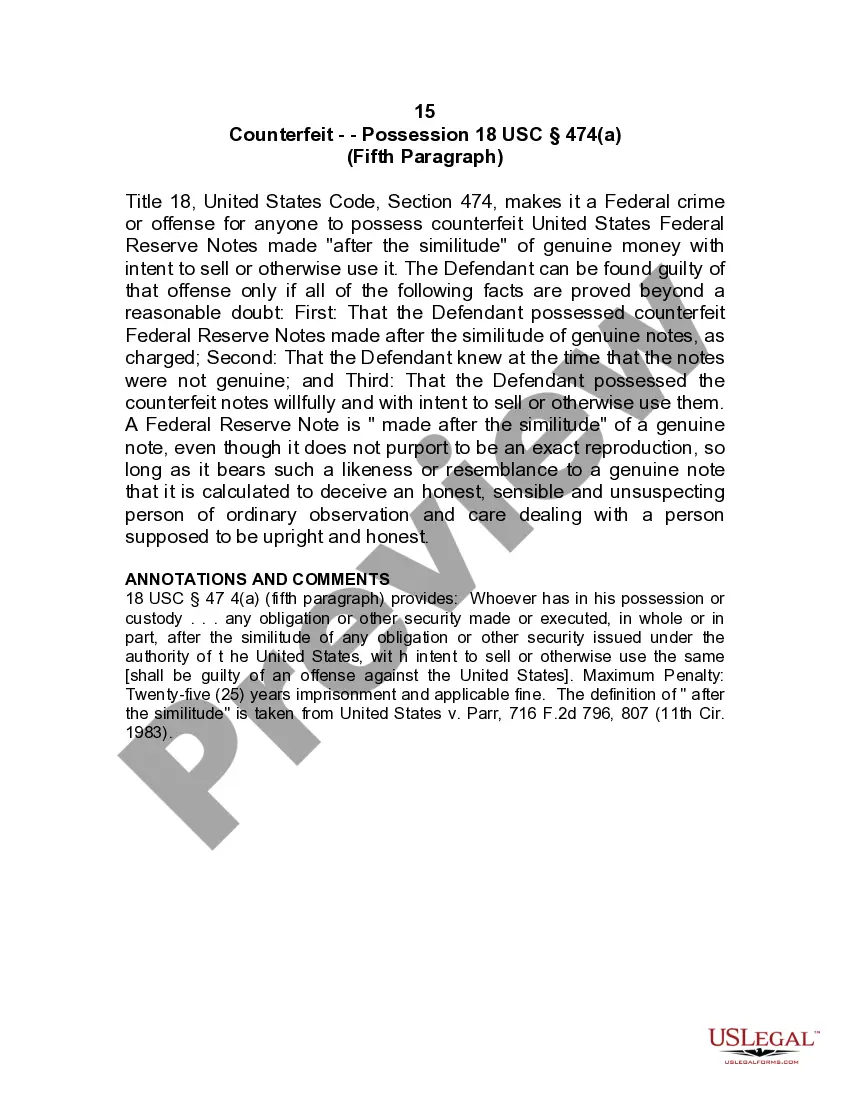
The Jury Instruction - Counterfeit - Possession with Intent to Defraud form is a legal document that provides sample jury instructions related to federal laws against counterfeit currency. This form serves as a model and outlines the necessary elements for establishing a conviction for possession of counterfeit Federal Reserve Notes with intent to defraud. Unlike general jury instructions, this form specifically addresses the legal definitions and criteria unique to cases involving counterfeit currency.
What’s included in this form
- Definition of the crime: Outlines the statutory basis under Title 18, United States Code, Section 472.
- Elements of the offense: Specifies what must be proven for a guilty verdict, including possession, knowledge, and intent.
- Intent to defraud: Clarifies the meaning and requirements for intent in fraudulent actions.
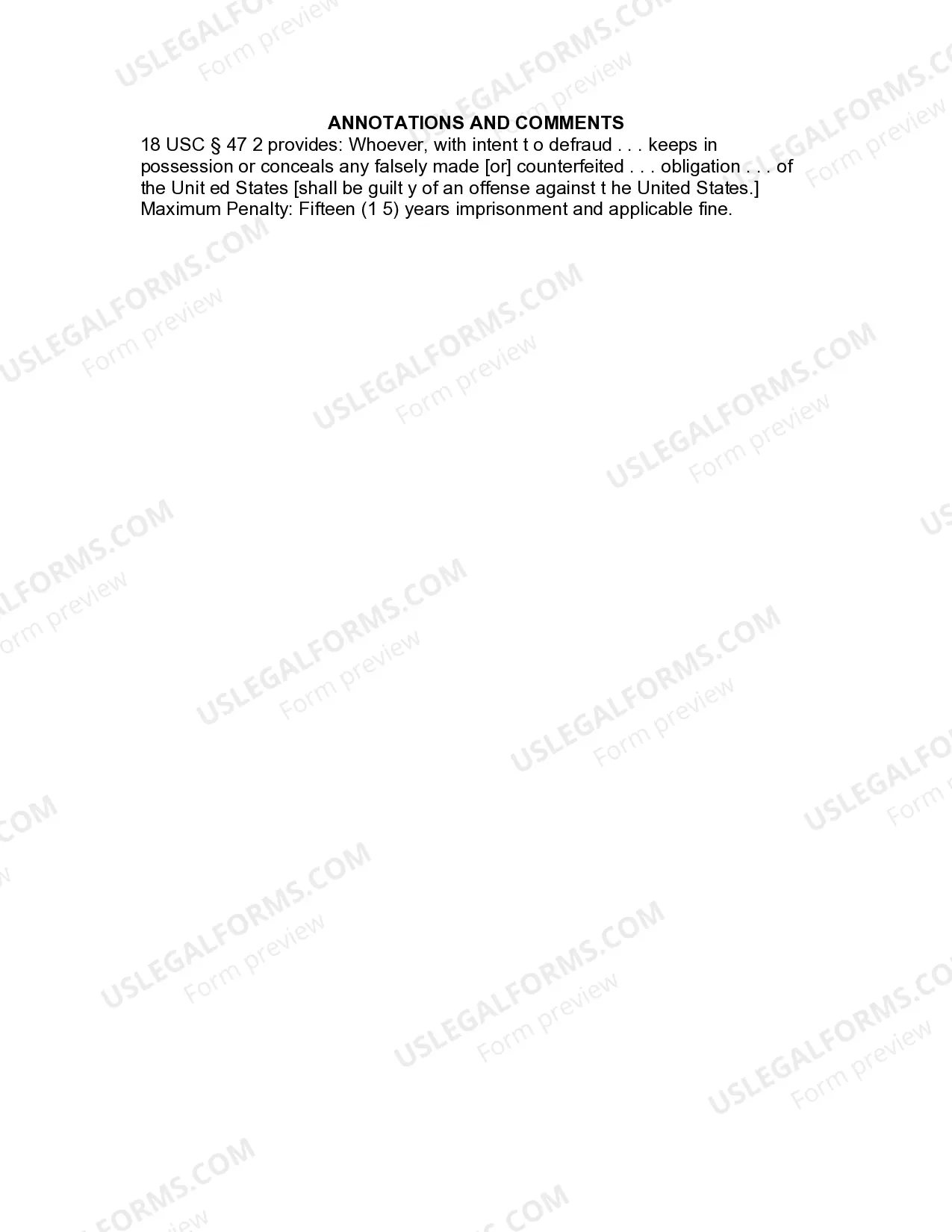
- Potential penalties: Details the maximum penalty for a conviction, including imprisonment and fines.
- Model jury questions: Provides sample questions to guide jury deliberation on the case.

When this form is needed
This form should be used in federal criminal proceedings where a defendant is accused of possessing counterfeit Federal Reserve Notes. It is specifically utilized during the jury instruction phase to ensure jurors understand the elements they must evaluate to determine guilt or innocence. Legal practitioners can employ this form for cases including but not limited to fraud investigations, counterfeiting operations, and other related offenses.
Who this form is for
Legal professionals including:
- Defense attorneys representing clients accused of counterfeiting.
- Prosecutors handling cases involving counterfeit currency.
- Judges overseeing federal court cases where jury instructions are required.
- Legal scholars studying federal counterfeiting laws and jury instructions.
How to complete this form
- Review the relevant law: Familiarize yourself with Title 18, United States Code, Section 472.
- Determine the elements of the offense: Identify and outline the three key facts that need to be proven.
- Prepare jury questions: Draft specific inquiries for the jury based on the case circumstances and the provided model questions.
- Tailor the instructions: Modify the sample instructions as necessary to fit the particular facts of your case.
- Ensure clarity: Confirm that the language is understandable for jurors with varying levels of legal knowledge.
Does this form need to be notarized?
This form does not typically require notarization to be legally valid. However, some jurisdictions or document types may still require it. US Legal Forms provides secure online notarization powered by Notarize, available 24/7 for added convenience.
Get your form ready online
Our built-in tools help you complete, sign, share, and store your documents in one place.
Make edits, fill in missing information, and update formatting in US Legal Forms—just like you would in MS Word.
Download a copy, print it, send it by email, or mail it via USPS—whatever works best for your next step.
Sign and collect signatures with our SignNow integration. Send to multiple recipients, set reminders, and more. Go Premium to unlock E-Sign.
If this form requires notarization, complete it online through a secure video call—no need to meet a notary in person or wait for an appointment.
We protect your documents and personal data by following strict security and privacy standards.

Make edits, fill in missing information, and update formatting in US Legal Forms—just like you would in MS Word.

Download a copy, print it, send it by email, or mail it via USPS—whatever works best for your next step.

Sign and collect signatures with our SignNow integration. Send to multiple recipients, set reminders, and more. Go Premium to unlock E-Sign.

If this form requires notarization, complete it online through a secure video call—no need to meet a notary in person or wait for an appointment.

We protect your documents and personal data by following strict security and privacy standards.
Avoid these common issues
- Failing to specify all elements of the offense clearly.
- Overlooking the necessity of proving intent to defraud.
- Using outdated language that may confuse jurors.
- Neglecting to customize the jury questions for the specific case.
Advantages of online completion
- Convenient access: Downloadable form allows for easy access and use in a variety of cases.
- Editability: Customize the sample jury instructions to fit the specifics of the case at hand.
- Legal reliability: Form is drafted by licensed attorneys, ensuring that content meets legal standards.
Legal use & context
- The form is aimed at cases involving alleged possession of counterfeit currency under federal law.
- A conviction can result in significant penalties, including imprisonment for up to fifteen years.
- Ensuring correct usage of the form aids in the proper functioning of the legal process, informing jurors of their responsibilities.
Looking for another form?







Form popularity
FAQ
Dishonesty is the fundamental component of a majority of offences relating to the acquisition, conversion and disposal of property (tangible or intangible) defined in criminal law such as fraud.
California Penal Code 537 PC defines the crime of defrauding an innkeeper as using fraud to obtain a good or service from a business without paying for it. The offense can be charged as a misdemeanor petty theft or a felony grand theft and carries a maximum sentence of up to 3 years in jail.
Some common synonyms of defraud are cheat, cozen, and swindle.
To take something illegally from a person, company, etc., or to prevent someone from having something that is legally theirs by deceiving them: He was found guilty of defrauding the Internal Revenue Service. They are both charged with conspiracy to defraud an insurance company of $20,000.
: to deprive of something by deception or fraud trying to defraud the public Investors in the scheme were defrauded of their life savings.