Jury Instruction - Expert Witnesses
About this form
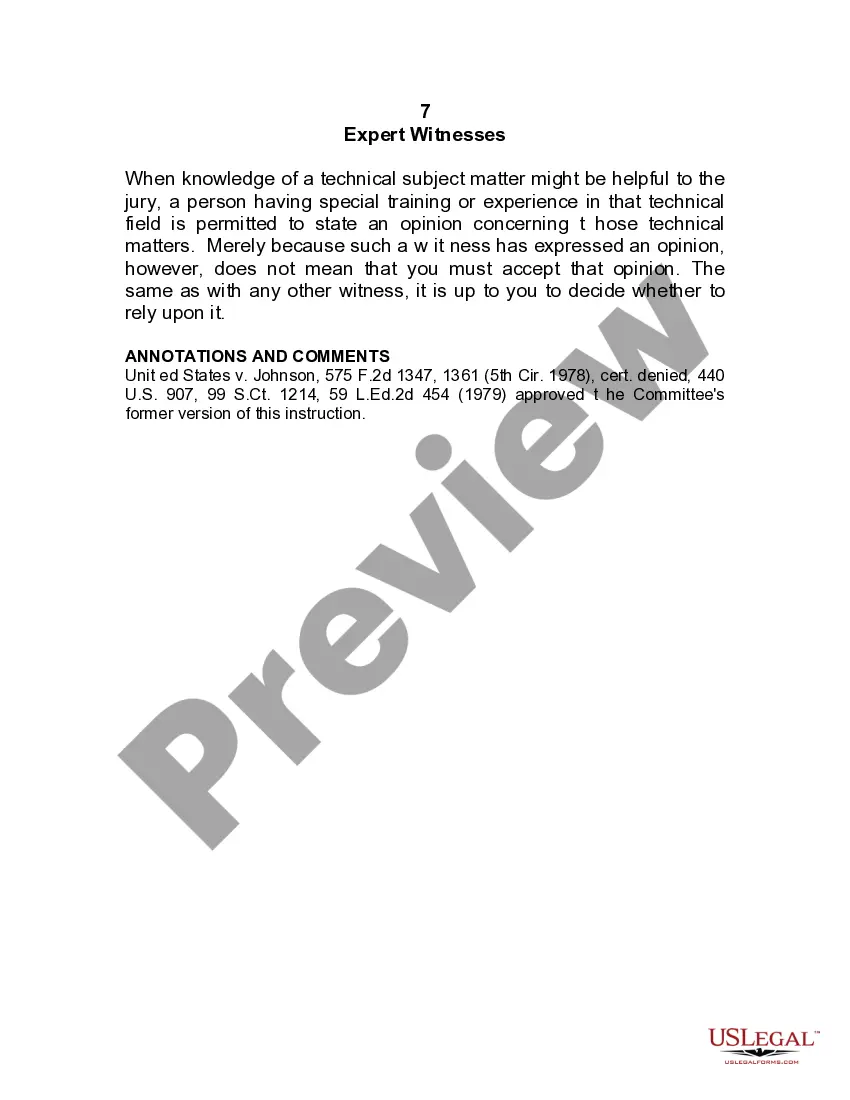
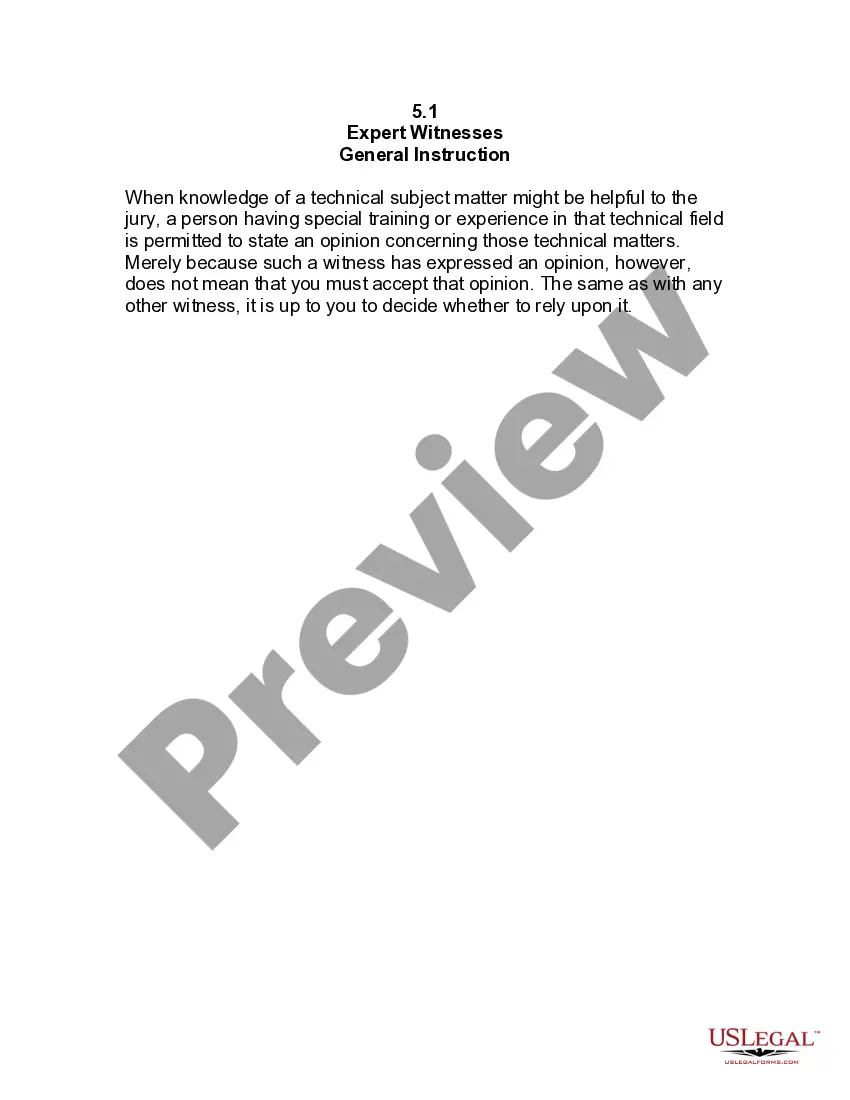
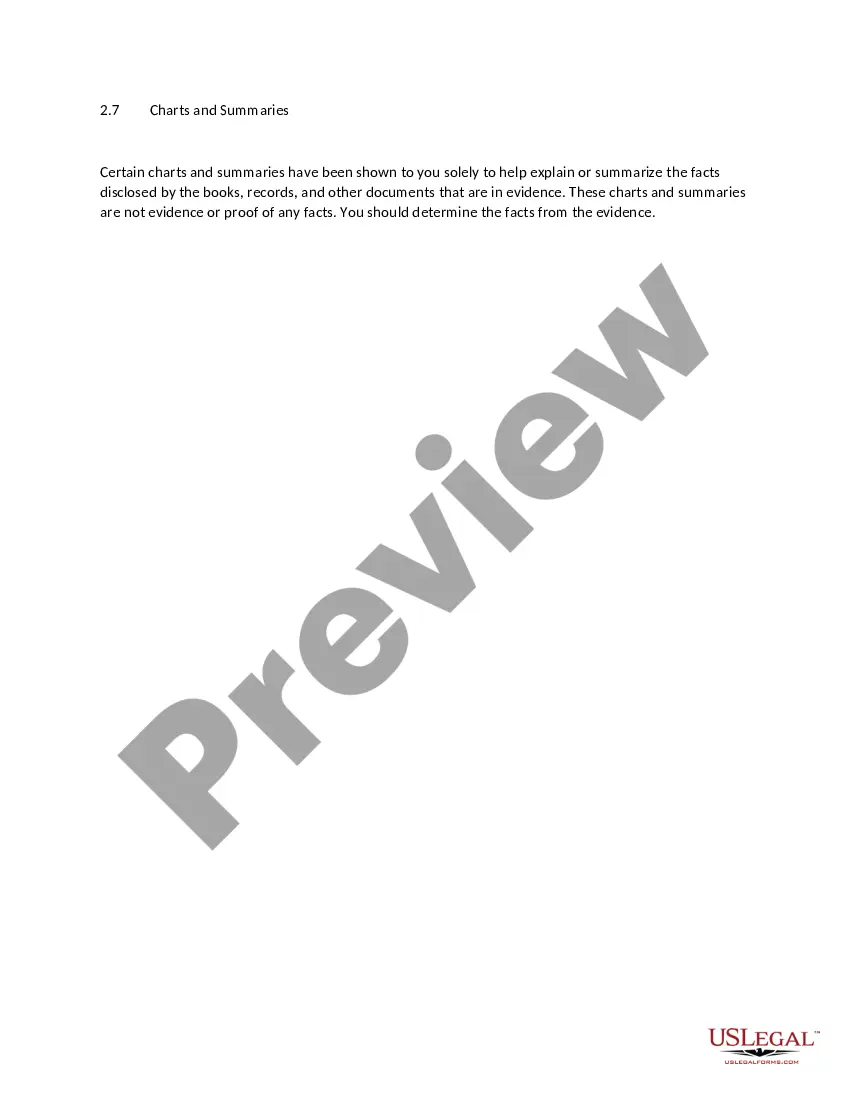
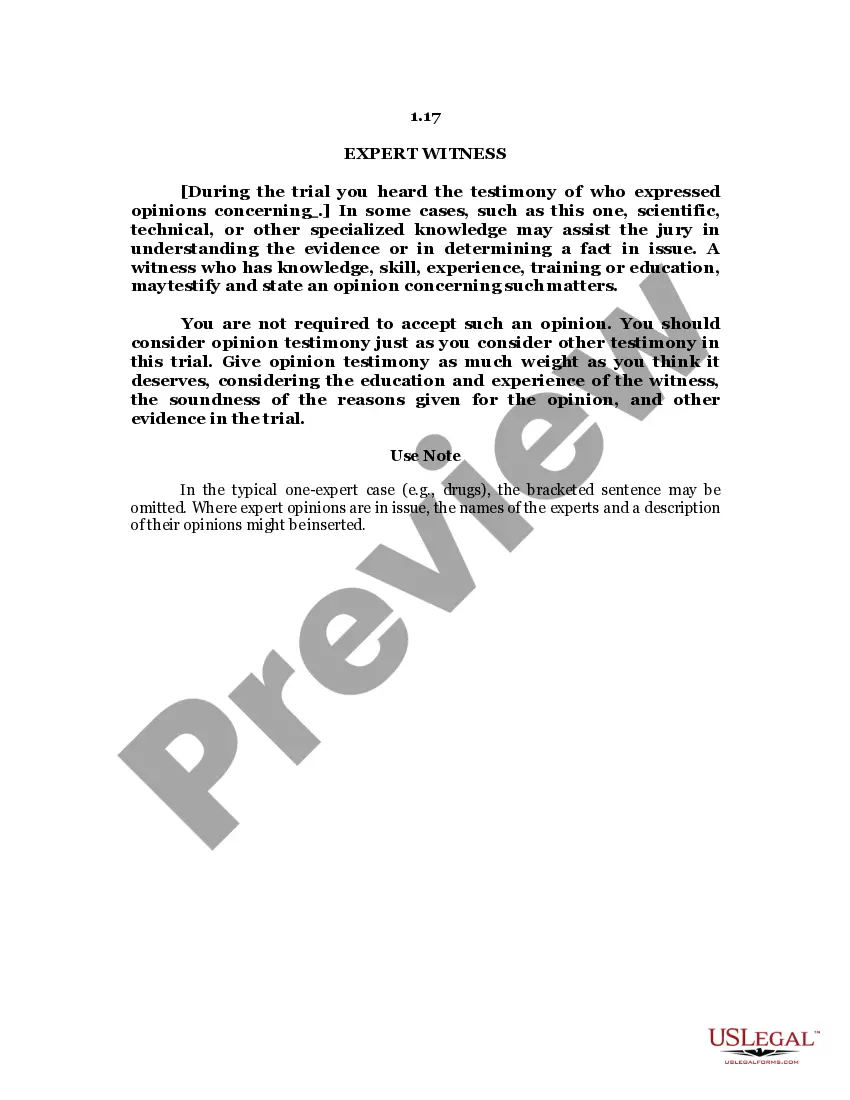
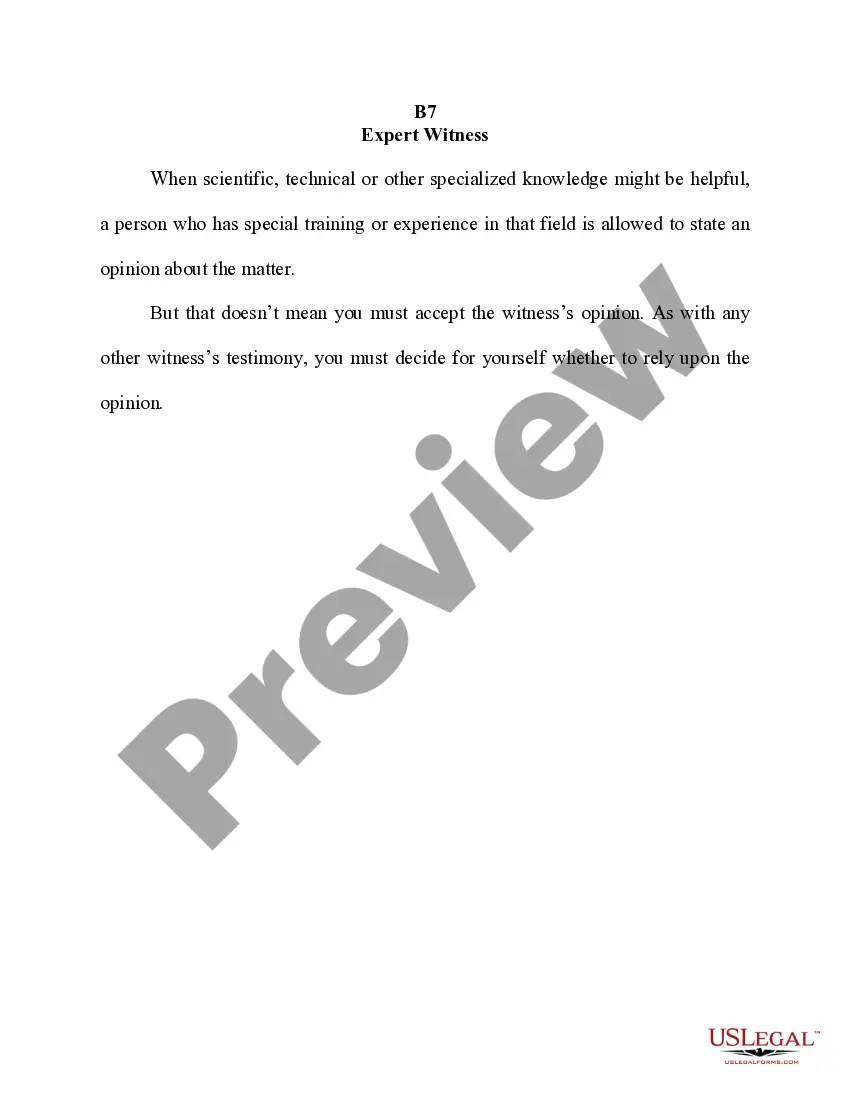
The Jury Instruction - Expert Witnesses form provides essential jury instructions regarding the use of expert testimony in legal proceedings. This form outlines how jurors can consider expert opinions for technical subject matters and clarifies that jurors are not obligated to accept these opinions. It serves as a guideline for courts across the United States, helping to standardize how expert witnesses are presented in trials.
What’s included in this form
- Definition of expert witness and qualifications required for testimony.
- Guidance on how jurors should evaluate expert opinions.
- Reiteration that acceptance of expert testimony is at the jurors' discretion.
- References to legal precedents that support the use of expert testimony.
Situations where this form applies
This form should be used during jury trials where expert testimony is anticipated. It is applicable in cases involving technical subject matters where jurors may need the insights of individuals with specialized knowledge, such as medical, forensic, or engineering fields. Utilizing this form can help ensure that jurors are properly instructed on how to consider expert evidence.
Intended users of this form
This form is intended for:
- Attorneys involved in civil and criminal trials where expert witness testimony is relevant.
- Judges preparing jury instructions for cases requiring technical knowledge.
- Legal teams seeking standardized jury instructions regarding expert witnesses.
How to prepare this document
- Identify the specific technical field relevant to your case.
- Prepare a section defining expert qualifications and their relevance to the case.
- Draft jury instructions on how jurors should weigh expert opinions.
- Cite relevant legal precedents to support the instructions provided.
- Consult with legal counsel to ensure completeness and suitability for your trial.
Notarization guidance
Notarization is not commonly needed for this form. However, certain documents or local rules may make it necessary. Our notarization service, powered by Notarize, allows you to finalize it securely online anytime, day or night.
Get your form ready online
Our built-in tools help you complete, sign, share, and store your documents in one place.
Make edits, fill in missing information, and update formatting in US Legal Forms—just like you would in MS Word.
Download a copy, print it, send it by email, or mail it via USPS—whatever works best for your next step.
Sign and collect signatures with our SignNow integration. Send to multiple recipients, set reminders, and more. Go Premium to unlock E-Sign.
If this form requires notarization, complete it online through a secure video call—no need to meet a notary in person or wait for an appointment.
We protect your documents and personal data by following strict security and privacy standards.

Make edits, fill in missing information, and update formatting in US Legal Forms—just like you would in MS Word.

Download a copy, print it, send it by email, or mail it via USPS—whatever works best for your next step.

Sign and collect signatures with our SignNow integration. Send to multiple recipients, set reminders, and more. Go Premium to unlock E-Sign.

If this form requires notarization, complete it online through a secure video call—no need to meet a notary in person or wait for an appointment.

We protect your documents and personal data by following strict security and privacy standards.
Common mistakes to avoid
- Failing to tailor the instructions to the specific expert witness and their field.
- Neglecting to cite relevant legal precedents which may affect jury decision-making.
- Using complex legal jargon that may confuse jurors instead of plain language.
Advantages of online completion
- Convenience of having access to standardized jury instructions at any time.
- Easy to download and customize per case requirements.
- Reliability of templates drafted by licensed attorneys based on current legal standards.
Legal use & context
- This form is legally recognized for use in jury trials across various states.
- It is essential to modify the language to align with local legal standards and procedures.
- This form serves as a guideline but must be adapted based on specific case circumstances.
Looking for another form?







Form popularity
FAQ
The definition of an expert witness, according to the Federal Rule of Evidence. An expert witness is a person with specialized skill sets whose opinion may help a jury make sense of the factual evidence of a case. Testimonies from expert witnesses can have a tremendous influence on the final decision of the judge.
Per the Federal Rules of Evidence, a qualified expert witness is a witness who has the knowledge, skill, education, experience, or training in a specialized field. Some professions, like attorneys and physicians, require a license in order to formally become a member of that profession.
You can force the opposing expert, on cross-examination, to disclose the bases of her opinion, and, if it is based on inaccurate or incomplete information, then the jury should discount her opinion.
When the expert witness does the same, he or she is considered biased. If the evidence or opinions are not helpful or persuasive to the judge or jury, they are given less weight than usual. However, when the expert has become swayed by evidence, injury or the defending party, he or she may be disqualified in the case.
In the federal courts, judges determine the credibility of expert witnesses in a pre-trial Daubert hearing. See Daubert v. Merrell Dow Pharmaceuticals, 509 U.S. 579 (1993). In considering witnesses' qualifications, judges may consider information that is not admissible as evidence.
The definition of an expert witness, according to the Federal Rule of Evidence. An expert witness is a person with specialized skill sets whose opinion may help a jury make sense of the factual evidence of a case. Testimonies from expert witnesses can have a tremendous influence on the final decision of the judge.
A key point to discredit expert witnesses is to attack their qualifications. If the cross-examiner can establish exaggerations in the expert's qualifications not only will that expert's credibility quickly fade, but the attorney who called that witness to the stand will likely lose credibility with the jury as well.
Rule 702 Testimony By Expert Witnesses It states that an expert's opinion is admissible if: the expert's scientific, technical, or other specialized knowledge will help the trier of fact to understand the evidence or to determine a fact in issue. the testimony is based on sufficient facts or data.