Jury Instruction - 10.10.5 Real Estate Held Primarily For Sale
About this form
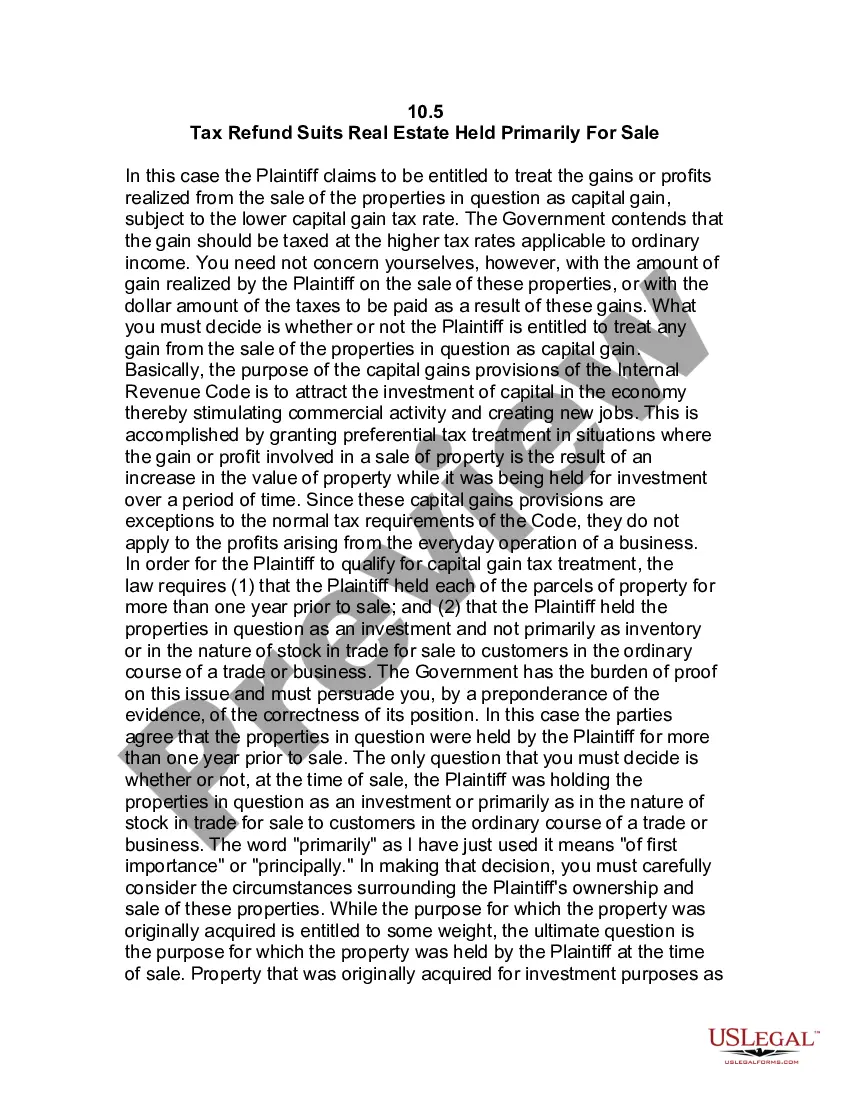
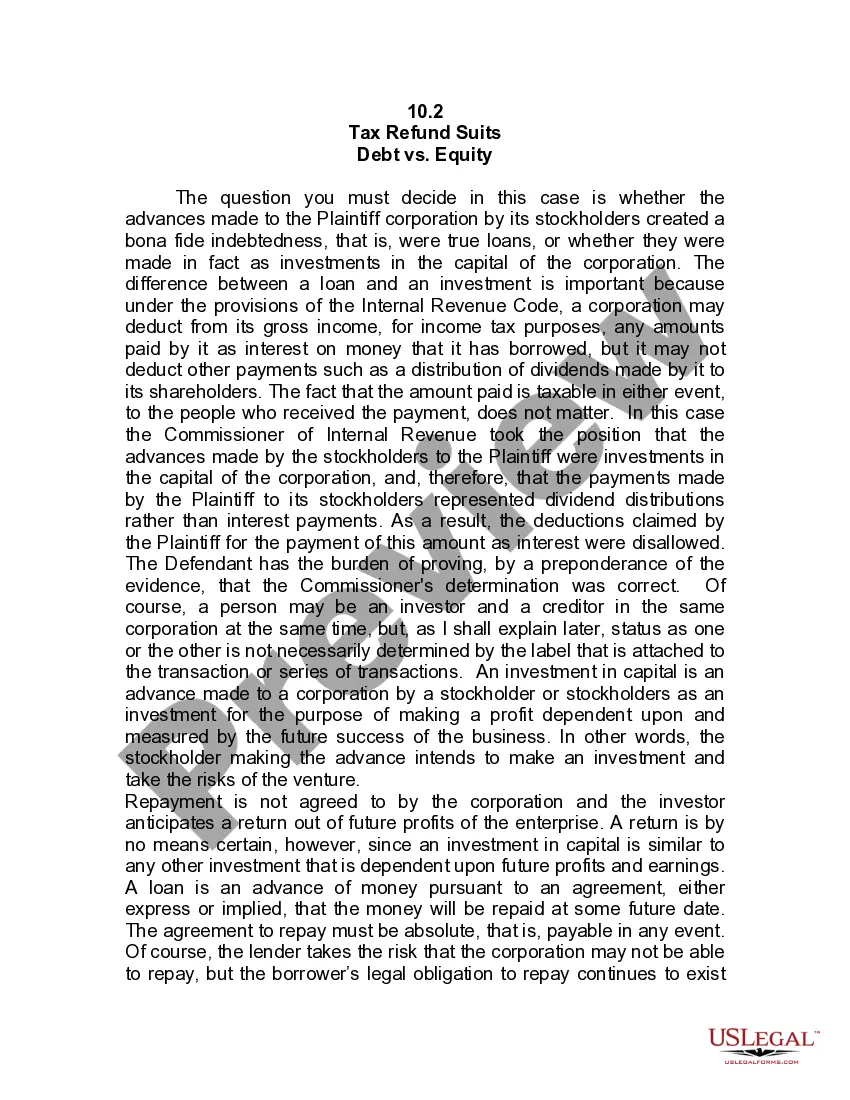
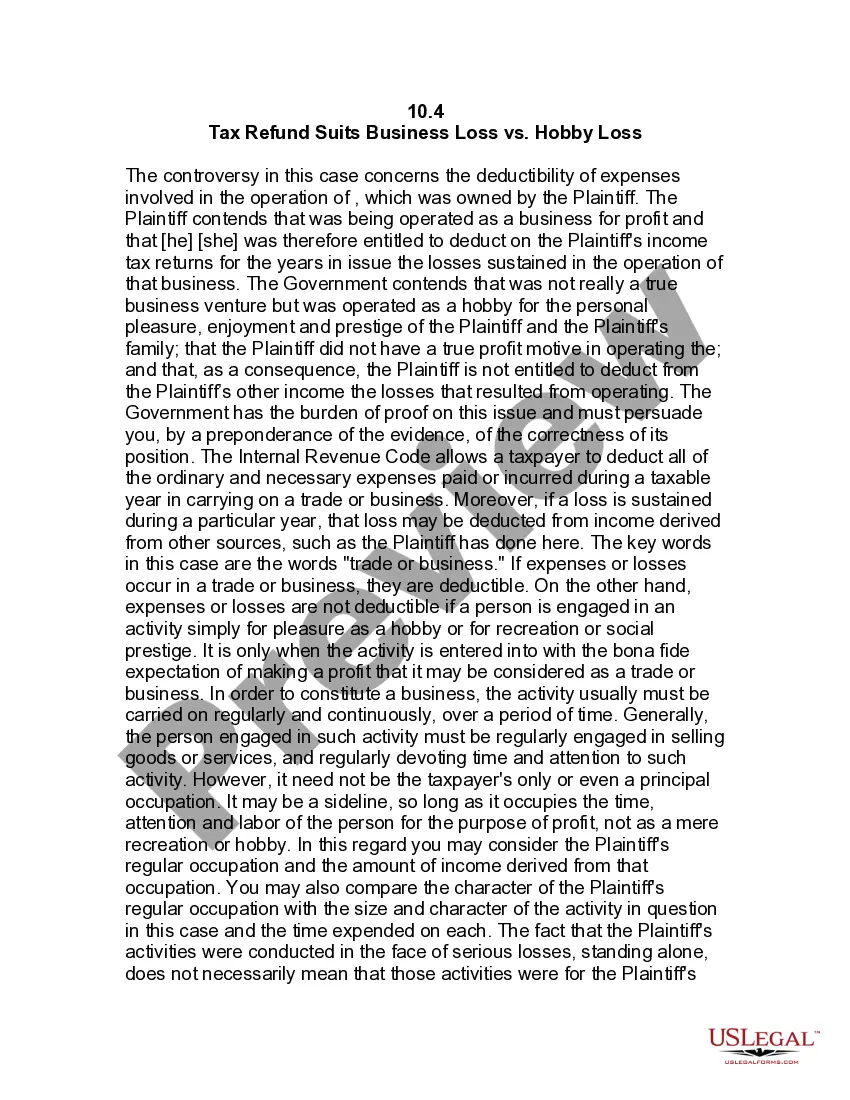
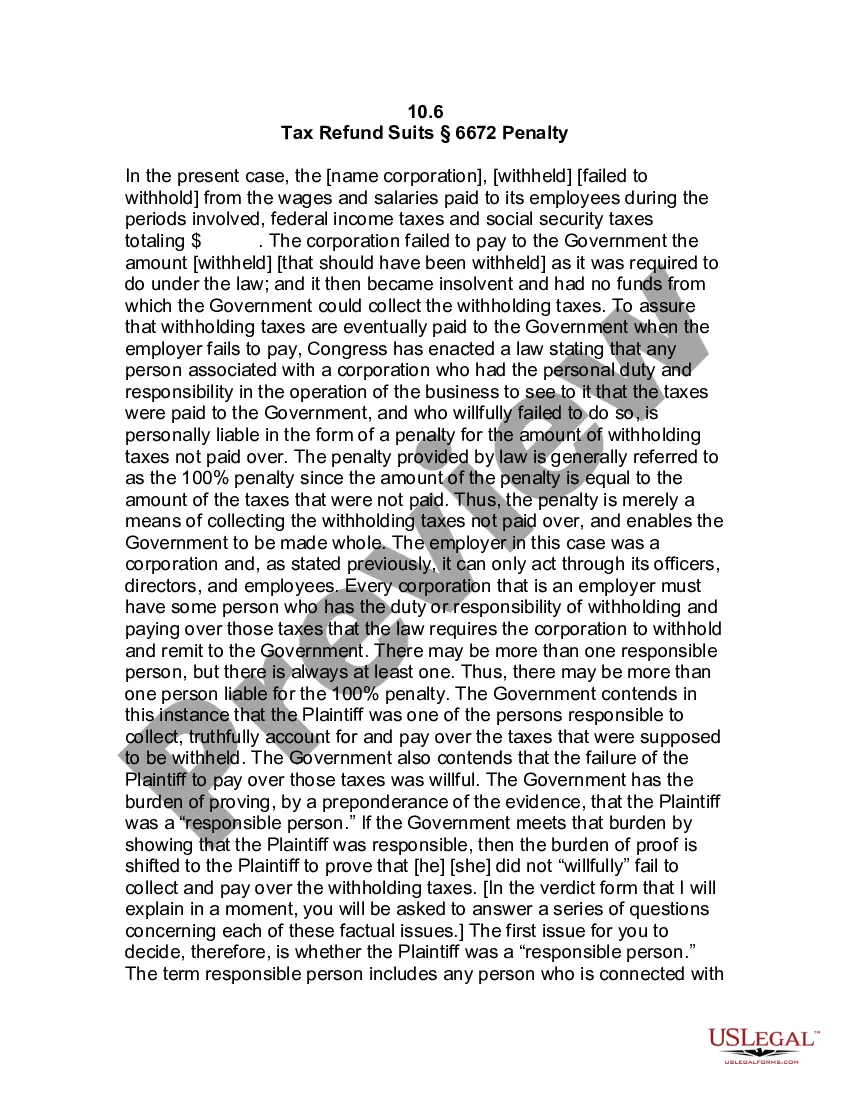
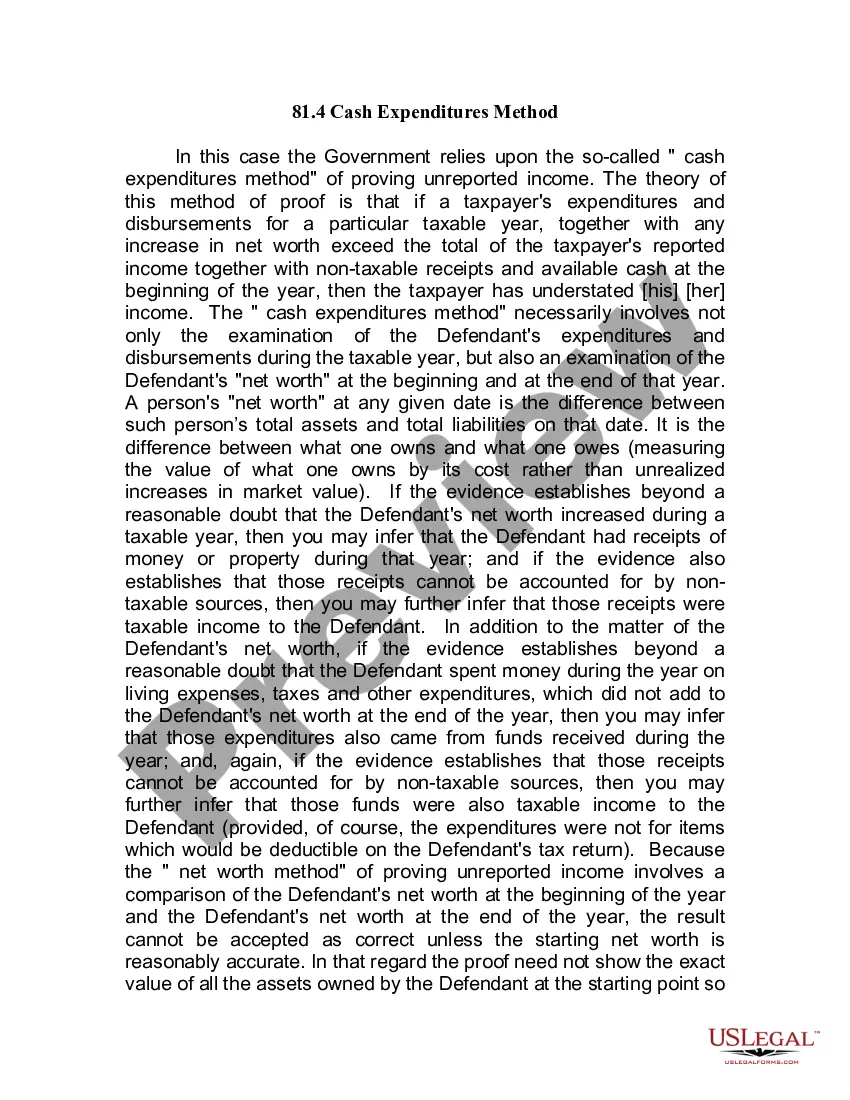
This form provides sample jury instructions specifically related to tax refund suits involving real estate held primarily for sale. It guides jurors in determining whether gains from the sale of such properties can be classified as capital gains or should be taxed as ordinary income. This form is critical in ensuring clarity on tax classification in legal disputes over real estate transactions.
What’s included in this form
- Overview of the capital gains provisions in the Internal Revenue Code.
- Criteria for distinguishing between capital gains and ordinary income taxation.
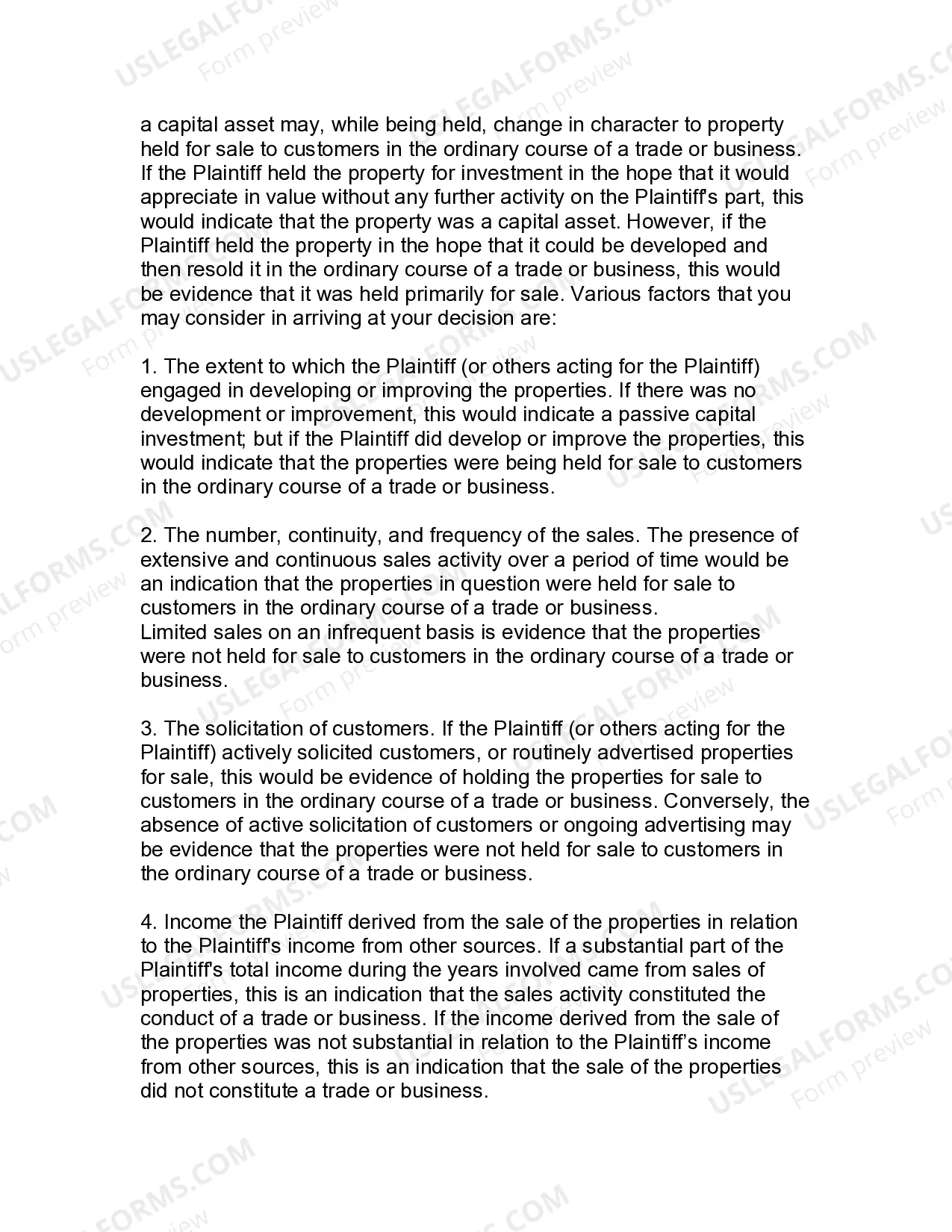
- Factors jurors must consider regarding property ownership and sale intent.
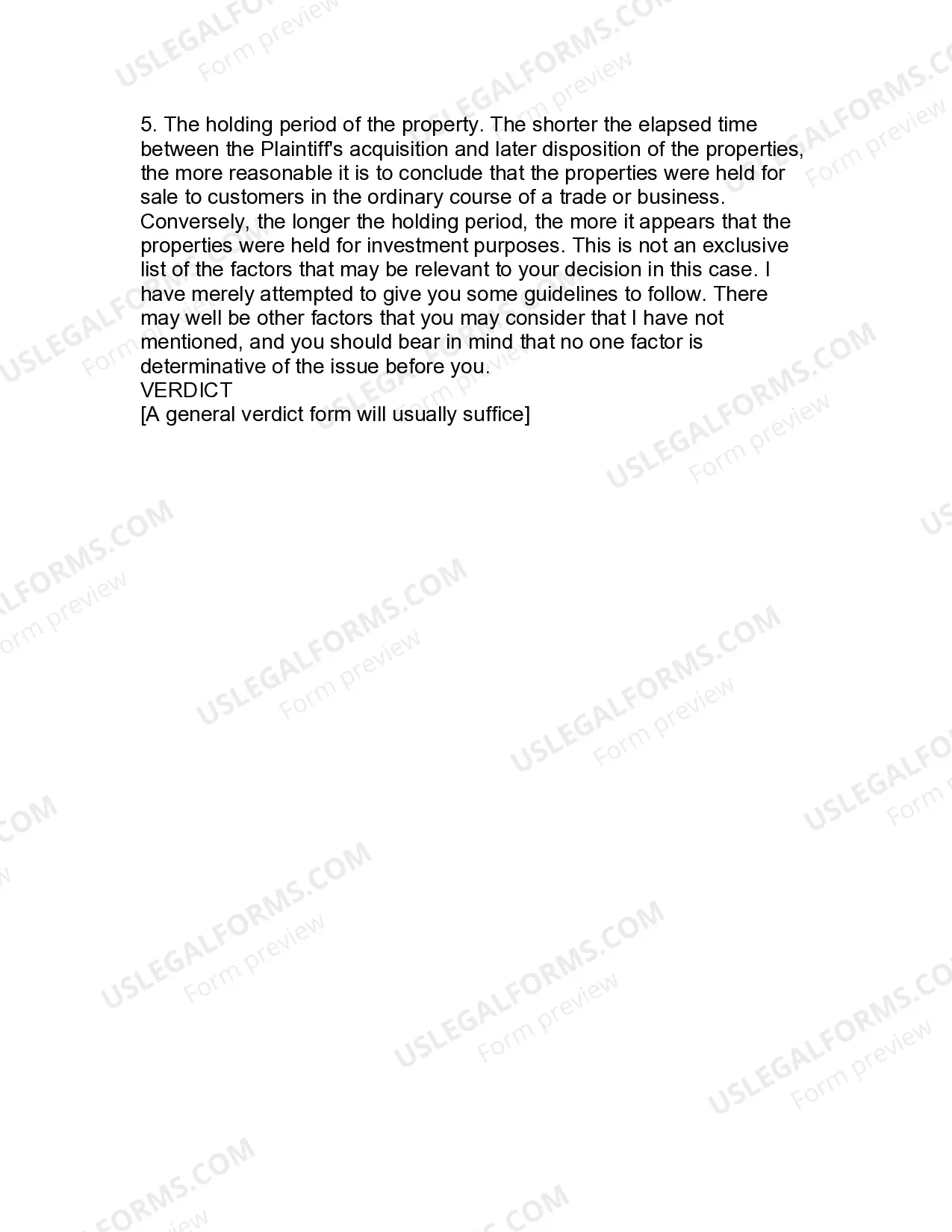
- Guidelines for evaluating the nature of property holdings and sales activity.
- General verdict form prompt to conclude the juryâs decision.

Common use cases
This jury instruction form is useful in cases where the plaintiff has sold real estate and claims the right to treat the profits from the sale as capital gains, which are subject to lower tax rates. It should be used in legal settings where there is a dispute over the classification of gains from such property sales, particularly during tax refund suits.
Who should use this form
- Attorneys representing plaintiffs in tax refund suits involving real estate.
- Jurors tasked with making decisions in cases involving real estate sales and tax implications.
- Legal scholars or students studying real estate and tax law.
How to complete this form
- Review the factual context of the property sales involved in the case.
- Identify whether the properties were held for more than one year prior to the sale.
- Evaluate the intent behind holding the properties at the time of sale.
- Consider all relevant factors that indicate whether the properties were held for investment or sale.
- Discuss and decide as a jury on the classification of the gains obtained from the sale of the properties.
Does this form need to be notarized?
This form does not typically require notarization unless specified by local law. Ensure you confirm the requirements specific to your jurisdiction before proceeding.
Get your form ready online
Our built-in tools help you complete, sign, share, and store your documents in one place.
Make edits, fill in missing information, and update formatting in US Legal Forms—just like you would in MS Word.
Download a copy, print it, send it by email, or mail it via USPS—whatever works best for your next step.
Sign and collect signatures with our SignNow integration. Send to multiple recipients, set reminders, and more. Go Premium to unlock E-Sign.
If this form requires notarization, complete it online through a secure video call—no need to meet a notary in person or wait for an appointment.
We protect your documents and personal data by following strict security and privacy standards.

Make edits, fill in missing information, and update formatting in US Legal Forms—just like you would in MS Word.

Download a copy, print it, send it by email, or mail it via USPS—whatever works best for your next step.

Sign and collect signatures with our SignNow integration. Send to multiple recipients, set reminders, and more. Go Premium to unlock E-Sign.

If this form requires notarization, complete it online through a secure video call—no need to meet a notary in person or wait for an appointment.

We protect your documents and personal data by following strict security and privacy standards.
Avoid these common issues
- Failing to clearly differentiate between capital gains and ordinary income during jury deliberations.
- Overlooking essential factors that may indicate the intent of the property holdings.
- Relying on incomplete evidence or inadequate discussion of the property sales' context.
Benefits of completing this form online
- Convenience of accessing and downloading legal forms at any time.
- Ability to customize sample jury instructions to fit specific case needs.
- Reliability of forms drafted by licensed attorneys, ensuring legal accuracy.
Legal use & context
- This form provides a framework for jury instructions in tax-related cases.
- It helps clarify legal standards applicable under federal tax law.
- Understanding this context ensures juries make informed decisions based on established tax principles.
Quick recap
- The form offers essential guidelines for assessing tax treatment of real estate gains.
- Jurors must evaluate the plaintiffâs intent regarding property use at the time of sale.
- Proper usage can lead to a clearer understanding of complex tax implications for real estate transactions.
Looking for another form?
Form popularity
FAQ
A judgment notwithstanding the verdict (or JNOV) is an order by a judge after a jury has returned its verdict. The judge can overturn the jury's verdict if he or she feels it cannot reasonably be supported by the evidence or if it contradicts itself.
These official Judicial Council Civil Jury Instructions are referred to as "CACI" (pronounced "Kay See"), which stands for California Civil Instructions.
These are civil or criminal jury instructions approved by a state court, bench committee, or bar association. They are commonly used by courts in the relevant jurisdiction, as they ease the process of drafting fair jury instructions and theoretically do not have errors.
The judge instructs the jury about the relevant laws that should guide its deliberations. (In some jurisdictions, the court may instruct the jury at any time after the close of evidence.The judge reads the instructions to the jury. This is commonly referred to as the judge's charge to the jury.
A jury instruction is a guideline given by the judge to the jury about the law they will have to apply to the facts they have found to be true. The purpose of the instructions is to help the jury arrive at a verdict that follows the law of that jurisdiction.
Jury instructions, directions to the jury, or judge's charge are legal rules that jurors should follow when deciding a case.
Westlaw: Jury instructions can be found by going to Secondary Sources link, then selecting jury selections from the options listed on the left side of the page.