Jury Instruction - 3 Credibility Of Witnesses
Understanding this form
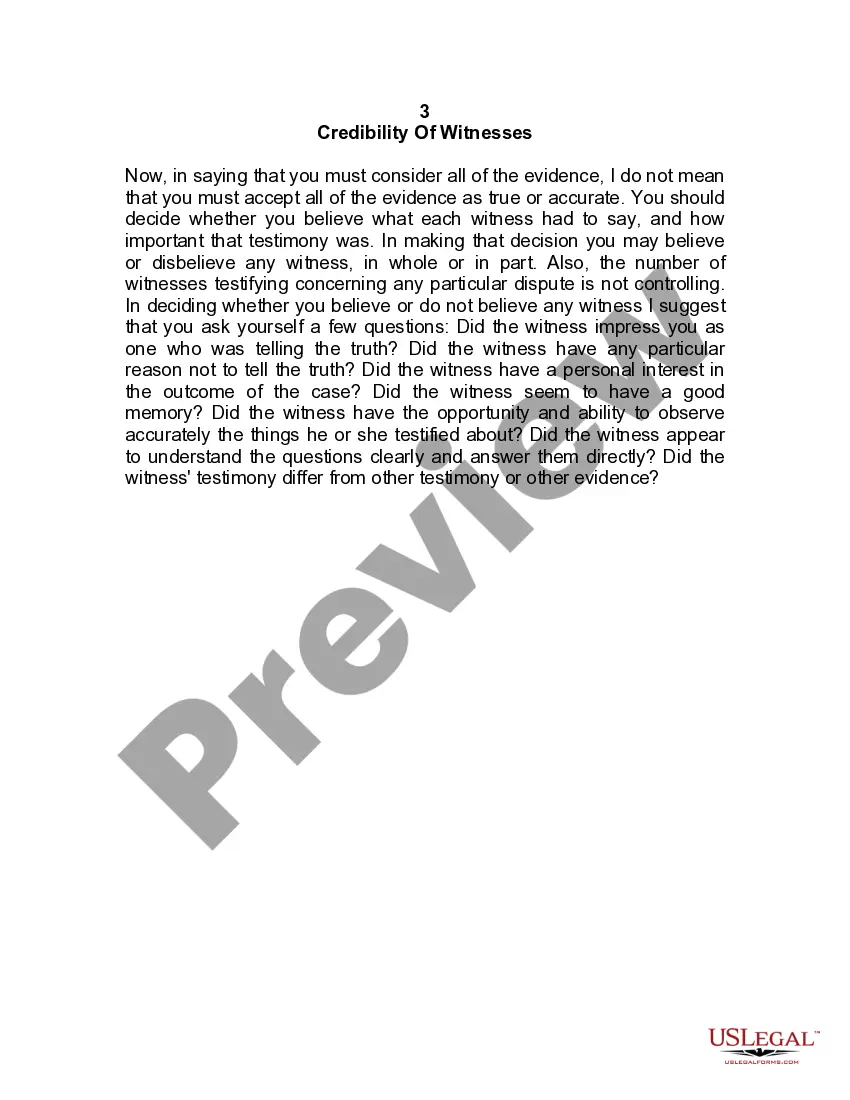
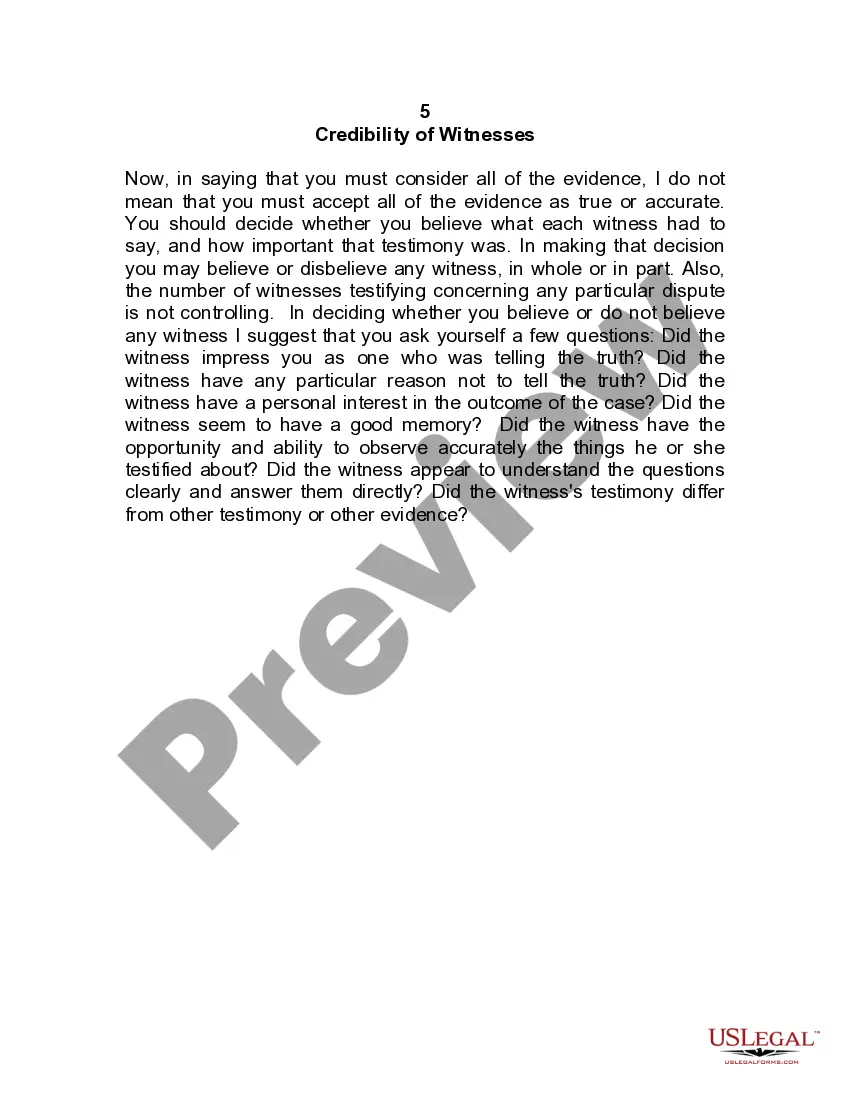
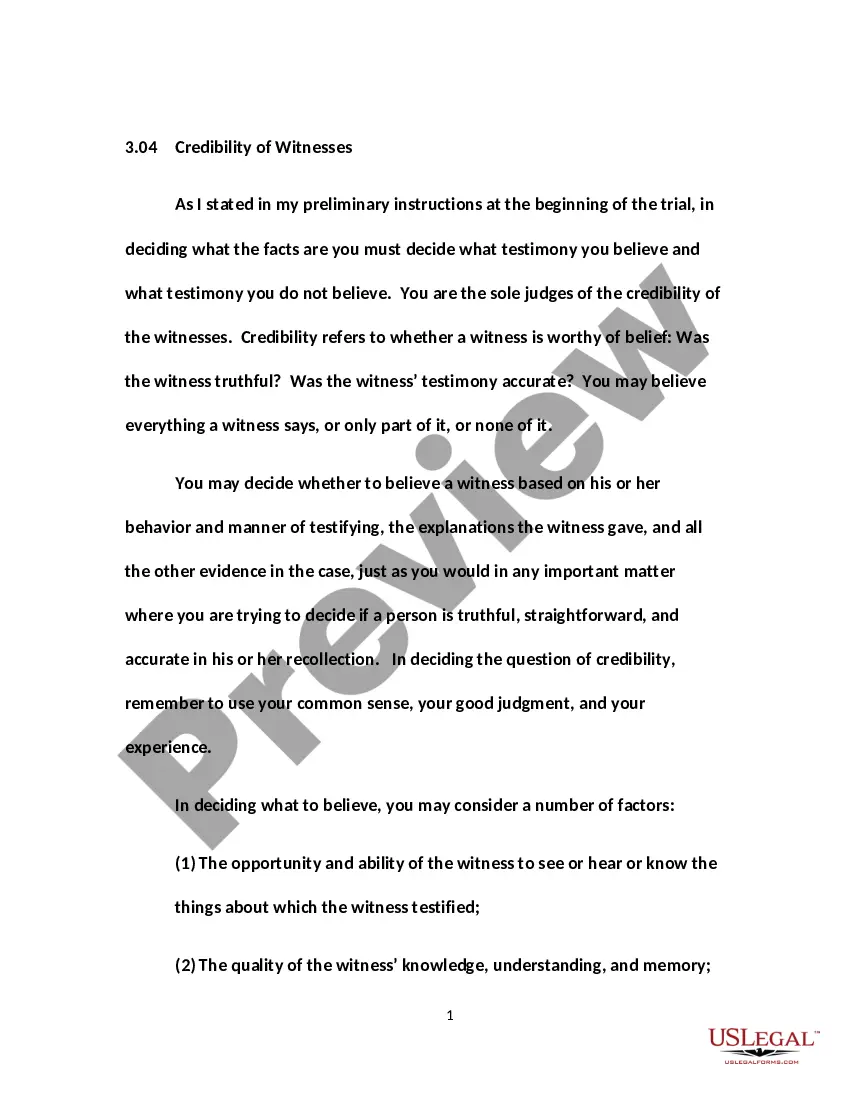
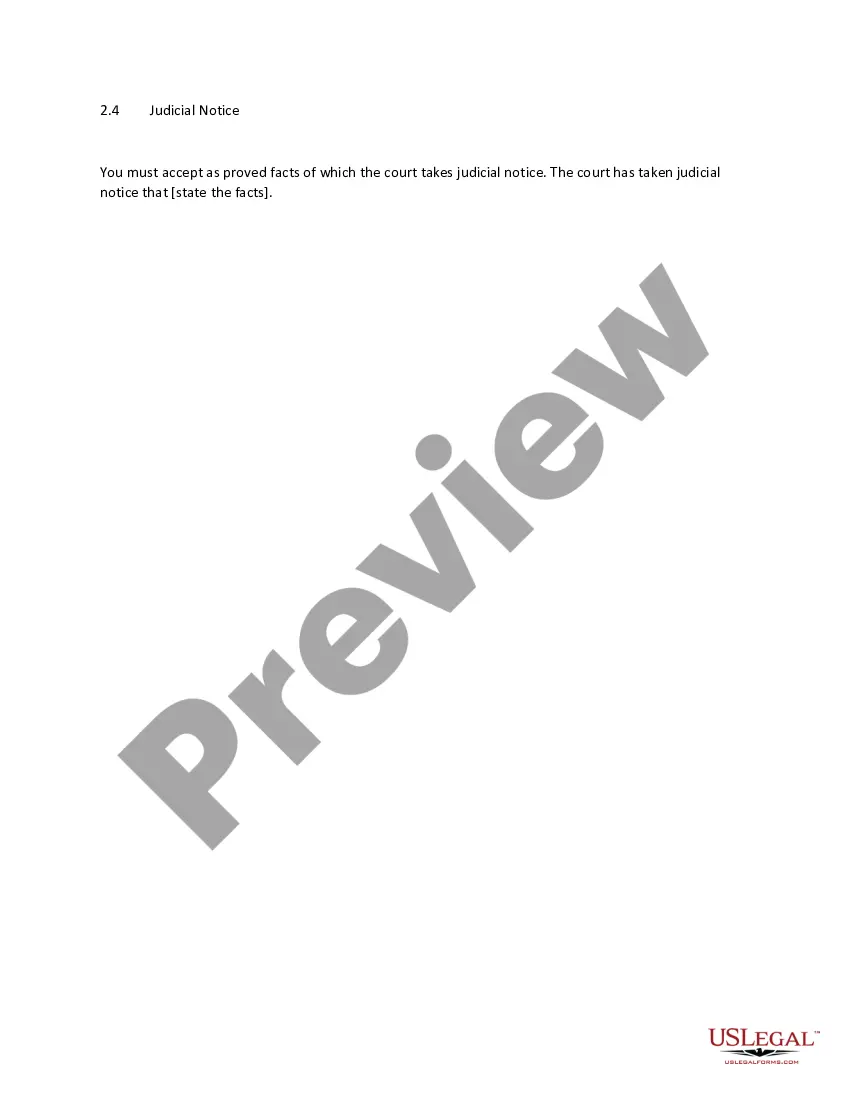
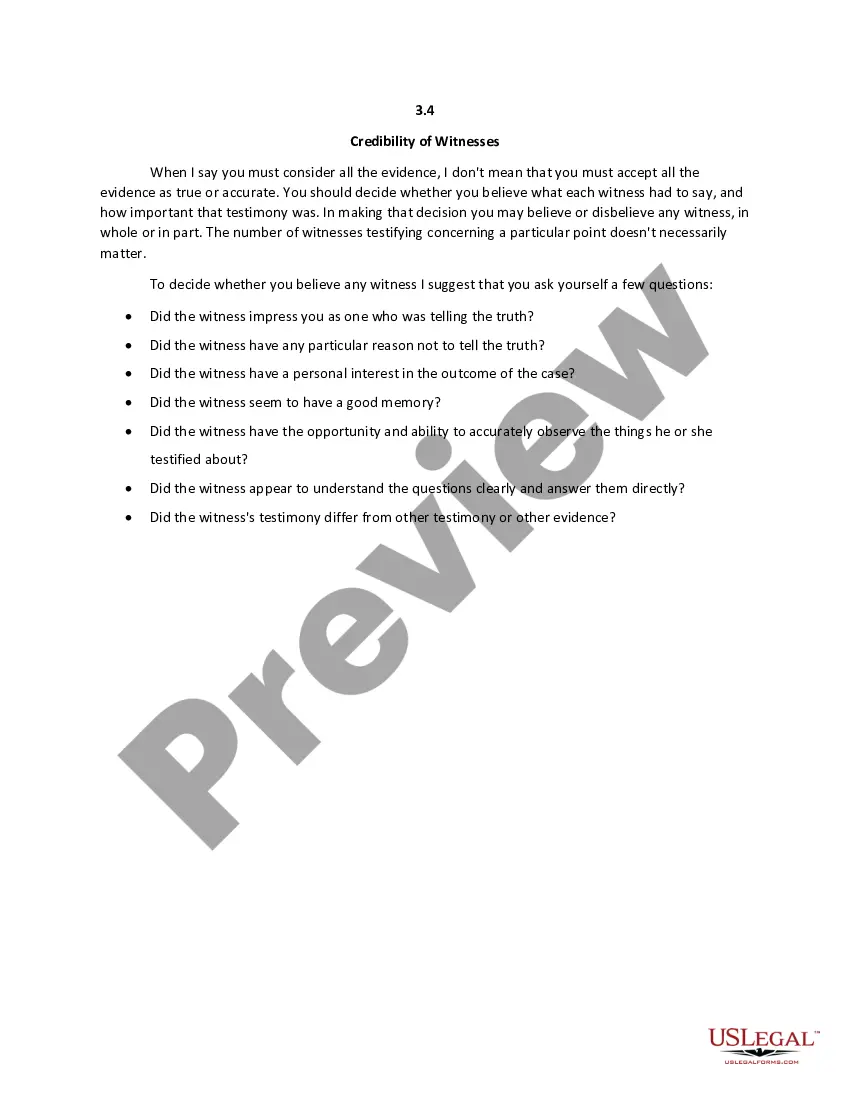
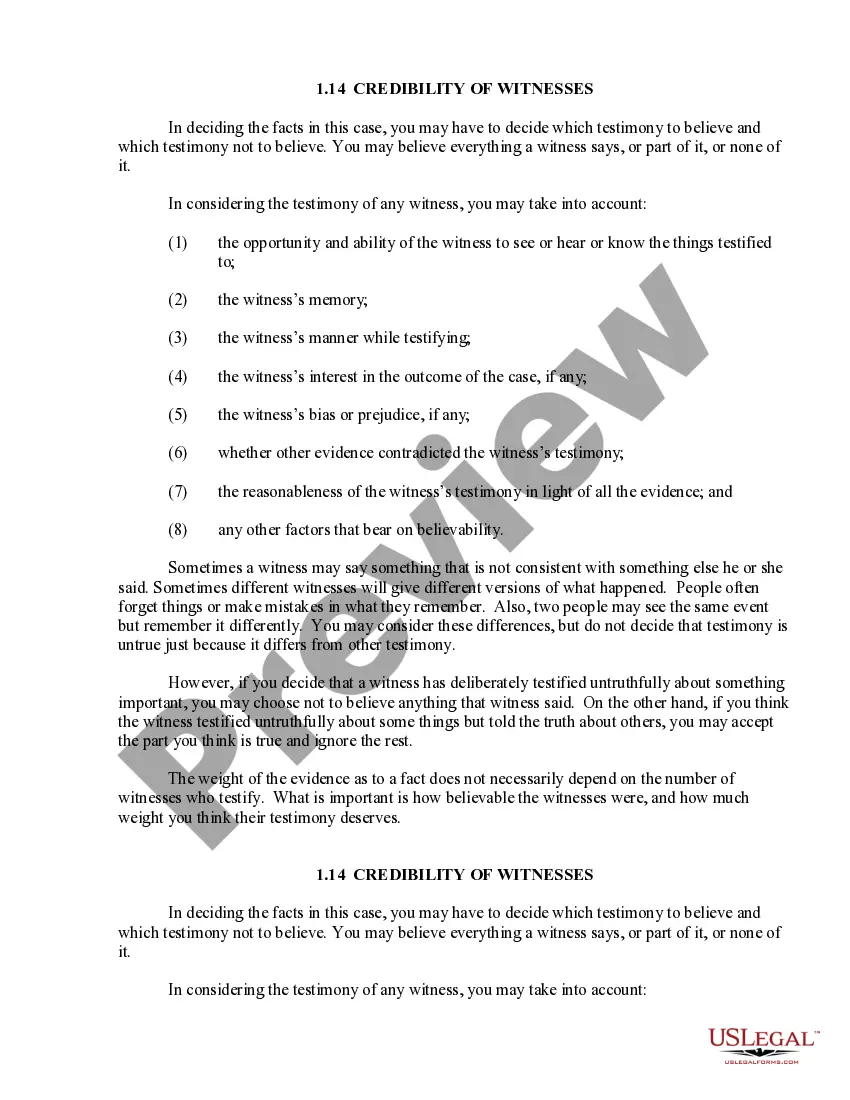
The Jury Instruction - 3 Credibility of Witnesses form provides a framework for juries to evaluate the reliability and truthfulness of witnesses' testimonies during a trial. This form offers standardized questions to help jurors assess evidence objectively and establish the credibility of witnesses. Unlike other legal forms, this document specifically addresses the nuances of witness credibility, ensuring that jurors consider various aspects of testimony before reaching a verdict.
Key components of this form
- Instructions for jurors on evaluating evidence and witness credibility.
- Guidelines on assessing the truthfulness and accuracy of witness statements.
- Suggested questions for jurors to consider when deliberating testimony.
- Clarification that the number of witnesses does not determine credibility.
When to use this form
This form is utilized during jury trials when jurors need to determine the credibility of witnesses based on their testimonies. It is especially important in cases where conflicting accounts are presented, allowing jurors to navigate their deliberations more effectively. This form can be referenced during civil or criminal trials to help evaluate the integrity of witness contributions.
Who can use this document
This form is intended for:
- Judges who need to provide jury instructions related to witness credibility.
- Attorneys involved in trial cases where witness testimony is critical.
- Juries in civil or criminal trials that require guidelines for evaluating evidence.
Instructions for completing this form
- Review the form and understand the provided jury instructions related to witness credibility.
- Customize the sample questions to align with the specific circumstances of the trial.
- Ensure that all jurors receive the same instructions to maintain consistency during deliberations.
- Distribute the completed form to the jury at the appropriate time in the trial process.
Notarization requirements for this form
This form does not typically require notarization to be legally valid. However, some jurisdictions or document types may still require it. US Legal Forms provides secure online notarization powered by Notarize, available 24/7 for added convenience.
Get your form ready online
Our built-in tools help you complete, sign, share, and store your documents in one place.
Make edits, fill in missing information, and update formatting in US Legal Forms—just like you would in MS Word.
Download a copy, print it, send it by email, or mail it via USPS—whatever works best for your next step.
Sign and collect signatures with our SignNow integration. Send to multiple recipients, set reminders, and more. Go Premium to unlock E-Sign.
If this form requires notarization, complete it online through a secure video call—no need to meet a notary in person or wait for an appointment.
We protect your documents and personal data by following strict security and privacy standards.

Make edits, fill in missing information, and update formatting in US Legal Forms—just like you would in MS Word.

Download a copy, print it, send it by email, or mail it via USPS—whatever works best for your next step.

Sign and collect signatures with our SignNow integration. Send to multiple recipients, set reminders, and more. Go Premium to unlock E-Sign.

If this form requires notarization, complete it online through a secure video call—no need to meet a notary in person or wait for an appointment.

We protect your documents and personal data by following strict security and privacy standards.
Common mistakes
- Failing to adapt the instructions to the specific particulars of the case.
- Overlooking the need to explain why the number of witnesses does not define credibility.
- Not providing sufficient context or background information for jurors.
Benefits of completing this form online
- Convenience of accessing the form anytime, reducing the need for physical paperwork.
- Editability allows customization to suit specific case details.
- Reliability of having a template drafted by licensed attorneys to guide jurors accurately.
Legal use & context
This form is legally recognized as a support tool in jury trials, helping to ensure that jurors receive clear guidance on assessing witness credibility. Its use can contribute to fair trial outcomes by providing consistent instructions.
Looking for another form?








Form popularity
FAQ
A competent witness is one who has the sufficient mental capacity to perceive, remember, and narrate the incident he or she has observed. A competent witness must also be able to understand and appreciate the nature and obligation of an oath.A witness is generally presumed by the court to be competent.
There is no mandatory requirement that the witness have to testify his good standing in the community, reputation for trustworthiness and reliableness, honesty and uprightness in order that his testimony may be believed and accepted by the trial court.
So, again, the way to discredit a witness is to bring up prior inconsistent statements that they made. The way to discredit a witness is to call other witness or cross-examine other witnesses and bring up key points about your main witness's testimony and impeach them through over witness statements.
A lay witness the most common type is a person who watched certain events and describes what they saw. An expert witness is a specialist someone who is educated in a certain area. A character witness is someone who knew the victim, the defendant, or other people involved in the case.
In the United States, such a witness is "more than likely to be true based on his/her experience, knowledge, training and appearance of honesty and forthrightness...." Some factors for determining the credibility of testimony in U.S. courts include: (1) the witness had personal knowledge, (2) he or she was actually
Prior inconsistent statements/conduct. Character evidence. Case-specific impeachment. Consider when to impeach.
He must, with understanding, take the oath or a substitute. Evid. He must have personal knowledge about the subject of his testimony. He must remember what he perceived. He must be able to communicate what he perceived.
Child witnesses As per Section 118 of the Evidence Act, any person is competent to be a witness unless the Court thinks that he cannot answer the questions being put to him. Furthermore, a child can be easily framed to answer the questions. The factor of age is a reasonable restriction on this.