Jury Instruction - 1.3 Medical Malpractice Claim Against Hospital And Physician Statute Of Limitations Defense
About this form
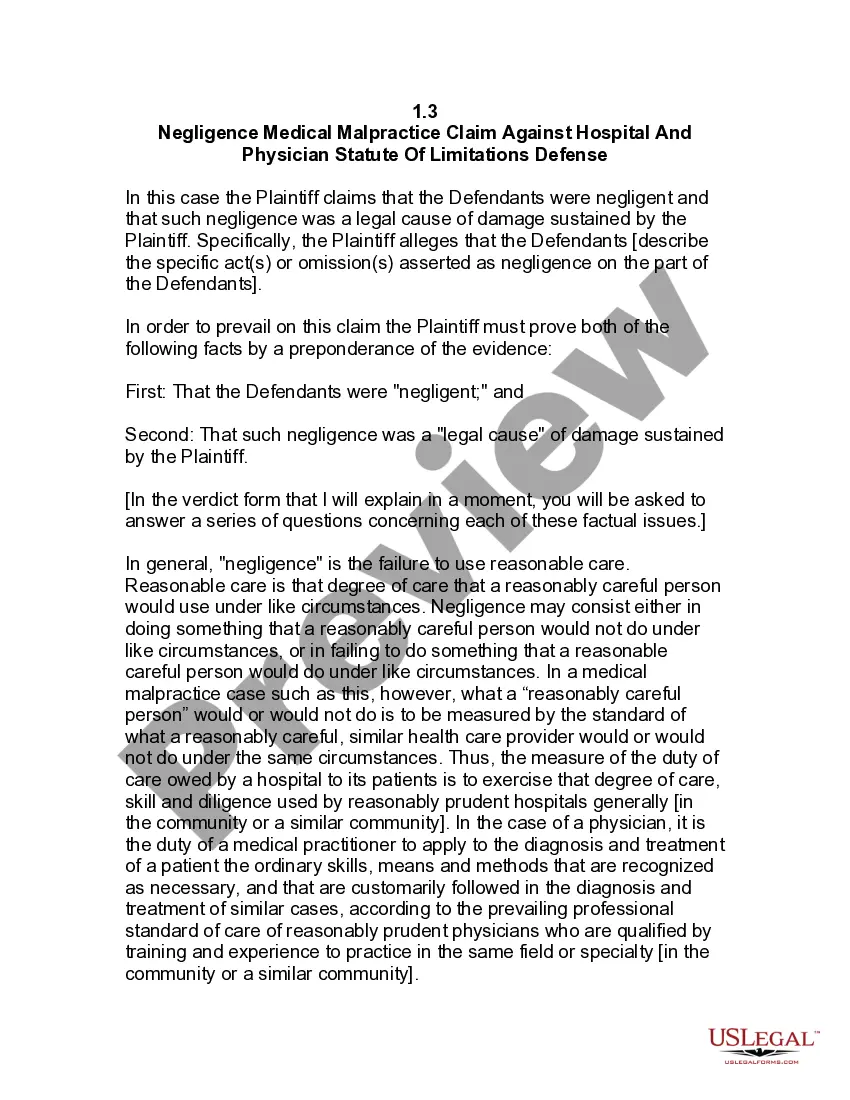
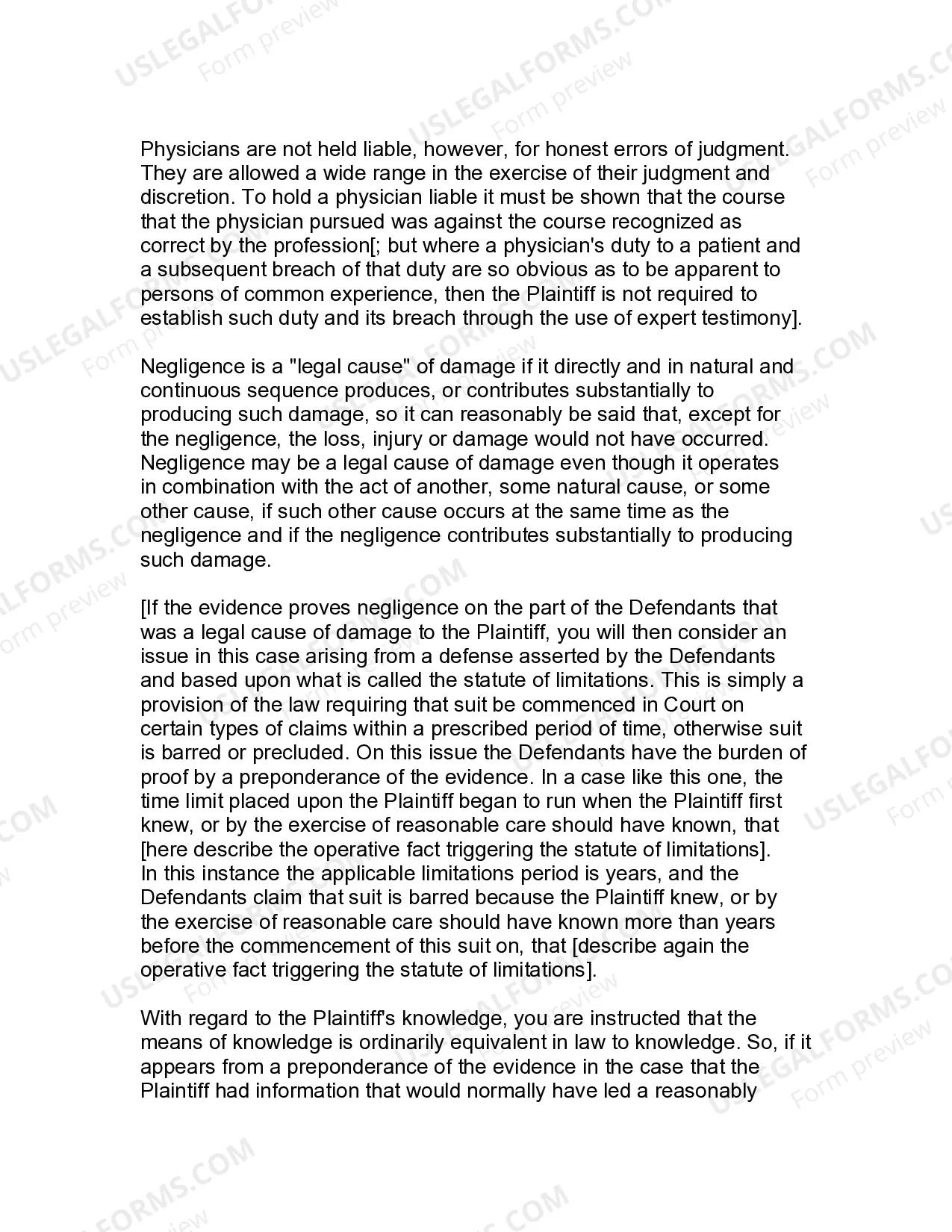
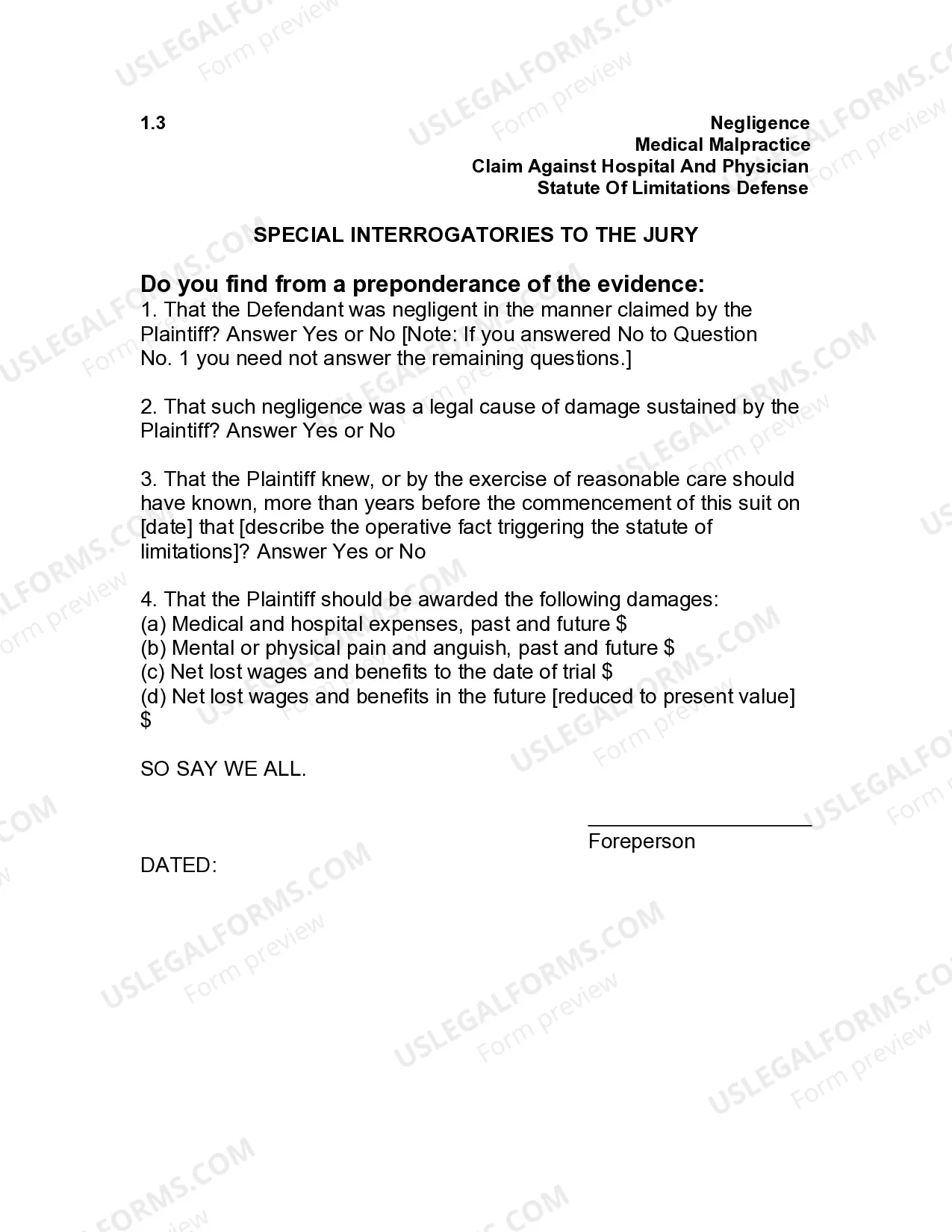
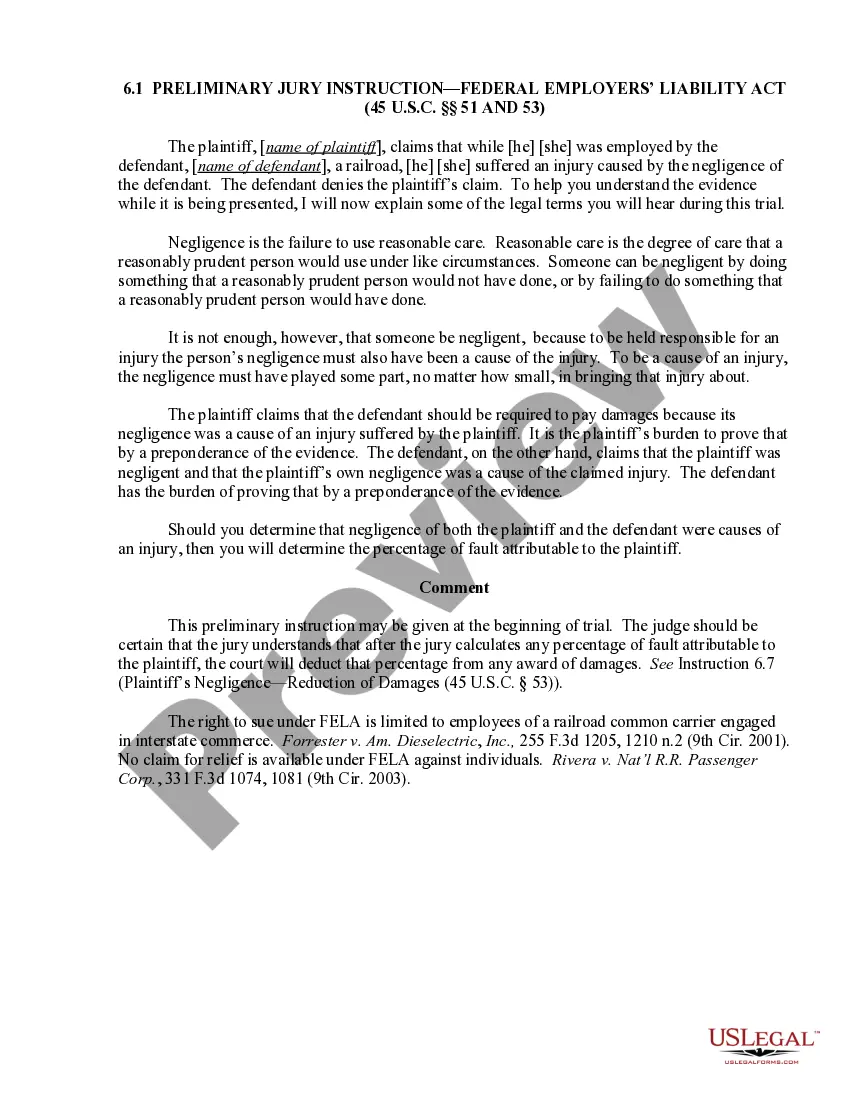
The Jury Instruction - Medical Malpractice Claim Against Hospital and Physician Statute of Limitations Defense is a legal document designed to provide jurors with clear guidelines on how to evaluate evidence in medical malpractice cases. This form outlines the responsibilities of the plaintiff and the defendants, focusing on allegations of negligence by healthcare providers. Unlike standard jury instructions, this form includes specific references to the statute of limitations applicable to medical malpractice claims, making it essential for ensuring that jurors understand the legal context in which they are making their decisions.
Form components explained
- Definitions of negligence and reasonable care in the context of medical malpractice.
- Criteria that the plaintiff must satisfy to prove negligence and legal causation.
- Explanation of the statute of limitations and how it affects the plaintiff's claims.
- Special interrogatories for jurors to assess the evidence and determine liability.
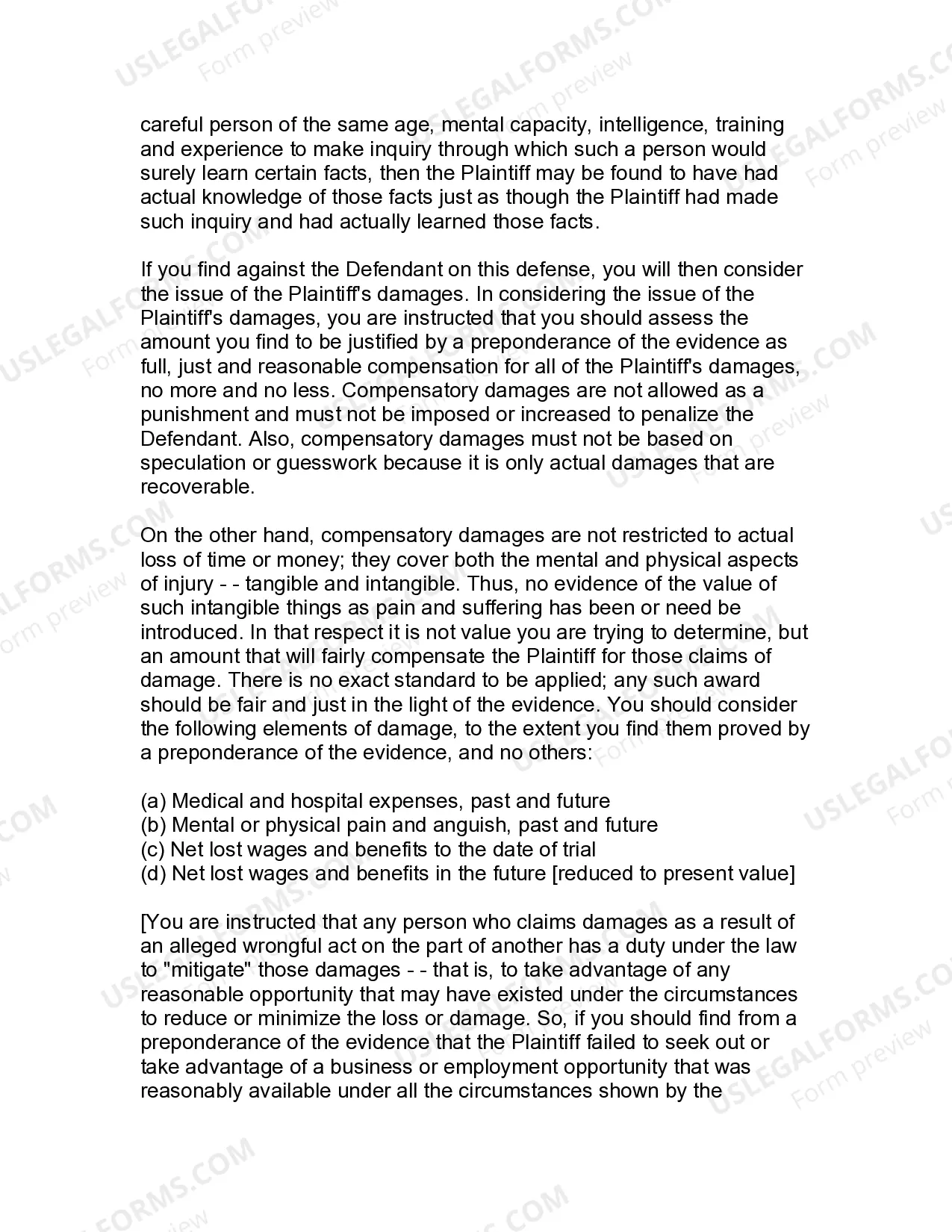
- Guidance on calculating compensatory damages based on the plaintiffâs injuries.



When to use this document
This form should be used in cases where the plaintiff alleges medical malpractice against a hospital or physician due to negligence. It is particularly relevant when the defense asserts that the claim is barred by the statute of limitations. You will need this form to instruct a jury on how to interpret evidence related to both negligence and time limits on filing a claim.
Who needs this form
- Attorneys representing plaintiffs in medical malpractice lawsuits.
- Defense lawyers who need to provide jury instructions regarding statute of limitations defenses.
- Court administrators and judges overseeing medical malpractice trials.
Steps to complete this form
- Clearly define the parties involved in the case.
- Detail the allegations of negligence and the specific actions or omissions of the defendants.
- Specify the date when the plaintiff became aware of the facts triggering the statute of limitations.
- Outline the damages being claimed by the plaintiff, including both economic and non-economic losses.
- Ensure that all instructions and special interrogatories are clearly presented for juror consideration.
Does this document require notarization?
This form does not typically require notarization unless specified by local law. Ensure to check your jurisdiction's regulations for any specific requirements related to notarization for legal documents in medical malpractice cases.
Get your form ready online
Our built-in tools help you complete, sign, share, and store your documents in one place.
Make edits, fill in missing information, and update formatting in US Legal Forms—just like you would in MS Word.
Download a copy, print it, send it by email, or mail it via USPS—whatever works best for your next step.
Sign and collect signatures with our SignNow integration. Send to multiple recipients, set reminders, and more. Go Premium to unlock E-Sign.
If this form requires notarization, complete it online through a secure video call—no need to meet a notary in person or wait for an appointment.
We protect your documents and personal data by following strict security and privacy standards.

Make edits, fill in missing information, and update formatting in US Legal Forms—just like you would in MS Word.

Download a copy, print it, send it by email, or mail it via USPS—whatever works best for your next step.

Sign and collect signatures with our SignNow integration. Send to multiple recipients, set reminders, and more. Go Premium to unlock E-Sign.

If this form requires notarization, complete it online through a secure video call—no need to meet a notary in person or wait for an appointment.

We protect your documents and personal data by following strict security and privacy standards.
Avoid these common issues
- Failing to accurately define what constitutes negligence in the context of medical practice.
- Neglecting to clarify the specific statute of limitations applicable to the case.
- Overlooking the need for clear instructions on the standard of care expected from medical professionals.
- Providing jurors with ambiguous or overly complex language that may lead to confusion.
Advantages of online completion
- Convenient access to legal forms tailored for your needs.
- Editability allows for modification to suit specific cases or jurisdictions.
- Reliable templates drafted by licensed attorneys to ensure accuracy and legal compliance.
- Time-saving access to resources without the need for a legal consultation.
Legal use & context
The Jury Instruction - Medical Malpractice Claim Against Hospital and Physician Statute of Limitations Defense is legally binding when properly completed and utilized in court. It is essential for ensuring that all parties involved in the case clearly understand the expectations of the jury regarding negligence, legal causation, and the implications of the statute of limitations.
What to keep in mind
- This form provides essential instructions for jurors in medical malpractice cases.
- It includes specific guidelines on negligence and the statute of limitations.
- Proper use of this form can significantly impact the outcome of a case.
- Ensure clarity and compliance with local laws concerning medical malpractice claims.
Looking for another form?








Form popularity
FAQ
In the case of defective medical equipment or products a claim must also be made within 10 years of that product going into circulation. This cannot be extended. Time limits are always on a case by case basis.
Medical malpractice lawsuits, like all civil cases, can only be brought within a certain period of time. The short answer is, yes, you can, since most states give you two to three years to bring a claim after malpractice occurs.
In general, there is a two year statute of limitations for medical malpractice claims in Texas. This means that a medical malpractice suit must be filed no later than two years after the negligent act or omission occurred, or it is barred by the statute of limitations and cannot be brought.
Every medical malpractice case is subject to a statute of limitations a period of time in which a plaintiff is allowed to file his or her claim in court. Depending upon the type of case and state where the lawsuit is being filed, this time limit can be as short as a year or two, or as long as ten years.
The California medical malpractice statute of limitations limits potential plaintiffs to filing no later than 3 years after their injury. They may also file for up to 1 year after they discover the injury. It's imperative to file a medical malpractice lawsuit as soon as possible after learning of the injury.
What are the best defenses against a malpractice suit? Prevention and good communication between provider and patient are the best defenses against malpractice.
The short answer is, yes, you can, since most states give you two to three years to bring a claim after malpractice occurs. The longer answer is, it depends on the type of injury and the state in which the claim is brought.
Any personal injury lawyer will tell you that a claimant has only 3 years to bring a claim to court.A case recently reported by the Medical Protection Society (source) proves that a claim can be made some 20 years after the medical negligence occurred.
Standard Negligence Defenses. Contributory Negligence. Respectable Minority Principle. Good Samaritan Laws. Statute of Limitations. Additional Resources.