Sample Letter for Letter transmitting Summons by Publication
What this document covers
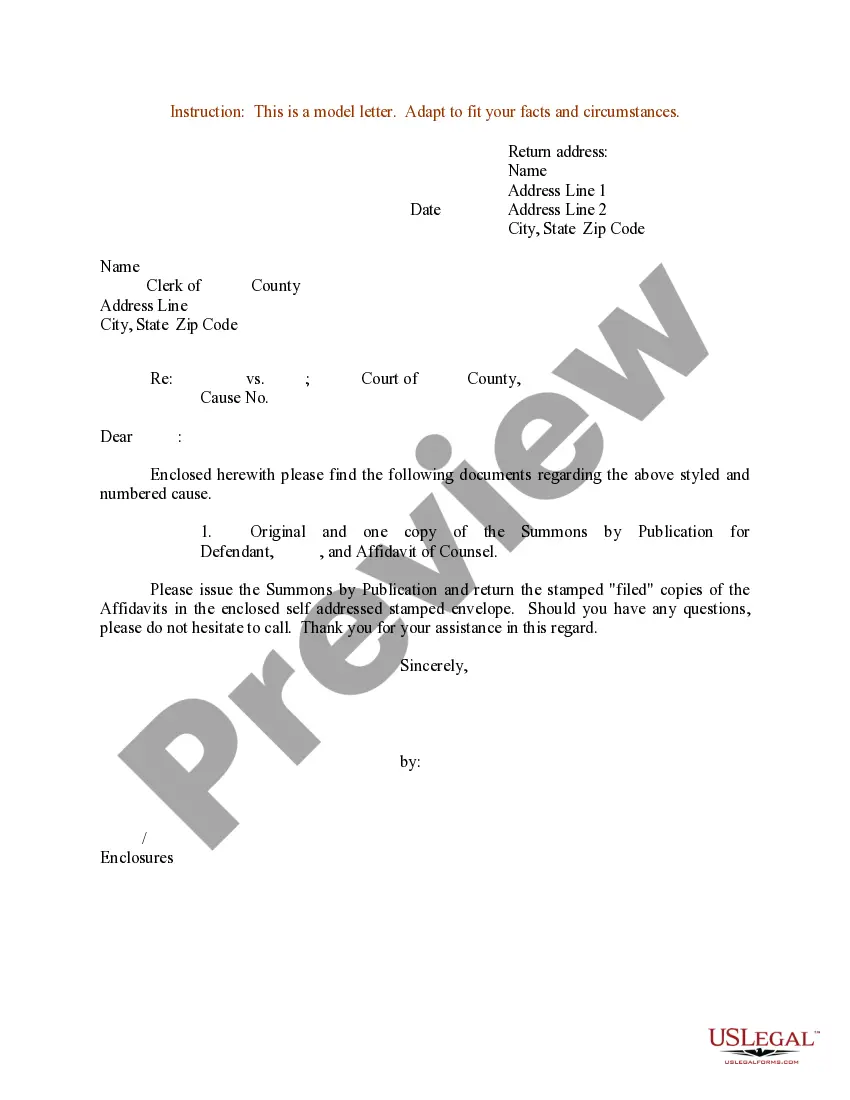
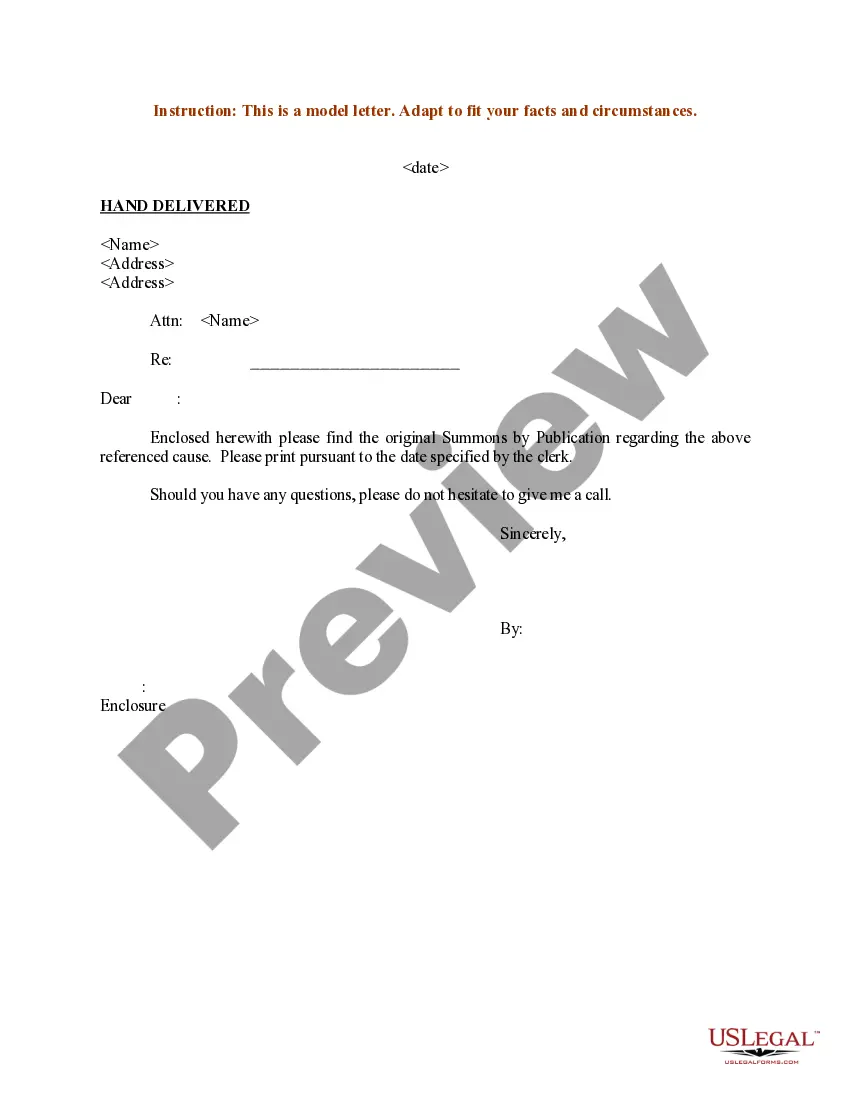
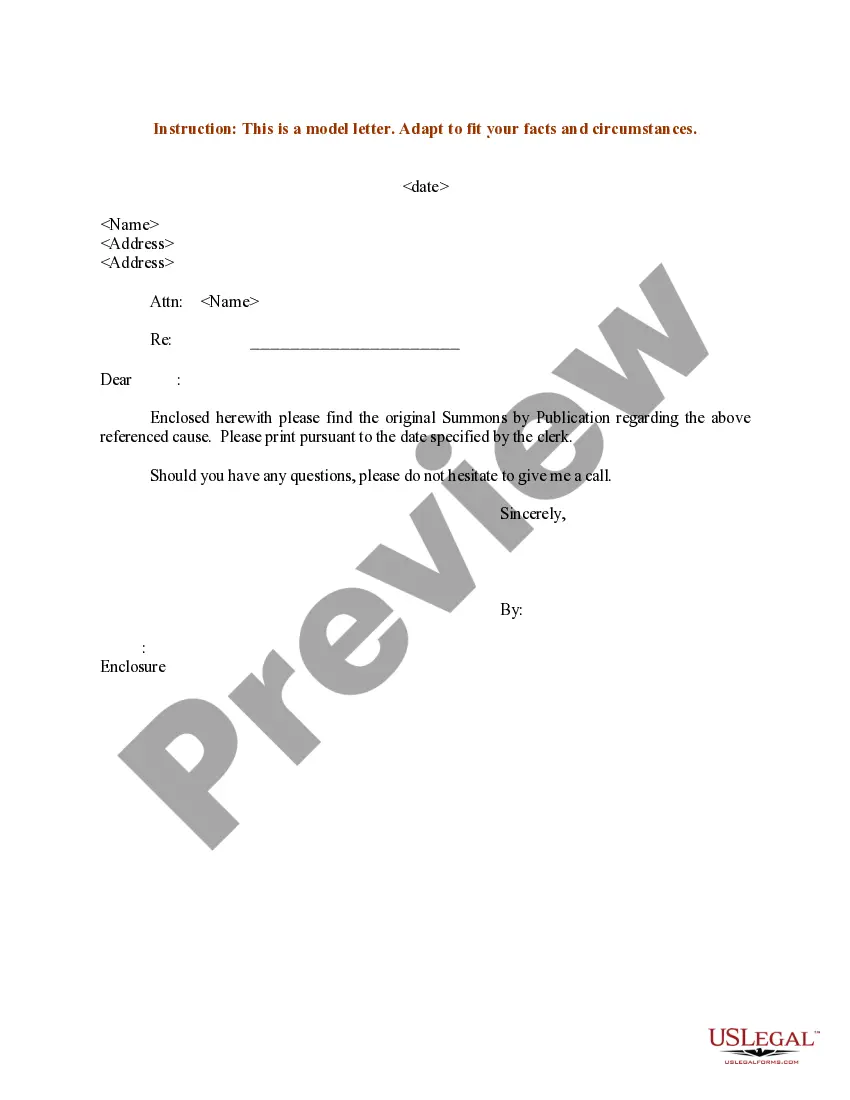
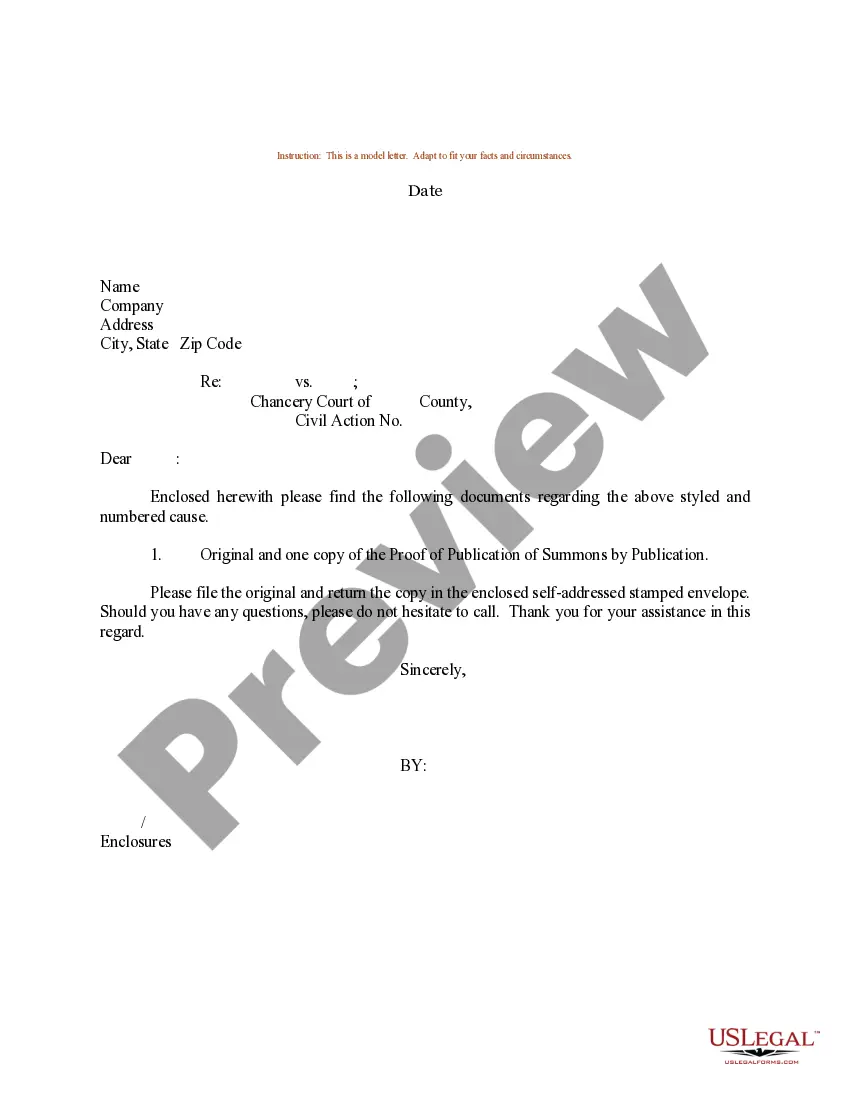
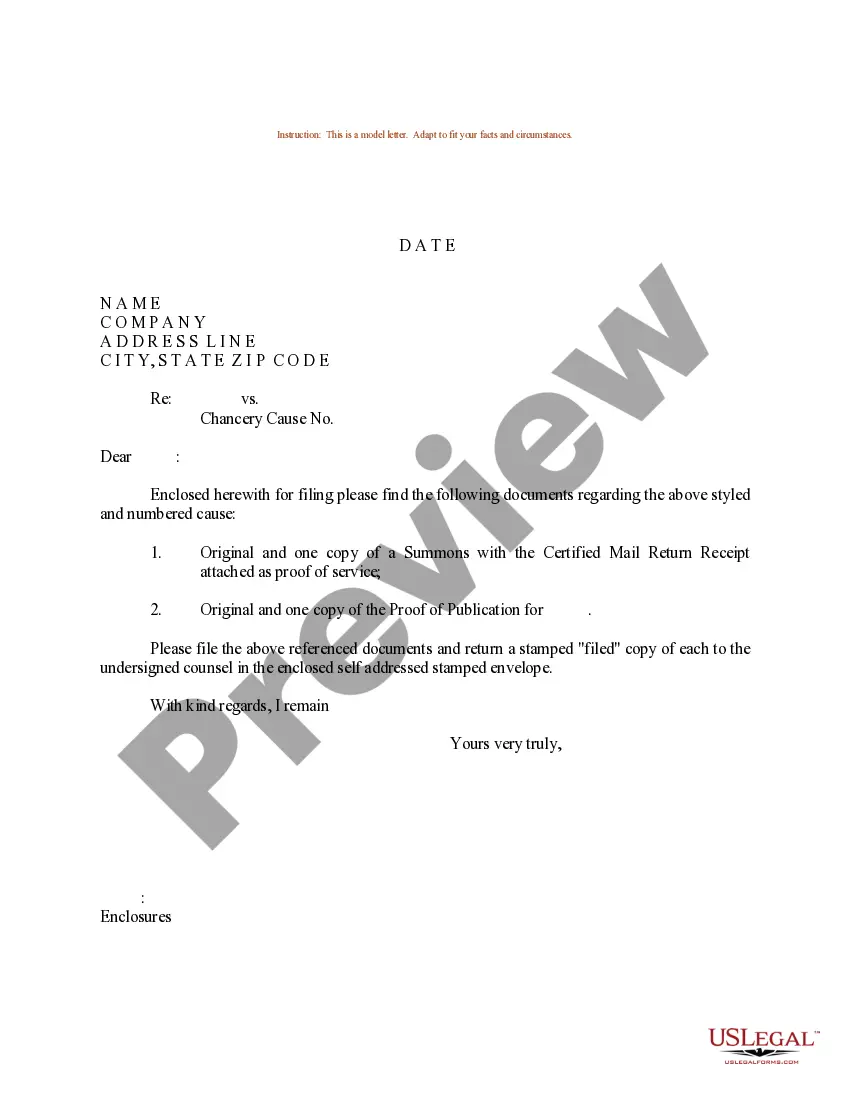
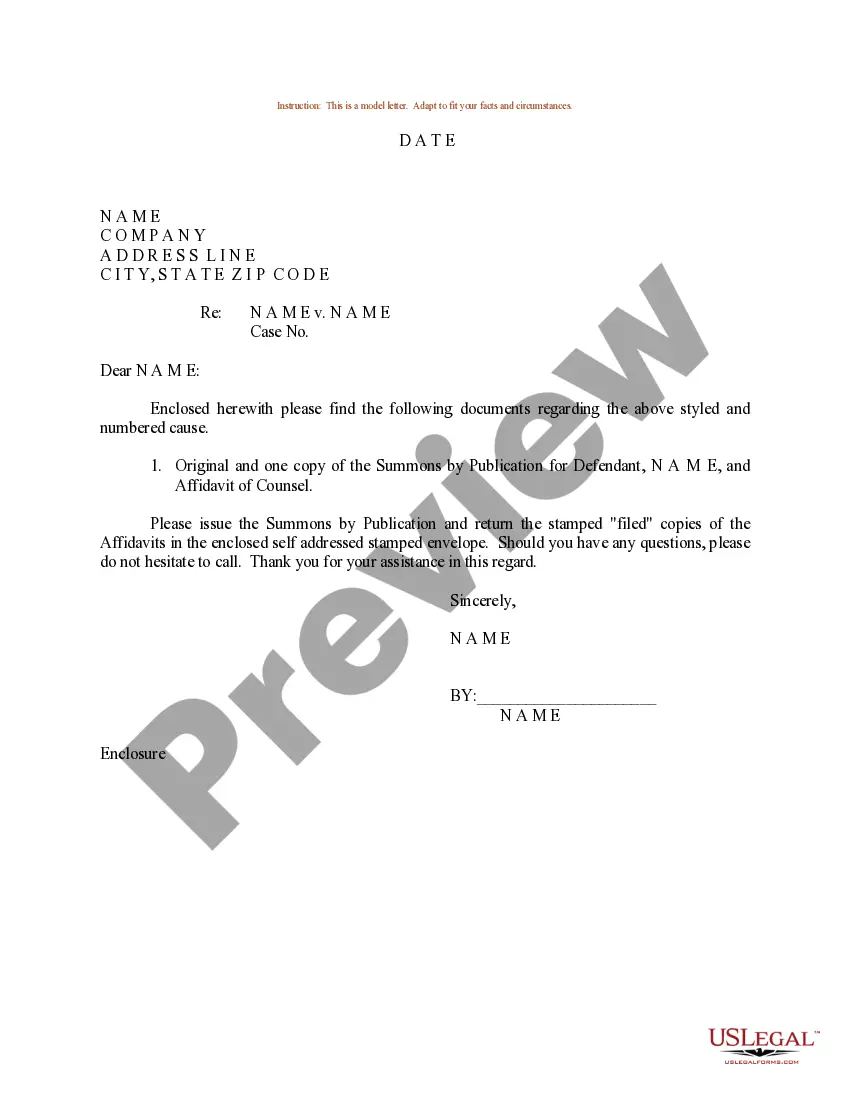
This form is a sample letter for transmitting a summons by publication, specifically designed to comply with legal requirements for notifying a defendant through public notice. The letter serves as a formal introduction to the notice, ensuring that all necessary information is conveyed adequately. Unlike general correspondence, this document adheres to specific legal standards that may vary by jurisdiction, making it essential for proper legal communication.
Main sections of this form
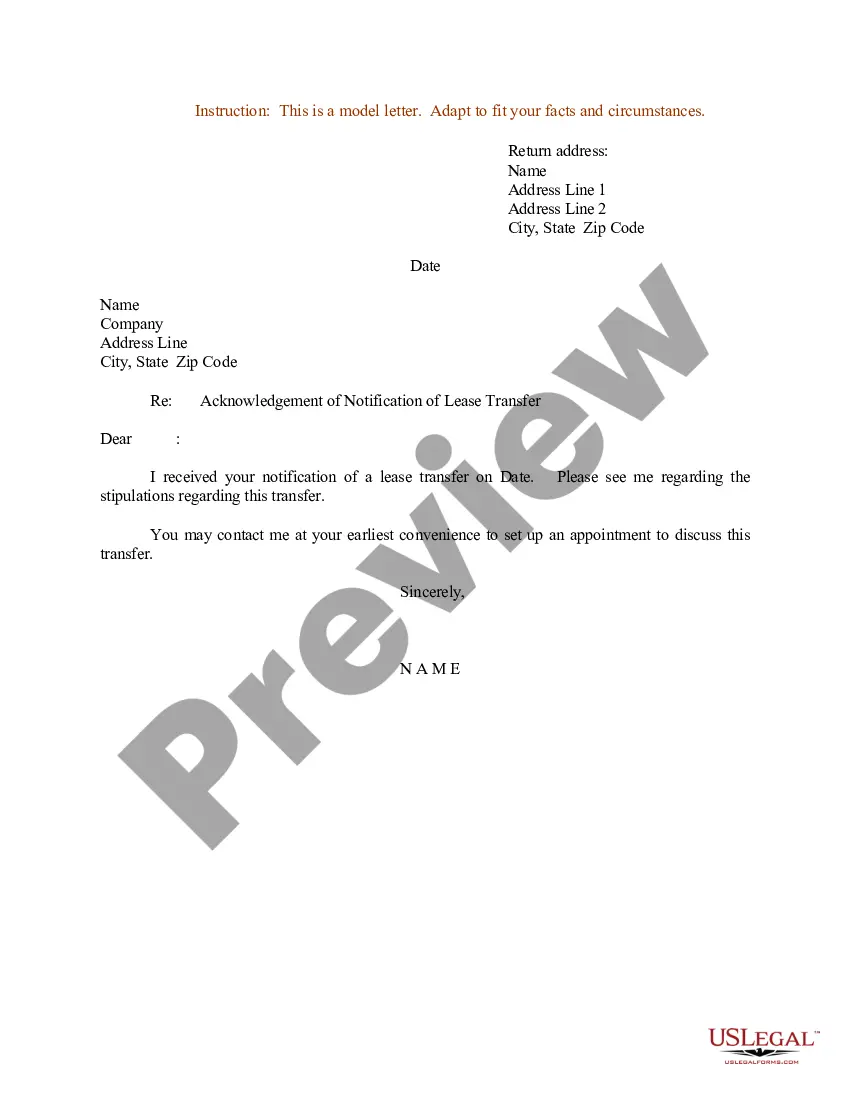
- Return address: Includes the sender's name and address, which is crucial for legal correspondence.
- Date: The date the letter is prepared, indicating when the notice is sent.
- Recipient's name: The name of the party receiving the summons, ensuring proper delivery.
When to use this form
This letter should be used in situations where a defendant cannot be located for a legal action, and the court permits notification via publication. It is particularly relevant for foreclosure actions, divorce proceedings, or any cases requiring service of process when traditional methods are not viable.
Intended users of this form
- Attorneys representing clients in legal proceedings.
- Individuals filing for a divorce or other family law matters when a spouse cannot be served personally.
- Property owners seeking to initiate foreclosure proceedings.
Steps to complete this form
- Identify the parties: Enter the return address and recipient's name accurately.
- Enter the date: Specify the date when the letter is issued.
- Format the letter properly: Ensure the layout follows professional business letter standards.
Notarization guidance
Notarization is generally not required for this form. However, certain states or situations might demand it. You can complete notarization online through US Legal Forms, powered by Notarize, using a verified video call available anytime.
Get your form ready online
Our built-in tools help you complete, sign, share, and store your documents in one place.
Make edits, fill in missing information, and update formatting in US Legal Forms—just like you would in MS Word.
Download a copy, print it, send it by email, or mail it via USPS—whatever works best for your next step.
Sign and collect signatures with our SignNow integration. Send to multiple recipients, set reminders, and more. Go Premium to unlock E-Sign.
If this form requires notarization, complete it online through a secure video call—no need to meet a notary in person or wait for an appointment.
We protect your documents and personal data by following strict security and privacy standards.

Make edits, fill in missing information, and update formatting in US Legal Forms—just like you would in MS Word.

Download a copy, print it, send it by email, or mail it via USPS—whatever works best for your next step.

Sign and collect signatures with our SignNow integration. Send to multiple recipients, set reminders, and more. Go Premium to unlock E-Sign.

If this form requires notarization, complete it online through a secure video call—no need to meet a notary in person or wait for an appointment.

We protect your documents and personal data by following strict security and privacy standards.
Common mistakes
- Failing to include the proper return address or contact information.
- Missing the date or incorrect dating of the letter.
- Not following specific state formatting or language requirements.
Why use this form online
- Convenience: Downloadable format allows for easy access and modification.
- Editability: Customize the letter to suit the specific circumstances of your case.
- Reliability: Documents are created with input from licensed attorneys, ensuring legal soundness.
Main things to remember
- The sample letter for transmitting a summons by publication is crucial for notifying defendants whose locations are unknown.
- Ensure all fields are accurately filled out to avoid delays in legal proceedings.
- Understand local regulations regarding notice publication to ensure compliance.
Looking for another form?


Form popularity
FAQ
A good letter of transmittal example is usually very short.Generally, a letter of transmittal is for: Explaining or clarifying your requirements or instructions regarding the document or item it is attached to. Accompanying contracts or drafts of documents which are being sent over, either for review or for approval.
Make sure to tell the recipient what you are sending and why you are sending the document. Make a summary of all the key aspects and the purpose of the document. Add in any and all special information which would aid in the understanding of the recipient.
A letter or memo of transmittal conveys the report to the person requesting it, or the primary audience for the report. It provides a context for reading the report. Unlike the report proper, a letter of transmittal may use I and be less formal in tone than the rest of the report.
Include heading with the date and recipient's address. Include a heading with your full name and company address, located in the top left corner of the page. Greet the recipient appropriately. Write the letter body. Include a short closing paragraph.
A transmittal or cover letter accompanies a larger item, usually a document. The transmittal letter provides the recipient with a specific context in which to place the larger document and simultaneously gives the sender a permanent record of having sent the material.
The main purpose of a transmittal is to document the sending of documents, files, or samples.
A Transmittal Letter is a business letter and is formatted accordingly, it should include the recipient's address, sender's address, distribution list, a salutation and closing. It typically includes why it should receive the reader's consideration, and what the reader should do with it.
A transmittal letter is a brief business letter sent along with another type of communication, such as a longer document like a proposal, a response to an inquiry or a payment. It provides a way to let the recipient understands what is being sent, why they received it, and who it is from.
Include heading with the date and recipient's address. Include a heading with your full name and company address, located in the top left corner of the page. Greet the recipient appropriately. Write the letter body. Include a short closing paragraph.