Sample Letter for Legal Representation - Worker's Compensation
Understanding this form
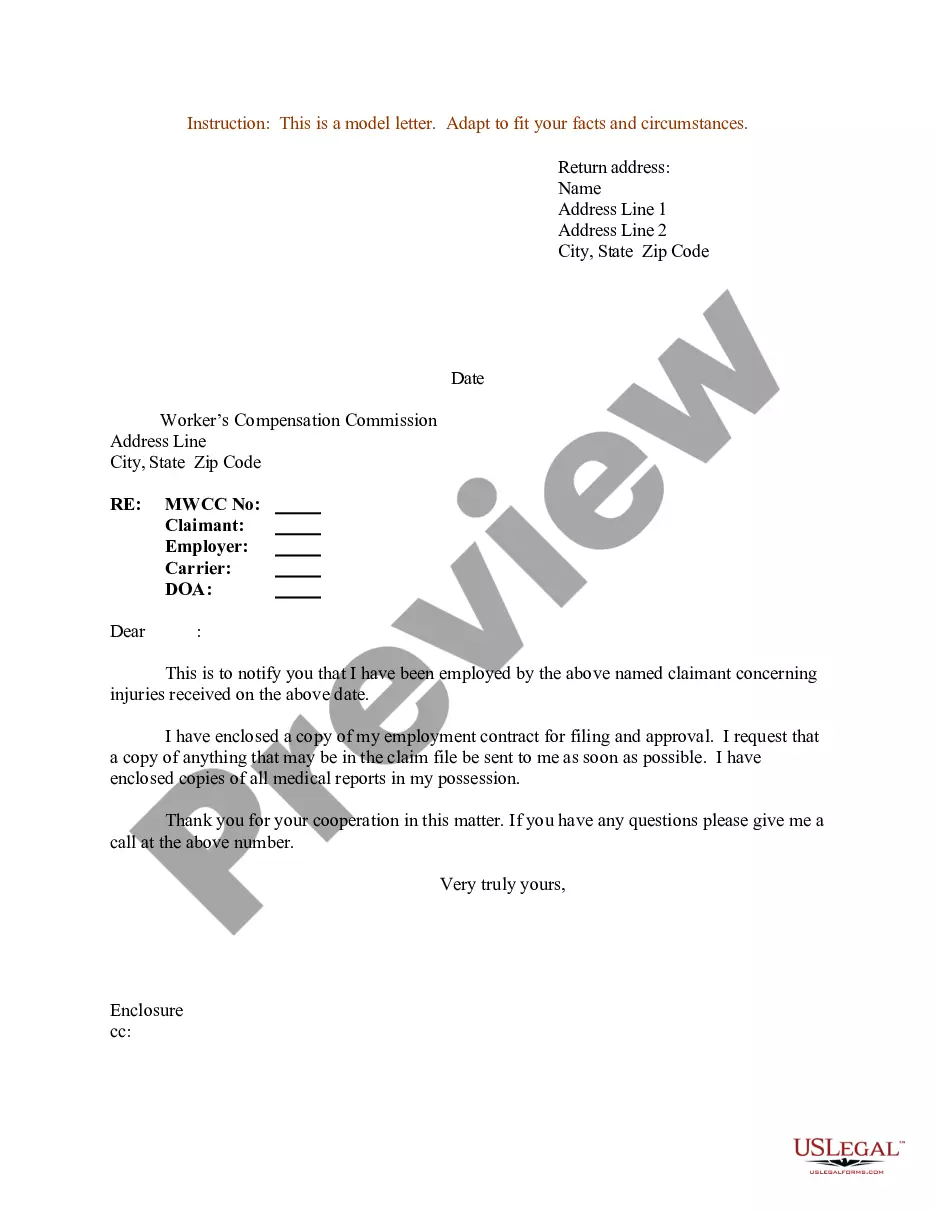
This Sample Letter for Legal Representation - Worker's Compensation is a document that serves as a template to formally request legal representation for a workerâs compensation case. It is designed to guide users in communicating their need for legal assistance effectively, distinguishing it from other letters that may not specify the legal context or purpose.
What’s included in this form
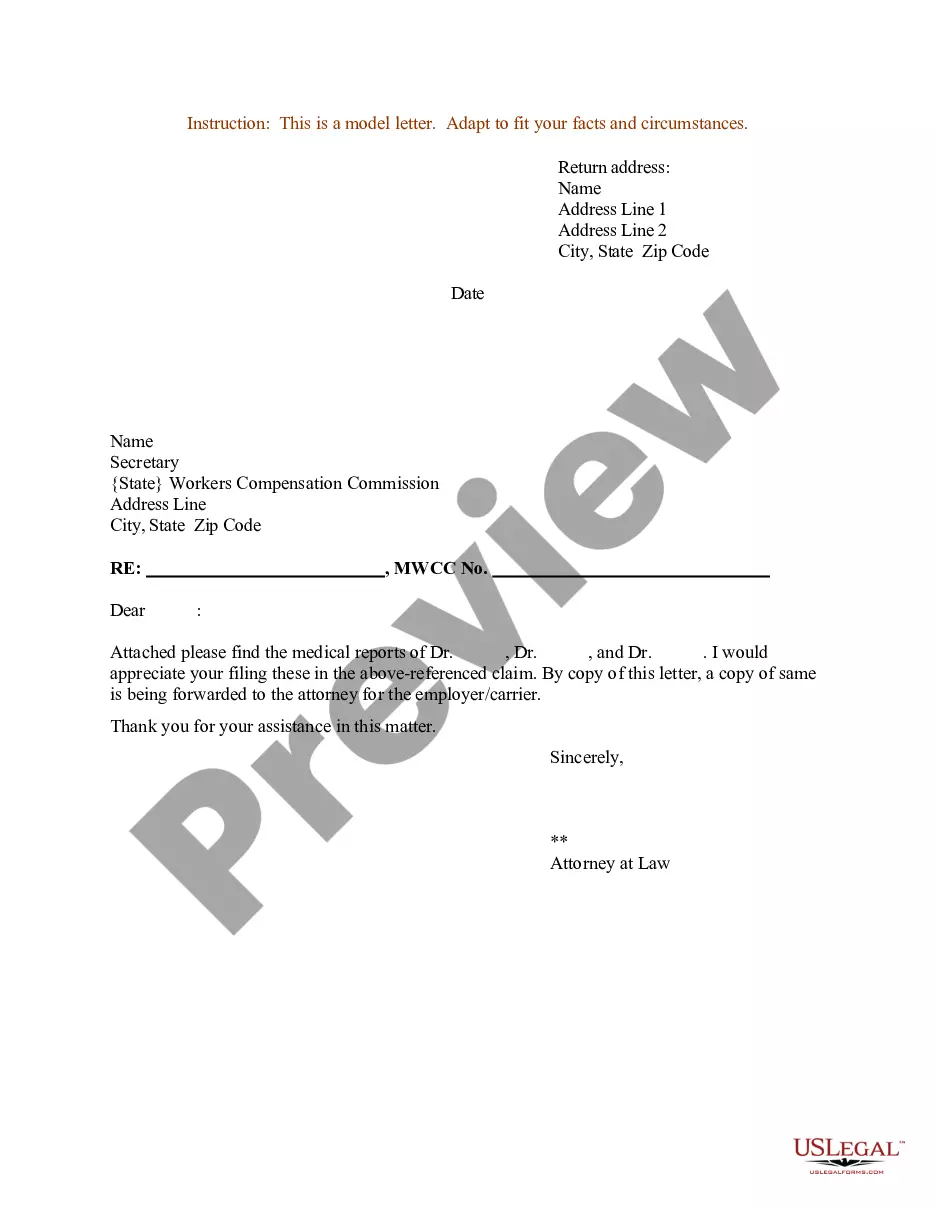
- Return address: Includes the senderâs name and contact information.
- Date: Specifies when the letter is sent.
- Subject line: Clearly states the intent to seek legal representation for a worker's compensation case.
- Body: Contains the request and details related to the case, including any pertinent information that the attorney might need.
Common use cases
This form is used when an injured worker wants to formally notify a lawyer of their need for representation in a workers' compensation claim. This situation may arise after a workplace injury occurs, when benefits are denied, or when navigating the claims process becomes complex. Using this letter can help ensure clear communication about representation needs.
Who this form is for
- Individuals who have been injured at work and require legal assistance.
- Workers whose claim for compensation has been denied or disputed.
- Employees navigating the workers' compensation process who need professional legal guidance.
Instructions for completing this form
- Identify and enter your return address at the top of the letter.
- Insert the current date for reference.
- Clearly state the subject line indicating the purpose of the letter.
- Craft the body of the letter, detailing your case and need for legal representation.
- Review and proofread for clarity and accuracy before sending.
Does this form need to be notarized?
This form does not typically require notarization unless specified by local law. However, always check your stateâs regulations to ensure compliance.
Get your form ready online
Our built-in tools help you complete, sign, share, and store your documents in one place.
Make edits, fill in missing information, and update formatting in US Legal Forms—just like you would in MS Word.
Download a copy, print it, send it by email, or mail it via USPS—whatever works best for your next step.
Sign and collect signatures with our SignNow integration. Send to multiple recipients, set reminders, and more. Go Premium to unlock E-Sign.
If this form requires notarization, complete it online through a secure video call—no need to meet a notary in person or wait for an appointment.
We protect your documents and personal data by following strict security and privacy standards.

Make edits, fill in missing information, and update formatting in US Legal Forms—just like you would in MS Word.

Download a copy, print it, send it by email, or mail it via USPS—whatever works best for your next step.

Sign and collect signatures with our SignNow integration. Send to multiple recipients, set reminders, and more. Go Premium to unlock E-Sign.

If this form requires notarization, complete it online through a secure video call—no need to meet a notary in person or wait for an appointment.

We protect your documents and personal data by following strict security and privacy standards.
Typical mistakes to avoid
- Failing to include complete return address information.
- Using vague language that does not clearly express the need for legal representation.
- Neglecting to proofread for grammatical or spelling errors.
Why complete this form online
- Convenience: Easily downloadable and customizable to fit personal circumstances.
- Editability: Allows users to fill in specific details needed for their case.
- Reliability: Templates are drafted by licensed attorneys to ensure legal compliance.
Looking for another form?
Form popularity
FAQ
This template is a formal letter you send to request legal representation for a workers’ compensation claim. It guides you to communicate your need clearly and outlines essential details the attorney may need. It includes a return address, the date, a subject line, and a body that explains the case and your representation request.
Use this form to draft a letter that requests legal representation for a workers' compensation claim. Include a return address, the date, a subject line stating the intent to obtain representation, and a body detailing the injury, the claim status, and any information the attorney will need to evaluate the case.
Include your return address, the date, a subject line that states you are seeking legal representation for a worker's compensation case, and a body with the facts of the injury, relevant claim details, and information the attorney would need to evaluate your case.
A legal rep letter is a notice that you want a lawyer to represent you in a workers' compensation claim. The Sample Letter for Legal Representation - Worker's Compensation is designed to clearly communicate that need and provide the essential contact details.
Follow the form’s structure: start with your return address, include the date, add a subject line stating the request for representation in a workers' compensation matter, then write a body that explains the injury, the claim status, and what the attorney would need to move the case forward.
It is specifically tailored to workers’ compensation matters, with a subject line and body crafted to address a work-related injury and claim process. It also specifies the exact components (return address, date, subject line, and body) used to initiate representation in a workers’ compensation case.