Personal Property Lease
About this form
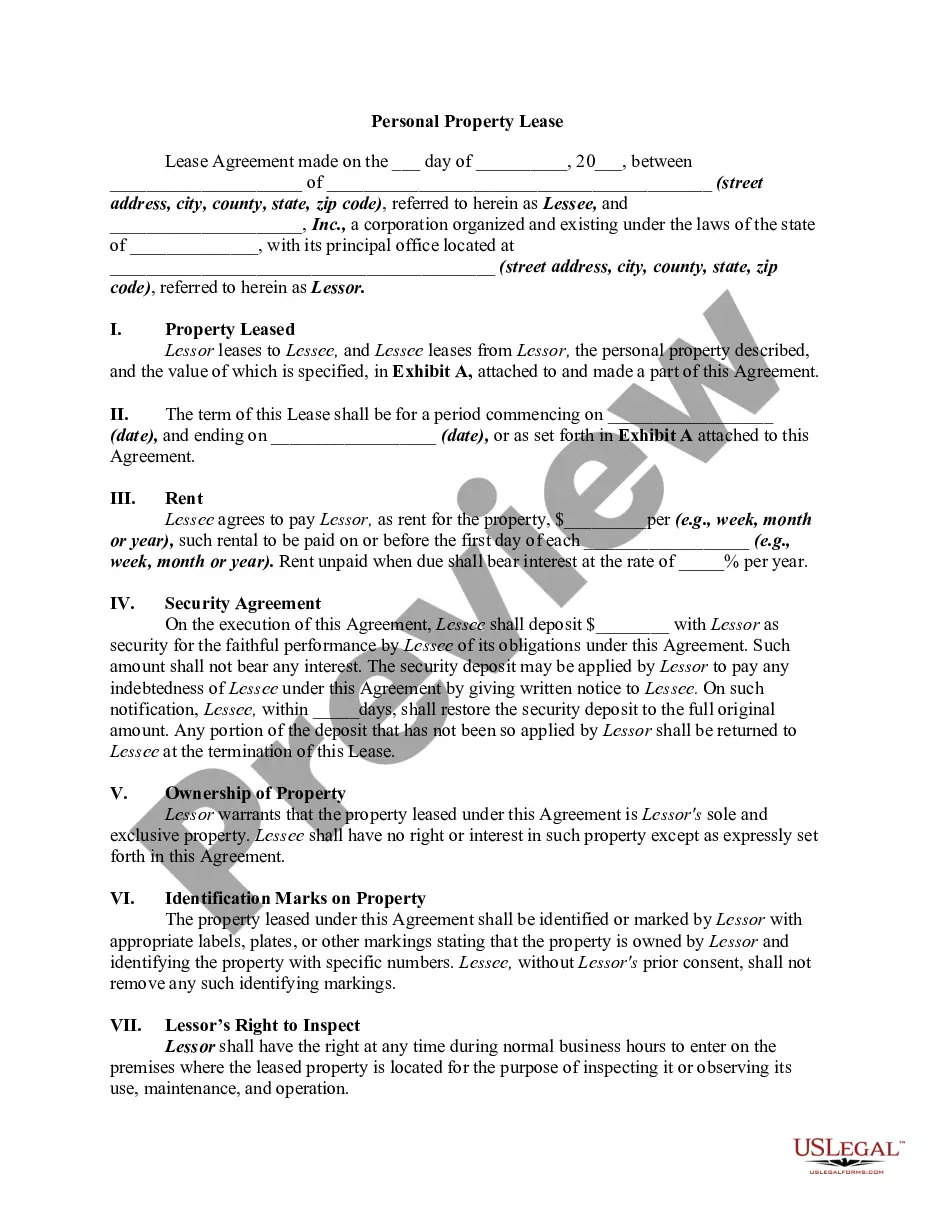
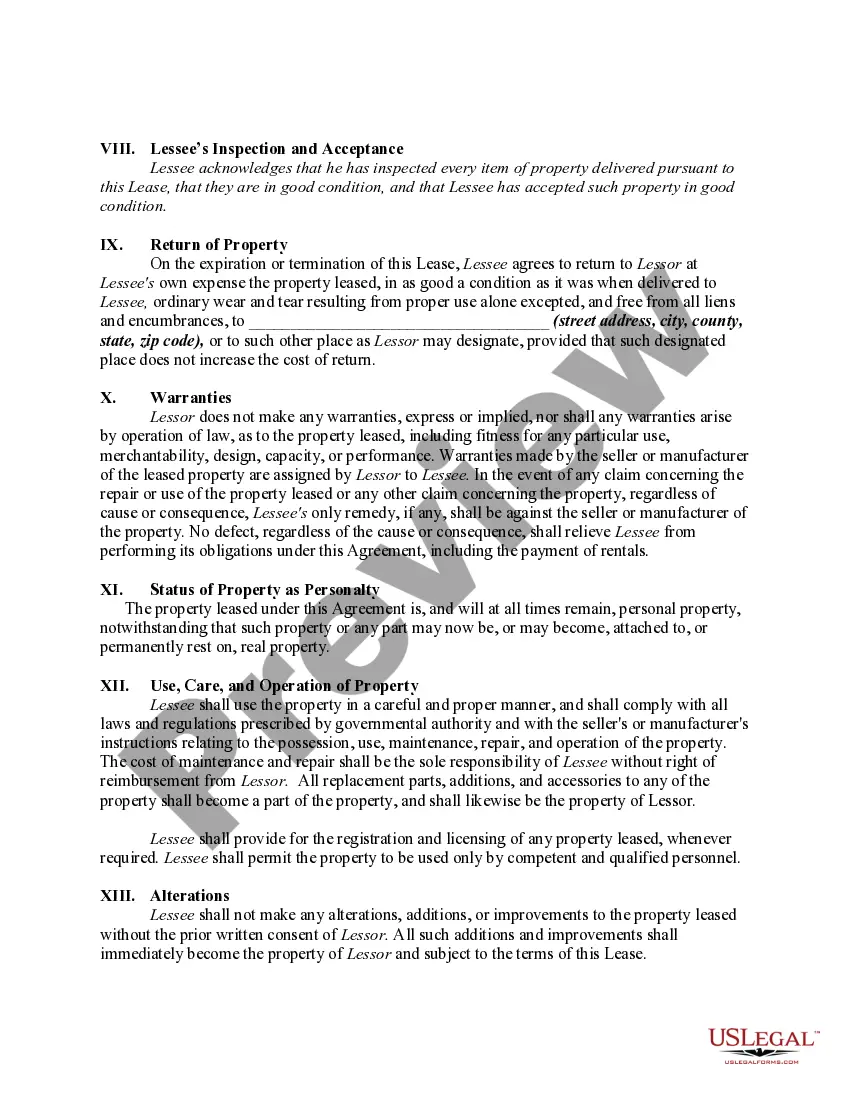
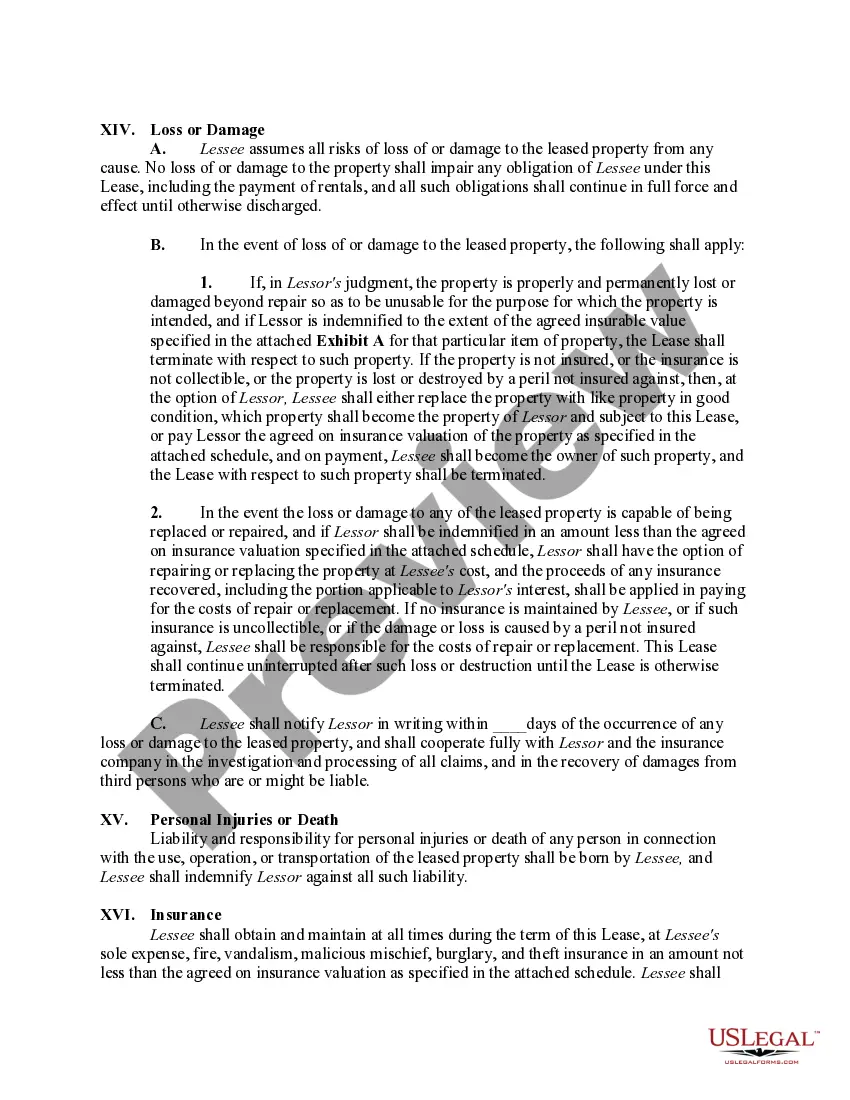
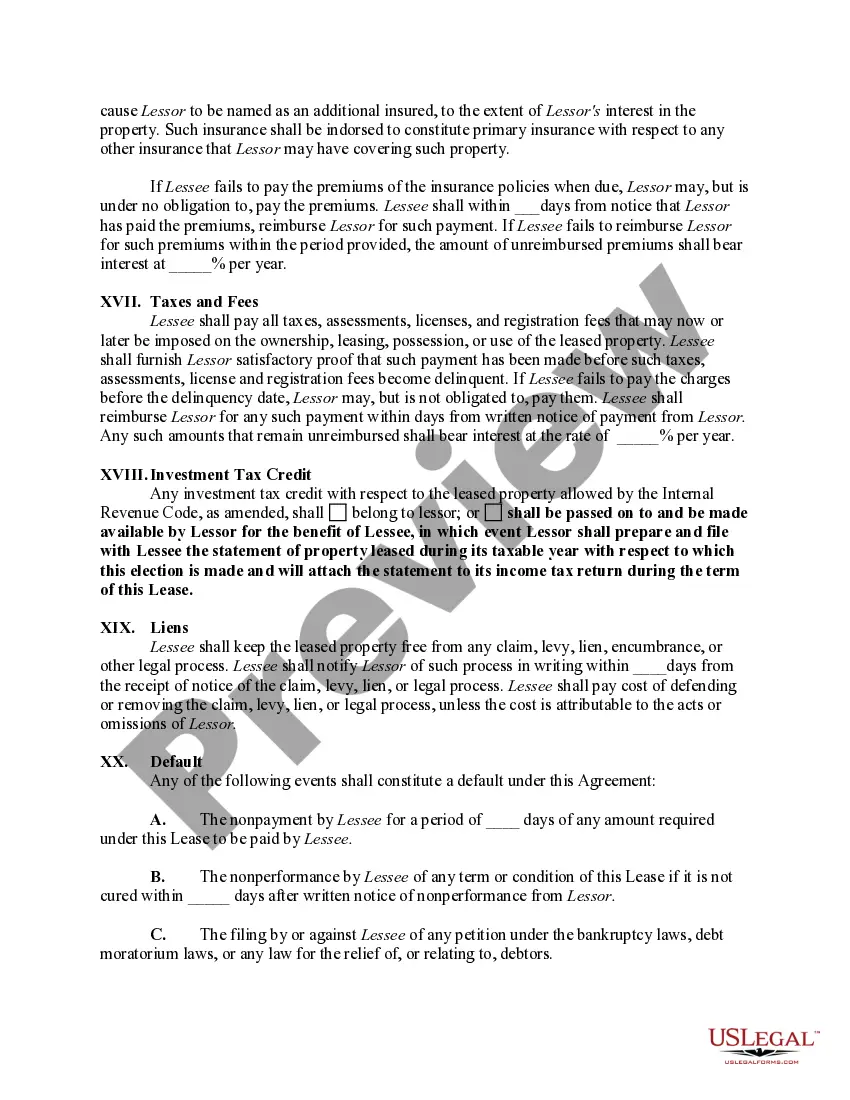
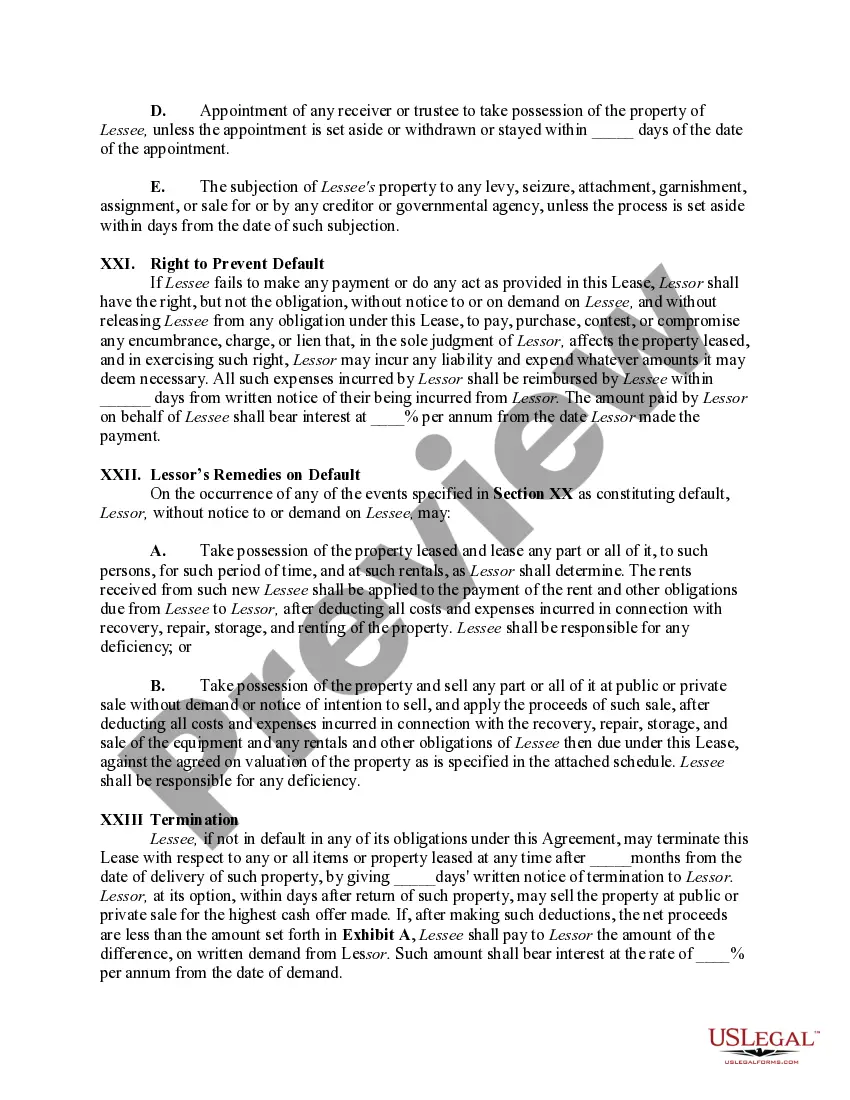
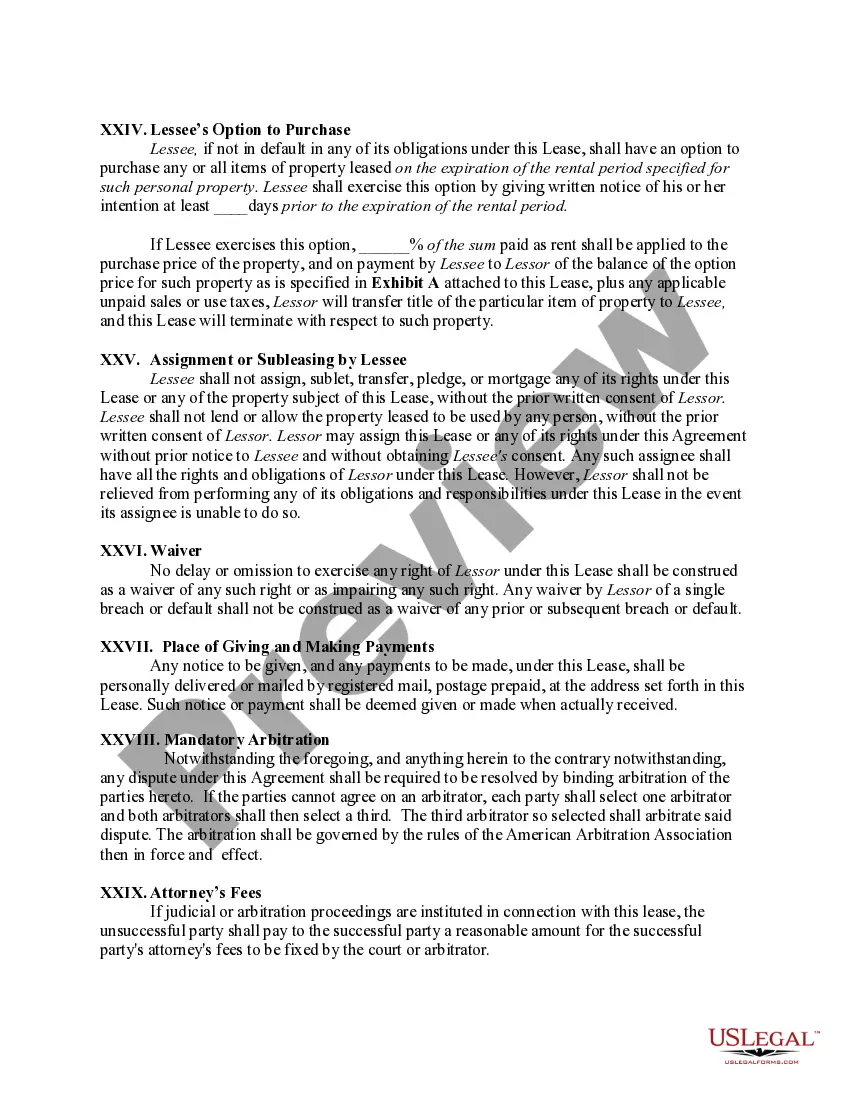
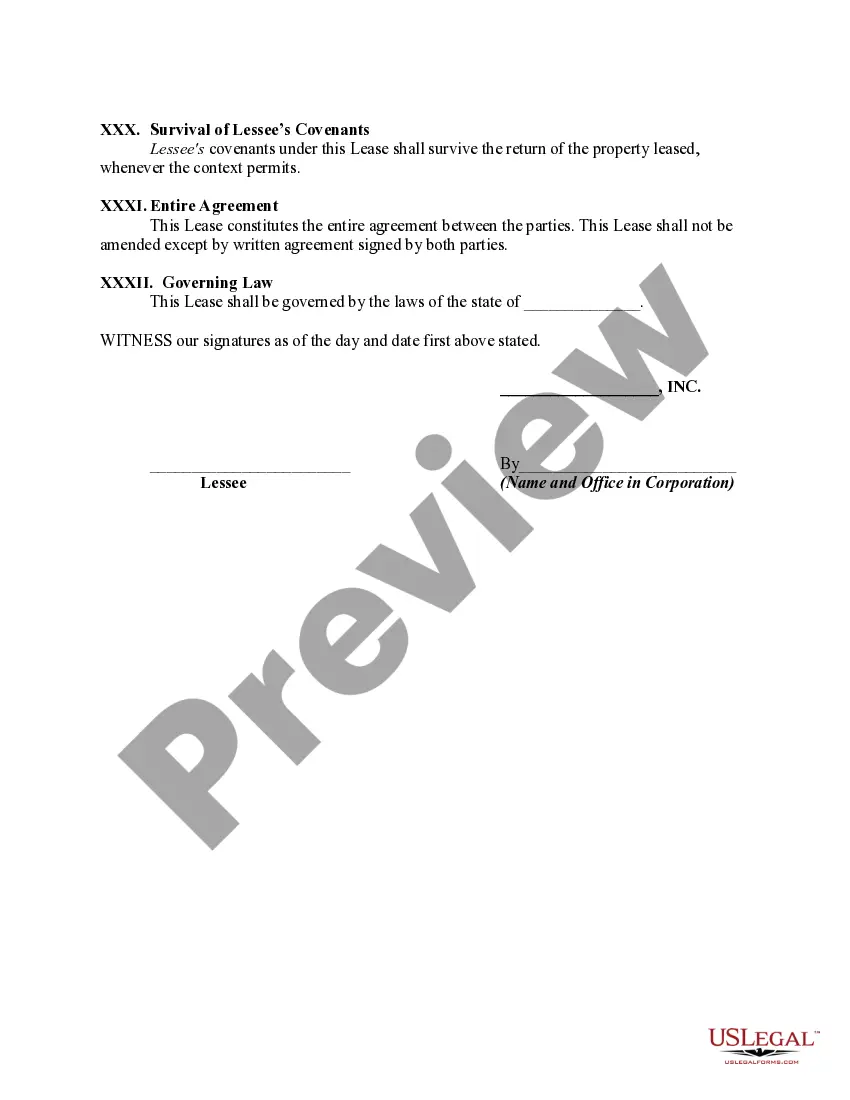
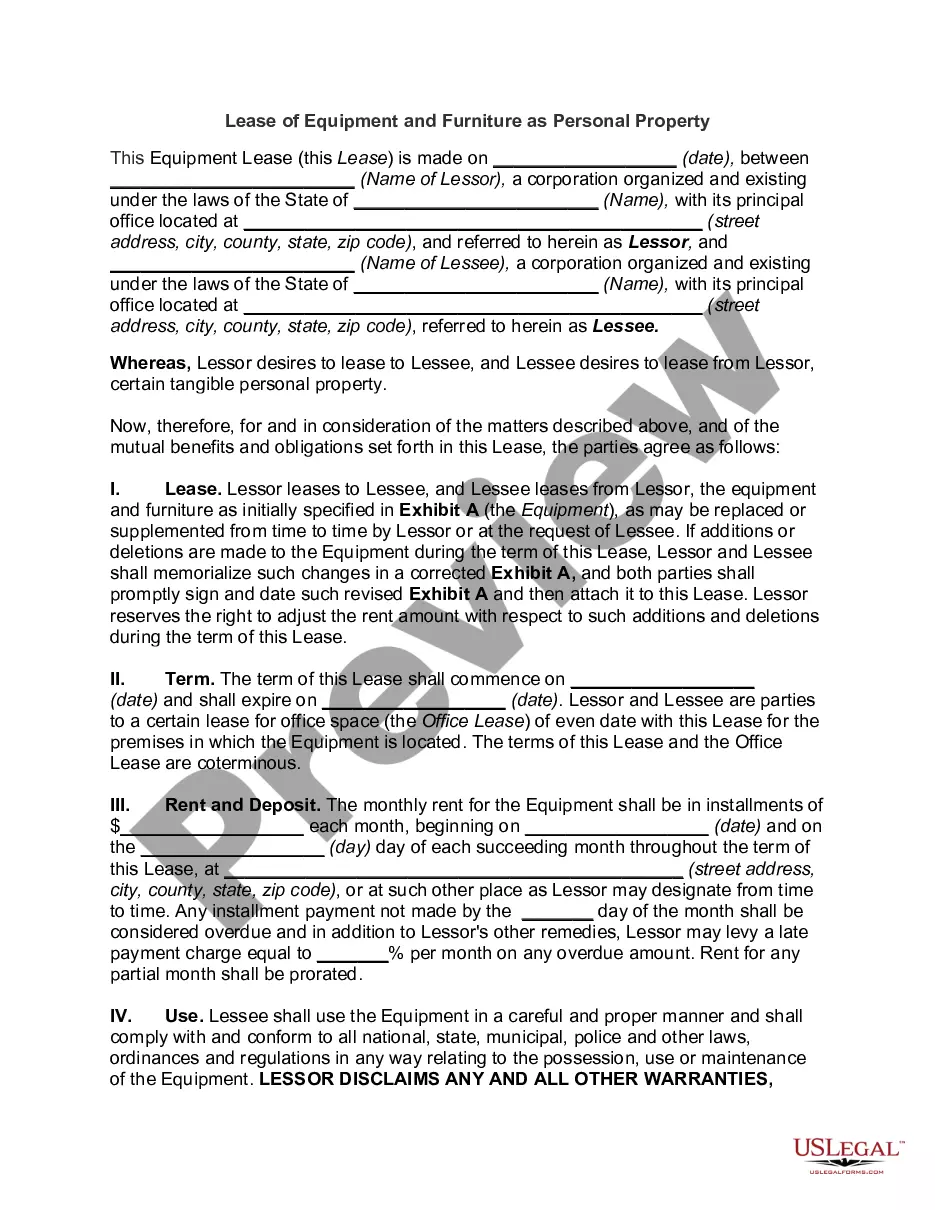
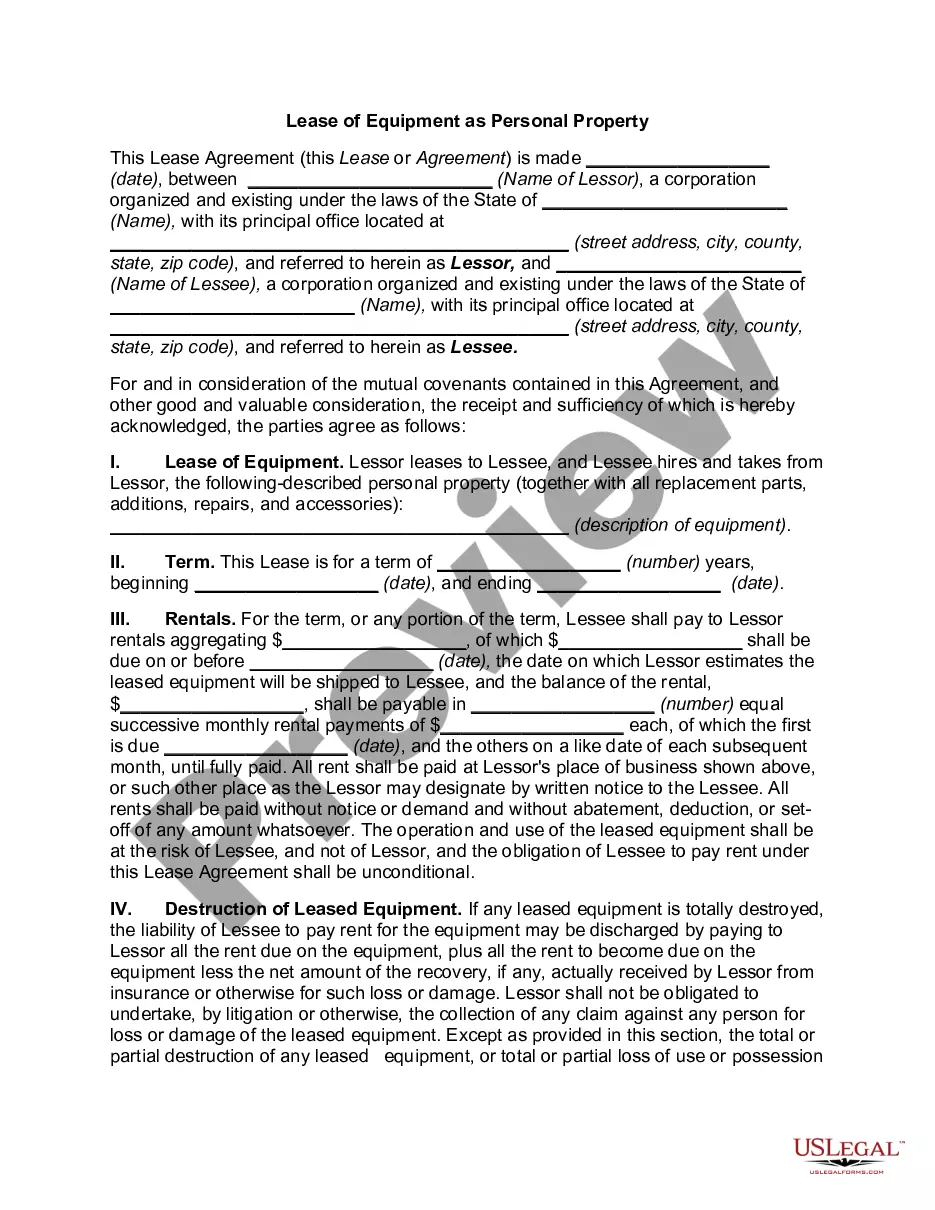
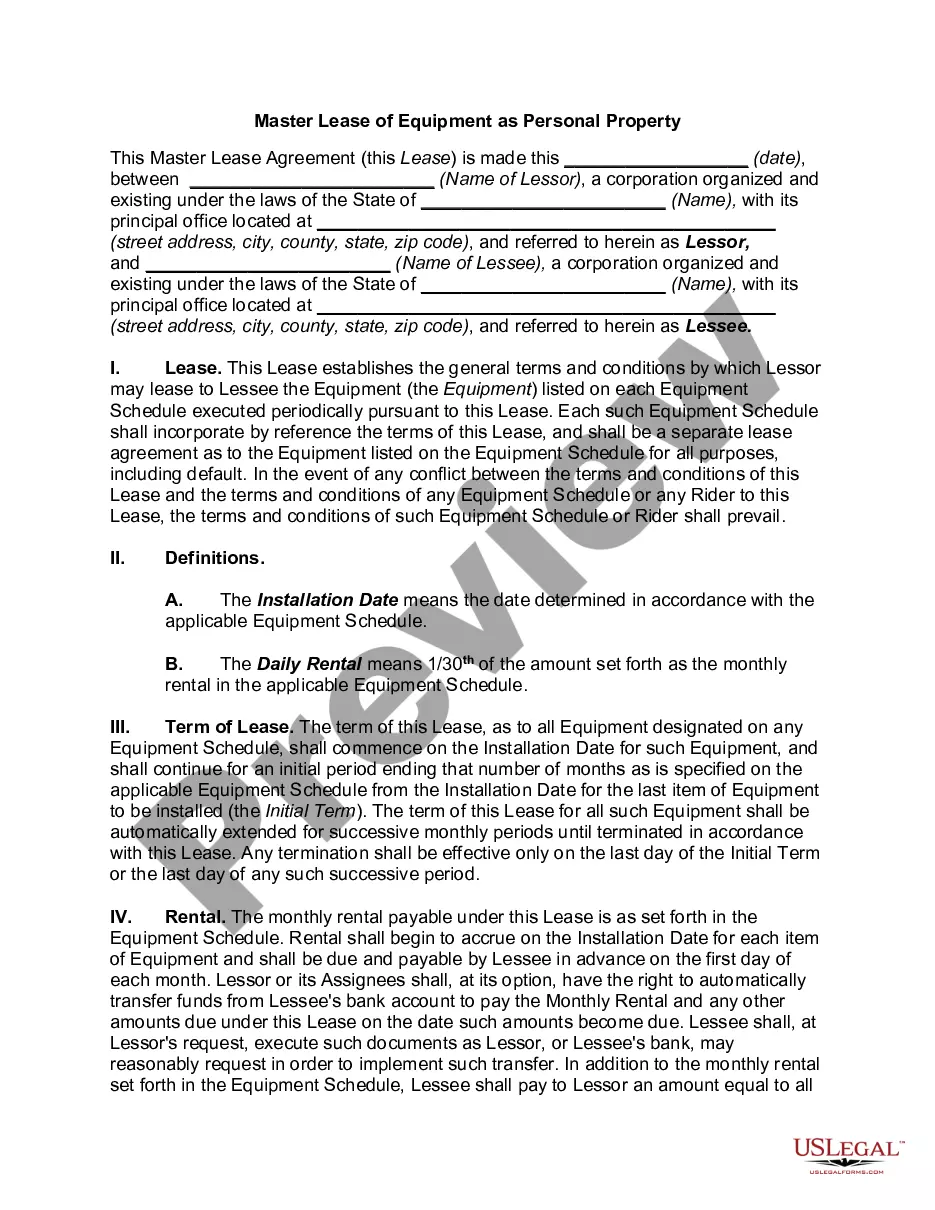
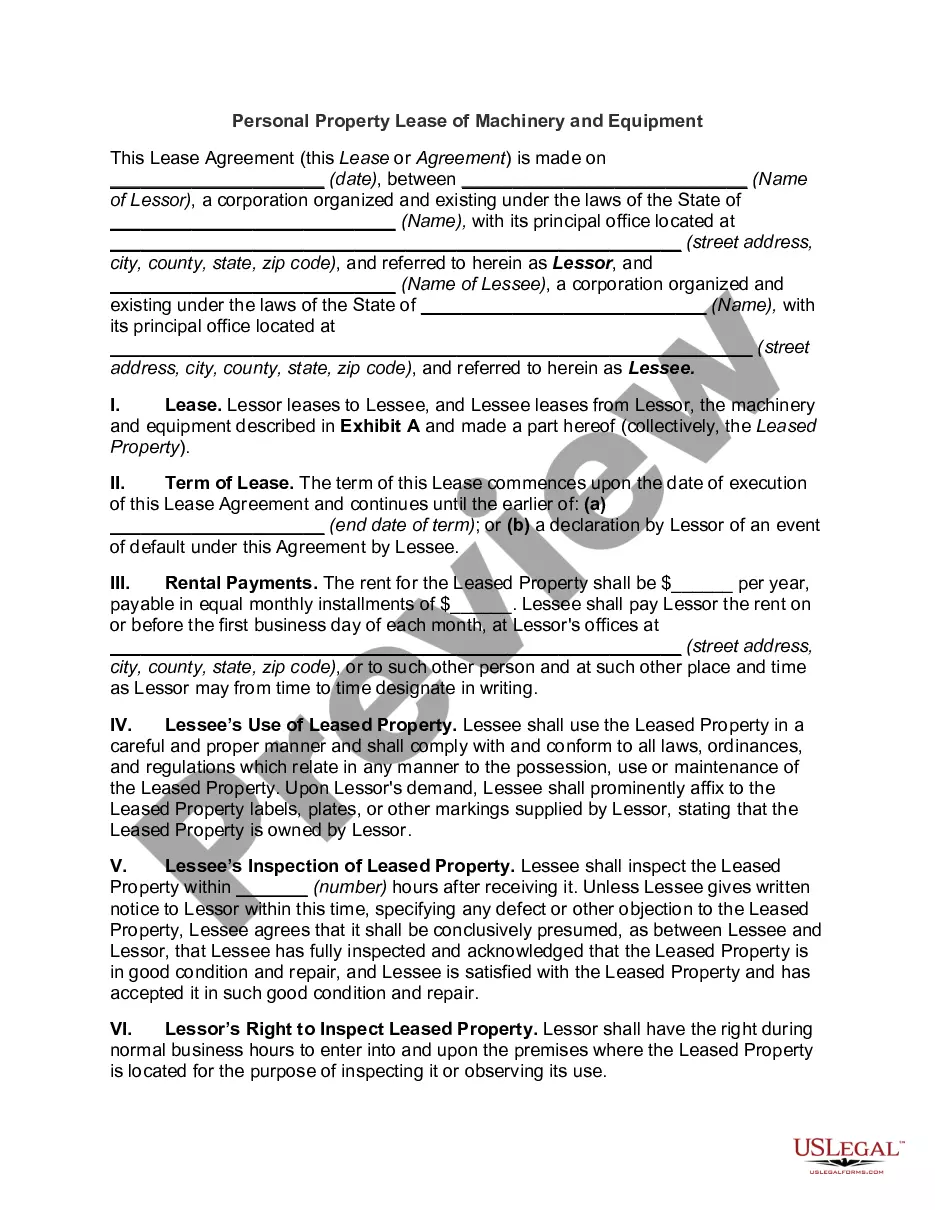
The Personal Property Lease is a legal document that outlines the terms and conditions under which one party (the Lessor) rents personal property to another party (the Lessee). Unlike real estate leases, this form specifically addresses movable personal assets, such as equipment or vehicles. This lease helps to clarify the responsibilities of both parties, especially concerning the use, care, and return of the leased property.
Key parts of this document
- Identification of the Lessor and Lessee along with their respective addresses.
- Description of the personal property being leased, including its value.
- Terms of payment, including rent amount, frequency, and late fees.
- Security deposit details and conditions for its return.
- Responsibilities for maintenance, repair, and insurance of the leased property.
- Clauses addressing default and termination of the lease.

Common use cases
This form should be used when an individual or business wants to lease personal property, such as equipment, vehicles, or other movable items. It is essential for defining the relationship and obligations between the Lessor and Lessee, helping to prevent disputes or misunderstandings throughout the lease term.
Who this form is for
- Business owners leasing equipment for operations.
- Individuals renting personal items such as furniture or vehicles.
- Organizations seeking to clarify leasing terms with other parties.
Steps to complete this form
- Identify the parties involved: the Lessor and Lessee.
- Describe the personal property being leased and attach necessary documents if needed.
- Specify the rental amount, payment schedule, and security deposit terms.
- Include the start and end date of the lease.
- Ensure all parties sign the document to validate the agreement.
Is notarization required?
This form does not typically require notarization unless specified by local law. It's advisable to check state-specific regulations to ensure compliance.
Get your form ready online
Our built-in tools help you complete, sign, share, and store your documents in one place.
Make edits, fill in missing information, and update formatting in US Legal Forms—just like you would in MS Word.
Download a copy, print it, send it by email, or mail it via USPS—whatever works best for your next step.
Sign and collect signatures with our SignNow integration. Send to multiple recipients, set reminders, and more. Go Premium to unlock E-Sign.
If this form requires notarization, complete it online through a secure video call—no need to meet a notary in person or wait for an appointment.
We protect your documents and personal data by following strict security and privacy standards.

Make edits, fill in missing information, and update formatting in US Legal Forms—just like you would in MS Word.

Download a copy, print it, send it by email, or mail it via USPS—whatever works best for your next step.

Sign and collect signatures with our SignNow integration. Send to multiple recipients, set reminders, and more. Go Premium to unlock E-Sign.

If this form requires notarization, complete it online through a secure video call—no need to meet a notary in person or wait for an appointment.

We protect your documents and personal data by following strict security and privacy standards.
Typical mistakes to avoid
- Failing to clearly describe the leased property, which can lead to disputes.
- Omitting specific payment terms, including due dates and fees for late payments.
- Not addressing maintenance responsibilities, which may result in unexpected costs.
Advantages of online completion
- Convenience of immediate access and downloadable format.
- Easy to customize the template for specific needs.
- Reliability of having a professionally drafted legal document.
Looking for another form?
Form popularity
FAQ
The short answer is yes. Handwritten contracts are slightly impractical when you could just type them up, but they are completely legal if written properly. In fact, they're even preferable to verbal contracts in many ways.
Owning a leasehold gives you the right to live in a property for a set period of time, which can be years, decades or centuries. But it's important to understand that in the eyes of the law, you're essentially a tenant of the freeholder for that period.
Even after factoring in service charge and ground rent payments, the average London investor buying a leasehold 20 years ago would have comfortably outperformed most freeholds elsewhere in the UK.The condition of the property, asking price, local planning conditions, investment potential of the wider area etc.
What is a Lease? Why You Need an Ironclad Lease Agreement. Before You Write the Lease. Step 1: Title & Format Your Document. Step 2: Make a List of Lease Provisions. Step 3: Flesh Out Each Clause. Step 4: Check Local Laws. Step 5: Create a Signature Section.
Although a tenant does hold rights to real property, a leasehold estate is typically considered personal property.As lease is a legal estate, leasehold estate can be bought and sold on the open market.
Leasehold means that you own the property, but the land upon which the property is built is owned by the freeholder. This gives you the right to occupy the property for as long as the lease is valid. Freehold, on the other hand, means that you own the property and the land upon which the property stands.
Names of all tenants. Limits on occupancy. Term of the tenancy. Rent. Deposits and fees. Repairs and maintenance. Entry to rental property. Restrictions on tenant illegal activity.
The Lease Must be in Writing It does not matter if the lease is handwritten or typed. If the lease is for more than one year, it must be in written form and contain the following terms.
You only own a leasehold property for a fixed period of time. You'll have a legal agreement with the landlord (sometimes known as the 'freeholder') called a 'lease'. This tells you how many years you'll own the property. Ownership of the property returns to the landlord when the lease comes to an end.