Sample Letter regarding List of Exhibits
Overview of this form
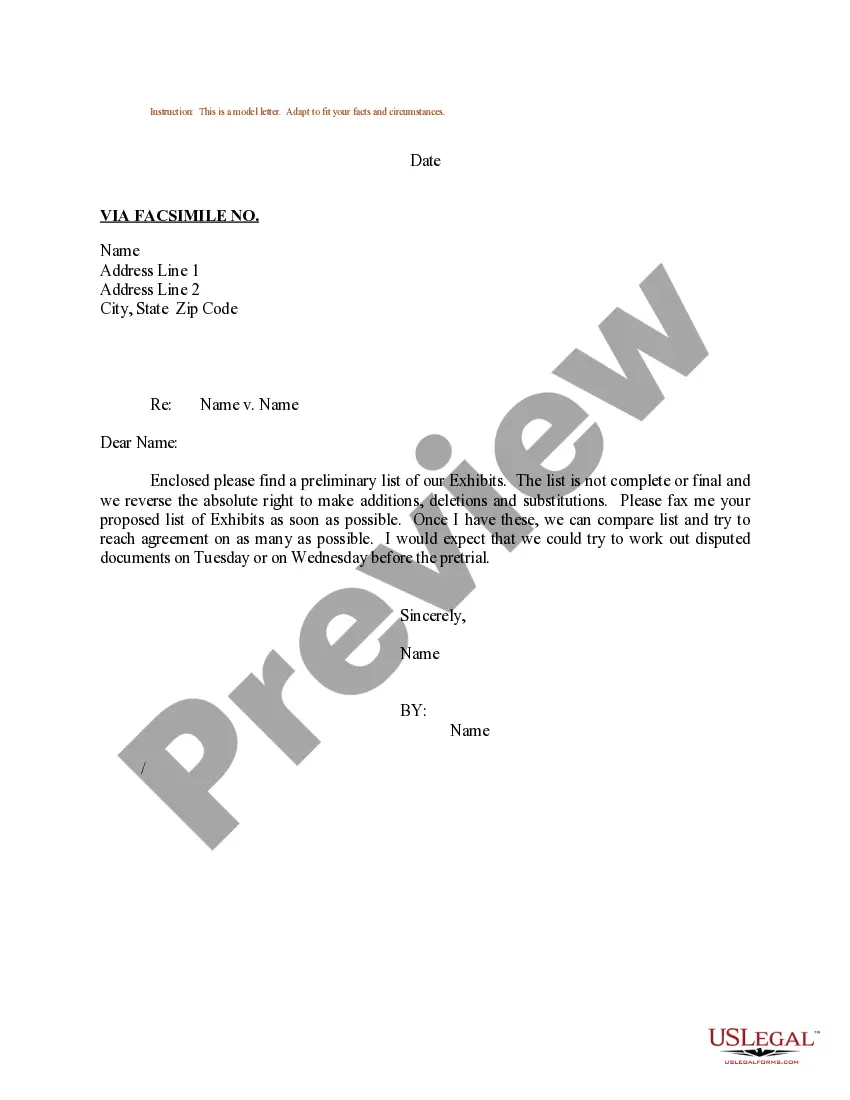
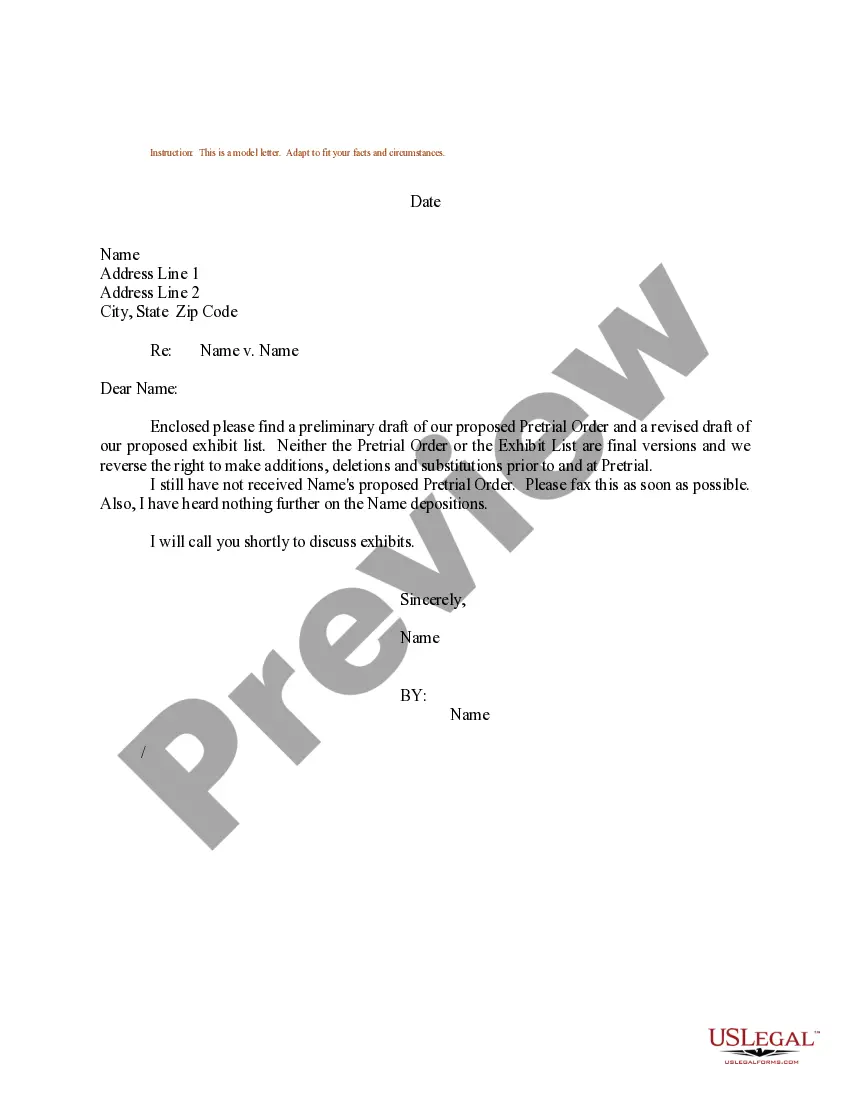
This Sample Letter regarding List of Exhibits is a template designed to be used as correspondence in legal contexts. It aids in formally identifying and listing exhibits relevant to a case. This differs from other document types, as it specifically addresses the need to clarify and communicate the exhibits to the involved parties clearly.
Main sections of this form
- Date of the letter
- Names of the parties involved
- Subject line identifying the case
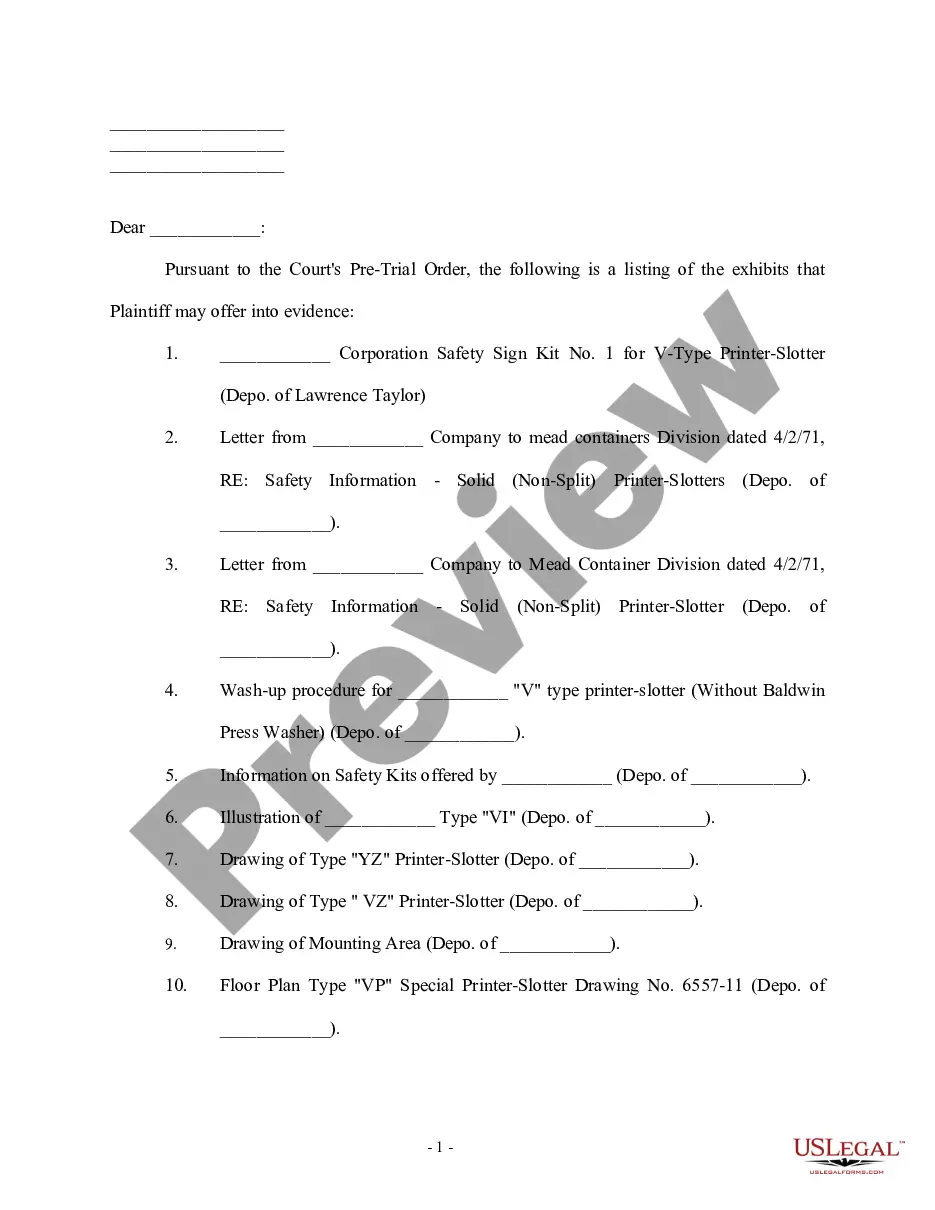
- Body of the letter detailing the list of exhibits
- Signature of the sender

Situations where this form applies
This form should be used when a party in a legal case needs to inform others about the specific exhibits that will be presented. Scenarios include pre-trial preparations, discovery communications, or settlement discussions. It is essential to ensure all parties are aware of the exhibits to maintain transparency and facilitate discussions.
Who this form is for
- Attorneys preparing for trial
- Legal assistants managing case documentation
- Parties involved in litigation
- Individuals responsible for organizing evidence
Steps to complete this form
- Enter the date of the letter at the top.
- Fill in the names of the parties involved in the case.
- Add the subject line to clarify the purpose of the letter.
- List each exhibit clearly in the body of the letter.
- Include a signature at the end of the letter.
Is notarization required?
In most cases, this form does not require notarization. However, some jurisdictions or signing circumstances might. US Legal Forms offers online notarization powered by Notarize, accessible 24/7 for a quick, remote process.
Get your form ready online
Our built-in tools help you complete, sign, share, and store your documents in one place.
Make edits, fill in missing information, and update formatting in US Legal Forms—just like you would in MS Word.
Download a copy, print it, send it by email, or mail it via USPS—whatever works best for your next step.
Sign and collect signatures with our SignNow integration. Send to multiple recipients, set reminders, and more. Go Premium to unlock E-Sign.
If this form requires notarization, complete it online through a secure video call—no need to meet a notary in person or wait for an appointment.
We protect your documents and personal data by following strict security and privacy standards.

Make edits, fill in missing information, and update formatting in US Legal Forms—just like you would in MS Word.

Download a copy, print it, send it by email, or mail it via USPS—whatever works best for your next step.

Sign and collect signatures with our SignNow integration. Send to multiple recipients, set reminders, and more. Go Premium to unlock E-Sign.

If this form requires notarization, complete it online through a secure video call—no need to meet a notary in person or wait for an appointment.

We protect your documents and personal data by following strict security and privacy standards.
Avoid these common issues
- Failing to include all necessary exhibits.
- Not using correct case names or title formatting.
- Omitting the date of the letter.
- Neglecting to proofread for clarity and errors.
Benefits of using this form online
- Easy to edit and customize to fit specific case needs.
- Accessible from anywhere with an internet connection.
- Reliable templates drafted by licensed attorneys ensure legal conformity.
- Saves time by eliminating the need to create documents from scratch.
Main things to remember
- The Sample Letter regarding List of Exhibits is essential for clear communication of evidence in legal matters.
- Proper completion of this letter ensures all parties are aware of the exhibits involved.
- Utilizing an online template can enhance efficiency and accuracy in legal proceedings.
Looking for another form?



Form popularity
FAQ
Generally, exhibits are labeled in sequential alphabetical or numerical order. For example, Exhibit A is followed by Exhibit B, etc. This gives the reader clear guideposts to follow throughout the document.
Include a typed notation within the body of the legal document where the exhibit should be referenced. Thereafter, assign the exhibit with an identifying number or letter. For instance, this notation can state either "See Exhibit A" or "See Exhibit 1".
To cite a specific section or page from the exhibit, you may say: Douma, Michael, curator. "Title of section or page," Calendars through the Ages, 2008, URL, (date of retrieval).
Place one sticker on the bottom right corner of the first page of each exhibit. 2713 If you are the plaintiff, use a yellow sticker.Once you have them in the order you like, you need to write a number or letter on each sticker.
Exhibits should be numbered (1, 2, 3) or lettered (A, B, C) consecutively in the order they are first encountered in the body of the contract.
Pre-mark the exhibit. Show it to opposing counsel. Show it to the witness. Ask the right predicate questions. Ask the court to admit the exhibit (see below for magic terminology) Let the clerk mark the exhibit into evidence.
Place one sticker on the bottom right corner of the first page of each exhibit. 2713 If you are the plaintiff, use a yellow sticker. 2713 If you are the defendant, use a blue sticker. Once you have put stickers on the first pages of all of your exhibits, place the exhibits in an order you like.
Place one sticker on the bottom right corner of the first page of each exhibit. 2713 If you are the plaintiff, use a yellow sticker. 2713 If you are the defendant, use a blue sticker. Once you have put stickers on the first pages of all of your exhibits, place the exhibits in an order you like.