Sample Letter for Sale of Property and Corrected Warranty Deed
Overview of this form
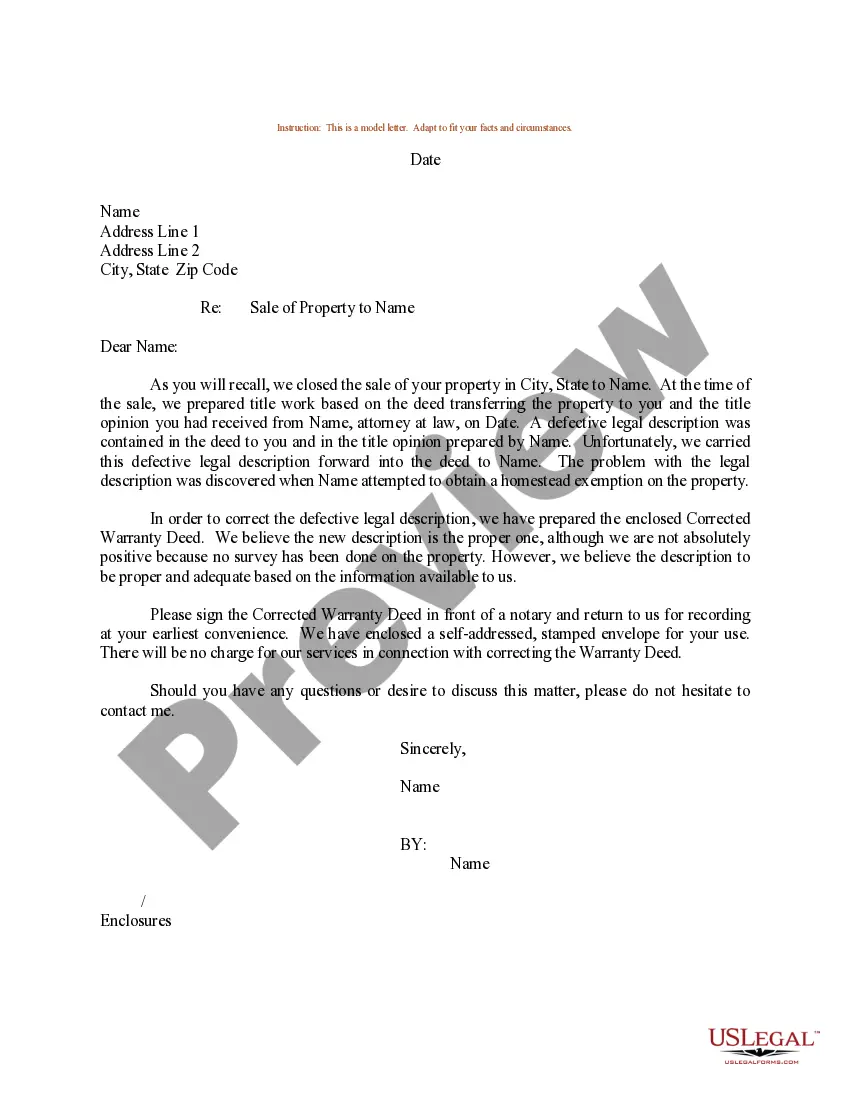
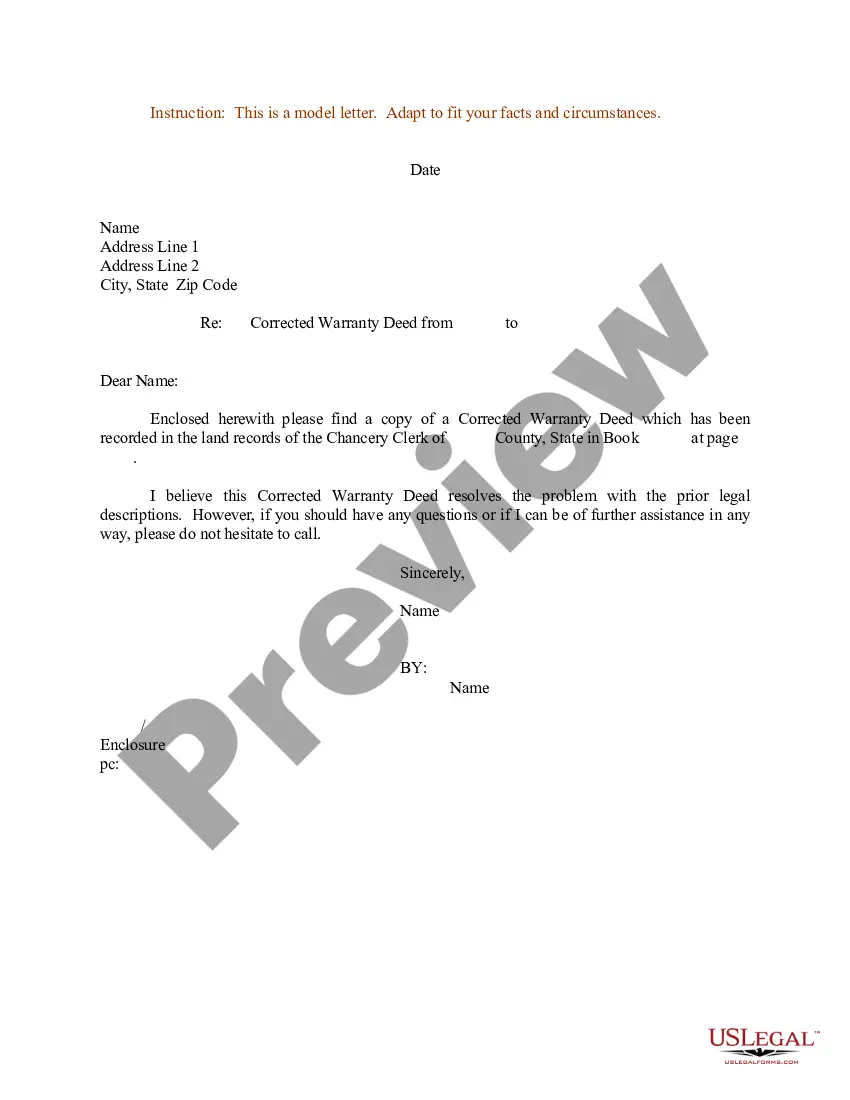
The Sample Letter for Sale of Property and Corrected Warranty Deed is a template designed to assist sellers in addressing issues related to a defective legal description in prior property deeds. This form outlines the appropriate steps to notify the involved parties about the correction of the legal description and includes instructions for executing the necessary documentation to rectify the issue. Unlike generic templates, this letter is tailored to ensure that all relevant legal details are addressed, making it suitable for specific transactions or circumstances involving real estate.
Key components of this form
- Parties involved: Identification of the seller and buyer involved in the transaction.
- Date of sale: A space to specify when the property was sold.
- Reference to prior legal documents: Mention of the defective deed and title opinion.
- Corrected Warranty Deed: An enclosed document that must be signed and notarized.
- Instructions for returning the signed deed: Including the acknowledgment of no charges for these services.
- Contact information for further inquiries: A section for the seller to provide support or address concerns.

When to use this form
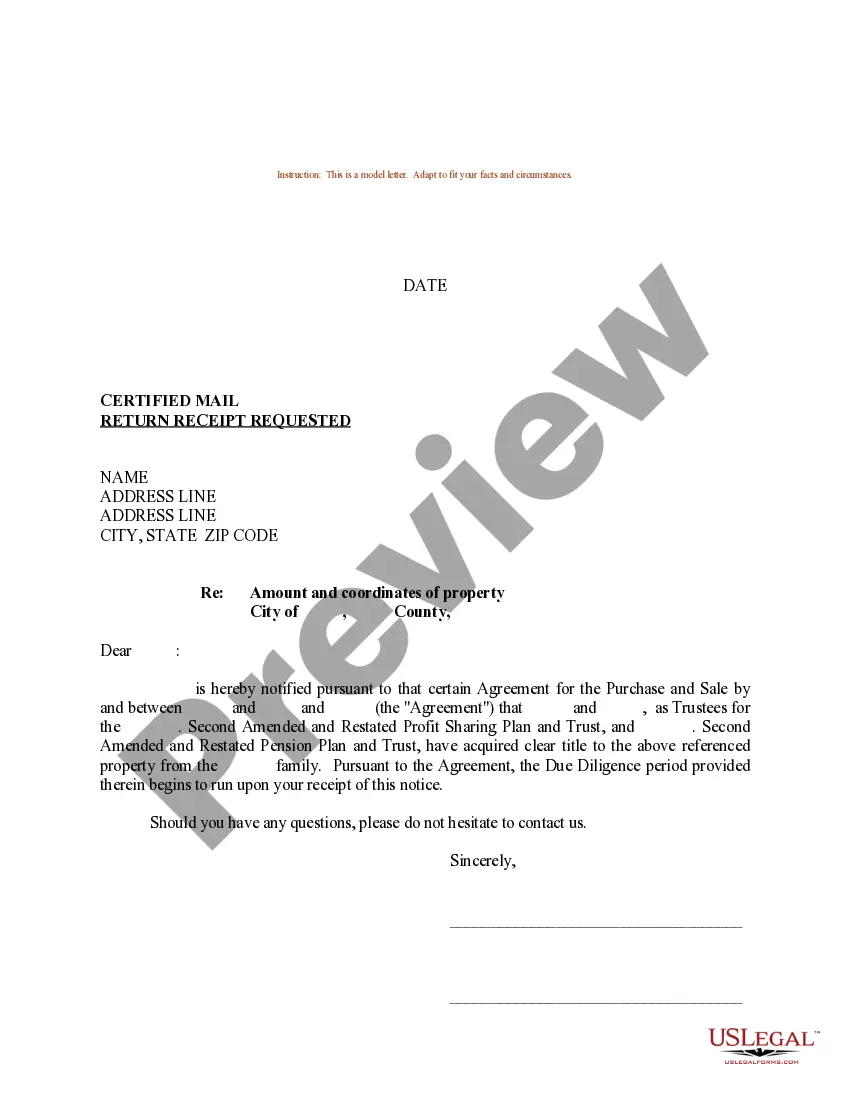
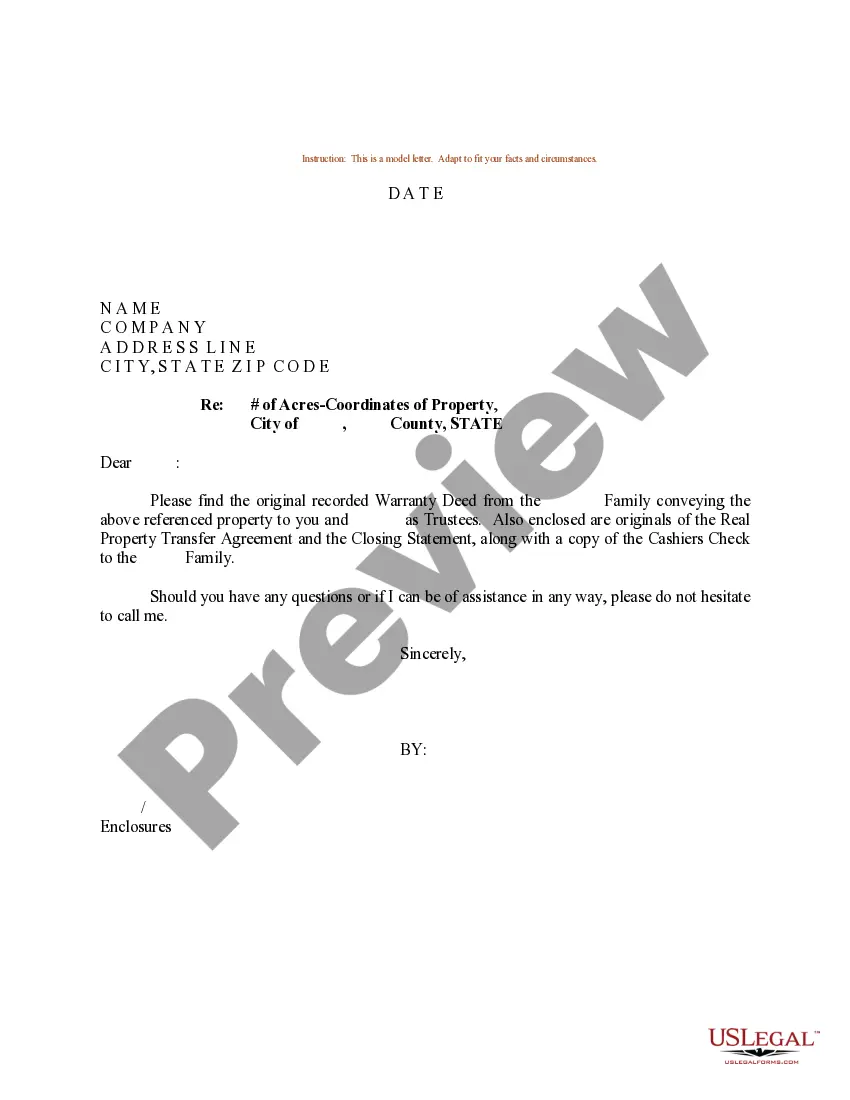
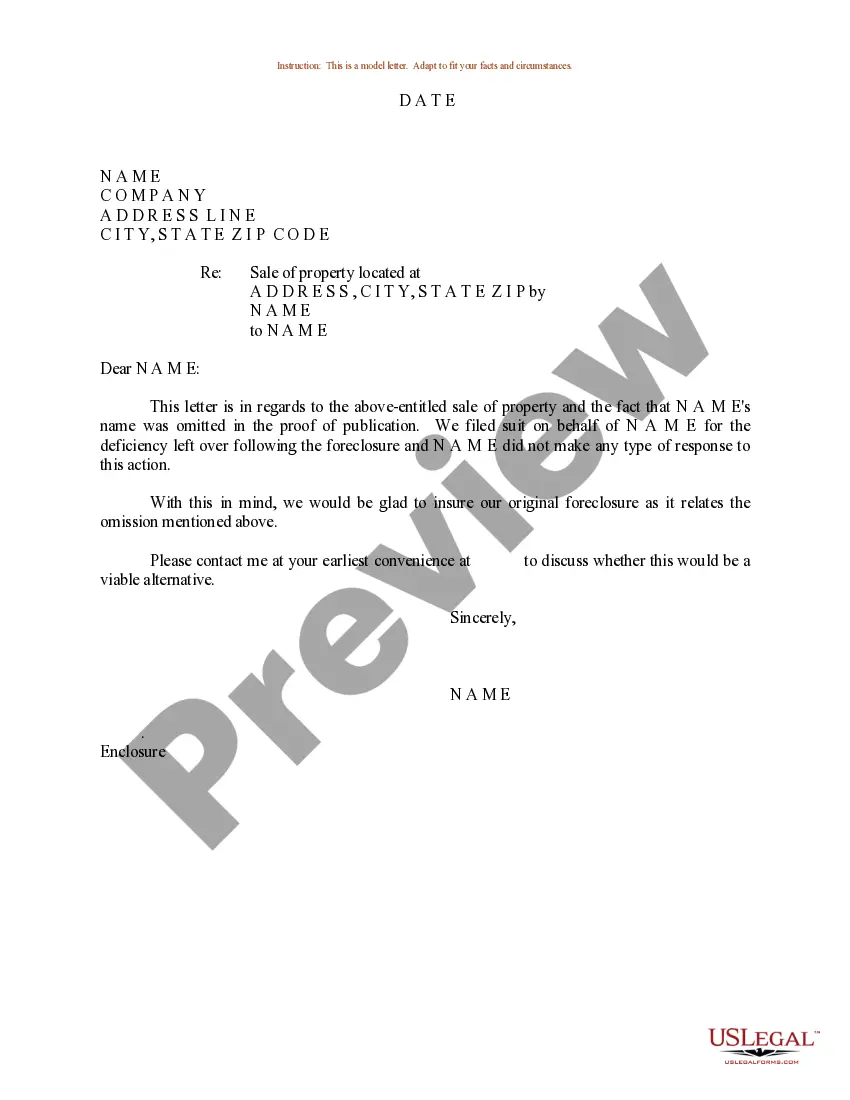
This letter should be used when a property seller needs to notify the buyer about a faulty legal description contained in the prior deed. Its primary use is to facilitate the correction process by sending a formal notification that includes a properly drafted Corrected Warranty Deed. It is particularly relevant when a buyer encounters issues, such as difficulties in obtaining legal exemptions like homestead exemptions due to discrepancies in property titles.
Who needs this form
This form is intended for:
- Property sellers who have identified errors in the legal description of a deed.
- Buyers who have experienced complications due to incorrect property descriptions.
- Real estate attorneys who wish to provide clients with a structured way to correct title issues.
- Individuals engaging in private property sales that require formal communication regarding legal corrections.
Steps to complete this form
- Identify and enter the date at the top of the letter.
- Provide the full name and address of the recipient.
- Detail the specifics of the property sale, including the city and state of the transaction.
- Specify the name of the buyer and the issues discovered related to the legal description.
- Include a request for the recipient to sign the Corrected Warranty Deed in front of a notary.
- Send the completed document back using the self-addressed stamped envelope provided.
Does this form need to be notarized?
Notarization is required for this form to take effect. Our online notarization service, powered by Notarize, lets you verify and sign documents remotely through an encrypted video session, available 24/7.
Get your form ready online
Our built-in tools help you complete, sign, share, and store your documents in one place.
Make edits, fill in missing information, and update formatting in US Legal Forms—just like you would in MS Word.
Download a copy, print it, send it by email, or mail it via USPS—whatever works best for your next step.
Sign and collect signatures with our SignNow integration. Send to multiple recipients, set reminders, and more. Go Premium to unlock E-Sign.
If this form requires notarization, complete it online through a secure video call—no need to meet a notary in person or wait for an appointment.
We protect your documents and personal data by following strict security and privacy standards.

Make edits, fill in missing information, and update formatting in US Legal Forms—just like you would in MS Word.

Download a copy, print it, send it by email, or mail it via USPS—whatever works best for your next step.

Sign and collect signatures with our SignNow integration. Send to multiple recipients, set reminders, and more. Go Premium to unlock E-Sign.

If this form requires notarization, complete it online through a secure video call—no need to meet a notary in person or wait for an appointment.

We protect your documents and personal data by following strict security and privacy standards.
Typical mistakes to avoid
- Failing to accurately identify all parties involved in the transaction.
- Neglecting to address the specific nature of the defect in the legal description.
- Not obtaining the necessary signatures and notarizations on the Corrected Warranty Deed.
- Forgetting to include the self-addressed stamped envelope for easy return.
- Omitting contact information for follow-up questions.
Why complete this form online
- Immediate access to a professionally drafted template tailored for real estate transactions.
- Easy to edit and customize according to personal needs and circumstances.
- Reduction of errors due to clear structure and guidance provided in the template.
- Convenience of downloading and printing from home or office at any time.
What to keep in mind
- The Sample Letter for Sale of Property and Corrected Warranty Deed is essential for addressing legal description errors in property documentation.
- Proper completion and notarization of this form can prevent future legal complications regarding property ownership.
- Using an online template can streamline the process, making it easier and more reliable for users.
Looking for another form?









Form popularity
FAQ
Determine the property ownership interests and what type of deed of conveyance you'll use, either a quitclaim deed or warranty deed. Obtain a copy of the original title deed. Complete, review and sign the deed form. Submit the quitclaim or warranty deed form.
Determine if the error is harmless or fatal to the transfer of title. Decide what instrument is best suited to the error. Draft a corrective deed, affidavit, or new deed. Original Grantor(s) signature(s) obtained. Deed is re-executed. Re-acknowledgment before a notary.
Quitclaim Deeds can be complicated legal documents. They are commonly used to add/remove someone to/from real estate title or deed (divorce, name changes, family and trust transfers).
Re-recording of the original document. With corrections made in the body of the original document. A cover sheet detailing the changes. Must be re-signed and re-acknowledged. Correction Deed. A new deed reflecting the corrections/changes. Must meet all recording requirements of a deed.
The name and address of the seller (called the grantor) The name and address of the buyer (called the grantee) A legal description of the property (found on the previous deed) A statement that the grantor is transferring the property to the grantee.
Receipt of tax last paid. Attested copy of the sale transaction deed. No Objection Certificate from the associated housing society. Duly-filled application form with signatures.
Check the mortgage. Get a copy of the property title. Fill out a property title transfer form. Submit the title transfer form. Pay the relevant fee. Wait for the processing of the form.
If a deed is to have any validity, it must be made voluntarily.If FRAUD is committed by either the grantor or grantee, a deed can be declared invalid. For example, a deed that is a forgery is completely ineffective. The exercise of UNDUE INFLUENCE also ordinarily serves to invalidate a deed.
Determine if the error is harmless or fatal to the transfer of title. Decide what instrument is best suited to the error. Draft a corrective deed, affidavit, or new deed. Obtain the original signature(s) of the Grantor(s). Re-execute the deed with proper notarization and witnessing.