Sample Letter for List of Pleadings Filed
Overview of this form
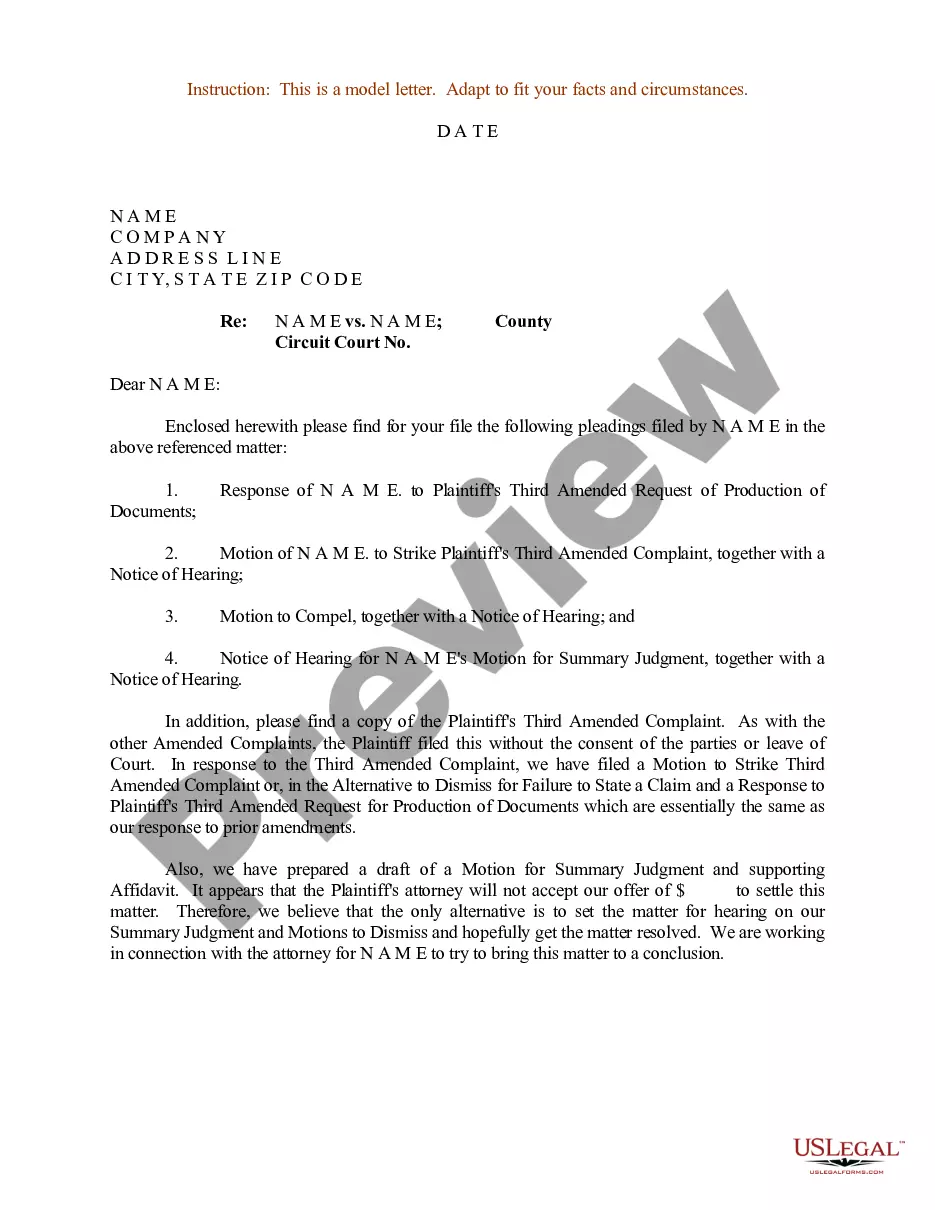
The Sample Letter for List of Pleadings Filed is a template designed for legal practitioners to communicate details about motions and documents filed in court. This form serves as a reference to ensure proper notification and documentation of pleadings, distinguishing itself from other forms that may not cover detailed communications regarding specific legal filings.
Main sections of this form
- Date of the letter
- Recipient's name and address
- List of motions filed, including notices of hearing
- Reference to the Plaintiffs Third Amended Complaint
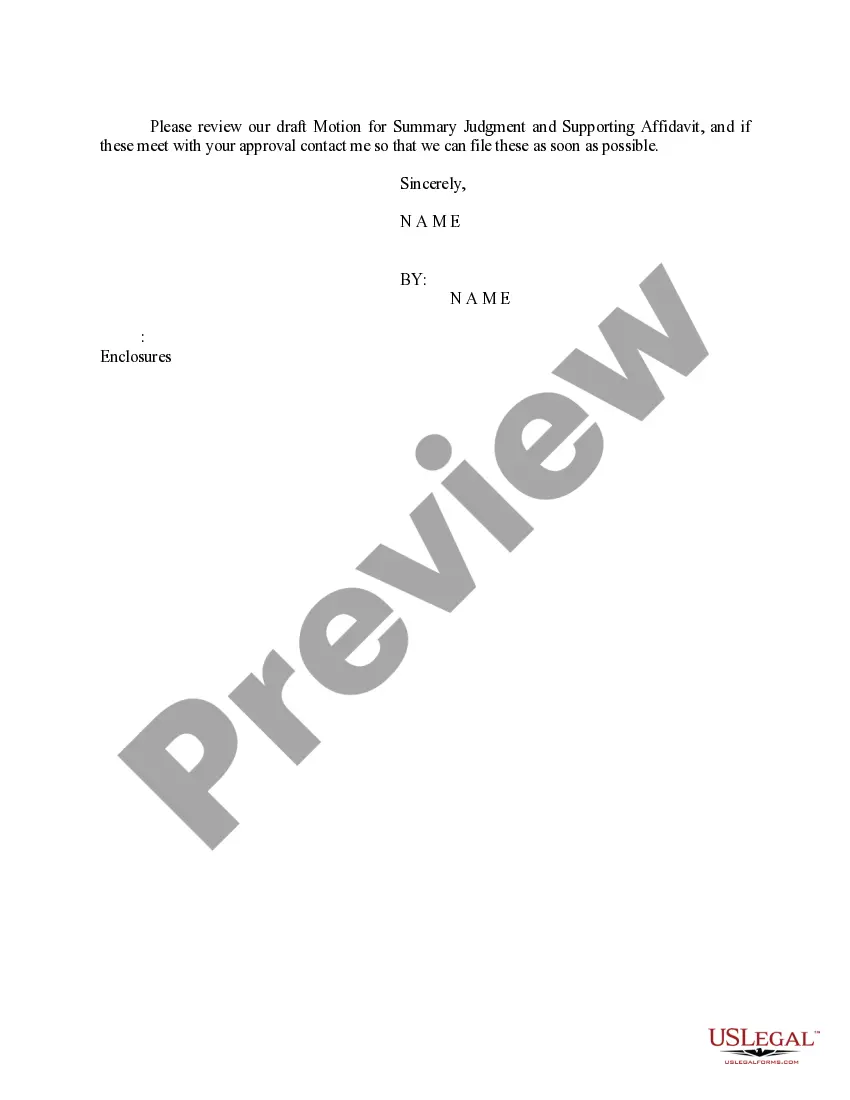
- Request for review and approval of the draft motion for summary judgment
When to use this document
This letter should be used when an attorney needs to inform a party or parties involved in litigation about specific pleadings that have been filed with the court, including motions to strike and compel actions. It is useful in scenarios where ongoing communication about court filings is necessary to ensure compliance and clarify the current state of the case.
Who can use this document
- Attorneys representing clients in litigation
- Legal assistants responsible for case management
- Parties involved in a lawsuit needing to maintain communication with opposing counsel
How to complete this form
- Fill in the date at the top of the letter.
- Enter the private name and address of the recipient.
- List all motions filed clearly, ensuring to include relevant notices of hearing.
- Attach a copy of the Plaintiffs Third Amended Complaint for reference.
- Conclude the letter with a request for review of the attached motion and provide contact information for follow-up.
Does this form need to be notarized?
This form usually doesn’t need to be notarized. However, local laws or specific transactions may require it. Our online notarization service, powered by Notarize, lets you complete it remotely through a secure video session, available 24/7.
Get your form ready online
Our built-in tools help you complete, sign, share, and store your documents in one place.
Make edits, fill in missing information, and update formatting in US Legal Forms—just like you would in MS Word.
Download a copy, print it, send it by email, or mail it via USPS—whatever works best for your next step.
Sign and collect signatures with our SignNow integration. Send to multiple recipients, set reminders, and more. Go Premium to unlock E-Sign.
If this form requires notarization, complete it online through a secure video call—no need to meet a notary in person or wait for an appointment.
We protect your documents and personal data by following strict security and privacy standards.

Make edits, fill in missing information, and update formatting in US Legal Forms—just like you would in MS Word.

Download a copy, print it, send it by email, or mail it via USPS—whatever works best for your next step.

Sign and collect signatures with our SignNow integration. Send to multiple recipients, set reminders, and more. Go Premium to unlock E-Sign.

If this form requires notarization, complete it online through a secure video call—no need to meet a notary in person or wait for an appointment.

We protect your documents and personal data by following strict security and privacy standards.
Typical mistakes to avoid
- Failing to customize the template for specific circumstances or facts.
- Omitting important attachments, such as the complaint or relevant motion documents.
- Not including accurate contact information for follow-up.
Advantages of online completion
- Convenient access to a professionally drafted legal document.
- Edit and adapt the template quickly to fit specific needs and facts.
- Reliable format ensures compliance with legal standards.
Summary of main points
- The form provides a structure for detailing pleadings and motions filed in court.
- It is useful for maintaining communication among parties in a lawsuit.
- Customization is essential to reflect the specifics of each case accurately.
Looking for another form?






Form popularity
FAQ
Your name must start on line 1. The Court name and location must start on line 8. The caption of the case must start on line 11. You must have a footer with the title of the document. After the caption (the box with the name of the Plaintiff/Respondent) you can use the space as needed, using double spacing.
Pleadings include any application, complaint, petition, protest, notice of protest, answer, motion, and any amendment or withdrawal of a pleading. Pleadings do not include comments on rulemakings or comments on offers of settlement.
Complaint. A lawsuit begins when a plaintiff (the party suing) files a complaint against a defendant (the party being sued.) Answer. The answer is the defendant's written response to the plaintiff's complaint. Counterclaim. Cross-claim. Amended Pleadings.
The pleadings should contain only facta probanda and not facta probantia. The material facts on which the plaintiff relies for his claim or the defendant relies for his defence are called facta probanda, and they must be stated in the plaint or in the written statement, as the case may be.
Pleadings are certain formal documents filed with the court that state the parties' basic positions.Probably the most important pleading in a civil case, since by setting out the plaintiff's version of the facts and specifying the damages, it frames the issues of the case.
Comply With the Relevant Federal, State, and Local Rules. Research Before Writing. Allege Subject Matter Jurisdiction, Personal Jurisdiction, and Venue. Draft Concise and Plain Statement of the Facts. Draft Separate Counts for Each Legal Claim. Plead Facts With Particularity Where Necessary.
The Complaint. The Answer. The Counterclaim. The Cross Claim. The Pre-Trial Motions. Post-Trial Motions.