Sample Letter regarding Complaint and Summons to be Filed
About this form
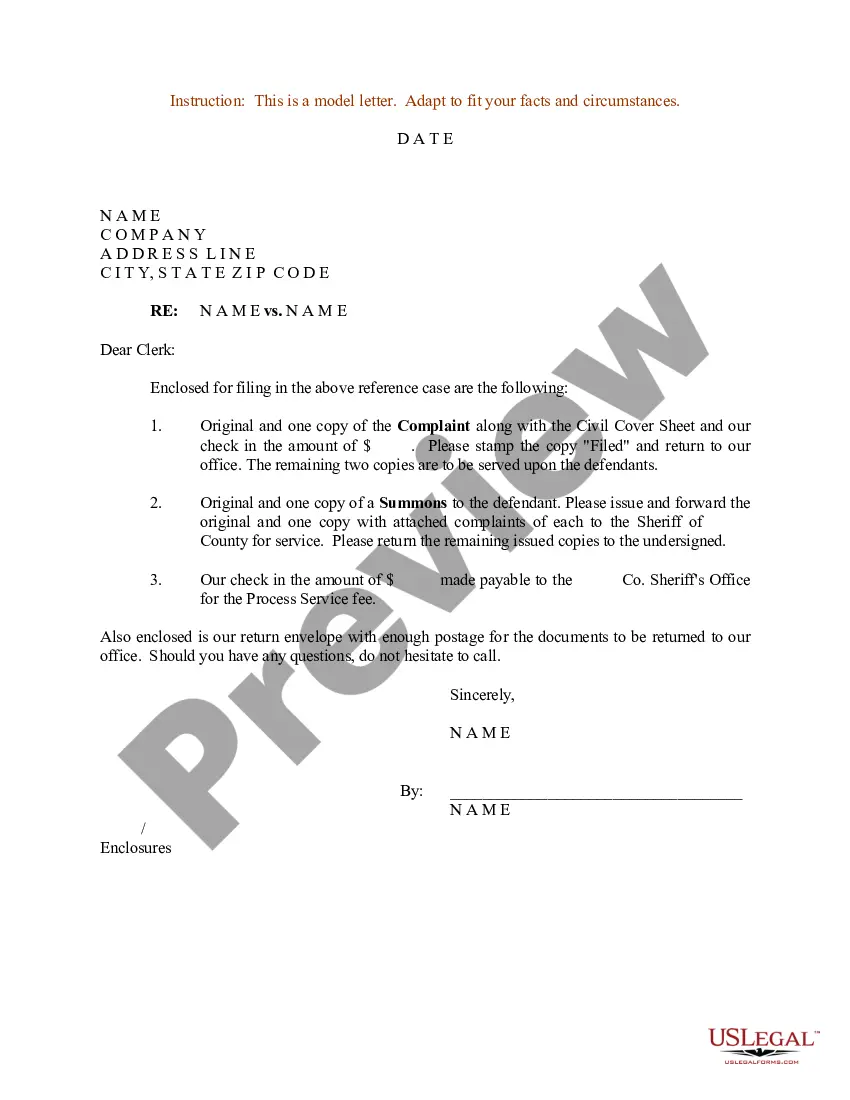
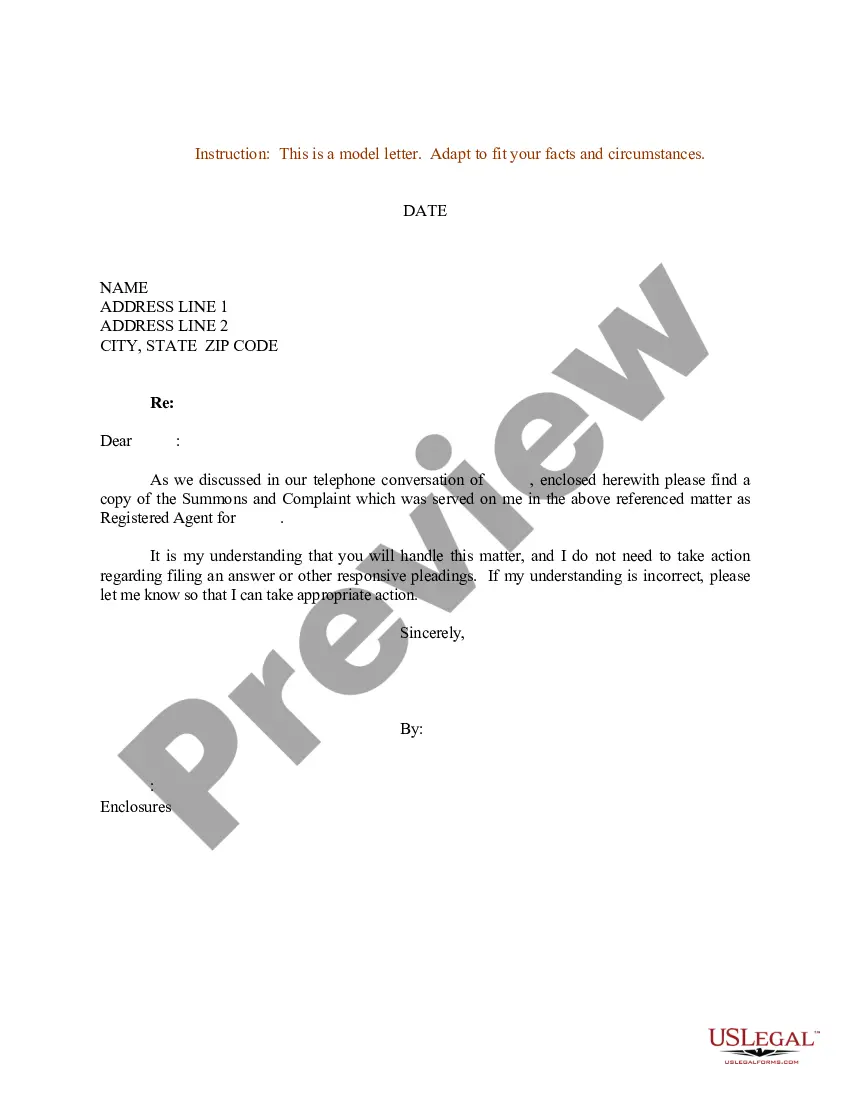
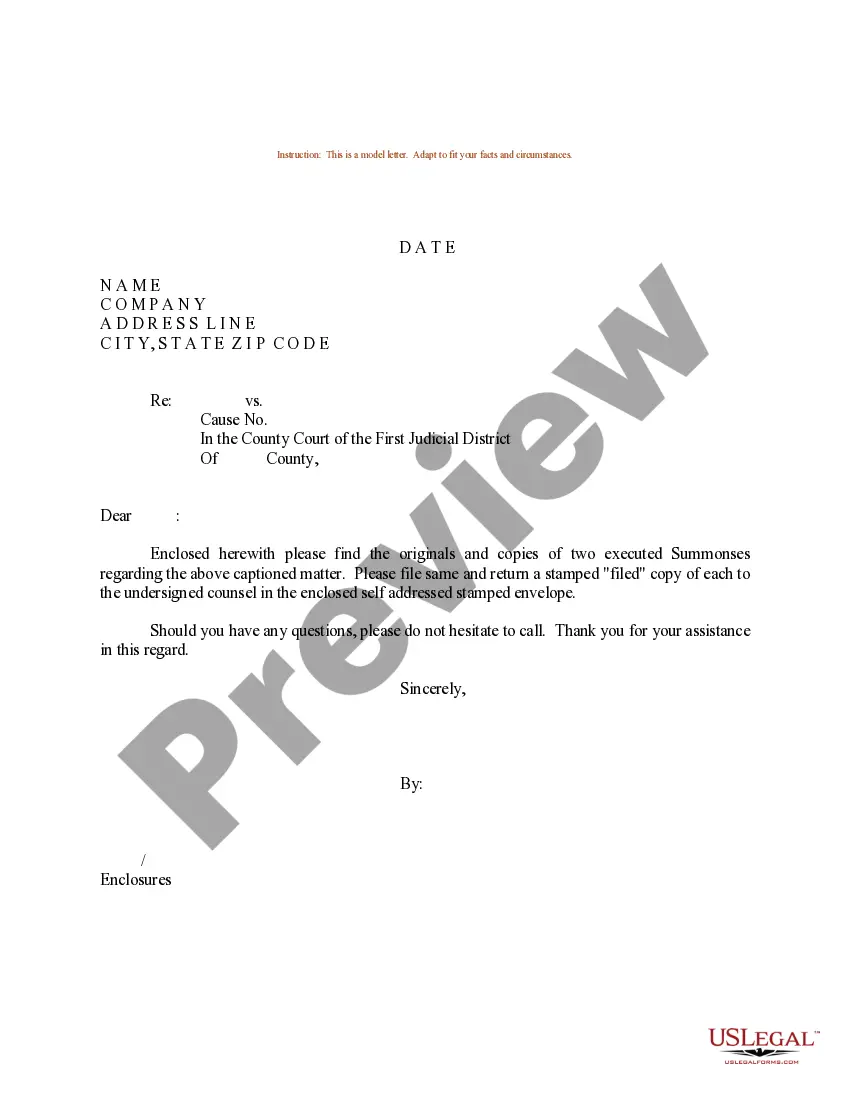
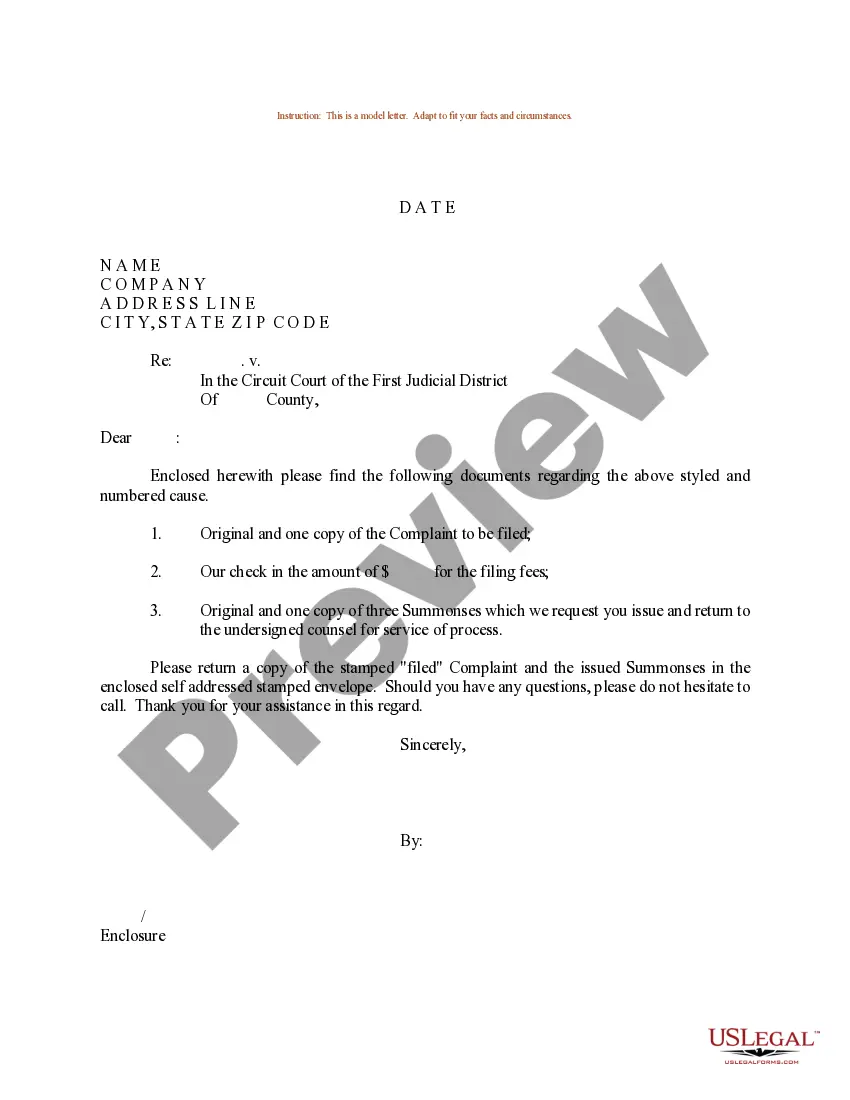
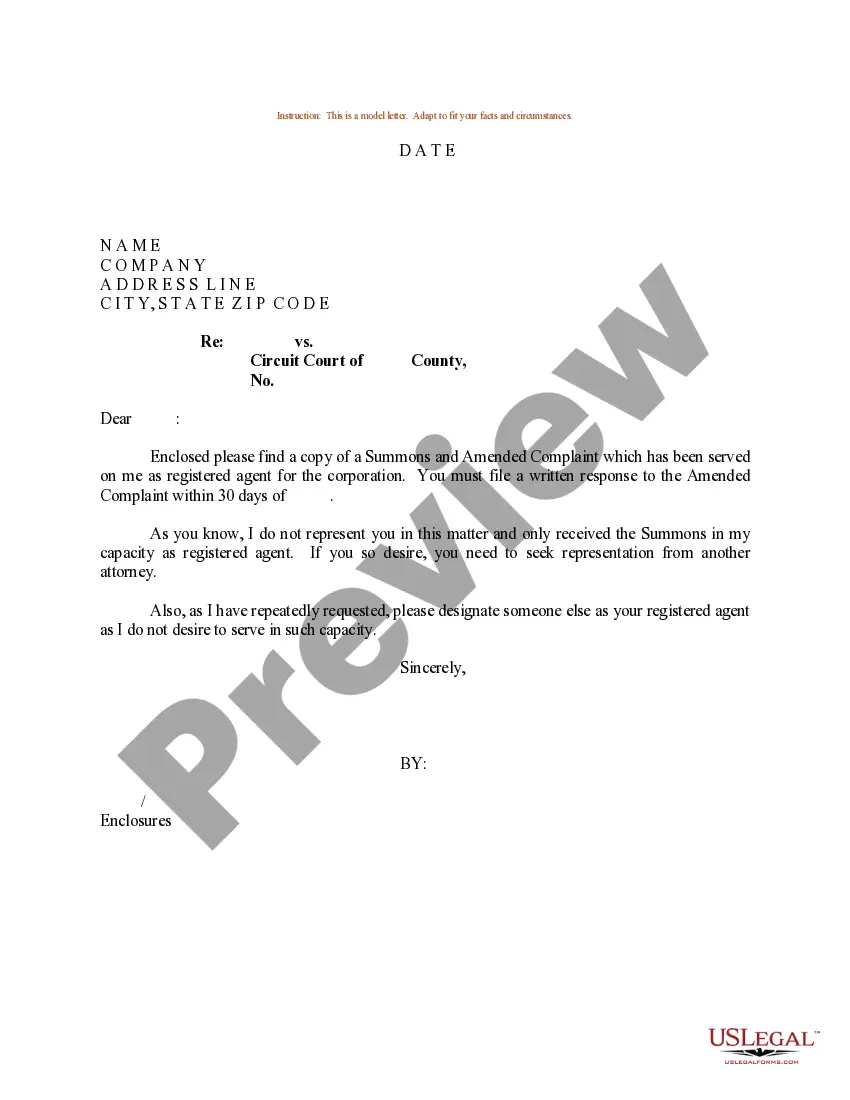
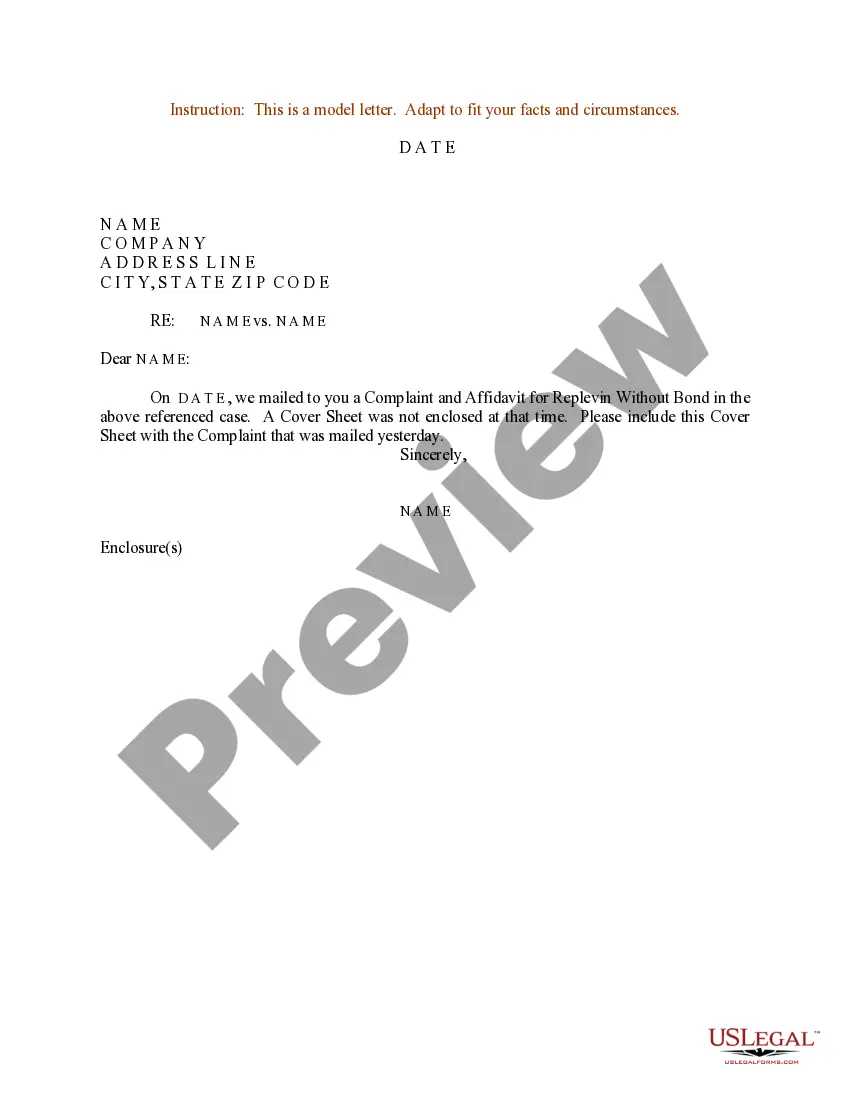
This Sample Letter regarding Complaint and Summons to be Filed is a template intended to assist individuals in formally communicating with a court clerk regarding a legal case. This model letter is adaptable to suit various situations involving the filing of complaints and summons. Unlike other legal letters, this form focuses specifically on the initial communication needed to facilitate the submission of legal documents to a court.
Key parts of this document
- Date of the letter
- Recipient's details, including name and address
- Reference case title (e.g., Plaintiff vs. Defendant)
- Enclosure list of the documents being filed
- Signature line for the sender
Situations where this form applies
This letter should be used when an individual or their attorney is filing a complaint and a summons with the court. It is necessary to formally communicate this filing to ensure that all parties involved are aware of the legal proceedings. This letter serves as a notification to the court clerk regarding the enclosed documents and helps to initiate the legal process.
Who this form is for
This form is suitable for:
- Individuals filing a lawsuit
- Attorneys representing plaintiffs in a legal case
- Parties involved in civil litigation
Instructions for completing this form
- Enter the date at the top of the letter.
- Input the recipient's name and address accurately.
- Clearly state the reference case title in the subject line.
- List all documents being submitted with the letter.
- Sign the letter to validate the submission.
Notarization guidance
This form does not typically require notarization unless specified by local law. Therefore, you should verify the local regulations regarding notarization for filing complaints.
Get your form ready online
Our built-in tools help you complete, sign, share, and store your documents in one place.
Make edits, fill in missing information, and update formatting in US Legal Forms—just like you would in MS Word.
Download a copy, print it, send it by email, or mail it via USPS—whatever works best for your next step.
Sign and collect signatures with our SignNow integration. Send to multiple recipients, set reminders, and more. Go Premium to unlock E-Sign.
If this form requires notarization, complete it online through a secure video call—no need to meet a notary in person or wait for an appointment.
We protect your documents and personal data by following strict security and privacy standards.

Make edits, fill in missing information, and update formatting in US Legal Forms—just like you would in MS Word.

Download a copy, print it, send it by email, or mail it via USPS—whatever works best for your next step.

Sign and collect signatures with our SignNow integration. Send to multiple recipients, set reminders, and more. Go Premium to unlock E-Sign.

If this form requires notarization, complete it online through a secure video call—no need to meet a notary in person or wait for an appointment.

We protect your documents and personal data by following strict security and privacy standards.
Common mistakes
- Omitting the date or recipientâs details.
- Failing to include all necessary enclosures.
- Not clearly indicating the reference case title.
- Forgetting to sign the letter before submission.
Why use this form online
- Convenience of downloading and editing the form at any time.
- Access to professionally drafted templates that ensure legal compliance.
- Time-saving solution for individuals who need to file documents quickly.
Legal use & context
- This letter serves as a formal introduction to your case when submitted to the court.
- After filing, the letter helps ensure proper documentation of your intent to initiate legal proceedings.
Main things to remember
- Use the Sample Letter regarding Complaint and Summons to ensure proper communication with the court.
- Make sure to adapt the letter to fit the specific facts and details of your case.
- Check local court rules for any state-specific requirements or notarization needs.
Looking for another form?


Form popularity
FAQ
The most valid complaint letter is usually short, averaging about 500 words tops. When writing your complaint letter, make sure that your request is in the form of a question. Use words like, How do you fix this? State what you would like to be done and how long you are willing to wait for a response.
Write the letter in a polite manner. Always introduce yourself first at the left of the letter. Never forget to mention the date of writing the letter. The letter of receiver or recipient should be properly mentioned along with Pincode. Mention the purpose of writing a letter in the subject line.
Be clear and concise. State exactly what you want done and how long you're willing to wait for a response. Don't write an angry, sarcastic, or threatening letter. Include copies of relevant documents, like receipts, work orders, and warranties. Include your name and contact information.
When writing a complaint letter you should: describe your problem and the outcome you want. include key dates, such as when you purchased the goods or services and when the problem occurred. identify what action you've already taken to fix the problem and what you will do if you and the seller cannot resolve the
I have a complaint to make. Sorry to bother you but... I'm sorry to say this but... I'm afraid I've got a complaint about... I'm afraid there is a slight problem with... Excuse me but there is a problem about... I want to complain about... I'm angry about...
Describe your problem and the outcome you want. include key dates, such as when you purchased the goods or services and when the problem occurred. identify what action you've already taken to fix the problem and what you will do if you and the seller cannot resolve the problem.
Provide the name of the court at the top of the Answer. You can find the information on the summons. List the name of the plaintiff on the left side. Write the case number on the right side of the Answer. Address the Judge and discuss your side of the case. Ask the judge to dismiss the case.
Be clear and concise. State exactly what you want done and how long you're willing to wait for a response. Don't write an angry, sarcastic, or threatening letter. Include copies of relevant documents, like receipts, work orders, and warranties. Include your name and contact information.
Be professional. Use professional letterhead and be sure to sign in ink. Express your dissatisfaction clearly, with facts, dates, and details (including copies of receipts and so on) to help substantiate your claim. Be sincere. Be prompt. Don't expect compensation every time.