Sample Letter for Deed of Trust with Corrected Assignment
What is this form?
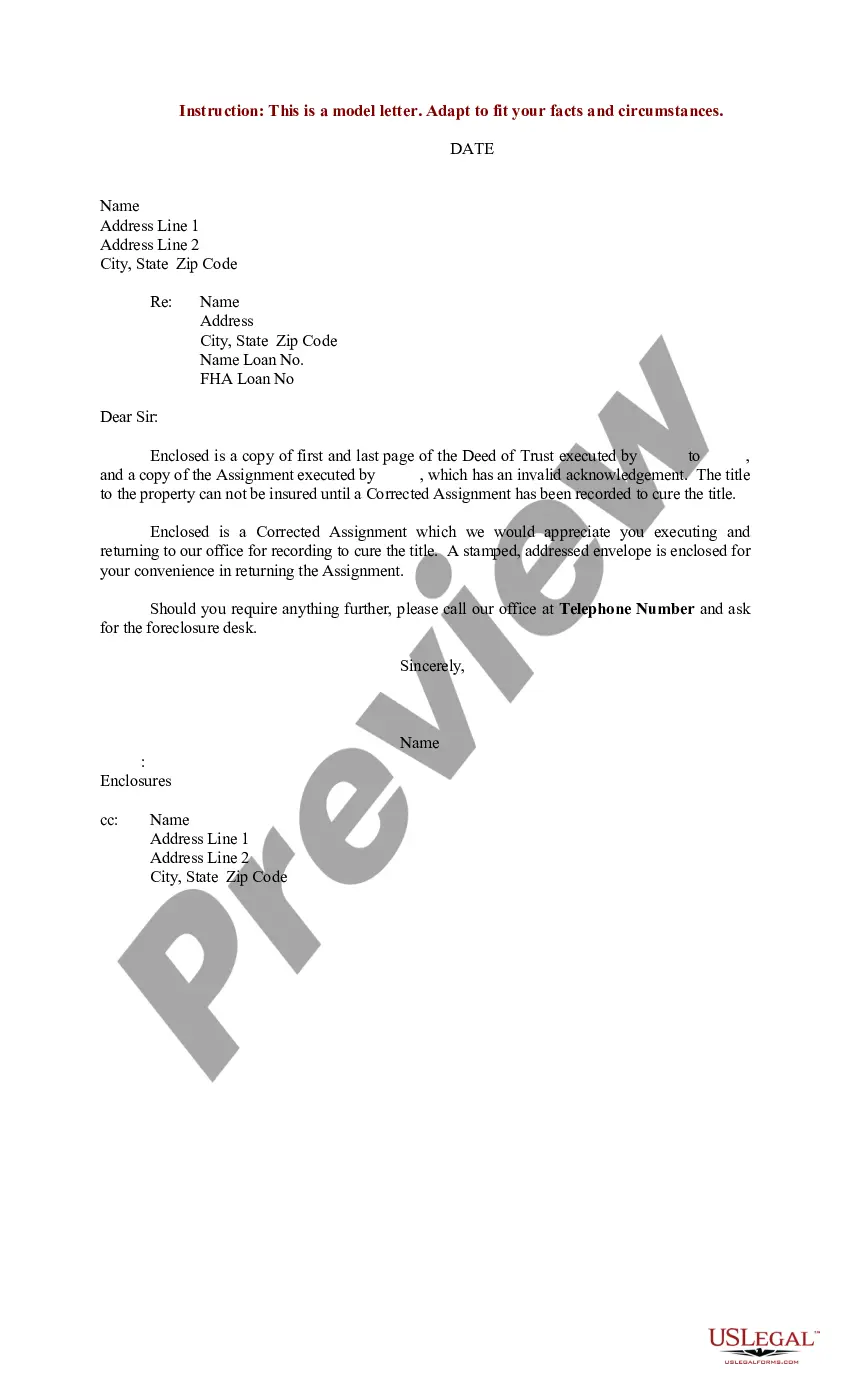
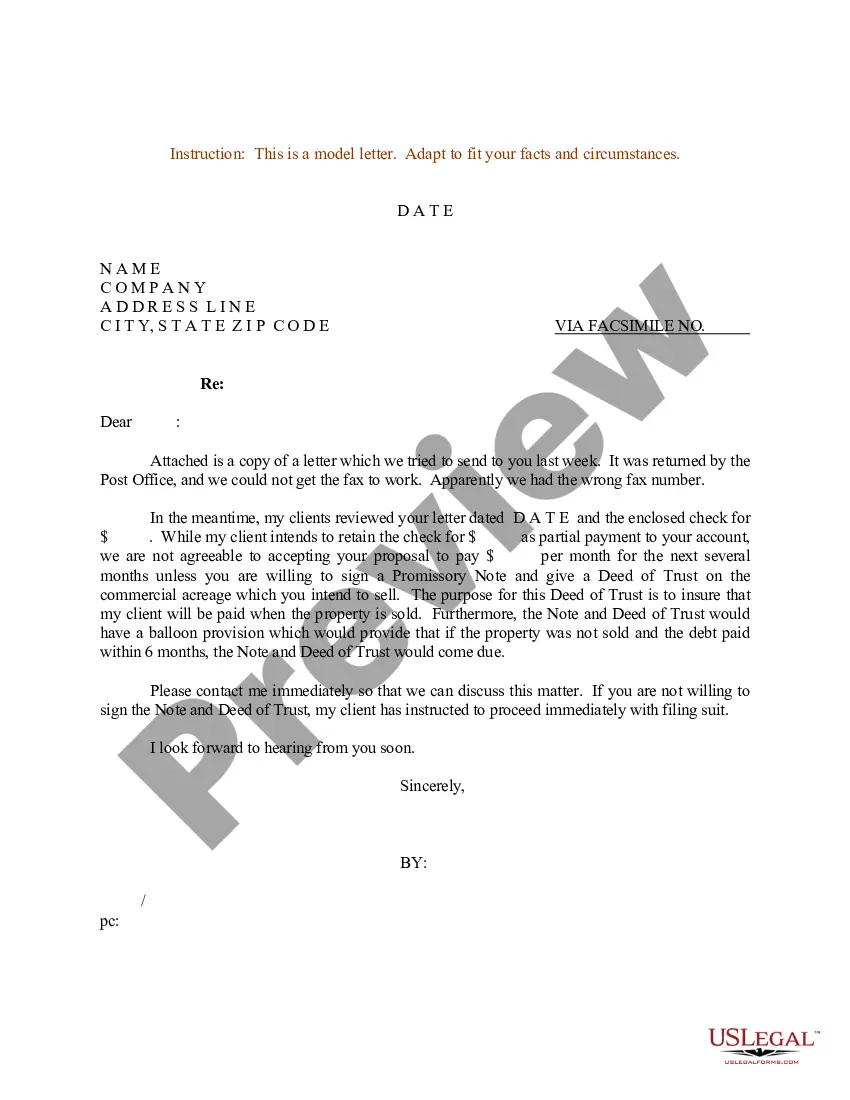
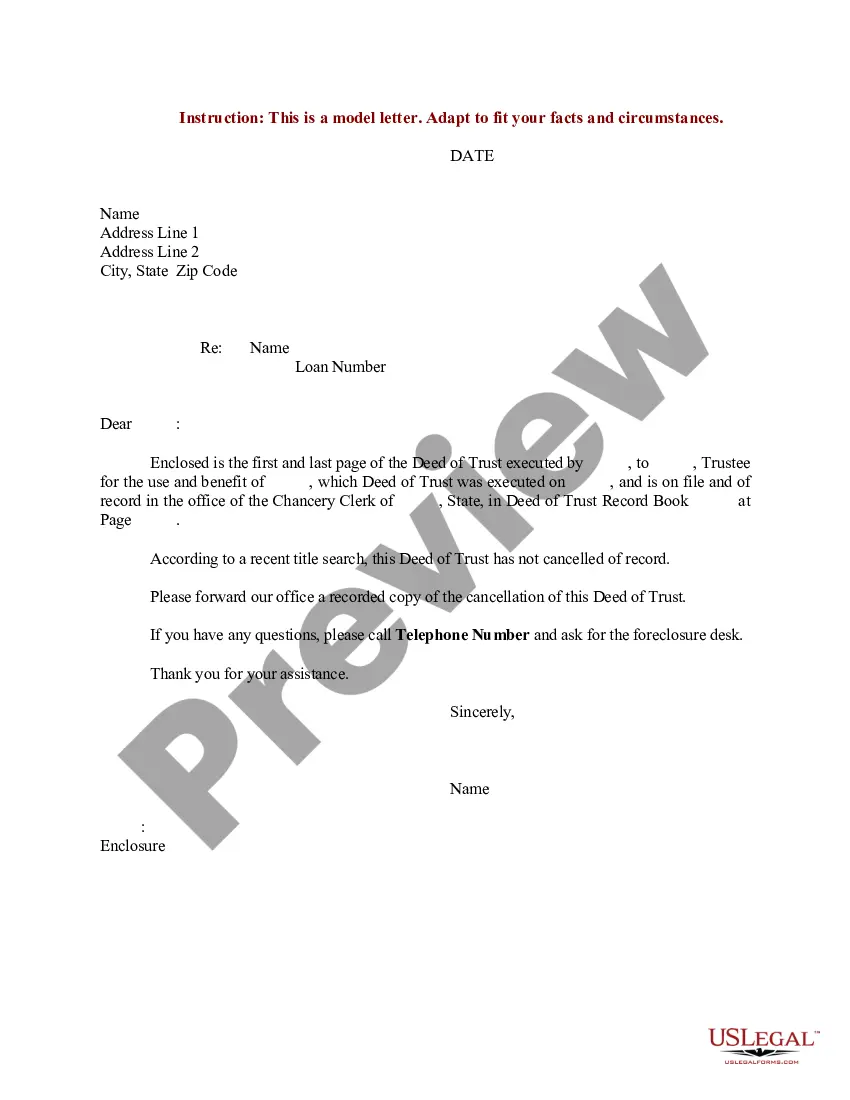
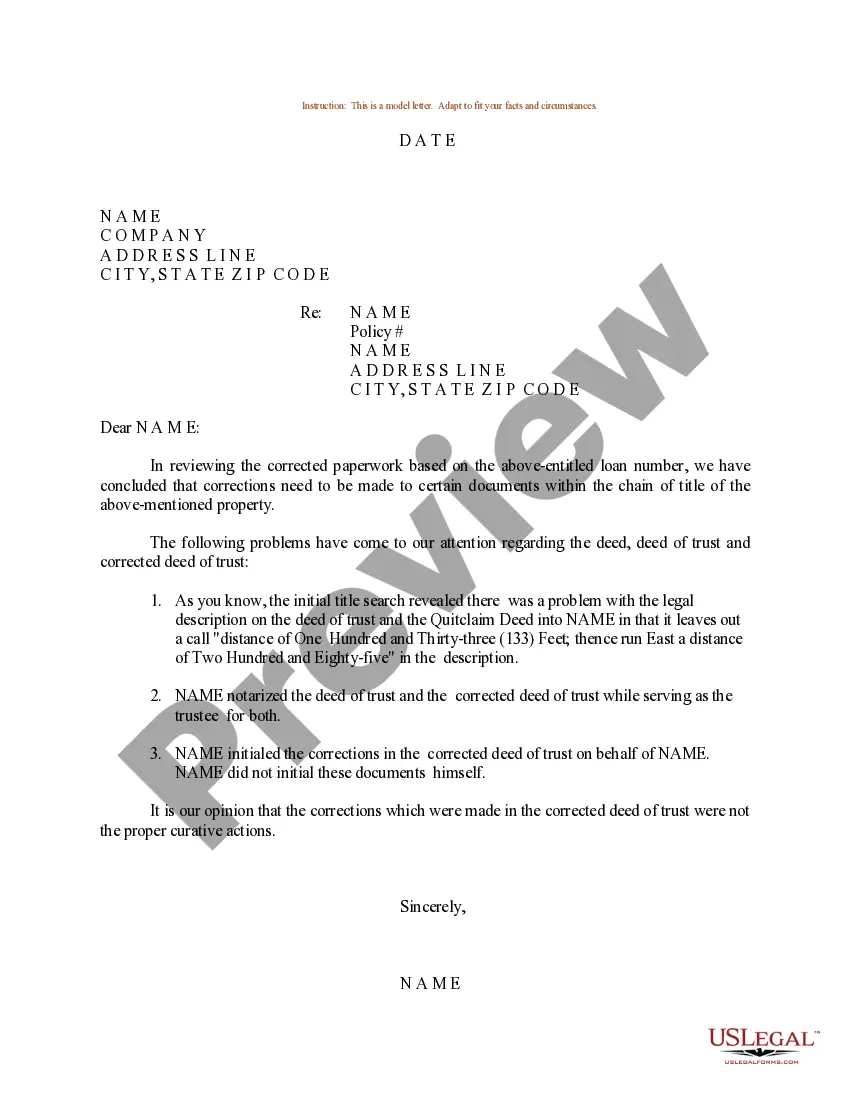
The Sample Letter for Deed of Trust with Corrected Assignment is a formal communication template designed to accompany a corrected assignment of a deed of trust. This letter provides essential instructions to the recipient regarding the execution and return of the assignment, which is necessary for curing potential title issues. Unlike other legal forms, this template specifically facilitates the clarification and correction of documents related to deeds of trust.
Main sections of this form
- Date: Indicates when the letter is sent.
- Recipient information: Includes the name and address of the person receiving the letter.
- Salutation: A standard greeting to the recipient.
- Body of the letter: Includes the request to execute the corrected assignment and return it for recording.
- Contact information: Provides a phone number for further inquiries.
- Closing: A formal sign-off to conclude the letter.
When this form is needed
This letter is used when there is a need to correct an assignment related to a deed of trust. It is typically employed in situations where an error has been identified in the original documentation, and the parties involved must ensure that the corrected assignment is properly executed and submitted for official recording. This helps prevent potential legal disputes regarding the property title.
Who needs this form
- Property owners needing to correct a deed of trust assignment.
- Loan servicers managing mortgage-related documents.
- Real estate attorneys handling title issues.
- Anyone involved in a foreclosure process seeking to rectify title discrepancies.
Completing this form step by step
- Fill in the date at the top of the letter.
- Provide the recipient's name and address in the designated areas.
- Clearly state the purpose of the letter in the body, asking for the execution of the corrected assignment.
- Include your contact information for any questions or further assistance.
- Sign the letter and include any necessary enclosures.
Does this document require notarization?
Notarization is required for this form to take effect. Our online notarization service, powered by Notarize, lets you verify and sign documents remotely through an encrypted video session, available 24/7.
Get your form ready online
Our built-in tools help you complete, sign, share, and store your documents in one place.
Make edits, fill in missing information, and update formatting in US Legal Forms—just like you would in MS Word.
Download a copy, print it, send it by email, or mail it via USPS—whatever works best for your next step.
Sign and collect signatures with our SignNow integration. Send to multiple recipients, set reminders, and more. Go Premium to unlock E-Sign.
If this form requires notarization, complete it online through a secure video call—no need to meet a notary in person or wait for an appointment.
We protect your documents and personal data by following strict security and privacy standards.

Make edits, fill in missing information, and update formatting in US Legal Forms—just like you would in MS Word.

Download a copy, print it, send it by email, or mail it via USPS—whatever works best for your next step.

Sign and collect signatures with our SignNow integration. Send to multiple recipients, set reminders, and more. Go Premium to unlock E-Sign.

If this form requires notarization, complete it online through a secure video call—no need to meet a notary in person or wait for an appointment.

We protect your documents and personal data by following strict security and privacy standards.
Common mistakes to avoid
- Failing to include the correct date on the letter.
- Not providing complete recipient information.
- Omitting contact information for follow-up.
- Forgetting to sign the letter before sending.
Benefits of completing this form online
- Easy to download and customize as needed.
- Convenient access allows for quick updates and corrections.
- Drafted by licensed attorneys, ensuring legal reliability.
Looking for another form?




Form popularity
FAQ
Party information: names and addresses of the trustor(s), trustee(s), beneficiary(ies), and guarantor(s) (if applicable) Property details: full address of the property and its legal description (which can be obtained from the County Recorder's Office)
A deed of trust is an agreement between a home buyer and a lender at the closing of a property. It states that the home buyer will repay the loan and that the mortgage lender will hold the legal title to the property until the loan is fully paid.
As you stated in your question, it is recorded among the land records, and your lender keeps the original. When you pay off the loan, the lender will return the deed of trust with the promissory note. This document is rather lengthy and quite legalistic.
A trust deed is always used together with a promissory note that sets out the amount and terms of the loan. The property owner signs the note, which is a written promise to repay the borrowed money.
Some owners are put off using solicitors duke to the deed of trust cost. Individuals can write out their own, and use someone else as a witness. However, this may have errors or not be a legally binding document. The investment of getting a deed of trust when buying a property is often worth it in the long term.
A Deed of Trust is essentially an agreement between a lender and a borrower to give the property to a neutral third party who will serve as a trustee. The trustee holds the property until the borrower pays off the debt.The trustee, however, holds the legal title to the property.
While both a deed of trust and a mortgage provide a security interest for the lender in the property, the lender does not hold the security interest as is the case in a traditional mortgage.The deed of trust is what secures the promissory note.
In Texas, a deed of trust, also known as a trust deed, is the commonly used instrument for the purpose of creating mortgage liens on real estate. A mortgage is an executed contract in which the legal or equitable owner of the real property pledges the title thereto as security for performance of an obligation.
The person who owns the property usually signs a promissory note and a deed of trust. The deed of trust does not have to be recorded to be valid.