Sample Letter for Settlement of Outstanding Bill of Deceased
What this document covers
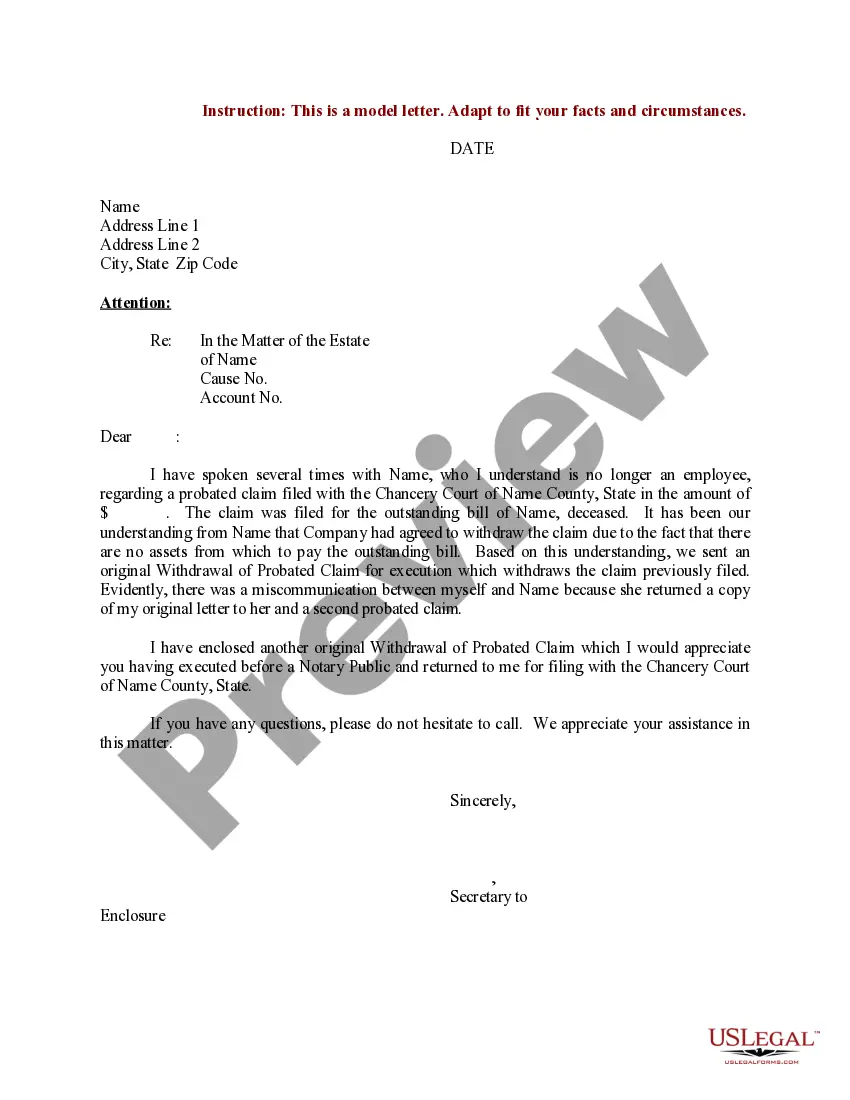
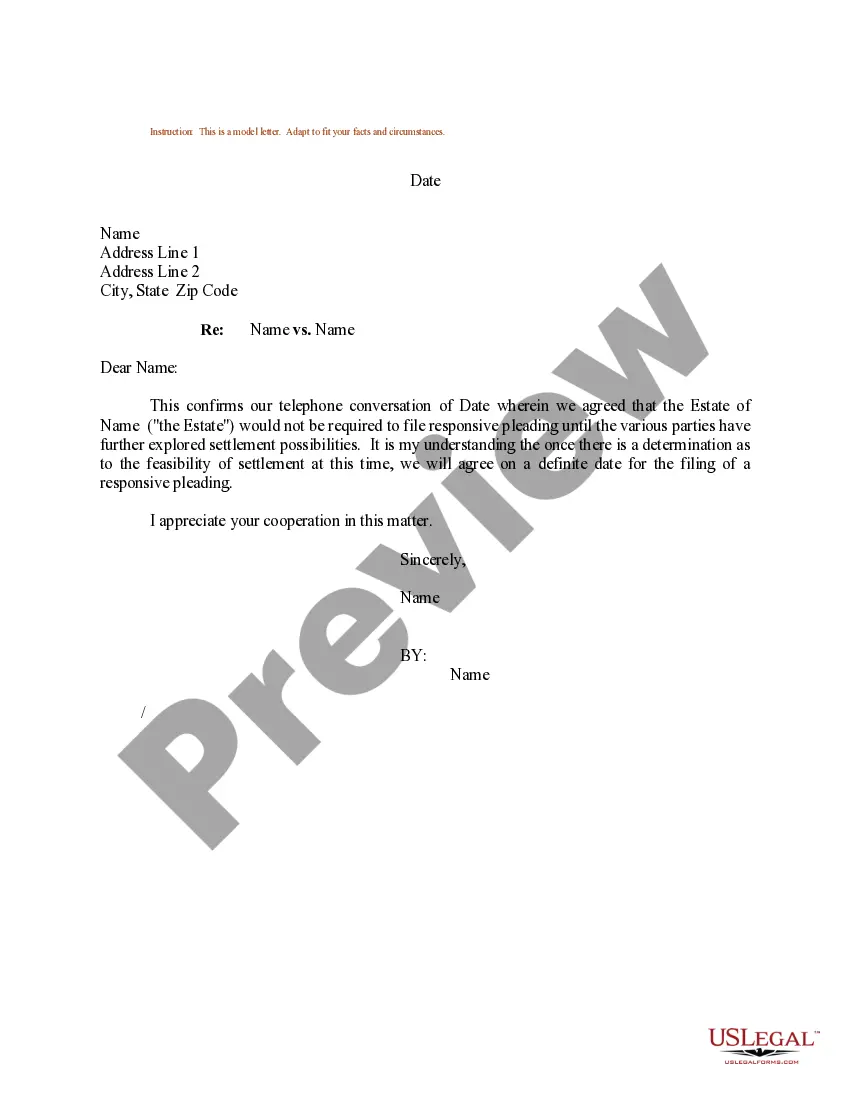
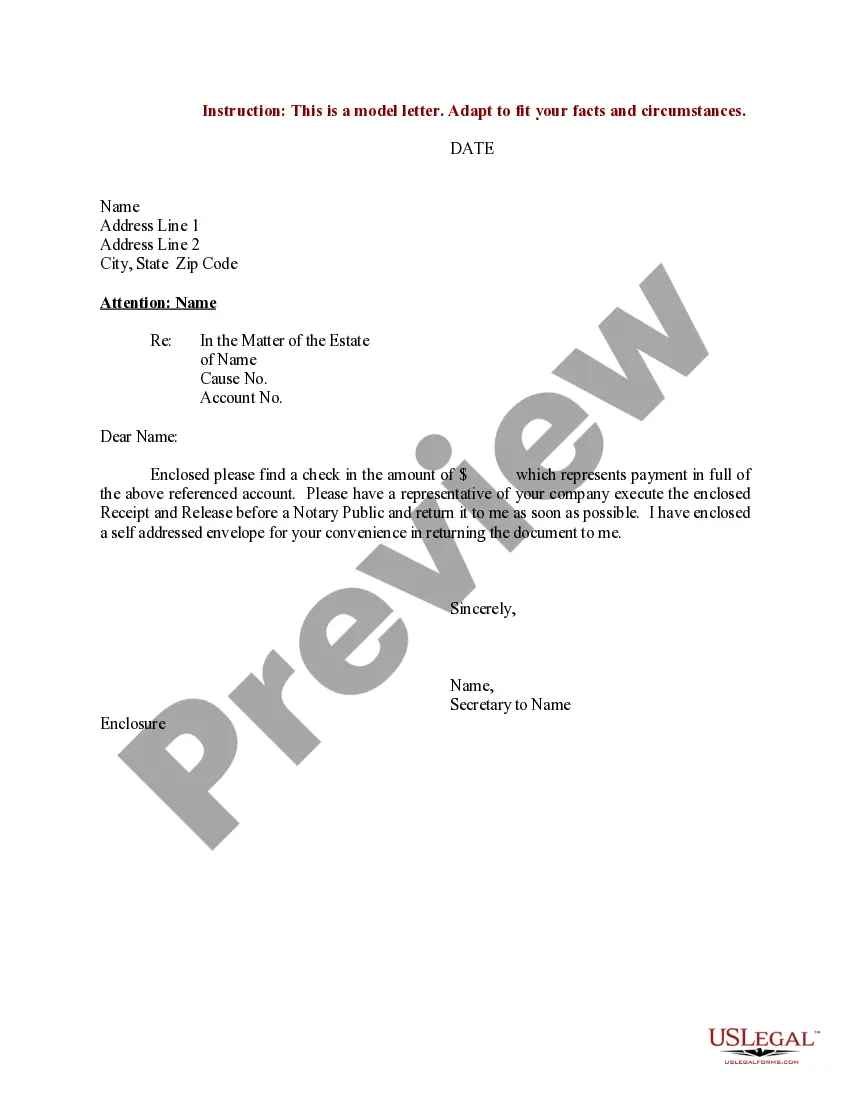
This Sample Letter for Settlement of Outstanding Bill of Deceased is a document used to request the settlement of unpaid bills related to a deceased person's estate. This letter serves as a formal communication with creditors, ensuring that all claims against the estate are properly addressed and settled. Unlike other legal documents, this letter is specifically tailored to handle outstanding debts of the deceased, simplifying the process for the executor or administrator of the estate.
What’s included in this form
- Date of the letter
- Creditorâs name and address
- Description of the enclosed Withdrawal of Probated Claim
- Request for notarization
- Contact information for follow-up questions


When to use this form
You should use this form when you need to communicate with creditors about settling outstanding debts of a deceased person. This letter is essential when managing the estate's liabilities and ensures that creditors are acknowledged and that their claims are settled in accordance with state laws. It is typically used after the death of a person when the estate has unpaid bills that need to be resolved.
Who this form is for
Eligibility for this form includes:
- Executors or administrators of a deceased personâs estate
- Family members or heirs managing the estate
- Legal representatives handling estate-related matters
How to complete this form
- Enter the date at the top of the letter.
- Write the creditor's name and address clearly.
- Specify the details of the Withdrawal of Probated Claim enclosed.
- Request for the creditor to have the letter executed before a Notary Public.
- Provide your contact information for any questions they may have.
Is notarization required?
This form must be notarized to be legally valid. Notarization helps authenticate the signatures on the document, ensuring that it is recognized by the court and creditors. US Legal Forms offers integrated online notarization services that are available 24/7 through secure video calls, making it convenient to complete this step without the need for in-person visits.
Get your form ready online
Our built-in tools help you complete, sign, share, and store your documents in one place.
Make edits, fill in missing information, and update formatting in US Legal Forms—just like you would in MS Word.
Download a copy, print it, send it by email, or mail it via USPS—whatever works best for your next step.
Sign and collect signatures with our SignNow integration. Send to multiple recipients, set reminders, and more. Go Premium to unlock E-Sign.
If this form requires notarization, complete it online through a secure video call—no need to meet a notary in person or wait for an appointment.
We protect your documents and personal data by following strict security and privacy standards.

Make edits, fill in missing information, and update formatting in US Legal Forms—just like you would in MS Word.

Download a copy, print it, send it by email, or mail it via USPS—whatever works best for your next step.

Sign and collect signatures with our SignNow integration. Send to multiple recipients, set reminders, and more. Go Premium to unlock E-Sign.

If this form requires notarization, complete it online through a secure video call—no need to meet a notary in person or wait for an appointment.

We protect your documents and personal data by following strict security and privacy standards.
Common mistakes
- Forgetting to include the date on the letter.
- Not providing complete information for the creditor's address.
- Omitting to specify the enclosed documents.
- Failing to request for notarization when necessary.
- Not including contact information for follow-up.
Why use this form online
- Immediate access to professionally drafted legal language.
- Easily downloadable and editable to meet specific needs.
- Cost-effective solution compared to hiring an attorney for basic documentation.
- Simplifies the process of communicating with creditors.
Looking for another form?
Form popularity
FAQ
Dear Recipients Name, It is with a heavy heart that I have to advise you that your mother is no more with us. She passed last night at am in the infirmary. I request you to make the necessary arrangements for her last rights and please keep us informed about the same.
Timespan for Creditors to Make Claim For unsecured debts, the time limit ranges from 3-6 months in most states. State laws require executors to post notice of the death, either in a newspaper or directly to known creditors to give them a chance to file a claim. No claims are accepted after the time frame has expired.
If you or your loved one has completed a beneficiary form for each account such as your life insurance policy and 401(k) unsecured creditors typically cannot collect any money from those sources of funds.
Inform the creditor that the deceased passed away; reference the prior call you made. Ask the creditor to place a formal death notice on the deceased credit file and to close the account. Provide information about the decedent, such as his full name, address, Social Security number, birth date and account number.
Write a debt settlement letter to your creditor. Explain your current situation and how much you can pay. Also, provide them with a clear description of what you expect in return, such as removal of missed payments or the account shown as paid in full on your report.
Mail the letter first class. You should send the letter first class, return receipt requested. The receipt will serve as proof that the creditor received the letter. Be sure to attach any supporting documentation, such as a copy of your credit report.
Verify that it's your debt. Understand your rights. Consider the kind of debt you owe. Consider hardship programs. Offer a lump sum. Mention bankruptcy. Speak calmly and logically. Be mindful of the statute of limitations.
Collectors are allowed to contact third parties (such as a relative) to get the name, address, and telephone number of the deceased person's spouse, executor, administrator, or other person authorized to pay the deceased's debts.
How to Notify Creditors of Death. Once your debts have been established, your surviving family members or the executor of your estate will need to notify your creditors of your death. They can do this by sending a copy of your death certificate to each creditor.