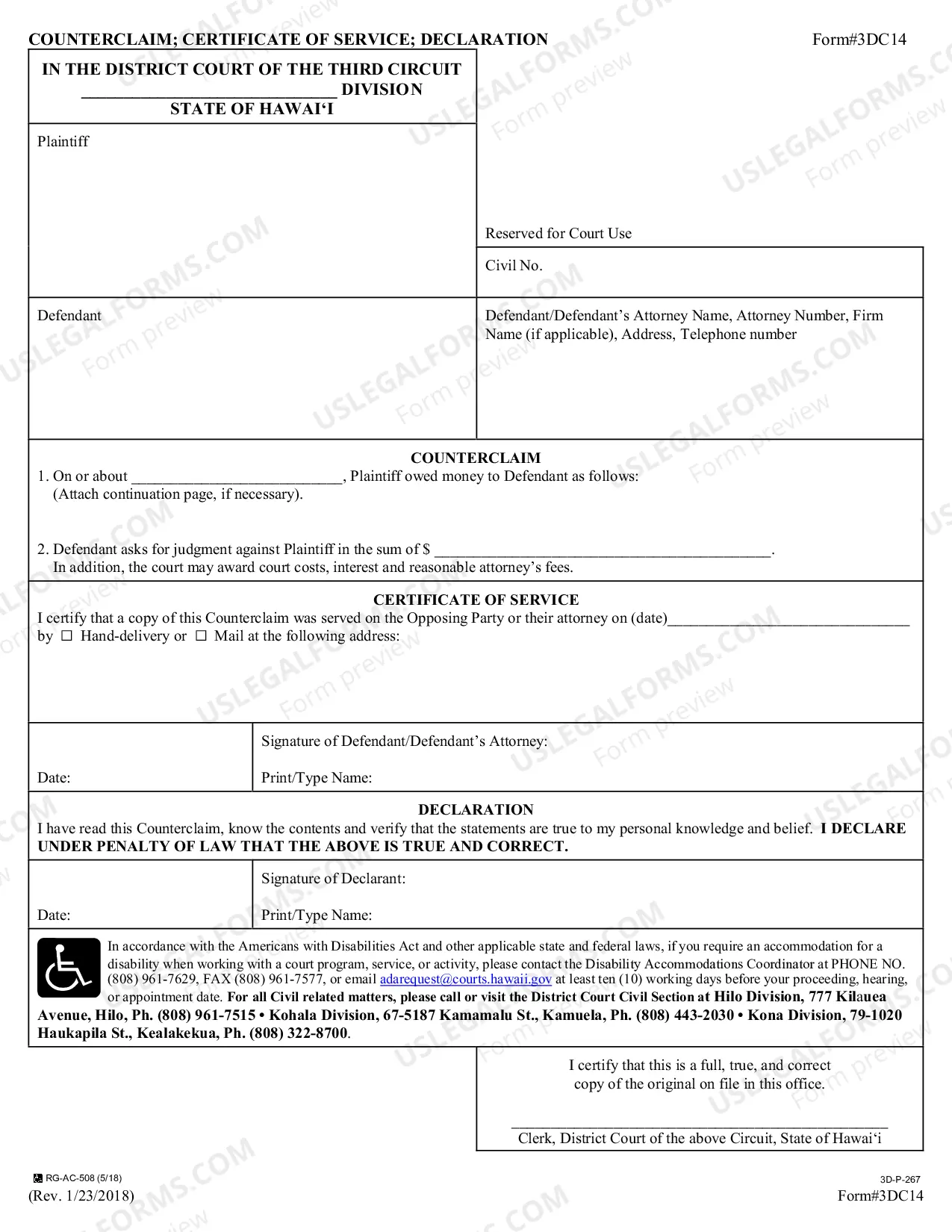
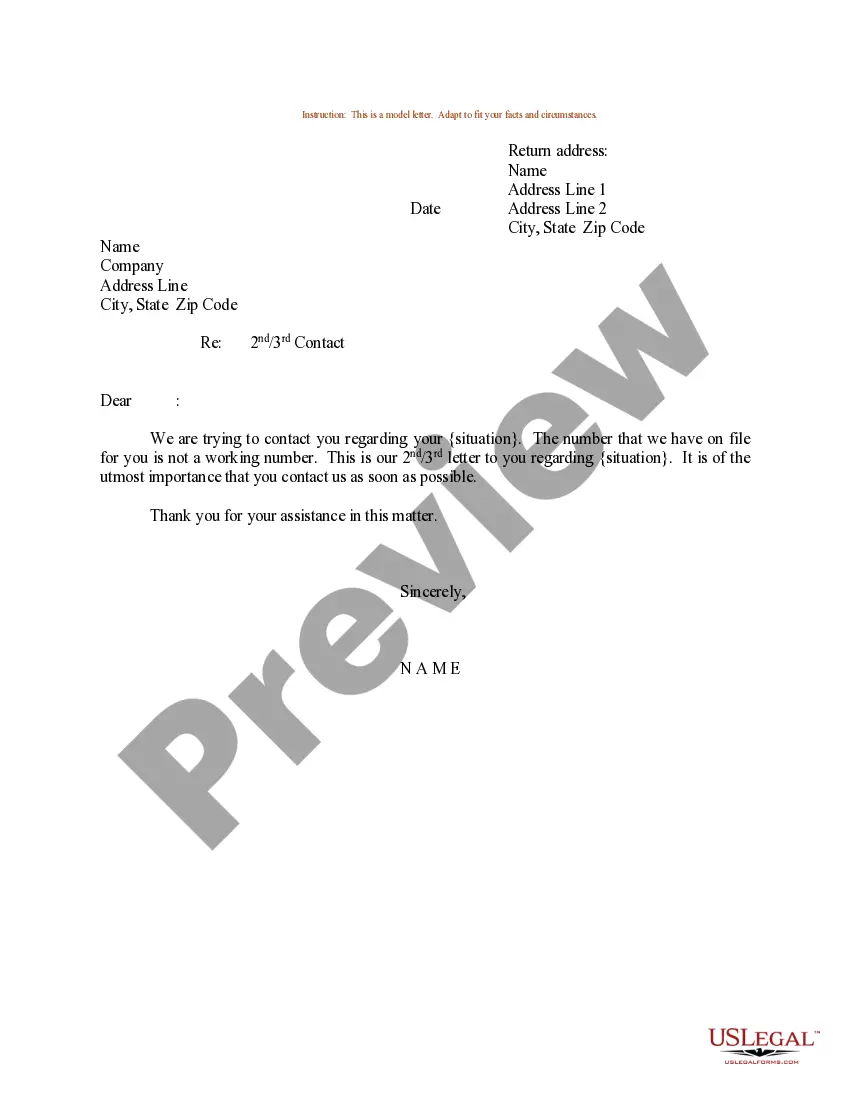
Sample Letter for Attempt to Contact an Individual concerning a Certain Issue
What is this form?
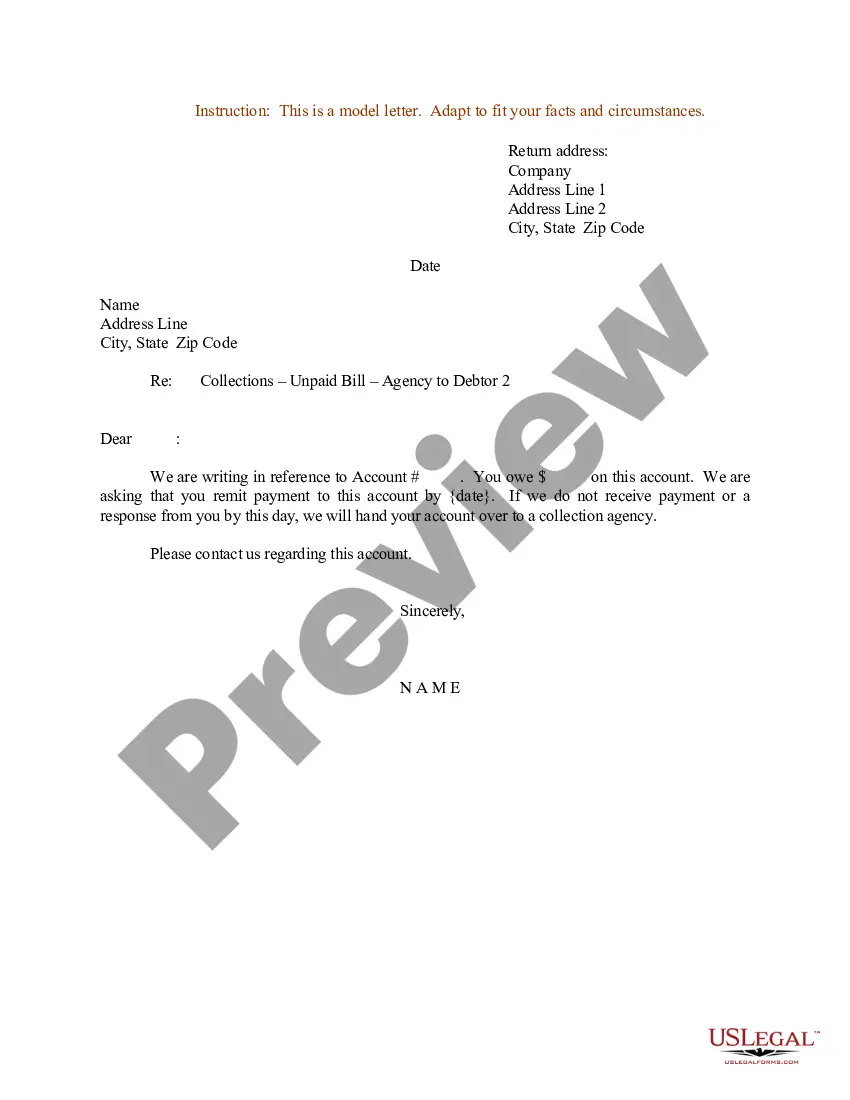
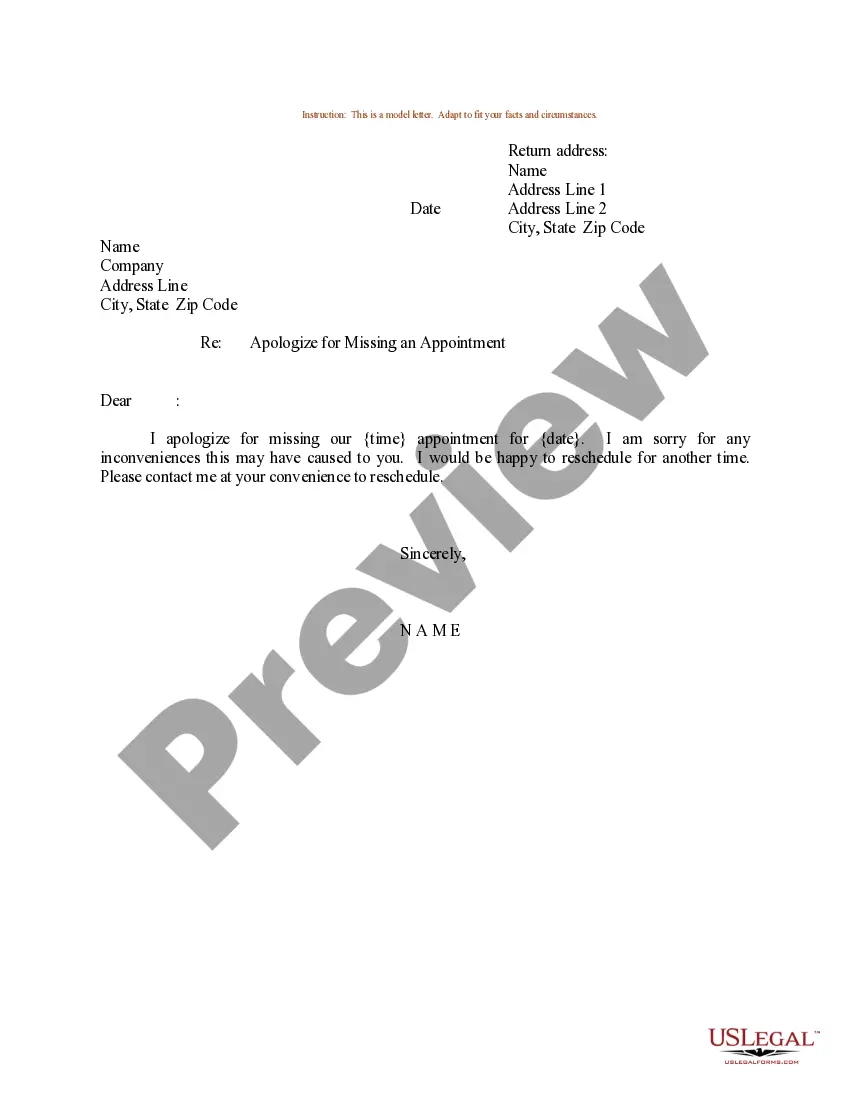
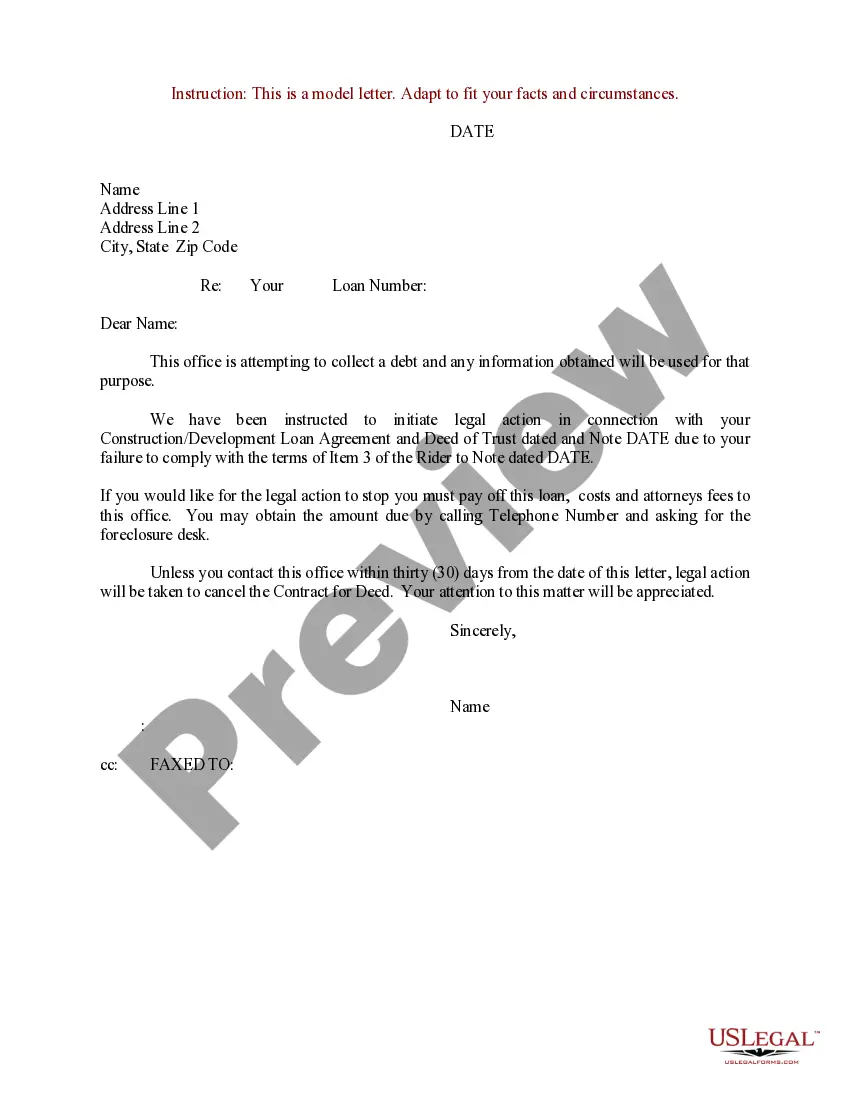
This document is a sample letter designed for individuals seeking to contact another party regarding a specific issue. It serves as a formal means of communication and follows a structured format to ensure clarity. The sample letter helps set the tone for a professional exchange, differing from generic communication formats by providing specific fields and guidance tailored to your situation.
Key parts of this document
- Return address: The sender's information including name, address, city, state, and zip code.
- Date: The date on which the letter is written.
- Recipient's address: The name and contact details of the individual or company being contacted.
- Subject line: A clear indication of the purpose of the letter, such as "2nd/3rd Contact."
- Salutation: A courteous greeting to the recipient.
- Closing statement: A professional sign-off and the sender's name.
When this form is needed
This letter is useful in situations where you need to follow up with an individual or organization regarding an unresolved issue or request. It may be used in business contexts, personal matters, or any scenario requiring formal communication and record-keeping to demonstrate continued engagement or persistence.
Who needs this form
- Individuals seeking to follow up on previously attempted contacts.
- Business professionals needing to ensure their inquiries are acknowledged.
- Anyone who wishes to document their attempts to communicate on specific issues.
- Consumers who have unresolved matters with a company or service provider.
Instructions for completing this form
- Identify and enter the return address at the top of the letter.
- Insert the date when the letter is written.
- Add the recipient's name and address in the designated section.
- Write a concise subject line to summarize the purpose of contact.
- Include a polite greeting at the beginning of the letter.
- Conclude with a professional sign-off and your name.
Does this document require notarization?
Notarization is not commonly needed for this form. However, certain documents or local rules may make it necessary. Our notarization service, powered by Notarize, allows you to finalize it securely online anytime, day or night.
Get your form ready online
Our built-in tools help you complete, sign, share, and store your documents in one place.
Make edits, fill in missing information, and update formatting in US Legal Forms—just like you would in MS Word.
Download a copy, print it, send it by email, or mail it via USPS—whatever works best for your next step.
Sign and collect signatures with our SignNow integration. Send to multiple recipients, set reminders, and more. Go Premium to unlock E-Sign.
If this form requires notarization, complete it online through a secure video call—no need to meet a notary in person or wait for an appointment.
We protect your documents and personal data by following strict security and privacy standards.

Make edits, fill in missing information, and update formatting in US Legal Forms—just like you would in MS Word.

Download a copy, print it, send it by email, or mail it via USPS—whatever works best for your next step.

Sign and collect signatures with our SignNow integration. Send to multiple recipients, set reminders, and more. Go Premium to unlock E-Sign.

If this form requires notarization, complete it online through a secure video call—no need to meet a notary in person or wait for an appointment.

We protect your documents and personal data by following strict security and privacy standards.
Typical mistakes to avoid
- Failing to include all required address information.
- Not dating the letter, which may affect the timeline of communication.
- Using an informal tone instead of maintaining professionalism.
- Forgetting to proofread for grammatical errors and clarity.
Benefits of using this form online
- Immediate access to a professionally drafted template that saves time.
- Editability allows you to customize the letter according to your specific needs.
- Standardized format ensures clarity and professionalism in communication.
Legal use & context
- The letter can serve as a record of attempts to contact an individual.
- Using a formal letter format may support your position should formal action be needed later.
Key takeaways
- The form is a sample letter meant for contacting an individual about an issue.
- It should be used when previous attempts to reach out have failed.
- Ensure to include all necessary details, such as addresses and date, for clarity.
Looking for another form?

Form popularity
FAQ
Address the recipient in a formal manner. Explain the dispute in detail. List your arguments as to why the establishment's decision should be reconsidered. Add additional evidence or facts that would speak in your favor in this particular case.
When addressing a letter To Whom It May Concern, the entire phrase is typically capitalized, then followed by a colon: To Whom It May Concern: Leave a space after it, then start the first paragraph of the letter.
Be polite and tactful. If you are asking for special consideration for something based on extenuating circumstances such as a medical issue, providing evidence in the form of a doctor's note may help. Simply stating that you should be considered for something is worthless without explaining why.
Letter of concern means a non-disciplinary advisory letter to notify a respondent that the finding of the Superintendent does not warrant disciplinary action, but is nonetheless cause for concern on the part of the Superintendent and that its continuation may result in disciplinary action.
Ask for attention (consideration) or. request for attention (consideration) I am writing to request your consideration... I am writing to ask your consideration... I am writing to request your attention... I appreciate your consideration. I thank you for your consideration.
Respected Sir, I am constrained to draw your attention to the growing menace of thieves in my locality. The policeman is a rare sight in the crowded and growing locality. Taking advantage of the absence of the police around, some goondas are freely indulging in thefts and robberies.
Frame the Issue. Before you lodge a complaint, examine its relevance. State Reasons for Writing. Start the letter by briefly stating your reason for writing it. Provide Chronology of Events. State Desired Remedy.
Be clear and concise. State exactly what you want done and how long you're willing to wait for a response. Don't write an angry, sarcastic, or threatening letter. Include copies of relevant documents, like receipts, work orders, and warranties. Include your name and contact information.
Why am I writing? What are my specific concerns? What are my questions? What would I like the person to do about this situation? What sort of response do I want: a letter, a meeting, a phone call, or something else?