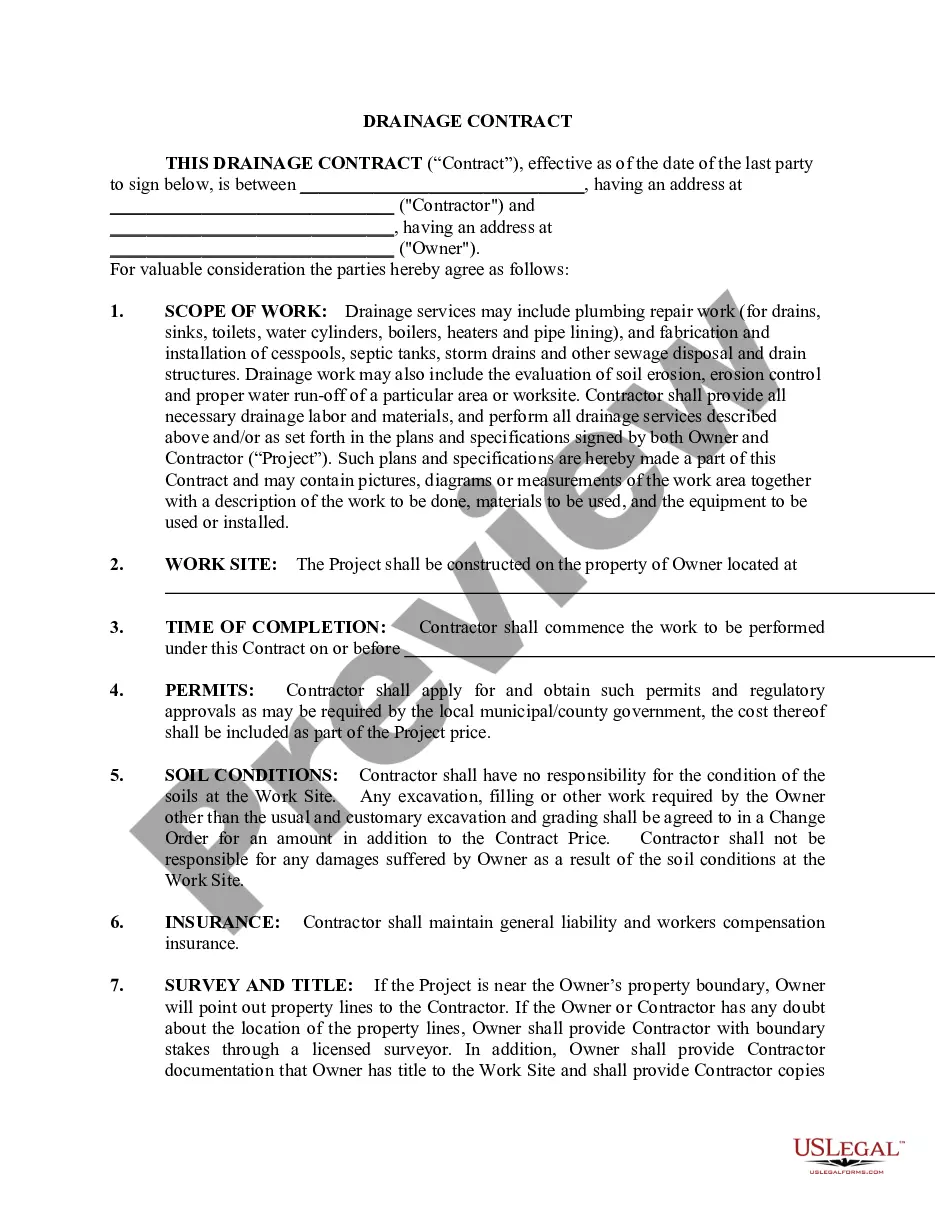
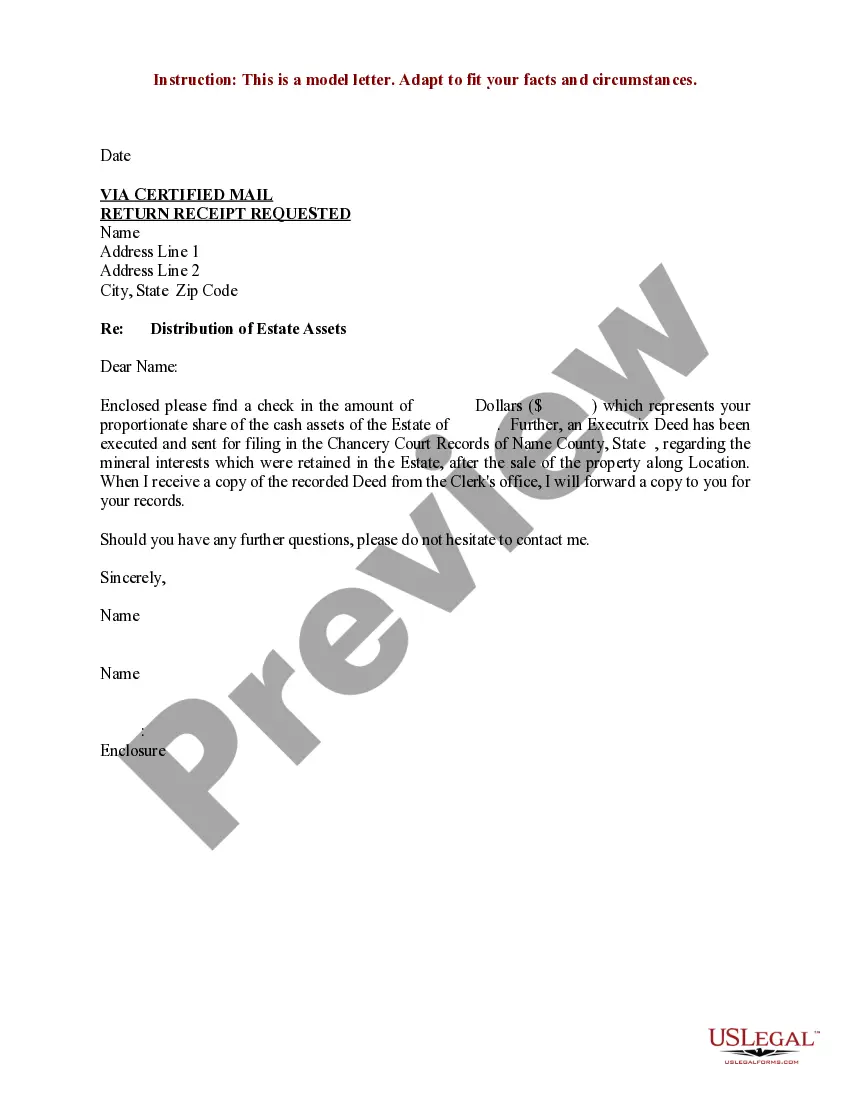
Sample Letter for Distribution of Estate Assets
About this form
The Sample Letter for Distribution of Estate Assets is a legal template designed to assist executors or administrators of an estate in communicating with heirs about the distribution of assets. This form serves as a formal notification, detailing how the inheritance will be handled, and differs from other estate planning documents by specifically addressing the communication of asset distribution rather than the creation of the estate itself.
Form components explained
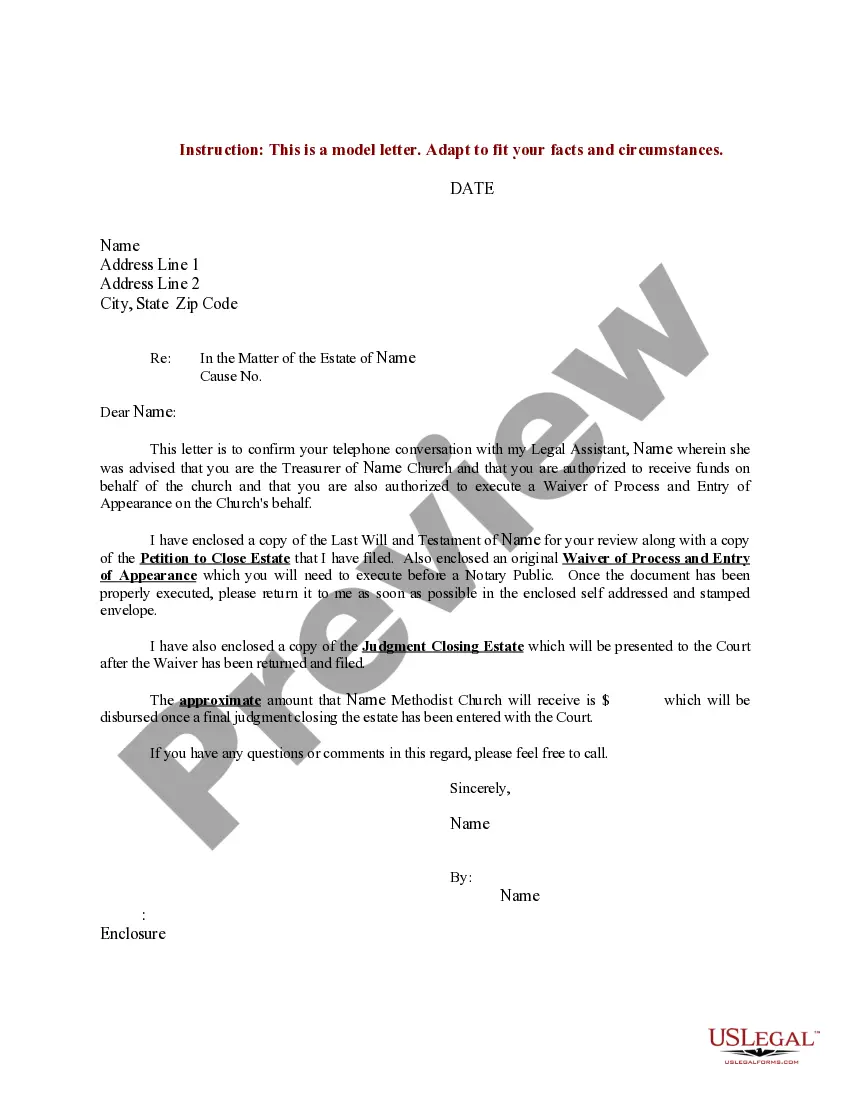
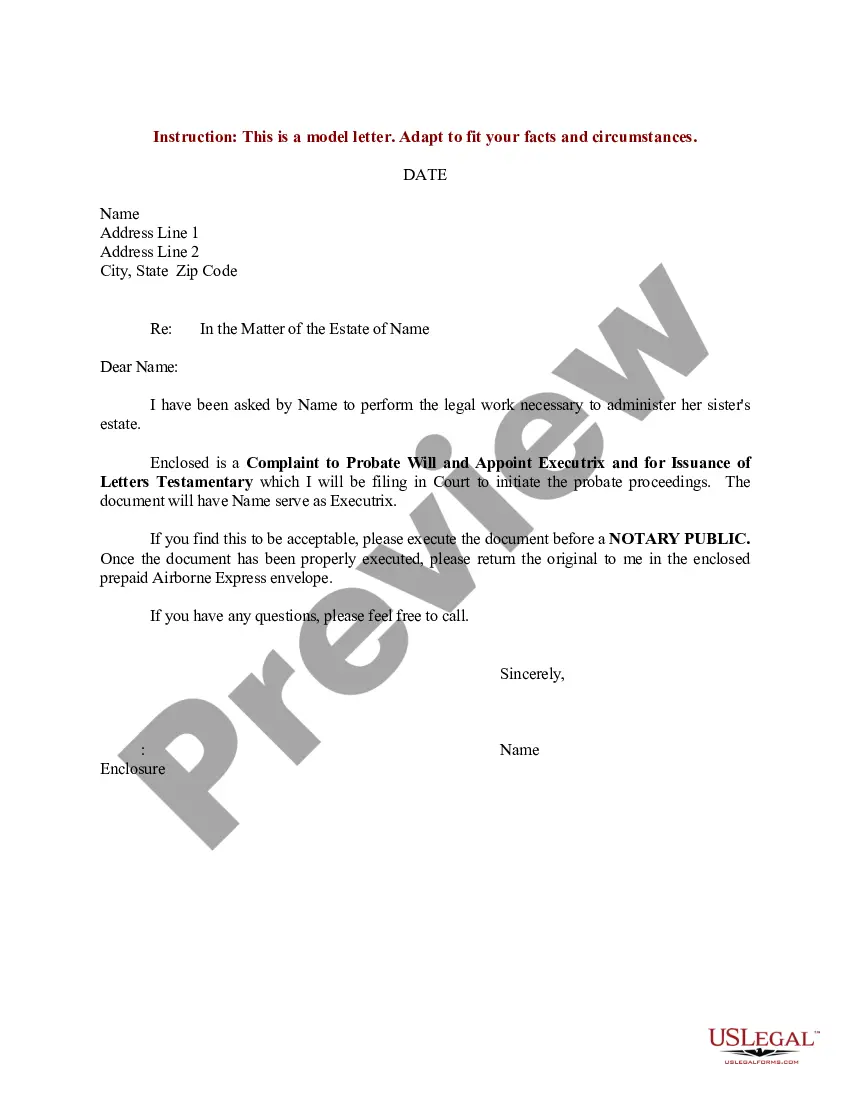
- Date of the letter to establish a record.
- Recipient's name and address to identify the heir.
- Subject line stating the purpose of the letter.
- Opening salutation for a personal touch.
- Content outlining the specifics of the asset distribution.
- Closing remarks inviting questions.
- Sender's signature and name for authenticity.
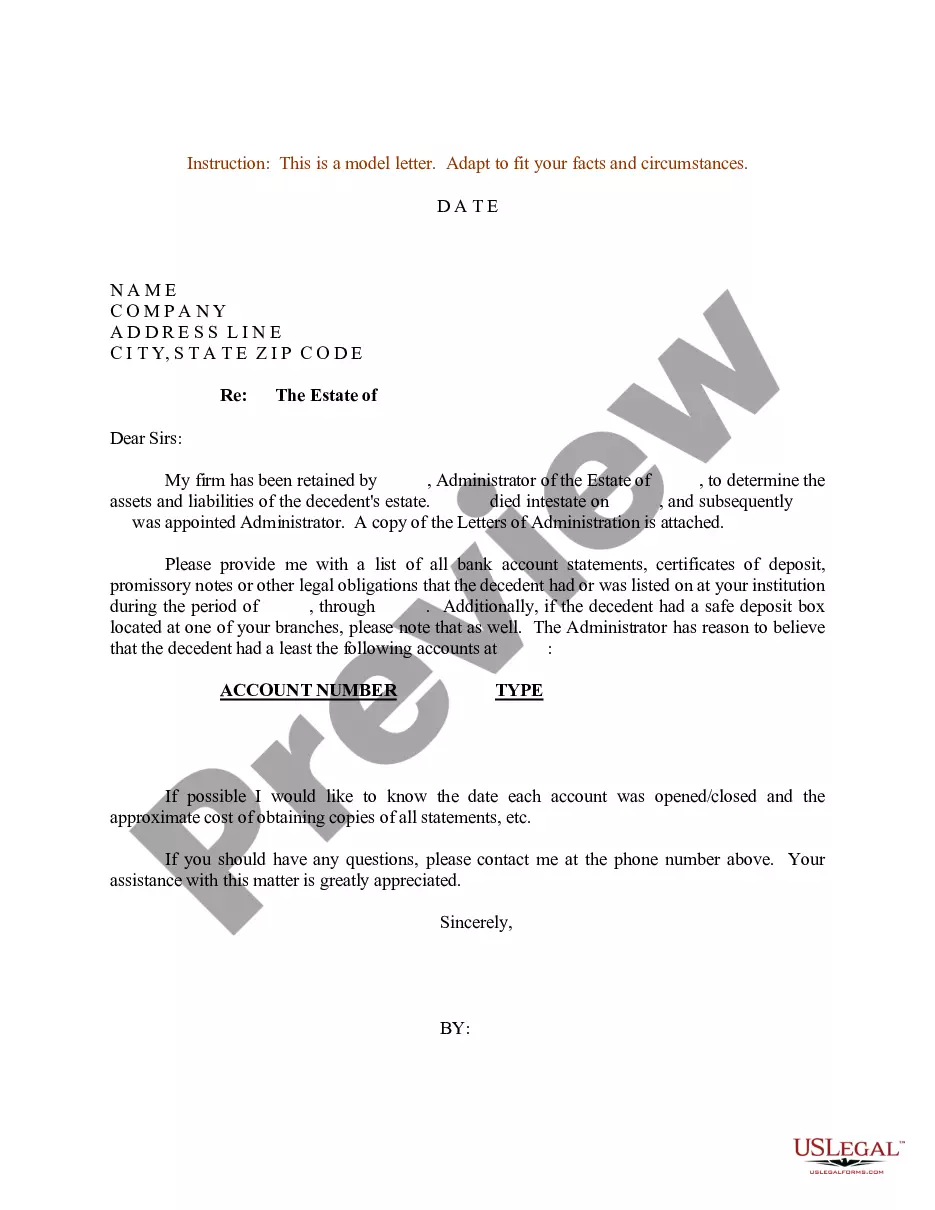
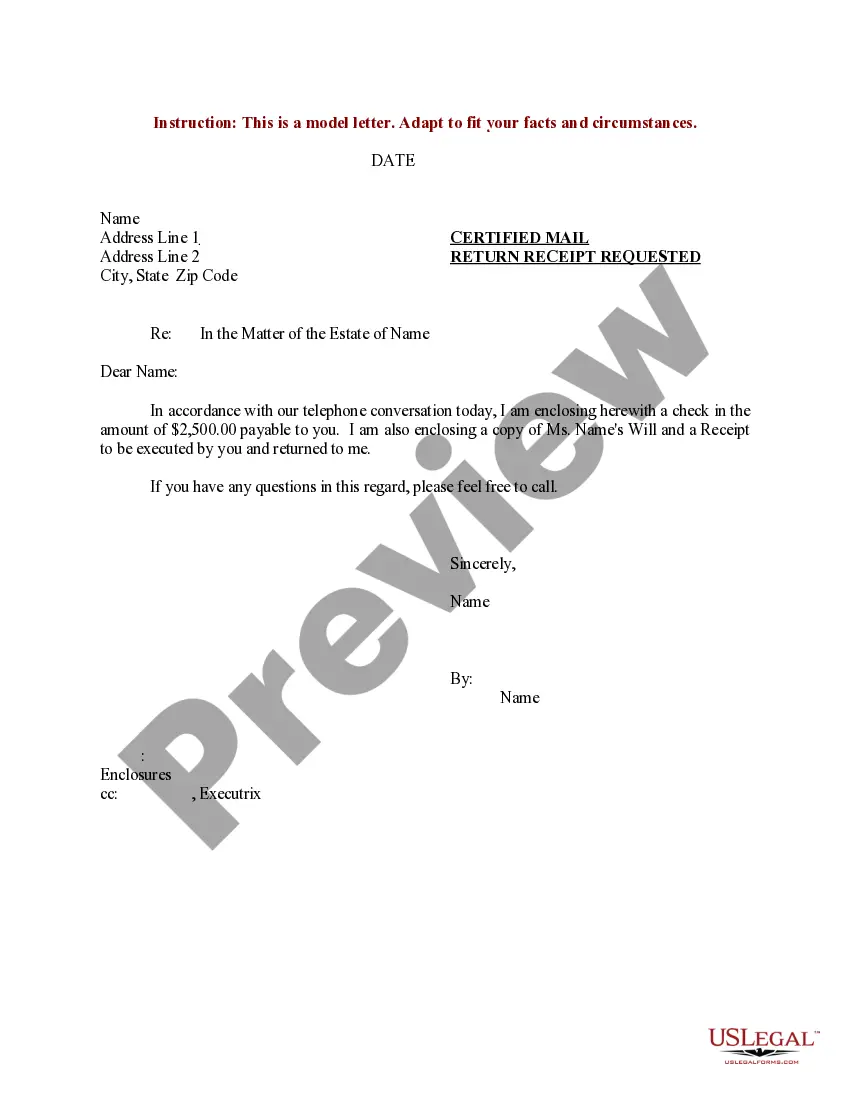
When this form is needed
This form should be utilized when an estate has been settled and it's time to inform heirs about how assets will be distributed. It is especially useful in cases where there are multiple beneficiaries or when the distribution requires clarification to avoid misunderstandings. Executors may use this letter after the asset inventory is completed and the distribution plan is established.
Intended users of this form
- Executors or administrators handling an estate.
- Heirs or beneficiaries seeking formal notification of asset distribution.
- Legal representatives involved in estate management.
Completing this form step by step
- Enter the date at the top of the letter.
- Fill in the name and address of the recipient (the heir).
- Clearly state the subject related to the distribution of estate assets.
- Draft the body of the letter, explaining the distribution details.
- Add a closing statement inviting any questions from the recipient.
- Sign the letter and print the sender's name beneath the signature.
Notarization requirements for this form
This form usually doesn’t need to be notarized. However, local laws or specific transactions may require it. Our online notarization service, powered by Notarize, lets you complete it remotely through a secure video session, available 24/7.
Get your form ready online
Our built-in tools help you complete, sign, share, and store your documents in one place.
Make edits, fill in missing information, and update formatting in US Legal Forms—just like you would in MS Word.
Download a copy, print it, send it by email, or mail it via USPS—whatever works best for your next step.
Sign and collect signatures with our SignNow integration. Send to multiple recipients, set reminders, and more. Go Premium to unlock E-Sign.
If this form requires notarization, complete it online through a secure video call—no need to meet a notary in person or wait for an appointment.
We protect your documents and personal data by following strict security and privacy standards.

Make edits, fill in missing information, and update formatting in US Legal Forms—just like you would in MS Word.

Download a copy, print it, send it by email, or mail it via USPS—whatever works best for your next step.

Sign and collect signatures with our SignNow integration. Send to multiple recipients, set reminders, and more. Go Premium to unlock E-Sign.

If this form requires notarization, complete it online through a secure video call—no need to meet a notary in person or wait for an appointment.

We protect your documents and personal data by following strict security and privacy standards.
Common mistakes to avoid
- Failing to include the date of the letter.
- Addressing the letter to the wrong individual.
- Leaving out key details about the asset distribution.
- Not signing the letter.
Advantages of online completion
- Immediate access to a professionally drafted template.
- Easy customization to suit specific estate details.
- Time-efficient process for notifying heirs.
- Assurance that it meets legal standards where applicable.
Legal use & context
- This letter serves as a formal communication regarding the distribution of an estate's assets.
- It ensures that beneficiaries have a clear understanding of their entitlements.
- Using a formal letter can help prevent misunderstandings and disputes among beneficiaries.
Summary of main points
- The Sample Letter for Distribution of Estate Assets is essential for clear communication with beneficiaries.
- Always provide accurate details and contact information within the letter.
- Use this template for effective and efficient asset distribution following an estate settlement.
Looking for another form?


Form popularity
FAQ
Draw lots and take turns picking items. Use colored stickers for each person to indicate what he wants. Get appraisals. Make copies. Use an online service like FairSplit.com to catalog and divide personal property in an estate.
An estate bank account is opened up by the executor, who also obtains a tax ID number. The various accounts of the deceased person are then transferred to the account. The executor must pay creditors, file tax returns and pay any taxes due. Then, he must collect any money or benefits owed to the decedent.
Distribution Letter means that certain letter agreement, executed and delivered by the Company, the Controlling Stockholder and the Investor concurrently with the execution of this Agreement, as attached hereto as Exhibit E.
Q: How Long Does an Executor Have to Distribute Assets From a Will? A: Dear Waiting: In most states, a will must be executed within three years of a person's death.
Give the letter a personal touch and address each of your heirs and beneficiaries personally. Tell them any last wishes you may have or any hopes you have for their future. Write as clearly as possible. Use specific details and avoid using shorthand.
When the executor has paid off the debts, filed the taxes and sold any property needed to pay bills, he can submit a final estate accounting to the probate court. Once the probate court approves the accounting, he can distribute assets to you and other beneficiaries according to the terms of the will.
An estate bank account is opened up by the executor, who also obtains a tax ID number.The executor must pay creditors, file tax returns and pay any taxes due. Then, he must collect any money or benefits owed to the decedent. Finally, he or she distributes the remainder in accordance with the will.
Divide up assets based on their value. Instruct your executor to divide assets equally. Instruct your executor to sell everything and then distribute the proceeds to your beneficiaries equally.