Sample Letter for Execution - Distribution of Will to Individual
About this form
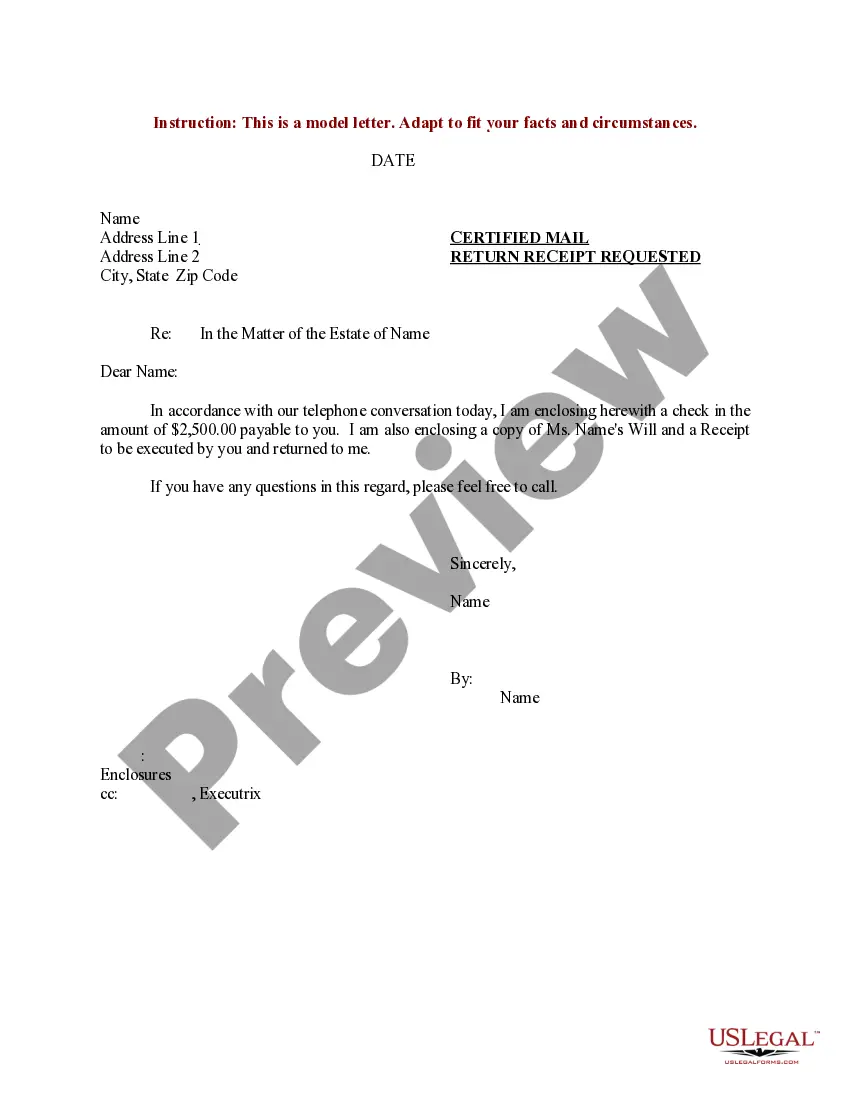
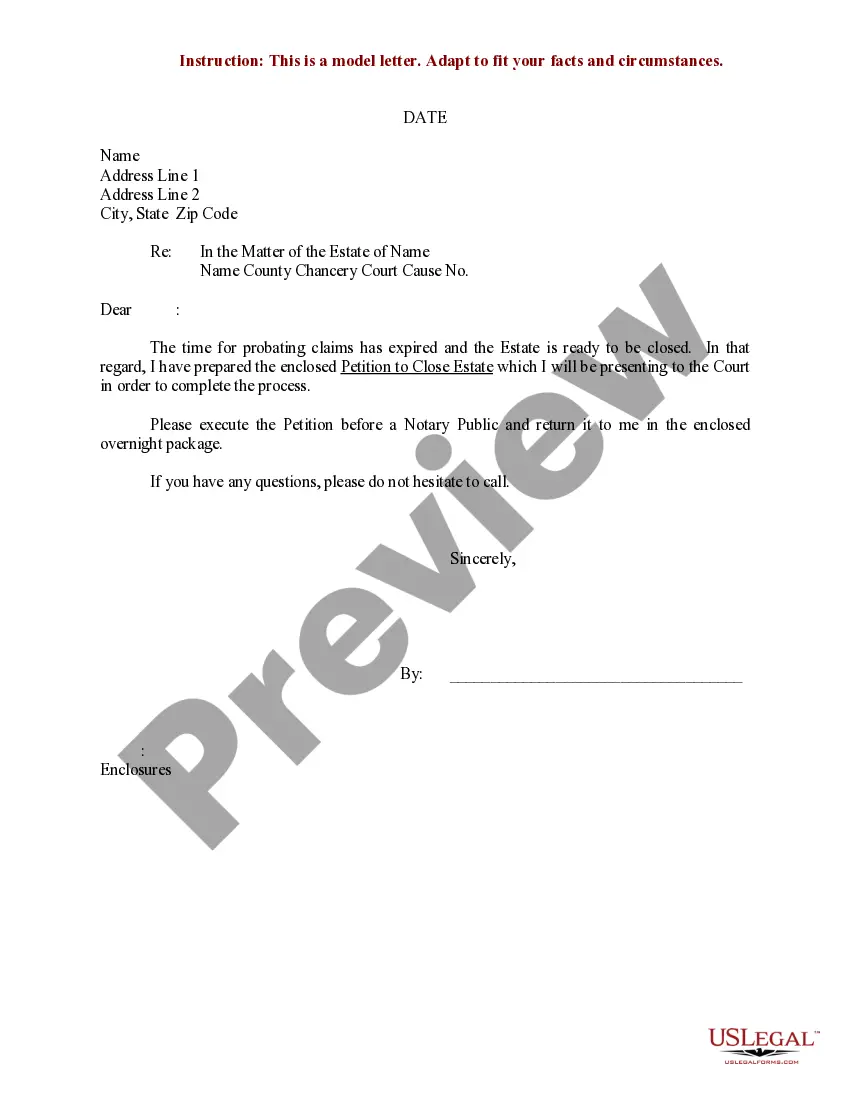
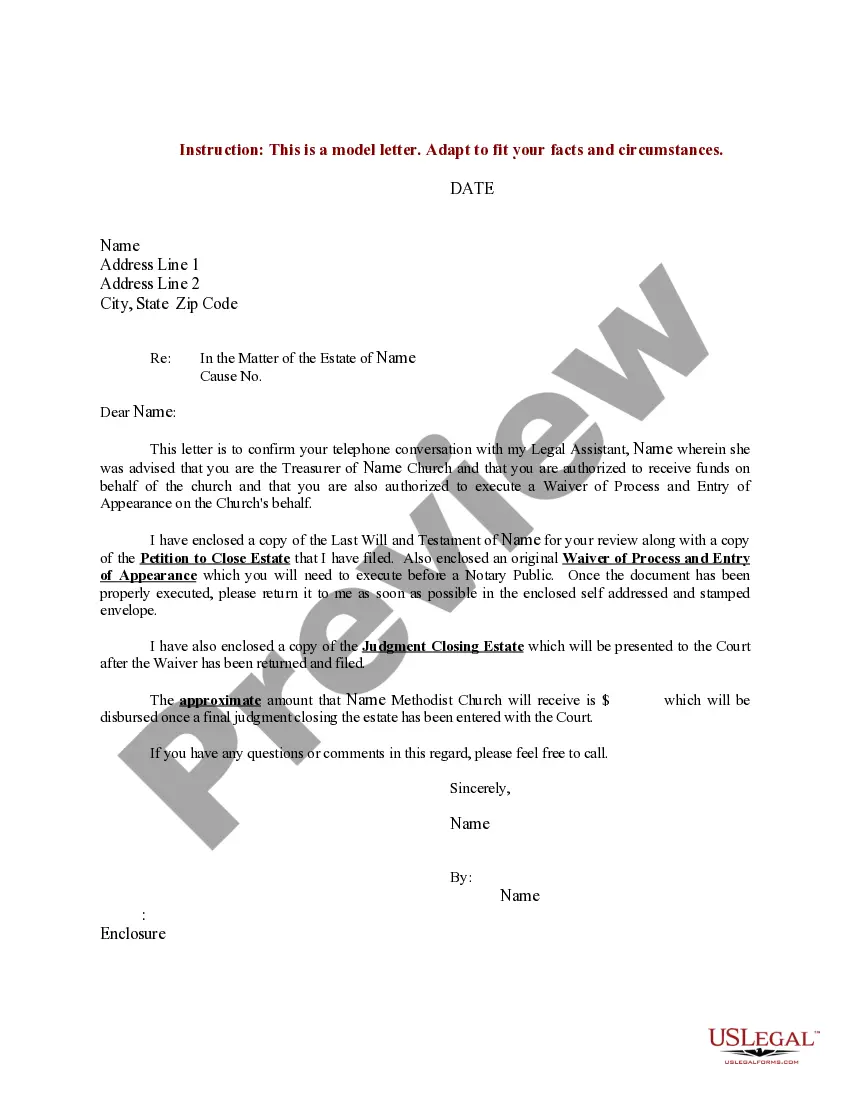
The Sample Letter for Execution - Distribution of Will to Individual is a legal document used to formally communicate the distribution of assets from a will to an individual. This letter includes important details, such as the amount being distributed and instructions for acknowledgment. Its structured format and comprehensive instructions differentiate it from other will-related documents, ensuring clarity for both the sender and recipient during the estate distribution process.
Main sections of this form
- Date of the letter
- Sender's name and address
- Recipient's name and address
- Subject line referencing the estate matter
- Enclosure details for the check and will
- Signature lines for the sender and recipient acknowledgment
Common use cases
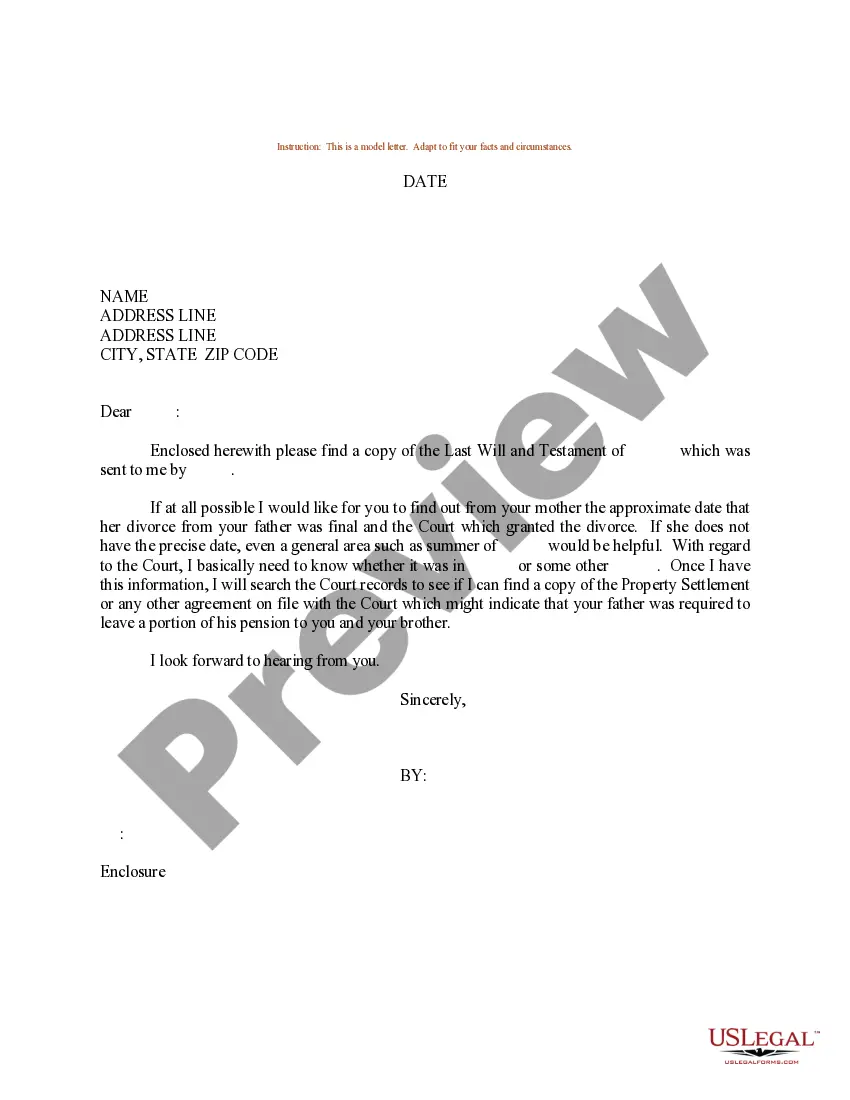
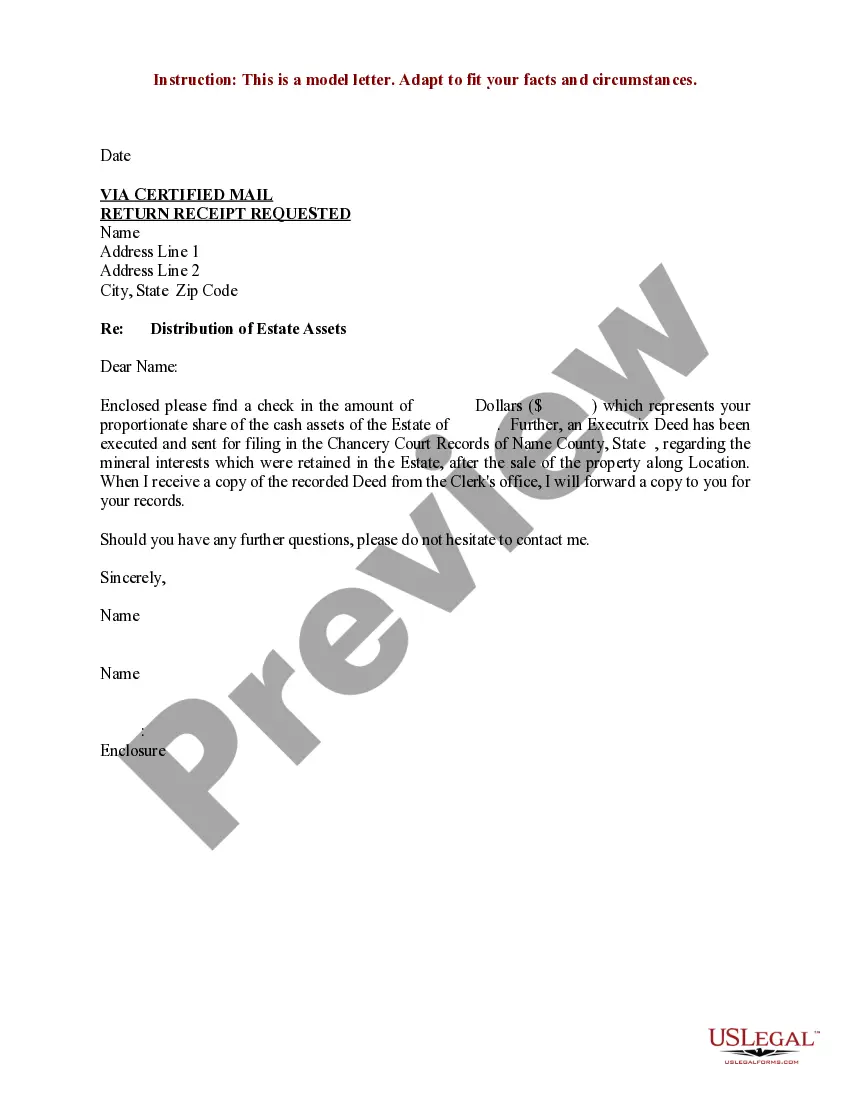
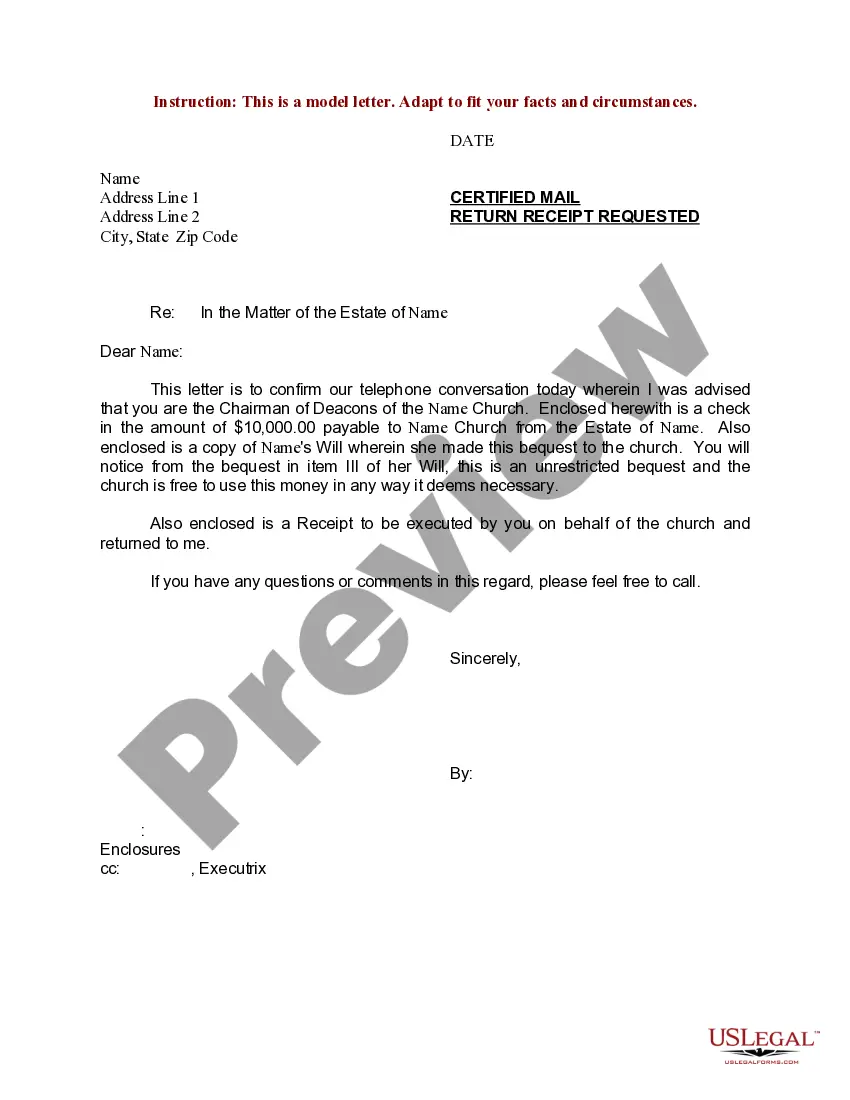
This form is typically used after the death of an individual, when an executor or administrator needs to distribute assets to beneficiaries according to the will. It serves as a formal record of the transaction and provides essential documentation of the distribution, facilitating clear communication and maintaining legal compliance.
Who should use this form
- Executors of an estate
- Administrators managing a deceased person's affairs
- Individuals involved in the distribution of assets under a will
- Beneficiaries receiving assets from the estate
Completing this form step by step
- Enter the date at the top of the letter.
- Fill in your name and address as the sender.
- Add the recipient's name and address.
- Clearly state the subject line related to the estate name.
- Specify the amount being distributed and attach the check.
- Include a copy of the will and a receipt for the recipient to sign and return.
Notarization requirements for this form
Notarization is generally not required for this form. However, certain states or situations might demand it. You can complete notarization online through US Legal Forms, powered by Notarize, using a verified video call available anytime.
Get your form ready online
Our built-in tools help you complete, sign, share, and store your documents in one place.
Make edits, fill in missing information, and update formatting in US Legal Forms—just like you would in MS Word.
Download a copy, print it, send it by email, or mail it via USPS—whatever works best for your next step.
Sign and collect signatures with our SignNow integration. Send to multiple recipients, set reminders, and more. Go Premium to unlock E-Sign.
If this form requires notarization, complete it online through a secure video call—no need to meet a notary in person or wait for an appointment.
We protect your documents and personal data by following strict security and privacy standards.

Make edits, fill in missing information, and update formatting in US Legal Forms—just like you would in MS Word.

Download a copy, print it, send it by email, or mail it via USPS—whatever works best for your next step.

Sign and collect signatures with our SignNow integration. Send to multiple recipients, set reminders, and more. Go Premium to unlock E-Sign.

If this form requires notarization, complete it online through a secure video call—no need to meet a notary in person or wait for an appointment.

We protect your documents and personal data by following strict security and privacy standards.
Common mistakes
- Not providing complete addresses for both the sender and recipient.
- Omitting the check or will copy from the letter.
- Failing to sign the letter before sending it.
- Using incorrect or unclear subject lines.
Benefits of using this form online
- Immediate access to a professionally drafted template.
- Easy customization to fit your specific situation.
- Secure and reliable format that can be downloaded and printed.
- Reduces the risk of errors with clear instructions provided.
Looking for another form?


Form popularity
FAQ
Explain why you are giving property to certain beneficiaries and not to others. explain disparities in bequests. express positive or negative sentiments about a beneficiary. express wishes about how to care for a pet.
Most assets can be distributed by preparing a new deed, changing the account title, or by giving the person a deed of distribution. For example: To transfer a bank account to a beneficiary, you will need to provide the bank with a death certificate and letters of administration.
Bank accounts. Brokerage or investment accounts. Retirement accounts and pension plans. A life insurance policy.
Those requirements are: That the estate assets are distributed at least 6 months after the deceased's date of death; That the executor has published a 30 day notice of his/her intent to distribute the estate; and. That the time specified in the notice has expired.
File the Will and Probate Petition. Secure Personal Property. Appraise and Insure Valuable Assets. Cancel Personal Accounts. Determine Cash Needs. Remove Estate Tax Lien. Determine Location of Assets and Secure "Date of Death Values" Submit Probate Inventory.
Distribution Letter means that certain letter agreement, executed and delivered by the Company, the Controlling Stockholder and the Investor concurrently with the execution of this Agreement, as attached hereto as Exhibit E.
An estate bank account is opened up by the executor, who also obtains a tax ID number. The various accounts of the deceased person are then transferred to the account. The executor must pay creditors, file tax returns and pay any taxes due. Then, he must collect any money or benefits owed to the decedent.
Most assets can be distributed by preparing a new deed, changing the account title, or by giving the person a deed of distribution. For example: To transfer a bank account to a beneficiary, you will need to provide the bank with a death certificate and letters of administration.
When the executor has paid off the debts, filed the taxes and sold any property needed to pay bills, he can submit a final estate accounting to the probate court. Once the probate court approves the accounting, he can distribute assets to you and other beneficiaries according to the terms of the will.