Sample Letter for Responding to a False Accusation from a Government Agency
About this form
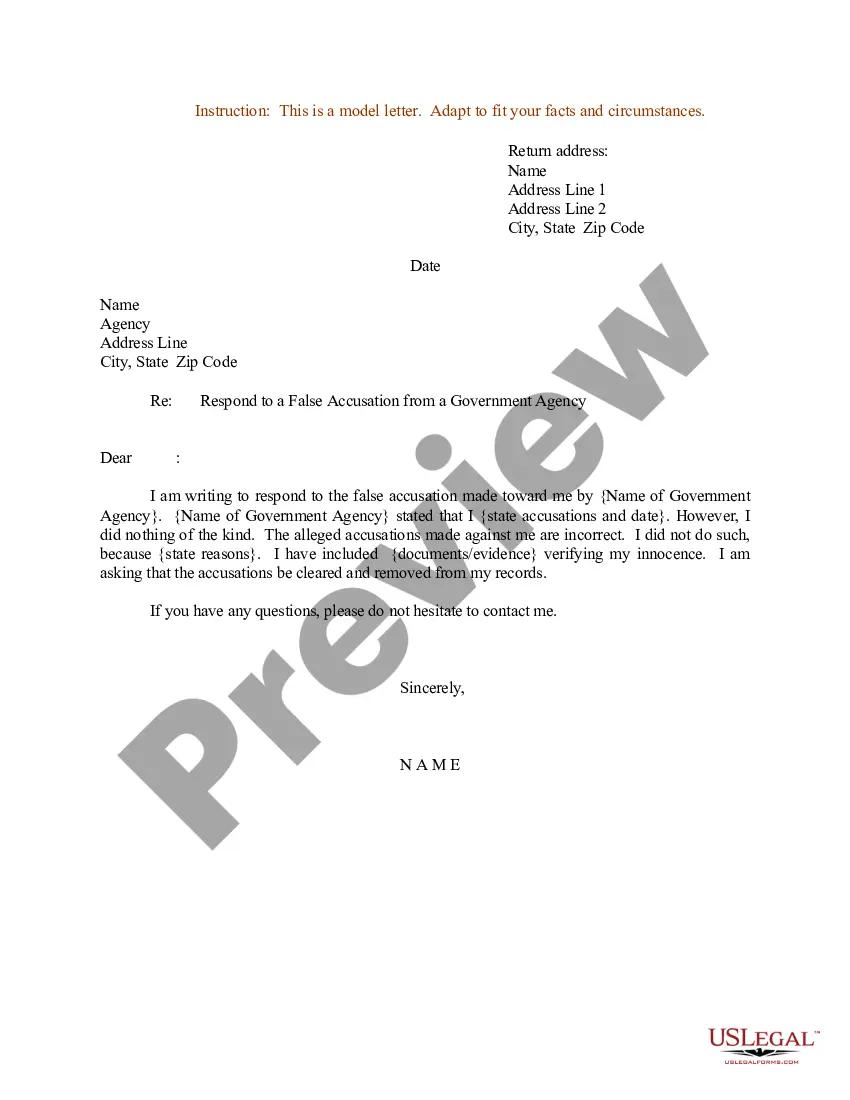
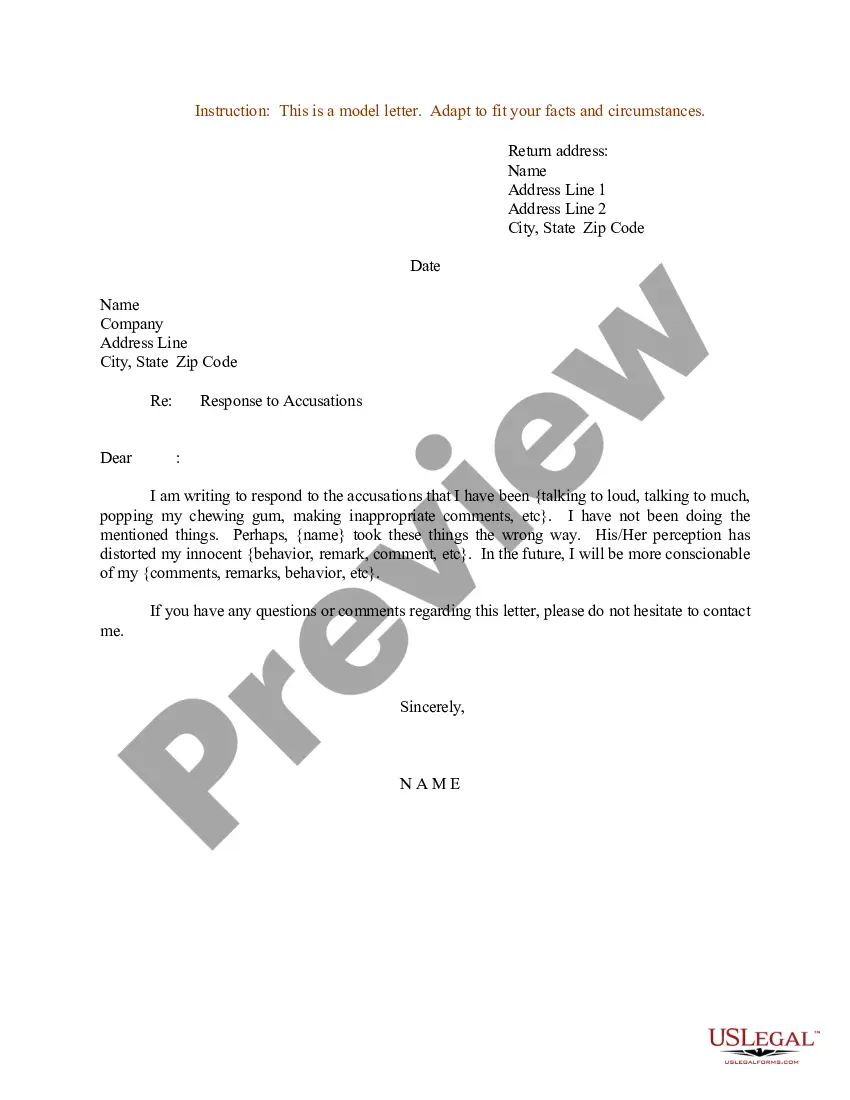
This Sample Letter for Responding to a False Accusation from a Government Agency is designed to assist individuals in crafting a formal response to any wrongful allegations made against them by a government entity. This letter format emphasizes professionalism and clarity, differentiating it from other complaint or response templates by focusing specifically on addressing false accusations.
What’s included in this form
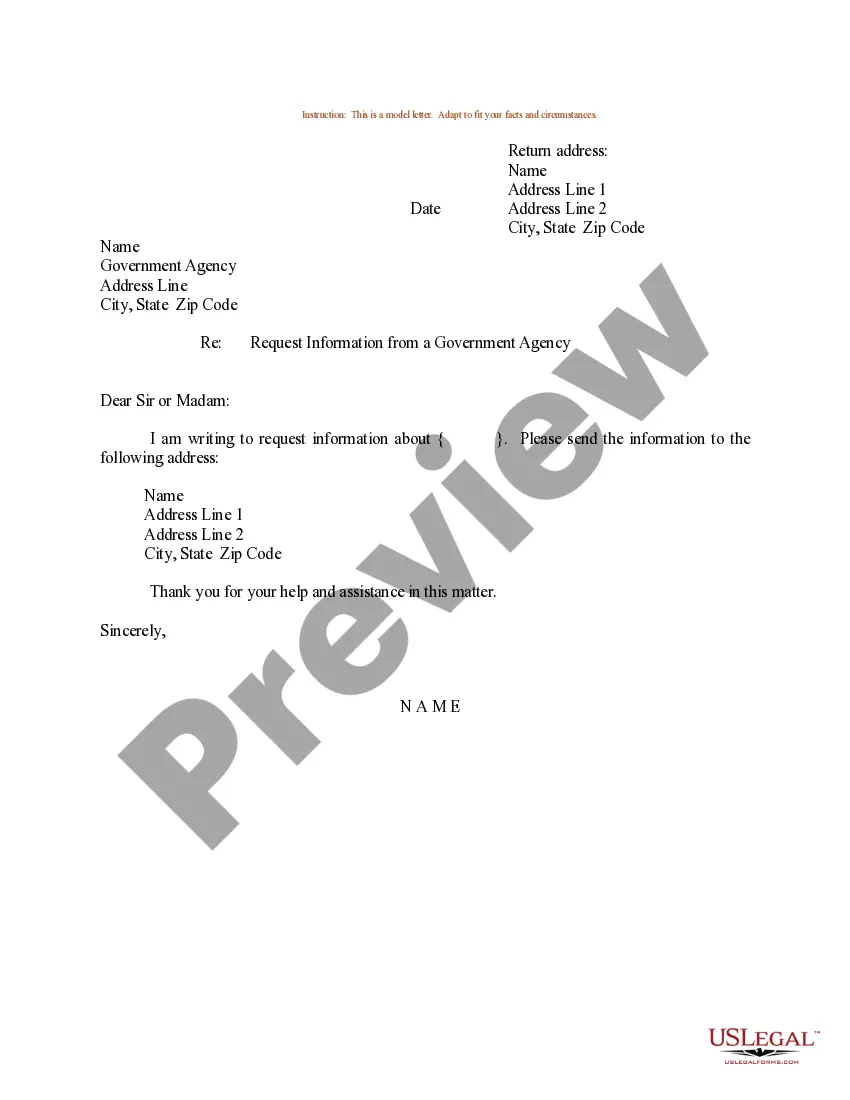
- Return address: Your name and address for correspondence.
- Date: The date on which the letter is drafted.
- Agency address: The name and address of the government agency involved.
- Subject line: A clear subject stating the purpose of the letter.
- Body: An articulate response addressing the accusations.
- Closing: A professional sign-off, including your name.
When to use this form
This form is useful when you find yourself facing false accusations from a government agency. It can be utilized in various situations where you need to assert your innocence, clarify misunderstandings, or formally respond to incorrect information affecting your rights or reputation. Whether it's an investigation or a regulatory inquiry, having a structured response can help support your case.
Who needs this form
This form is intended for:
- Individuals accused of wrongdoing by a government entity.
- Residents seeking to defend their reputation against incorrect claims.
- Business owners facing regulatory challenges from government agencies.
Steps to complete this form
- Identify your personal details and the return address.
- Enter the date on which you are sending the letter.
- Provide the full name and address of the government agency.
- Clearly state the subject of the letter in the subject line.
- Draft your response, addressing the accusations specifically and professionally.
- Sign the letter with your name at the end.
Is notarization required?
This form does not typically require notarization unless specified by local law.
Get your form ready online
Our built-in tools help you complete, sign, share, and store your documents in one place.
Make edits, fill in missing information, and update formatting in US Legal Forms—just like you would in MS Word.
Download a copy, print it, send it by email, or mail it via USPS—whatever works best for your next step.
Sign and collect signatures with our SignNow integration. Send to multiple recipients, set reminders, and more. Go Premium to unlock E-Sign.
If this form requires notarization, complete it online through a secure video call—no need to meet a notary in person or wait for an appointment.
We protect your documents and personal data by following strict security and privacy standards.

Make edits, fill in missing information, and update formatting in US Legal Forms—just like you would in MS Word.

Download a copy, print it, send it by email, or mail it via USPS—whatever works best for your next step.

Sign and collect signatures with our SignNow integration. Send to multiple recipients, set reminders, and more. Go Premium to unlock E-Sign.

If this form requires notarization, complete it online through a secure video call—no need to meet a notary in person or wait for an appointment.

We protect your documents and personal data by following strict security and privacy standards.
Common mistakes to avoid
- Failing to include a clear subject line.
- Being overly emotional or aggressive in the response.
- Not addressing the specific allegations mentioned by the agency.
- Omitting personal contact information for follow-up.
Why use this form online
- Convenience of downloading a pre-drafted letter format.
- Editability to customize the response to your situation.
- Reliability of a template created by licensed attorneys.
Legal use & context
- This letter serves as a formal response and can be used as evidence of your efforts to address false accusations.
- It helps establish a record of communication with the government entity involved.
Main things to remember
- Use this letter to respond effectively to false government accusations.
- Ensure clarity and professionalism in your communication.
- Always keep a copy of the correspondence for your records.
Looking for another form?
Form popularity
FAQ
This is a ready-to-fill template for responding to false accusations by a government agency. It directs you to include your return address, date, the agency's details, a clear subject line, a formal body addressing the accusations, and a closing with your signature. Use it during investigations, audits, or complaints to present a professional, precise reply.
The letter template helps you refute false allegations by presenting a concise, fact-based body that directly addresses the agency's claims, while including your return address, the date, the agency's name, a clear subject line, and a closing with your signature.
It supports defending yourself by structuring a calm, non-defensive response that states the facts and corrects inaccuracies. The form guides you through the return address, date, agency details, subject line, a focused body addressing the accusations, and a proper closing to maintain professionalism.
This template gives you a step-by-step letter framework for writing against false allegations. It provides the return address, date, agency details, subject line, and body, enabling a professional, clear response that counters the claims without emotional language.
Use this form to respond to a letter of allegations from a government agency by presenting a structured reply. It emphasizes a formal body and precise addressing of the claims, with the return address, date, agency details, subject line, and closing to ensure clear, official communication.
This form differs from a generic response letter by being tailored specifically to false accusations from a government agency. It includes a formal subject line, and a fixed structure (return address, date, agency details, body, closing) to ensure a consistent, professional reply that clearly addresses the falsities.