Sample Letter for Response to Accusations
About this form
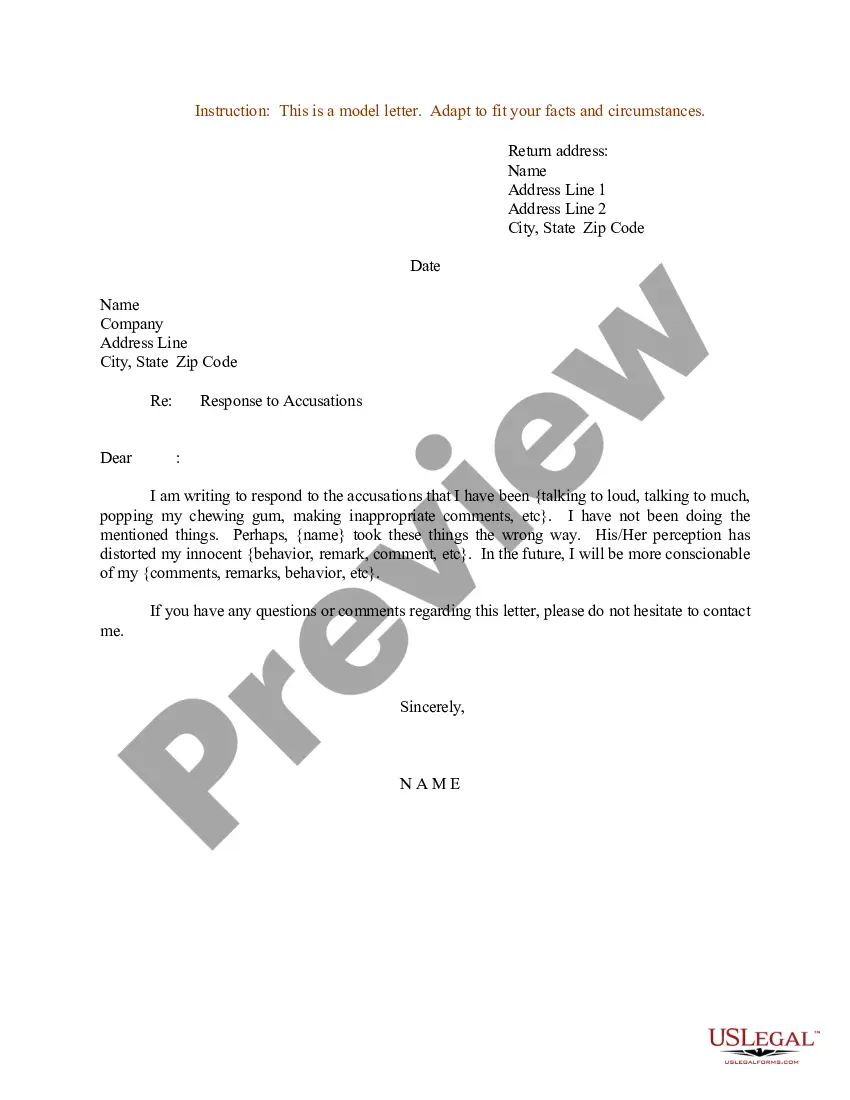
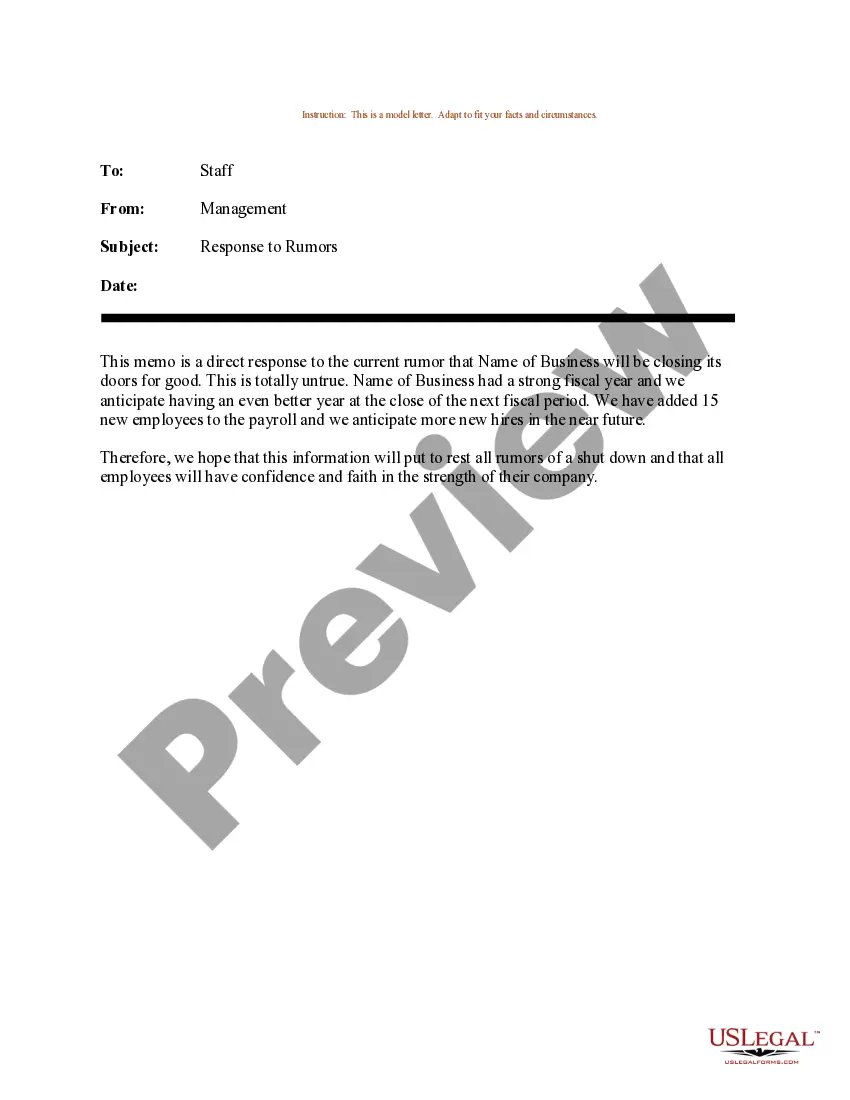
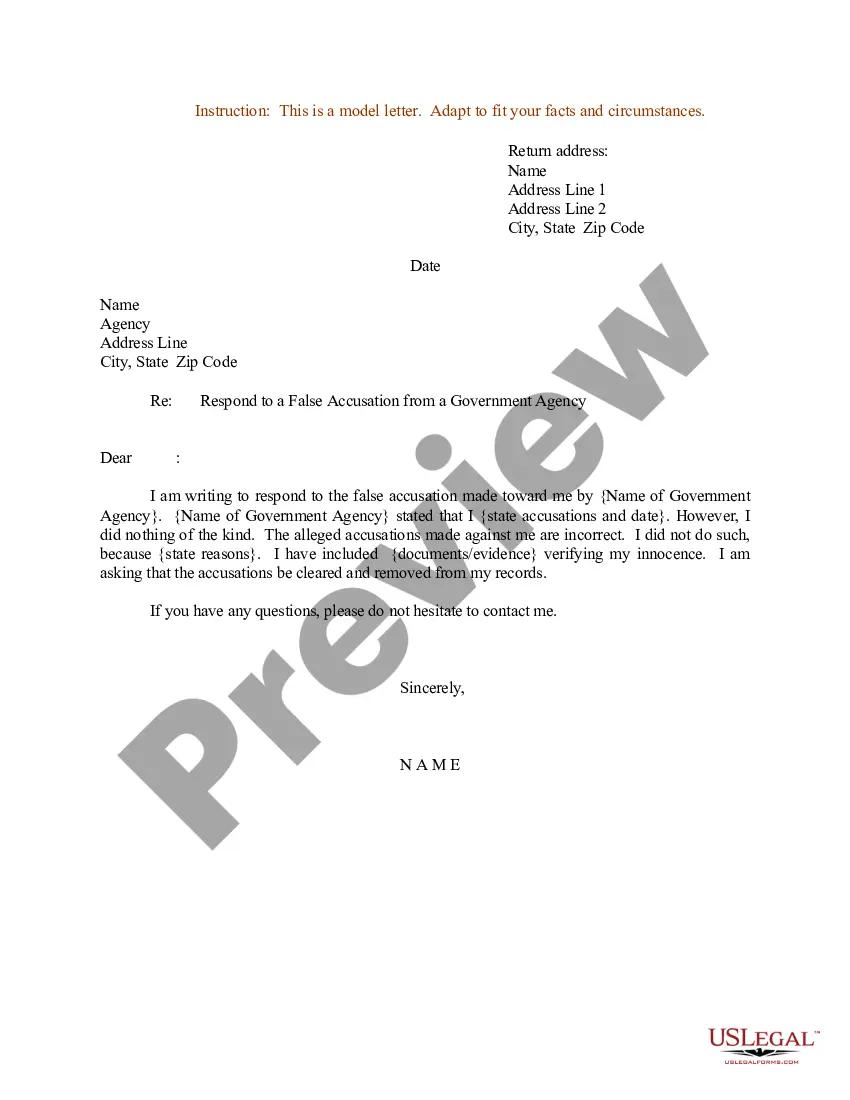
The Sample Letter for Response to Accusations is a template designed to help individuals address accusations made against them in a formal and professional manner. Unlike other forms that may serve as a general communication tool, this specific document provides a structured way to respond to specific claims, ensuring clarity and a record of your rebuttal. This letter allows the recipient to understand your stance on the accusations presented.
Form components explained
- Return address section for sender information.
- Date of the letter for context and record-keeping.
- Recipient's address to ensure proper delivery.
- Subject line indicating the purpose: response to accusations.
- Closing remarks encouraging further communication.
- Signature section for personal verification of the document's authenticity.
When to use this form
This letter should be used when you have been formally accused of something and need to provide a structured response. Common situations include disputes with employers, misunderstandings in professional settings, or allegations from clients or customers. It is important to respond promptly and with clarity to maintain your professional reputation and address any potential damage to your credibility.
Who needs this form
- Individuals facing accusations in a workplace or professional setting.
- Business owners responding to client or customer complaints.
- Anyone needing to provide a formal rebuttal to allegations made against them.
- Professionals seeking to maintain clear records of communication regarding disputes.
How to prepare this document
- Identify the sender and recipient addresses, ensuring all information is accurate.
- Enter the date on which the letter is written.
- Clearly state the subject of the letter to indicate it is a response to accusations.
- Include any specific details or comments addressing the accusations mentioned.
- Sign the letter to provide authenticity and a personal touch.
Notarization requirements for this form
In most cases, this form does not require notarization. However, some jurisdictions or signing circumstances might. US Legal Forms offers online notarization powered by Notarize, accessible 24/7 for a quick, remote process.
Get your form ready online
Our built-in tools help you complete, sign, share, and store your documents in one place.
Make edits, fill in missing information, and update formatting in US Legal Forms—just like you would in MS Word.
Download a copy, print it, send it by email, or mail it via USPS—whatever works best for your next step.
Sign and collect signatures with our SignNow integration. Send to multiple recipients, set reminders, and more. Go Premium to unlock E-Sign.
If this form requires notarization, complete it online through a secure video call—no need to meet a notary in person or wait for an appointment.
We protect your documents and personal data by following strict security and privacy standards.

Make edits, fill in missing information, and update formatting in US Legal Forms—just like you would in MS Word.

Download a copy, print it, send it by email, or mail it via USPS—whatever works best for your next step.

Sign and collect signatures with our SignNow integration. Send to multiple recipients, set reminders, and more. Go Premium to unlock E-Sign.

If this form requires notarization, complete it online through a secure video call—no need to meet a notary in person or wait for an appointment.

We protect your documents and personal data by following strict security and privacy standards.
Mistakes to watch out for
- Failing to include correct contact information for the recipient.
- Neglecting to proofread for clarity and professionalism.
- Using a vague subject line that does not specify the nature of the response.
- Not including a clear call to action or invitation for further contact.
Why complete this form online
- Convenient access to a professionally drafted response letter at any time.
- Edit and customize the document easily to suit personal needs.
- Reliable source for legally sound templates vetted by licensed attorneys.
Looking for another form?
Form popularity
FAQ
Stay calm. The first and most important tip to follow is to stay calm. Cooperate with investigations. Which brings us to our next point: be cooperative with the investigator. Document all the details. Offer supporting evidence. Mind your body language. Seek legal advice. Gather your witnesses. Be truthful.
Realize the seriousness of the accusations. Understand the cost of a defense. Intervene before charges. Take no action. Gather any physical evidence and documents. Obtain witness contact information. Investigation. Plea bargain.
Maintain Silence. Get The Best Lawyers. Don't Get In Contact With Your Accuser. Turning The Case Around Is One Way Of How To Prove Innocence When Falsely Accused. Gather As Much Evidence As Possible. Avoid Plea Deals. In A Nutshell.
In California, the crime of false accusations is a misdemeanor and you can be prosecuted for it. The penalties for giving false information to the police are up to six months in jail and possible fines.Not everyone who has been charged with giving false information to the police is guilty of this crime.
Details and particulars of the allegations. A request for supporting documents. A formal request for interview. The letter is required to stipulate if there is a finding of misconduct, what disciplinary actions may be considered and imposed.
The first and most important tip to follow is to stay calm. No matter how angry or upset you are, you must try to not let these emotions get the best of you! You're a professional, so prove that you can handle difficult situations with grace and dignity. Don't retaliate, and don't throw accusations back at the accuser.
Accept the complaint document and quickly run down the relevant contents of the complaint. Provide factual information about the issue from your understanding, showing the issue into a new or different side. End the letter by explaining your judgment that the case is without basis.
Summarize the Allegations. Start the letter by explaining you are writing the letter in response to allegations against you. Explain Your Side. Discuss why the allegations are untrue and mention any extenuating circumstances. Reaffirm Your Commitment. Conclusion.
The best tack to take when responding to false allegations is to write a serious, unemotional examination of the subjects raised. Repeat an allegation, then explain dispassionately the ways in which it is inaccurate. Then proceed to the next allegations. Keep responses objective, factual and succinct.