Letter regarding Notice and Settlement Offer - Personal Injury
What this document covers
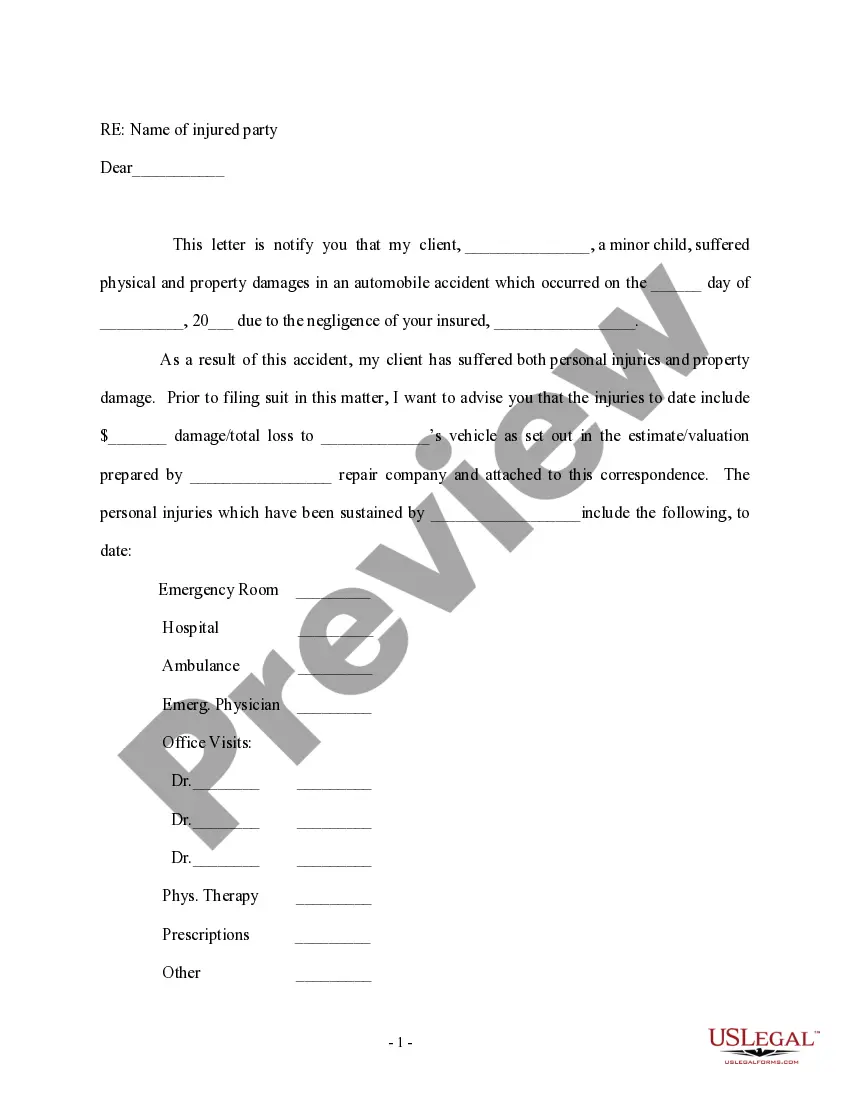
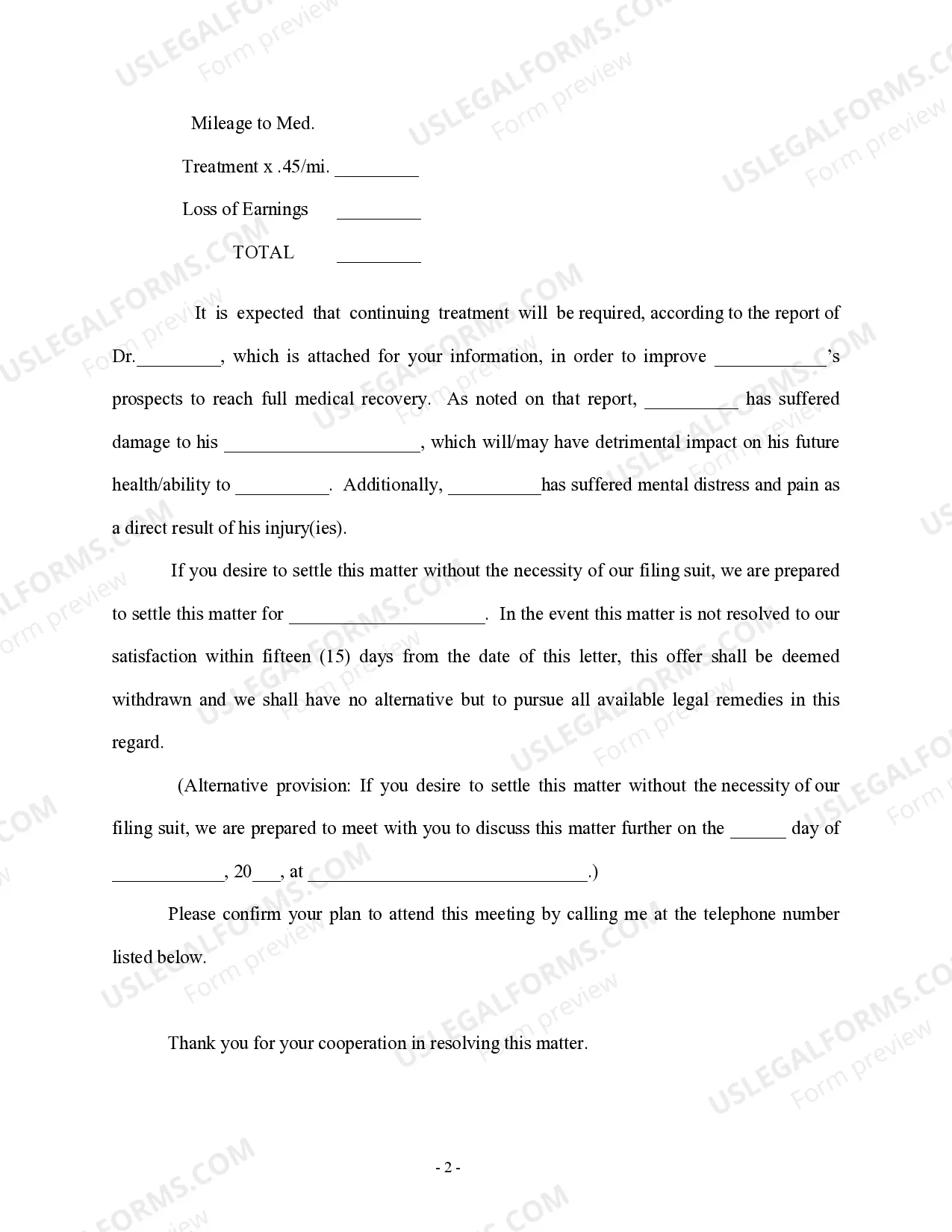
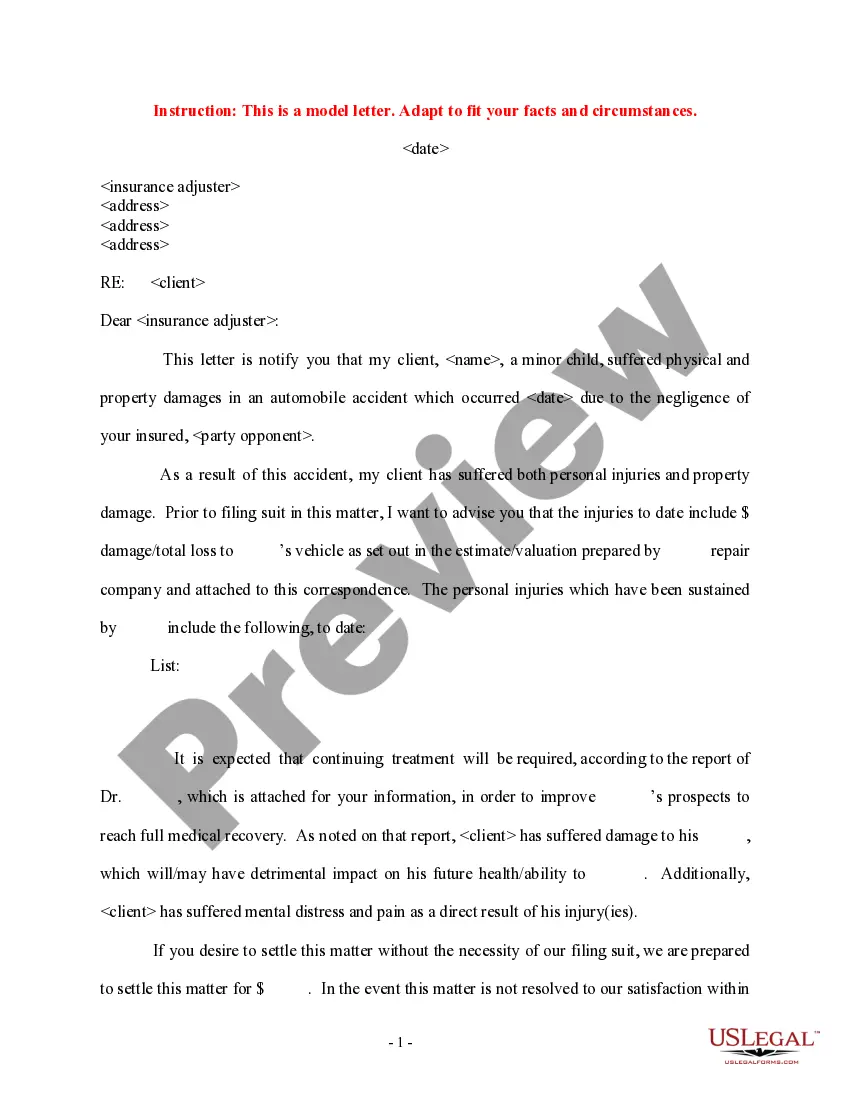
This Letter regarding Notice and Settlement Offer for Personal Injury is a formal communication sent to the defendant's insurer. It notifies them of the plaintiffâs claims resulting from an automobile accident and presents a settlement offer. This form serves as a crucial step before initiating legal action, helping to clarify the injuries and damages incurred, and facilitates the negotiation process. Unlike other legal correspondence, this letter specifically addresses personal injury claims and outlines both medical and property damage in detail.
Form components explained
- Identification of the injured party and the defendant's insured.
- A detailed account of the accident date and circumstances.
- A breakdown of medical expenses and damages suffered by the plaintiff.
- A statement regarding the anticipated future treatment and effects of the injuries.
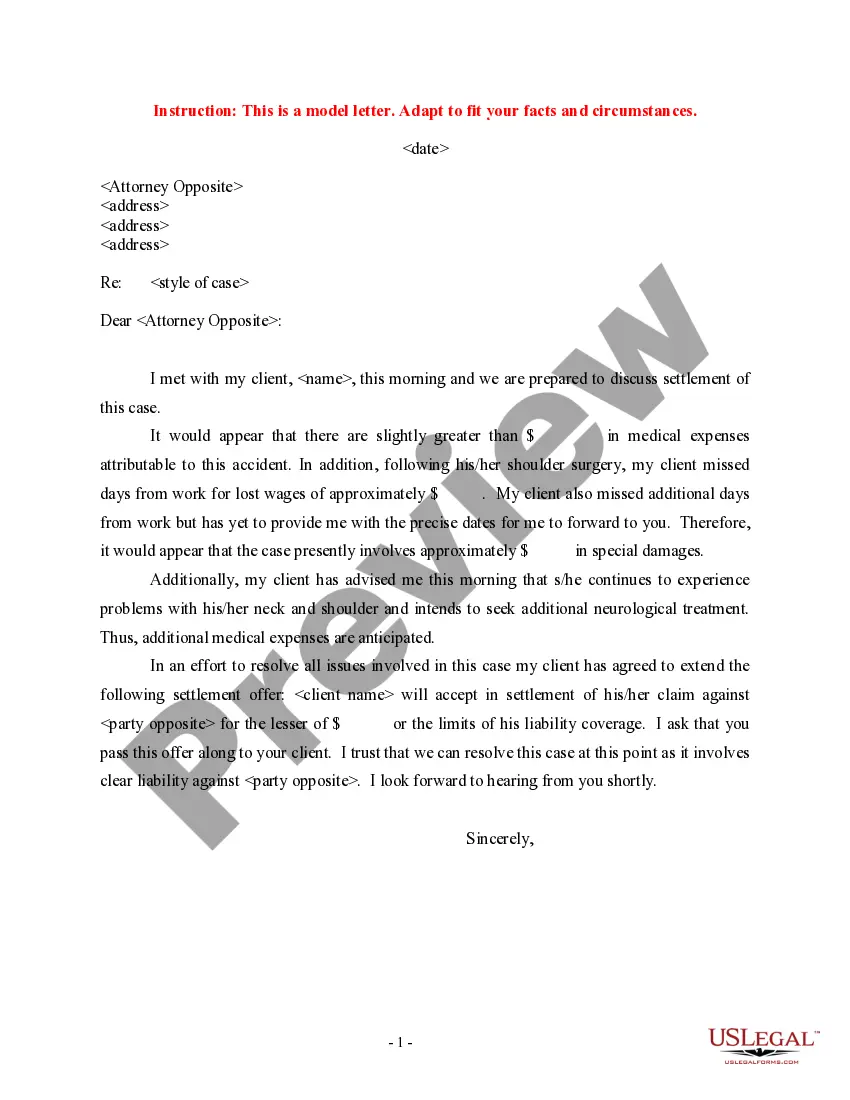
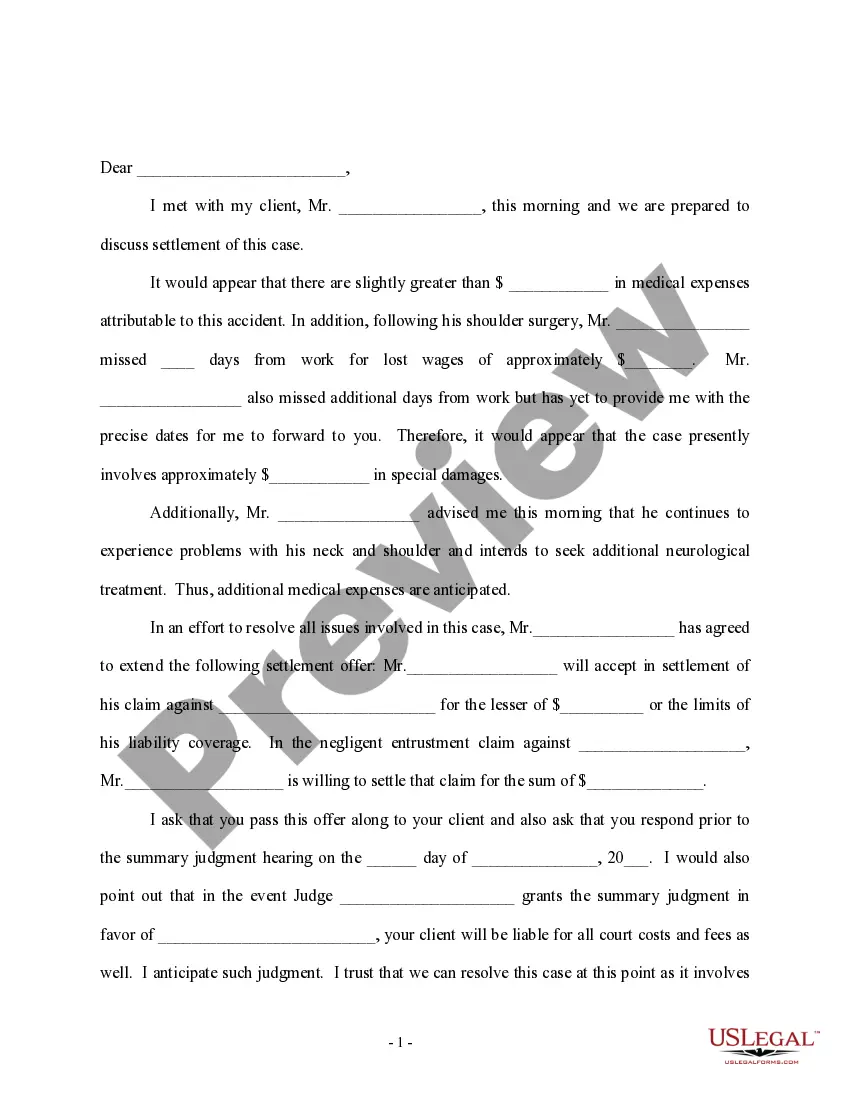
- An offer to settle the claim, with a specified dollar amount and timeframe.
- Contact information for follow-up or meeting arrangements.
When this form is needed
This form is used when an individual, or their legal representative, seeks to settle a personal injury claim with an insurer without resorting to litigation. It is typically utilized after an automobile accident where the insured party is determined to be at fault, and the injured party has incurred medical expenses or property damage. This letter is essential for initiating negotiations and is beneficial in establishing a formal record of the claim.
Who should use this form
- Individuals who have suffered personal injuries in an automobile accident.
- Legal representatives acting on behalf of minors or individuals incapacitated due to their injuries.
- Anyone looking to negotiate a settlement with an insurance company before filing a lawsuit.
How to prepare this document
- Identify the injured party and insert their name at the top of the letter.
- Provide the details of the accident, including the date and circumstances.
- List the medical treatments received and their associated costs in detail.
- Clearly state the total amount being offered for settlement.
- Include a contact number and proposed date for further discussion, if applicable.
Is notarization required?
This form does not typically require notarization unless specified by local law. However, notarization can add an extra layer of legitimacy to the communication in some jurisdictions.
Get your form ready online
Our built-in tools help you complete, sign, share, and store your documents in one place.
Make edits, fill in missing information, and update formatting in US Legal Forms—just like you would in MS Word.
Download a copy, print it, send it by email, or mail it via USPS—whatever works best for your next step.
Sign and collect signatures with our SignNow integration. Send to multiple recipients, set reminders, and more. Go Premium to unlock E-Sign.
If this form requires notarization, complete it online through a secure video call—no need to meet a notary in person or wait for an appointment.
We protect your documents and personal data by following strict security and privacy standards.

Make edits, fill in missing information, and update formatting in US Legal Forms—just like you would in MS Word.

Download a copy, print it, send it by email, or mail it via USPS—whatever works best for your next step.

Sign and collect signatures with our SignNow integration. Send to multiple recipients, set reminders, and more. Go Premium to unlock E-Sign.

If this form requires notarization, complete it online through a secure video call—no need to meet a notary in person or wait for an appointment.

We protect your documents and personal data by following strict security and privacy standards.
Avoid these common issues
- Failing to clearly state the extent of medical injuries and their costs.
- Not including all relevant documents, such as medical reports or repair estimates.
- Omitting the deadline for responding to the settlement offer.
- Using unclear or ambiguous language that could misrepresent the injuries or damages.
Why use this form online
- Convenient access to professionally drafted legal forms.
- Ability to customize the form to fit specific circumstances.
- Rapid download and printing capabilities.
- Enhanced accuracy and reliability compared to handwritten drafts.
Summary of main points
- The Letter Regarding Notice and Settlement Offer is essential for initiating personal injury claim negotiations.
- Providing detailed information is crucial for a successful settlement offer.
- This form can be used in many states but check local laws for specific requirements.
Looking for another form?
Form popularity
FAQ
Find the Facts. First, you must determine the facts surrounding the injury. Determine the Sequence or Timeline. It is important to document in the report the sequence of events or timeline surrounding the incident that resulted in the injury. Analyze and Provide Feedback.
Insurance Company's Information Make sure to include the name of the insurance company, name of the adjuster/or medical examiner, their title, and the company's address. Intent You must include, FOR SETTLEMENT PURPOSES ONLY before the body of the letter to label the intent.
It should include your name, address, and a date for the letter. If sending to an insurance company, you would include their name, address, and a line directing the personal injury demand letter to the attention of an adjustor by name and title if one has been assigned to your claim.
Indicate at the start of the letter that you're making a claim then specify the type of claim you're making. If applicable indicate the policy number. Explain the specific details or circumstances of your claim.
A settlement demand letter is used to ask for a settlement. The demand letter indicates that you are willing and ready to settle your claim related to your slip and fall accident, car crash, construction accident, or other injury.
Outline The Incident. You will need to start by outlining the details of the accident. Detail Your Injuries. The next section you will want to talk about the resulting injuries. Explain All Of Your Damages. Calculate Your Settlement Demand. Attach Relevant Documents. Get Help From An Attorney.
Say who you are. Set out the accident circumstances. Allege negligence or fault or breach of statute. Describe your injuries and financial losses. Request sight of relevant documentation. Nominate medical experts.
An attorney is usually not necessary at this point and you can write a demand letter on your own. To write one, gather necessary documents, draft your letter, and send the letter to your opposing party.