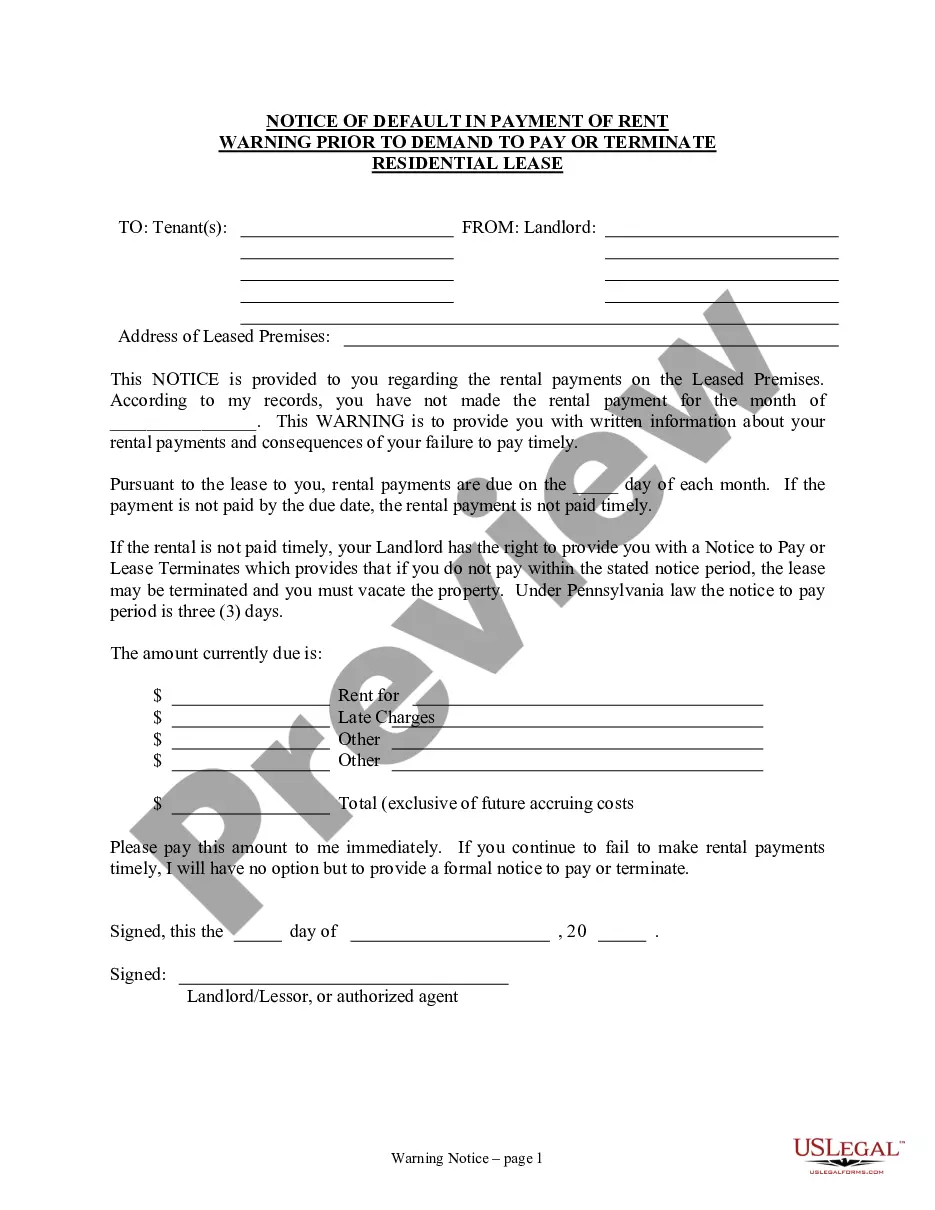
Pennsylvania Notice of Default in Payment of Rent as Warning Prior to Demand to Pay or Terminate for Residential Property
Description

Key Concepts & Definitions
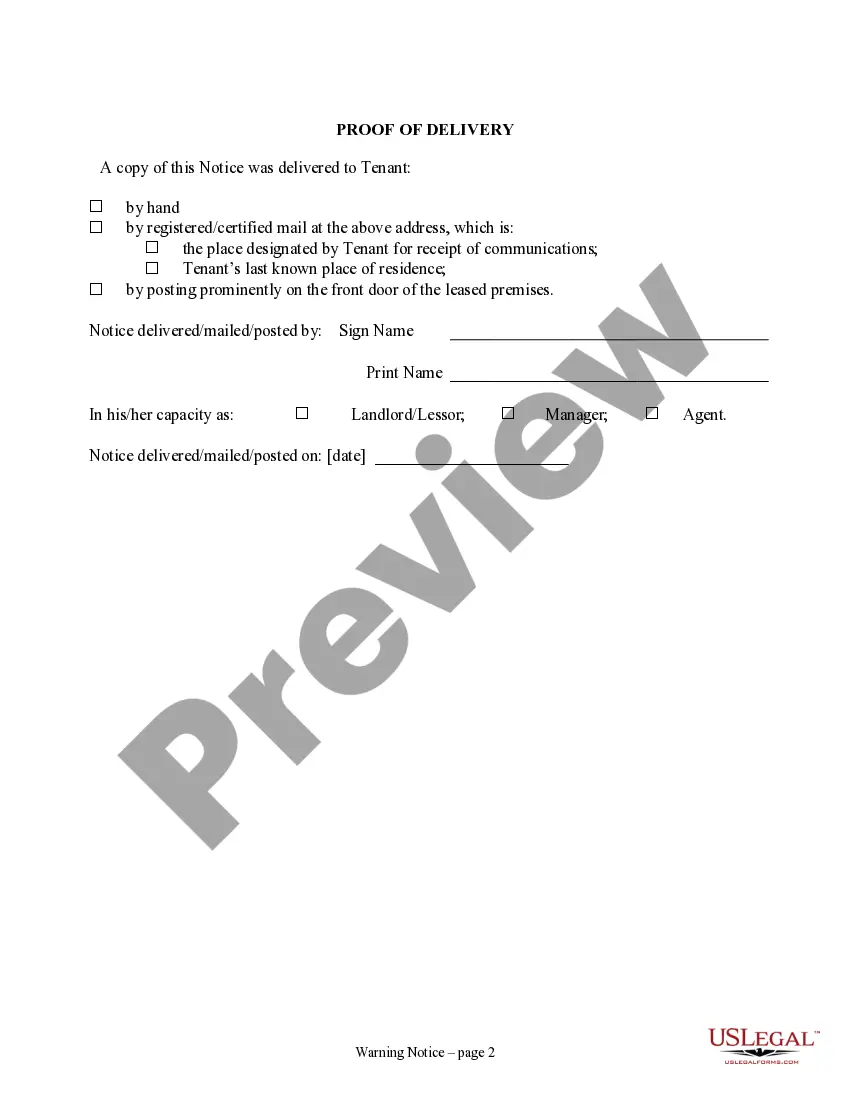
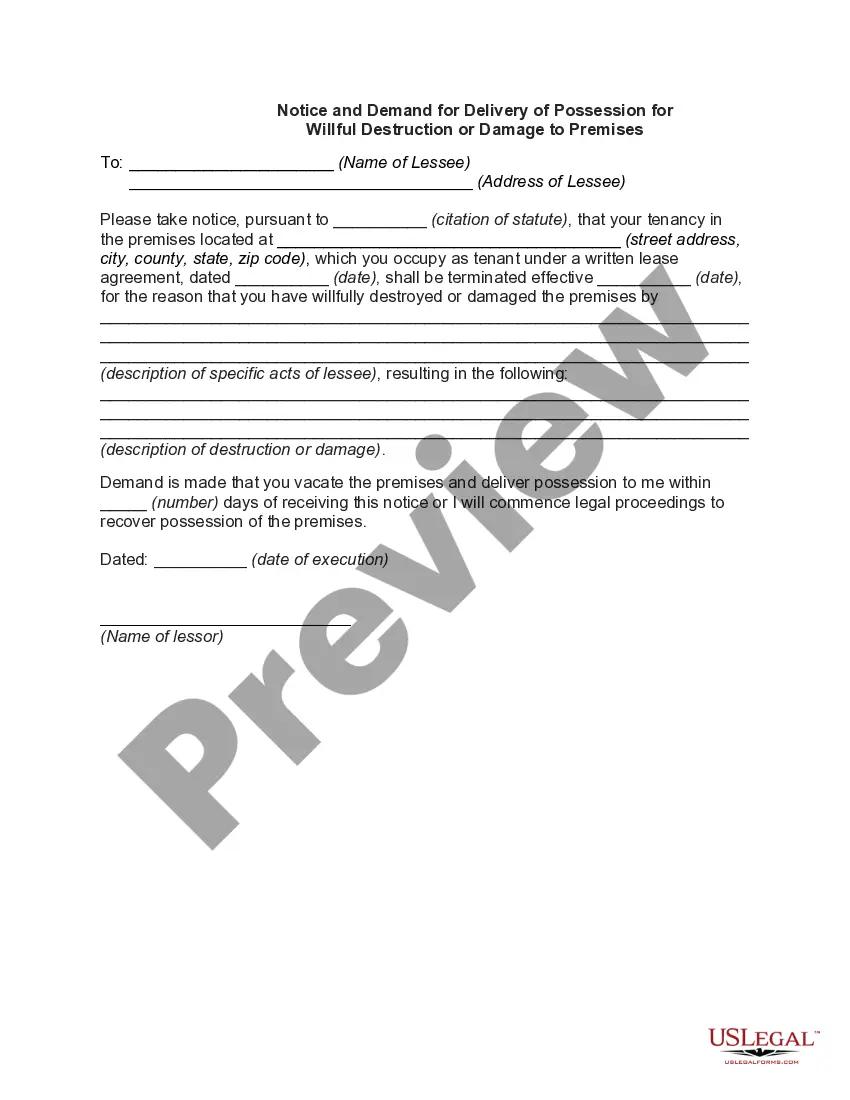
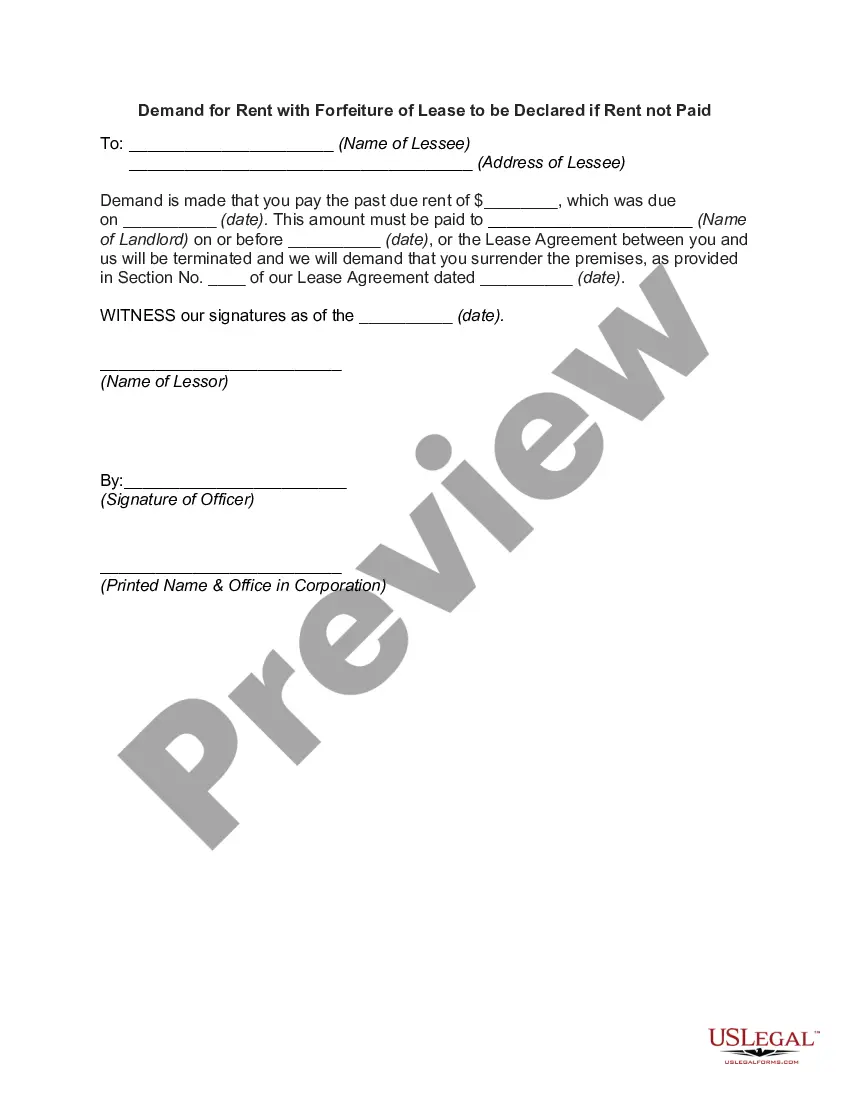
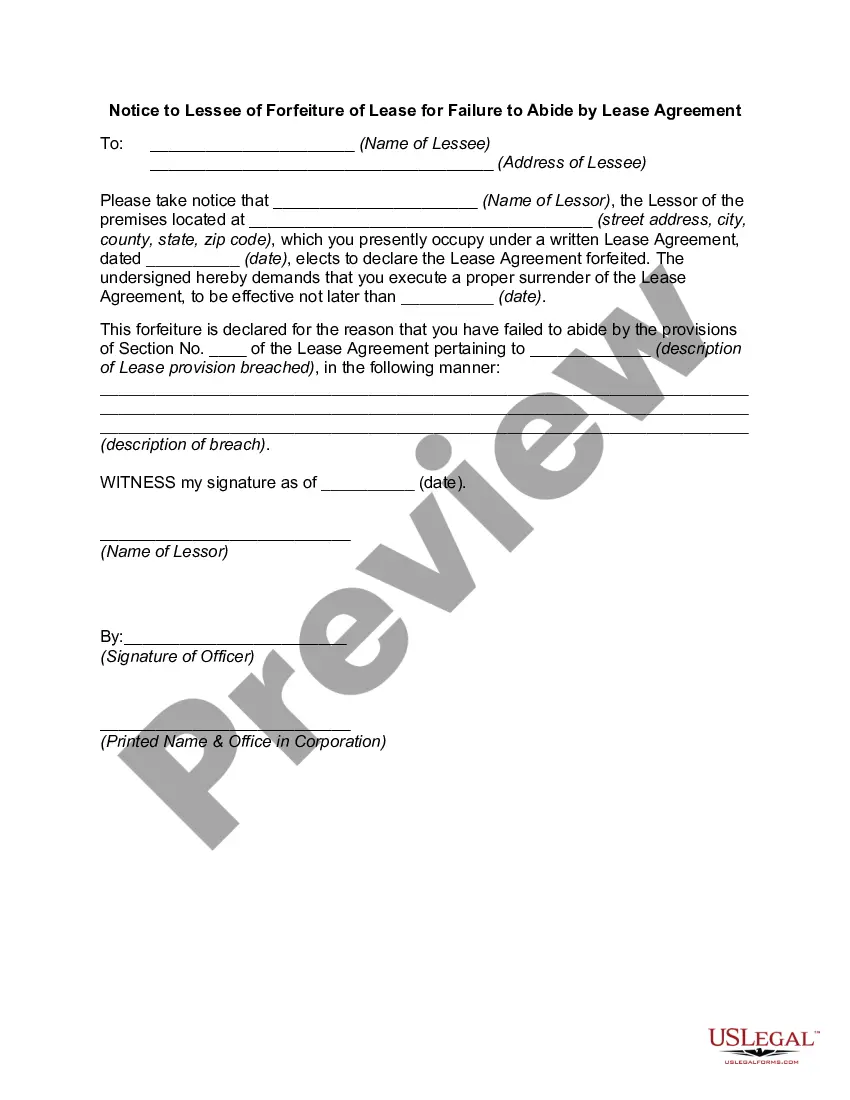
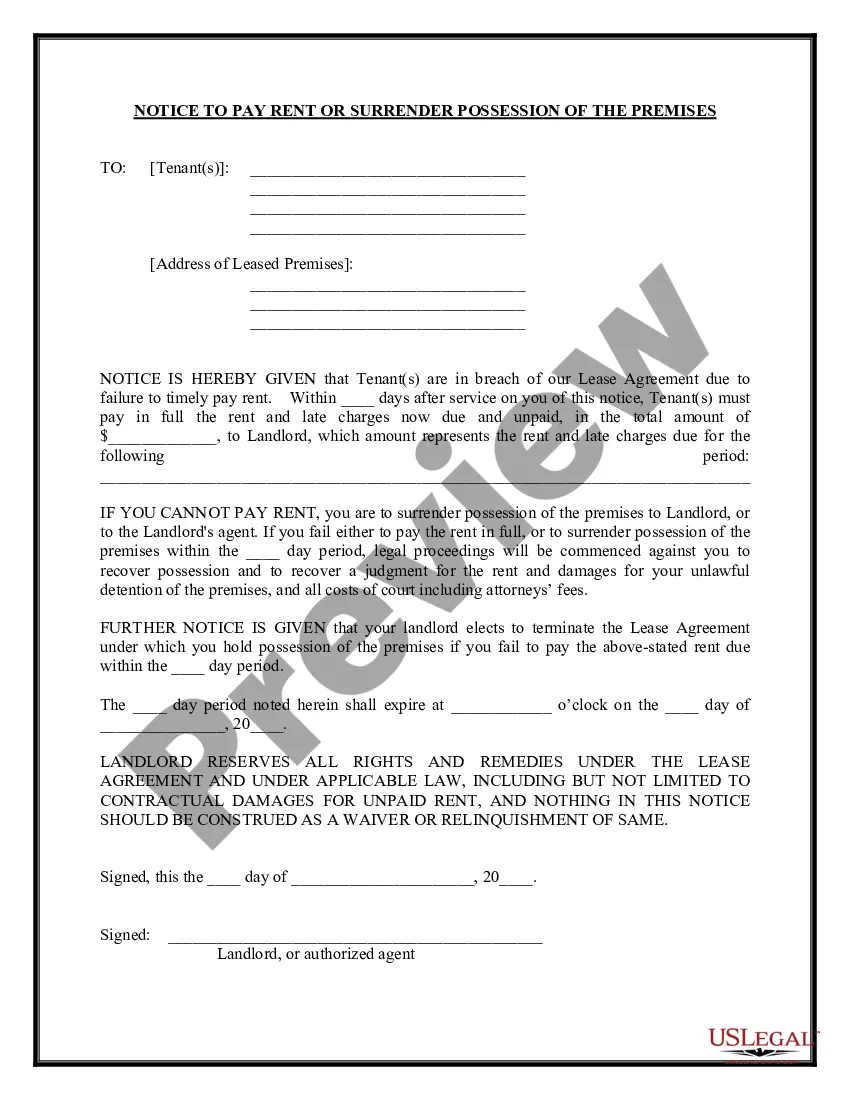
Notice of Default in Payment of Rent as Warning refers to a formal written notification sent by a landlord to a tenant indicating that the tenant has not paid the rent on time according to the terms outlined in the lease agreement. This notice serves as an official warning that failure to remedy the situation may lead to further legal actions, such as eviction.
Step-by-Step Guide
- Identify the Default: Verify that the tenant has indeed failed to meet the payment deadline as per the lease agreement.
- Review State Regulations: Ensure that the notice aligns with local and state laws governing tenant-landlord relationships and eviction procedures.
- Draft the Notice: Write a clear and formal notice outlining the rent amount due, the due date, and the consequences of non-payment.
- Deliver the Notice: Send the notice to the tenant through certified mail or another verifiable method to ensure receipt. Keep copies for your records.
- Follow Up: If the tenant fails to respond or pay within the stipulated timeframe, consult a lawyer to discuss further legal actions.
Risk Analysis
- Legal Compliance Risks: Failure to comply with state-specific legal requirements can invalidate the notice and delay eviction proceedings.
- Relationship Risks: Sending a notice can strain relationships with tenants and potentially lead to vacancy losses.
- Financial Risks: Prolonged non-payment can impact the landlords financial health, especially if the eviction process is lengthy and costly.
Key Takeaways
- Understanding the legal framework surrounding the notice of default is crucial for enforcing residential lease agreements effectively.
- Proper documentation and adherence to state laws are mandatory for the notice to be legally binding.
- Open communication with tenants can sometimes prevent the need for formal notices and foster better relationships.
Common Mistakes & How to Avoid Them
- Inadequate Documentation: Always keep detailed records of all communications and payments related to tenancy to avoid disputes.
- Ignoring Local Laws: Stay updated on the latest tenant-landlord laws in your state to ensure that any action taken is legally compliant.
- Lack of Formal Delivery: Use certified mail or personal delivery to ensure the tenant receives the notice, avoiding discrepancies later on.
How to fill out Pennsylvania Notice Of Default In Payment Of Rent As Warning Prior To Demand To Pay Or Terminate For Residential Property?
The work with papers isn't the most simple job, especially for people who almost never work with legal paperwork. That's why we advise making use of accurate Pennsylvania Notice of Default in Payment of Rent as Warning Prior to Demand to Pay or Terminate for Residential Property samples made by skilled attorneys. It allows you to eliminate problems when in court or working with official organizations. Find the files you need on our website for high-quality forms and correct descriptions.
If you’re a user having a US Legal Forms subscription, simply log in your account. Once you are in, the Download button will automatically appear on the file webpage. Soon after downloading the sample, it will be saved in the My Forms menu.
Customers without a subscription can quickly get an account. Follow this simple step-by-step help guide to get the Pennsylvania Notice of Default in Payment of Rent as Warning Prior to Demand to Pay or Terminate for Residential Property:
- Be sure that file you found is eligible for use in the state it is necessary in.
- Confirm the file. Use the Preview feature or read its description (if readily available).
- Click Buy Now if this form is what you need or return to the Search field to find another one.
- Choose a convenient subscription and create your account.
- Utilize your PayPal or credit card to pay for the service.
- Download your file in a wanted format.
After doing these straightforward actions, you are able to complete the form in your favorite editor. Double-check filled in data and consider requesting a legal representative to examine your Pennsylvania Notice of Default in Payment of Rent as Warning Prior to Demand to Pay or Terminate for Residential Property for correctness. With US Legal Forms, everything becomes much simpler. Test it now!
Form popularity
FAQ
Pennsylvania law requires that the tenant be given 10 days from the date of service of the Notice to Quit to either pay the rent due or move out of the property. This deadline can be changed if previously agreed to by the tenant in the lease or rental agreement.
No. Many Pennsylvania courts have said your landlord cannot evict you by self-help, meaning such things as padlocking your door, shutting off your utilities, using force to evict you, or using any eviction method other than going to court.
Absent a rental agreement, the landlord is required to provide the tenant with at least 15 days' notice of any changes to the lease. Regarding a year-to-year or definite lease term, at least 30 days' notice is required if the landlord wants to make any changes to the lease or terminate the tenancy.
Answer. Tenants have the right to "quiet enjoyment" of their home. Unless there is an emergency, your landlord or their agent must give you at least 24 hours' notice if they intend to visit.Apart from genuine emergencies, landlords cannot enter a tenant's home without their consent unless they have a court order.
Landlord Right to Entry in PennsylvaniaPennsylvania does not have any laws regarding landlord right to entry. As such, landlords are legally allowed to enter units whenever they want, though most landlords and tenants have some kind of entry notification policy in the lease agreement.
The Landlord/Tenant Act requires your landlord to give you a written eviction notice. This notice must be a 10-day notice if he/she is evicting you for nonpayment of rent, or 15 days if the eviction is for breach of the lease or end of lease term.
The Landlord/Tenant Act requires your landlord to give you a written eviction notice. This notice must be a 10-day notice if he/she is evicting you for nonpayment of rent, or 15 days if the eviction is for breach of the lease or end of lease term.
They don't have to give you any reasons why they want to evict you. They have to give you at least 28 days notice, but this could be longer depending on your agreement. If you don't leave by the time your notice ends, your landlord has to go to court to get a court order to make you leave.
After winning a residential eviction case, a landlord must wait at least 10 days, but not more than 120 days, to file a Request for Order of Possession of the property. This Request for Order of Possession is the order that allows a landlord to have the tenant actually removed from the property.