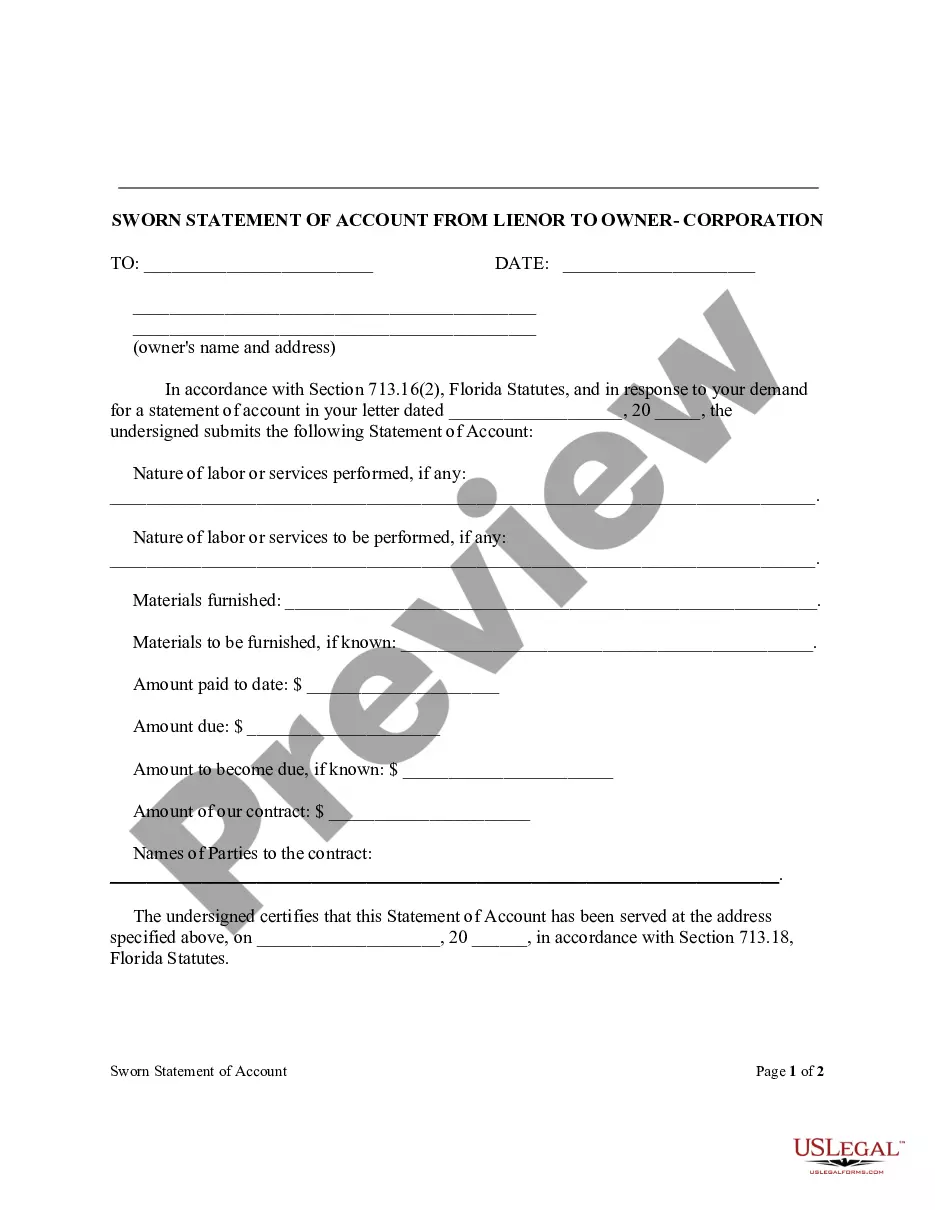
Employment Agreement of an Admissions Assitant
About this form
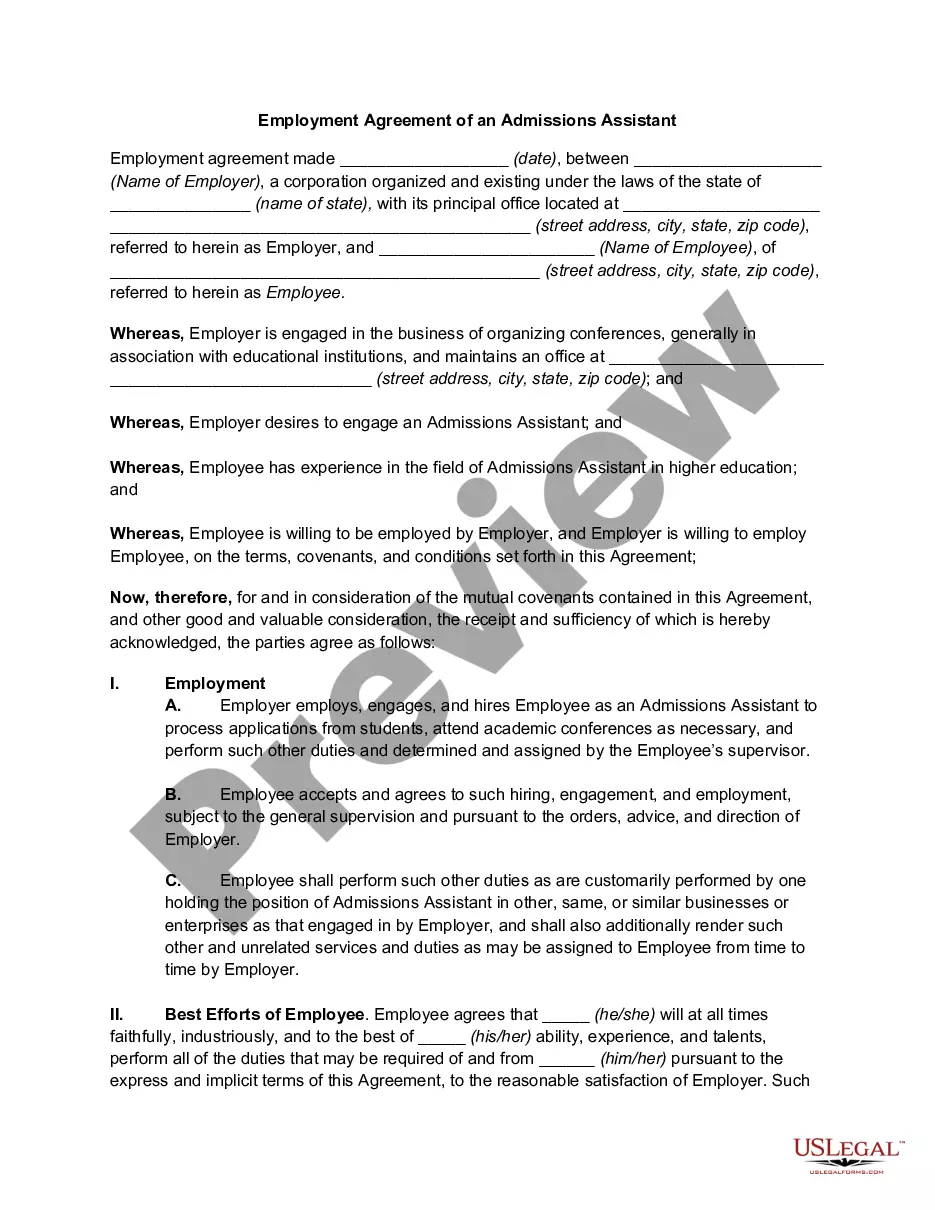
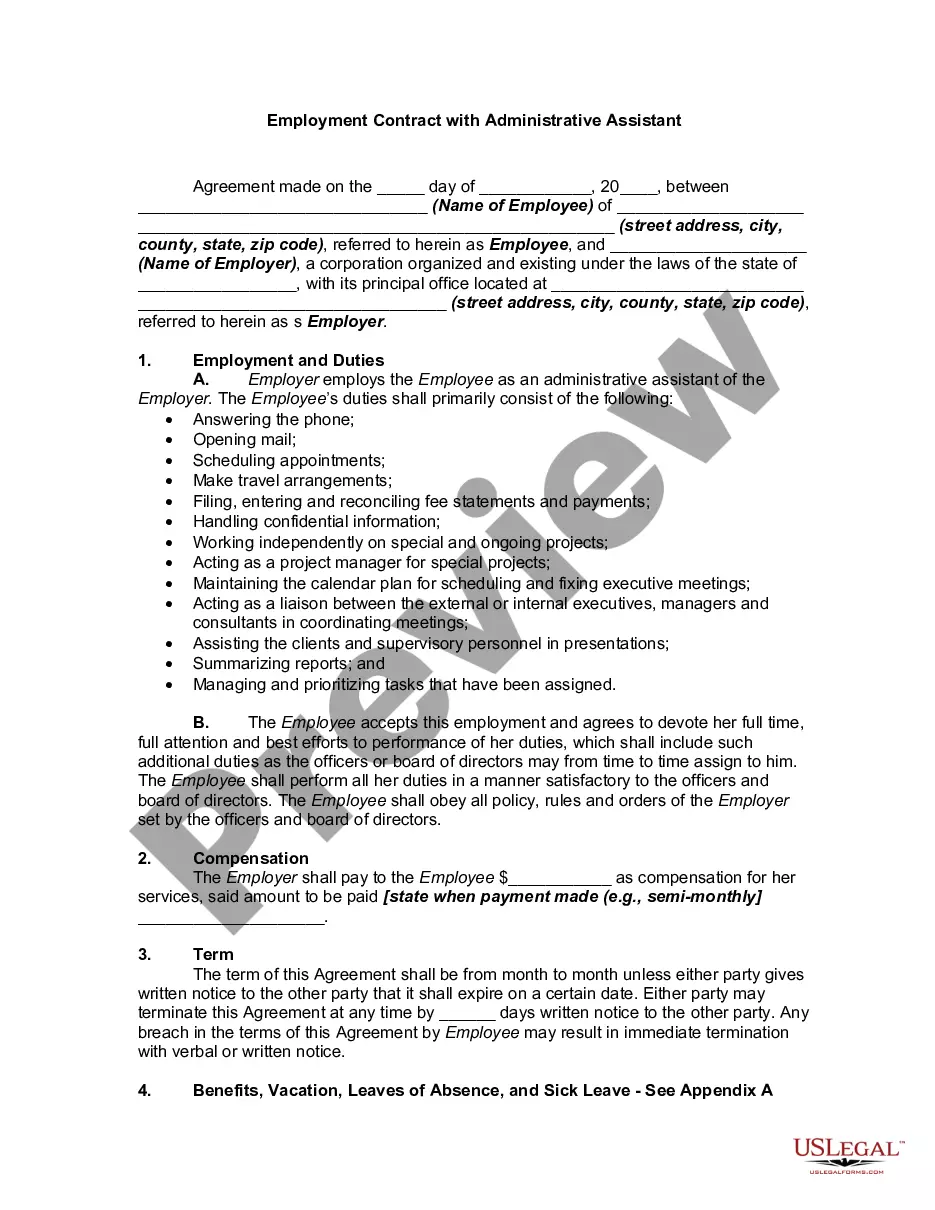
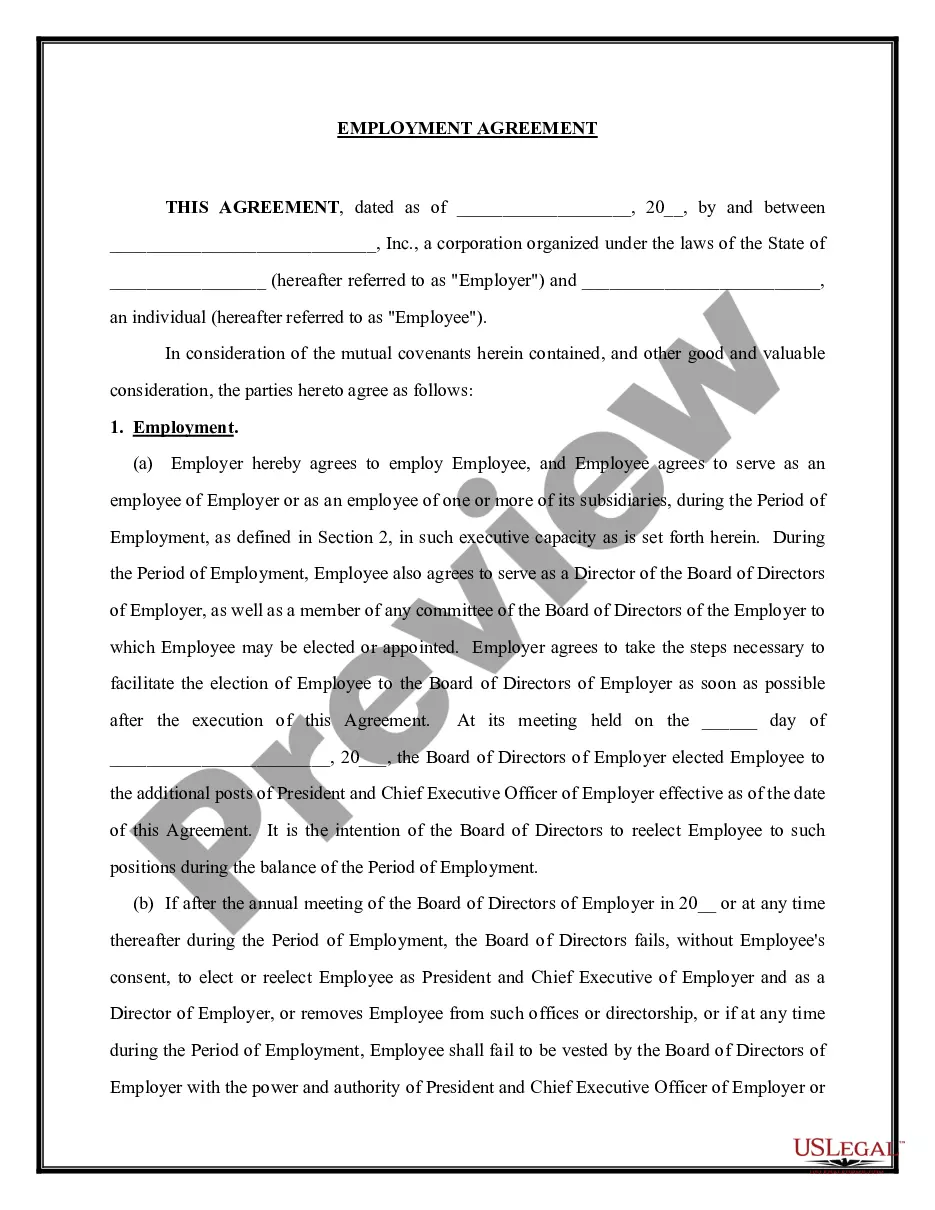
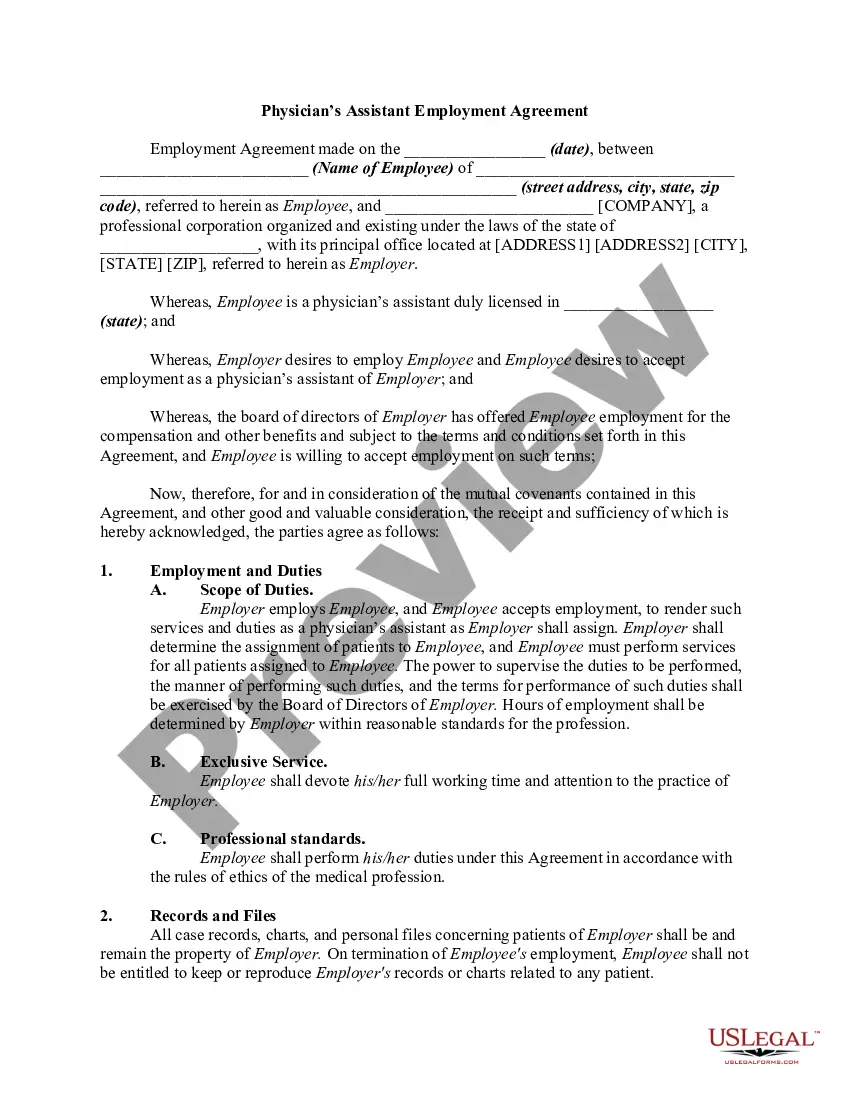
The Employment Agreement of an Admissions Assistant is a legal document that outlines the terms of employment for individuals in the role of admissions assistants at educational institutions. This agreement serves as a contract between the employer and the employee, detailing responsibilities, compensation, and conditions of employment. Unlike other employment agreements, this form is specifically tailored to the admissions assistant role, making it ideal for educational environments.
Main sections of this form
- Identification of parties involved: employer and employee information.
- Detailed job responsibilities and duties of the admissions assistant.
- Compensation terms, including payment frequency and rates.
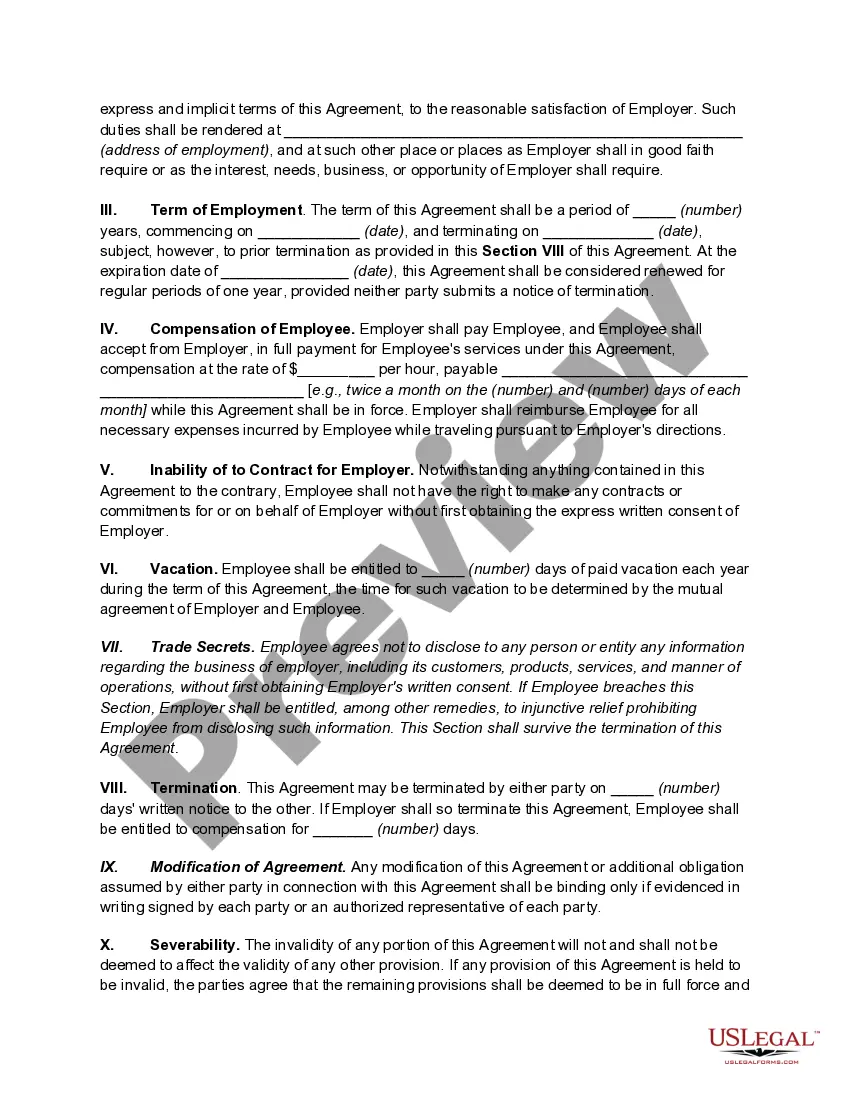
- Duration of employment, including terms for renewal and termination.
- Confidentiality clauses regarding trade secrets and business information.
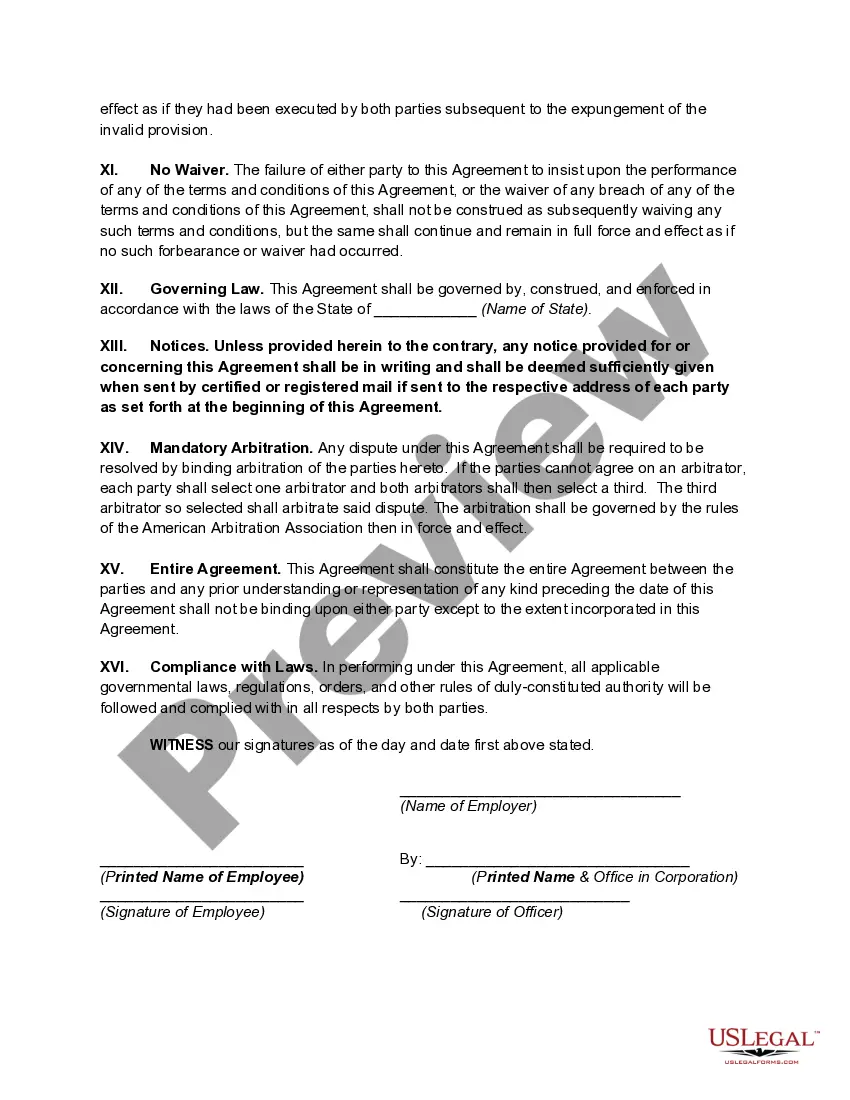
- Governing law and requirements for potential arbitration of disputes.
Situations where this form applies
This form should be used when hiring an admissions assistant at an educational institution. It is useful during the onboarding process, providing a clear understanding of the employee's role and expectations. This agreement helps to formalize employment terms, ensuring both parties are aware of their rights and obligations.
Intended users of this form
- Educational institutions seeking to hire admissions assistants.
- Employers looking for a standardized employment agreement for admissions positions.
- HR personnel responsible for drafting and finalizing employment contracts.
- Employees being offered a position as an admissions assistant who want a clear understanding of their employment terms.
Instructions for completing this form
- Fill in the date and names of the employer and employee at the beginning of the agreement.
- Specify the job responsibilities and any additional duties expected from the employee.
- Determine and record the compensation rate and payment schedule.
- Define the employment term, ensuring clear start and end dates.
- Review and complete the clauses related to confidentiality and termination.
- Both parties should sign and date the form to finalize the agreement.
Does this form need to be notarized?
Notarization is generally not required for this form. However, certain states or situations might demand it. You can complete notarization online through US Legal Forms, powered by Notarize, using a verified video call available anytime.
Get your form ready online
Our built-in tools help you complete, sign, share, and store your documents in one place.
Make edits, fill in missing information, and update formatting in US Legal Forms—just like you would in MS Word.
Download a copy, print it, send it by email, or mail it via USPS—whatever works best for your next step.
Sign and collect signatures with our SignNow integration. Send to multiple recipients, set reminders, and more. Go Premium to unlock E-Sign.
If this form requires notarization, complete it online through a secure video call—no need to meet a notary in person or wait for an appointment.
We protect your documents and personal data by following strict security and privacy standards.

Make edits, fill in missing information, and update formatting in US Legal Forms—just like you would in MS Word.

Download a copy, print it, send it by email, or mail it via USPS—whatever works best for your next step.

Sign and collect signatures with our SignNow integration. Send to multiple recipients, set reminders, and more. Go Premium to unlock E-Sign.

If this form requires notarization, complete it online through a secure video call—no need to meet a notary in person or wait for an appointment.

We protect your documents and personal data by following strict security and privacy standards.
Common mistakes
- Failing to include the specific job responsibilities, leading to confusion later.
- Neglecting to define the termination notice period, resulting in potential disputes.
- Leaving out compensation details, which can cause misunderstandings regarding payment.
- Not reviewing local laws that may affect the legitimacy of the agreement.
Benefits of using this form online
- Immediate download and access to the employment agreement template.
- Editability allows for customization based on specific needs and state requirements.
- Reliability with forms drafted by licensed attorneys, ensuring legal compliance.
Looking for another form?



Form popularity
FAQ
If you didn't use a job description, take an hour to sit down and write out the duties you want your employee to perform. Be as specific as possible. The job description also should have included the target wage. You should consider whether or not you are paying a fair rate.
There is no requirement that you have to enter into a written employee contract with every employee that you have. However, there are some situations in which it makes sense to enter into an employment contract with your employees.
A clear job description. This should set out the role and duties of the employee. Salary or wage details. The nature of the employment. The reporting structure. Leave entitlements. Confidentiality. Non-compete/restraint of trade. Protection of intellectual property.
Types of Employment Contracts: Permanent employment, temporary employment and independent contractors.
Contract Types Overview. Express and Implied Contracts. Unilateral and Bilateral Contracts. Unconscionable Contracts. Adhesion Contracts. Aleatory Contracts. Option Contracts. Fixed Price Contracts.
Right to a safe workplace free of dangerous conditions, toxic substances, and other potential safety hazards; Right to be free from retaliation for filing a claim or complaint against an employer (these are sometimes called "whistleblower" rights); and. Right to fair wages for work performed.
There is no legal requirement for an employee to have a written contract of employment, although having something in writing can make it easier to understand what your contractual obligations and rights are.
Fixed price contracts. With a fixed price contract the buyer (that's you) doesn't take on much risk. Cost-reimbursable contracts. With a cost-reimbursable contract you pay the vendor for the actual cost of the work. Time and materials contracts.
There are three types of employment status: employee, worker and self-employed. The three are often not in practice used correctly and the difference is not always known.