Sample Letter to Clerk for filing Request for Default Judgment with Supporting Affidavit
Understanding this form
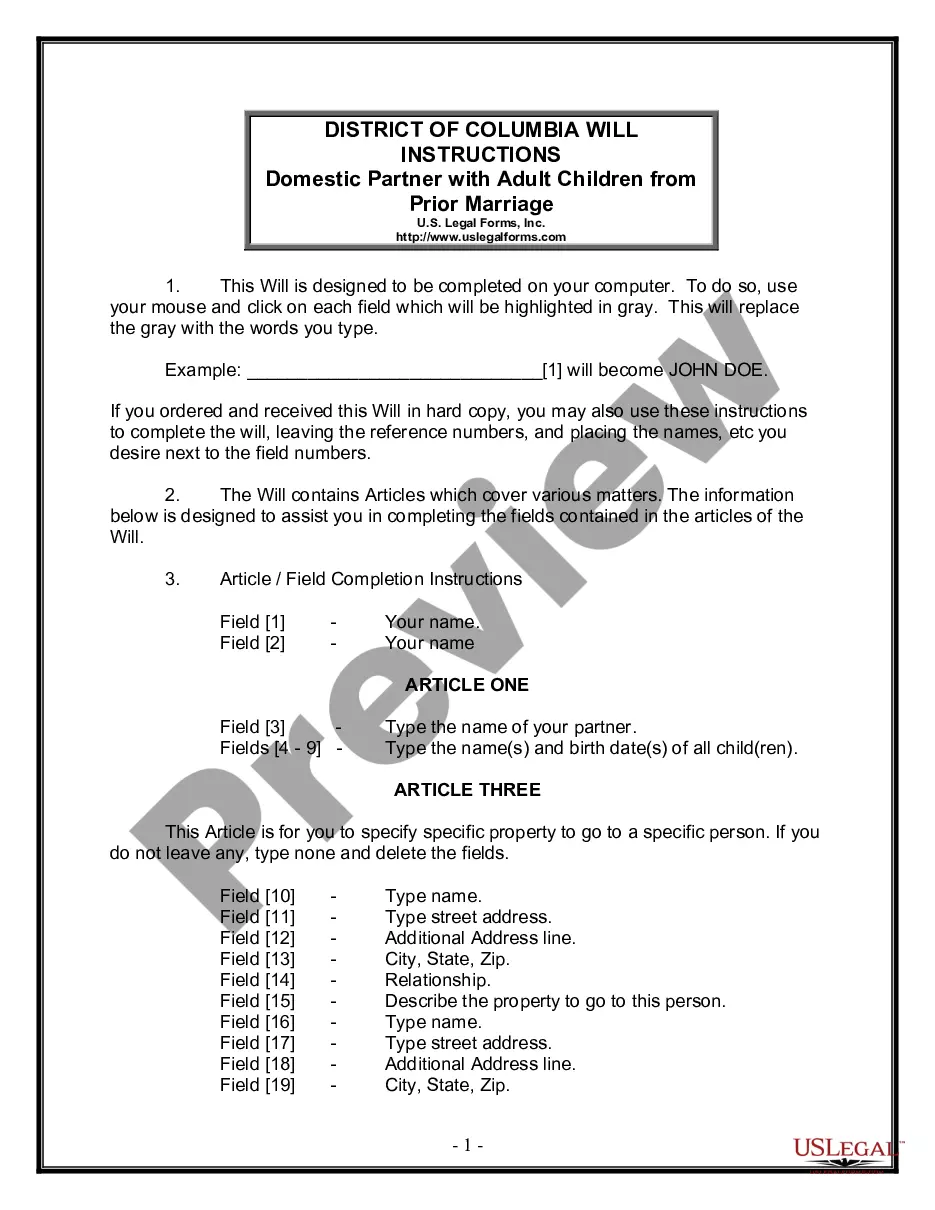
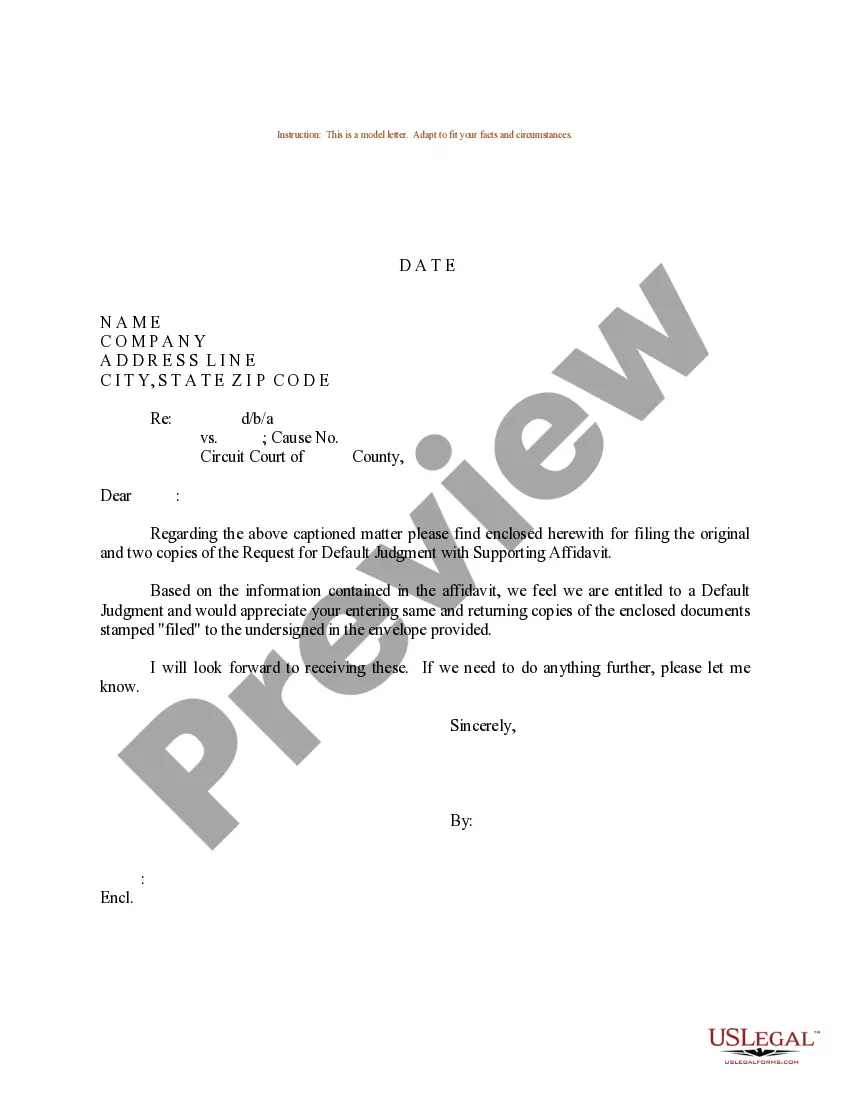
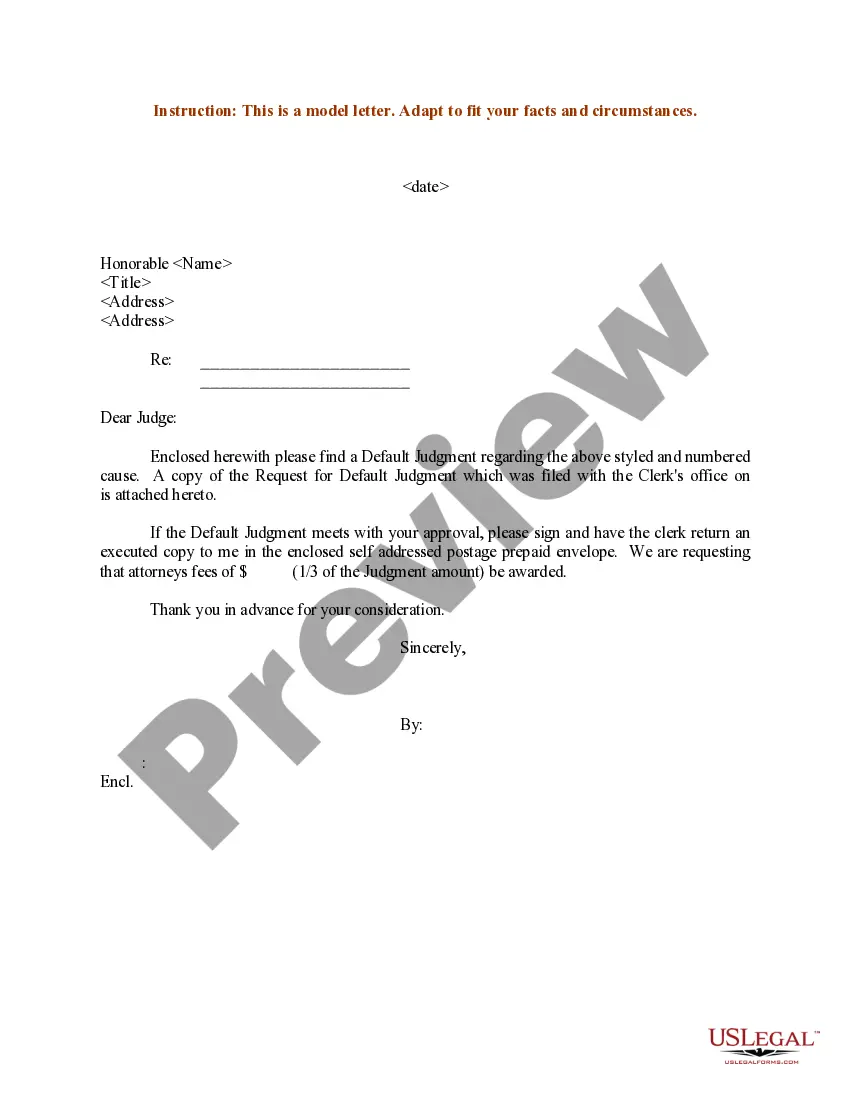
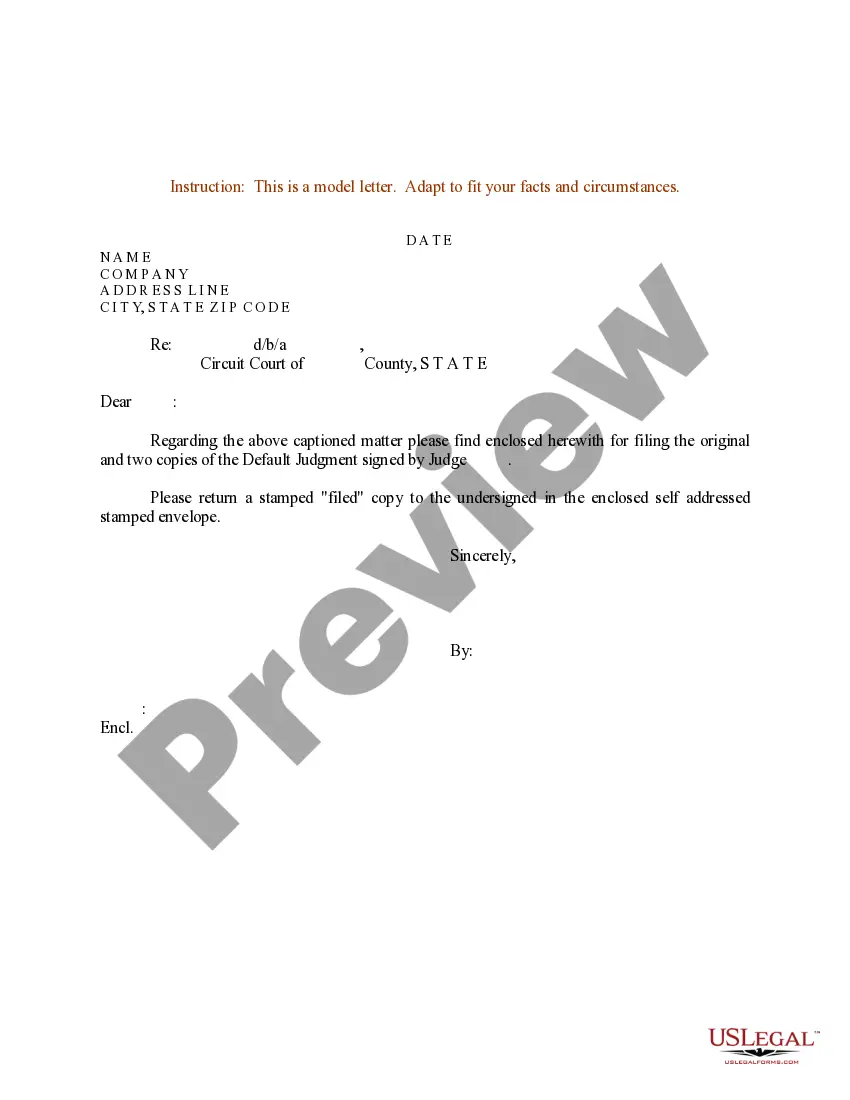
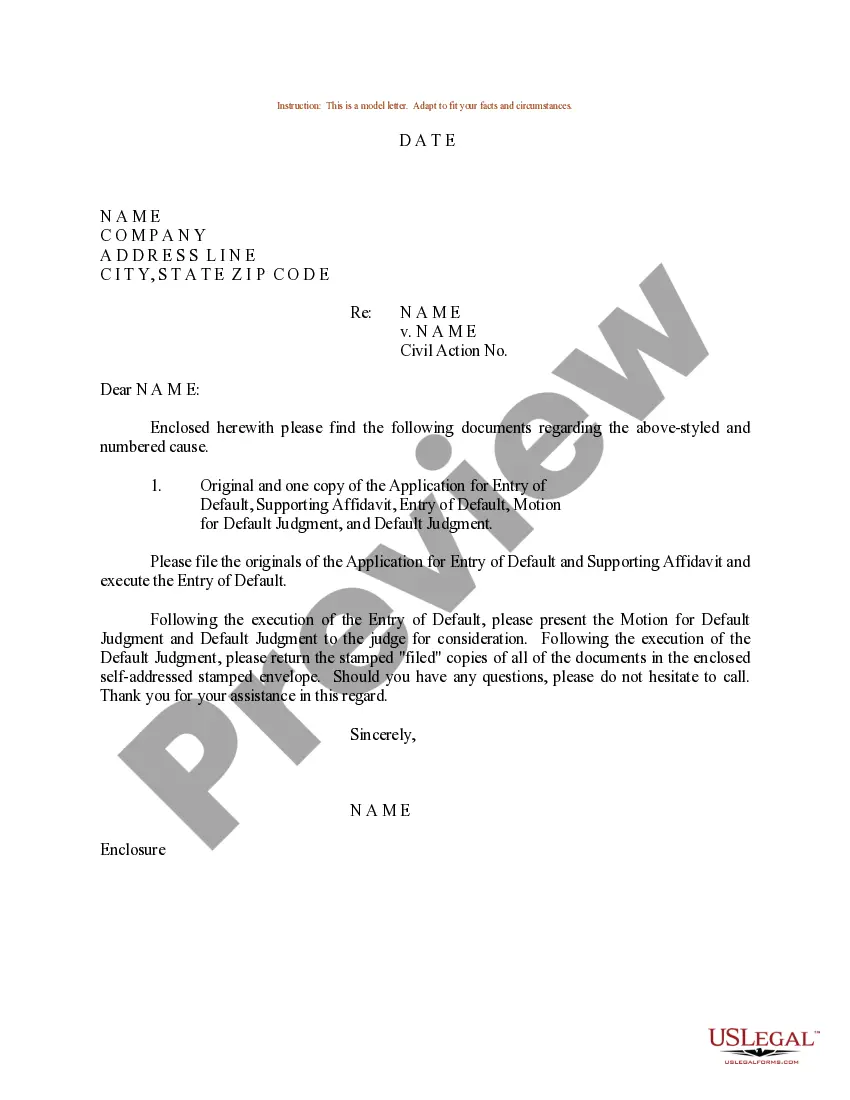
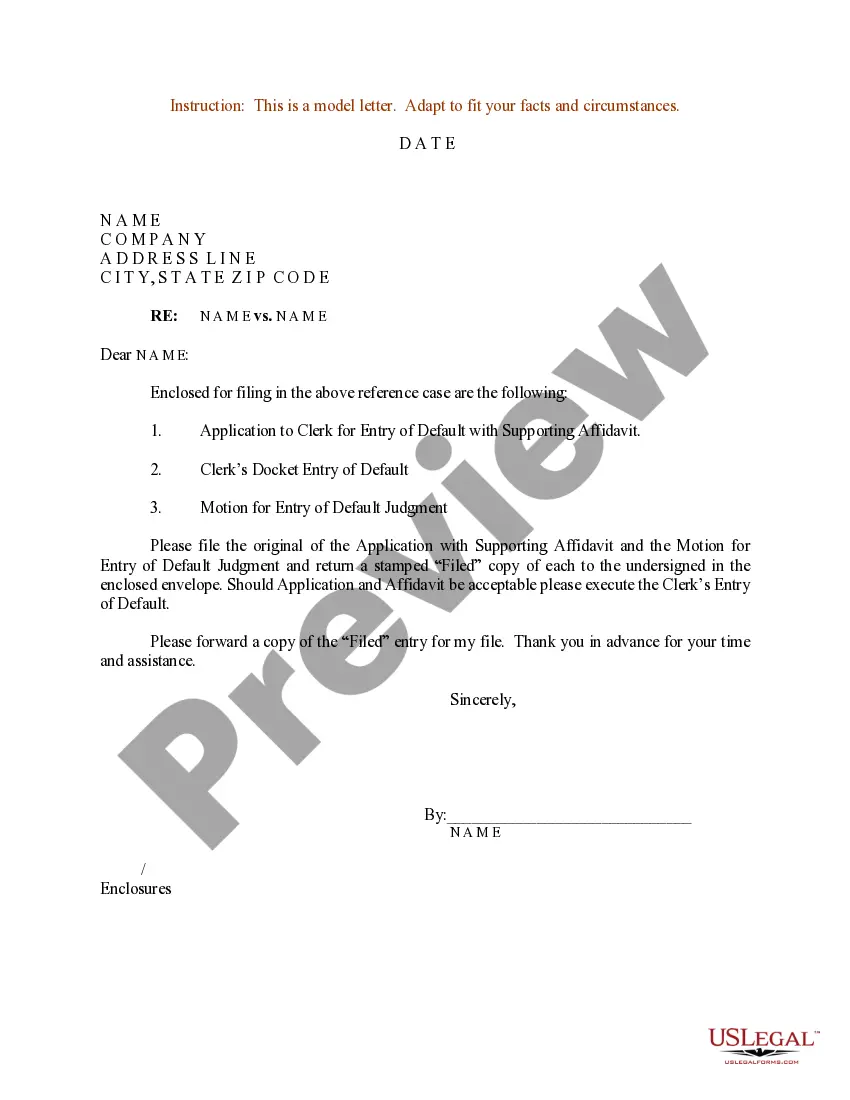
This form is a Sample Letter to Clerk for filing a Request for Default Judgment with Supporting Affidavit. It serves as a template to inform the court that you believe your case warrants a default judgment based on the evidence provided in your affidavit. This form distinguishes itself by focusing specifically on the request for a default judgment, making it a crucial step in legal proceedings where the opposing party has failed to respond.
Form components explained
- Date of the letter.
- Private name and company details.
- The request for a default judgment.
- Instructions for returning the filed documents.
- Signature line for the sender.

Common use cases
This form is typically used when a plaintiff has filed a lawsuit, and the defendant has not responded within the required timeframe. When the court has been provided with adequate evidence through an affidavit, this letter serves as a formal request to the court to issue a default judgment in favor of the plaintiff.
Who this form is for
- Individuals or businesses who have filed a lawsuit and the defendant has not responded.
- Those seeking a legally enforceable decision without a trial due to non-response from the defendant.
- People who need a structured format to communicate with the court regarding a default judgment.
Instructions for completing this form
- Enter the date at the top of the letter.
- Fill in your name and company details as indicated.
- Clearly state your request for a default judgment based on the attached affidavit.
- Include instructions for the clerk on returning filed copies to you.
- Sign the letter at the bottom.
Notarization guidance
Notarization is required for this form to take effect. Our online notarization service, powered by Notarize, lets you verify and sign documents remotely through an encrypted video session, available 24/7.
Get your form ready online
Our built-in tools help you complete, sign, share, and store your documents in one place.
Make edits, fill in missing information, and update formatting in US Legal Forms—just like you would in MS Word.
Download a copy, print it, send it by email, or mail it via USPS—whatever works best for your next step.
Sign and collect signatures with our SignNow integration. Send to multiple recipients, set reminders, and more. Go Premium to unlock E-Sign.
If this form requires notarization, complete it online through a secure video call—no need to meet a notary in person or wait for an appointment.
We protect your documents and personal data by following strict security and privacy standards.

Make edits, fill in missing information, and update formatting in US Legal Forms—just like you would in MS Word.

Download a copy, print it, send it by email, or mail it via USPS—whatever works best for your next step.

Sign and collect signatures with our SignNow integration. Send to multiple recipients, set reminders, and more. Go Premium to unlock E-Sign.

If this form requires notarization, complete it online through a secure video call—no need to meet a notary in person or wait for an appointment.

We protect your documents and personal data by following strict security and privacy standards.
Typical mistakes to avoid
- Failing to provide adequate detail in the supporting affidavit.
- Not including the necessary envelope for returning filed documents.
- Omitting the date or signature from the letter.
Why complete this form online
- Convenient access to an easy-to-use template without the need for a lawyer.
- Editable format allows for customization to fit your specific situation.
- Reliable content drafted by licensed attorneys to ensure compliance with legal standards.
Legal use & context
- This form initiates a process within the court system to obtain a default judgment.
- It is important to follow specific formatting and procedural rules applicable in your jurisdiction to avoid delays.
Quick recap
- This form is essential for requesting a default judgment when the other party does not respond.
- Customize the sample letter to your specific circumstances and follow local rules carefully.
- Ensure that all components are completed accurately to facilitate the court's review.
Looking for another form?
Form popularity
FAQ
The Sample Letter to Clerk for Filing a Request for Default Judgment with Supporting Affidavit is a template used to tell the court you seek a default judgment based on evidence in your affidavit. It is designed for multi-state use and includes the date, your name and company details, the requested judgment, return instructions, and a signature line.
This form is a letter to the clerk of the court used to file a Request for Default Judgment with Supporting Affidavit. It includes a Date field, space for private name and company details, the request itself, instructions for returning the filed documents, and a signature line. In practice, direct the letter to the court handling the case and attach the supporting affidavit.
The form is not designed to set aside a default judgment. It is used to request a default judgment based on evidence in a supporting affidavit. Grounds to set aside are not listed in this template, and pursuing relief would require a separate post-default procedure, such as a motion to set aside, which may require court approval. Consult a licensed attorney for guidance.
This form does not address restoring a suit that was dismissed for default. It is specifically a template to obtain a default judgment by sending a letter to the clerk with a supporting affidavit. Restoring a dismissed case would involve different court procedures and filings, and one should consult an attorney about the appropriate path in the relevant jurisdiction.
This form does not reverse a default judgment. It is used to request a default judgment when the defendant has not responded to the complaint and evidence is provided in a supporting affidavit. Reversing or challenging an existing default judgment generally requires a separate remedy (such as a motion to set aside or an appeal) according to the court rules; consult counsel.
This form is a letter to the clerk for filing a default judgment with a Supporting Affidavit, including a date, sender details, the requested relief, return instructions, and a signature line. It is designed for multi-state use and filed as a clerk-facing letter rather than a judge-directed motion, which is a separate filing in many jurisdictions.