Agreement to Attempt to Locate Unclaimed Property of Client
About this form
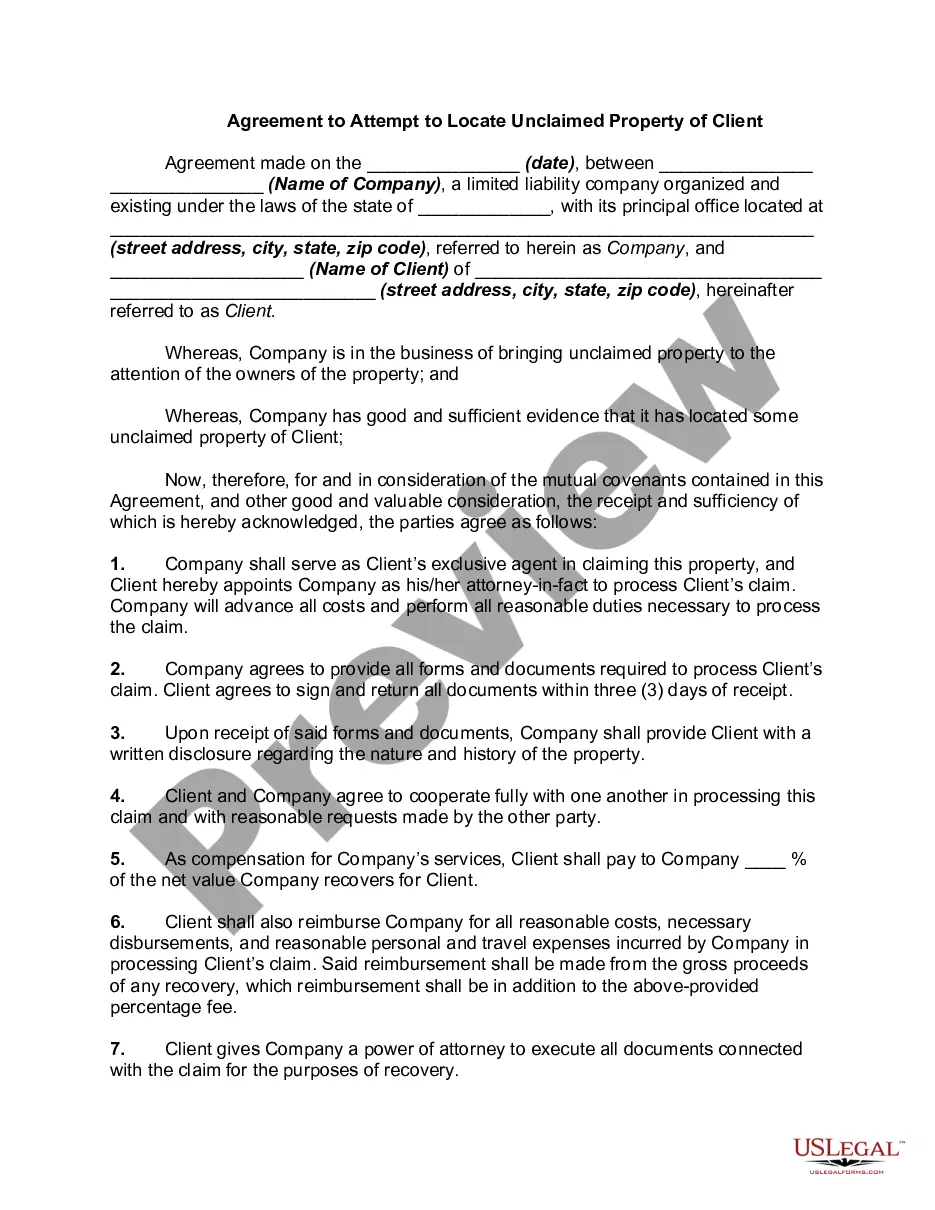
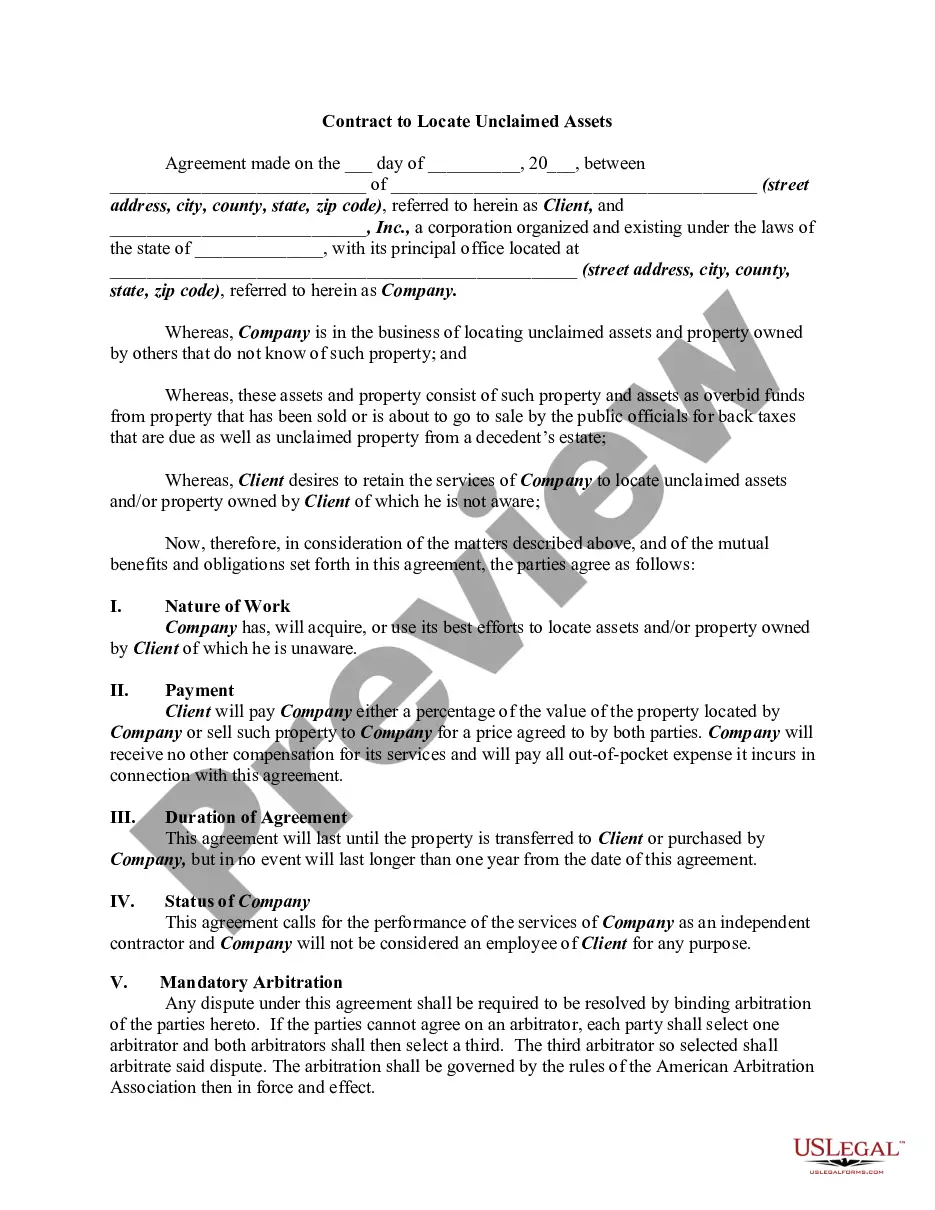
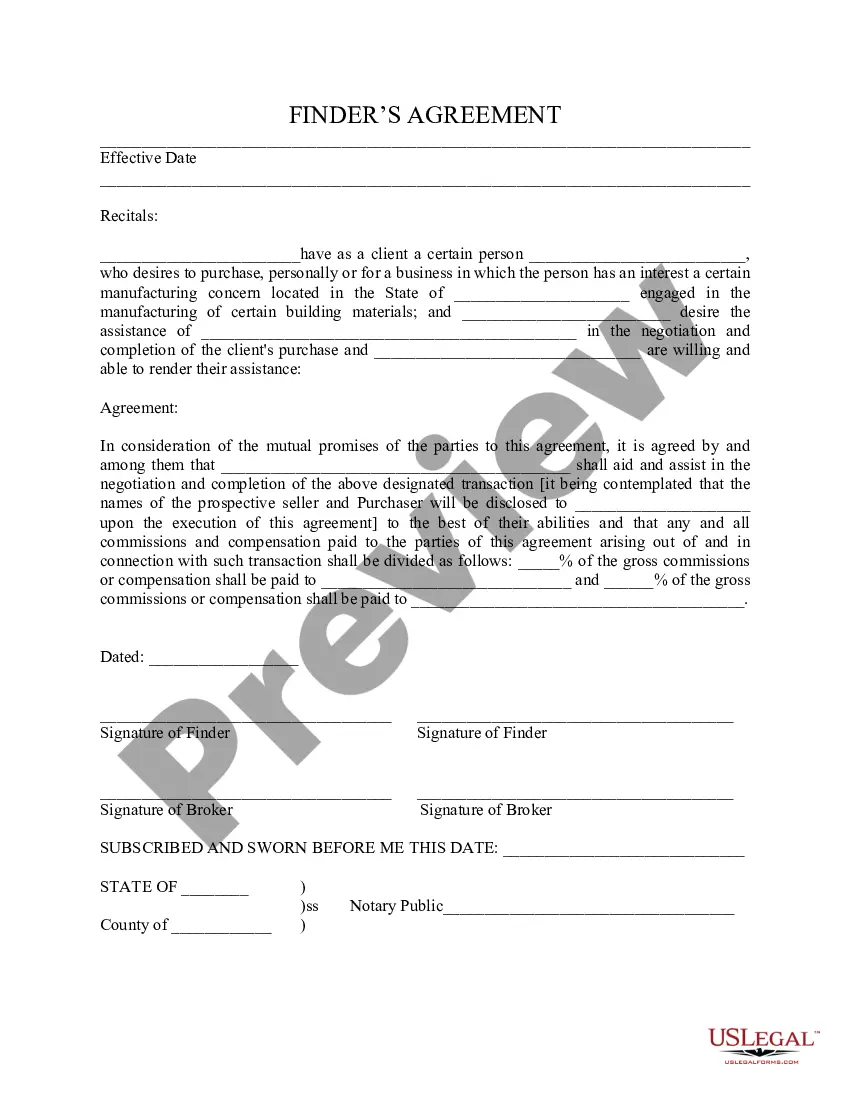
The Agreement to Attempt to Locate Unclaimed Property of Client is a legal document that establishes a relationship between a company that specializes in locating unclaimed property and a client seeking to recover those assets. This agreement outlines the responsibilities of both parties, including the company's role as an intermediary and the compensation structure for its services. Unlike other property recovery forms, this agreement specifically focuses on unclaimed assets that may have been overlooked by their rightful owners, ensuring a clear process for claiming those funds.
Form components explained
- Date of the agreement.
- Identification of the company and the client.
- Client's appointment of the company as their exclusive agent for claiming the property.
- Obligations of the company to provide necessary forms and documents.
- Details on compensation for services rendered and reimbursement of incurred costs.
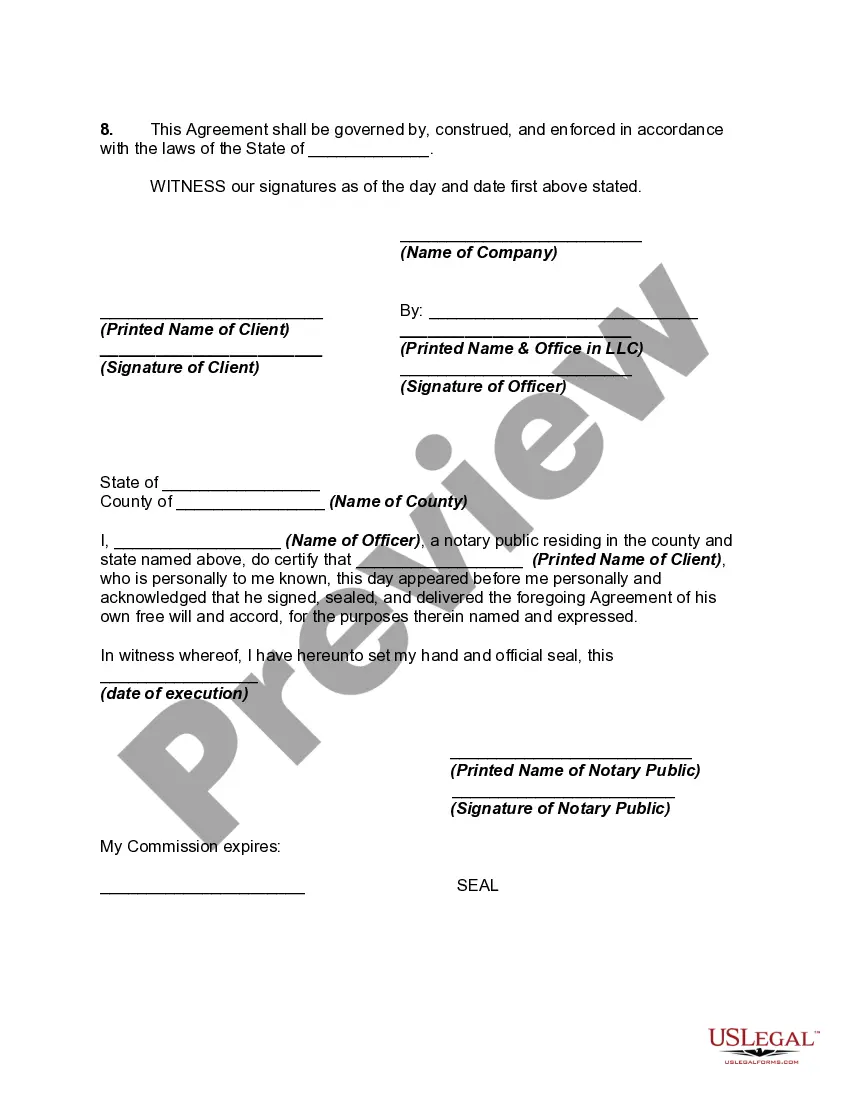
- Granting of power of attorney by the client.
When to use this form
This form is used when a client believes they have unclaimed property that requires assistance to recover. Common scenarios include situations where property has remained unclaimed after tax or mortgage foreclosures, and the client needs expert help to navigate the claims process. The agreement ensures that the client is working with a professional who can effectively advocate for their rights to recover these assets.
Who this form is for
- Individuals or businesses who suspect they have unclaimed property.
- Clients who want to engage a company specialized in locating unclaimed assets.
- Efficient for those who may lack the expertise or time to pursue claims themselves.
- Parties looking for clarity on the fee structure involved in asset recovery.
How to complete this form
- Enter the date of the agreement at the top of the document.
- Fill in the name of the company and its details, including address.
- Provide the client's full name and address information.
- Specify the compensation percentage that the client will pay upon recovery of funds.
- Sign and date the agreement, ensuring all parties acknowledge their roles.
Is notarization required?
This form does not typically require notarization unless specified by local law. However, it is recommended to have signatures witnessed to enhance the document's validity and enforceability.
Get your form ready online
Our built-in tools help you complete, sign, share, and store your documents in one place.
Make edits, fill in missing information, and update formatting in US Legal Forms—just like you would in MS Word.
Download a copy, print it, send it by email, or mail it via USPS—whatever works best for your next step.
Sign and collect signatures with our SignNow integration. Send to multiple recipients, set reminders, and more. Go Premium to unlock E-Sign.
If this form requires notarization, complete it online through a secure video call—no need to meet a notary in person or wait for an appointment.
We protect your documents and personal data by following strict security and privacy standards.

Make edits, fill in missing information, and update formatting in US Legal Forms—just like you would in MS Word.

Download a copy, print it, send it by email, or mail it via USPS—whatever works best for your next step.

Sign and collect signatures with our SignNow integration. Send to multiple recipients, set reminders, and more. Go Premium to unlock E-Sign.

If this form requires notarization, complete it online through a secure video call—no need to meet a notary in person or wait for an appointment.

We protect your documents and personal data by following strict security and privacy standards.
Common mistakes
- Failing to fill in the compensation percentage, leading to confusion later.
- Not providing accurate personal or company information, which could invalidate the agreement.
- Missing signatures from both parties, which are necessary for enforceability.
- Neglecting to review the agreement after filling it out to ensure clarity and accuracy.
Benefits of completing this form online
- Accessibility: Download the form anytime and from anywhere.
- Editability: Customize the agreement to fit your specific situation easily.
- Reliability: Forms are prepared by licensed attorneys to ensure they meet legal standards.
- Time-saving: Streamlined process for filling out and retrieving necessary documents.
Legal use & context
- This form is designed to protect both the company and the client by clearly outlining the terms of the agreement and responsibilities related to property recovery.
- It serves as a legal basis for the actions taken to recover unclaimed property on behalf of the client.
- Understanding state-specific laws regarding unclaimed property and finder fees is crucial for enforceability.
Summary of main points
- The Agreement to Attempt to Locate Unclaimed Property is crucial for clients seeking to recover unclaimed funds.
- It designates a company as the clientâs agent, facilitating the claims process.
- Understanding compensation terms is critical for clients."
- Local laws should always be reviewed when utilizing this form.
Looking for another form?
Form popularity
FAQ
After the dormancy period, dormant accounts become unclaimed property.Owners can gain back unclaimed property by filing an application with their state at no cost or for a nominal handling fee. Because the state keeps custody of the unclaimed property in perpetuity, owners can claim their property at any time.
Unclaimed Property Program at the State Controller's Office, Attn: Division of Audits, Post Office Box 942850, Sacramento, California 94250-5874. Inquiries should be directed to the Division of Audits' Unclaimed Property Program at (916) 324- 8907.
After one year or more, those assets are unclaimed and go to the state. That money is lawfully protected and kept by the state to be returned to the owner rather than reverting back to the party who initially distributed the money. In most states, the money is generally held until the owner is found.
Find out the laws of your state, or for all states where you have employees working. Set up policies and procedures to capture information on uncollected property and a timeline for reviewing the list and sending out notifications each year. Then, set a time each year for reporting and paying for uncollected property.
The States want to get the unclaimed property to The Rightful Owner, and, unfortunately, there is always someone out there that wants property that is not theirs to claim, so the States are diligent in the investigation of a claim. They will request information to prove your claim and that you are The Rightful Owner.
There are four basics to Unclaimed Property Compliance. Due Diligence You must make a final effort to notify owners of property you are holding by sending a letter to the last known address. Reporting and Remitting All states require this on or before a specific deadline. November 1 is the most common deadline.
Unclaimed property is any financial asset that has been abandoned or unclaimed by the rightful owner for a specific period of time. Examples include: Bank accounts and contents of safe deposit boxes. Dividends, payroll or cashier's checks. Stocks, bonds, mutual fund accounts.