District of Columbia 21-309. Manner of Creating Custodial Property and Effecting Transfer
Understanding this form
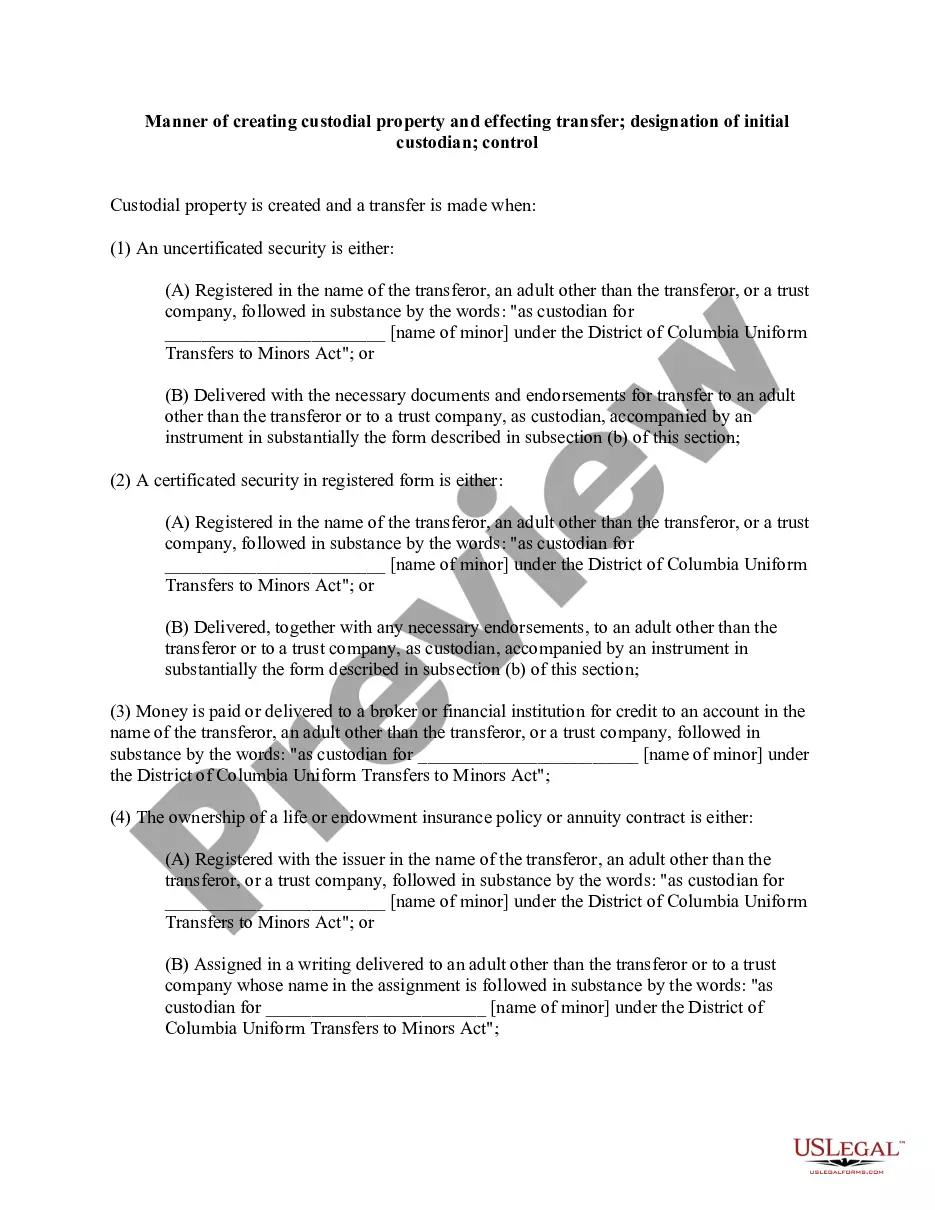
The 21-309 form, titled "Manner of Creating Custodial Property and Effecting Transfer," is an official document used in the District of Columbia. This form is essential for establishing custodial property under the District of Columbia Uniform Transfers to Minors Act. It clearly outlines the legal manner in which a transfer of property, such as money, securities, or insurance policies, can be made to benefit a minor. Unlike other financial transfer forms, this one specifically accommodates custodial arrangements, ensuring compliance with local laws.
Key parts of this document
- Identification of the type of property being transferred (e.g., money, securities).
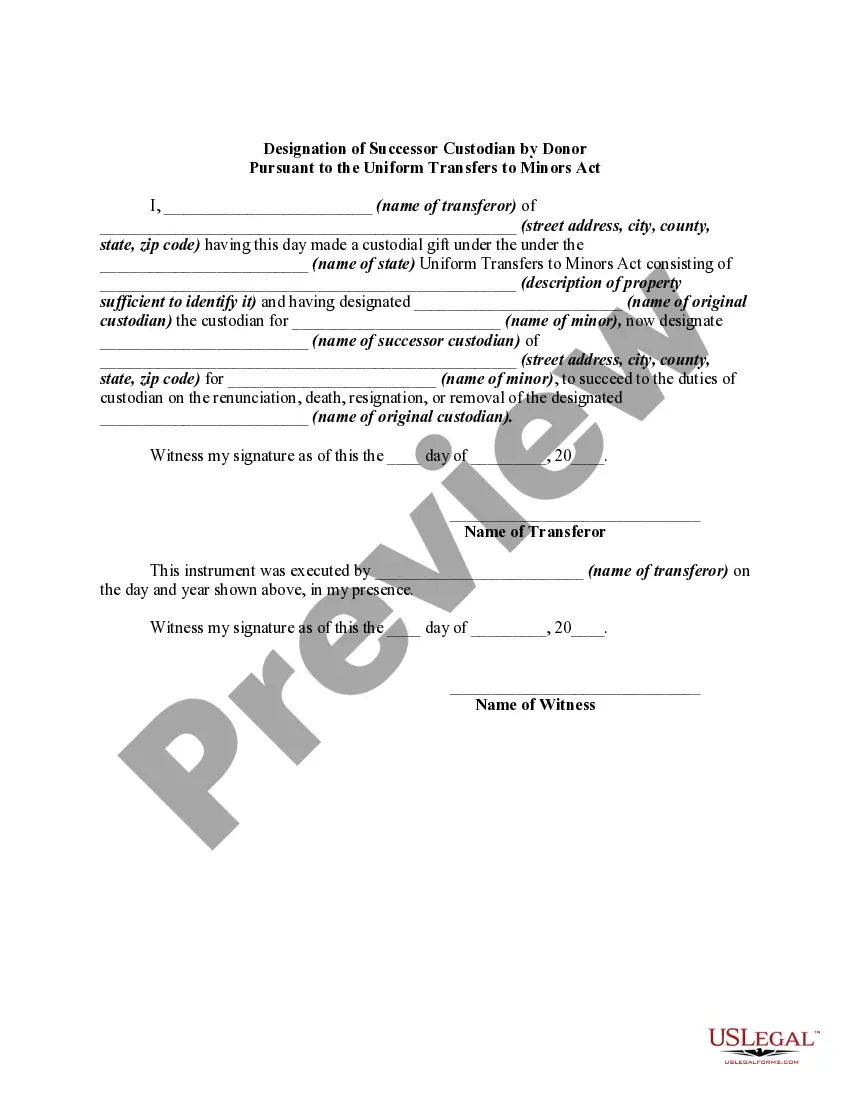
- Specification of the custodian responsible for managing the property.
- Requirements for properly registering or delivering the assets to the custodian.
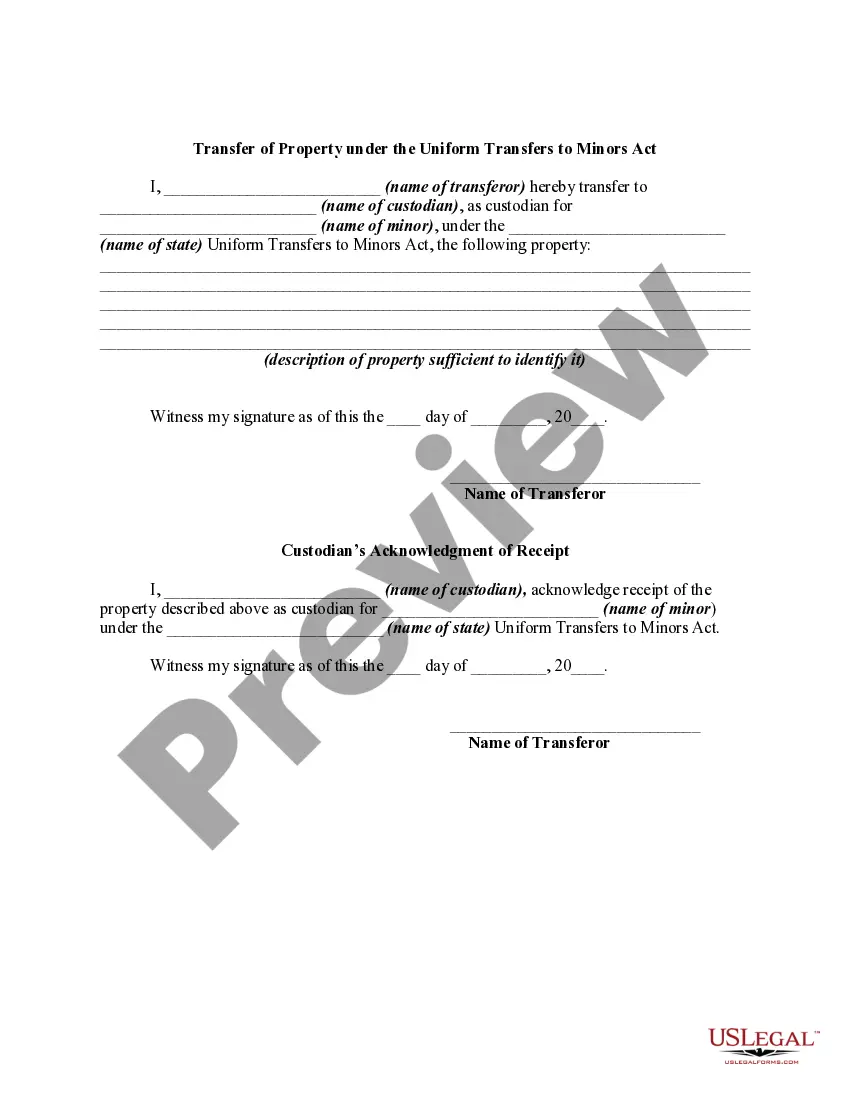
- Clear instructions for completing an instrument that guarantees the minor's rights to the property.
- Statements outlining the permissible actions for custodians regarding the management of the property.

When to use this document
This form should be used when a custodian is establishing legal ownership of property intended for a minor. Real-world scenarios include transferring stocks or bond holdings, depositing money into custodial accounts, or changing the beneficiary on a life insurance policy to a minor. It is crucial to have this form completed to ensure that the minor can legally benefit from the assets once they reach the age of majority.
Intended users of this form
- Parents or guardians looking to set up custodial accounts for their children.
- Anyone intending to transfer property or financial assets to a minor.
- Trust companies acting as custodians for minors.
- Legal professionals assisting clients in establishing custodial arrangements.
How to complete this form
- Identify the type of property you are transferring and provide the necessary details.
- Designate the custodian who will manage the property for the minor.
- Complete any required registration or endorse relevant documents pertaining to the transfer.
- Follow the legal form provided to ensure adherence to statutory requirements.
- Sign the document, ensuring all parties agree to the custodial arrangement.
Notarization requirements for this form
In most cases, this form does not require notarization. However, some jurisdictions or signing circumstances might. US Legal Forms offers online notarization powered by Notarize, accessible 24/7 for a quick, remote process.
Get your form ready online
Our built-in tools help you complete, sign, share, and store your documents in one place.
Make edits, fill in missing information, and update formatting in US Legal Forms—just like you would in MS Word.
Download a copy, print it, send it by email, or mail it via USPS—whatever works best for your next step.
Sign and collect signatures with our SignNow integration. Send to multiple recipients, set reminders, and more. Go Premium to unlock E-Sign.
If this form requires notarization, complete it online through a secure video call—no need to meet a notary in person or wait for an appointment.
We protect your documents and personal data by following strict security and privacy standards.

Make edits, fill in missing information, and update formatting in US Legal Forms—just like you would in MS Word.

Download a copy, print it, send it by email, or mail it via USPS—whatever works best for your next step.

Sign and collect signatures with our SignNow integration. Send to multiple recipients, set reminders, and more. Go Premium to unlock E-Sign.

If this form requires notarization, complete it online through a secure video call—no need to meet a notary in person or wait for an appointment.

We protect your documents and personal data by following strict security and privacy standards.
Common mistakes
- Forgetting to specify the name of the minor in the custodian designation.
- Not properly registering or delivering the asset to the custodian.
- Using outdated versions of the form that may not comply with recent legal changes.
- Neglecting to inform the custodian about their responsibilities under this arrangement.
Benefits of using this form online
- Instant access to the most current legal form templates.
- Ability to fill out the form at your own pace with easy editing options.
- Comprehensive instructions ensure accurate completion without the need for legal expertise.
- Secure downloading options that allow for safe storage of your important legal documents.
Legal use & context
- This form helps establish a legal framework to protect the minor's interests in the property.
- Completing this form properly is essential for enforceability under the District of Columbia law.
- Utilizing the form ensures that all transactions follow the Uniform Transfers to Minors Act.
Looking for another form?
Form popularity
FAQ
The District of Columbia Home Rule Act granted D.C. residents the power to elect a mayor and a council. This self-governance allows local leaders to make decisions on many issues impacting daily life. Nevertheless, Congress retains the final authority over federal matters, making understanding laws like the District of Columbia 21-309, Manner of Creating Custodial Property and Effecting Transfer, essential for effective local governance.
The Act of 1871 created a single municipal government for the entire District of Columbia. This legislation consolidated various jurisdictions into one entity, making governance more streamlined. This framework laid the groundwork for future legal structures, including those related to custodial property and transfers, such as the District of Columbia 21-309.
The act concerning the District of Columbia primarily refers to the District of Columbia Home Rule Act, which established self-governance for residents. This legislation marked a significant shift in how D.C. could manage local affairs. Importantly, it shaped the landscape for legal frameworks, including matters like the District of Columbia 21-309, Manner of Creating Custodial Property and Effecting Transfer.
The Home Rule movement in D.C. sought to grant the city's residents greater autonomy in governing themselves. This grassroots initiative aimed to shift power away from Congress and towards local leadership. The culmination of this movement was the enactment of the District of Columbia Home Rule Act, which established a local government framework and allowed for local elections.
Adverse possession in the District of Columbia is a legal doctrine that allows a person to claim ownership of land under certain conditions. If someone occupies a property openly and continuously for a specific time without the owner's permission, they may eventually claim legal ownership. This provision can be crucial in real estate matters, particularly for understanding property rights and issues related to the District of Columbia 21-309, Manner of Creating Custodial Property and Effecting Transfer.
The District of Columbia Home Rule Act allows residents of Washington, D.C., to govern themselves. This act gave local officials authority over many local matters that were previously controlled by Congress. Ultimately, the purpose of the Home Rule Act is to provide greater control to the citizens over local government, ensuring that decisions reflect the community's needs and priorities.