Pretrial Order
What is this form?
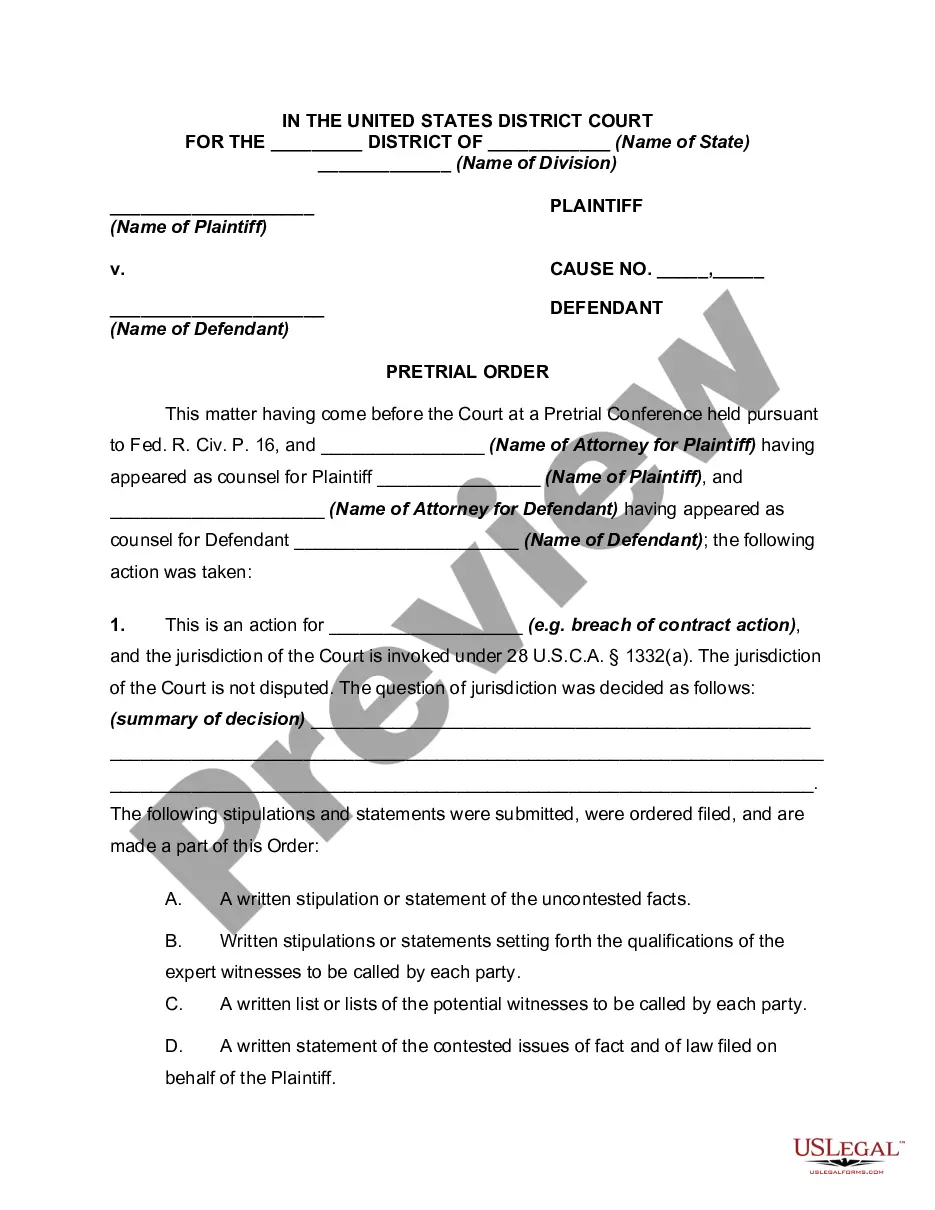
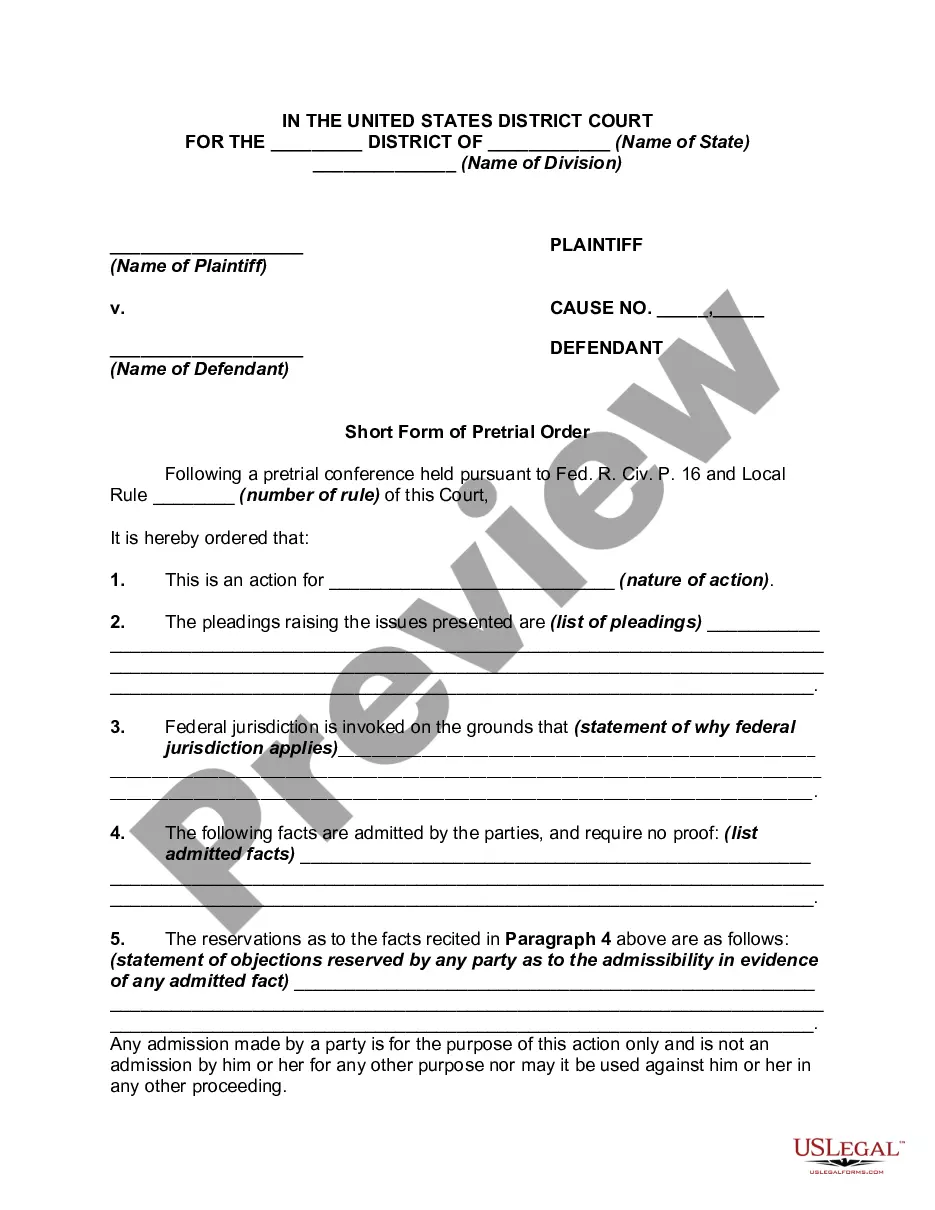
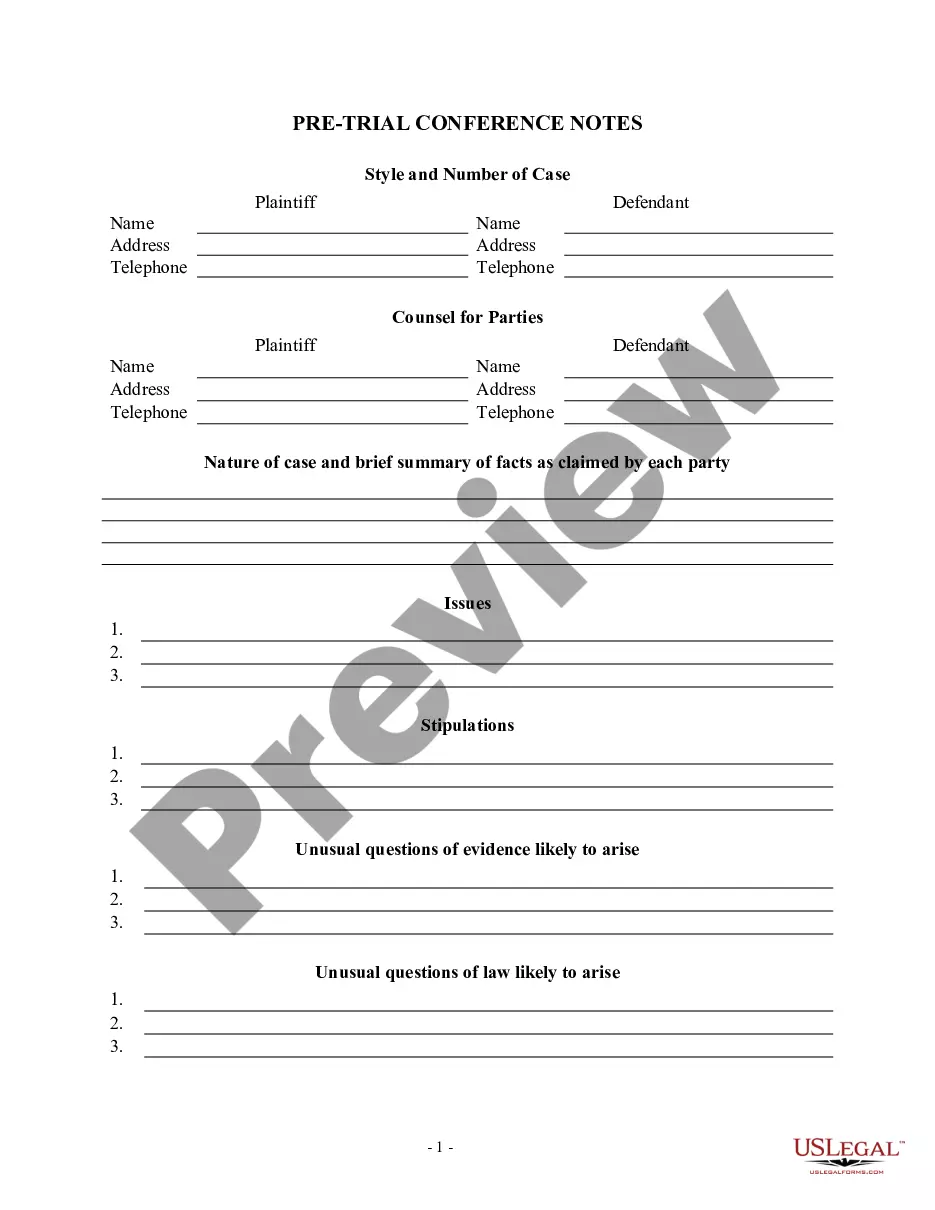
The Pretrial Order is a crucial legal document used by the court to facilitate a pretrial conference between parties involved in a case. Its primary purpose is to manage the flow of the litigation process and prepare for trial by addressing various aspects such as the nature of the case, the evidence to be presented, and the limits on expert witnesses. This form is distinct from other types of legal documents, as it outlines agreed-upon facts and unresolved issues, helping to streamline courtroom proceedings.
Key components of this form
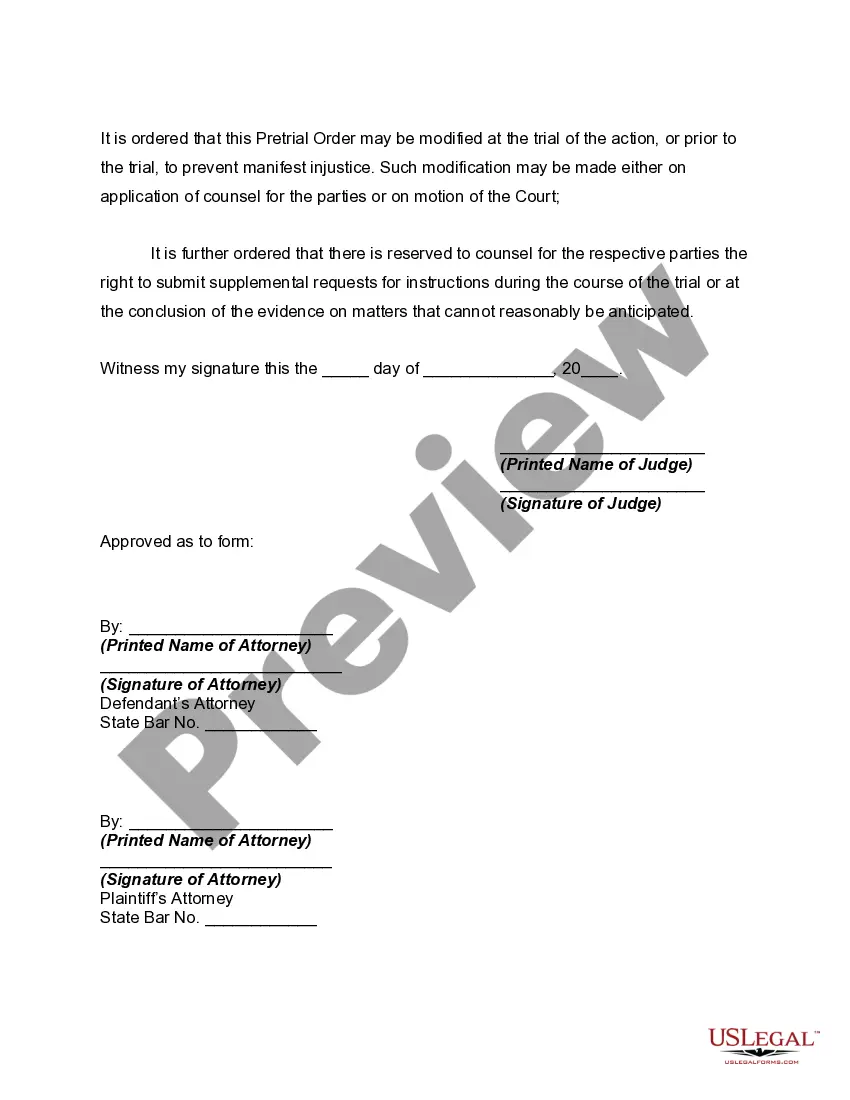
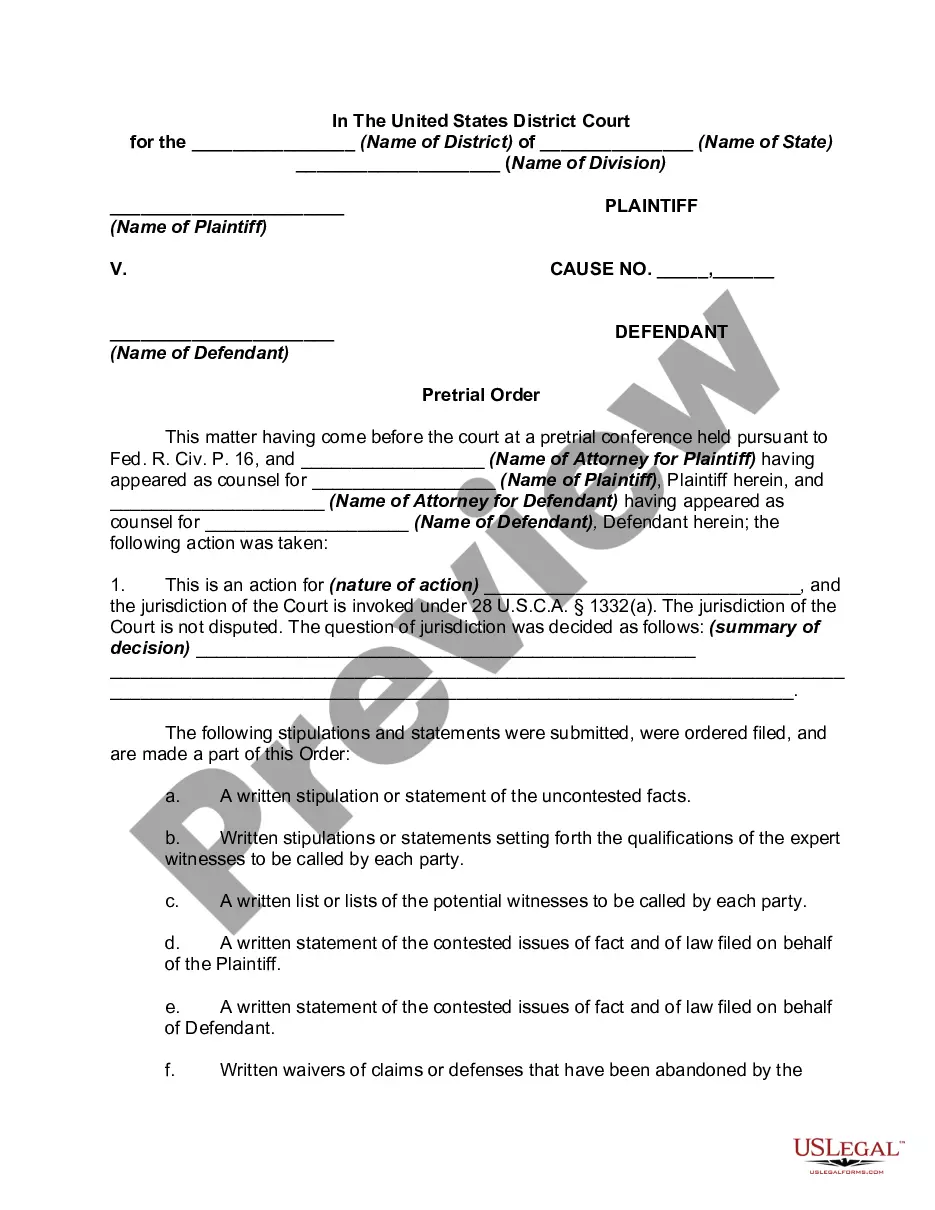
- Title and case information: Includes the district, state, and parties involved.
- Jurisdiction statement: Outlines the basis for the court's jurisdiction.
- Stipulations: A written statement of uncontested facts and qualifications of expert witnesses.
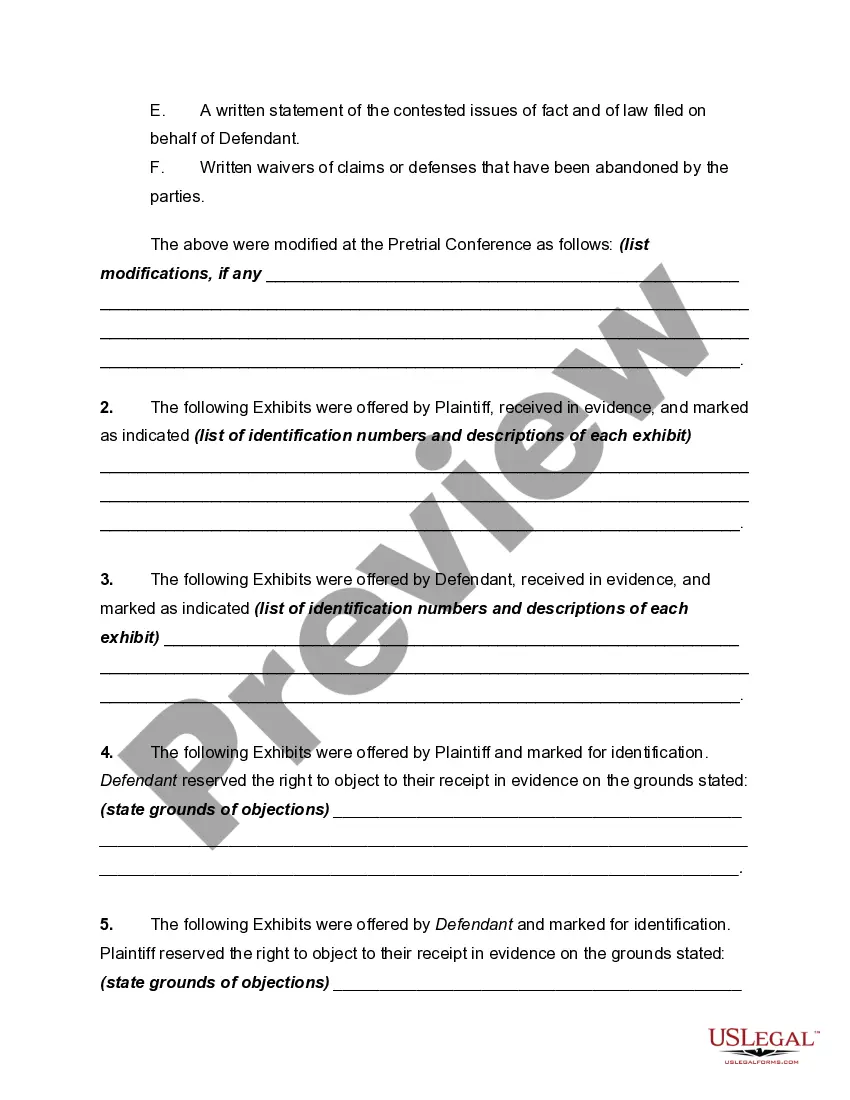
- Exhibit listings: Identification and reception of evidence for both plaintiff and defendant.
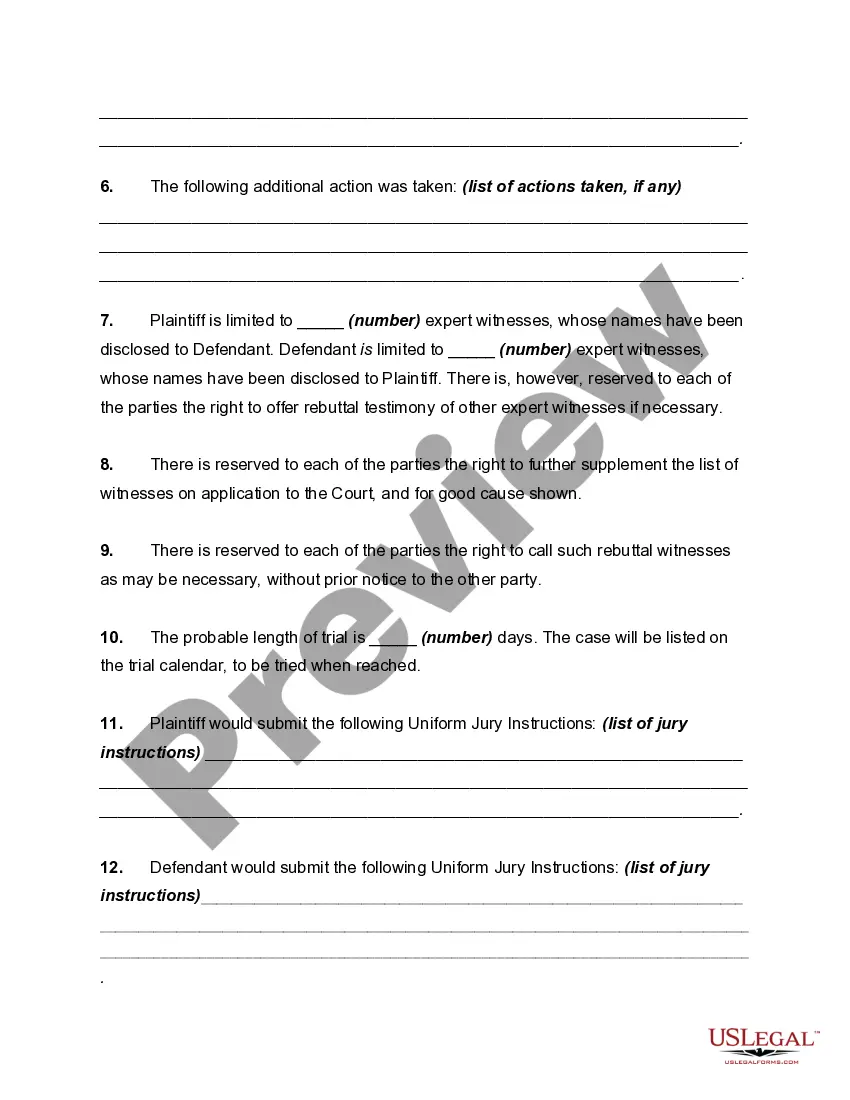
- Trial logistics: Details on witness limits and estimated length of the trial.
- Modification clause: Allows for changes to the order to prevent injustice.
Situations where this form applies
You should use a Pretrial Order when your case is approaching trial, particularly after the initial pleadings have been filed. It is necessary to establish how the case will proceed, clarify the issues that need resolution, and ensure that both parties are prepared for trial. This form is most applicable in civil cases, such as contract disputes, where a formal trial procedure needs to be established.
Who needs this form
Eligibility for using this form includes:
- Attorneys representing either plaintiffs or defendants in civil litigation.
- Self-represented individuals (pro se litigants) who are involved in a civil lawsuit.
- Parties in a case who need to collaboratively outline their positions before trial.
How to prepare this document
To complete the Pretrial Order, follow these steps:
- Fill in the title with the appropriate district, state, and case information.
- Clearly state the jurisdiction and include a summary of jurisdictional decisions.
- Submit stipulations regarding uncontested facts and expert witness qualifications.
- List all exhibits to be presented by both parties, including objections if any.
- Specify limits on expert witnesses and make note of the trial's expected duration.
Does this form need to be notarized?
This form does not typically require notarization unless specified by local law. Always check your jurisdictionâs requirements to ensure legal compliance.
Get your form ready online
Our built-in tools help you complete, sign, share, and store your documents in one place.
Make edits, fill in missing information, and update formatting in US Legal Forms—just like you would in MS Word.
Download a copy, print it, send it by email, or mail it via USPS—whatever works best for your next step.
Sign and collect signatures with our SignNow integration. Send to multiple recipients, set reminders, and more. Go Premium to unlock E-Sign.
If this form requires notarization, complete it online through a secure video call—no need to meet a notary in person or wait for an appointment.
We protect your documents and personal data by following strict security and privacy standards.

Make edits, fill in missing information, and update formatting in US Legal Forms—just like you would in MS Word.

Download a copy, print it, send it by email, or mail it via USPS—whatever works best for your next step.

Sign and collect signatures with our SignNow integration. Send to multiple recipients, set reminders, and more. Go Premium to unlock E-Sign.

If this form requires notarization, complete it online through a secure video call—no need to meet a notary in person or wait for an appointment.

We protect your documents and personal data by following strict security and privacy standards.
Common mistakes to avoid
- Failing to consult local rules for specific format requirements.
- Neglecting to disclose all necessary expert witnesses ahead of time.
- Not including the required stipulations or agreements from both parties.
- Forgetting to summarize jurisdictional decisions appropriately.
Benefits of completing this form online
- The convenience of downloading a ready-to-use legal template saves time.
- Easy editability allows you to customize the form to suit your specific needs.
- Access to reliable legal forms drafted by licensed attorneys ensures accuracy.
Looking for another form?

Form popularity
FAQ
An order setting forth the substantive and procedural framework of a case to be tried, specifying the parties' claims and defenses, stipulations, and procedural rules.
Call Your Attorney. Write a Journal of Key Events About Your Case. Review the Police Report for Accuracy. Research How a Criminal Conviction Will Impact You or Your Career. Bring Your Calendar.
A pretrial hearing, sometimes called a pretrial conference, is a meeting of the defense, the prosecution, and the judge before a trial commences. If one party does not appear, the judge can impose sanctions. During this hearing, a range of documents may be presented, evidence can be presented and excluded, and more.
Arrest. Booking. Bail. Arraignment. Plea Bargain. Preliminary Hearing. Do I Need A Lawyer?
The pretrial stage includes conferences and motions. The meeting of parties to a case conducted before trial is called a pretrial conference. Such meeting will be held before the trial judge or a magistrate, or a judicial officer who possesses fewer judicial powers than a judge.
A pretrial hearing, sometimes called a pretrial conference, is a meeting of the defense, the prosecution, and the judge before a trial commences. If one party does not appear, the judge can impose sanctions. During this hearing, a range of documents may be presented, evidence can be presented and excluded, and more.
Step 1: Arraignment. The first step in a criminal case is a court appearance called an arraignment, in which the charges against the defendant are read before a judge. Step 2: Preliminary Hearing. Step 3: 2nd Arraignment (Superior Court) Step 4: Pretrial Hearing & Motions. Step 5: Jury Trial.
Choosing a Jury. Opening Statements. Witness Testimony and Cross-Examination. Closing Arguments. Jury Instruction. Jury Deliberation and Announcement of Verdict.
Once either an arrest warrant or a summons to appear is issued, a case enters the Pre-Trial stage, during which the Pre-Trial Chamber judges determine whether or not there is sufficient evidence for the case to proceed to trial. First is the initial appearance hearing.