PRELIMINARY INSTRUCTIONS BEFORE TRIAL
Understanding this form
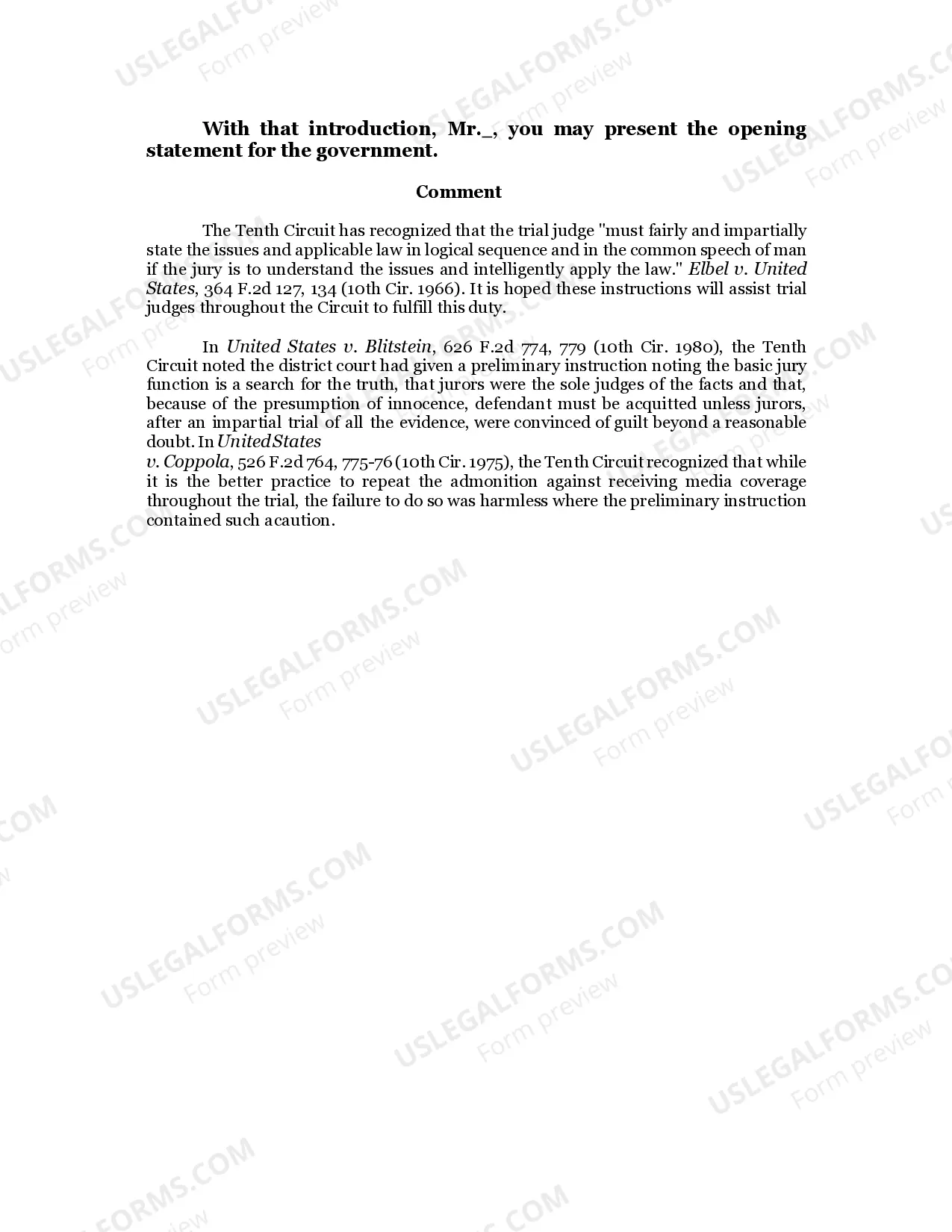
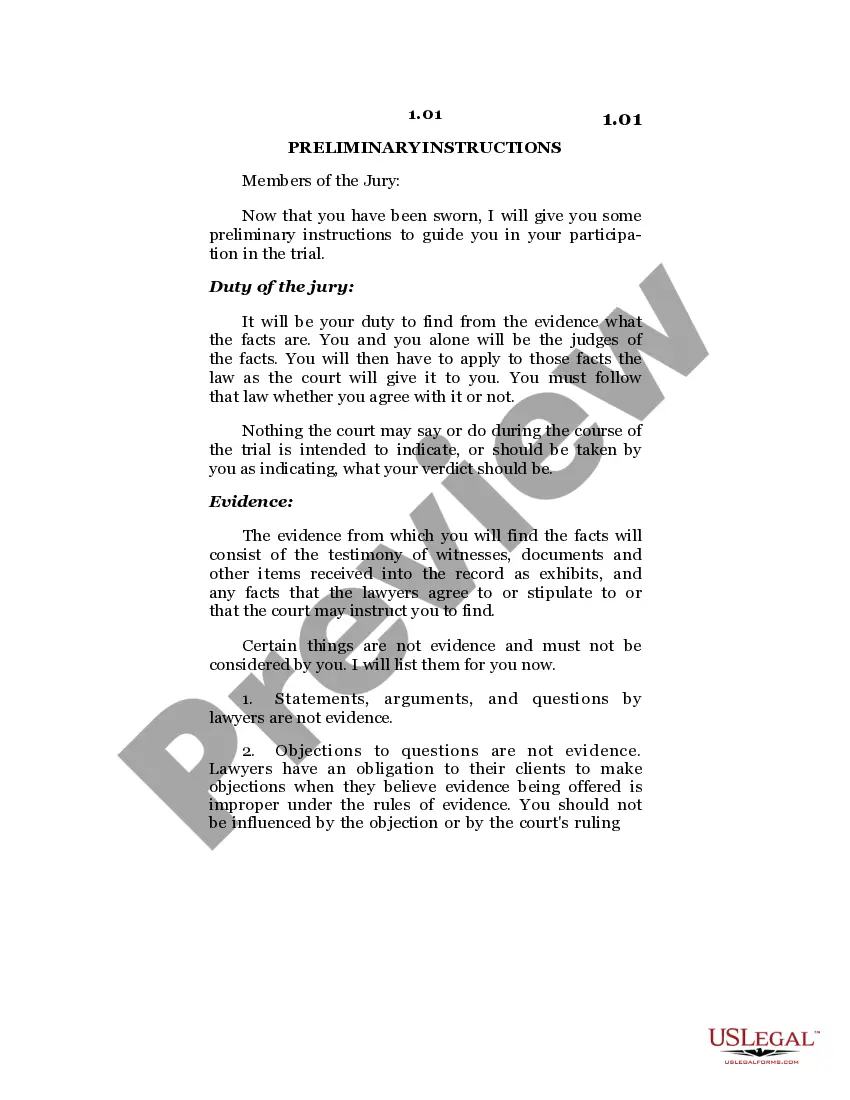
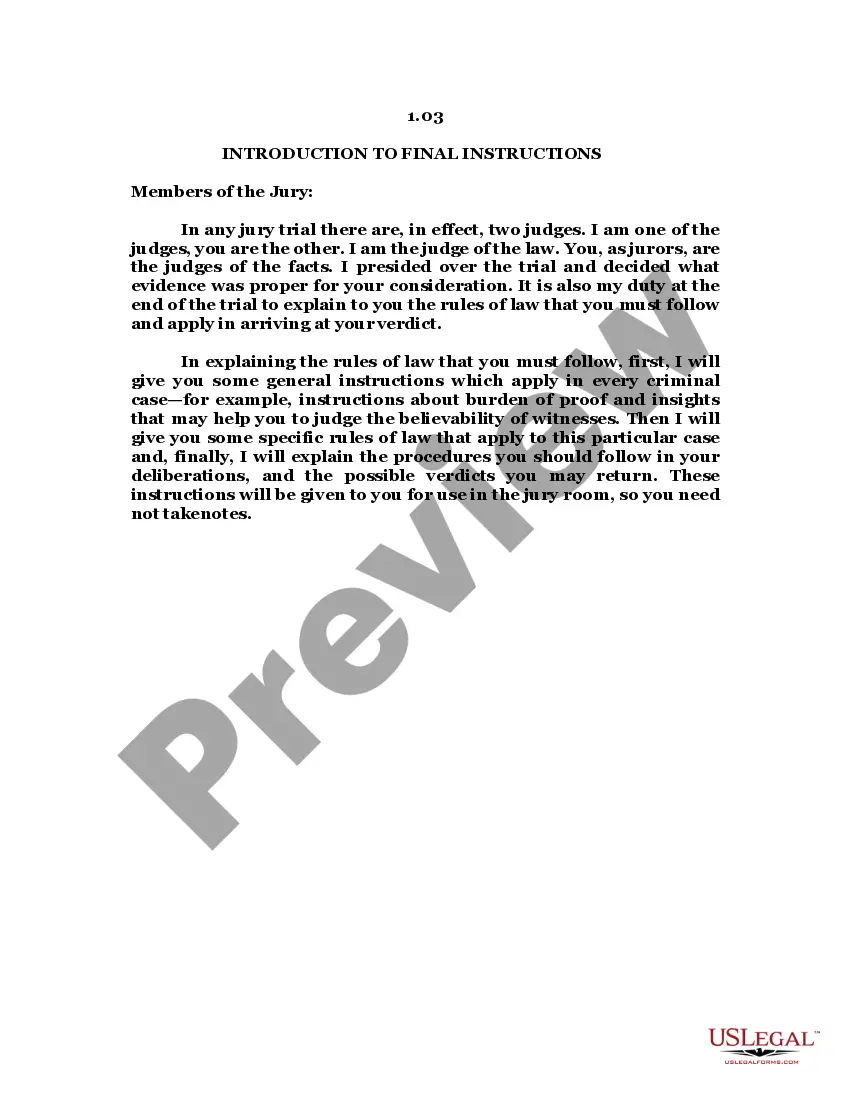
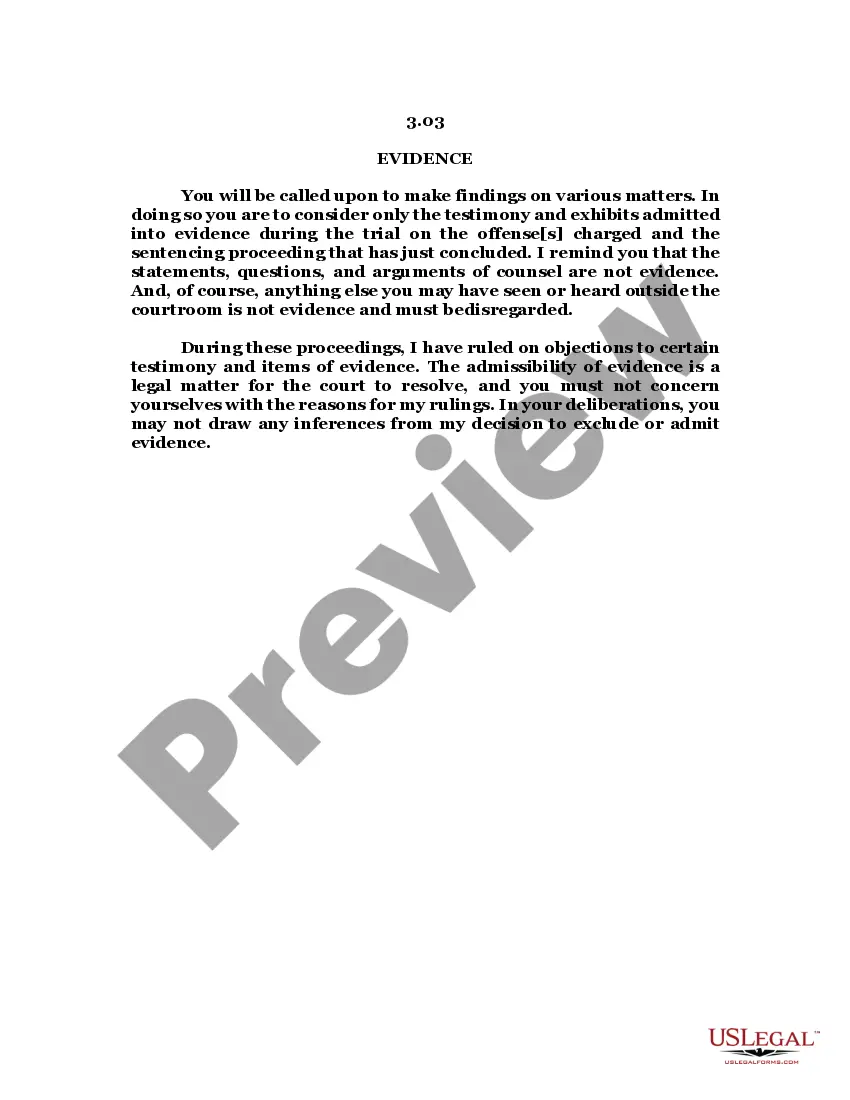
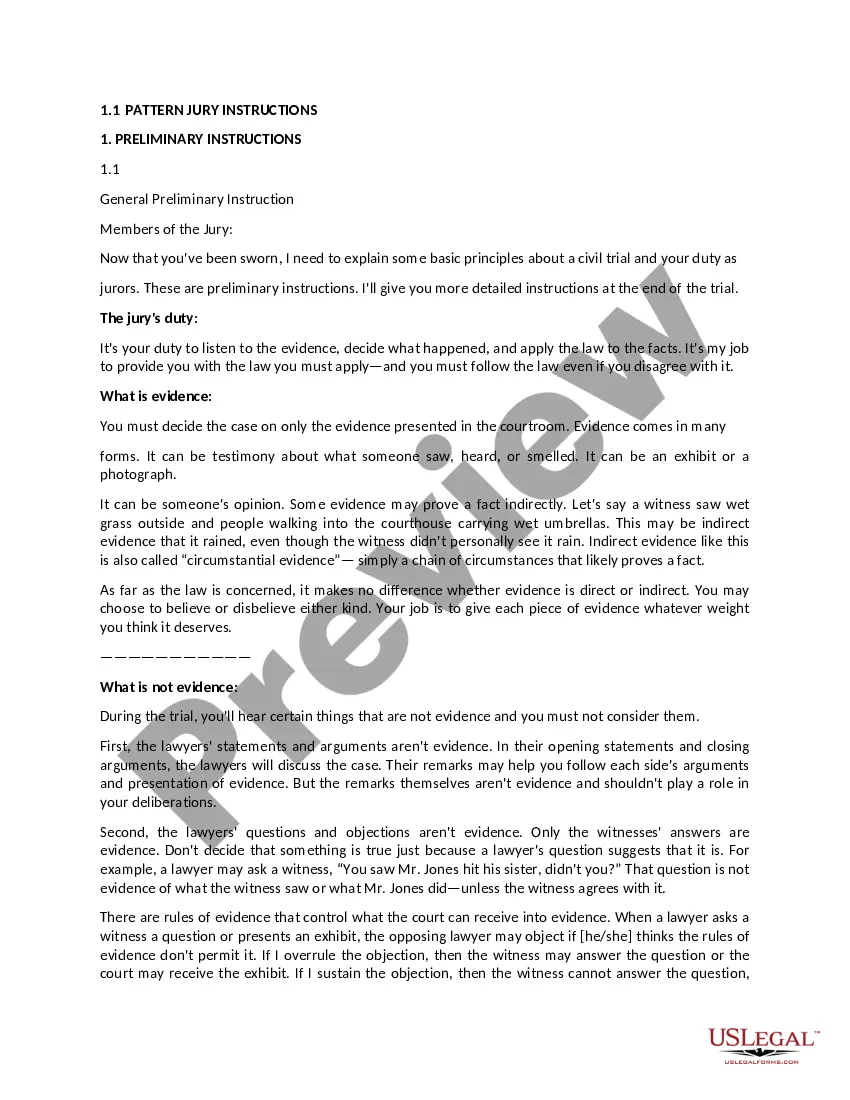
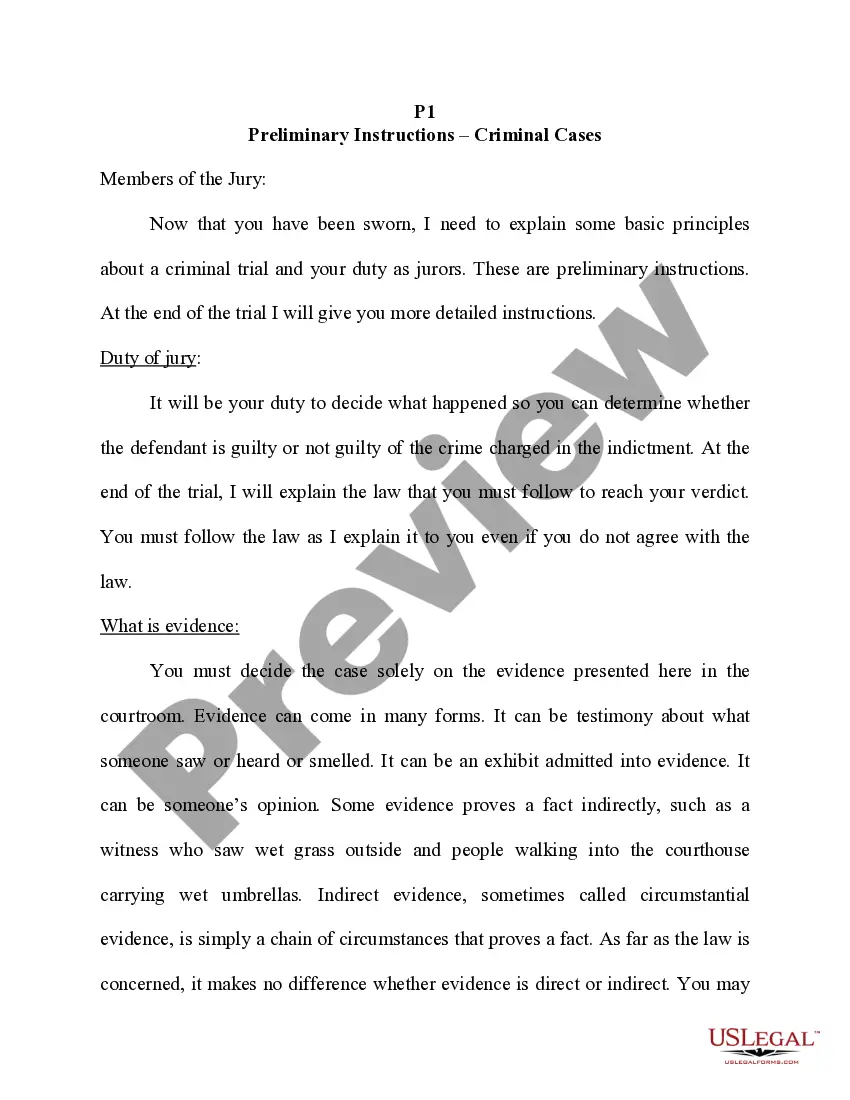
The Preliminary Instructions Before Trial is a legal document used in the context of jury trials. It is designed to guide jurors through the trial process and outline their responsibilities. This form aids in setting expectations regarding the proceedings, clarifying the roles of the parties involved, and emphasizing the importance of impartiality. Unlike verdict forms or detailed jury instructions provided at the end of a trial, this form serves as an introduction to inform jurors before the trial begins.
What’s included in this form
- Introduction to the roles of the prosecution and the defendant.
- Explanation of the presumption of innocence and the burden of proof on the government.
- Overview of how evidence will be presented and the structure of the trial.
- Guidance on juror behavior and communication during the trial.
- Instructions on how to handle objections and evidence presented by attorneys.
- Definition of jurors' rights regarding questioning witnesses.


When to use this form
This form should be used at the beginning of a criminal trial where jury members need to be instructed on their roles and responsibilities. It is essential for establishing the legal framework within which jurors will evaluate evidence and reach a verdict. This form is appropriate in situations where a trial involves serious criminal charges brought by the government against a defendant.
Who should use this form
- Judges presiding over criminal jury trials.
- Legal professionals, including attorneys and court clerks.
- Court administrators needing to inform jurors about trial procedures.
- Defendants in a criminal case who wish to understand the trial process.
Instructions for completing this form
- Identify the parties involved, including the prosecution and defense.
- Clearly state the charges outlined in the indictment against the defendant.
- Explain the presumption of innocence and the burden of proof.
- Guide jurors on how to interpret and respond to evidence and objections.
- Emphasize the importance of confidentiality and proper juror conduct throughout the trial.
Is notarization required?
This form usually doesn’t need to be notarized. However, local laws or specific transactions may require it. Our online notarization service, powered by Notarize, lets you complete it remotely through a secure video session, available 24/7.
Get your form ready online
Our built-in tools help you complete, sign, share, and store your documents in one place.
Make edits, fill in missing information, and update formatting in US Legal Forms—just like you would in MS Word.
Download a copy, print it, send it by email, or mail it via USPS—whatever works best for your next step.
Sign and collect signatures with our SignNow integration. Send to multiple recipients, set reminders, and more. Go Premium to unlock E-Sign.
If this form requires notarization, complete it online through a secure video call—no need to meet a notary in person or wait for an appointment.
We protect your documents and personal data by following strict security and privacy standards.

Make edits, fill in missing information, and update formatting in US Legal Forms—just like you would in MS Word.

Download a copy, print it, send it by email, or mail it via USPS—whatever works best for your next step.

Sign and collect signatures with our SignNow integration. Send to multiple recipients, set reminders, and more. Go Premium to unlock E-Sign.

If this form requires notarization, complete it online through a secure video call—no need to meet a notary in person or wait for an appointment.

We protect your documents and personal data by following strict security and privacy standards.
Common mistakes
- Failing to emphasize the presumption of innocence, which may confuse jurors about their role.
- Not properly explaining what constitutes evidence, leading to misinformation during deliberations.
- Overcomplicating language, making it difficult for jurors with little legal knowledge to understand instructions.
Benefits of completing this form online
- Convenience of having access to the form anytime for quick reference or amendments.
- Editability allows legal professionals to tailor the instructions to specific cases.
- Reliability ensures the use of accurate, attorney-drafted language applicable to legal standards.
What to keep in mind
- The Preliminary Instructions Before Trial are crucial for setting the stage for a fair jury process.
- This form ensures jurors understand their responsibilities and the legal context of their deliberations.
- Attention to detail in completing this form can prevent confusion and enhance the efficiency of the trial.
Looking for another form?
Form popularity
FAQ
They five stages are as follows: the first appearance, the arraignment, motions, pre-trial conference and trial.
An opening statement is made by the attorney for the plaintiff. The attorney for the defendant may then make an opening statement. The purpose of opening statements is to outline to the jury what each side contends the evidence will establish.
At trial, one of the first things a prosecutor and defense attorney must do is the selection of jurors for the case. Jurors are selected to listen to the facts of the case and to determine if the defendant committed the crime.
Criminal Trial Phases Choosing a Jury. Opening Statements. Witness Testimony and Cross-Examination. Closing Arguments. Jury Instruction. Jury Deliberation and Announcement of Verdict.
Summary: Preliminary substantive jury instructions are instructions provided to jurors at the start of a trial, before the presentation of evidence by the parties, on the elements of a claim or defense.
In its current form, Rule 30 requires that the court instruct the jury after the arguments of counsel. In some districts, usually where the state practice is otherwise, the parties prefer to stipulate to instruction before closing arguments.
A Look at the Trial Process Presentation of Evidence and Testimony of Witnesses. The plaintiff's or prosecution's case is presented first.Closing Arguments.Presentation of Jury Instructions (Charging the Jury)Deliberation.Announcement of the Verdict.