Preliminary Instructions
Overview of this form
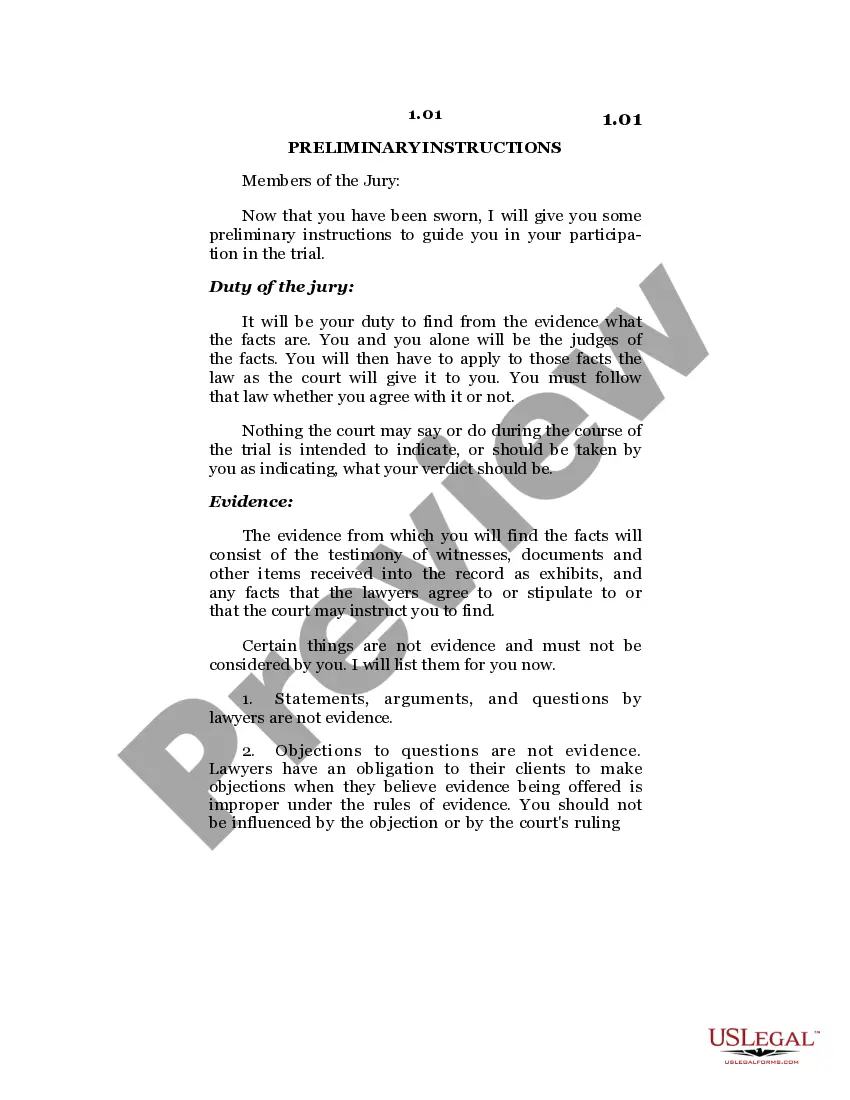
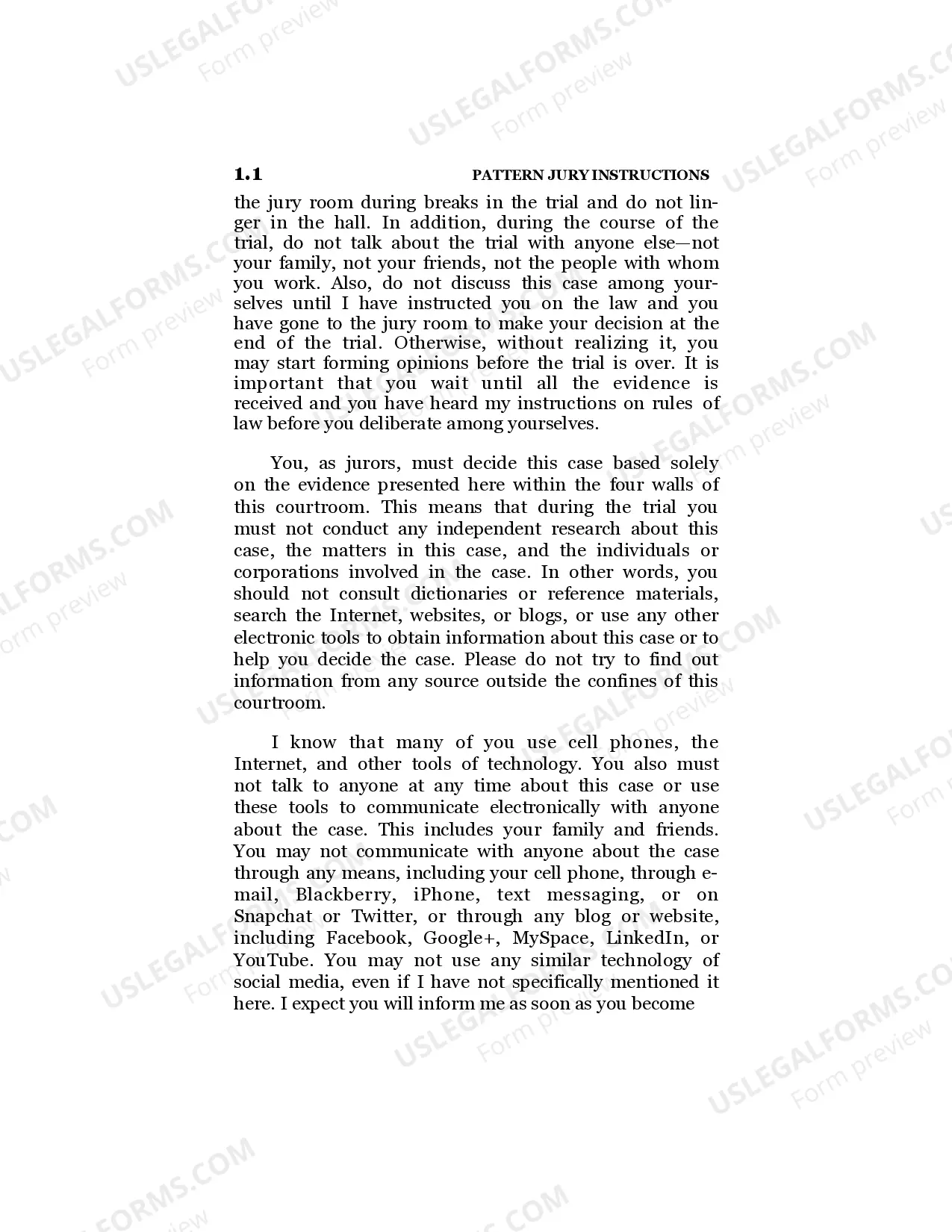
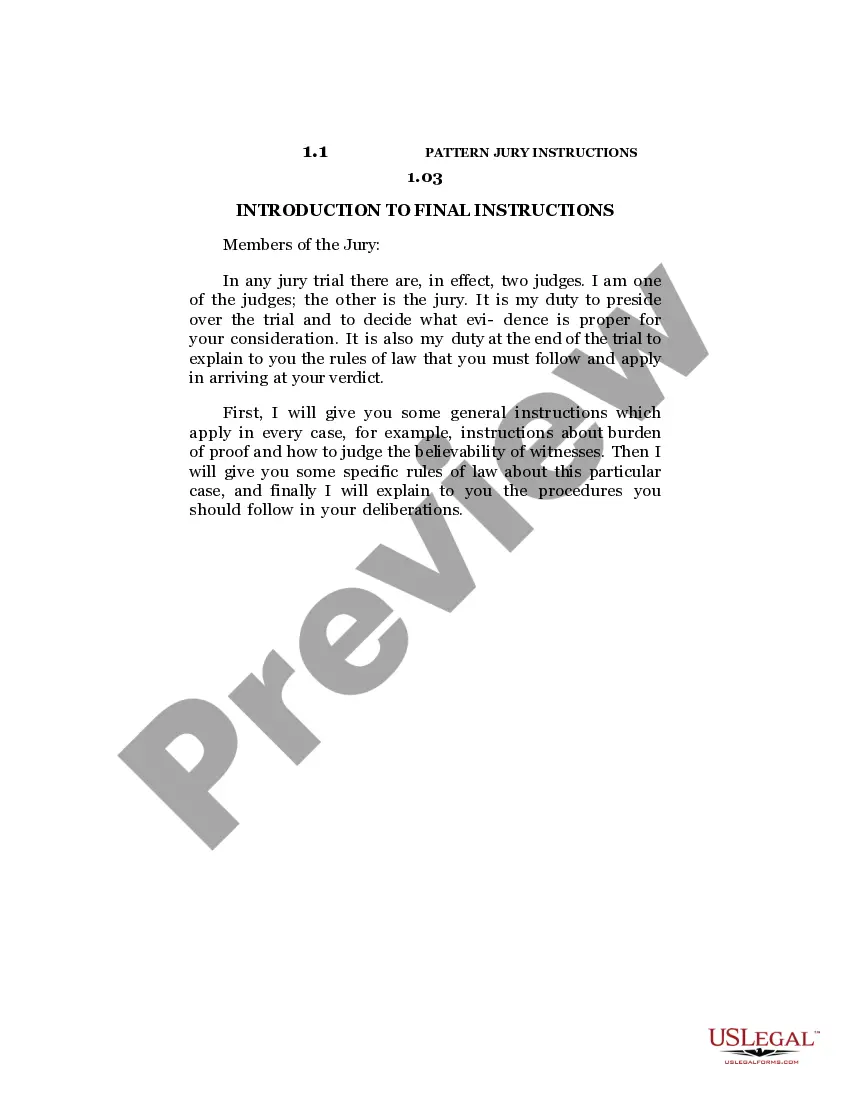
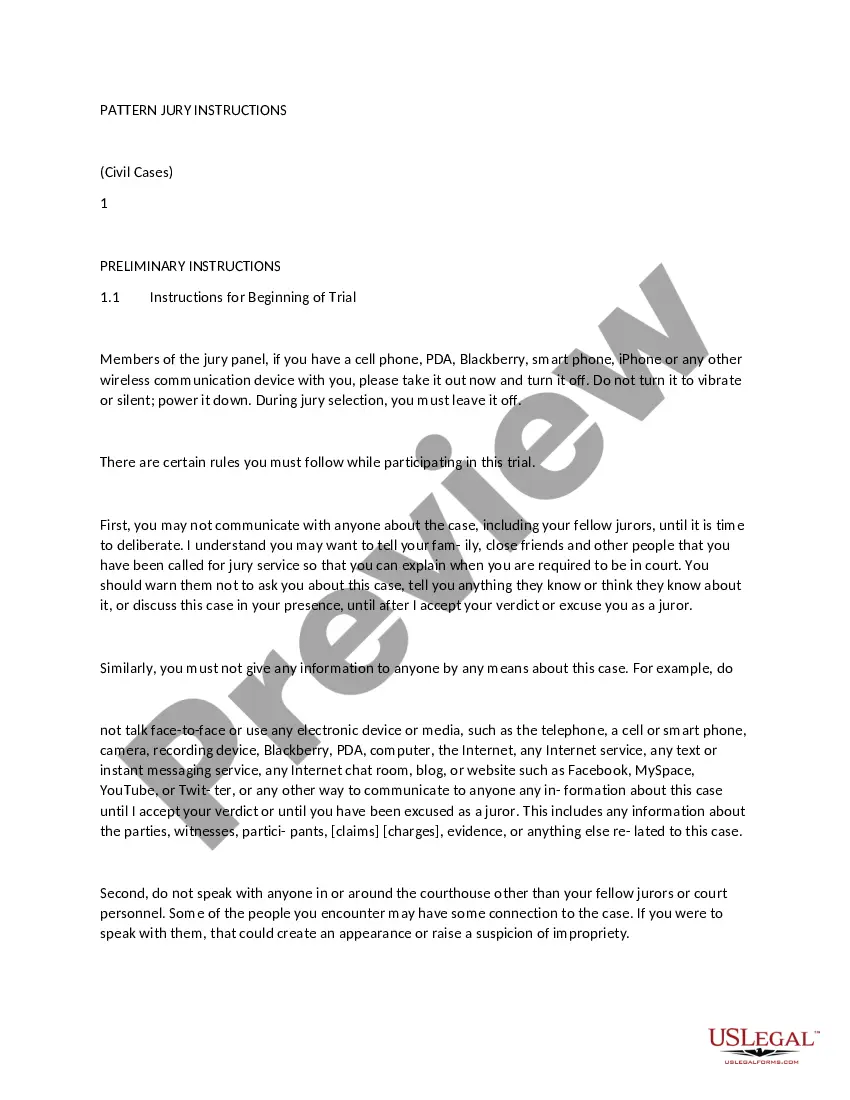
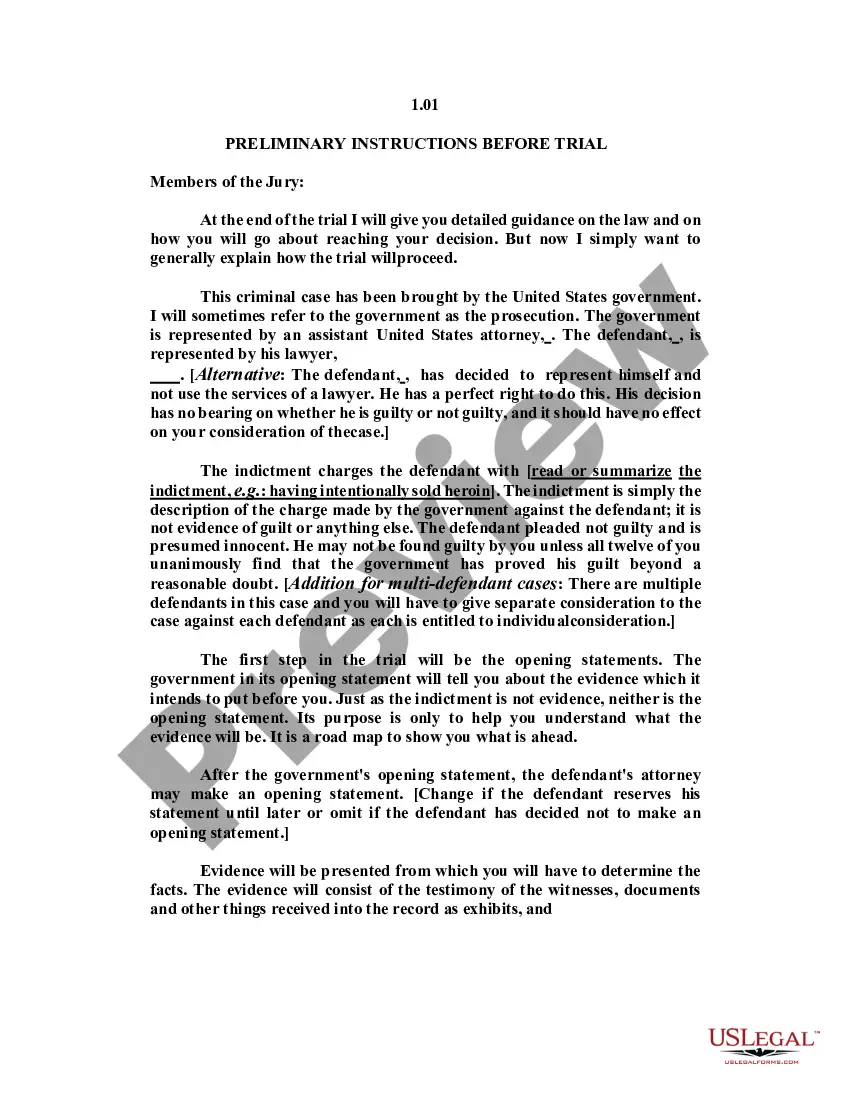
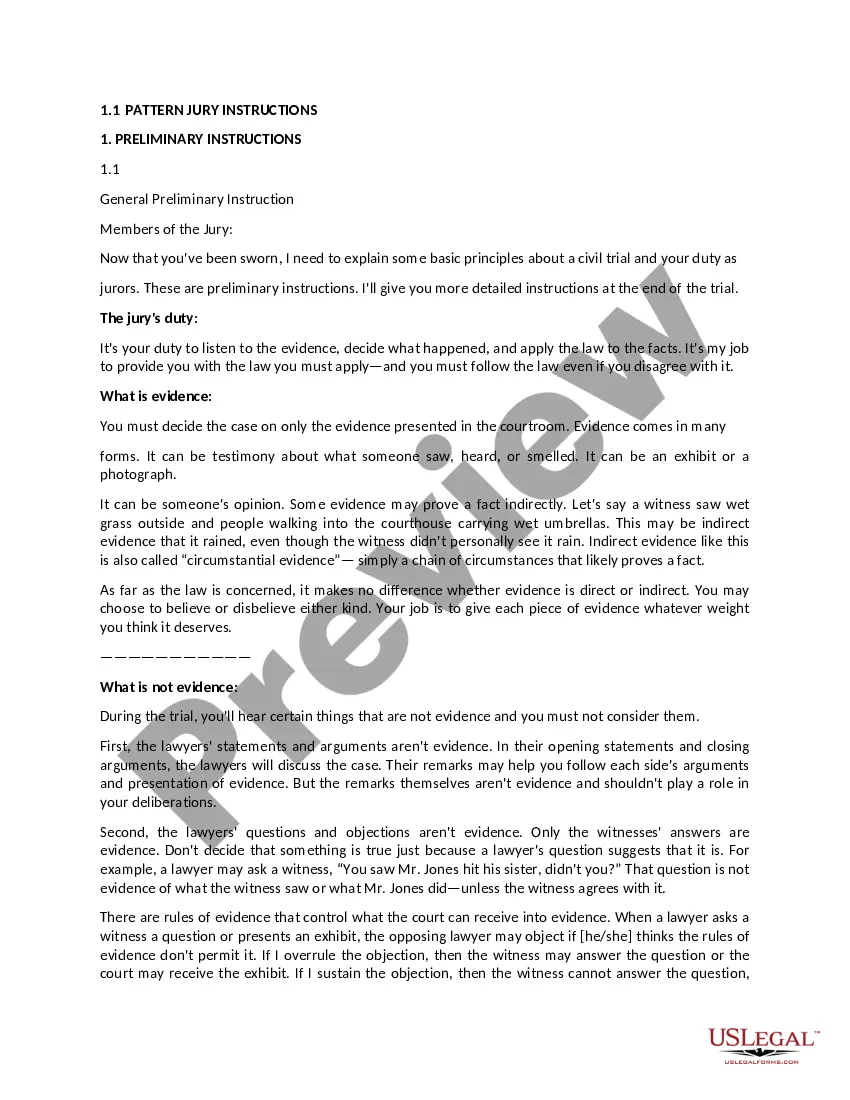
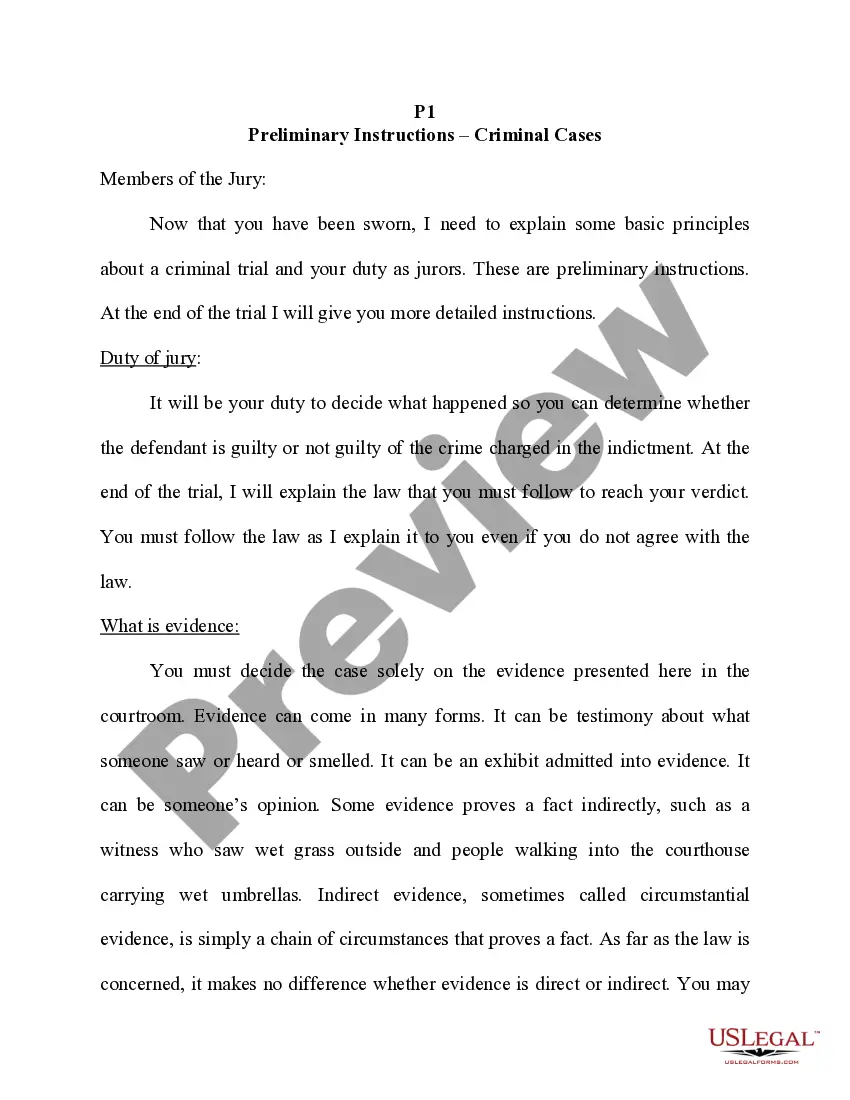
The Preliminary Instructions form is designed to guide jurors in understanding their responsibilities during a trial. This form is crucial as it outlines the jurors' duties, the types of evidence they should consider, and the legal standards they must apply. Unlike other legal documents, this form focuses specifically on the procedural conduct of jury members rather than substantive legal issues.
What’s included in this form
- Overview of jurors' duties and responsibilities.
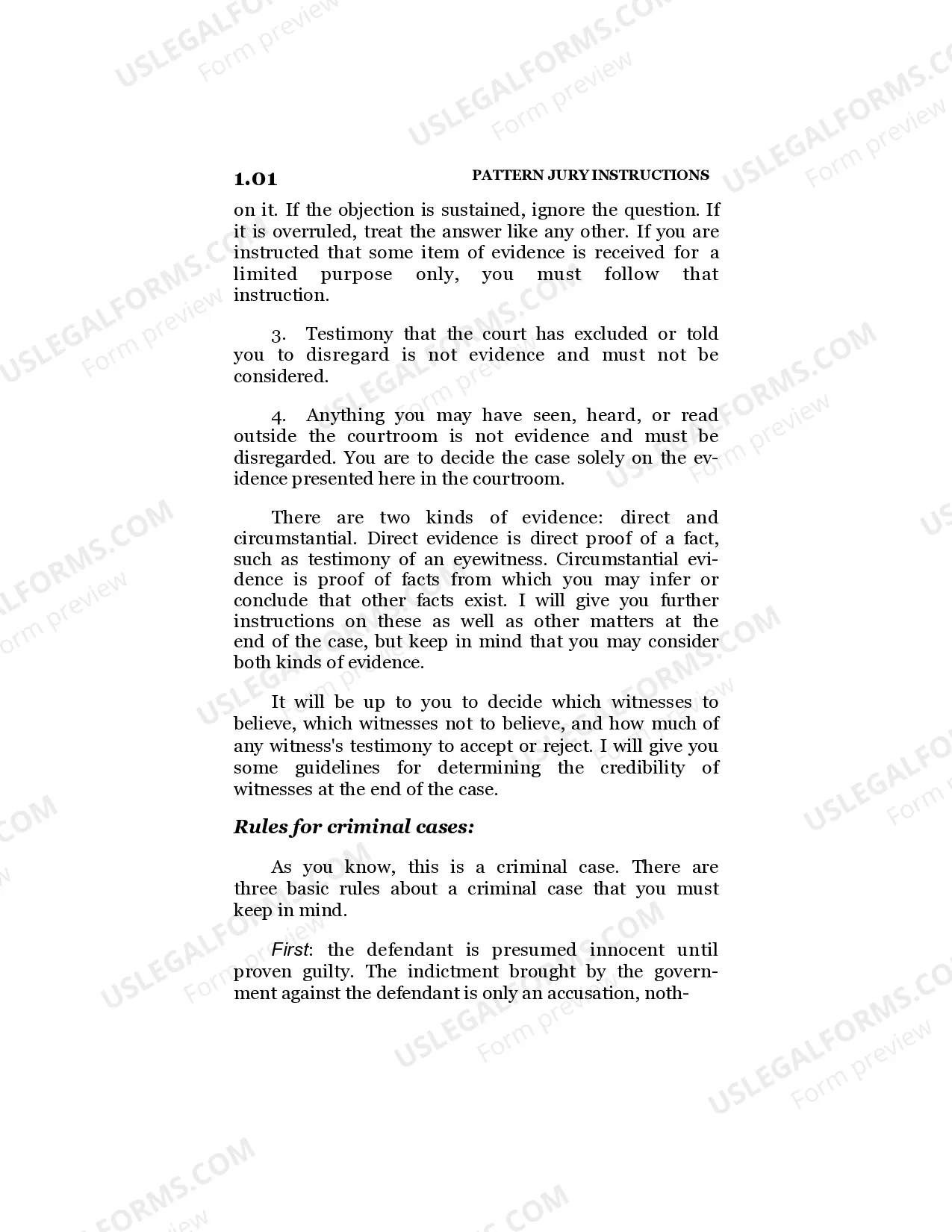
- Definition of evidence and how it should be evaluated.
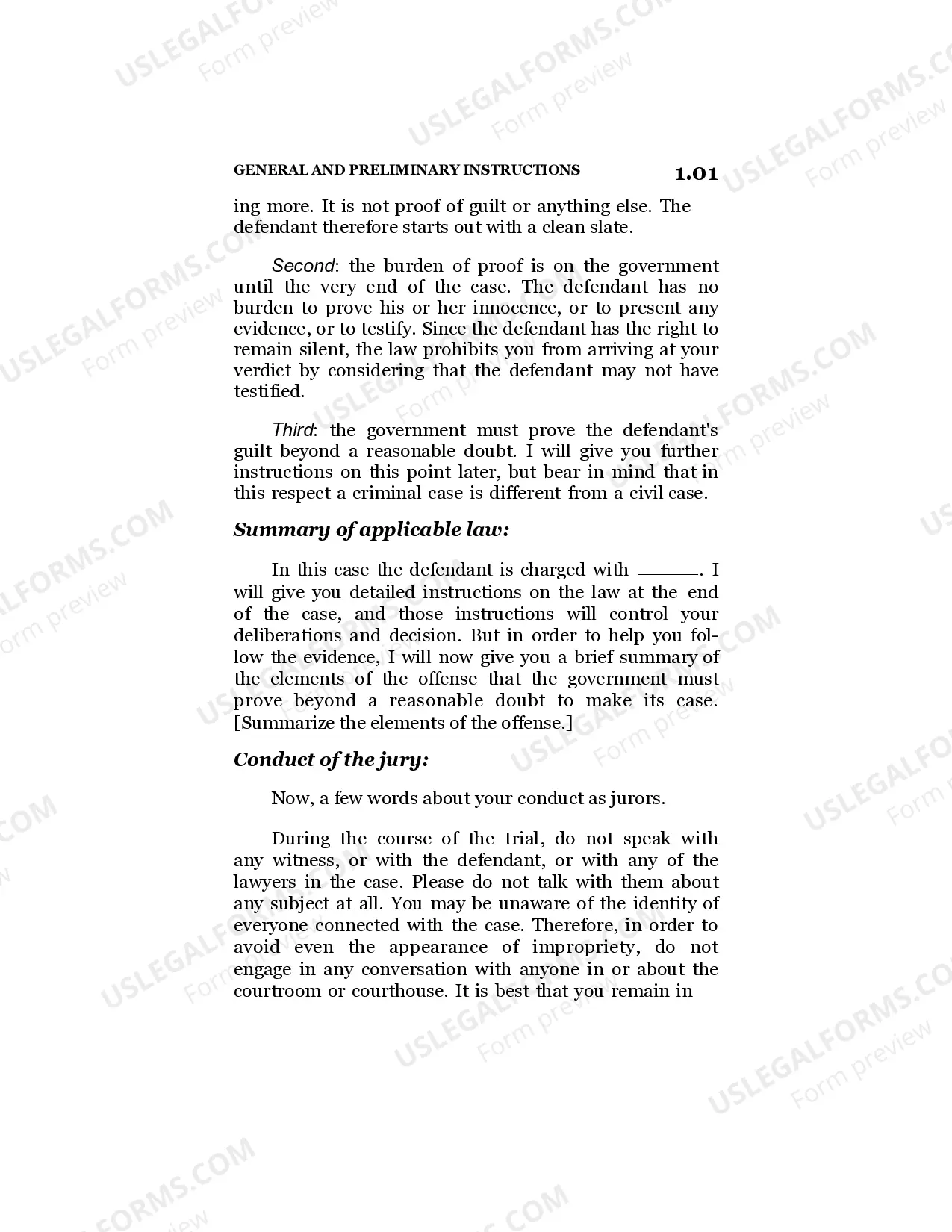
- Important legal principles in criminal cases, such as presumption of innocence.
- Instructions on courtroom conduct for jurors.
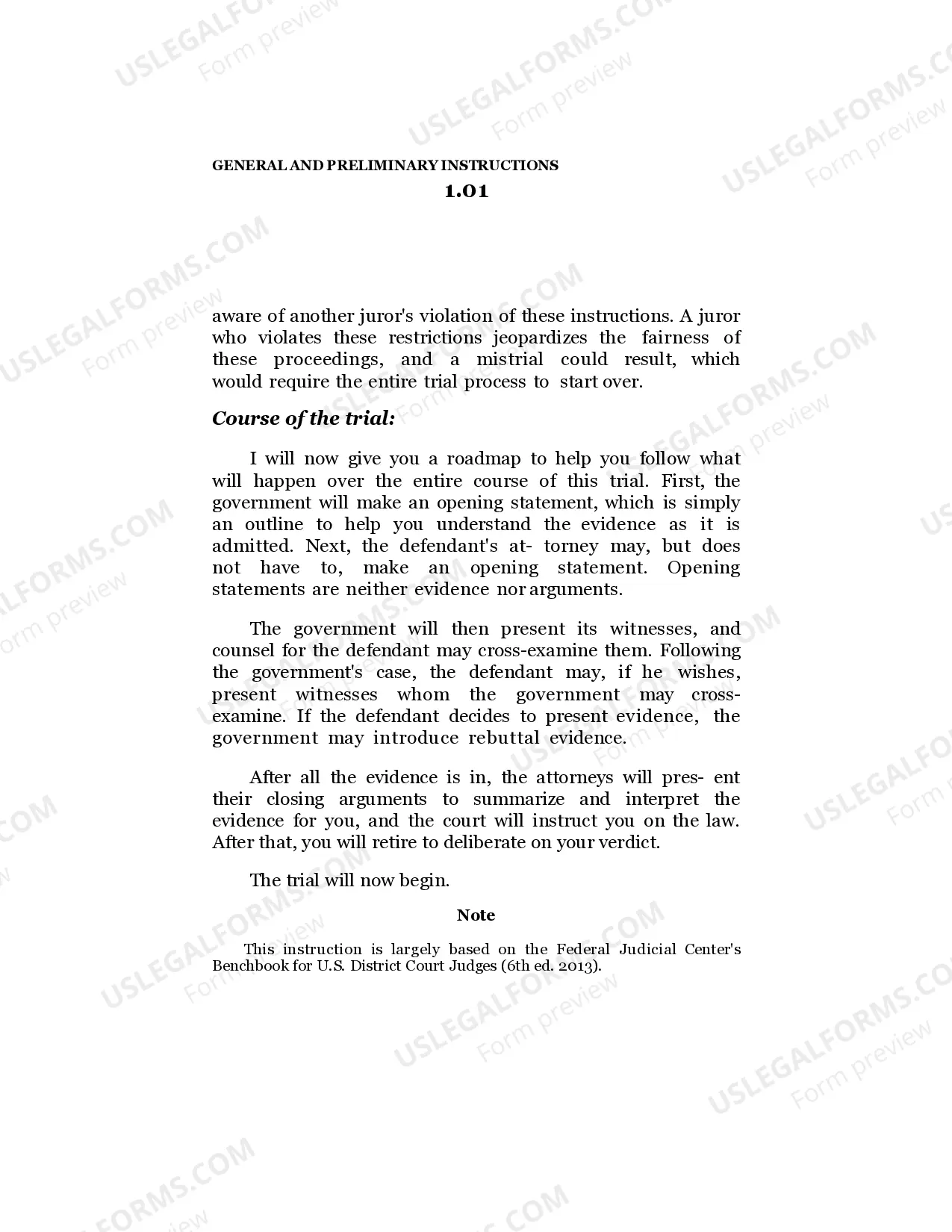
- Roadmap of the trial process, including opening and closing statements.
When this form is needed
This form is used at the beginning of a trial to inform jurors about their roles and the rules they must follow. It is essential in any criminal case where jurors are required to evaluate evidence and reach a verdict based on the trial proceedings.
Intended users of this form
- Jurors selected for jury duty in criminal trials.
- Court personnel overseeing the trial process.
- Attorneys and legal professionals guiding jurors through the trial.
Steps to complete this form
- Review the outline of the jurors' responsibilities presented in the instructions.
- Understand the definitions and types of evidence allowed in the trial.
- Familiarize yourself with the legal standards related to presumption of innocence.
- Follow courtroom conduct guidelines to maintain impartiality during the trial.
- Utilize the roadmap for the trial process to anticipate the sequence of events.
Does this document require notarization?
Notarization is not commonly needed for this form. However, certain documents or local rules may make it necessary. Our notarization service, powered by Notarize, allows you to finalize it securely online anytime, day or night.
Get your form ready online
Our built-in tools help you complete, sign, share, and store your documents in one place.
Make edits, fill in missing information, and update formatting in US Legal Forms—just like you would in MS Word.
Download a copy, print it, send it by email, or mail it via USPS—whatever works best for your next step.
Sign and collect signatures with our SignNow integration. Send to multiple recipients, set reminders, and more. Go Premium to unlock E-Sign.
If this form requires notarization, complete it online through a secure video call—no need to meet a notary in person or wait for an appointment.
We protect your documents and personal data by following strict security and privacy standards.

Make edits, fill in missing information, and update formatting in US Legal Forms—just like you would in MS Word.

Download a copy, print it, send it by email, or mail it via USPS—whatever works best for your next step.

Sign and collect signatures with our SignNow integration. Send to multiple recipients, set reminders, and more. Go Premium to unlock E-Sign.

If this form requires notarization, complete it online through a secure video call—no need to meet a notary in person or wait for an appointment.

We protect your documents and personal data by following strict security and privacy standards.
Avoid these common issues
- Ignoring courtroom conduct rules, such as speaking to witnesses.
- Considering evidence not presented during the trial, such as outside information.
- Forming opinions before all evidence has been presented.
Advantages of online completion
- Convenient access to essential instructions anytime and anywhere.
- Editability to tailor instructions for specific cases or audiences.
- Reliability of content drafted by licensed attorneys, ensuring legal compliance.
Legal use & context
- The instructions must be followed by jurors to ensure a fair trial.
- They help maintain the integrity of the judicial process by outlining permitted conduct and decision-making standards.
Looking for another form?

Form popularity
FAQ
Jury instructions are the only guidance the jury should receive when deliberating and are meant to keep the jury on track regarding the basic procedure of the deliberation and the substance of the law on which their decision is based.
As explained above, the closing argument is the time when the parties may forcefully argue their cases. The parties may summarize the evidence, point out discrepancies, and extensively argue how the law applies in their favor. Rather than tell a story, the closing argument is just that ? an argument.
The judge instructs the jury about the relevant laws that should guide its deliberations. (In some jurisdictions, the court may instruct the jury at any time after the close of evidence. This sometimes occurs before closing arguments.) The judge reads the instructions to the jury.
Thus, preliminary instructions should cover the statutory requirements, set forth the basic and important legal principles that a jury needs to know, attempt to explain to jurors things they will see and hear during a trial that might otherwise puzzle them, and try to assure jurors that rulings on objections and the
In its current form, Rule 30 requires that the court instruct the jury after the arguments of counsel. In some districts, usually where the state practice is otherwise, the parties prefer to stipulate to instruction before closing arguments.
Following the closing arguments, the judge ?charges the jury,? or informs them of the appropriate law and of what they must do to reach a verdict.
In its current form, Rule 30 requires that the court instruct the jury after the arguments of counsel. In some districts, usually where the state practice is otherwise, the parties prefer to stipulate to instruction before closing arguments.
General Order (Where Defendant Introduces Evidence). provide the first closing argument, defendant then provides its full closing argument, and plaintiff then offers a rebuttal of defendant's argument.