Complaint for Unlawful Detainer - Tenant Holding Over After Expiration of Term
Understanding this form
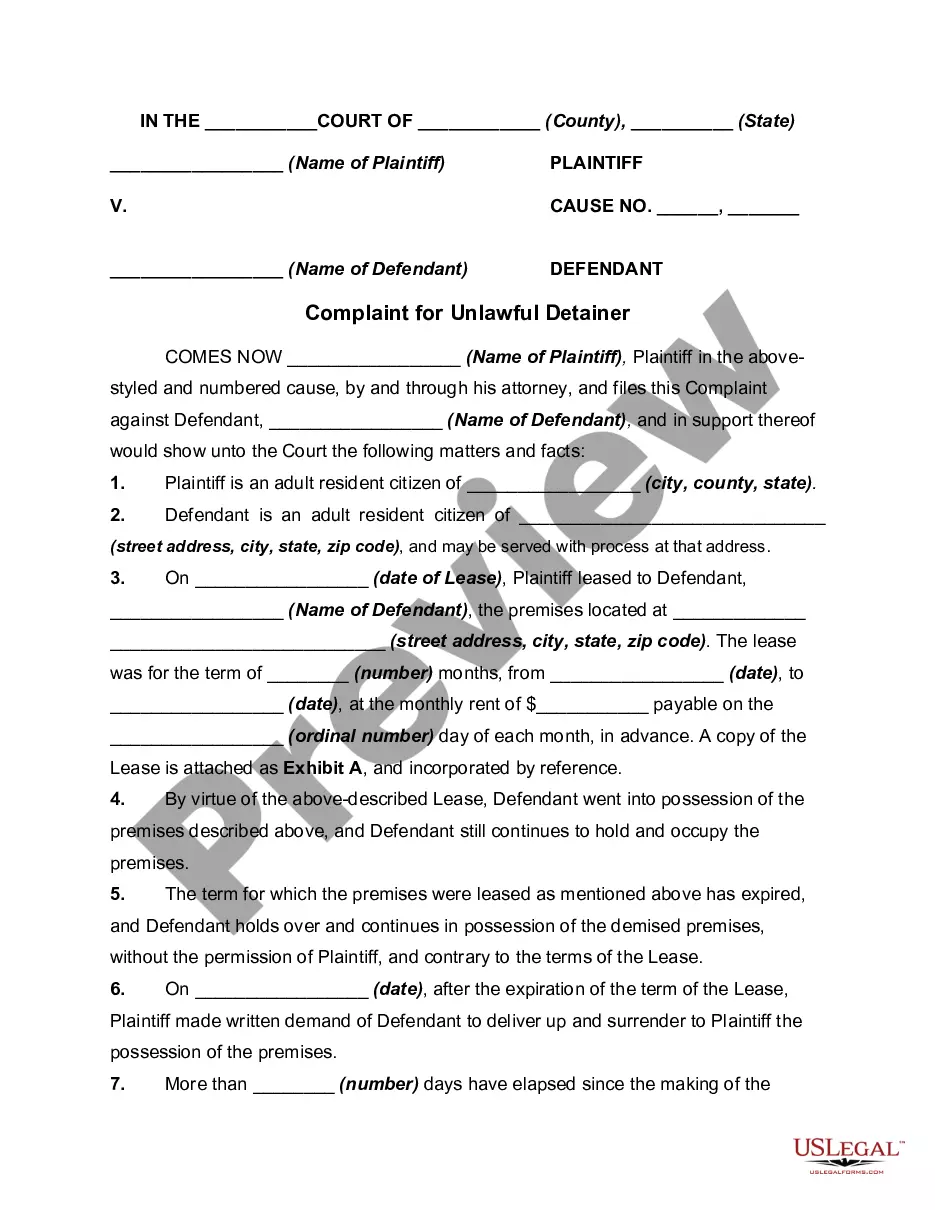
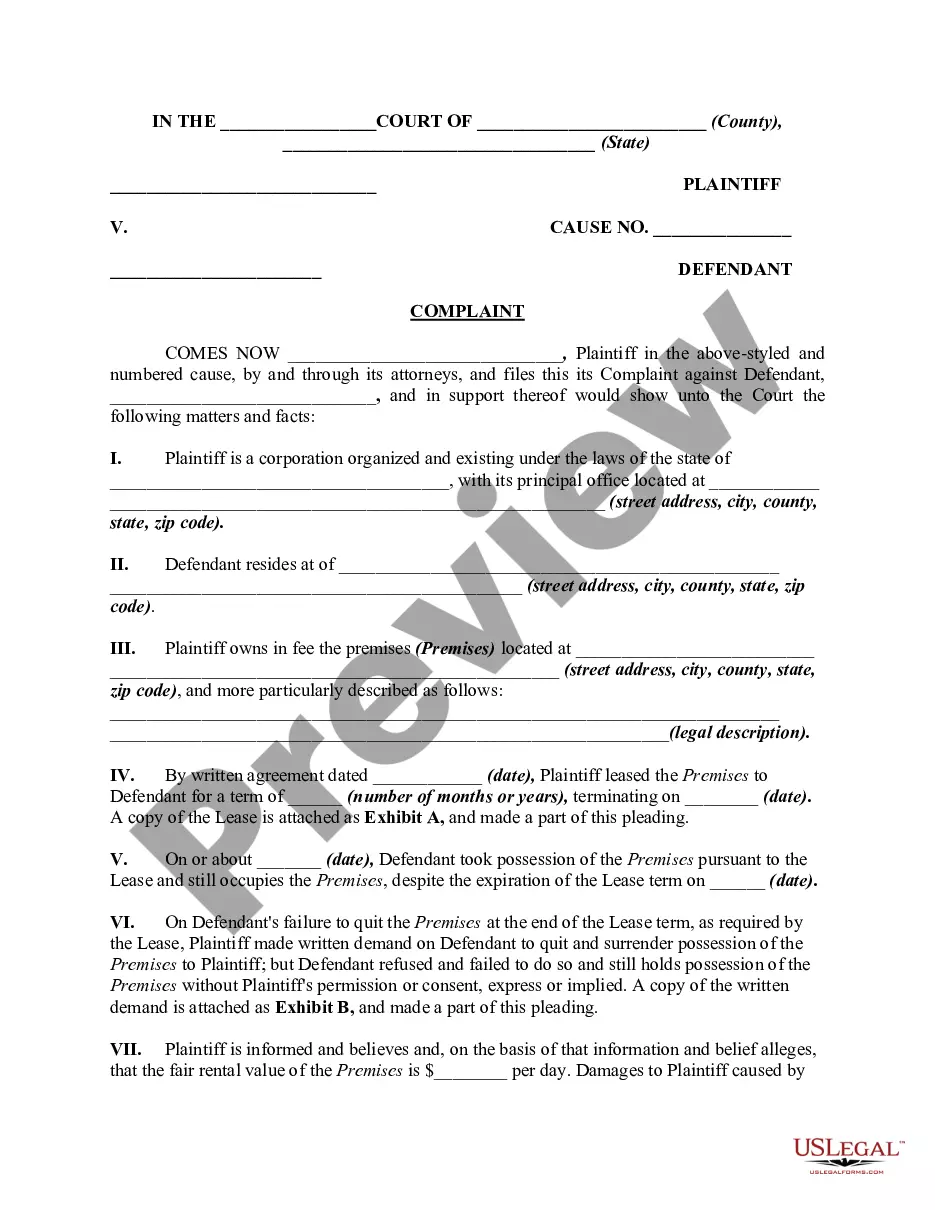
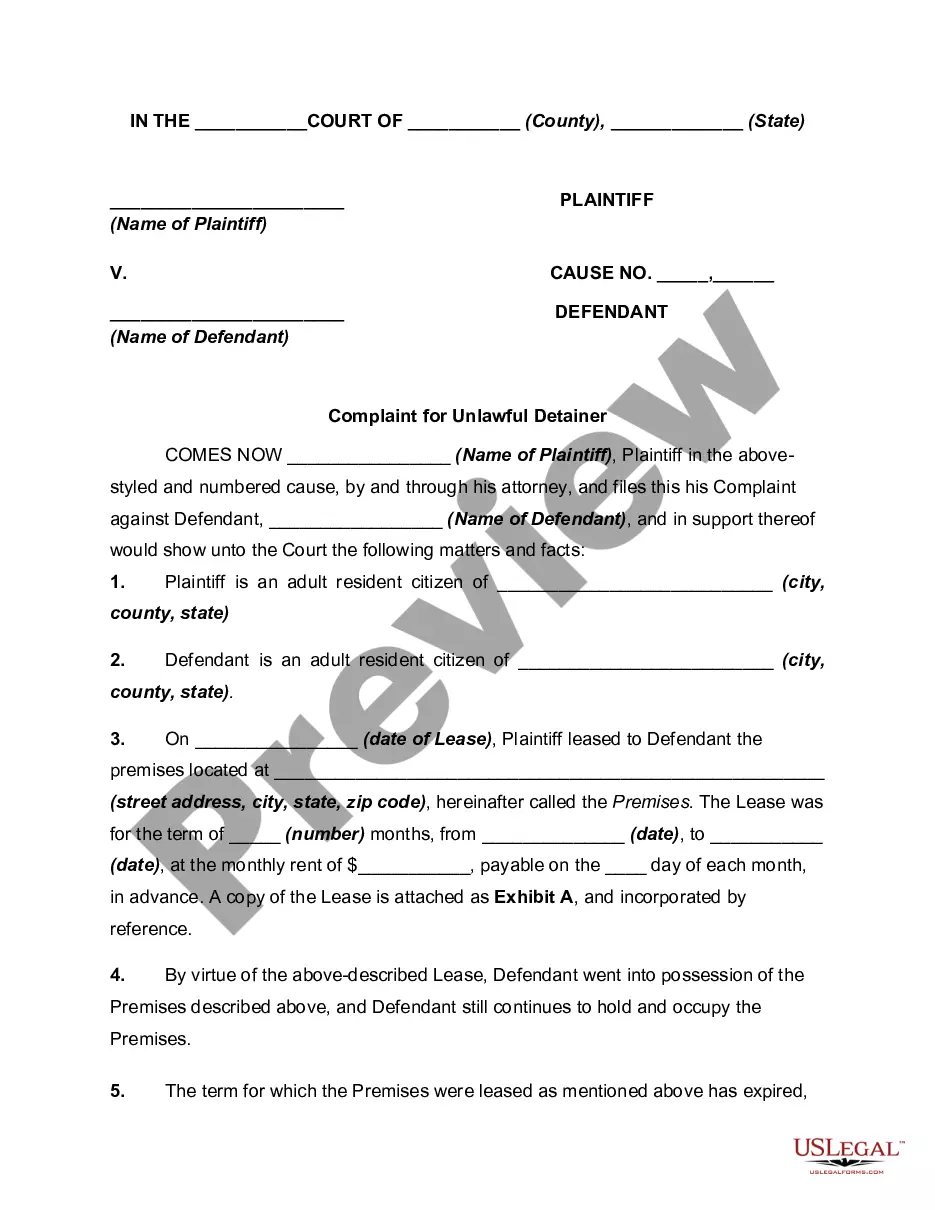
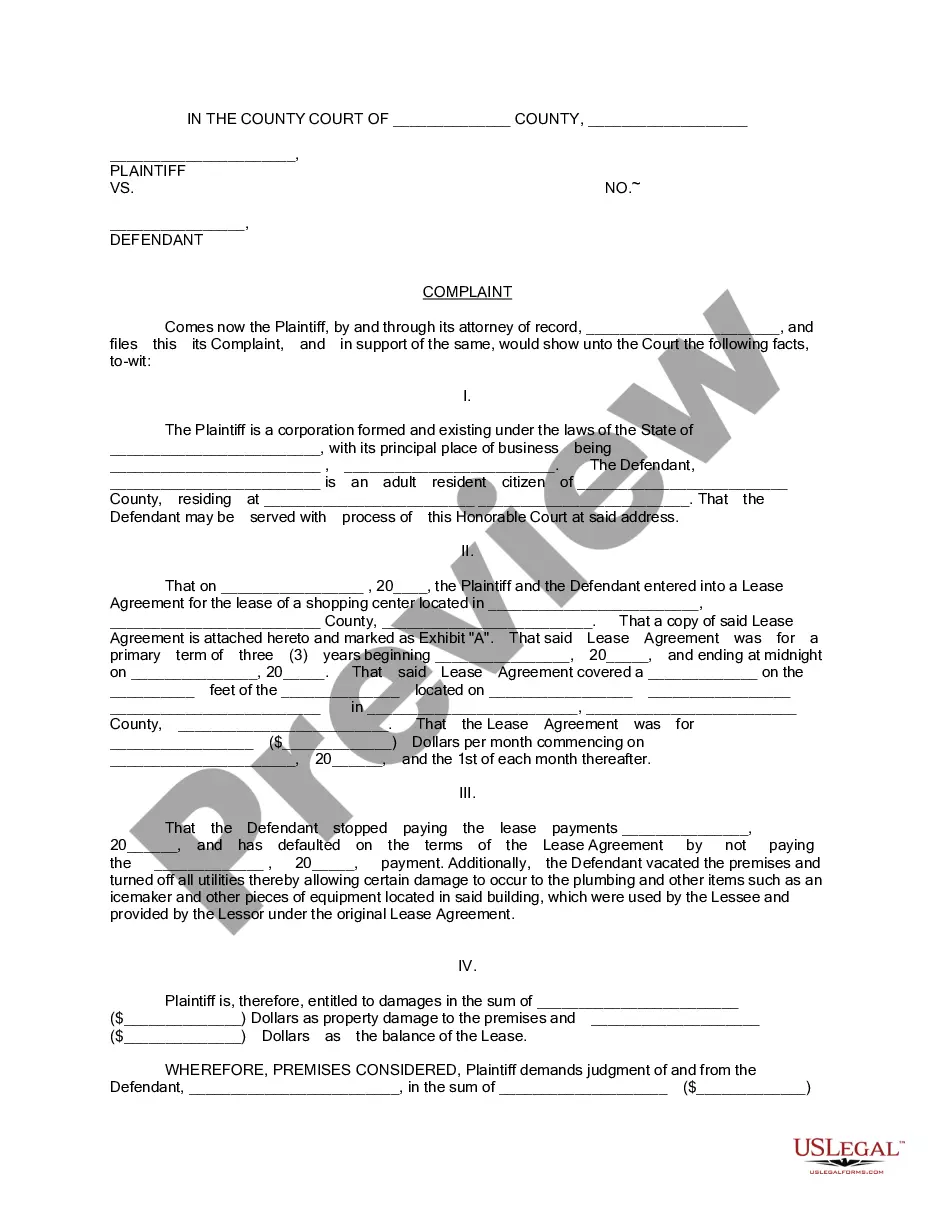
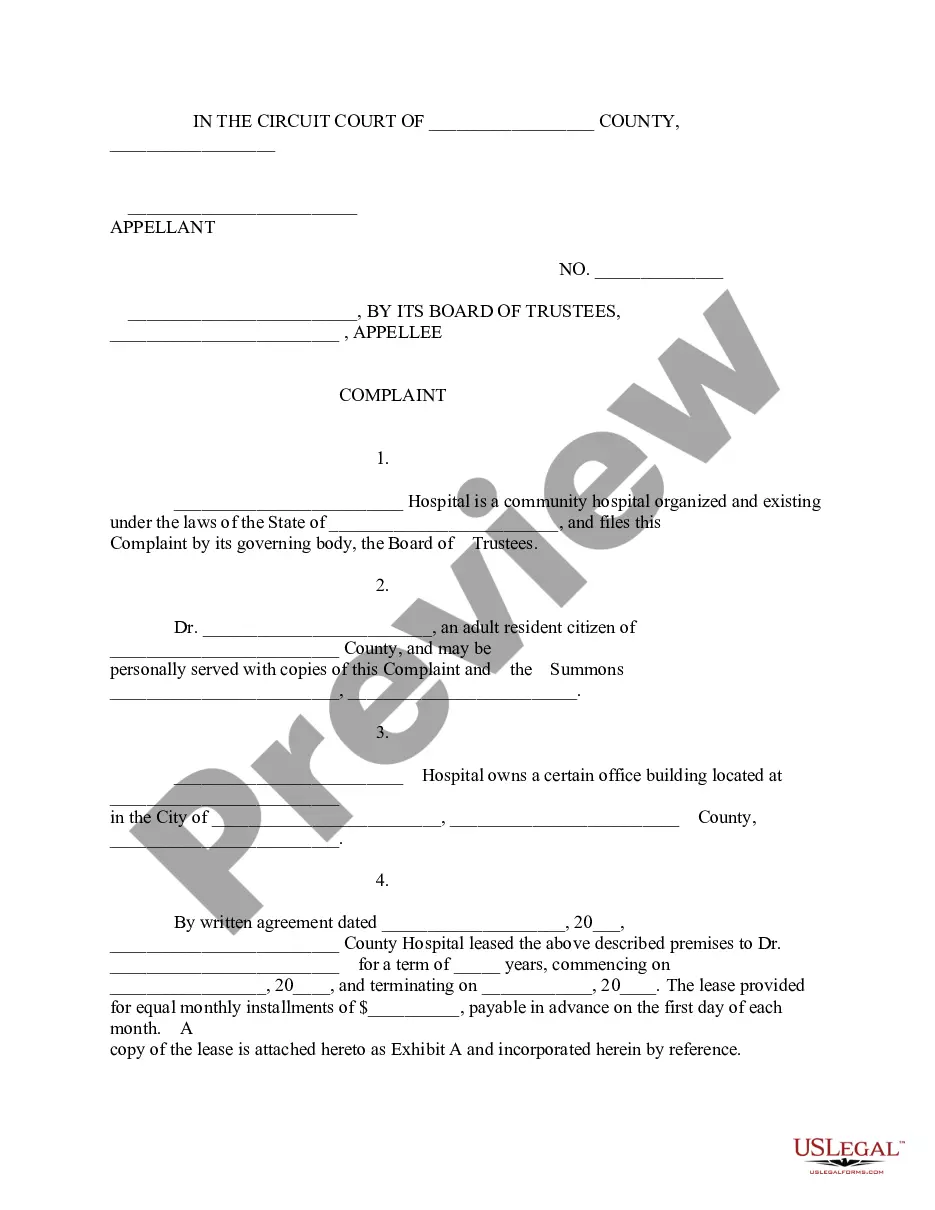
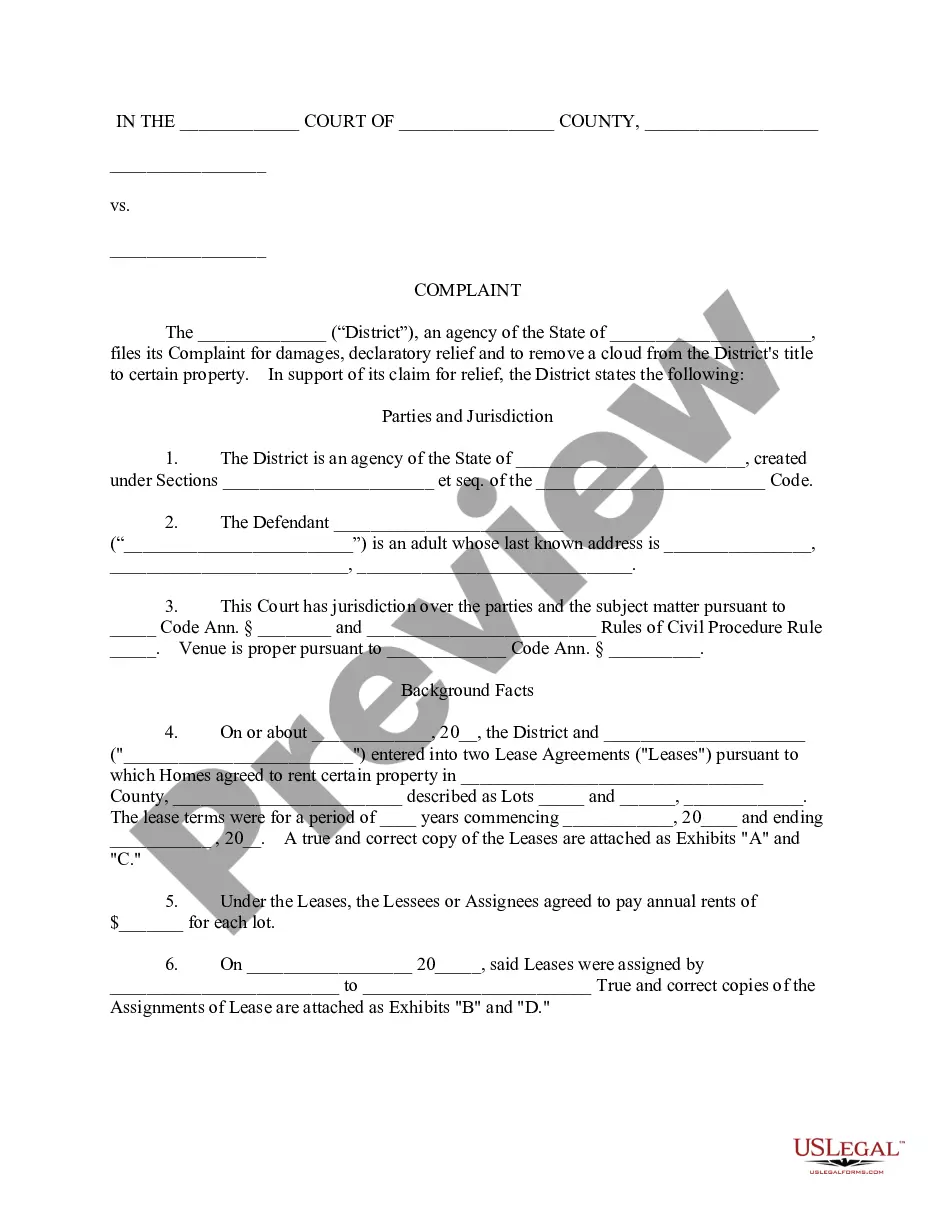
The Complaint for Unlawful Detainer - Tenant Holding Over After Expiration of Term is a legal document used by landlords to regain possession of their property from a tenant who remains in the premises after the lease has expired. This form specifically addresses situations where a tenant holds over after their lease term has ended, differing from other eviction notices that do not explicitly pertain to expired leases. It is crucial for landlords seeking to legally evict tenants who fail to vacate after the lease duration.
Key components of this form
- Name and contact details of the plaintiff (landlord).
- Name and address of the defendant (tenant).
- Details of the original lease, including start and end dates.
- Statement confirming the lease has expired and the tenant is holding over.
- Description of the written demand made to the tenant for possession.
- Request for restitution of the premises and any damages incurred.

When to use this document
This form should be used when a tenant continues to occupy rental property after the lease has expired and the landlord wants to begin legal action to reclaim the property. Common situations include tenants who refuse to move out after their lease student housing agreements, vacation rentals, or any rental situation where a lease term has concluded without a renewal or extension.
Who can use this document
This form is intended for:
- Landlords seeking to evict tenants who have overstayed their lease.
- Property management companies managing rental properties.
- Individuals renting residential properties who own the property.
- Attorneys assisting clients with eviction proceedings.
Instructions for completing this form
- Identify the parties involved by filling in the plaintiff and defendant's names and addresses.
- Specify the details of the expired lease, including dates and rental amounts.
- Clearly state the circumstances under which the tenant is unlawfully holding over.
- Document the demand for possession and any responses, or lack thereof, from the tenant.
- Request the relief sought from the court, including damages and restitution.
Is notarization required?
Notarization is not commonly needed for this form. However, certain documents or local rules may make it necessary. Our notarization service, powered by Notarize, allows you to finalize it securely online anytime, day or night.
Get your form ready online
Our built-in tools help you complete, sign, share, and store your documents in one place.
Make edits, fill in missing information, and update formatting in US Legal Forms—just like you would in MS Word.
Download a copy, print it, send it by email, or mail it via USPS—whatever works best for your next step.
Sign and collect signatures with our SignNow integration. Send to multiple recipients, set reminders, and more. Go Premium to unlock E-Sign.
If this form requires notarization, complete it online through a secure video call—no need to meet a notary in person or wait for an appointment.
We protect your documents and personal data by following strict security and privacy standards.

Make edits, fill in missing information, and update formatting in US Legal Forms—just like you would in MS Word.

Download a copy, print it, send it by email, or mail it via USPS—whatever works best for your next step.

Sign and collect signatures with our SignNow integration. Send to multiple recipients, set reminders, and more. Go Premium to unlock E-Sign.

If this form requires notarization, complete it online through a secure video call—no need to meet a notary in person or wait for an appointment.

We protect your documents and personal data by following strict security and privacy standards.
Common mistakes
- Failing to include all pertinent details about the lease, including dates and rental amounts.
- Not providing proper notice to the tenant before filing the complaint.
- Leaving out the specific grounds for eviction in the complaint.
- Neglecting to sign the complaint or provide attorney information if applicable.
Benefits of using this form online
- Easy access to legally drafted forms with state-specific considerations.
- Editability, allowing you to customize the form to meet your specific situation.
- Cost-effective solution compared to hiring an attorney for a simple eviction process.
- Convenience of downloading the form at any time and from any location.
Legal use & context
- This form is used within the legal framework of eviction proceedings, ensuring that landlords can legally reclaim possession of their property.
- It is essential to follow proper legal procedures to avoid counterclaims from the tenant.
- Local laws dictate specific timelines and procedures that must be followed for an unlawful detainer complaint to be valid.
Main things to remember
- Understand the purpose of the Complaint for Unlawful Detainer to effectively address hold-over tenants.
- Ensure all information is accurate and compliant with local laws before filing.
- Consider the benefits of online access to legal forms for efficiency and customization.
Looking for another form?
Form popularity
FAQ
A landlord can file an eviction lawsuit (or, as it's known in California, an "unlawful detainer") against a holdover tenant without first serving a notice to quit, streamlining the process somewhat. A holdover tenant can also be held liable for both rent and damages during the time they've overstayed their lease.
A holdover tenant is a renter who refuses to vacate the rental property after the end of the lease agreement. This is also known as a tenant at sufferance. The holdover period starts when the lease expires and ends when the landlord asks the tenant to leave.
What is/are a landlord's option(s) when a tenant holds over after a lease expiration date?the lease term. rent.
Let the tenant stay. A landlord who continues to accept monthly rent and allows the tenant to stay cannot later seek to evict the tenant on the basis of the holdover. Treat the tenant as a trespasser and seek eviction.
To evict a hold over tenant, the landlord must treat the tenant as a trespasser who does not have permission to be on the property and who is acting wrongfully by staying on the property from the moment the lease ends. The best way to deal with a trespasser will depend on the laws of your state and locality.
Know Your Rights. It goes without saying, but take some time to know your rights as a tenant. Keep Good Records. Make Sure Notice is Proper. Service of the Unlawful Detainer. Talking to an Attorney. Managing Partner Lipton Legal Group, A PC Beverly Hills, CA.
A tenant has five calendar days following service of summons to respond to an eviction lawsuit (i.e., an unlawful detainer action) filed by the landlord.
Courts commonly refer to eviction actions as "forcible entry and detainer" or "unlawful detainer" actions. The legal theory is that the landlord alleges the tenant unlawfully continues to have use and possession of the rental property, and the landlord seeks the assistance of the court to have the tenant removed.
If you file an eviction (unlawful detainer) case and you decide you do not want to move forward, you can ask the court to dismiss the case.You included more than one tenant in your eviction case but have decided you only want to evict one or some of them, so you dismiss the case as to the others.