Employment Agreement with Chief Financial and Administrative Officer
What is this form?
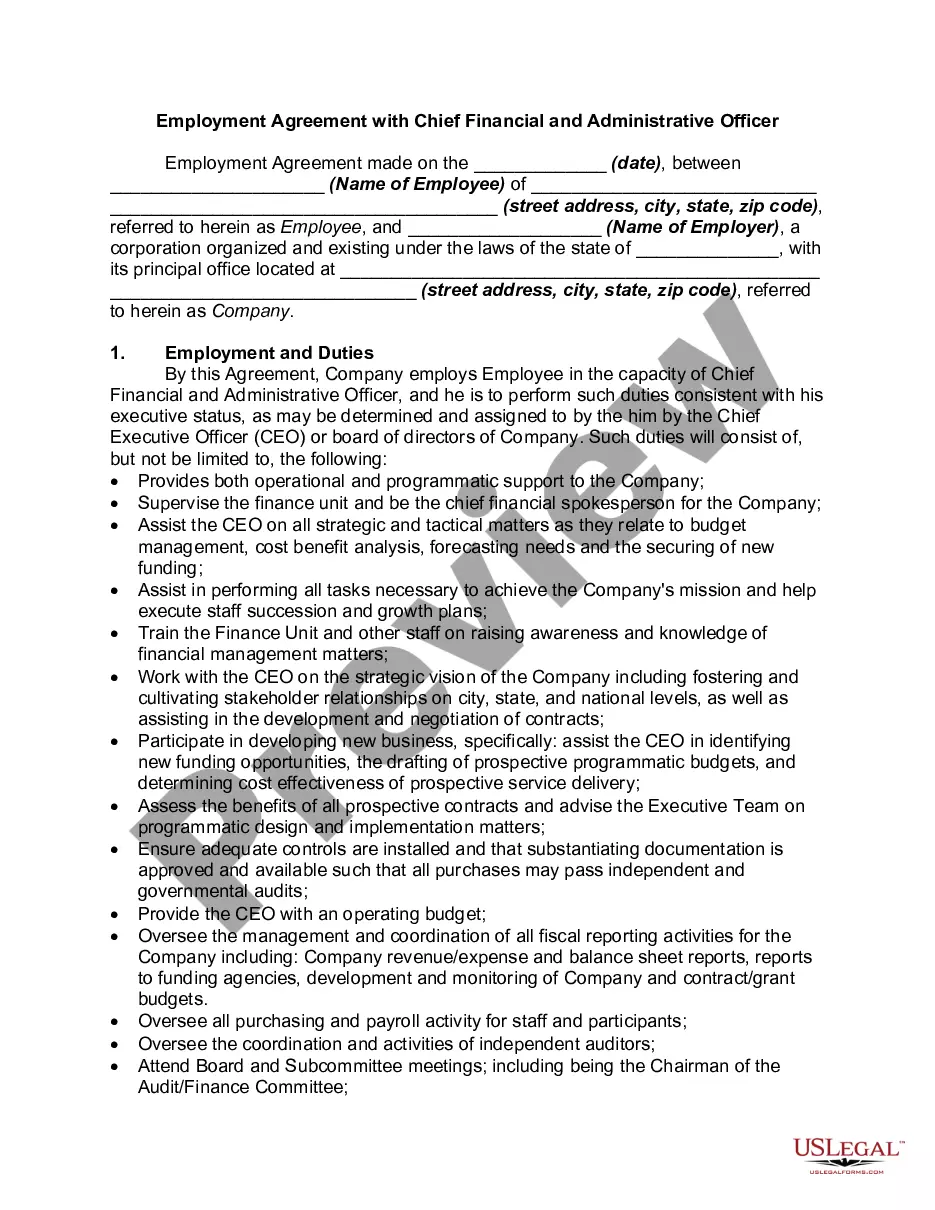
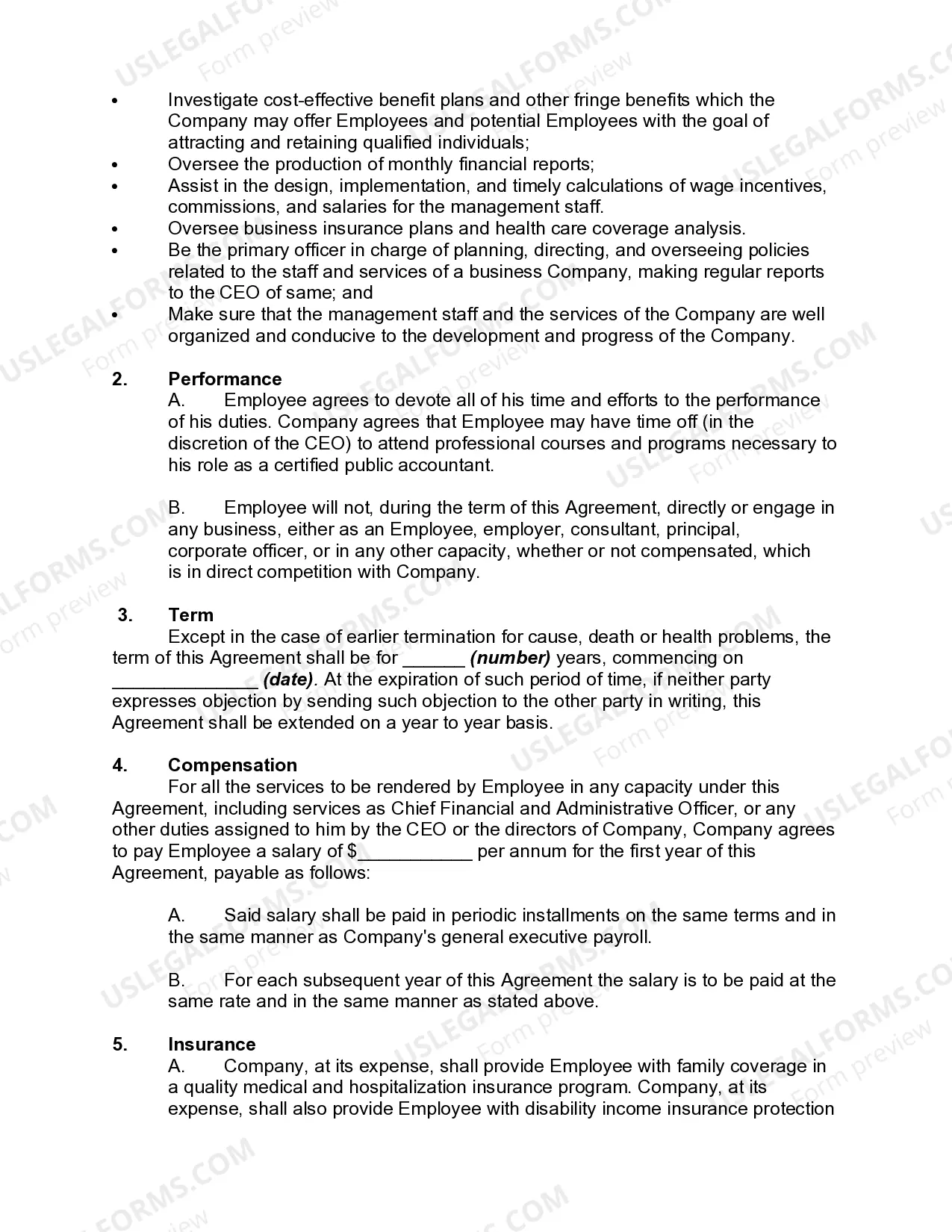
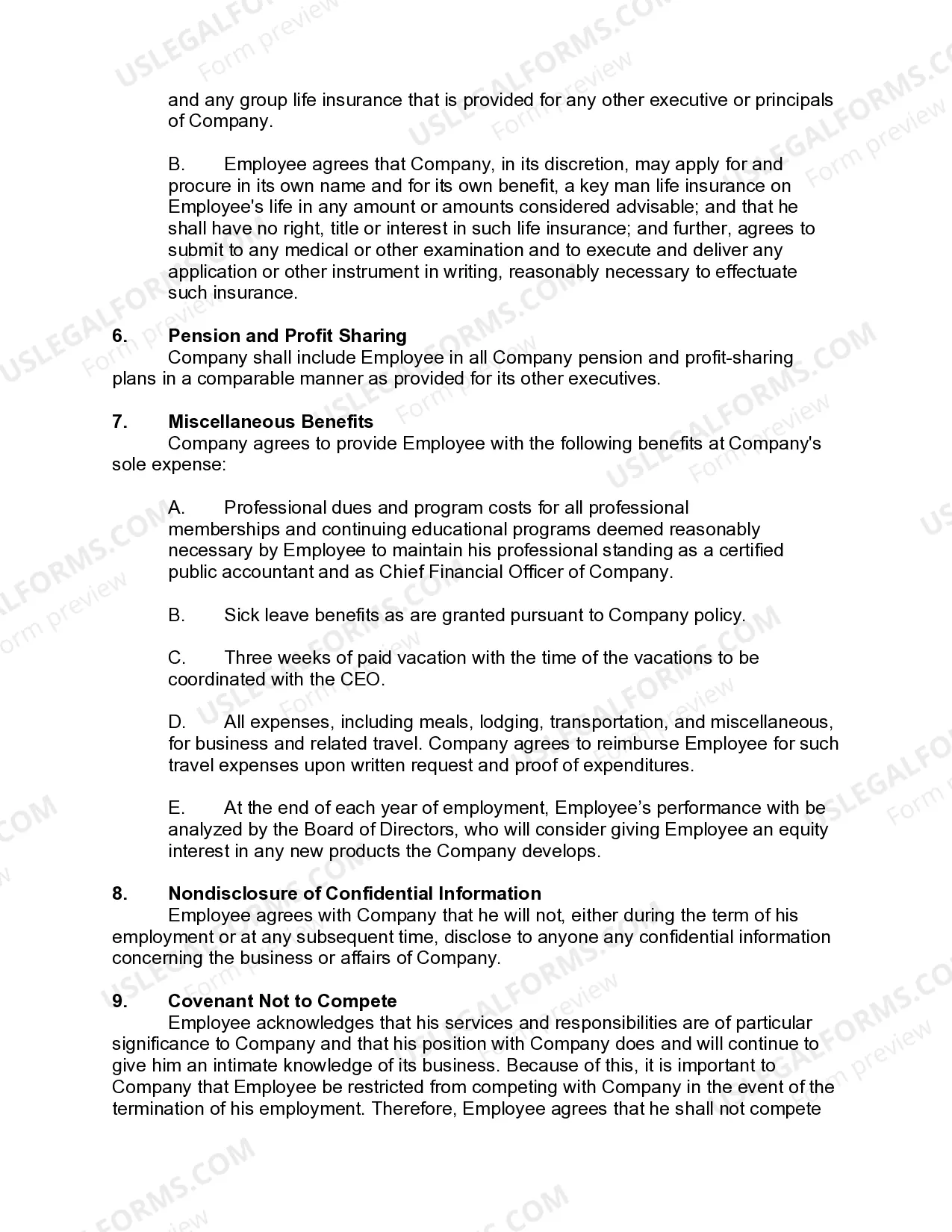
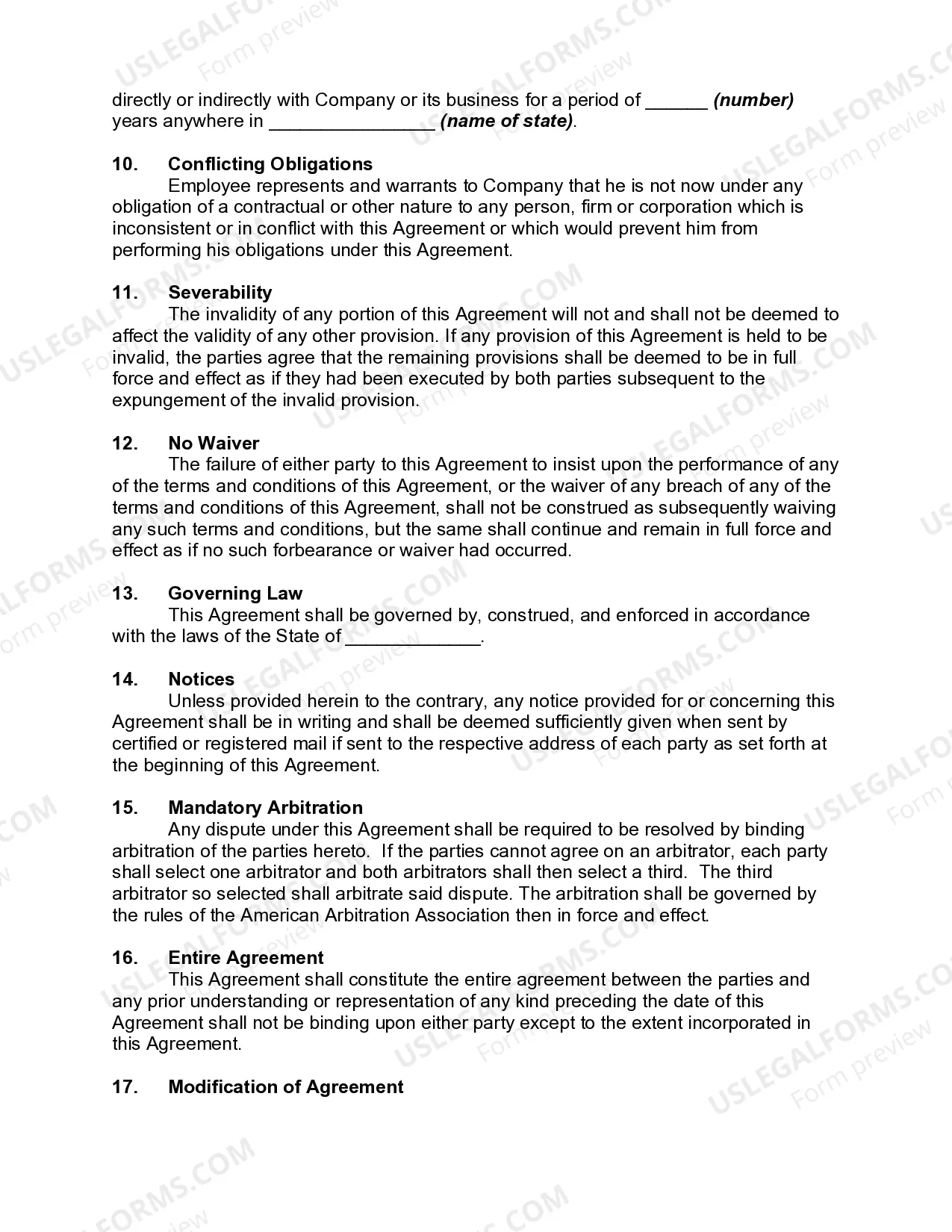
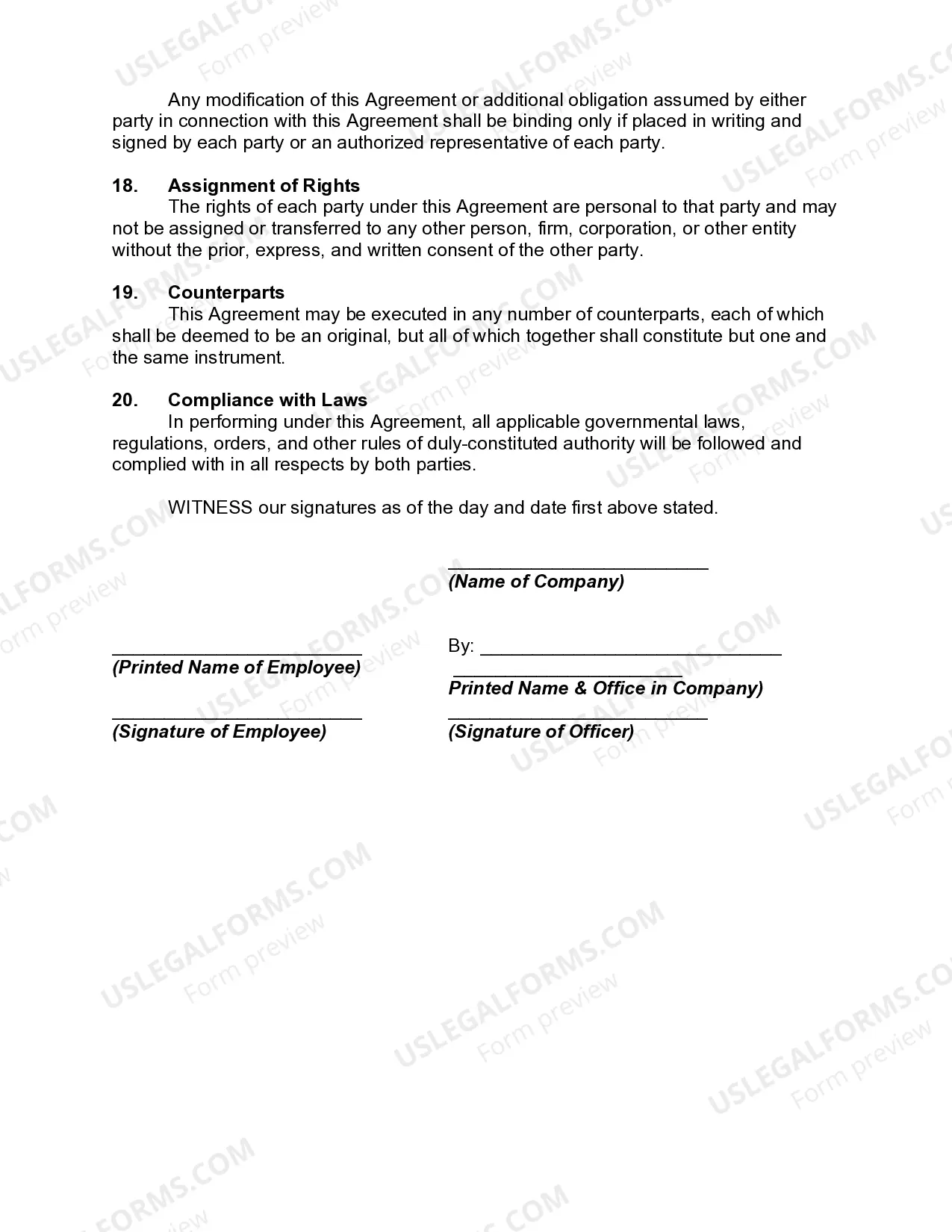
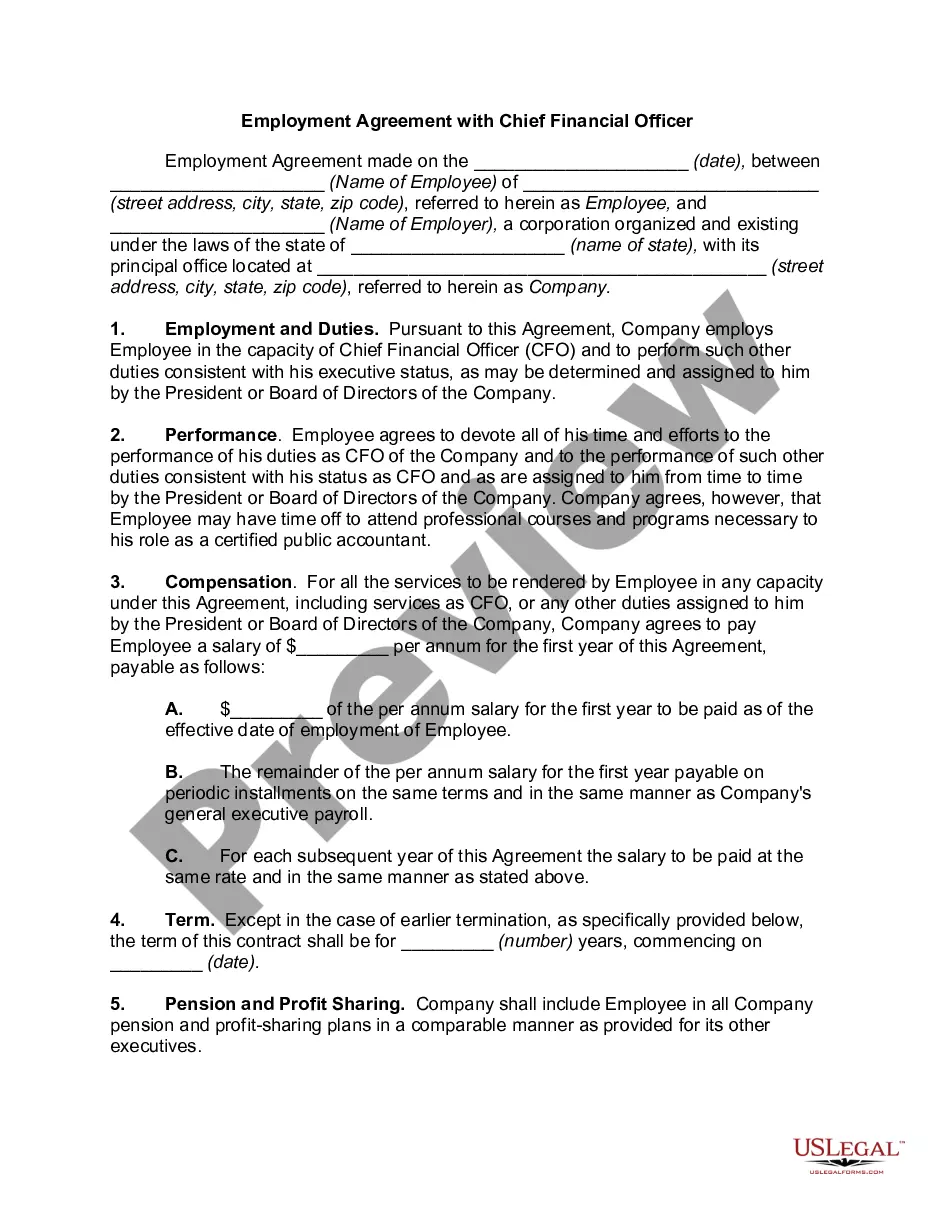
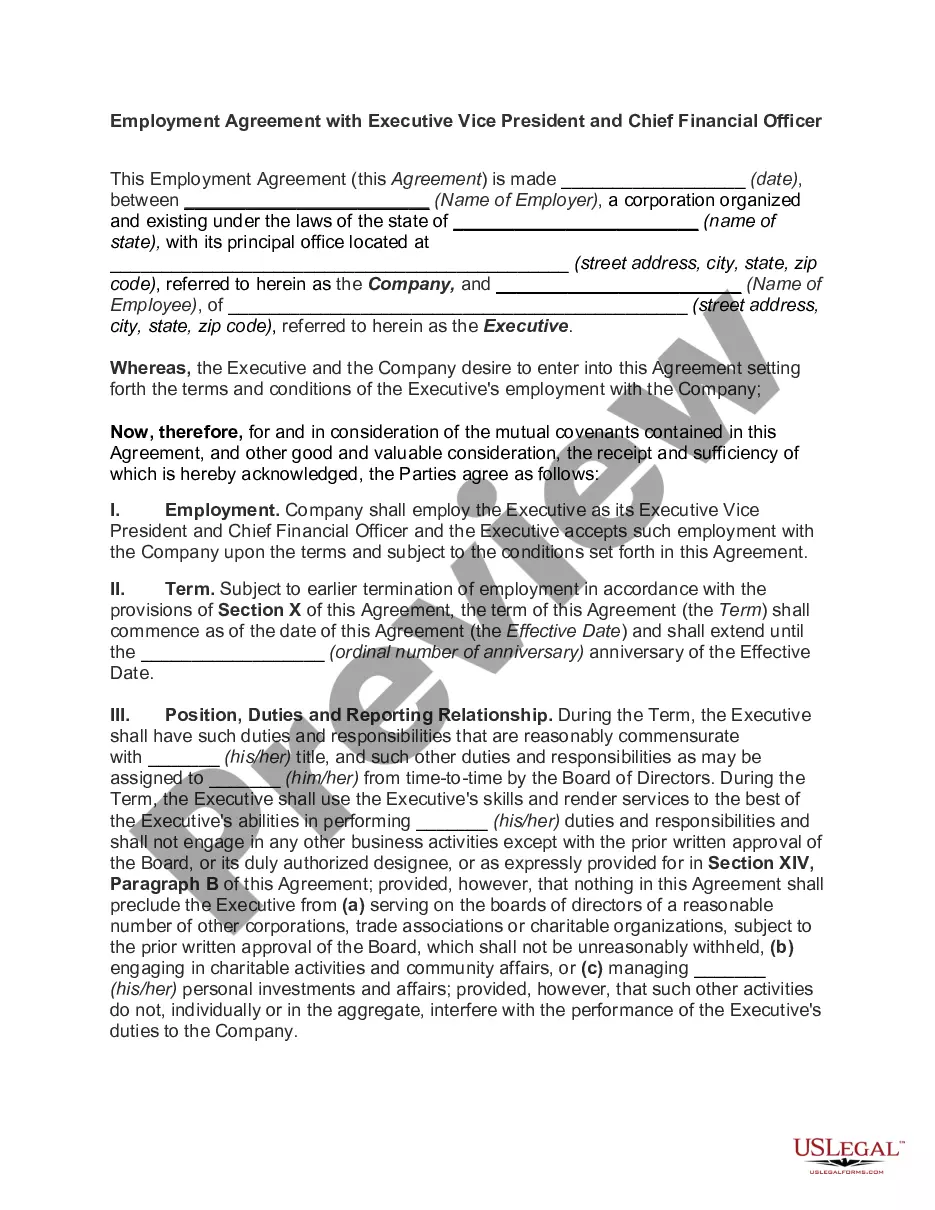
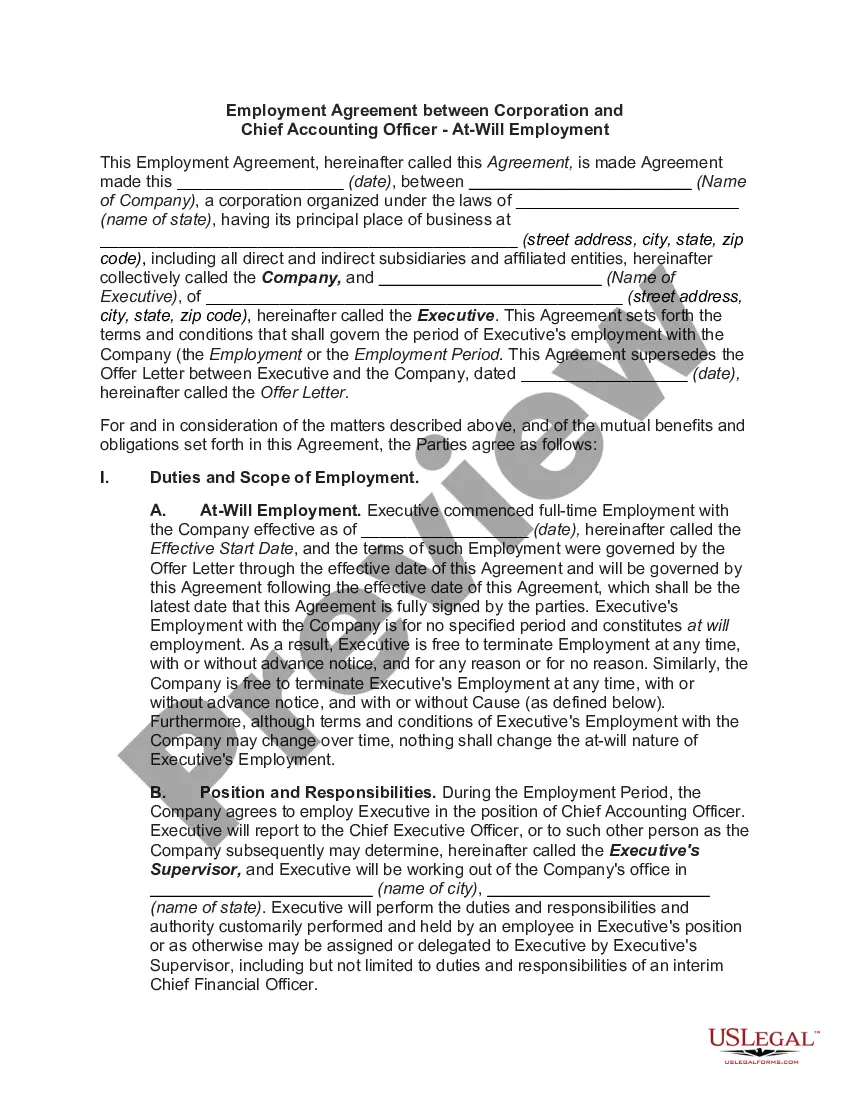
The Employment Agreement with Chief Financial and Administrative Officer is a legal document that outlines the terms of employment for an individual taking on the role of Chief Financial and Administrative Officer within a company. This agreement includes clauses that address the employee's duties, compensation, insurance benefits, and restrictions regarding competition after termination. It is essential for establishing clear expectations and protecting the interests of both the employer and the employee.
Main sections of this form
- Date and parties involved: Identifies the employee and employer.
- Employment duties: Details the responsibilities expected of the Chief Financial and Administrative Officer.
- Compensation: Specifies salary details and payment methods.
- Insurance and benefits: Outlines health insurance, disability coverage, and other employee benefits.
- Confidentiality and non-compete clauses: Protects company information and prevents direct competition.
- Governing law: Specifies the jurisdiction under which the agreement is governed.
Situations where this form applies
This agreement should be used when hiring a Chief Financial and Administrative Officer to ensure that both parties have a clear understanding of the role, responsibilities, and terms of employment. It is particularly beneficial when the role involves significant financial oversight and strategic decision-making that could affect the company's future.
Who needs this form
- Companies looking to hire a Chief Financial and Administrative Officer.
- Business owners or executives seeking to formalize employment relationships.
- Human resource professionals responsible for drafting employment contracts.
- Attorneys or legal advisors needing a template for an employment agreement.
How to prepare this document
- Identify the parties involved by entering the employee's name and the company's name.
- Specify the start date of the employment agreement.
- Clearly outline the duties and responsibilities of the Chief Financial and Administrative Officer.
- Enter the agreed-upon salary and compensation structure.
- Include details about insurance coverage and any additional benefits provided by the company.
- Finalize by having both parties review, sign, and date the agreement.
Notarization requirements for this form
Notarization is generally not required for this form. However, certain states or situations might demand it. You can complete notarization online through US Legal Forms, powered by Notarize, using a verified video call available anytime.
Get your form ready online
Our built-in tools help you complete, sign, share, and store your documents in one place.
Make edits, fill in missing information, and update formatting in US Legal Forms—just like you would in MS Word.
Download a copy, print it, send it by email, or mail it via USPS—whatever works best for your next step.
Sign and collect signatures with our SignNow integration. Send to multiple recipients, set reminders, and more. Go Premium to unlock E-Sign.
If this form requires notarization, complete it online through a secure video call—no need to meet a notary in person or wait for an appointment.
We protect your documents and personal data by following strict security and privacy standards.

Make edits, fill in missing information, and update formatting in US Legal Forms—just like you would in MS Word.

Download a copy, print it, send it by email, or mail it via USPS—whatever works best for your next step.

Sign and collect signatures with our SignNow integration. Send to multiple recipients, set reminders, and more. Go Premium to unlock E-Sign.

If this form requires notarization, complete it online through a secure video call—no need to meet a notary in person or wait for an appointment.

We protect your documents and personal data by following strict security and privacy standards.
Common mistakes
- Failing to clearly define the job duties, which can lead to misunderstandings.
- Omitting the non-compete clause, leaving the company vulnerable to competition.
- Not specifying the term of employment, which can create confusion in the future.
- Inadequately detailing compensation and benefits, leading to disputes later.
Benefits of using this form online
- Convenience of downloading and filling out the form at your own pace.
- Editability allows for customization to fit specific company needs.
- Access to attorney-drafted templates ensures legal compliance and reduces errors.
Legal use & context
- The Employment Agreement is legally binding once signed by both parties.
- Non-compete clauses must be reasonable in scope and duration to be enforceable.
- Compensation and benefits must comply with applicable labor laws to avoid legal issues.
Key takeaways
- The agreement defines the employment relationship for the Chief Financial and Administrative Officer.
- Understanding and including all terms can prevent disputes in the future.
- Properly completing the form is crucial for ensuring the validity of the agreement.
Looking for another form?


Form popularity
FAQ
Today, a successful chief financial officer must be able not only to see the risks and opportunities behind the numbers but to act as a strategic business partner to the CEO. Doing that well requires strong leadership, excellent communication and team-building skills.
The CFO is also responsible for the company's present financial condition, so they must decide how to invest the company's money, taking into consideration risk and liquidity. In addition, the CFO oversees the capital structure of the company, determining the best mix of debt, equity, and internal financing.
A minimum of 8, preferrably 10, years experience in a senior role. CPA designation preferred. Masters degree in Accounting, Finance or Business. Up to date knowledge of current financial and accounting computer applications. Excellent verbal, analytical, organizational and written skills.
The Chief Financial Officer (CFO) of a company has primary responsibility for the planning, implementation, managing and running of all the finance activities of a company, including business planning, budgeting, forecasting and negotiations.
The CFO must report accurate information because many decisions are based on the data they provide.The CFO sets financial policy and is responsible for managing government funds.
The CFO, or Chief Financial Officer, only oversees the financial operations of a company and reports to the CEO. The COO, or Chief Operations Officer, oversees the day-to-day administrative and operational functions of a company and also reports to the CEO.
A standard employment contract is between an employer that hires an individual to work on a per hour ($/hr) or per-project basis. Depending on the laws in the State, the employee may be subject to payroll taxes subject to withholding by the employer.
CFOs work to protect the vital assets of the company, ensure compliance with financial regulations, close the books correctly, and communicate value and risk issues to investors and boards.