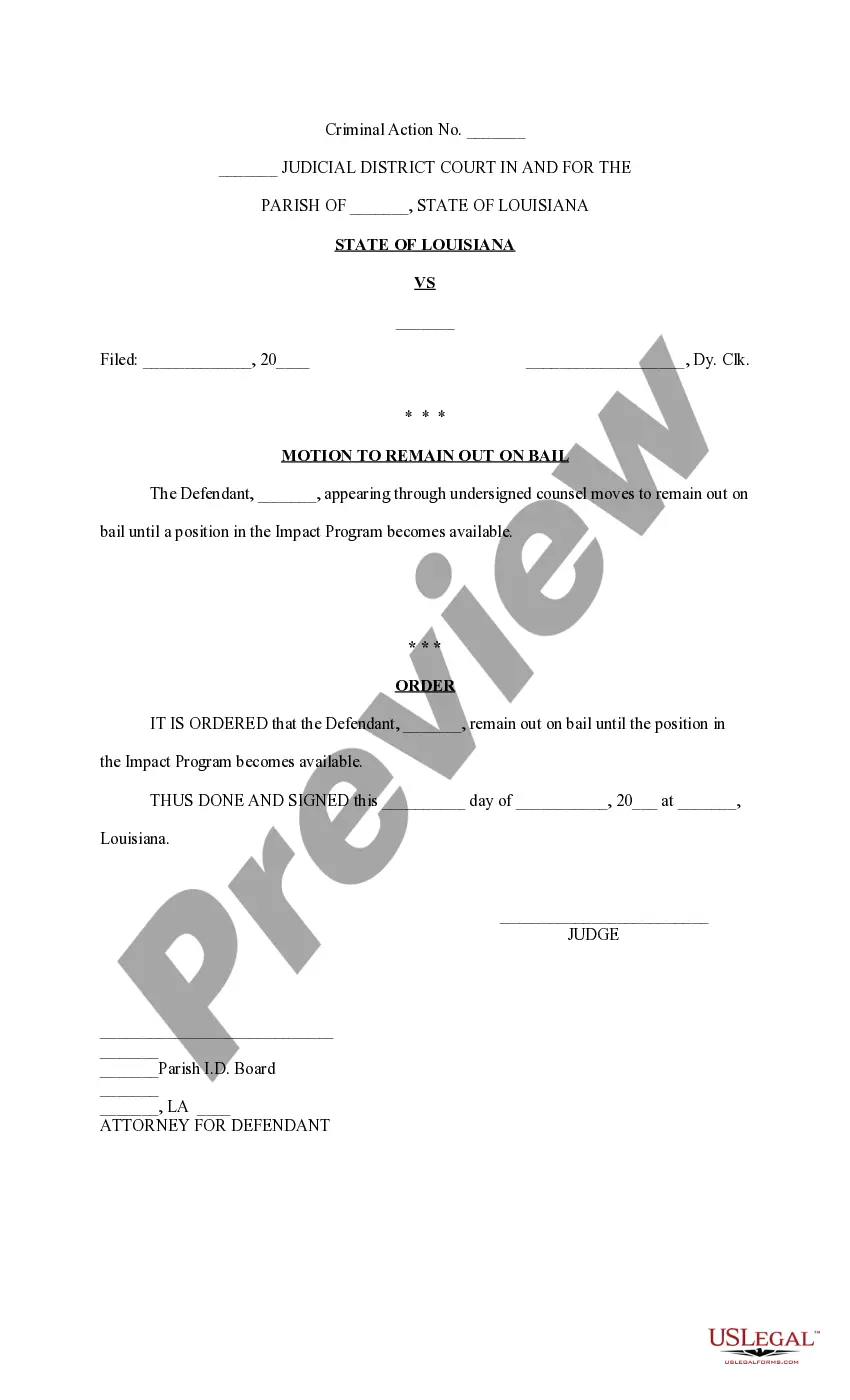
Employment Agreement between Corporation and Chief Accounting Officer - At-Will Employment
What is this form?
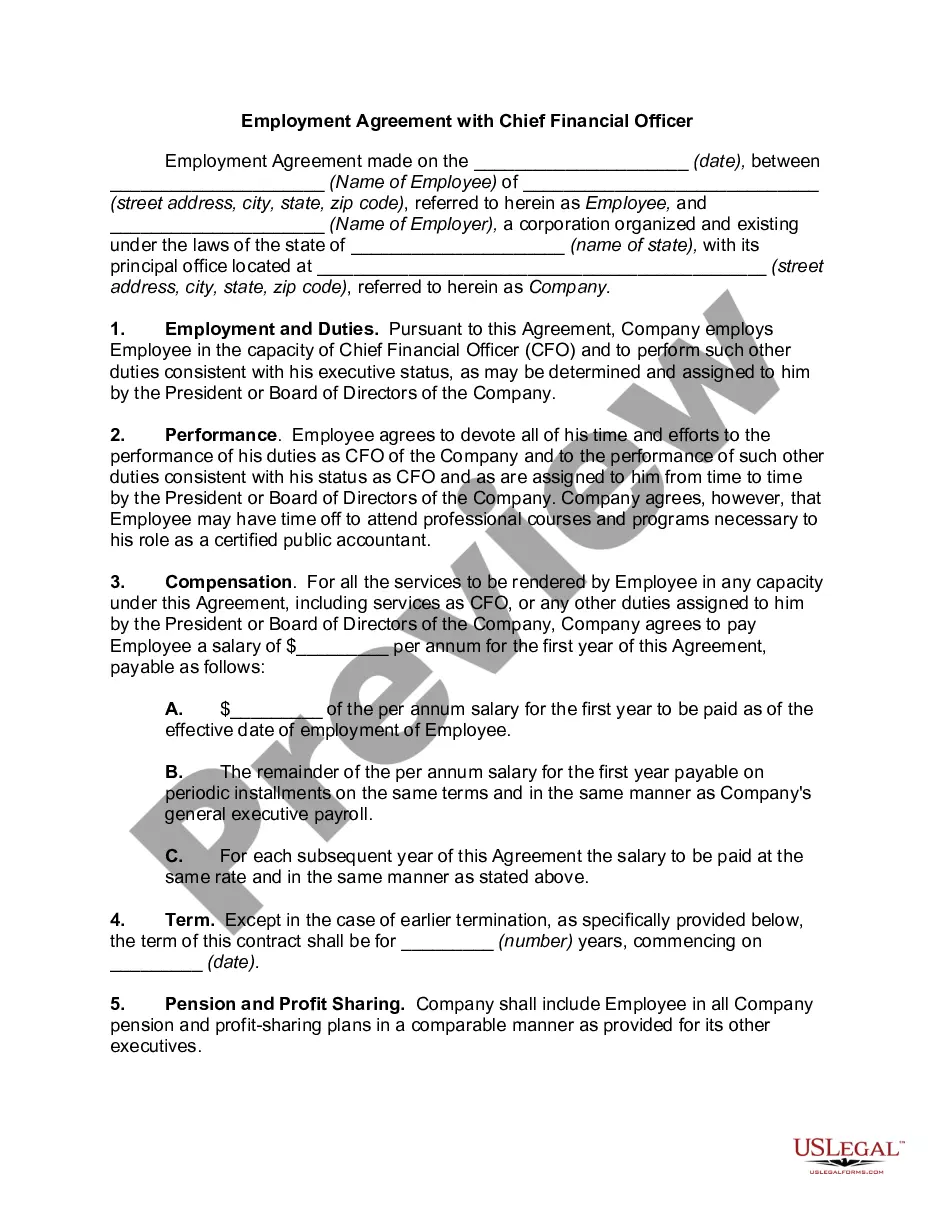
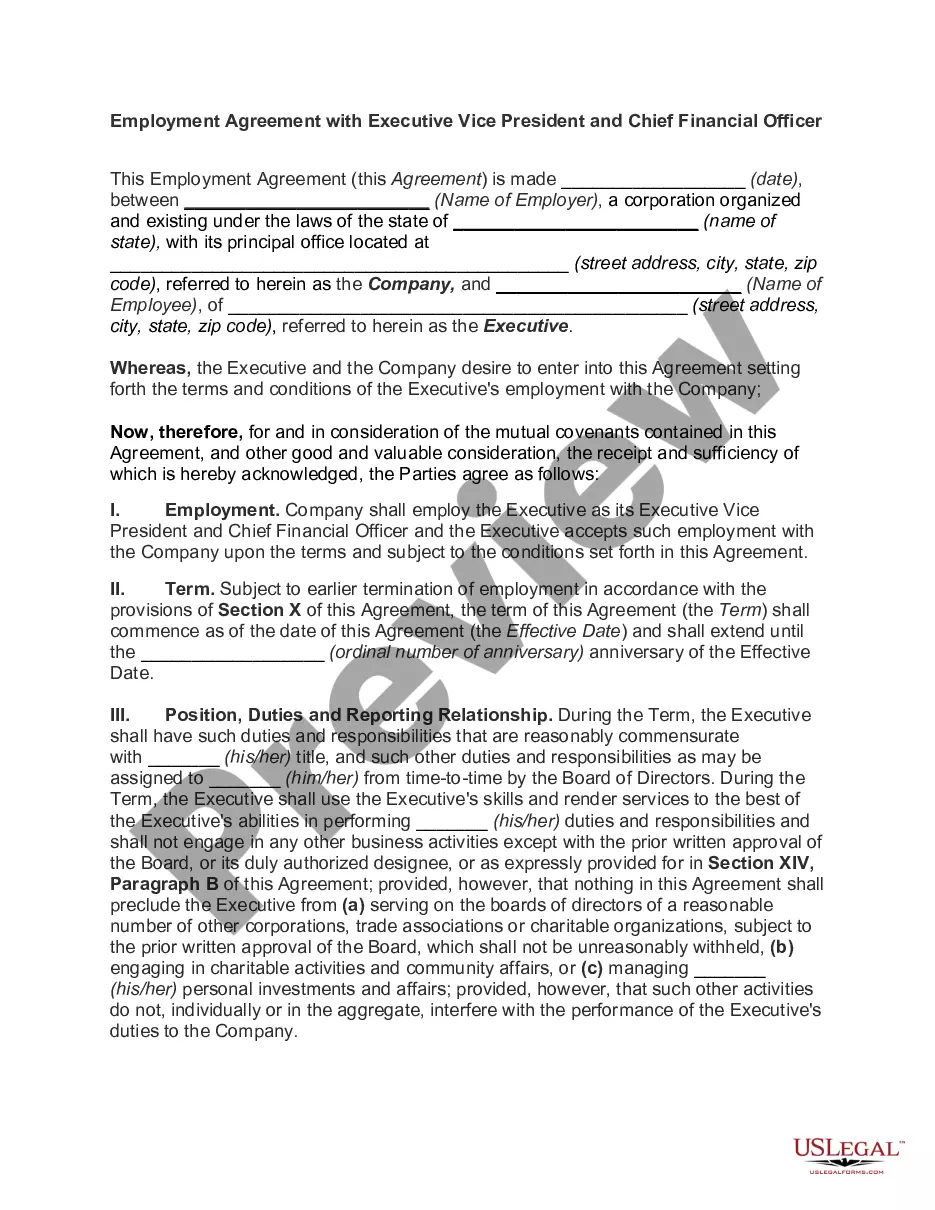
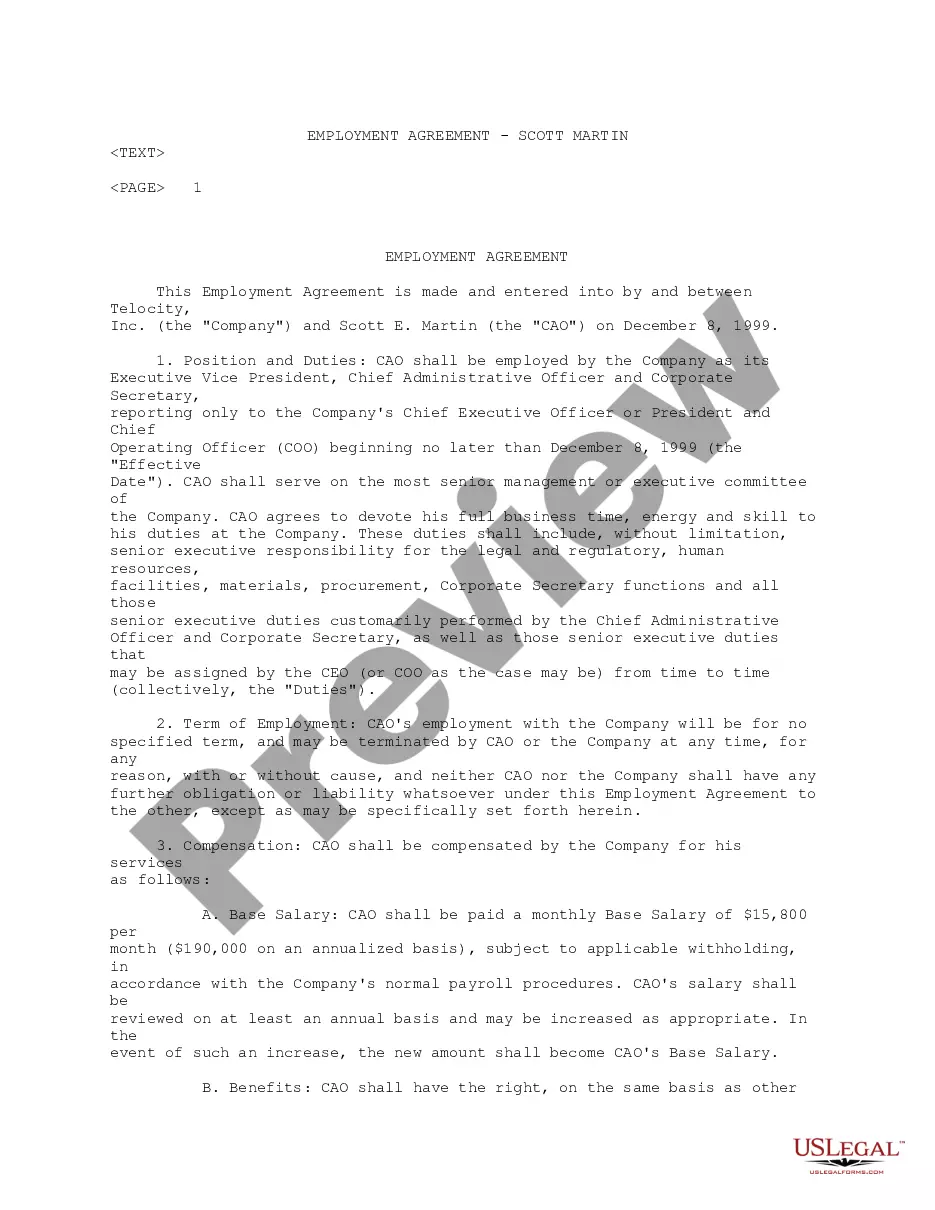
This Employment Agreement between Corporation and Chief Accounting Officer is a legal document that outlines the terms of employment for a Chief Accounting Officer (CAO) under at-will employment conditions. It serves to formalize the relationship between the company and the executive, specifying roles, responsibilities, compensation, and termination conditions. Unlike employment contracts with specified terms, this agreement allows for termination at any time, with or without cause, and is focused specifically on the executive role of a CAO, which entails significant responsibilities regarding the financial health of the organization.
Key components of this form
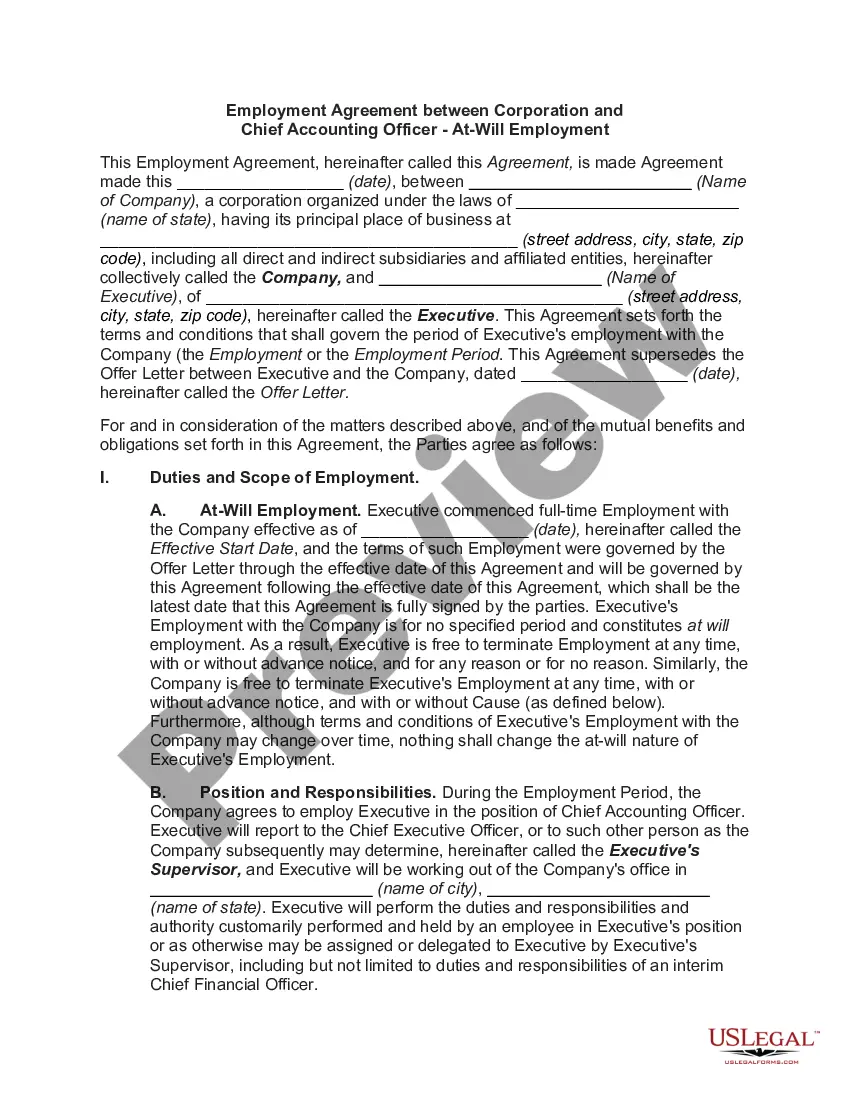
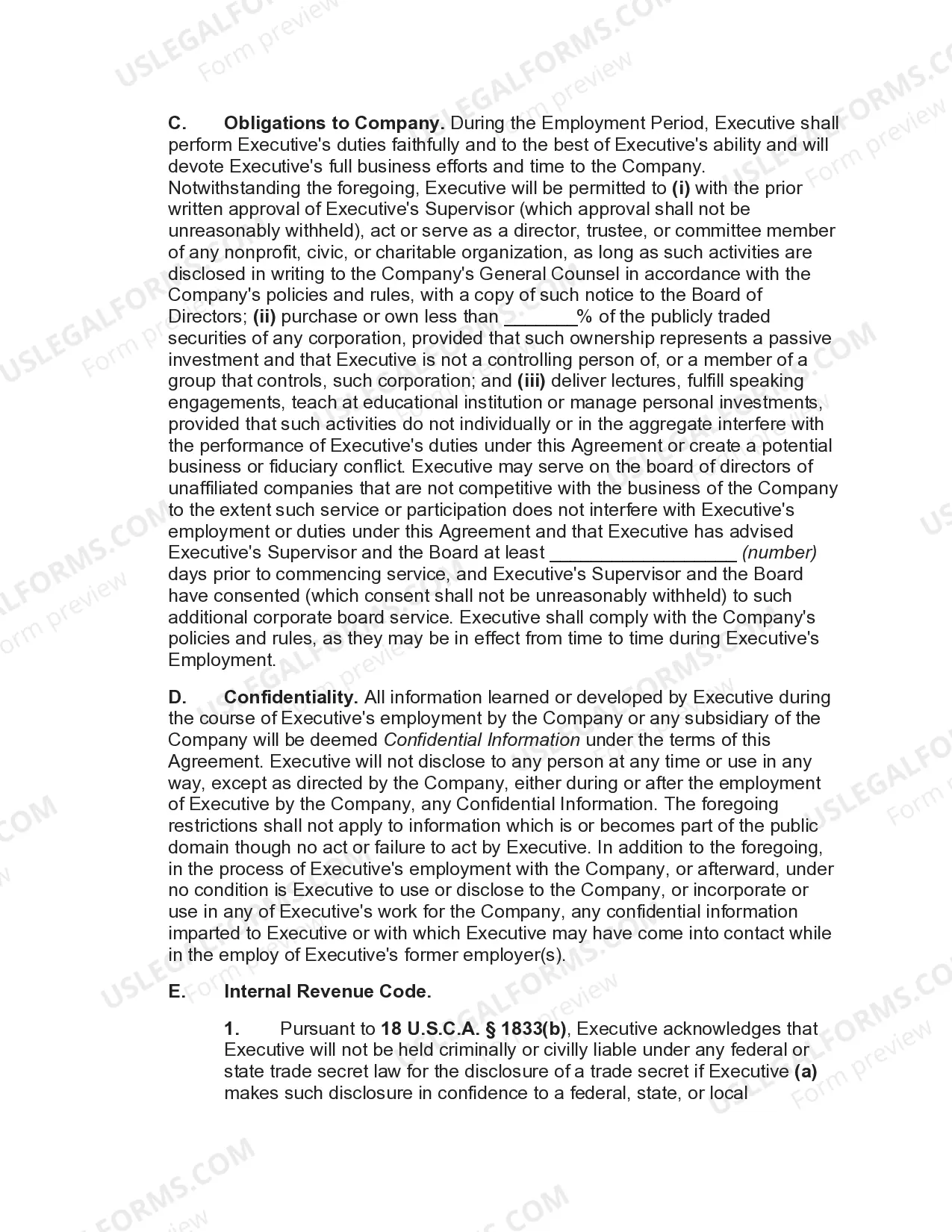
Duties and Scope of Employment: Details the responsibilities of the Chief Accounting Officer and the at-will nature of the employment.
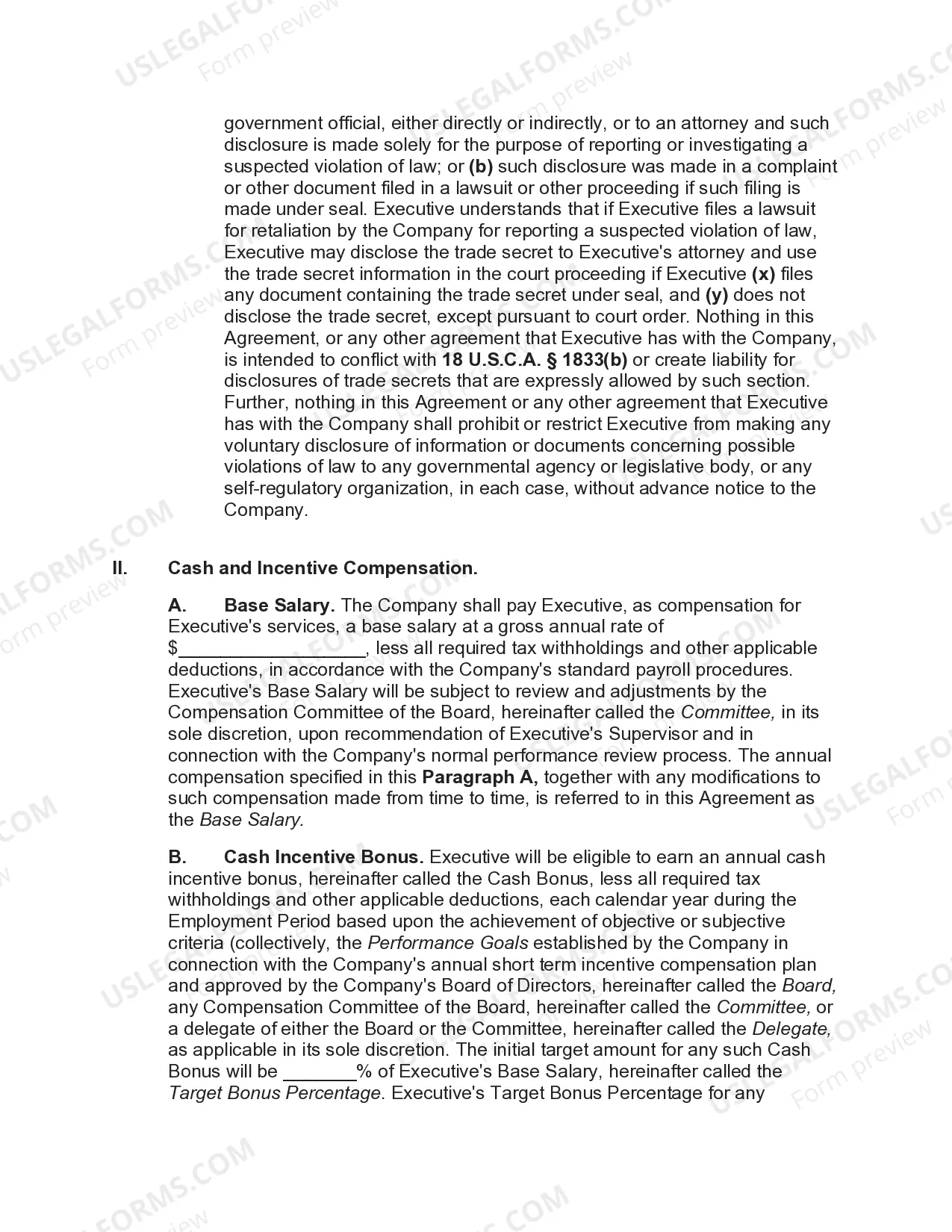
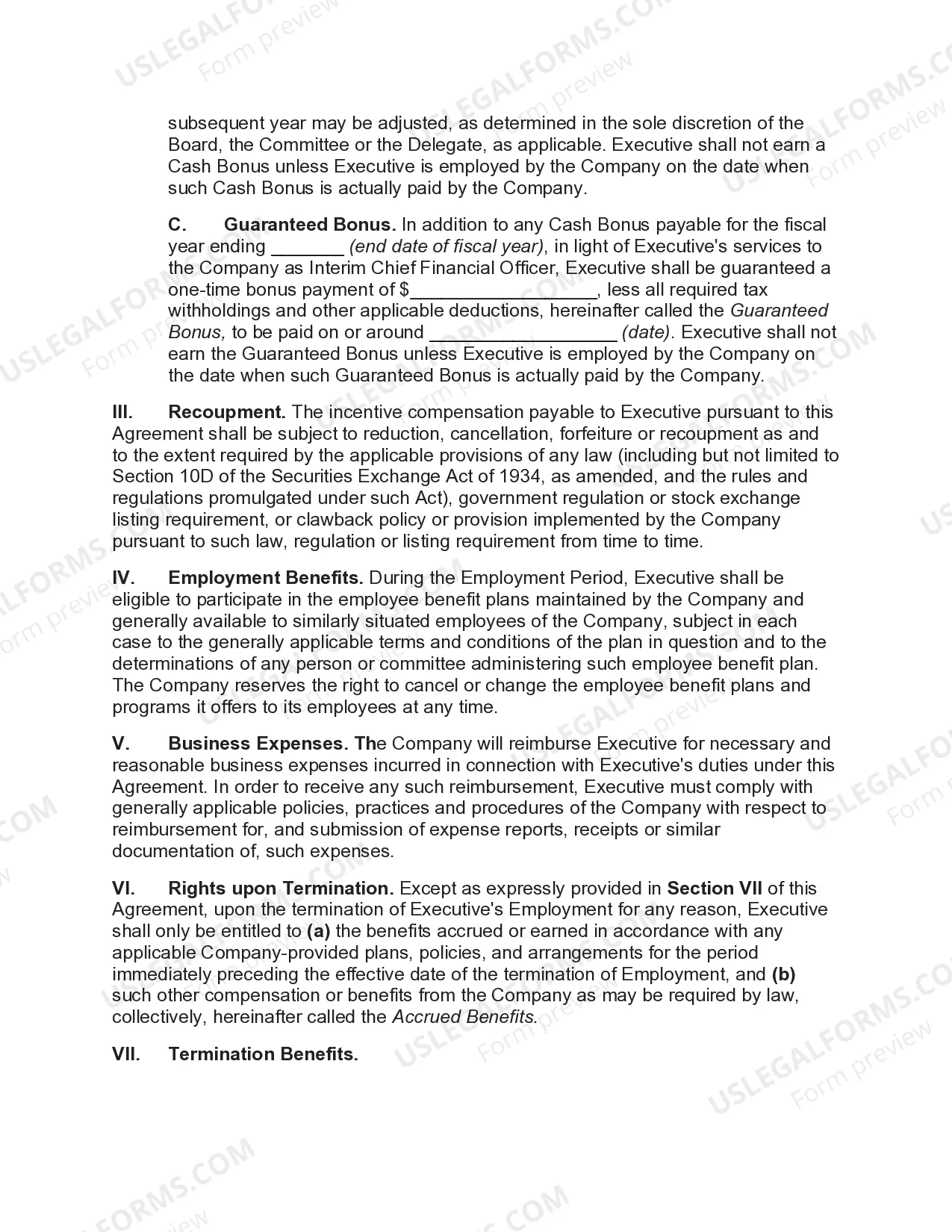
Compensation: Outlines the base salary, cash incentives, and bonuses, ensuring clarity on the executive's financial remuneration.
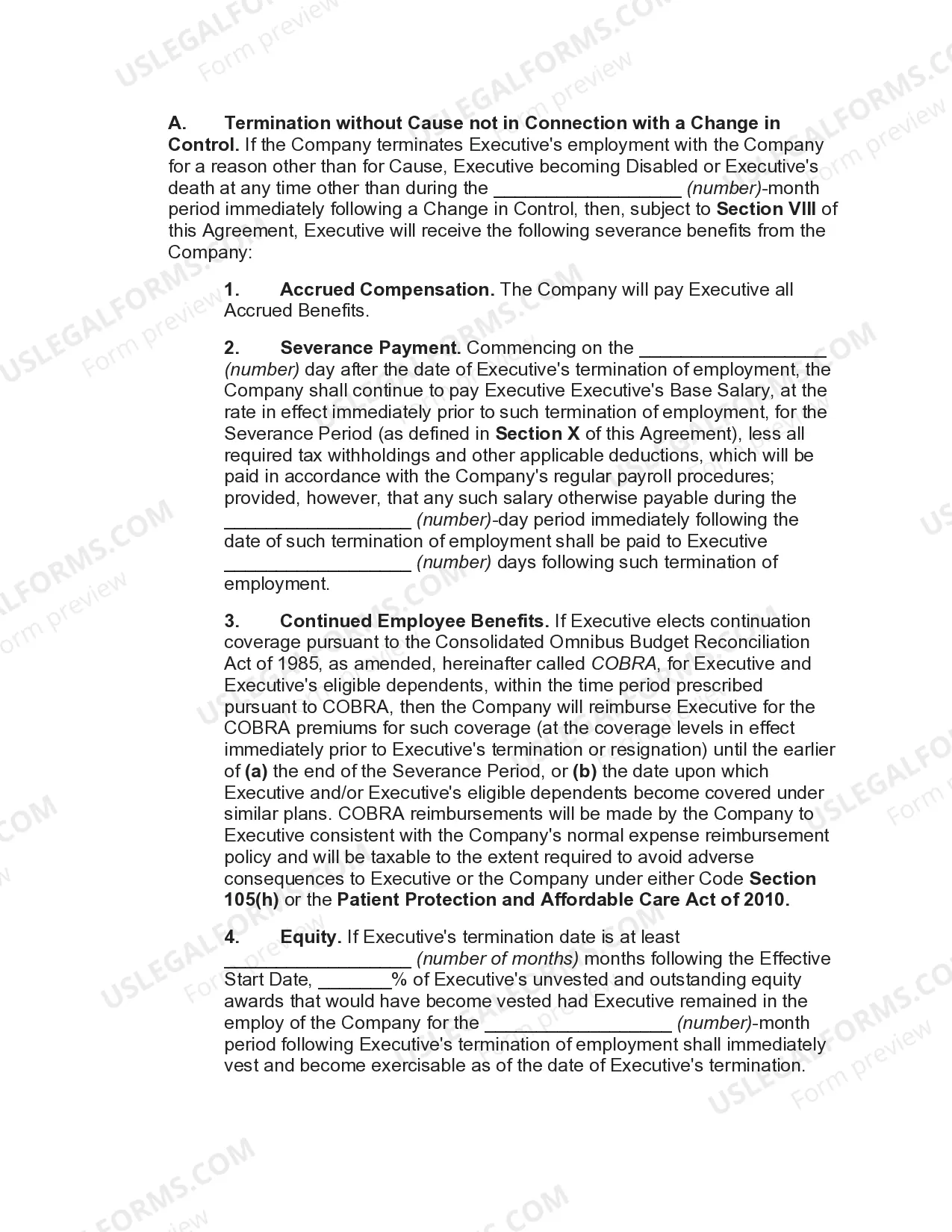
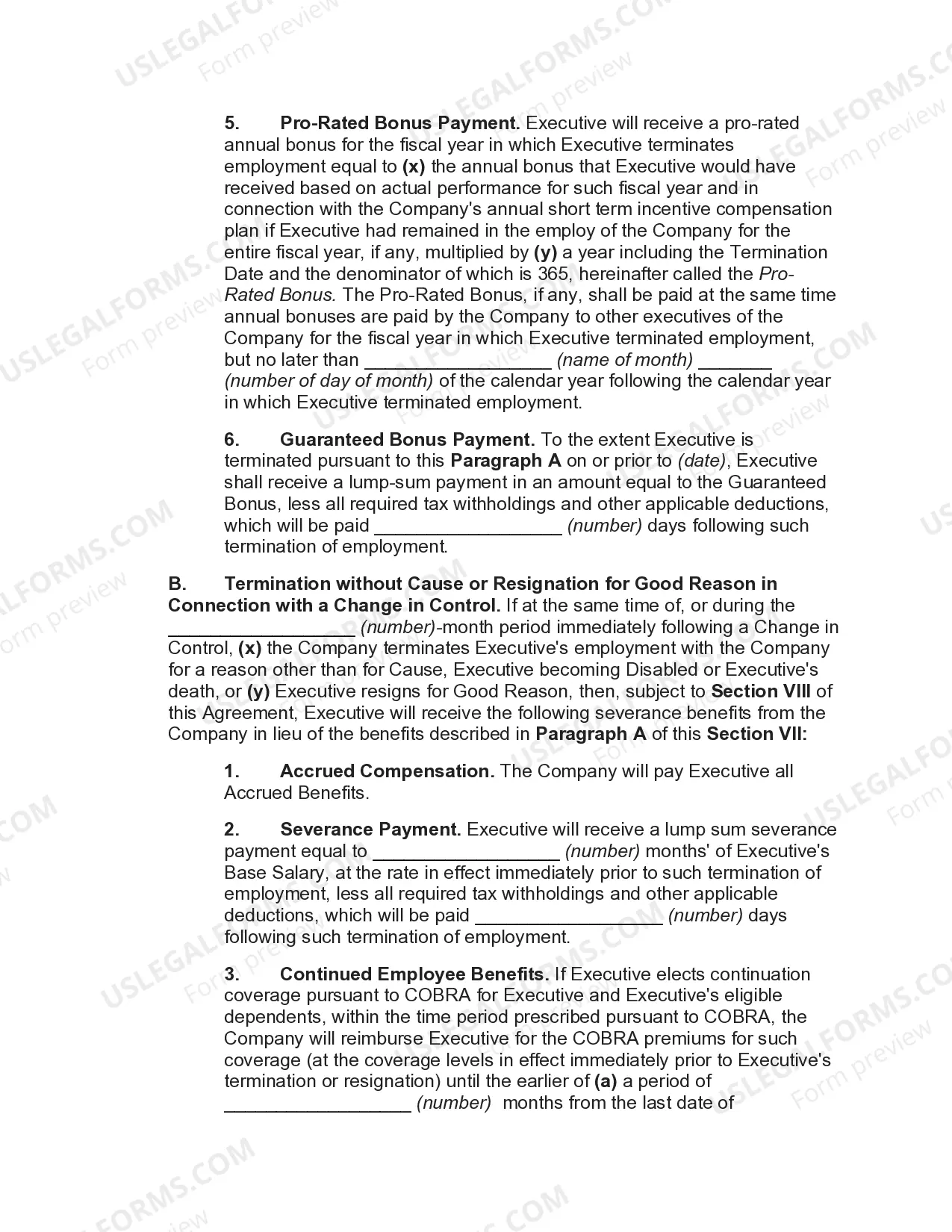
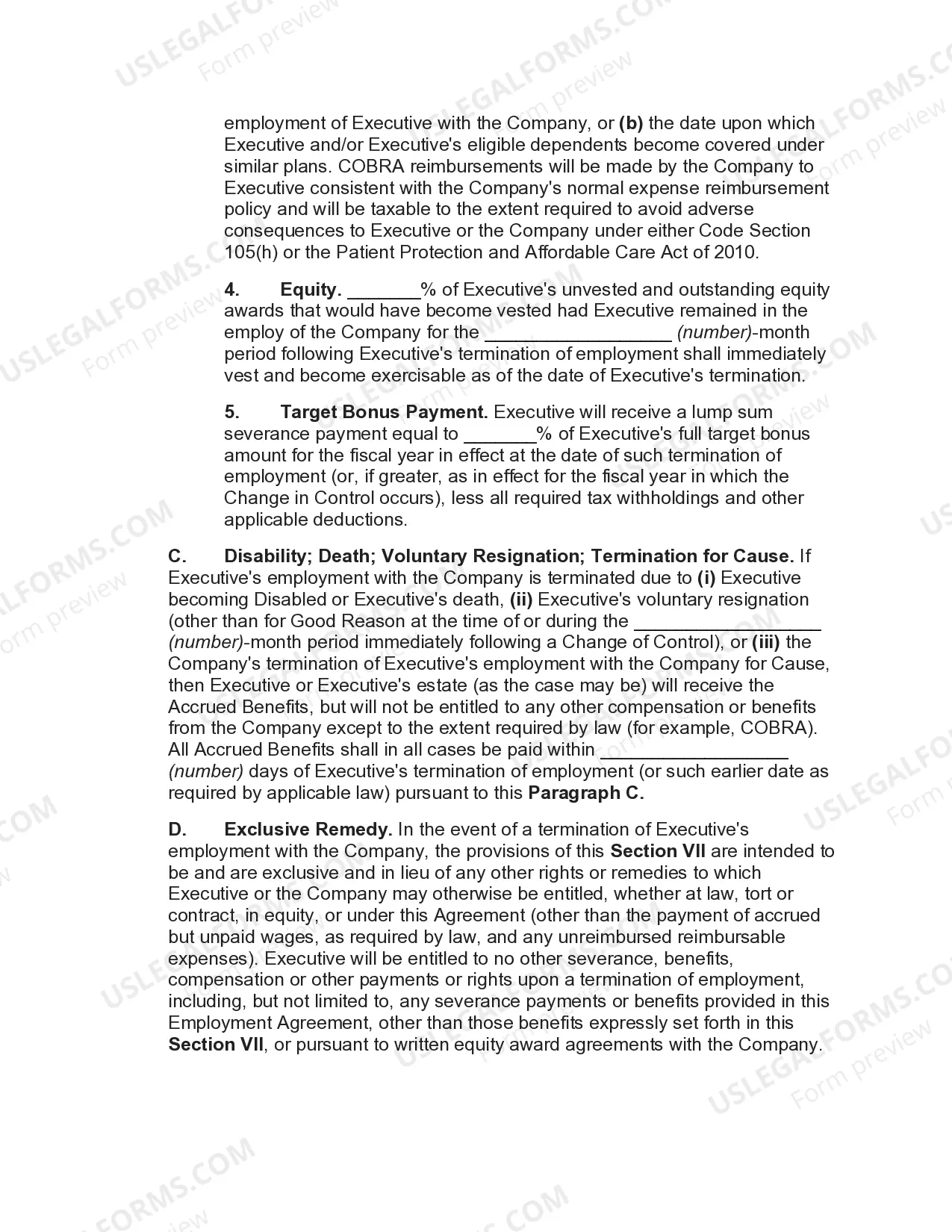
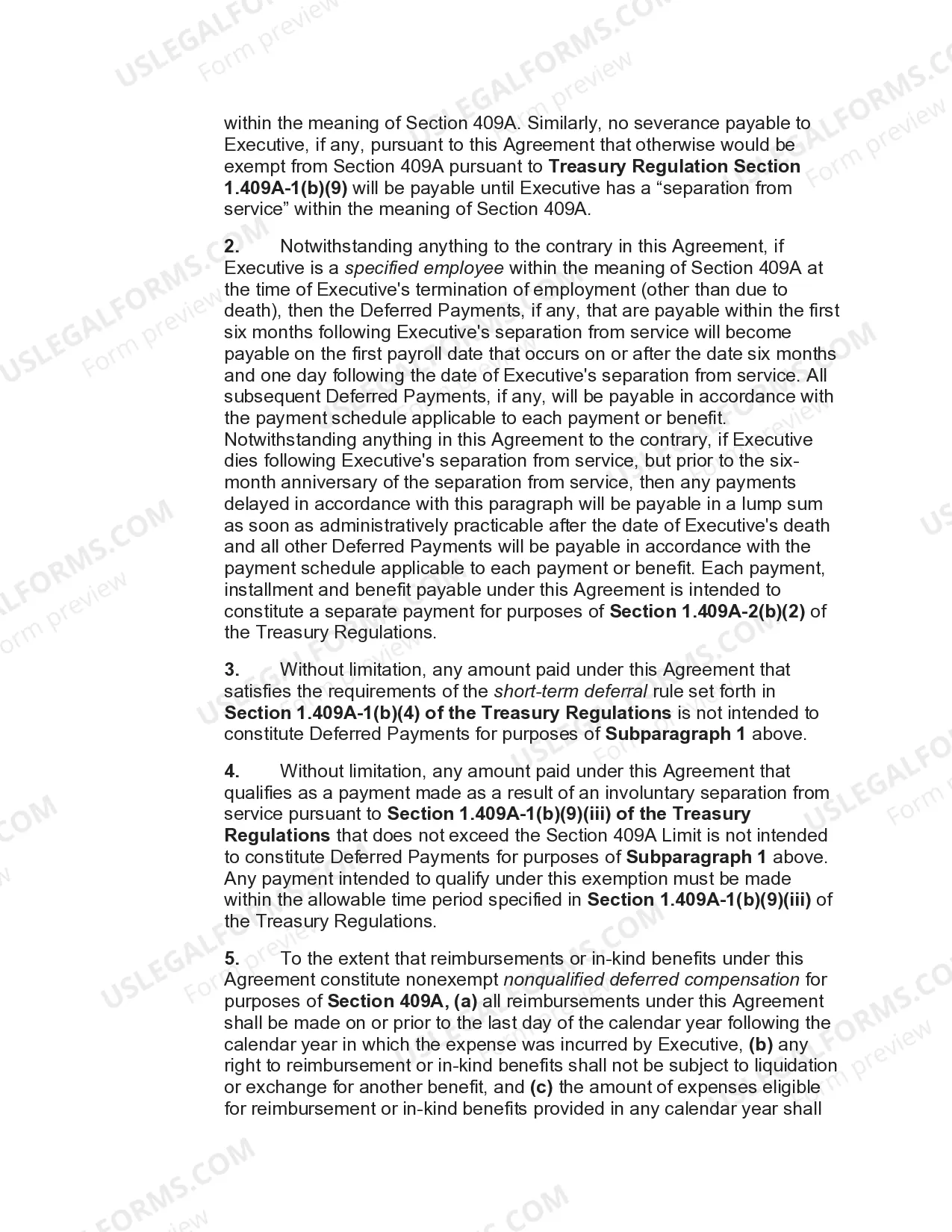
Termination Benefits: Specifies severance and other benefits in case of termination, including decisions made in connection with a change in control.
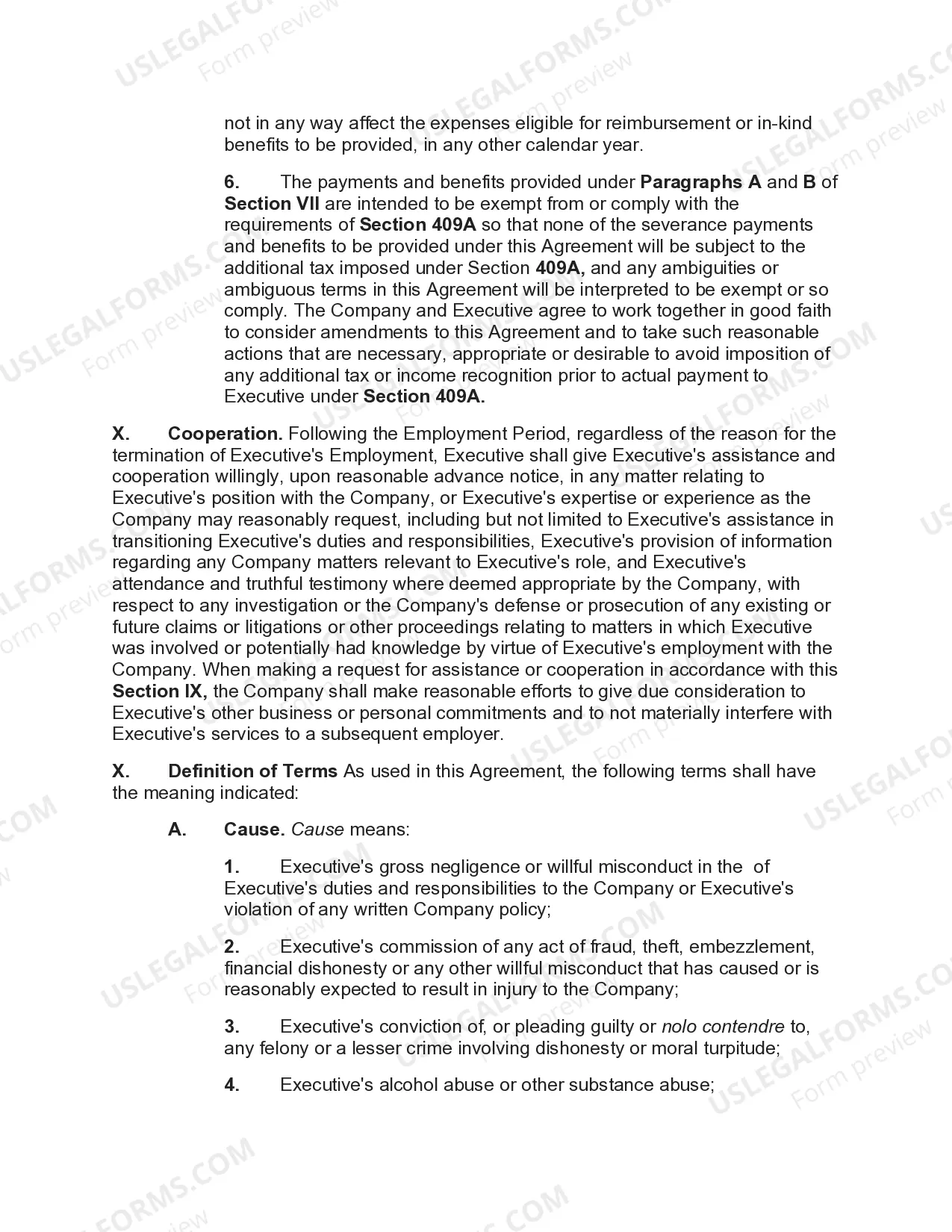
Confidentiality Obligations: Addresses the handling of confidential information and the executive's obligations to maintain privacy.
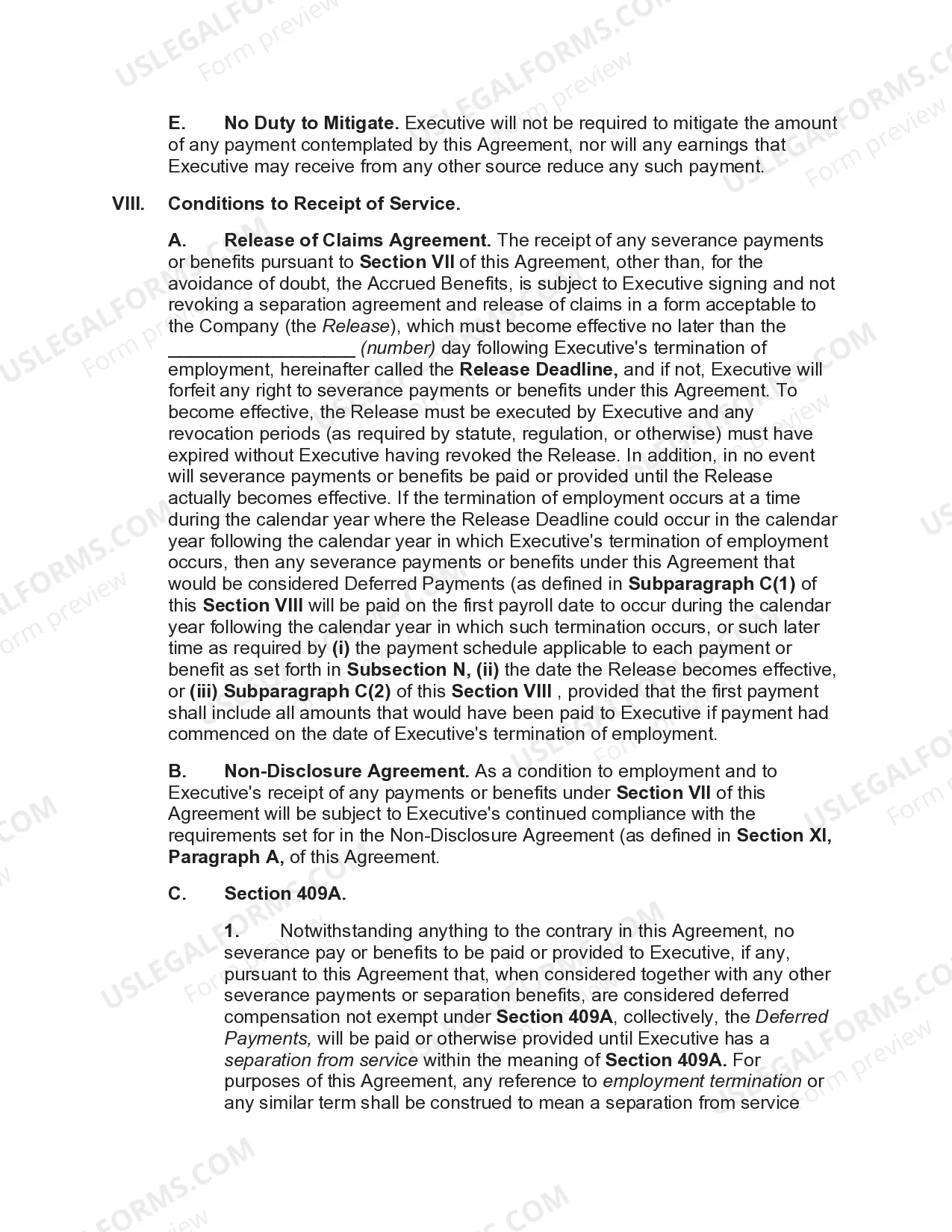
Conditions of Receipt: Details the requirements needed for the executive to receive severance benefits, including the signing of a release.

Situations where this form applies
This form should be used when hiring a Chief Accounting Officer who will be employed at-will. It is essential for clarifying the expectations and rights of both the executive and the corporation. Additionally, this agreement can be useful in situations involving restructuring, changes in management, or when there is a need to formalize the terms of employment due to regulatory or compliance reasons.
Who needs this form
- Corporations seeking to employ a Chief Accounting Officer under at-will conditions.
- Executive candidates ready to accept an offer for the Chief Accounting Officer position.
- Human resources professionals and legal advisors involved in the hiring and contract processes.
How to prepare this document
- Identify the parties by filling in the name of the company and the executive.
- Specify the effective start date and describe the position and responsibilities of the Chief Accounting Officer.
- Fill in the base salary and details regarding any cash bonuses or incentives.
- Outline the termination conditions and benefits to ensure both parties understand the terms of employment.
- Review the agreement with legal counsel and sign the document to formalize the employment relationship.
Notarization guidance
This form usually doesn’t need to be notarized. However, local laws or specific transactions may require it. Our online notarization service, powered by Notarize, lets you complete it remotely through a secure video session, available 24/7.
Get your form ready online
Our built-in tools help you complete, sign, share, and store your documents in one place.
Make edits, fill in missing information, and update formatting in US Legal Forms—just like you would in MS Word.
Download a copy, print it, send it by email, or mail it via USPS—whatever works best for your next step.
Sign and collect signatures with our SignNow integration. Send to multiple recipients, set reminders, and more. Go Premium to unlock E-Sign.
If this form requires notarization, complete it online through a secure video call—no need to meet a notary in person or wait for an appointment.
We protect your documents and personal data by following strict security and privacy standards.

Make edits, fill in missing information, and update formatting in US Legal Forms—just like you would in MS Word.

Download a copy, print it, send it by email, or mail it via USPS—whatever works best for your next step.

Sign and collect signatures with our SignNow integration. Send to multiple recipients, set reminders, and more. Go Premium to unlock E-Sign.

If this form requires notarization, complete it online through a secure video call—no need to meet a notary in person or wait for an appointment.

We protect your documents and personal data by following strict security and privacy standards.
Common mistakes
- Failing to clearly outline the responsibilities and expectations of the Chief Accounting Officer role.
- Not specifying conditions under which termination benefits are granted.
- Omitting state-specific legal requirements that may affect the enforceability of the agreement.
- Neglecting to have both parties review the agreement thoroughly before signing.
Advantages of online completion
- Convenience: Downloadable format allows for quick access and customization to meet specific corporate needs.
- Editability: Easily modify the template to fit individual circumstances without the need for legal consultations.
- Reliability: Legal forms provided by licensed attorneys ensure adherence to current legal standards and practices.
Looking for another form?


Form popularity
FAQ
At-Will Defined At-will means that an employer can terminate an employee at any time for any reason, except an illegal one, or for no reason without incurring legal liability. Likewise, an employee is free to leave a job at any time for any or no reason with no adverse legal consequences.
Overview. At-will employment refers to an employment agreement stating that employment is for an indefinite period of time and may be terminated either by employer or employee. If an employment is at-will, such an agreement would typically be expressly included in the relevant employment contract.
When a person is hired at a new company, they enter into one of two types of employment. Most workers are under what is known as at-will employment, which means they can be terminated at any time, for any reason. Employees under contract, however, have more protections against arbitrary termination.
At-will contracts between an employee and an employer mean that the employee may be terminated at any time, for any reason, and the employer does not need to give any notice when this happens. No specific document is needed for this contract, so many workers are surprised to find out about their at-will status.
In California, the relationship of employer and employee is generally ?at will.? This means that, without an employment contract, the employer or the employee can terminate the employment relationship at any time, with or without cause.
It is a best practice for the employment agreement?and often the organization's bylaws?to provide that the CEO shall have sole and exclusive authority for the hiring, firing, supervision, promotion, and compensation of all other staff, subject to budgetary parameters set by the board.
Disadvantages of employment-at-will Less job security. While employment at-will-allows for people to leave their jobs with little notice and relative ease, the inverse is also true.Less teamwork or comradery.Higher employee turnover.Fewer protections.Less transparency.
A contract of employment (or employment contract) is an agreement or term of hire that is extended from an employer to an employee to set the terms and conditions of their employment. While usually a written document, these agreements can also be verbal.