Louisiana Motion and Order to Refix
What is this form?
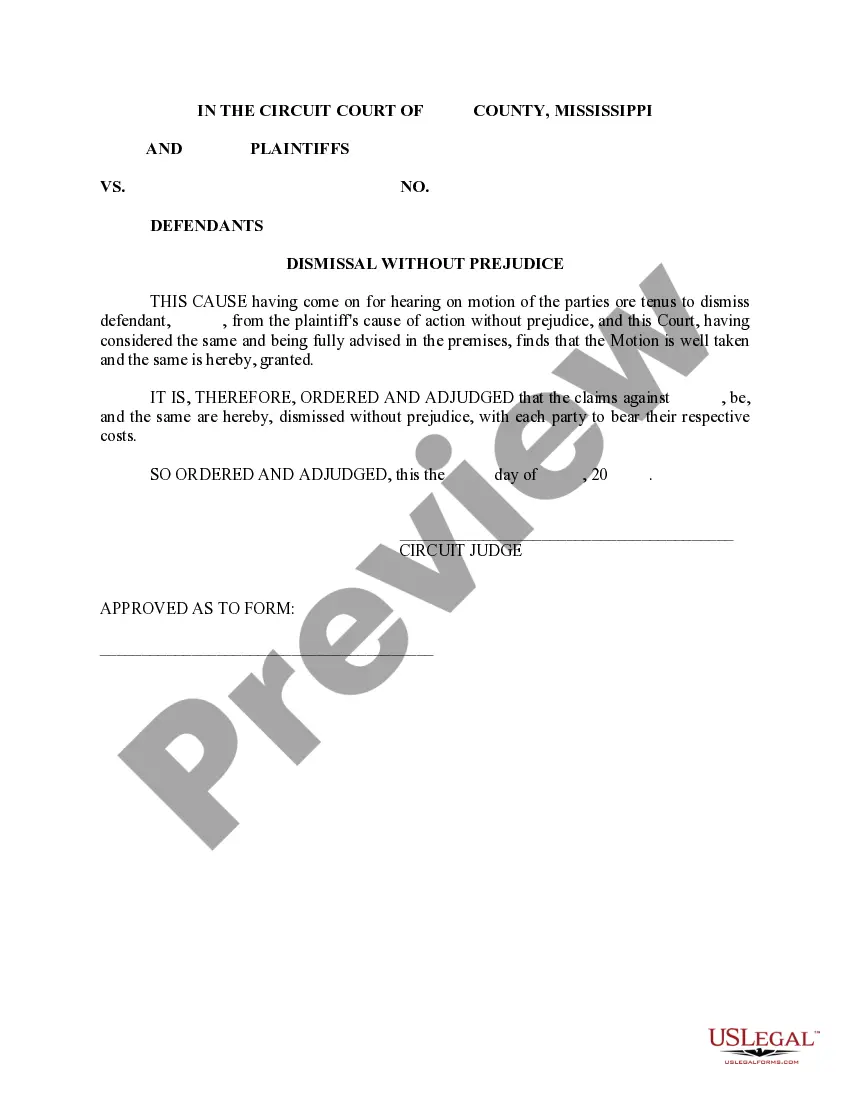
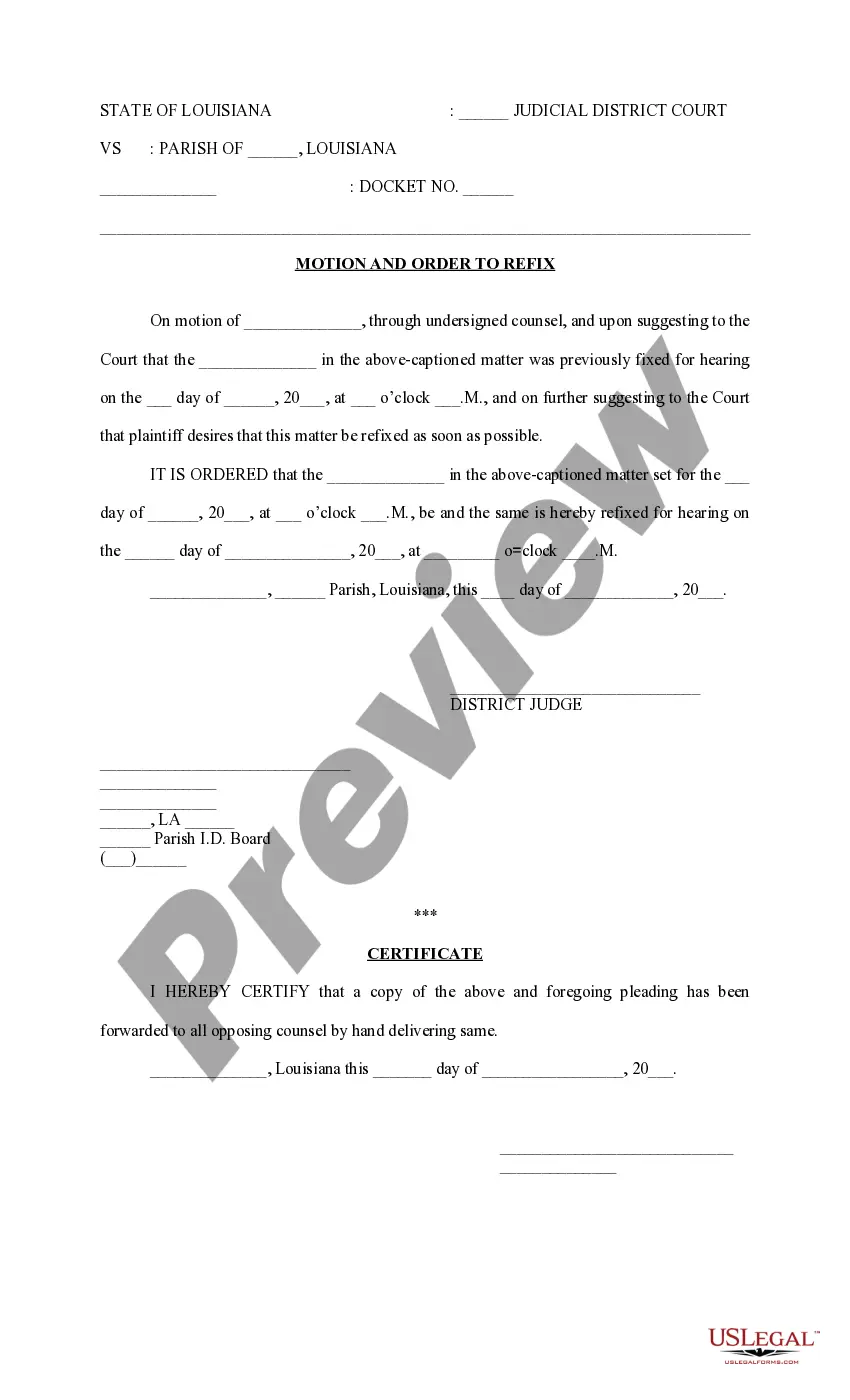
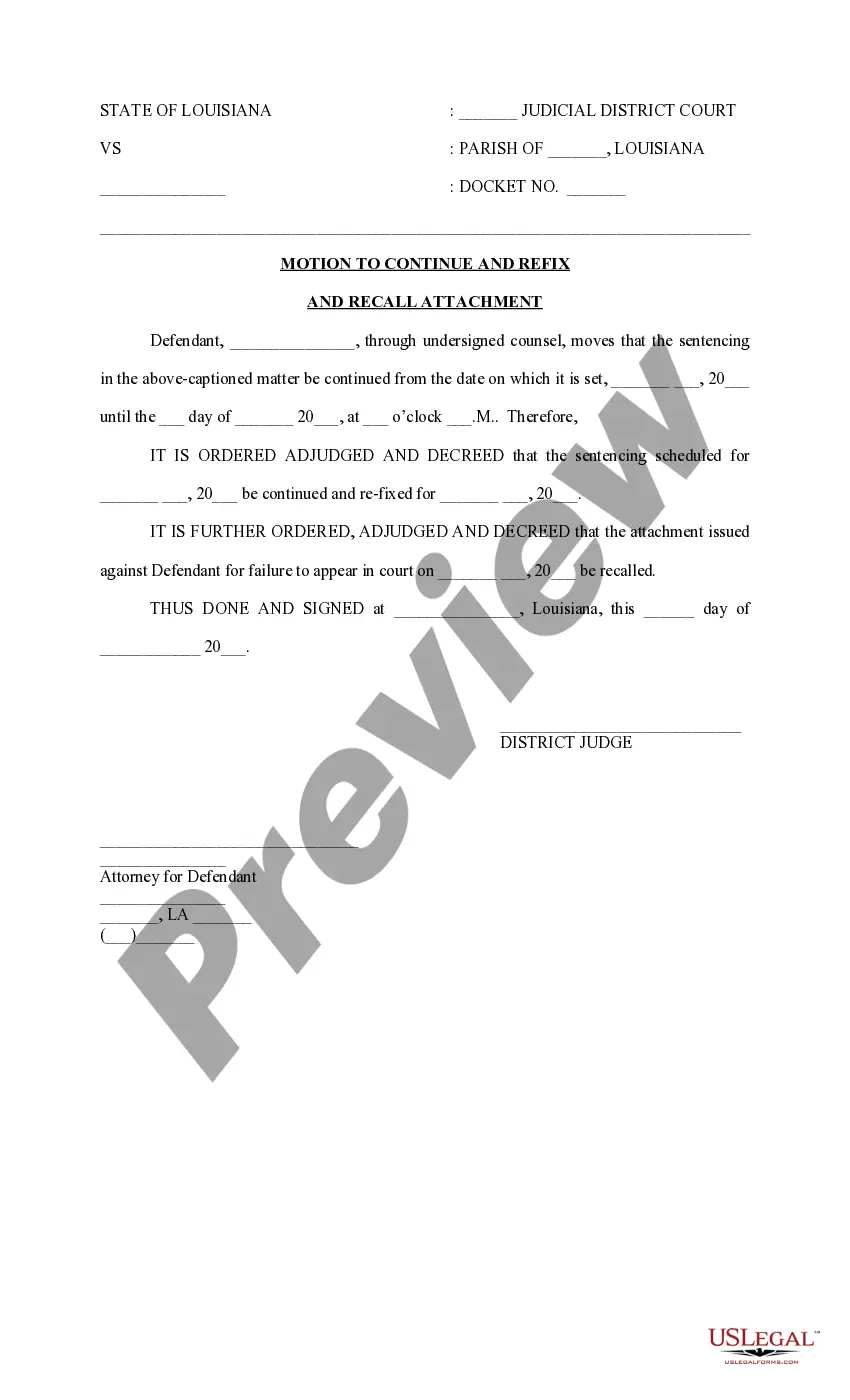
The Motion and Order to Refix is a legal document used in criminal cases to request that a defendant's hearing be rescheduled to a specific date. This form ensures that the court and all parties are informed of the new hearing date, allowing for proper legal proceedings. It differs from other motions as it specifically addresses cases where a hearing must be rescheduled, rather than initiated or dismissed.
Key parts of this document
- Caption: Identifies the court, parish, and case number.
- Motion section: Includes the request to the court to change the hearing date.
- Original hearing details: Specifies the date and time of the previously scheduled hearing.
- New hearing details: Indicates the proposed new date and time for the hearing.
- Signature block: Provides space for the district judge's signature.
- Certificate of service: Confirms that opposing counsel has been notified of the motion.
When to use this form
You should use the Motion and Order to Refix when you need to reschedule a hearing in a criminal matter. This may occur for various reasons, such as unavailability of an attorney, witness, or other parties involved, or to accommodate new evidence that may affect the case proceedings. It is crucial to submit this motion promptly to ensure that the court is aware of the desired new schedule.
Who needs this form
This form is intended for:
- Defendants in a criminal case who need to reschedule their hearing.
- Attorneys representing defendants in such cases.
- Legal representatives who must communicate schedule changes to the court.
Instructions for completing this form
To complete the Motion and Order to Refix, follow these steps:
- Identify the parties involved in the motion, including the defendant's name and the case information.
- Specify the date and time of the original hearing.
- Fill in the new date and time for the hearing as proposed.
- Ensure that the motion is signed by the attorney or the party making the request.
- Complete the certificate of service to verify notification to all opposing counsel.
Does this form need to be notarized?
This form does not typically require notarization unless specified by local law.
Get your form ready online
Our built-in tools help you complete, sign, share, and store your documents in one place.
Make edits, fill in missing information, and update formatting in US Legal Forms—just like you would in MS Word.
Download a copy, print it, send it by email, or mail it via USPS—whatever works best for your next step.
Sign and collect signatures with our SignNow integration. Send to multiple recipients, set reminders, and more. Go Premium to unlock E-Sign.
If this form requires notarization, complete it online through a secure video call—no need to meet a notary in person or wait for an appointment.
We protect your documents and personal data by following strict security and privacy standards.

Make edits, fill in missing information, and update formatting in US Legal Forms—just like you would in MS Word.

Download a copy, print it, send it by email, or mail it via USPS—whatever works best for your next step.

Sign and collect signatures with our SignNow integration. Send to multiple recipients, set reminders, and more. Go Premium to unlock E-Sign.

If this form requires notarization, complete it online through a secure video call—no need to meet a notary in person or wait for an appointment.

We protect your documents and personal data by following strict security and privacy standards.
Mistakes to watch out for
- Failing to notify all opposing counsel before submitting the motion.
- Not including the original hearing date, which can cause confusion.
- Leaving the new hearing date blank or incorrectly filled.
Benefits of completing this form online
- Convenience of downloading the form online and customizing it as needed.
- Reliable access to a form drafted by licensed attorneys, ensuring legal validity.
- Ability to quickly reschedule court dates, avoiding delays in legal proceedings.
- The Motion and Order to Refix is an essential tool for maintaining the order of legal proceedings.
- Proper use of this form ensures compliance with local court procedures, enhancing the likelihood of acceptance.
Quick recap
- The form is used to reschedule a defendant's hearing in a criminal case.
- It is important to complete the form accurately to avoid delays.
- Timely submission and proper notification can streamline legal processes.
Looking for another form?
Form popularity
FAQ
Ask the court for a motion date. Identify and fill out your motion forms. Serve and file your motion forms. Confirm that you will attend the motion. Go to your motion hearing. Receive the judge's decision.
The Notice of Motion usually begins with the caption that includes the court of jurisdiction, the docket number, and below the docket number, "Notice of Motion." It is usual to then write, "Please take Notice that the undersigned will bring a motion for (what you are asking the court for or to do)." Read the Local
The motion must include a separate "Notice of Motion" which includes a brief summary of the nature of the motion, the deadline for filing a response, and if there is a hearing, the date, time, and location of the hearing.
After you complete your motion, you must file it with the court.You must then serve (mail) a copy of your filed motion (including all exhibits and the date, time, and place of hearing) to all other parties in the case. If a party is represented by an attorney, mail the motion directly to the attorney's office.
You don't need an attorney to file a Motion for Contempt, but it is a good idea to have one. If you decide to represent yourself, you can go to the courthouse that made the order and ask for help at the Court Service Center.
A motion is an application to the court made by the prosecutor or defense attorney, requesting that the court make a decision on a certain issue before the trial begins.
File your Motion and the copies with the court clerk's office in the court where your case was heard. File a copy of the proposed order with your Motion. You can file your forms in person or by mailing your Motion and the copies to the court. The clerk will give you a hearing date and time when you file your Motion.
General format - each motion generally consists of a case caption, a title that briefly identifies the relief sought, a series of numbered paragraphs that explains -- in a logical way -- why you are entitled to that relief, a prayer for relief, a signature block, a certification that a copy of the motion was sent to