Mississippi Re-Notice of Deposition
Overview of this form
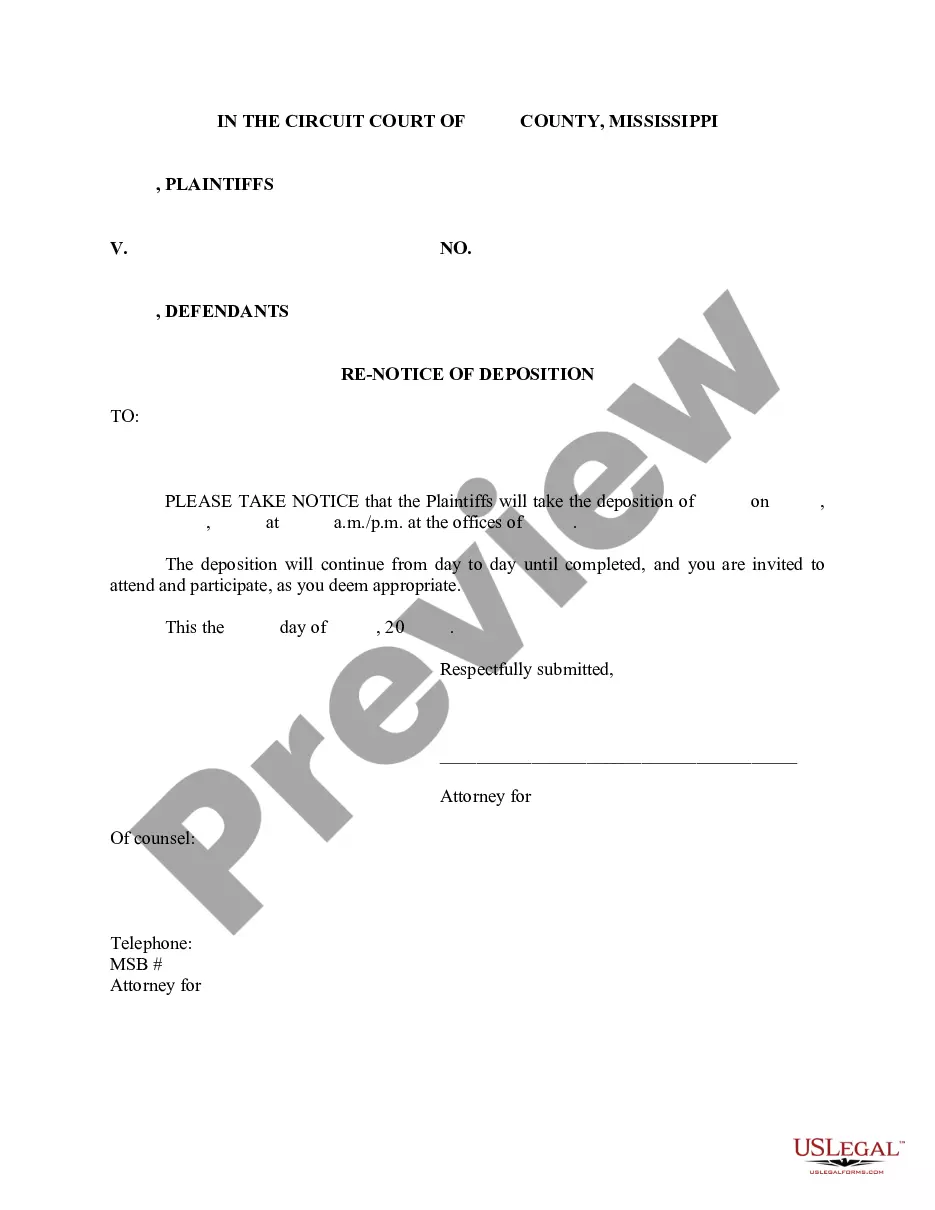
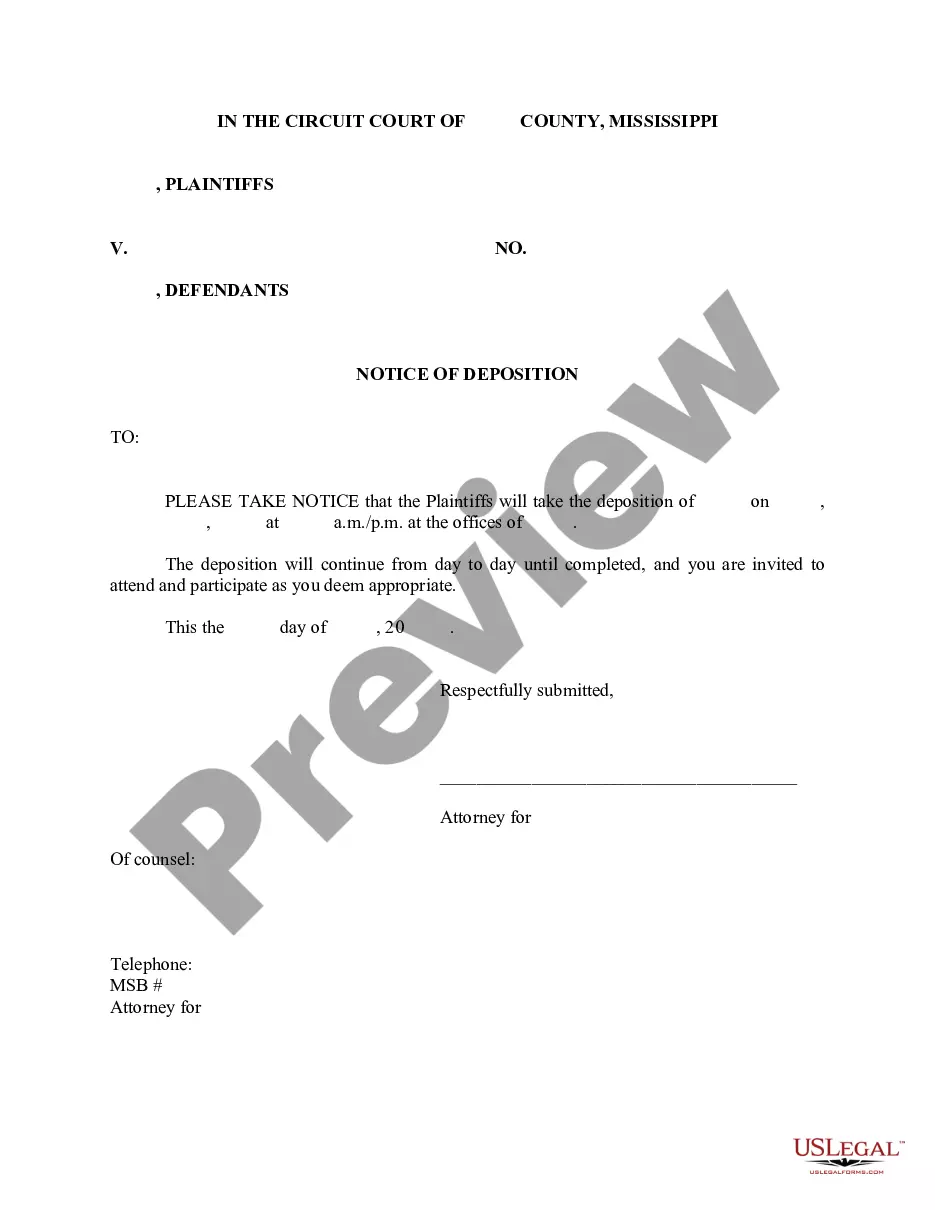
A Re-Notice of Deposition is a legal document used to inform all parties involved in a legal proceeding about a change in the date and time of a deposition. This form is necessary when the original deposition schedule has been altered, ensuring that all parties are updated in a timely manner. Unlike an initial notice of deposition, the Re-Notice specifically addresses changes to previously established scheduling, making it a crucial tool in legal proceedings.
Form components explained
- Identifying information for the parties involved in the deposition.
- Original date and time of the deposition that is being changed.
- New date and time for the deposition.
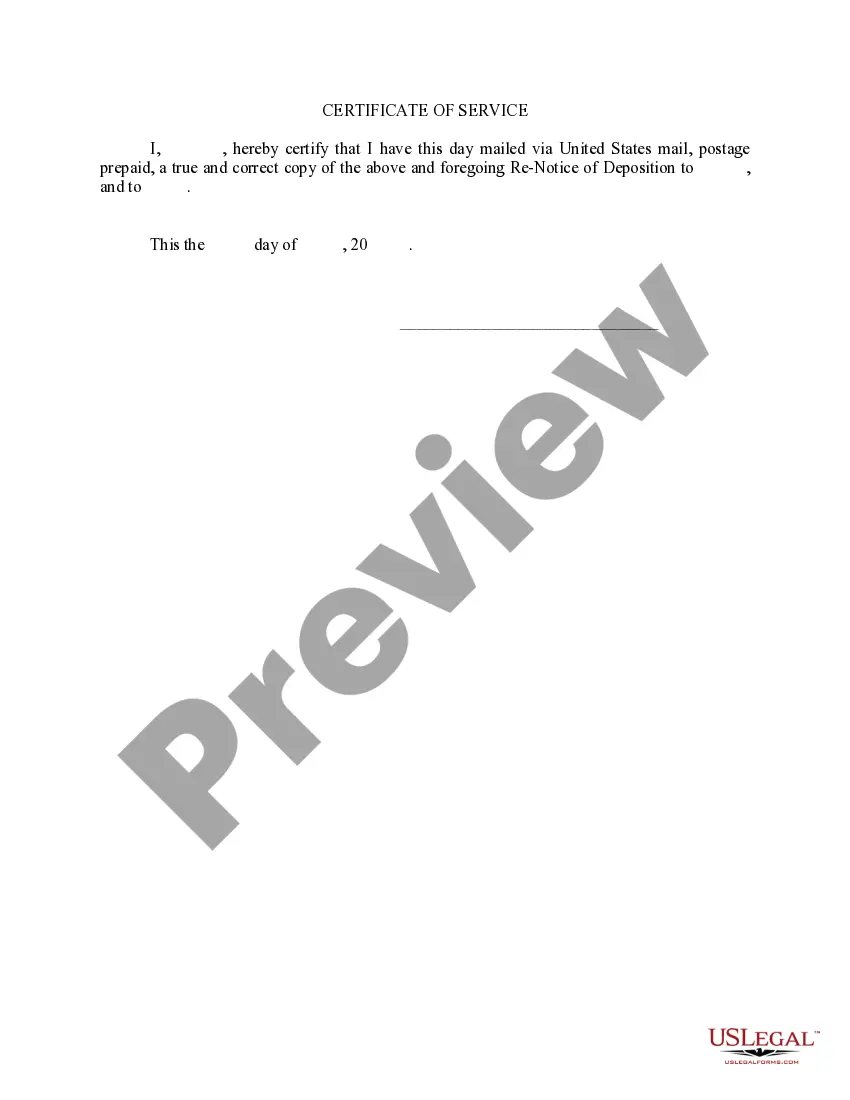
- Signature blocks for parties receiving the notice.
- Instructions on how to respond to the new date and time.
When to use this form
This form should be used whenever there is a rescheduling of a deposition in a legal case. Common situations for use include adjusting the timing due to conflicts with witnesses, scheduling changes from legal counsel, or unforeseen circumstances that prevent the deposition from occurring as initially planned.
Who needs this form
- Attorneys representing parties in a legal dispute.
- Parties involved in litigation who are required to attend depositions.
- Legal assistants preparing documents for attorneys.
How to prepare this document
- Identify all parties involved in the original deposition.
- Enter the original date and time of the deposition.
- Specify the new date and time for the deposition.
- Ensure all relevant parties sign the Re-Notice to acknowledge receipt.
- Distribute the completed form to all involved parties as soon as possible.
Notarization requirements for this form
This form does not typically require notarization unless specified by local law. It is important to check individual jurisdictional rules to confirm this requirement.
Get your form ready online
Our built-in tools help you complete, sign, share, and store your documents in one place.
Make edits, fill in missing information, and update formatting in US Legal Forms—just like you would in MS Word.
Download a copy, print it, send it by email, or mail it via USPS—whatever works best for your next step.
Sign and collect signatures with our SignNow integration. Send to multiple recipients, set reminders, and more. Go Premium to unlock E-Sign.
If this form requires notarization, complete it online through a secure video call—no need to meet a notary in person or wait for an appointment.
We protect your documents and personal data by following strict security and privacy standards.

Make edits, fill in missing information, and update formatting in US Legal Forms—just like you would in MS Word.

Download a copy, print it, send it by email, or mail it via USPS—whatever works best for your next step.

Sign and collect signatures with our SignNow integration. Send to multiple recipients, set reminders, and more. Go Premium to unlock E-Sign.

If this form requires notarization, complete it online through a secure video call—no need to meet a notary in person or wait for an appointment.

We protect your documents and personal data by following strict security and privacy standards.
Avoid these common issues
- Failing to notify all parties of the change.
- Not including the original date and time in the Re-Notice.
- Incorrectly formatting the date and time for the rescheduled deposition.
Why complete this form online
- Instant access to a legally vetted template created by licensed attorneys.
- Convenience of downloading the form in popular formats like Word or Rich Text.
- Easy customization to fit the specific needs of your case.
Main things to remember
- A Re-Notice of Deposition is essential for notifying parties of a change in deposition scheduling.
- Completing this form helps maintain transparency and communication among parties.
- Ensure you follow state-specific legal guidelines for proper usage.
Looking for another form?
Form popularity
FAQ
Deposition by written questions is essentially the same as an in-person, oral deposition, only the attorney's questions are written down and approved before the deposed person is required to answer them.
A subpoena duces tecum is a written order requiring a witness to testify and produce documents or records for use as evidence.A deposition is oral or written testimony given by a witness in advance of a trial or hearing.
The deposition procedure begins with swearing in the witness. This must be done prior to taking any testimony or the information provided, even if witnessed by the court reporter, will be useless. Once the individual is under oath, it's important to ask their name and address so that information is on the record.
A deposition previously taken may also be used as allowed by the Federal Rules of Evidence.On any party's request, deposition testimony offered in a jury trial for any purpose other than impeachment must be presented in nontranscript form, if available, unless the court for good cause orders otherwise.
RULE 30(B)(6) SHOULD REQUIRE AT LEAST 30 DAYS' NOTICE IN ORDER TO ENSURE PROPER PREPARATION, AND THE DEPOSITION SHOULD BE SCHEDULED AT A TIME AND DATE AGREEABLE TO BOTH PARTIES. A. Reasonable Notice Is at Least 30 Days Prior to Deposition.
These written questions resemble interrogatories, but they may be addressed to any person or entity, not just persons who are party to the litigation. Before a deposition on written questions is sent to the deponent, it must be sent to the other parties in the lawsuit.
In most types of cases, for the deposition of a party to the case, you must provide at least 10 days' notice if personally served, and 15 days' notice if served by mail within California (California Code of Civil Procedure (CCP) § 2025.270(a), A§ 1013).
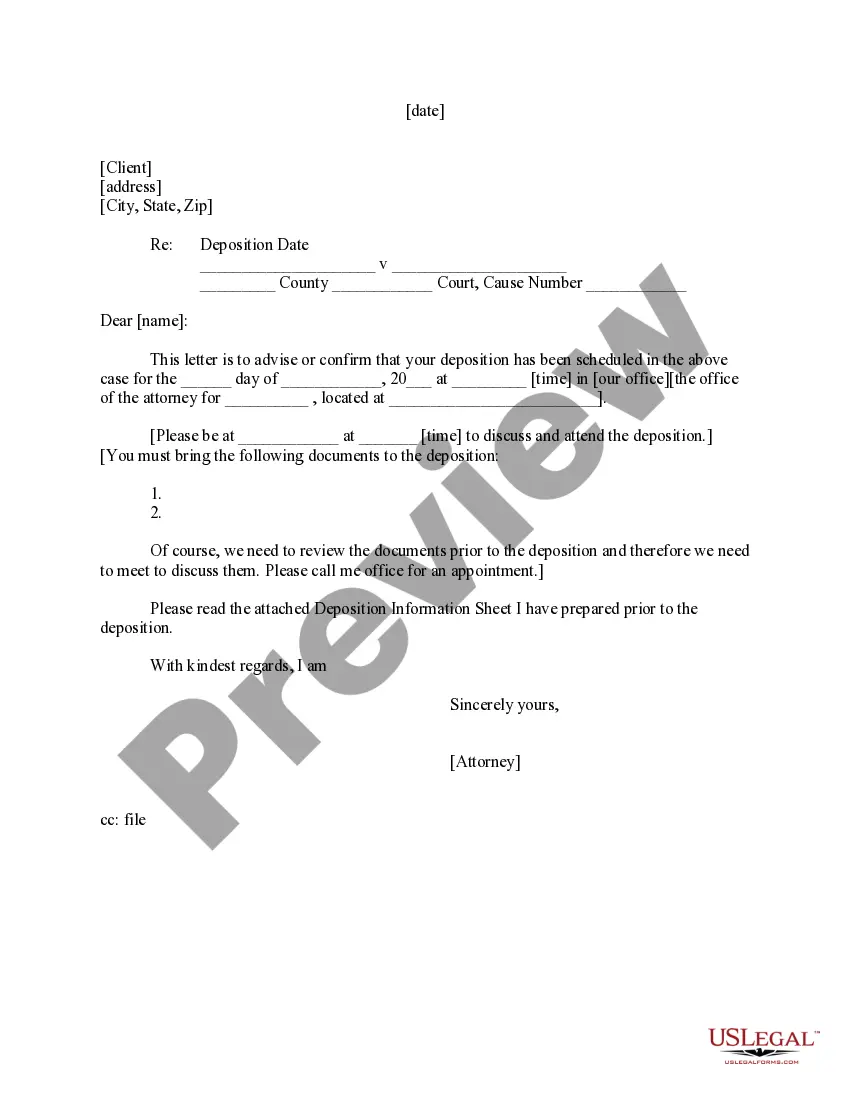
A deposition letter is a notice given to a person who is requested for a deposition in the context of a lawsuit.Advise that a notice of deposition has been received. Advise as to date, time and place where deposition is intended to take place.
Skip three lines and enter "Deposition of name of person being questioned." Skip one line and enter "Court Reporter:" justified to the left and the name, address and phone number of the court reporter justified to the right. Set up your word processor to number lines and pages beginning on the second page.