Mississippi Final Judgment
What is this form?
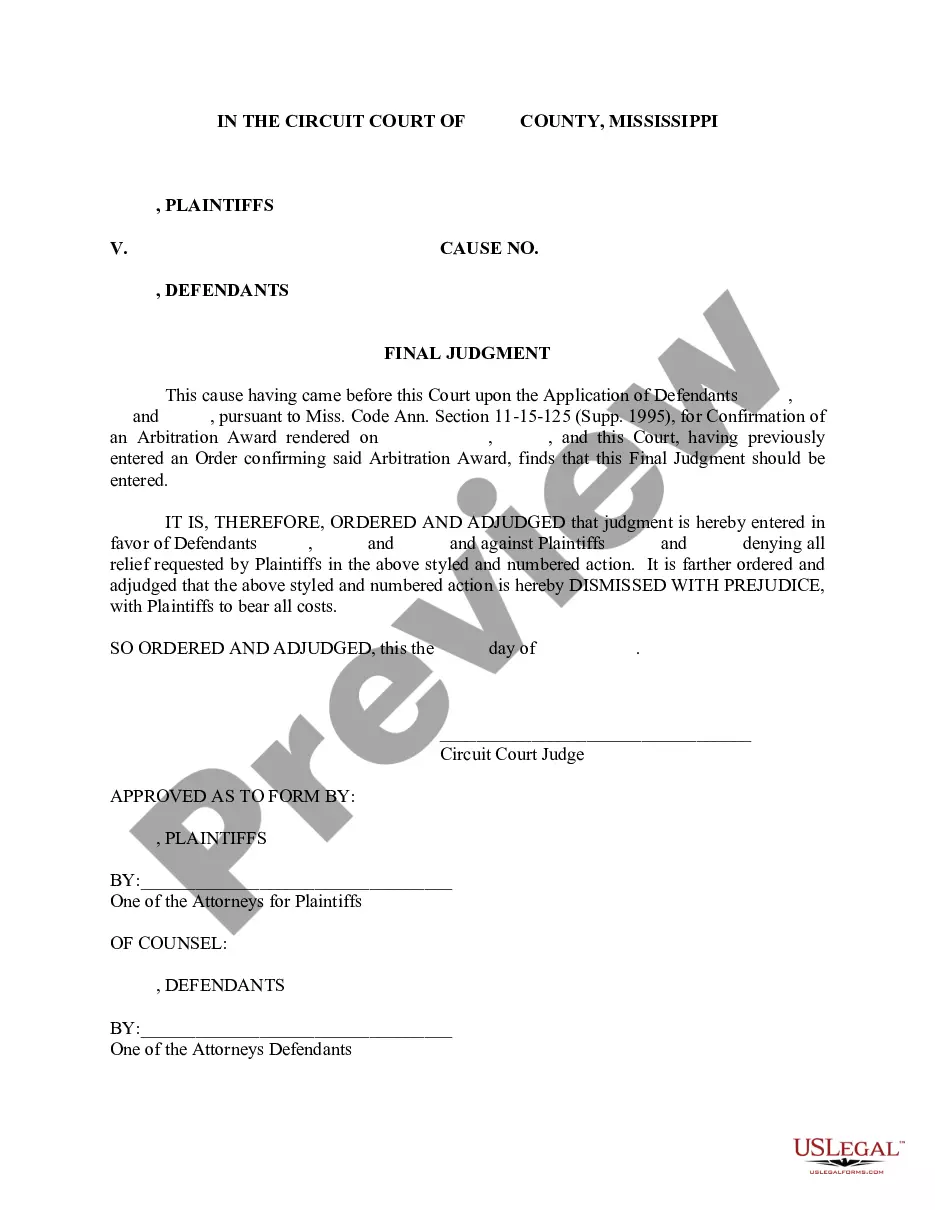
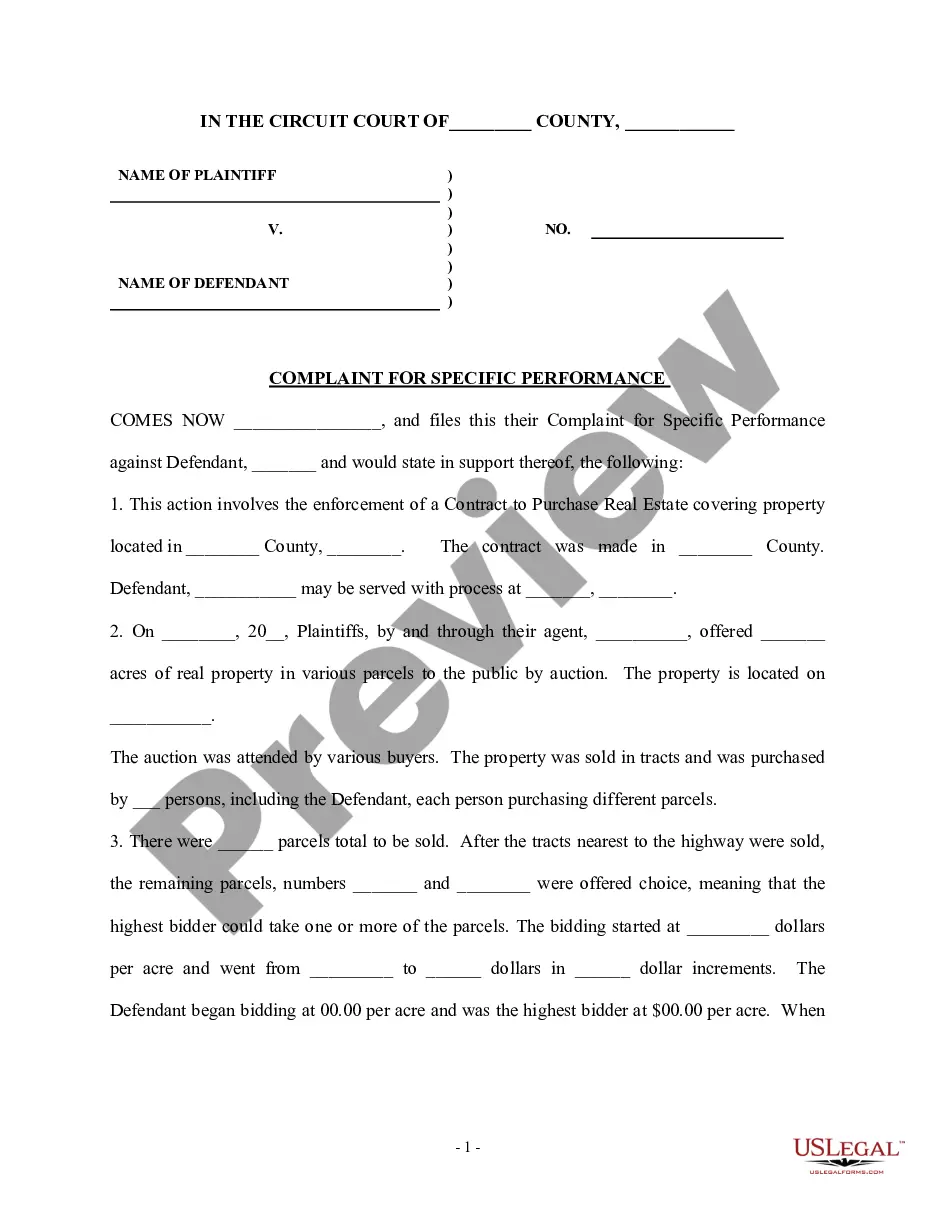
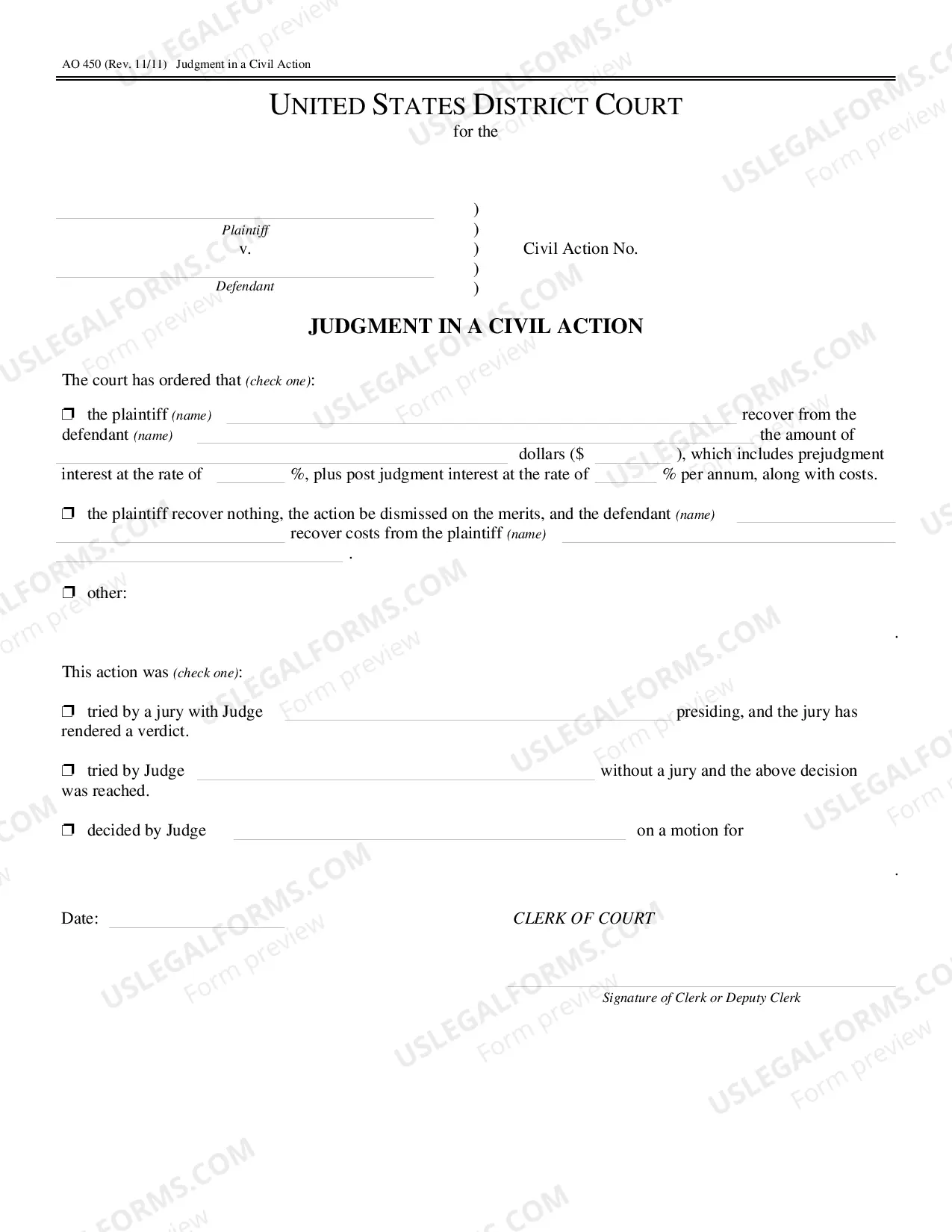
The Final Judgment is a legal document issued by a judge that formalizes the decision made by an arbitrator in a dispute. Unlike preliminary rulings, this form signifies the conclusion of the legal process, providing clarity and finality to the parties involved. It encapsulates the arbitrator's award and serves as an enforceable order, distinguishing it from other legal documents that may only outline disputes without resolution. This form is available in both Word and Rich Text formats for your convenience.
Main sections of this form
- Title of the case: Indicates the names of the parties involved in the arbitration.
- Arbitratorâs award summary: Summarizes the resolution reached by the arbitrator.
- Judicial signature: The judge's signature confirming the finality of the judgment.
- Effective date: Indicates when the judgment is enacted.
- Court information: Details about the court where the arbitration took place.

When to use this form
This form is used after an arbitration process has concluded and the arbitrator has made a binding decision. It is essential when the parties involved need to formally document the outcome of the arbitration, particularly when compliance or enforcement of the award is necessary. Situations may include contract disputes, employment grievances, or any matter resolved through arbitration.
Who can use this document
- Parties involved in an arbitration process seeking a legal recording of the arbitratorâs decision.
- Legal representatives or attorneys filing the judgment on behalf of their clients.
- Individuals or stakeholders requiring formal documentation for future compliance or enforcement actions.
Completing this form step by step
- Identify the parties: List the full legal names of all parties involved in the arbitration.
- Summarize the award: Accurately reflect the arbitratorâs decision and any awards granted.
- Include court details: Provide the name of the court and any relevant case numbers.
- Enter effective date: Specify the date on which the judgment takes effect.
- Obtain signatures: Ensure the judgeâs signature is acquired to finalize the judgment's enforceability.
Does this form need to be notarized?
This form does not typically require notarization unless specified by local law. However, it is essential to check any specific regulations in your jurisdiction regarding notarization requirements for Final Judgments.
Get your form ready online
Our built-in tools help you complete, sign, share, and store your documents in one place.
Make edits, fill in missing information, and update formatting in US Legal Forms—just like you would in MS Word.
Download a copy, print it, send it by email, or mail it via USPS—whatever works best for your next step.
Sign and collect signatures with our SignNow integration. Send to multiple recipients, set reminders, and more. Go Premium to unlock E-Sign.
If this form requires notarization, complete it online through a secure video call—no need to meet a notary in person or wait for an appointment.
We protect your documents and personal data by following strict security and privacy standards.

Make edits, fill in missing information, and update formatting in US Legal Forms—just like you would in MS Word.

Download a copy, print it, send it by email, or mail it via USPS—whatever works best for your next step.

Sign and collect signatures with our SignNow integration. Send to multiple recipients, set reminders, and more. Go Premium to unlock E-Sign.

If this form requires notarization, complete it online through a secure video call—no need to meet a notary in person or wait for an appointment.

We protect your documents and personal data by following strict security and privacy standards.
Common mistakes to avoid
- Failing to include all partiesâ names correctly.
- Not summarizing the arbitrator's award accurately.
- Omitting required signatures or dates, leading to potential enforcement issues.
- Using outdated forms that do not comply with current requirements.
Benefits of using this form online
- Immediate access: Download the form instantly without waiting for postal delivery.
- Editable formats: Customize the form in Word or Rich Text according to your needs.
- Legal assurance: All forms are drafted by licensed attorneys, ensuring compliance with legal standards.
- Convenient storage: Keep your records safe and accessible from anywhere.
What to keep in mind
- The Final Judgment formalizes the arbitrator's decision.
- Essential for enforcing arbitration outcomes.
- Ensure all required components are included for validity.
Looking for another form?

Form popularity
FAQ
The court may, upon any terms as may be just, relieve a party or his or her legal representative from a judgment, dismissal, order, or other proceeding taken against him or her through his or her mistake, inadvertence, surprise, or excusable neglect. (Code Civ.
United States, a final judgment is a decision by the. district court that ends the litigation on the merits and leaves nothing for the court to do but. execute the judgment.
The grant of summary judgment usually results in a final judgment only if the grant resolves all issues as to all parties. An order for summary judgment is interlocutory if it does not entirely end the proceedings before the trial court.
There are basically 3 stages to a civil appeal in Mississippi. First, you file your notice of appeal and other preliminary documents. Critically, you MUST file your notice of appeal within 30 days of the trial court's final judgment. In some cases, you should file a post-trial motion within 10 days of the judgment.