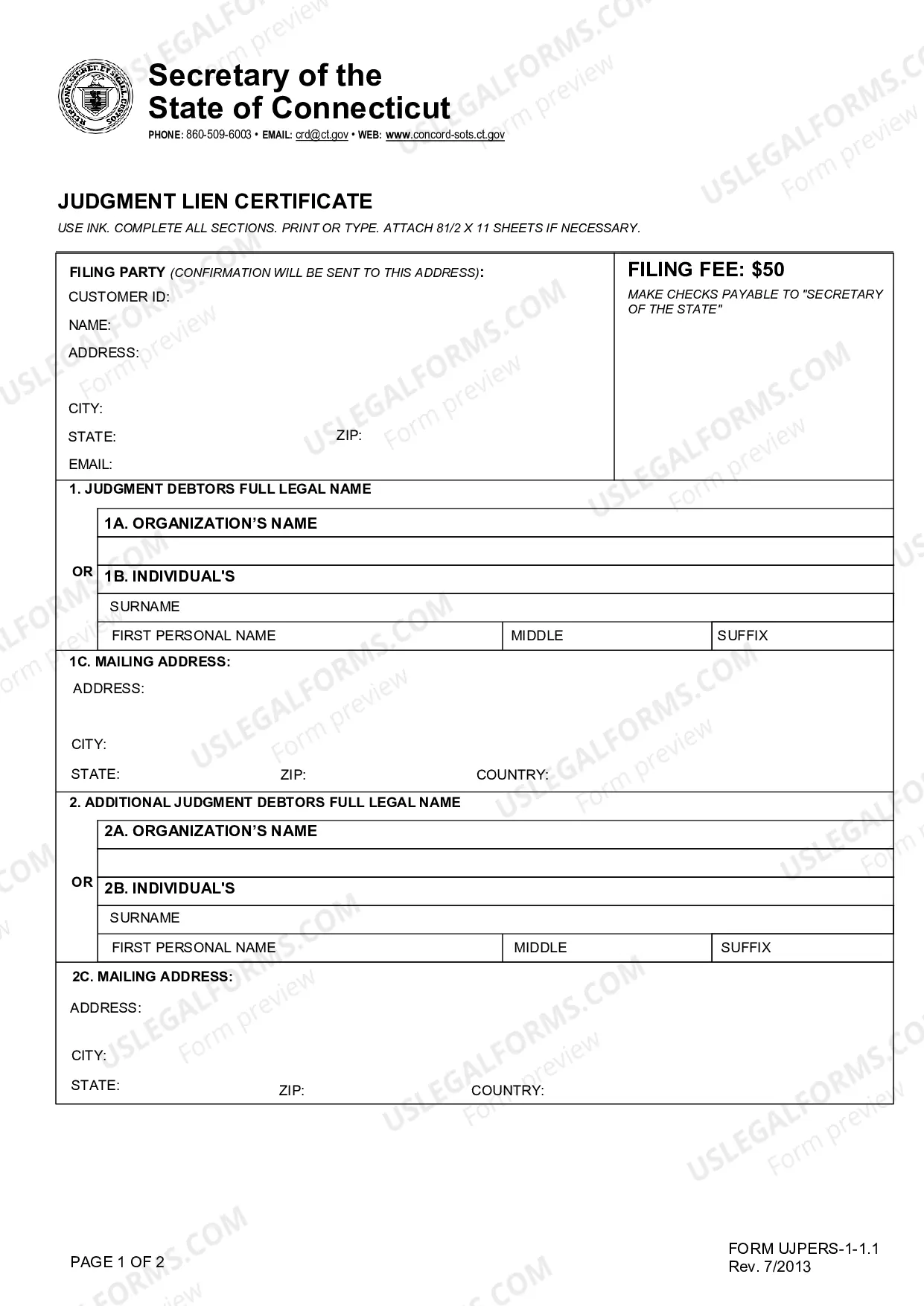
Offer to Purchase Business, Including Good Will
Understanding this form
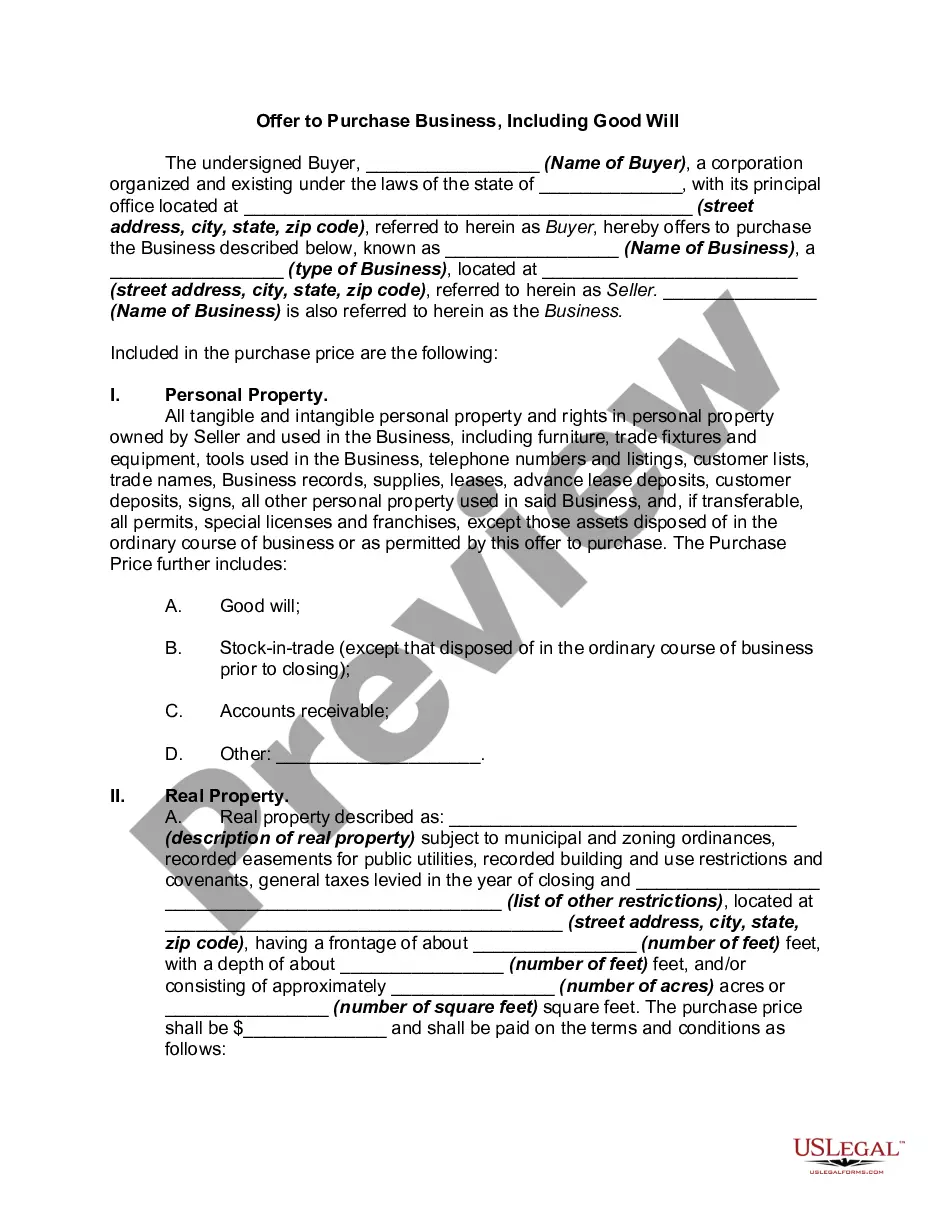
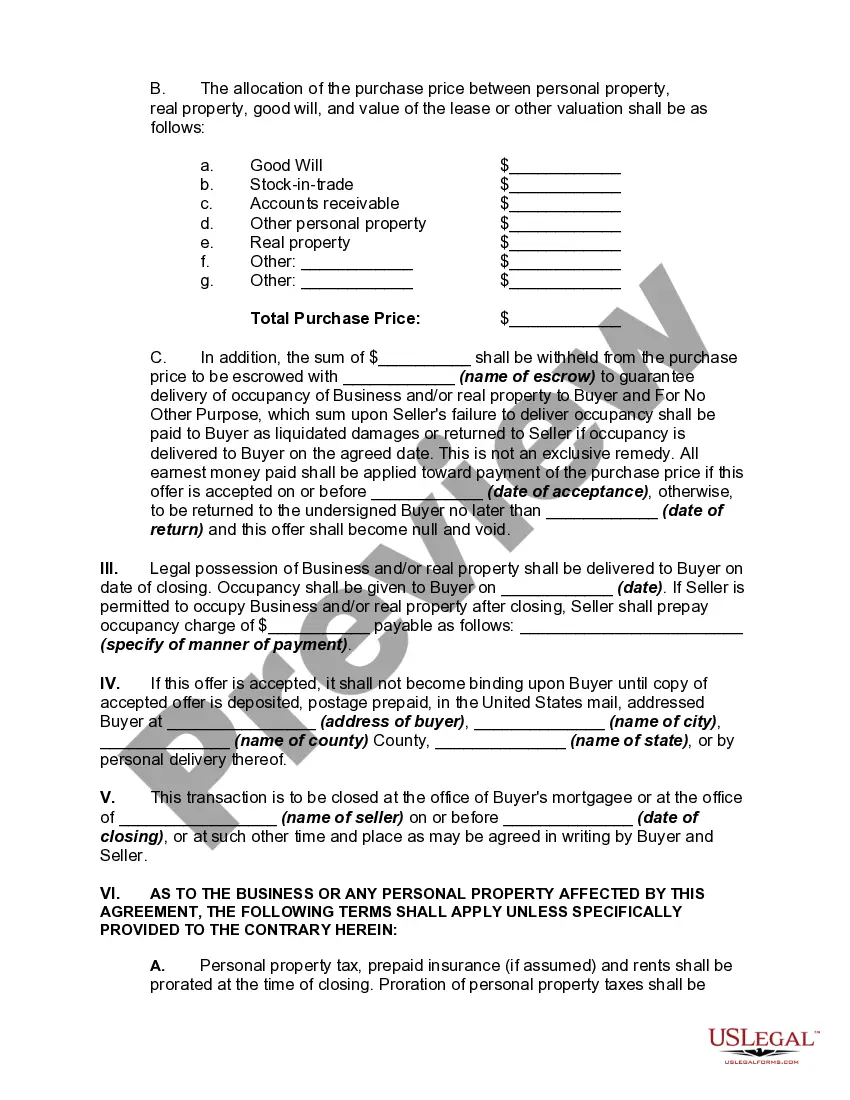
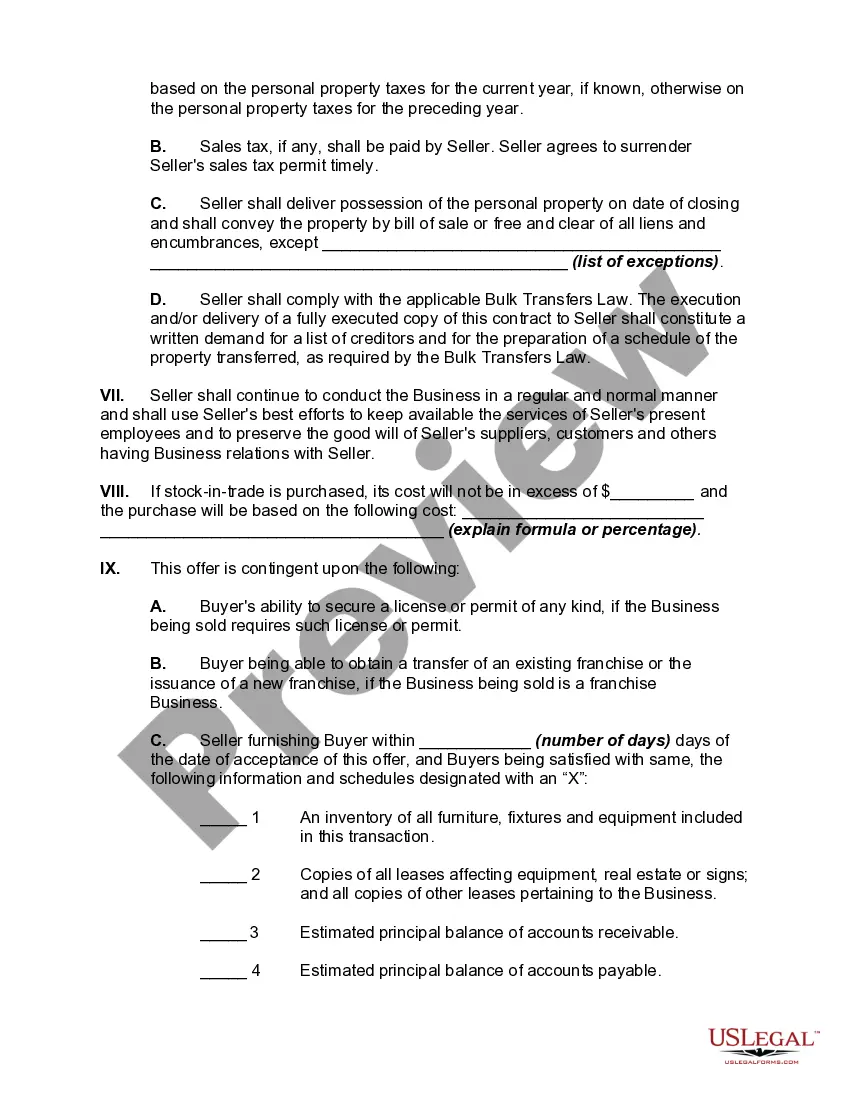
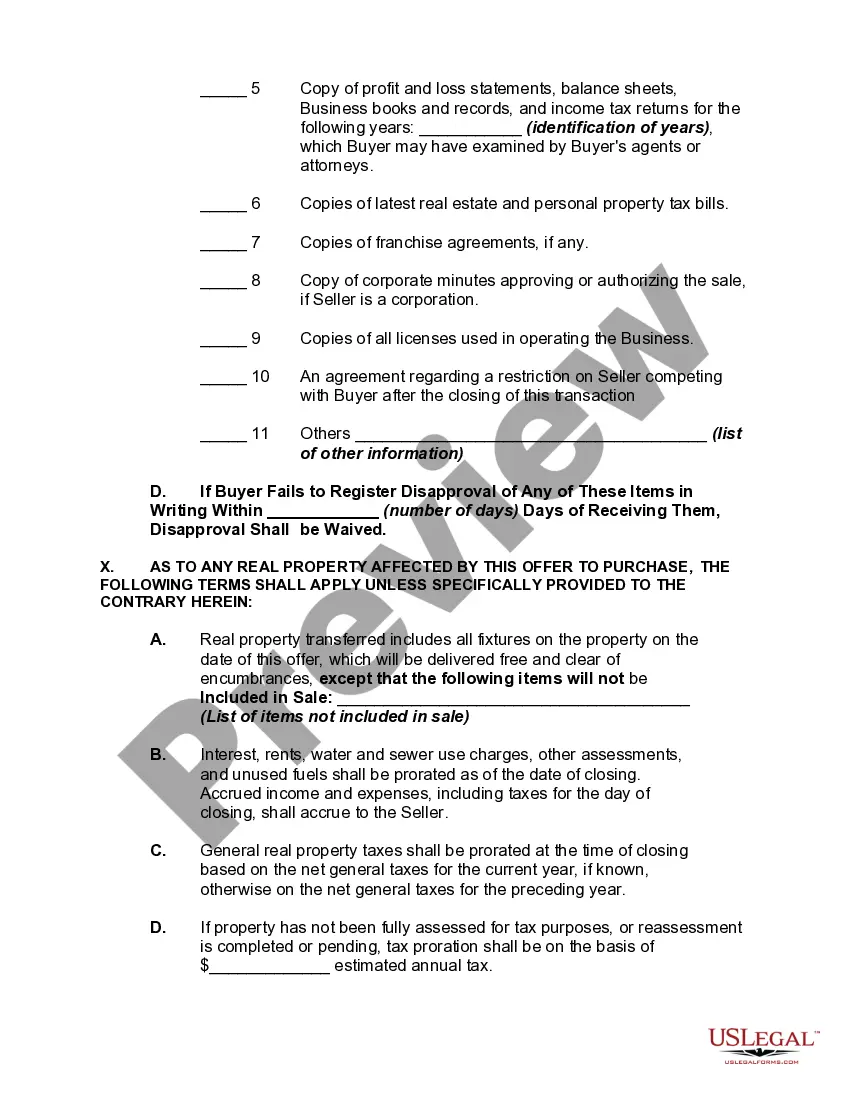
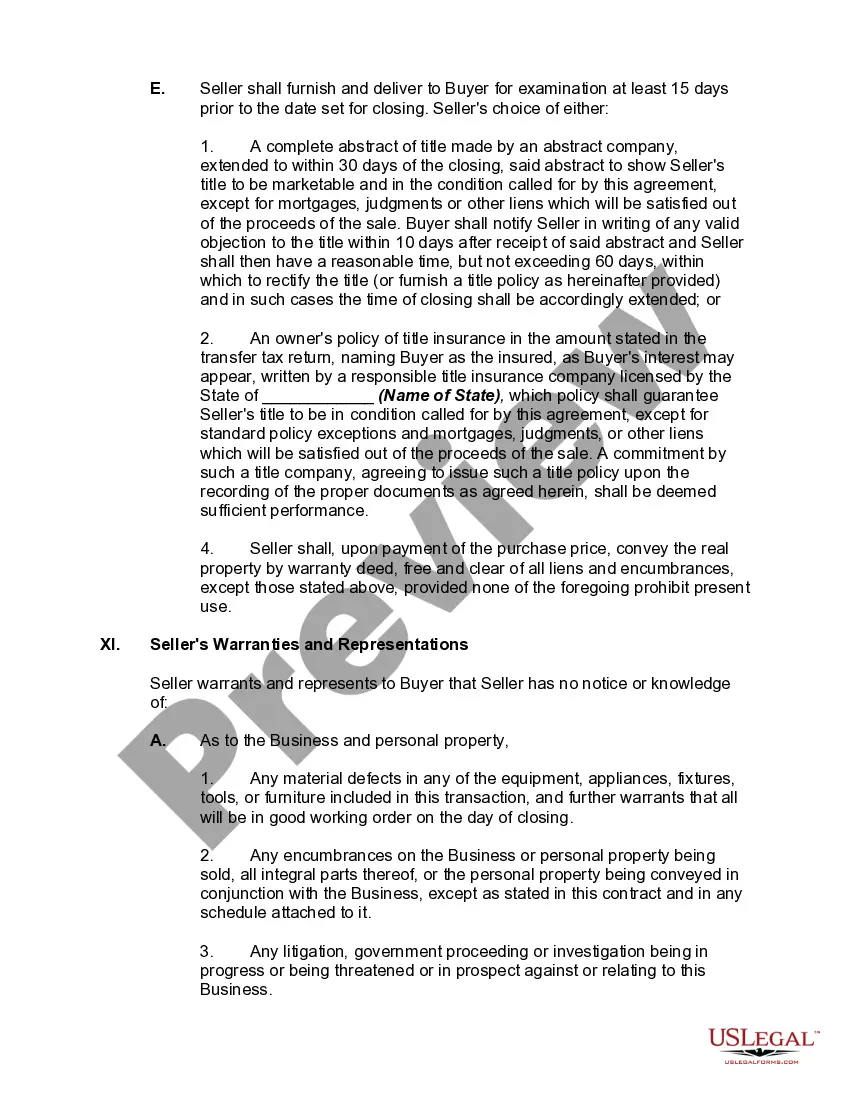
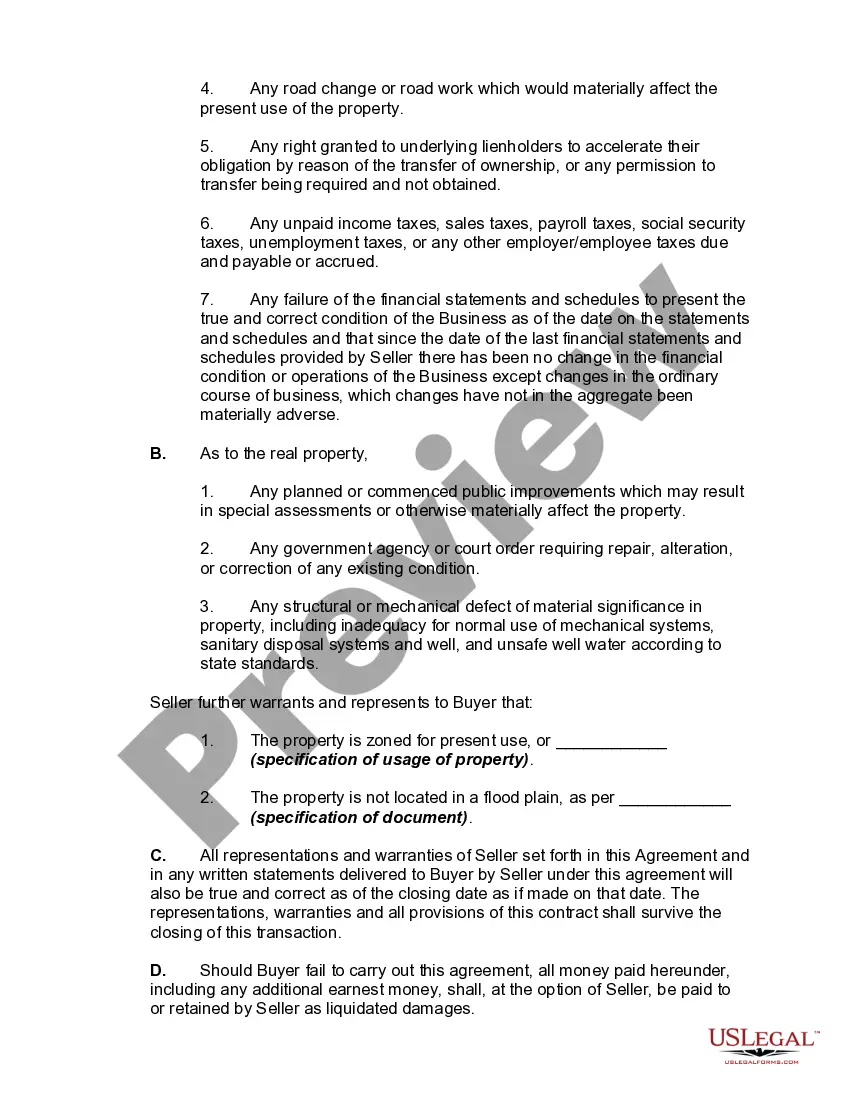
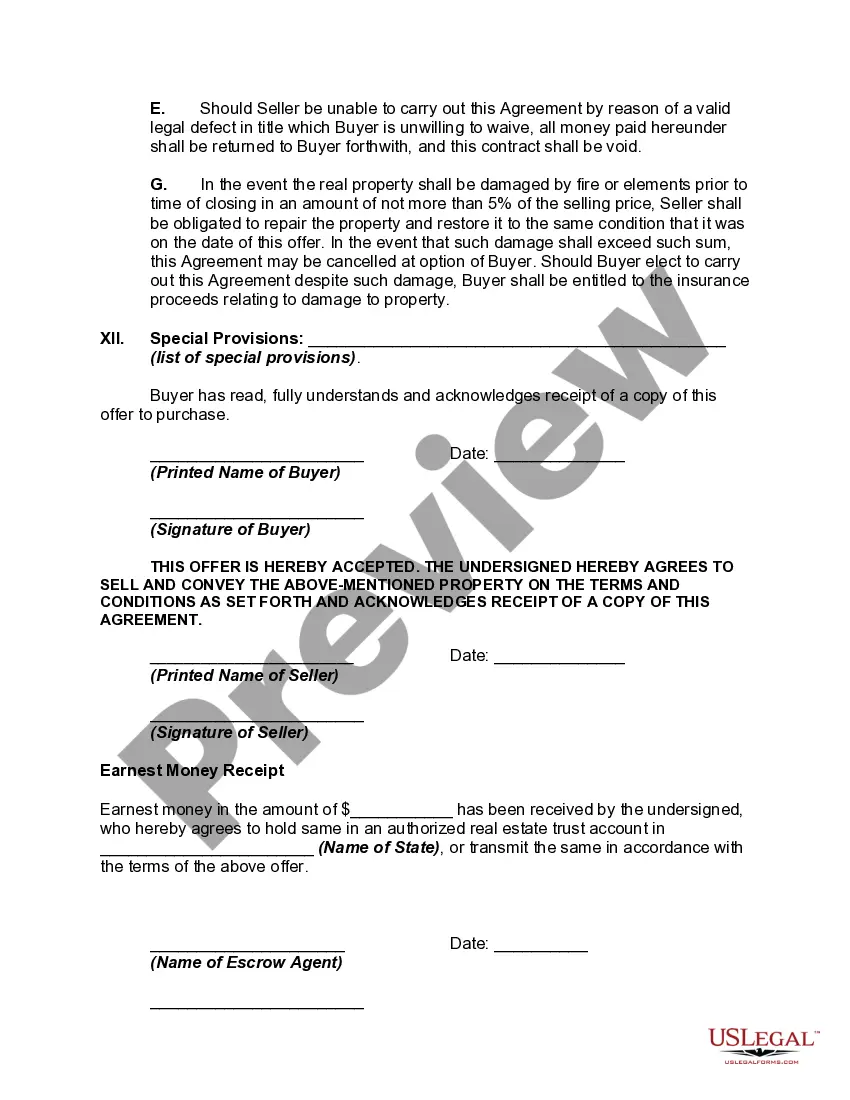
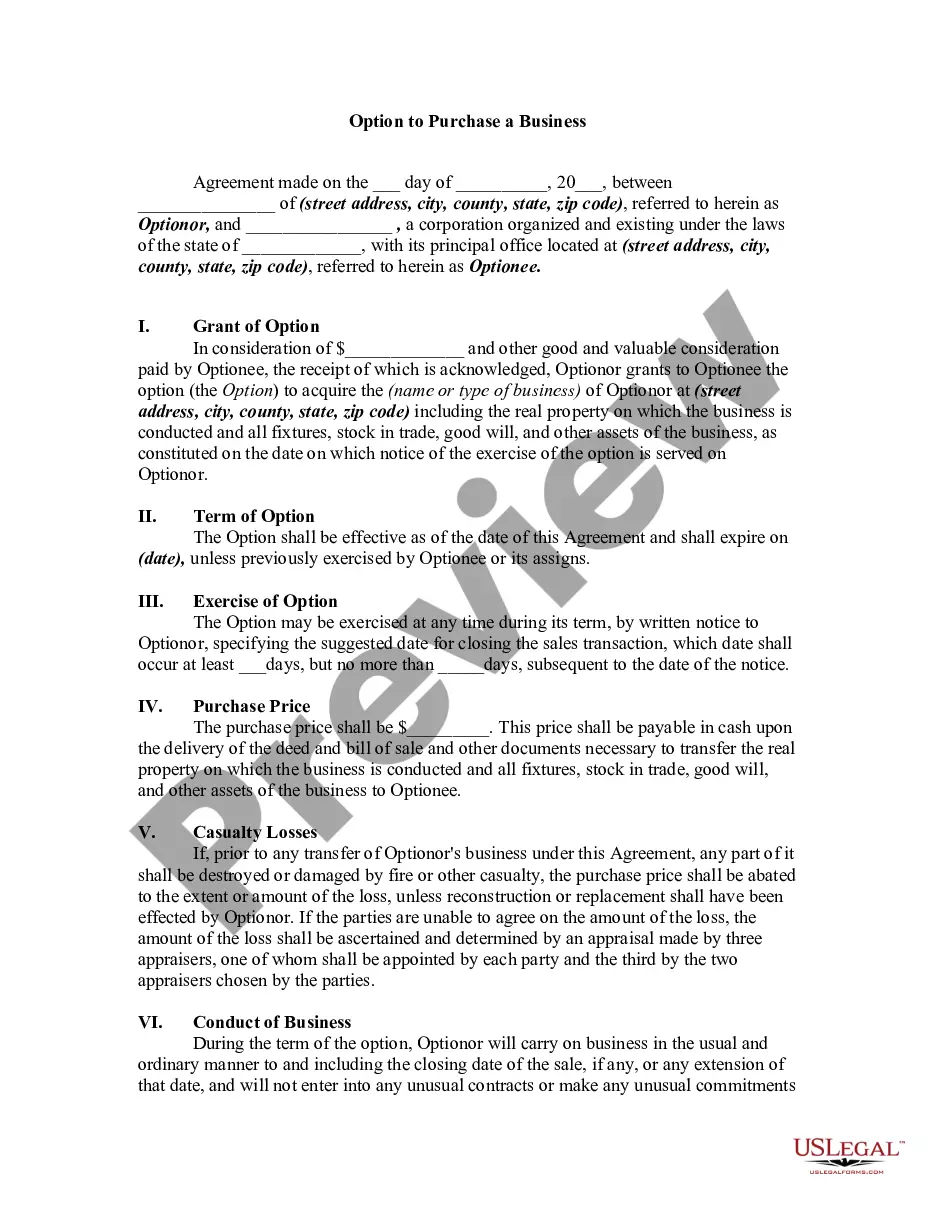
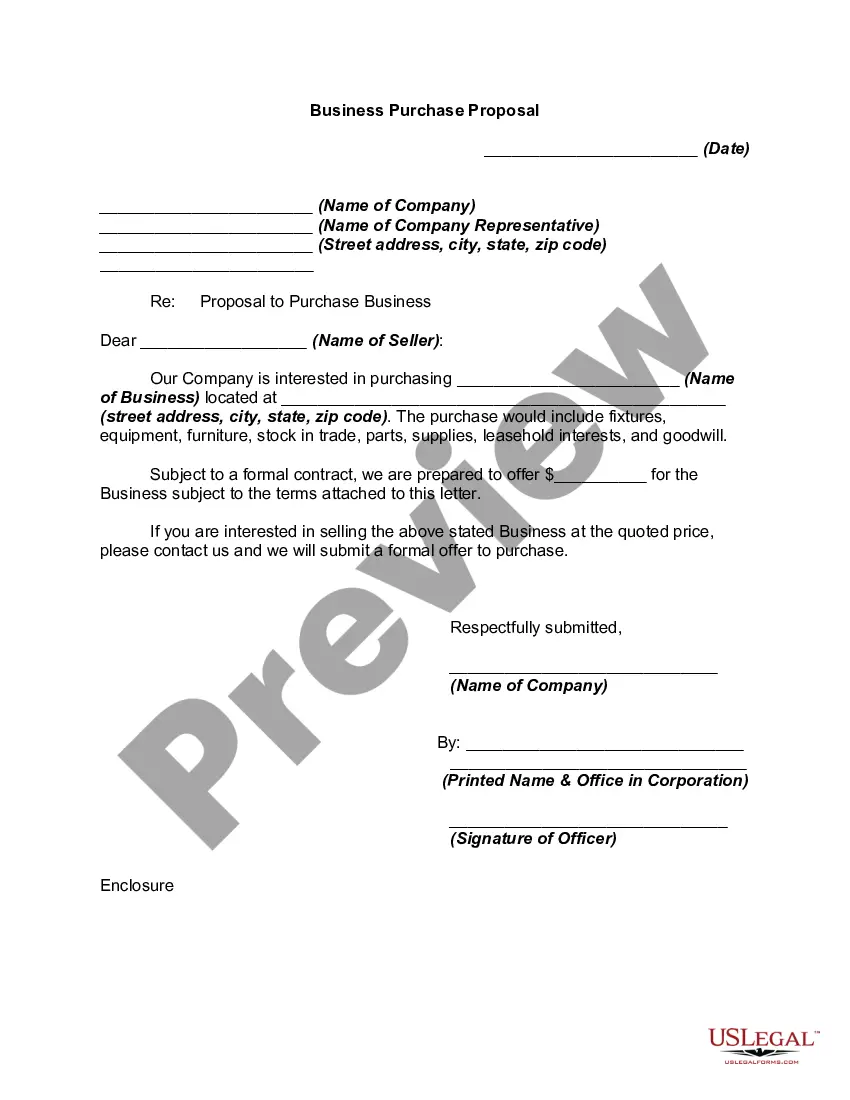
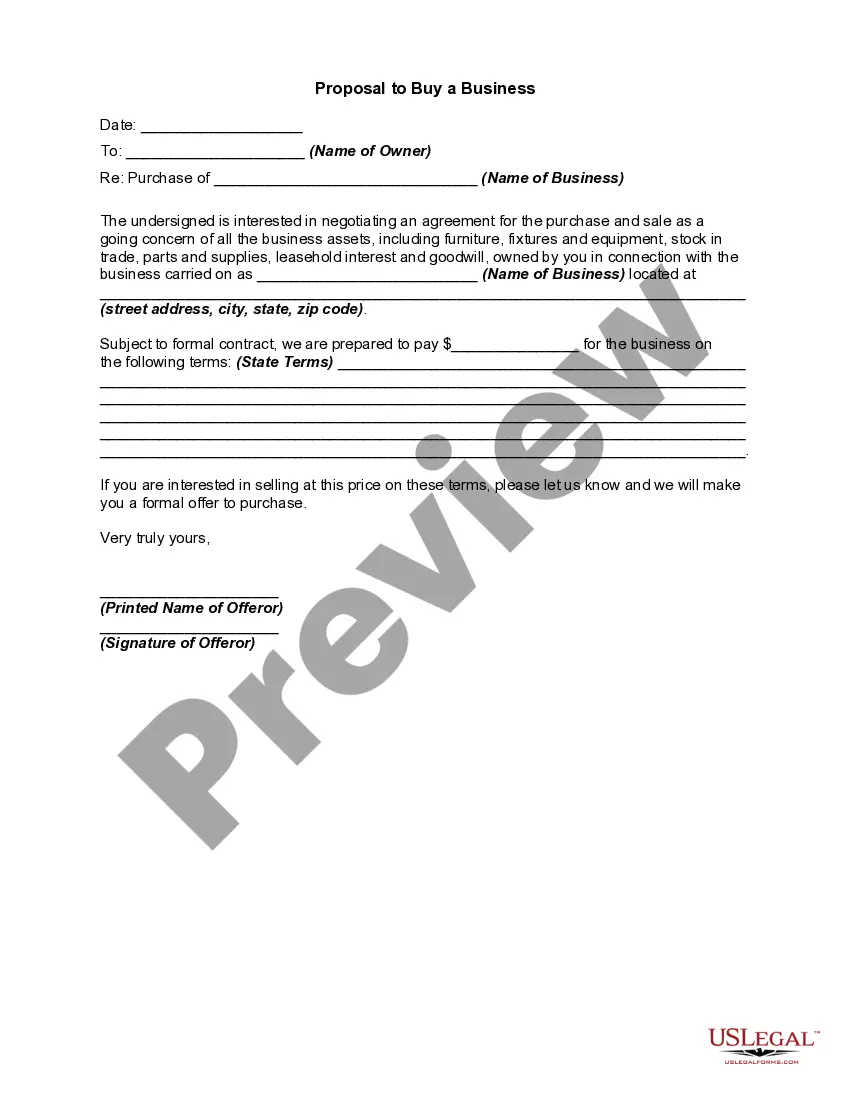
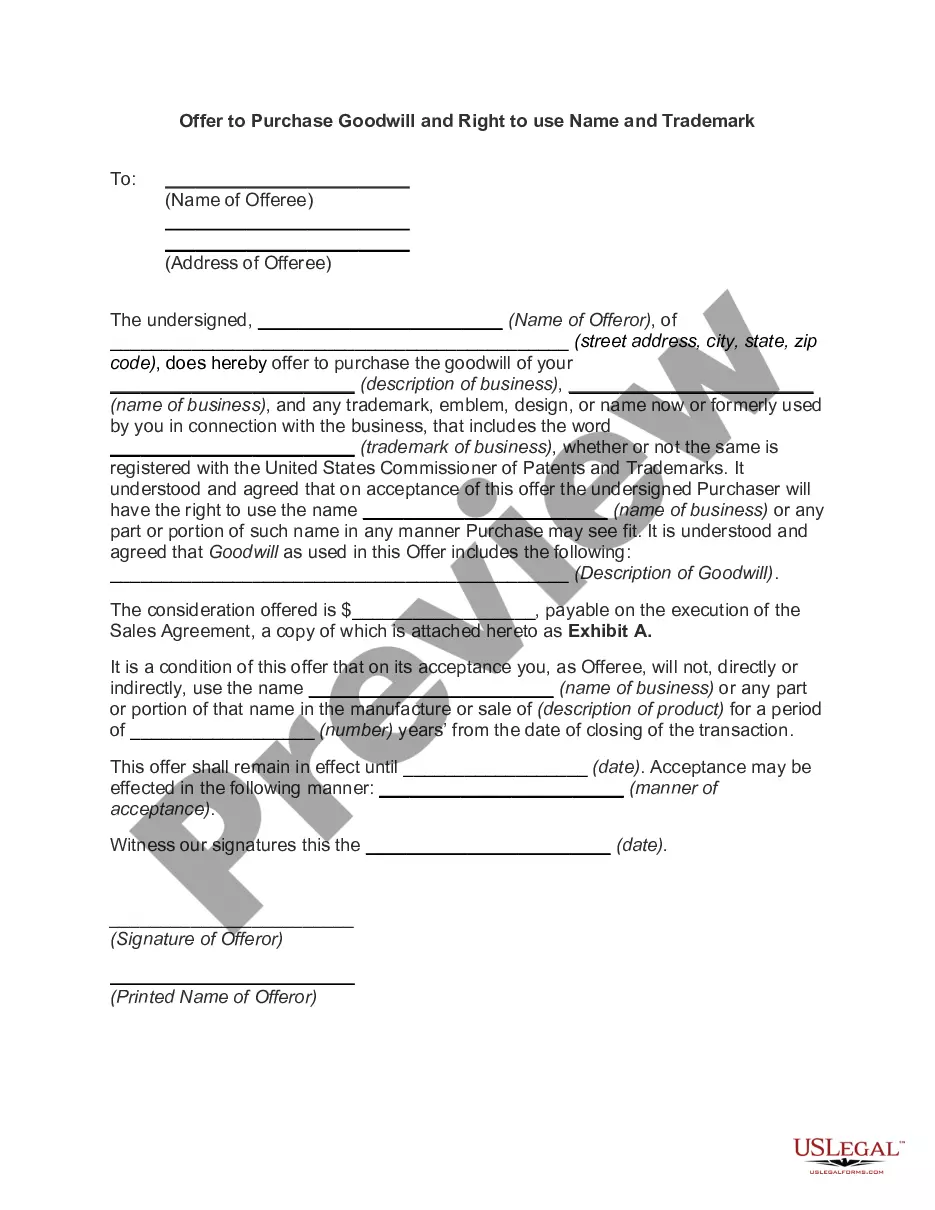
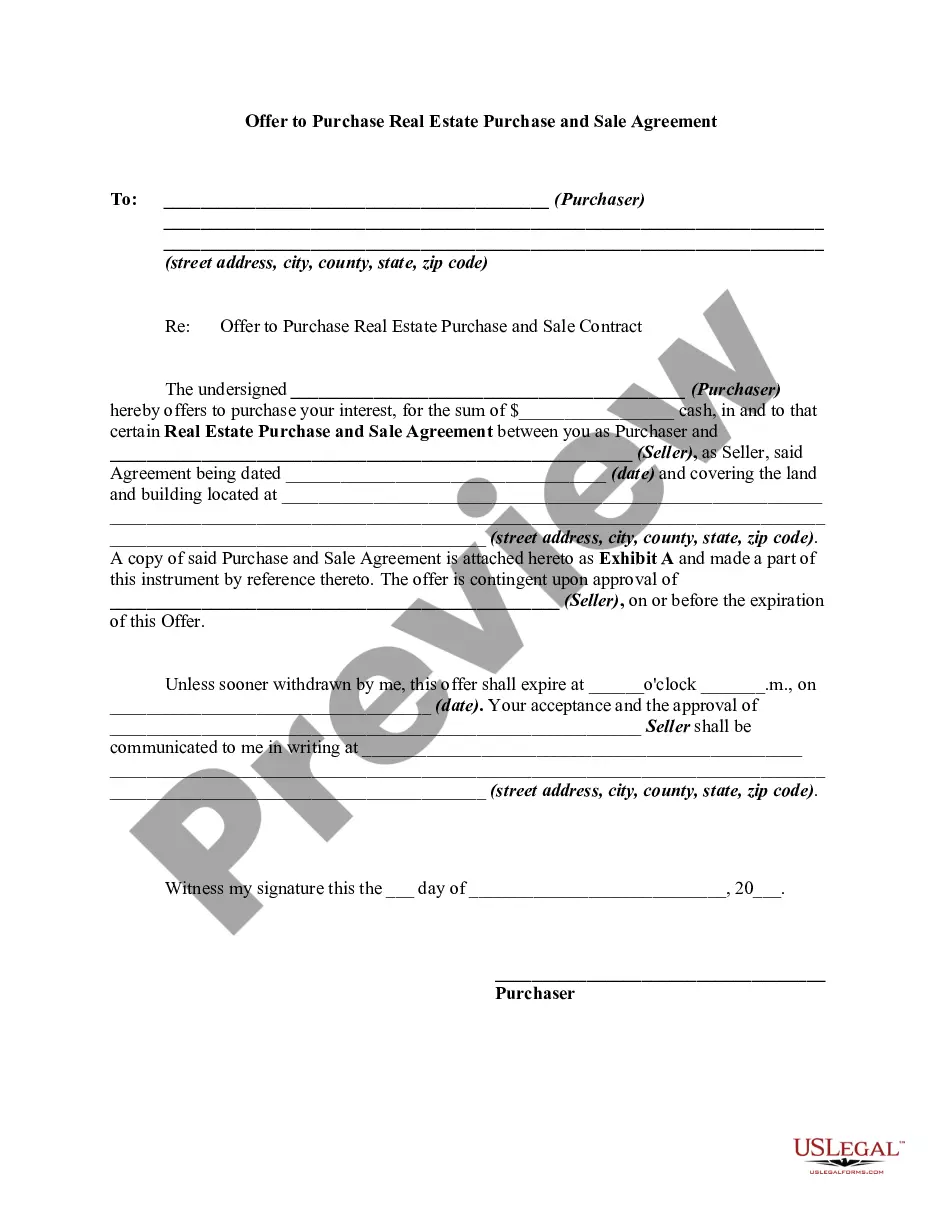
The Offer to Purchase Business, Including Good Will is a legal document used when a buyer intends to acquire a business along with its associated assets and goodwill. This form delineates the terms of the offer, detailing what is included in the purchase, such as real property, personal property, and any outstanding debts the buyer may assume. It is essential for ensuring that both parties have a clear understanding of the transaction, protecting their interests through legally binding agreements.
What’s included in this form
- Buyer and Seller Information: Names and addresses of both parties involved in the transaction.
- Purchase Price: The total amount being offered and the terms of payment.
- Asset Transfer Details: Specifies which personal and real property will be included in the sale.
- Contingencies: Lists conditions that must be met for the sale to proceed, such as licensing approvals.
- Warranties and Representations: Seller's assurances regarding the business and property being sold.

When this form is needed
This form should be used when you are looking to purchase a business and want to ensure all legal aspects of the transaction are documented. It is necessary if the business has existing debts, assets, or special licenses and requires a formal agreement to outline the terms of sale clearly. This form is essential not just for the financial aspects but also for addressing legal compliance and the protections needed for both the buyer and seller.
Who can use this document
- Business buyers looking to acquire an existing business, whether a corporation or sole proprietorship.
- Sellers intending to formalize the sale of their business and related assets.
- Real estate professionals assisting in business sales that involve property transfer.
- Attorneys involved in business law or transactions related to business sales.
How to prepare this document
- Identify the parties: Fill in the names of the buyer and seller, along with their addresses.
- Specify the purchase price: Clearly state the financial offer and terms of payment.
- Detail the assets: List all personal and real property included in the sale, ensuring an itemized breakdown.
- List contingencies: Specify any conditions that must be met for the sale to proceed.
- Provide necessary signatures: Ensure the form is signed and dated by both parties for validity.
Is notarization required?
This form needs to be notarized to ensure legal validity. US Legal Forms provides secure online notarization powered by Notarize, allowing you to complete the process through a verified video call, available anytime.
Get your form ready online
Our built-in tools help you complete, sign, share, and store your documents in one place.
Make edits, fill in missing information, and update formatting in US Legal Forms—just like you would in MS Word.
Download a copy, print it, send it by email, or mail it via USPS—whatever works best for your next step.
Sign and collect signatures with our SignNow integration. Send to multiple recipients, set reminders, and more. Go Premium to unlock E-Sign.
If this form requires notarization, complete it online through a secure video call—no need to meet a notary in person or wait for an appointment.
We protect your documents and personal data by following strict security and privacy standards.

Make edits, fill in missing information, and update formatting in US Legal Forms—just like you would in MS Word.

Download a copy, print it, send it by email, or mail it via USPS—whatever works best for your next step.

Sign and collect signatures with our SignNow integration. Send to multiple recipients, set reminders, and more. Go Premium to unlock E-Sign.

If this form requires notarization, complete it online through a secure video call—no need to meet a notary in person or wait for an appointment.

We protect your documents and personal data by following strict security and privacy standards.
Typical mistakes to avoid
- Not including all relevant assets and liabilities in the agreement.
- Failing to clearly outline contingencies, leading to misunderstandings.
- Omitting signatures or dates, which can invalidate the agreement.
- Assuming legal advice is not needed when drafting the agreement.
Advantages of online completion
- Easy access: Download and customize the form at your convenience.
- Editability: Modify the document to fit your specific needs without hassle.
- Reliability: Use professionally drafted templates for peace of mind regarding legal validity.
- Guidance: Step-by-step instructions help users avoid common pitfalls in the process.
What to keep in mind
- The Offer to Purchase Business is essential for structuring the sale of a business, covering key aspects such as asset allocation and payment terms.
- Appropriate use of this form helps ensure clarity and protect the rights of both buyers and sellers.
- Be aware of local laws and regulations that may affect business transactions when completing the form.
- Taking time to thoroughly complete the form can prevent common mistakes that hinder successful business sales.
Looking for another form?

Form popularity
FAQ
When buying or selling a business, goodwill represents the value of the business that is above and beyond the worth of separately identifiable tangible business assets. Unlike physical assets, like buildings or equipment, goodwill is an intangible asset.
Tally the value of assets. Add up the value of everything the business owns, including all equipment and inventory. Base it on revenue. Use earnings multiples. Do a discounted cash-flow analysis. Go beyond financial formulas.
Your offer should be no more than 25% below market value, anything less can't even be excused by being cheeky! Sellers tend to accept offers 5-10% below market value, so you can maybe test the waters and offer 15% below market value initially.
According to the U.S. Small Business Administration, most microbusinesses cost around $3,000 to start, while most home-based franchises cost $2,000 to $5,000. While every type of business has its own financing needs, experts have some tips to help you figure out how much cash you'll require.
Well, assume that the business you want to acquire has $100,000/year in cashflow. BizBuySell suggests an average asking price of $200,000. But historical data shows some businesses that would suggest an asking price of $100,000 all the way up to nearly $500,000!
When a corporation is sold in an asset sale, a separate sale of a shareholder's personal goodwill associated with the corporation can result in the gain from the sale of the goodwill being taxed to the shareholder at long-term capital gains rates.
Written offer (through a broker) with refundable good faith deposit of $1,000. Purchase price (subject to due diligence) Down payment (cash and/or outside financing) Terms and conditions on the balance due, which will be financed by seller.
A reasonable offer is one that leads to negotiation and an eventual sale. In other words: there is no simple answer and you will only know after the fact. A reasonable offer is one that leads to negotiation and an eventual sale. In other words: there is no simple answer and you will only know after the fact.
Your legal name, the name of the seller and the address of the property. the amount you're offering to pay (the purchase price) and the amount of your deposit. any extra items you want included in the purchase (for example, window coverings) the date you want to take possession (closing day)