Complaint to Compel Mortgagee to Execute and Record Satisfaction and Discharge of Mortgage
What this document covers
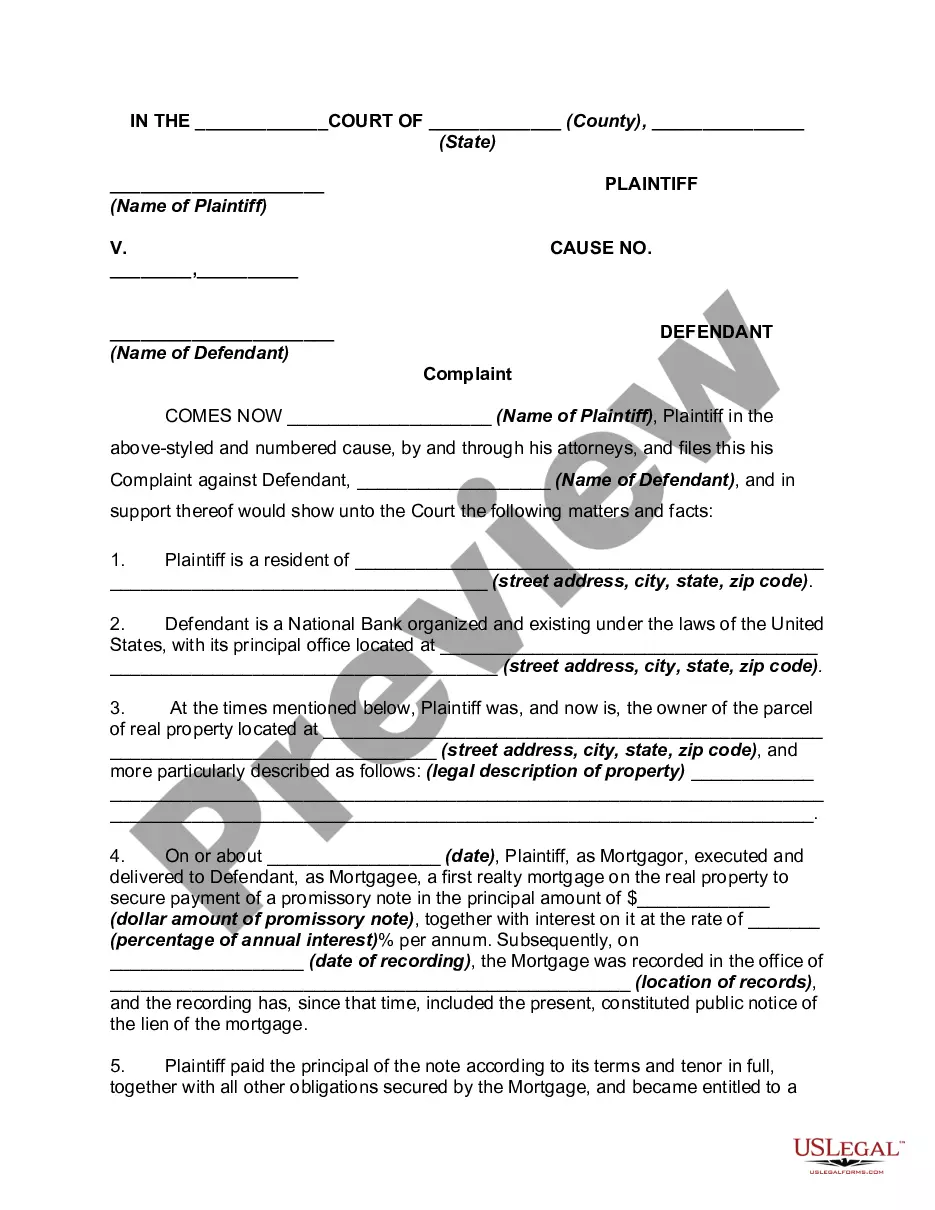
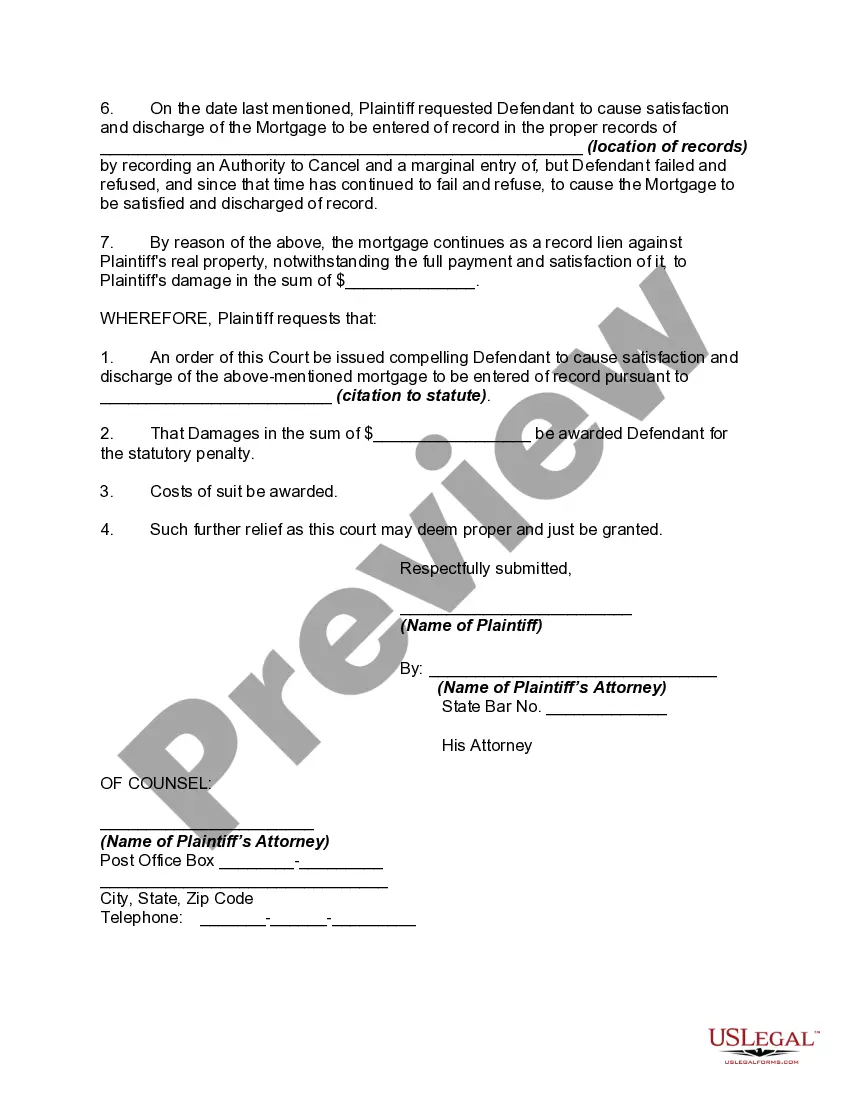
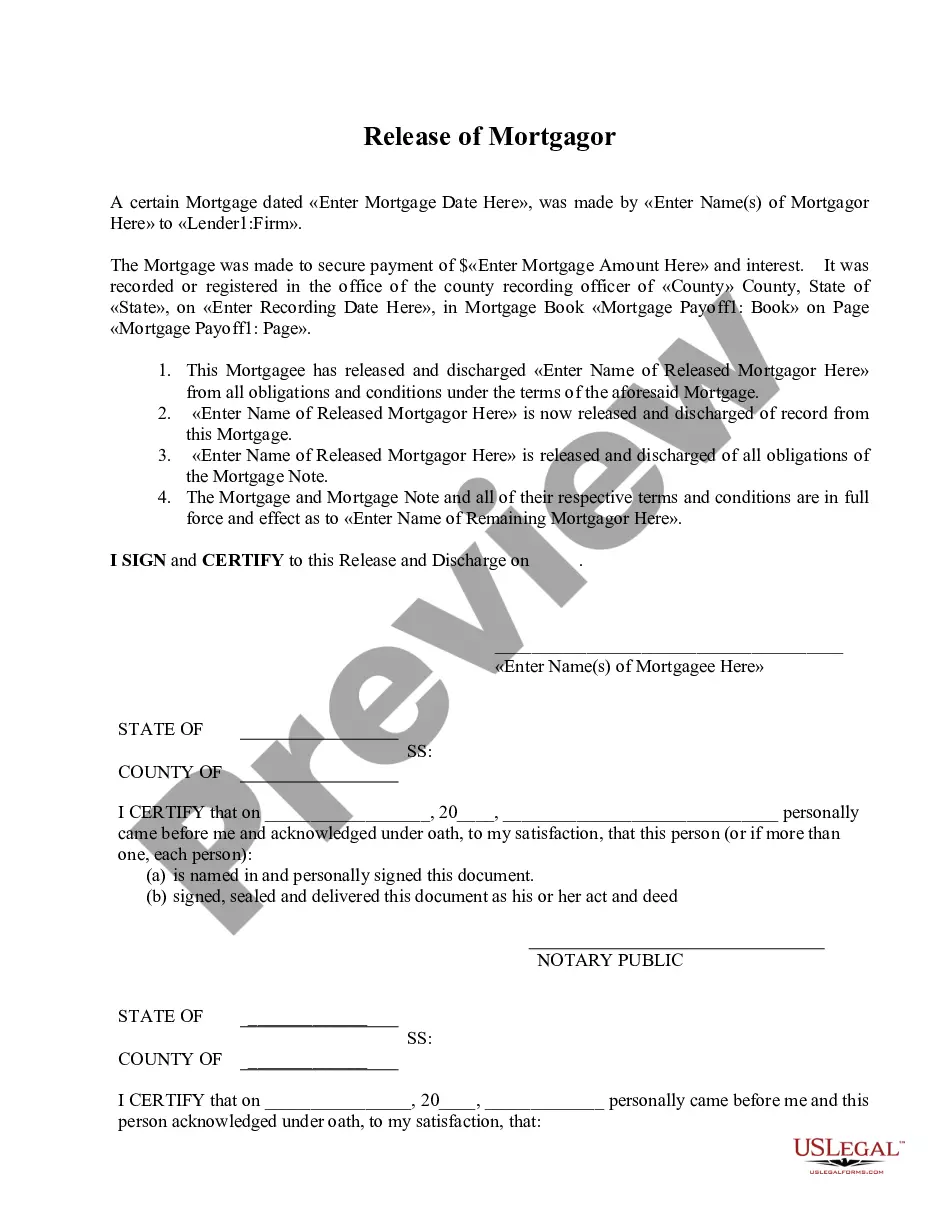
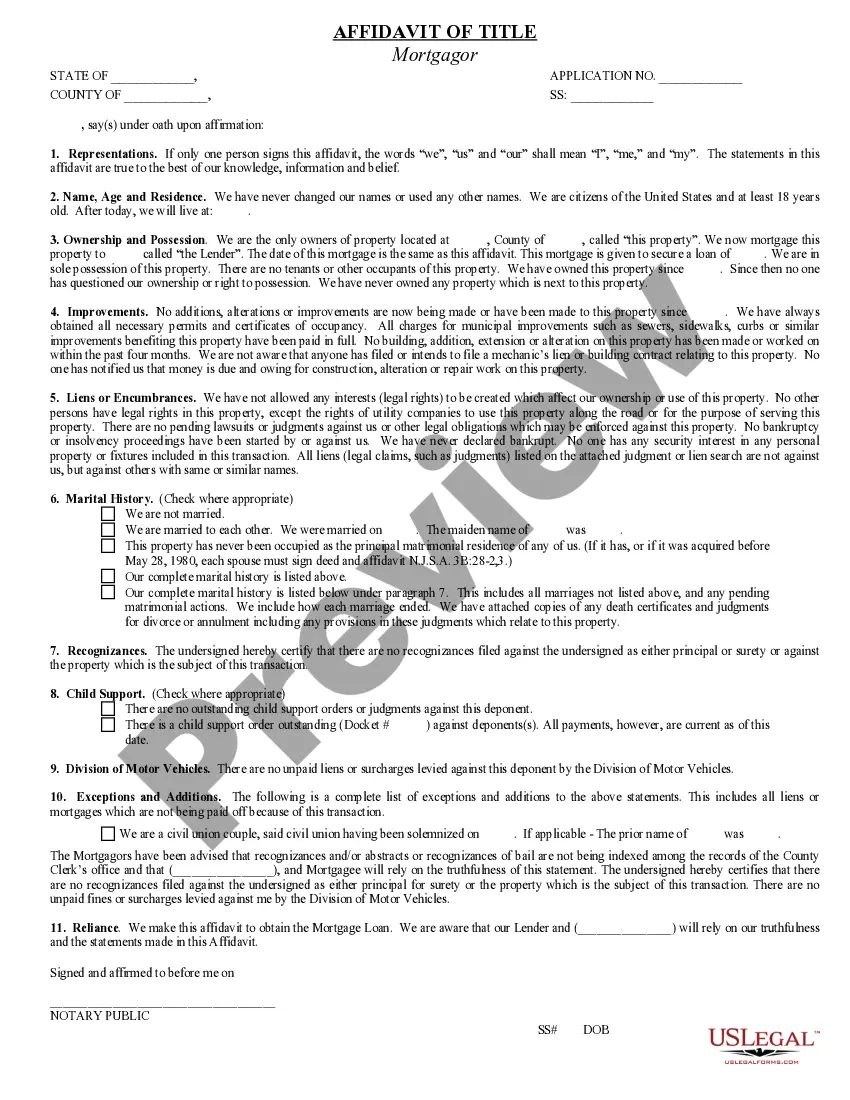
The Complaint to Compel Mortgagee to Execute and Record Satisfaction and Discharge of Mortgage is a legal document used to request a court order that compels a lender (mortgagee) to formally acknowledge the satisfaction of a mortgage after the borrower (mortgagor) has fulfilled their payment obligations. This form is essential when a mortgagee fails to record the discharge of the mortgage, leaving the borrower with a lingering public record of the lien. It differs from other mortgage-related forms by specifically addressing the need for a court's intervention to remove the mortgage from public records.
Form components explained
- Information about the plaintiff and defendant.
- Details regarding the mortgage and property description.
- Statement of mortgage payment completion and request for discharge.
- Legal citations supporting the request for action.
- Claim for damages and costs of suit.
When to use this document
This form should be used when a borrower has fully paid off their mortgage but the lender has not filed the necessary paperwork to officially release the mortgage lien. It is applicable in situations where the borrower has made their final payment and has requested the lender to record the discharge, but the lender has failed to comply. By filing this complaint, the borrower seeks court assistance to compel the lender to fulfill their obligations.
Intended users of this form
- Individuals who have paid off their mortgage but have not received a formal release from their lender.
- Property owners who find their property still encumbered by an unreleased mortgage post payment.
- Borrowers seeking legal recourse against a mortgage provider for failing to discharge a mortgage.
Instructions for completing this form
- Identify and fill in your name and address as the plaintiff.
- Provide the name and address of the defendant lender.
- Describe the property and include its legal description.
- Enter the details of the mortgage, including dates and payment amounts.
- State the date you requested the discharge and any responses from the lender.
- Sign the document and include any necessary attorney information.
Notarization requirements for this form
This form does not typically require notarization unless specified by local law. Reviewing your jurisdiction's regulations regarding legal filings will help clarify any notarization requirements.
Get your form ready online
Our built-in tools help you complete, sign, share, and store your documents in one place.
Make edits, fill in missing information, and update formatting in US Legal Forms—just like you would in MS Word.
Download a copy, print it, send it by email, or mail it via USPS—whatever works best for your next step.
Sign and collect signatures with our SignNow integration. Send to multiple recipients, set reminders, and more. Go Premium to unlock E-Sign.
If this form requires notarization, complete it online through a secure video call—no need to meet a notary in person or wait for an appointment.
We protect your documents and personal data by following strict security and privacy standards.

Make edits, fill in missing information, and update formatting in US Legal Forms—just like you would in MS Word.

Download a copy, print it, send it by email, or mail it via USPS—whatever works best for your next step.

Sign and collect signatures with our SignNow integration. Send to multiple recipients, set reminders, and more. Go Premium to unlock E-Sign.

If this form requires notarization, complete it online through a secure video call—no need to meet a notary in person or wait for an appointment.

We protect your documents and personal data by following strict security and privacy standards.
Avoid these common issues
- Failing to provide complete and accurate details of the mortgage and property.
- Not citing the correct state statute that supports the complaint.
- Omitting signatures or attorney information as required by law.
Why use this form online
- Convenience of downloading the form from anywhere at any time.
- Editable format allows for easy customization to meet specific state requirements.
- Access to a reliable and legally vetted document at a lower cost than hiring an attorney.
What to keep in mind
- This form is essential for borrowers who have completed mortgage payments but lack formal discharge documentation.
- Filing this complaint can compel a lender to fulfill their legal obligation to remove the mortgage record.
- Users should be aware of local laws that may affect how this form is used.
Looking for another form?
Form popularity
FAQ
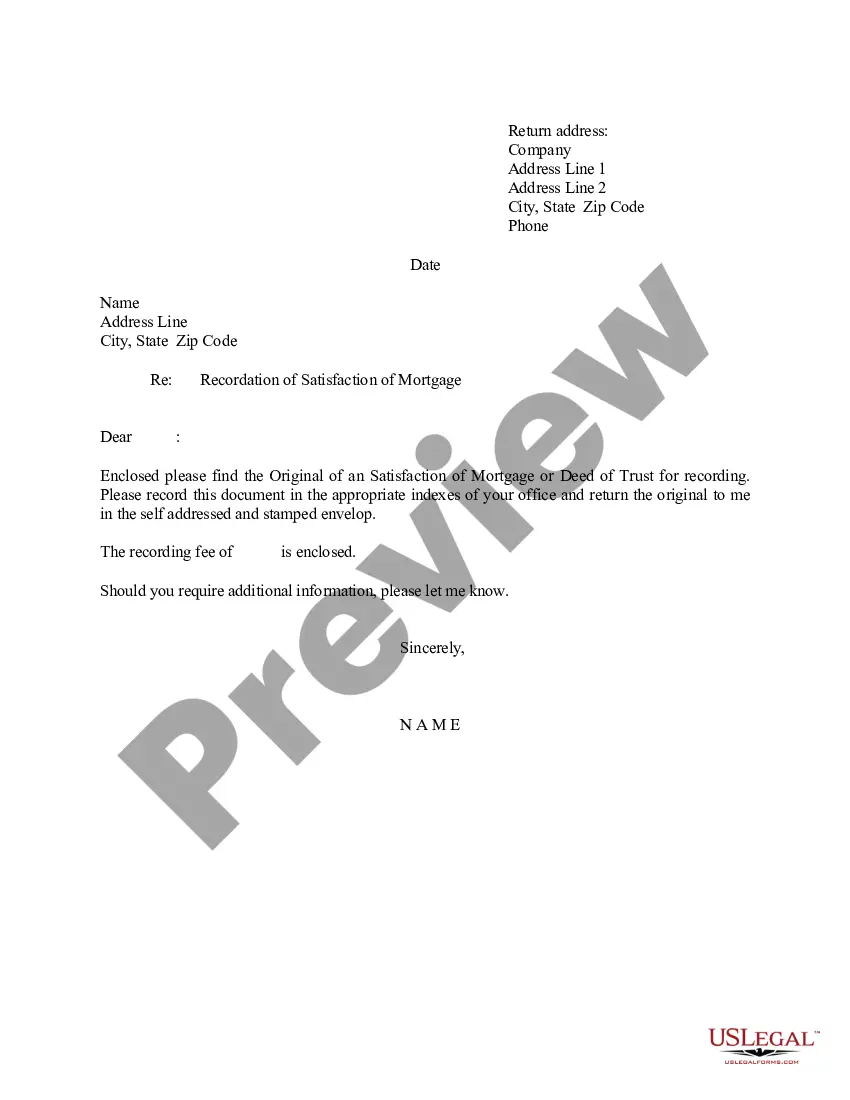
In order to clear the title to the real property owned by the mortgagor, the Satisfaction of Mortgage document must be recorded with the County Recorder or Recorder of Deeds. If the mortgagee fails to record a satisfaction within the set time limits, the mortgagee may be responsible for damages set out by statute.
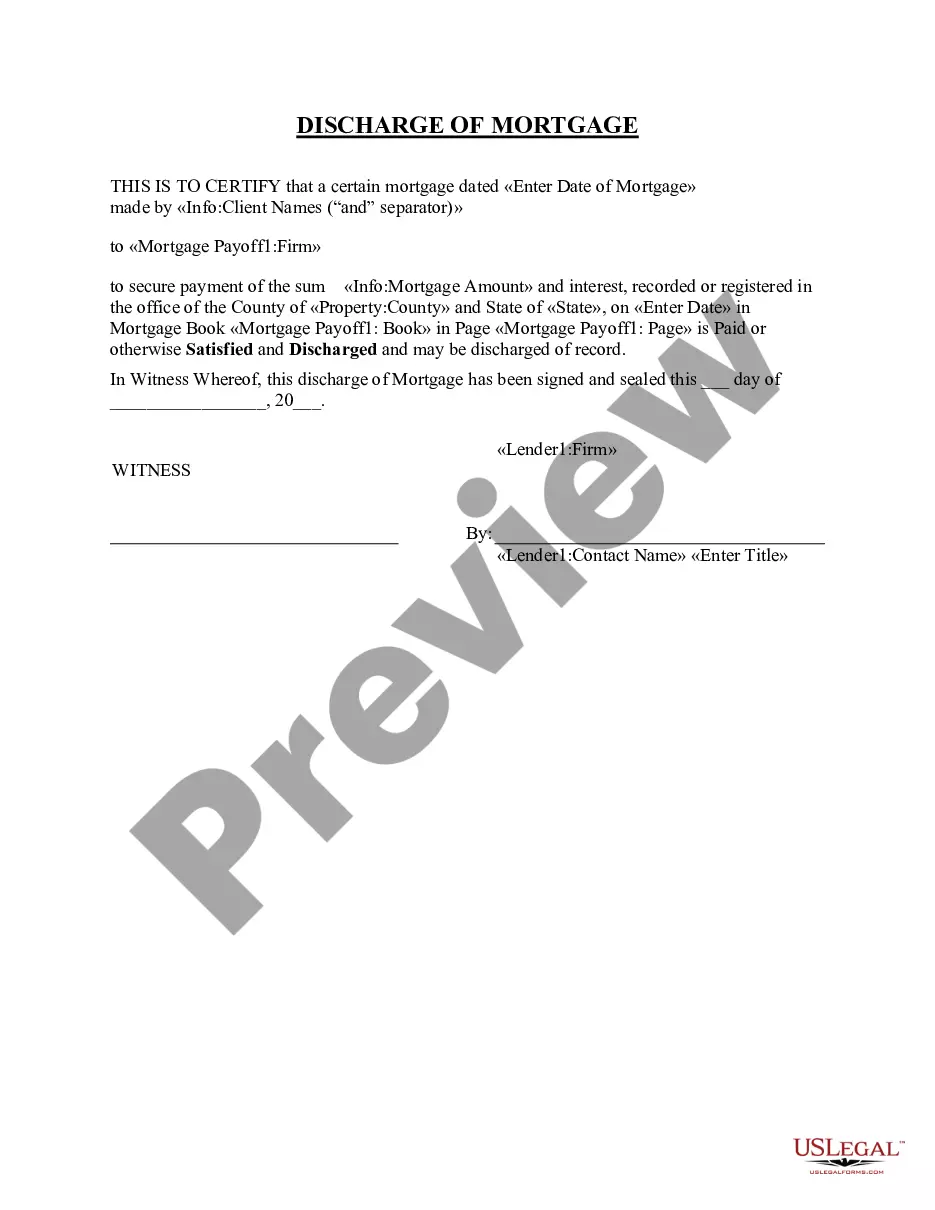
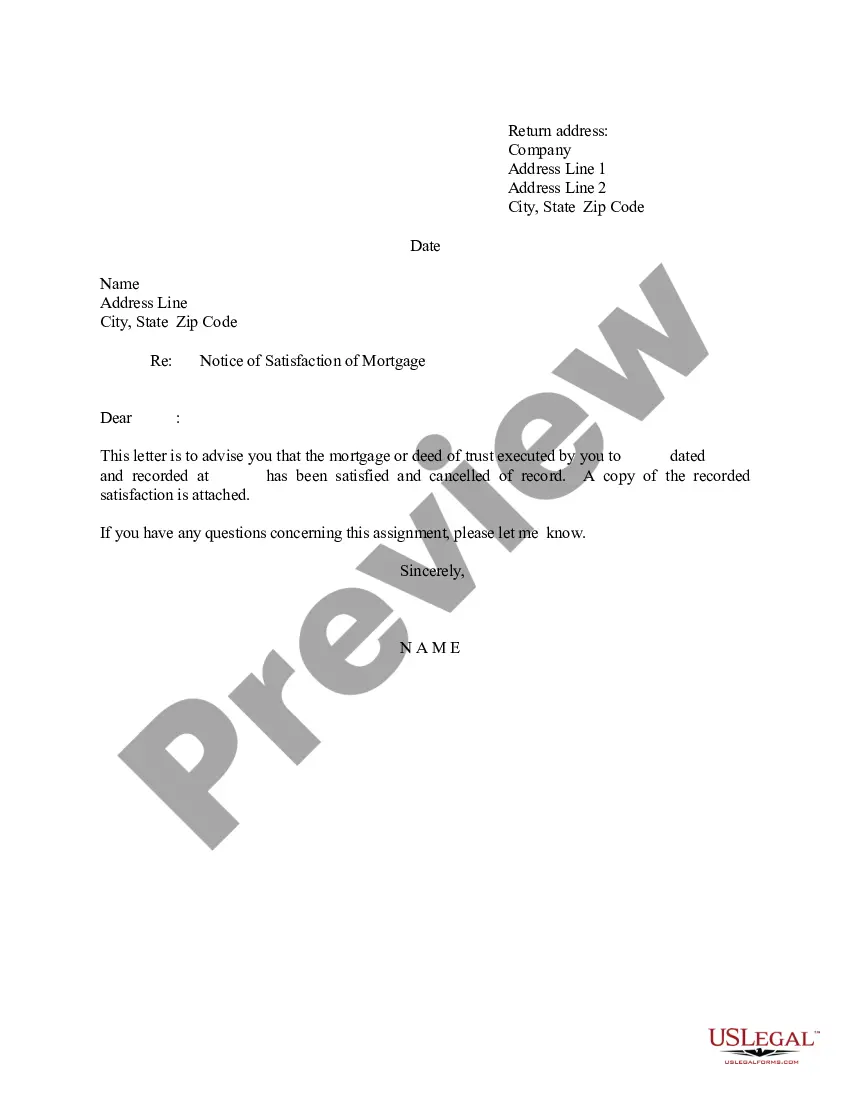
If you have cleared a debt, a mortgage satisfaction document will give you clear title to real property. In other words, mortgage satisfaction is a document that results in release or discharge of a mortgage lien, and indicates that a borrower has cleared his/her debt.
Register the discharge of mortgage Once you return the Discharge Authority form, your bank would prepare a Discharge of Mortgage document. This document must be registered at the Land Titles office.
If a lender takes longer than 90 days to record it, they can be charged up to $1,500 in penalties. So, in theory, a satisfaction should be recorded within 30-90 days of payoff regardless of what state you work in.
A Mortgage Release is where you, the homeowner, voluntarily transfer the ownership of your property to the owner of your mortgage in exchange for a release from your mortgage loan and payments.Depending on your situation, you may be required to make a financial contribution to receive a mortgage release.
Lending institutions are responsible for preparing and filing the satisfaction of mortgage with the appropriate county recorder, land registry office, city registrar, or recorder of deeds. Some borrowers prepay their mortgages by making extra mortgage payments in an effort to pay off their mortgages faster.
Go to the county recorder's office or local courthouse to find recorded mortgages. In states such as California, deeds, liens, mortgage documents and various types of land documents are available for review in the recorder's office.
Key Takeaways. A satisfaction of mortgage is a signed document confirming that the borrower has paid off the mortgage in full and that the mortgage is no longer a lien on the property.
Step 1 Identify the parties. The appropriate parties should be documented on the Satisfaction of Mortgage. Step 2 Fill and Sign. The Satisfaction of Mortgage should be signed by the mortgagee, after it has been issued. Step 3 File and Record the Form.