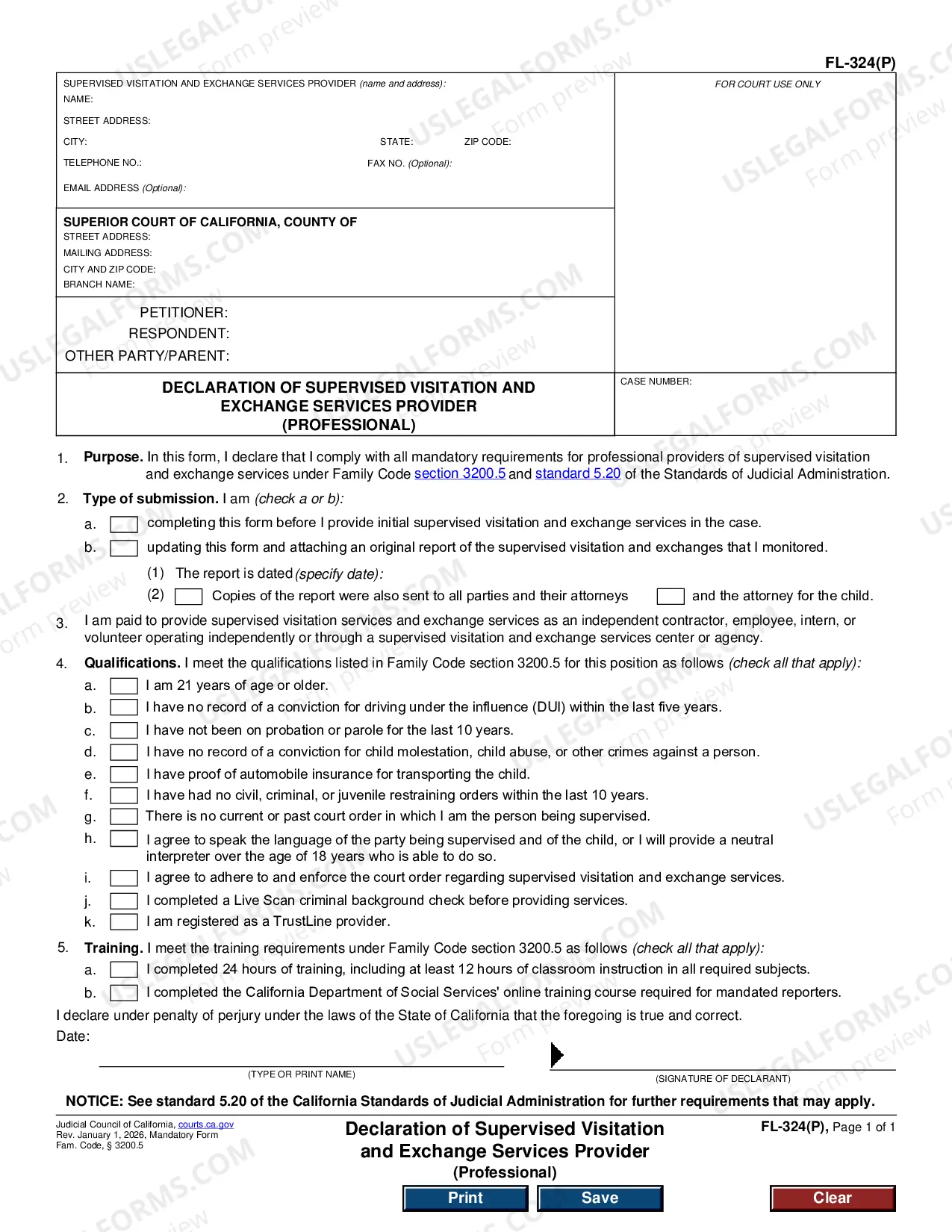
Copyright and License Agreement for Research
What this document covers
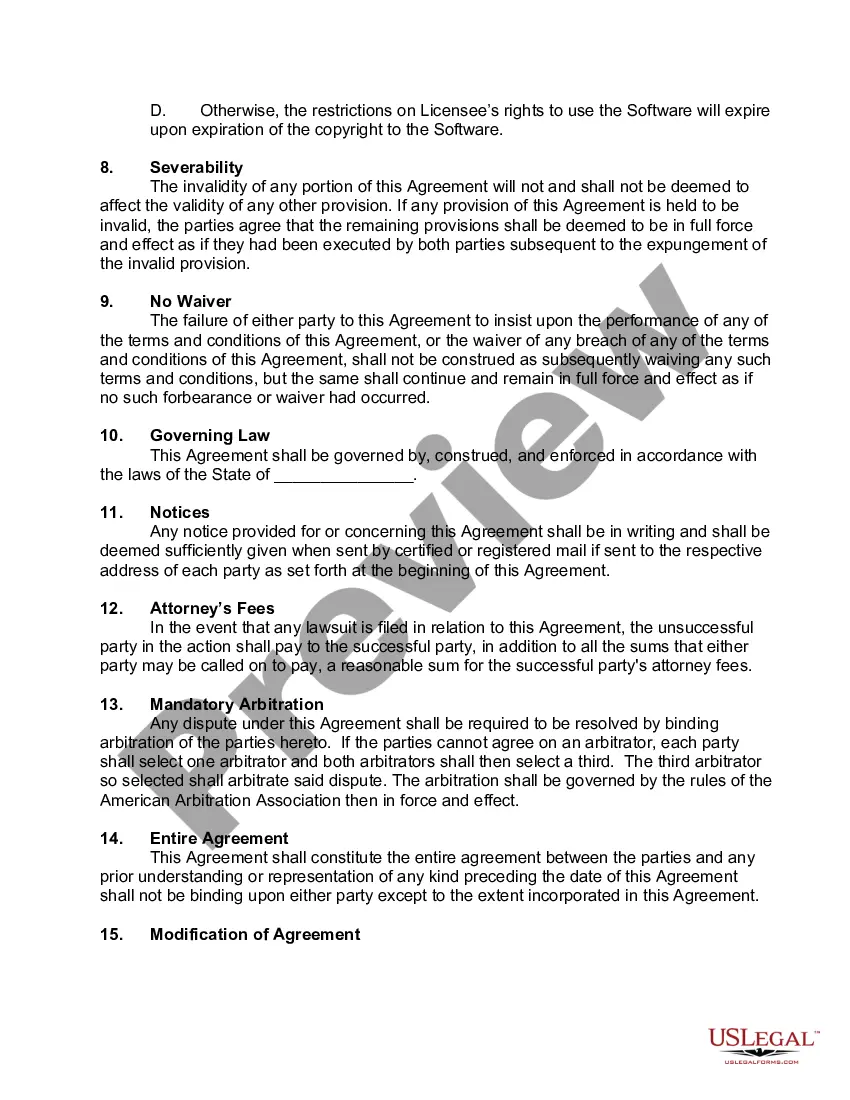
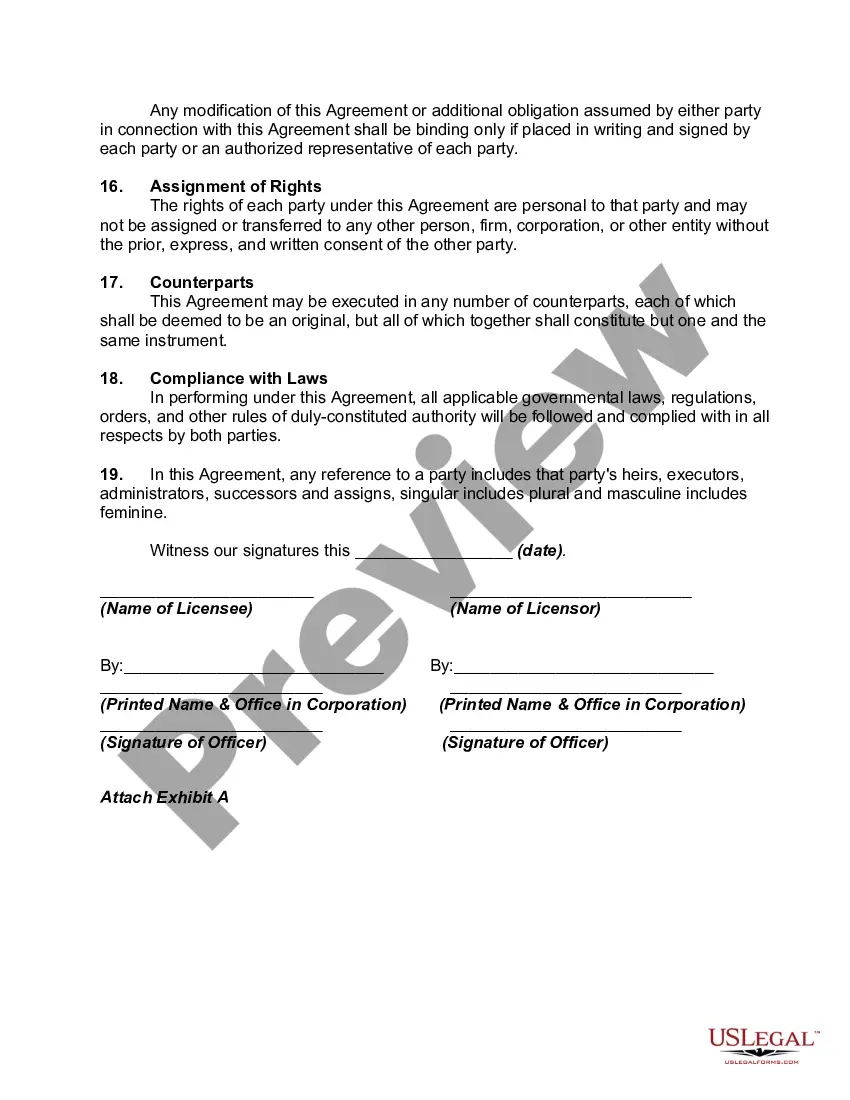
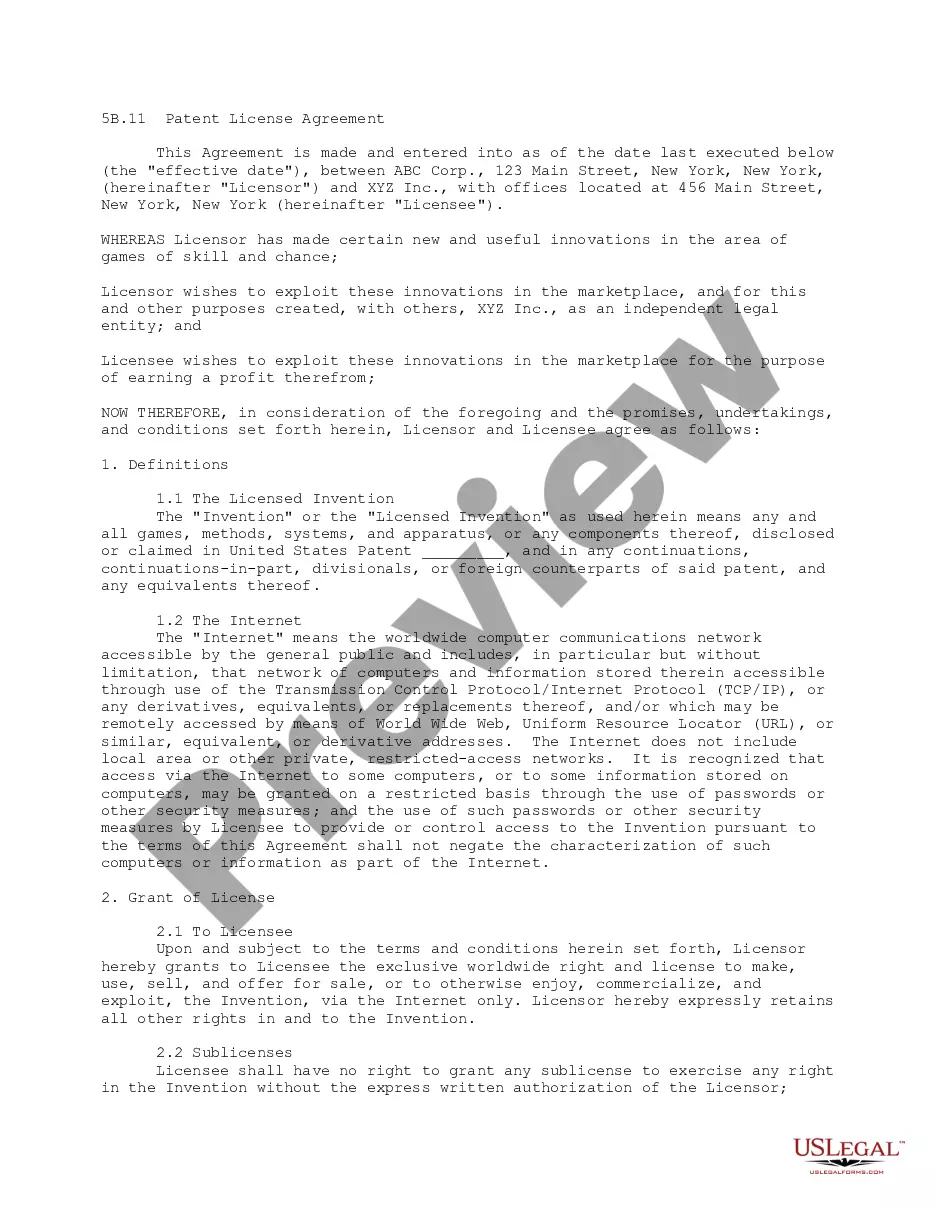
The Copyright and License Agreement for Research is a legal document that outlines the terms under which a copyright holder (Licensor) grants specific usage rights to another party (Licensee) for software or research materials. This form is essential for establishing how the Licensee can use, distribute, and share the licensed material while protecting the original creator's rights. Unlike other licenses, this agreement is specifically tailored for research purposes, providing clear guidelines for both parties to avoid potential infringement issues.
Key components of this form
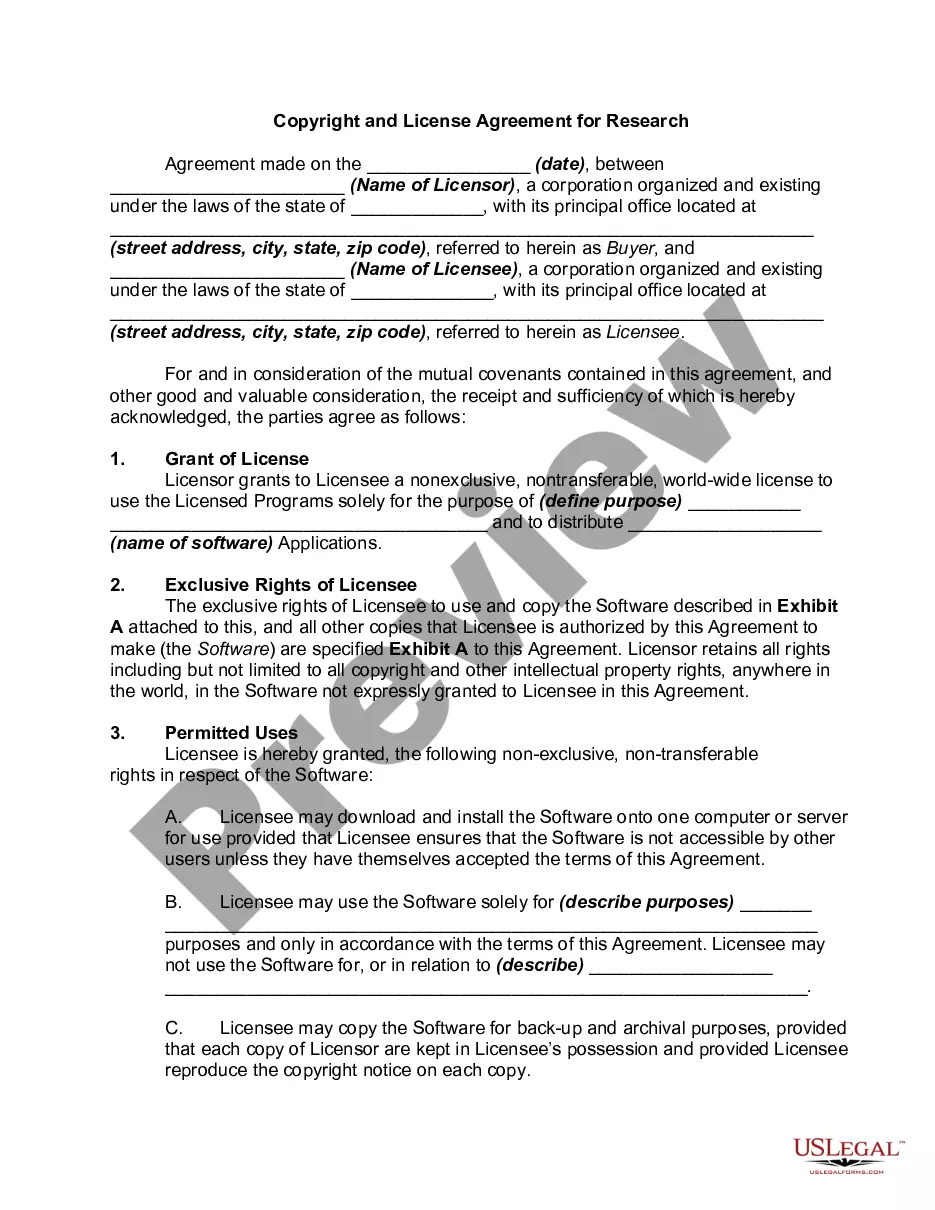
- Grant of License: Details the specific rights granted to the Licensee for using the licensed software.
- Exclusive Rights: Outlines the rights of the Licensee as it pertains to usage and copying of the software.
- Permitted Uses: Specifies the conditions under which the Licensee can use the software, including limitations.
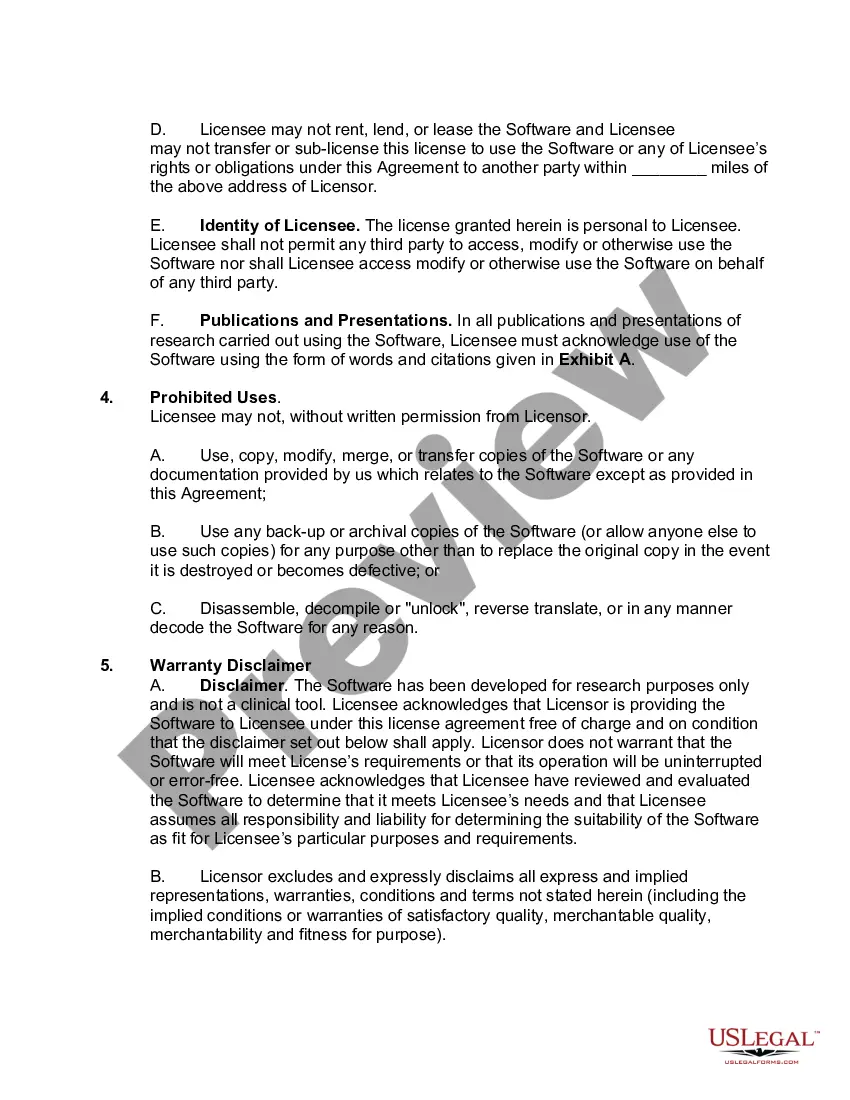
- Prohibited Uses: Lists actions that Licensee is expressly forbidden from taking without written consent from the Licensor.
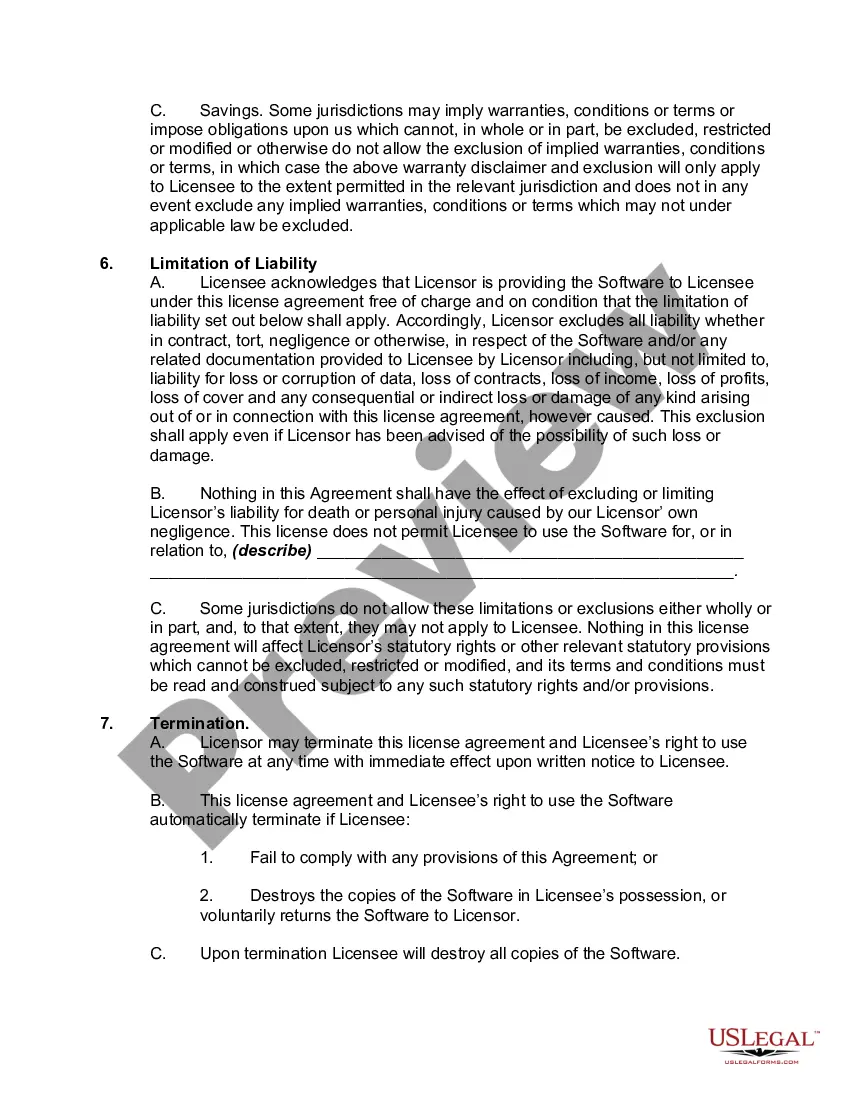
- Termination: Explains the conditions under which the agreement can be terminated by either party.
- Warranties and Liability: Clarifies the disclaimers of warranties provided by the Licensor and limitations of liability.
When to use this document
You should use the Copyright and License Agreement for Research when you need to allow another party to use your copyrighted software or research materials for specific purposes. This is particularly important in academic or corporate research settings where software applications are utilized to conduct studies or publish findings. It's vital when establishing the terms of use to ensure that the rights of the original creator are upheld while allowing for necessary collaboration.
Who needs this form
- Researchers looking to license software for academic purposes.
- Organizations or corporations developing proprietary software for research.
- Any party needing to formalize the use and distribution rights of copyrighted materials.
- Legal professionals drafting agreements related to software usage in research contexts.
Steps to complete this form
- Identify both parties: Fill in the names and addresses of the Licensor and Licensee at the beginning of the agreement.
- Define the purpose: Clearly outline the specific research purposes for which the software is being licensed.
- Specify permitted uses: Explicitly state the allowed uses and any restrictions on the software in the permitted uses section.
- Detail the warranty disclaimer: Review and acknowledge the limitations of liability provided by the Licensor.
- Sign the agreement: Ensure that both parties sign and date the form to validate the agreement.
Is notarization required?
This form does not typically require notarization unless specified by local law. However, it is always advisable to check your local regulations to ensure compliance.
Get your form ready online
Our built-in tools help you complete, sign, share, and store your documents in one place.
Make edits, fill in missing information, and update formatting in US Legal Forms—just like you would in MS Word.
Download a copy, print it, send it by email, or mail it via USPS—whatever works best for your next step.
Sign and collect signatures with our SignNow integration. Send to multiple recipients, set reminders, and more. Go Premium to unlock E-Sign.
If this form requires notarization, complete it online through a secure video call—no need to meet a notary in person or wait for an appointment.
We protect your documents and personal data by following strict security and privacy standards.

Make edits, fill in missing information, and update formatting in US Legal Forms—just like you would in MS Word.

Download a copy, print it, send it by email, or mail it via USPS—whatever works best for your next step.

Sign and collect signatures with our SignNow integration. Send to multiple recipients, set reminders, and more. Go Premium to unlock E-Sign.

If this form requires notarization, complete it online through a secure video call—no need to meet a notary in person or wait for an appointment.

We protect your documents and personal data by following strict security and privacy standards.
Common mistakes to avoid
- Not clearly defining the purpose of use, which can lead to misunderstandings.
- Failing to specify prohibited uses, leaving room for potential misuse of the software.
- Omitting signatures or dates, rendering the agreement incomplete and unenforceable.
- Not updating the form to reflect changes in parties or terms of use as circumstances evolve.
Why complete this form online
- Convenience: Easily fill out and customize the agreement for your specific needs from anywhere.
- Editability: Adjust terms quickly as research requirements change.
- Reliability: Access professionally drafted forms that comply with legal standards.
- Time-saving: Download and complete the form instantly, reducing legal delays.
Legal use & context
- This agreement establishes the legal framework under which software may be used in research.
- It protects both parties by clearly defining usage rights and limitations.
- Failure to comply with the terms may result in legal disputes or loss of rights to use the software.
What to keep in mind
- This agreement is essential for legally using copyrighted software for research.
- It sets clear boundaries to prevent misuse and protect intellectual property.
- Proper completion ensures all parties understand their rights and obligations.
Looking for another form?


Form popularity
FAQ
A license agreement is a business contract between two parties. The licensor (the seller of the license) owns the asset being licensed and the licensee (the buyer) pays for the right to use the license. The licensee pays royalties to the owner in exchange for the right to sell the product or use the technology.
The 3 P's of collegiate licensing are protection, promotion, and profit.
Exclusive or non-exclusive. In an exclusive license, the intellectual property holder is licensing the work only to one person, for that particular use/territory. Territory. Use. Attribution. Derivative works. Confidentiality. Time frame. Termination.
An example of a licensing agreement is a contract between the copyright holders of software and another company, allowing the latter to use the computer software for their daily business operations.
In a typical licensing agreement, the licensor agrees to provide the licensee with intellectual property rights such as the licensor's technology, brand name, or product creation know-how.
An example of a licensing agreement is a contract between the copyright holders of software and another company, allowing the latter to use the computer software for their daily business operations.
Download a template for a licensing agreement. Choose your role as the licensor or licensee. Define the license(s) in the agreement. Decide whether the license is exclusive or not. Settle the matter of fees and payment schedule. Add a renewal date and rules.
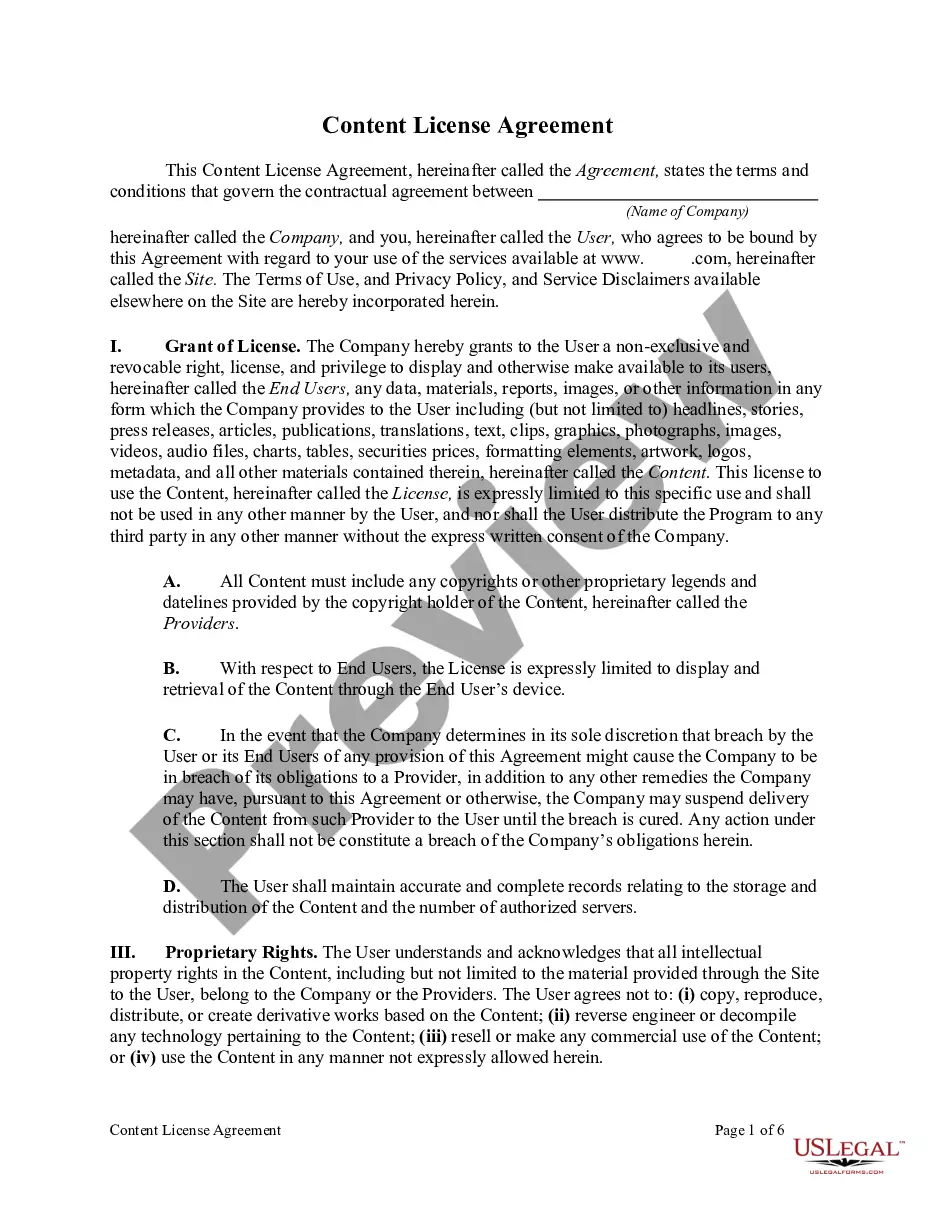
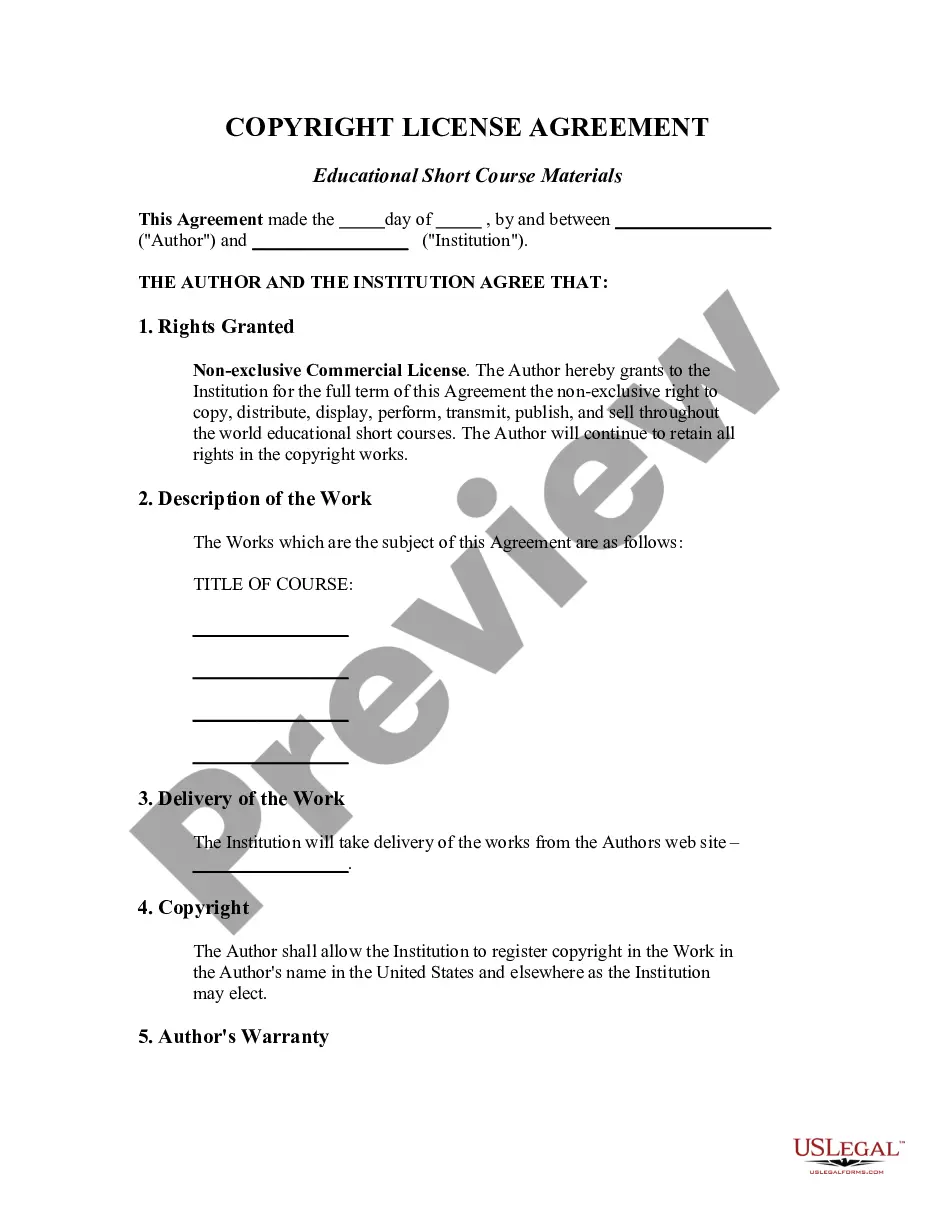
A Copyright License Agreement is a contract under which a copyright owner allows another person or company to use their copyrighted material in one way or another: to reprint it, or distribute it, to use it for a specified amount of time, and more.
Copyrights give the copyright owner exclusive rights over their original works. While not all works are copyrightable, a few examples of copyrightable materials include movies, literary works, live performances, sound recordings, radio broadcasts, and even software.