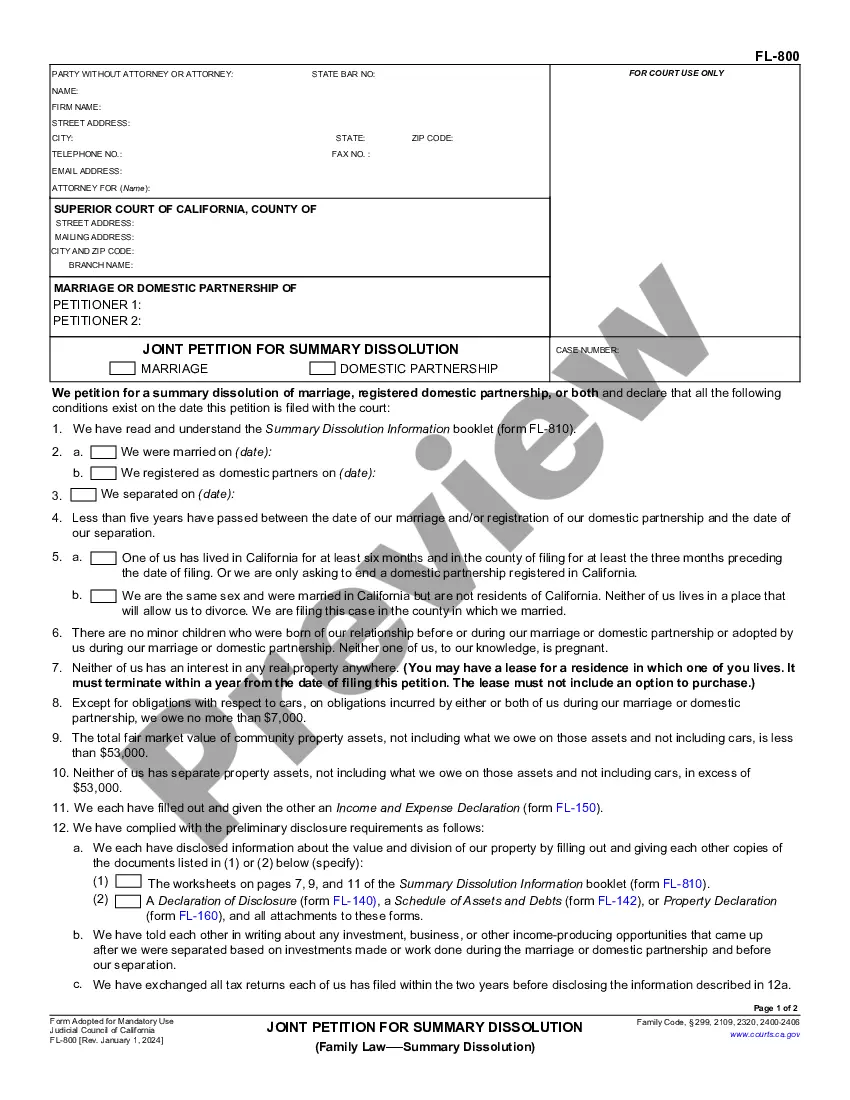
Affidavit in Support of Motion for Reduction of Amount of Bail or Release of Defendant on Own Recognizance
What is this form?
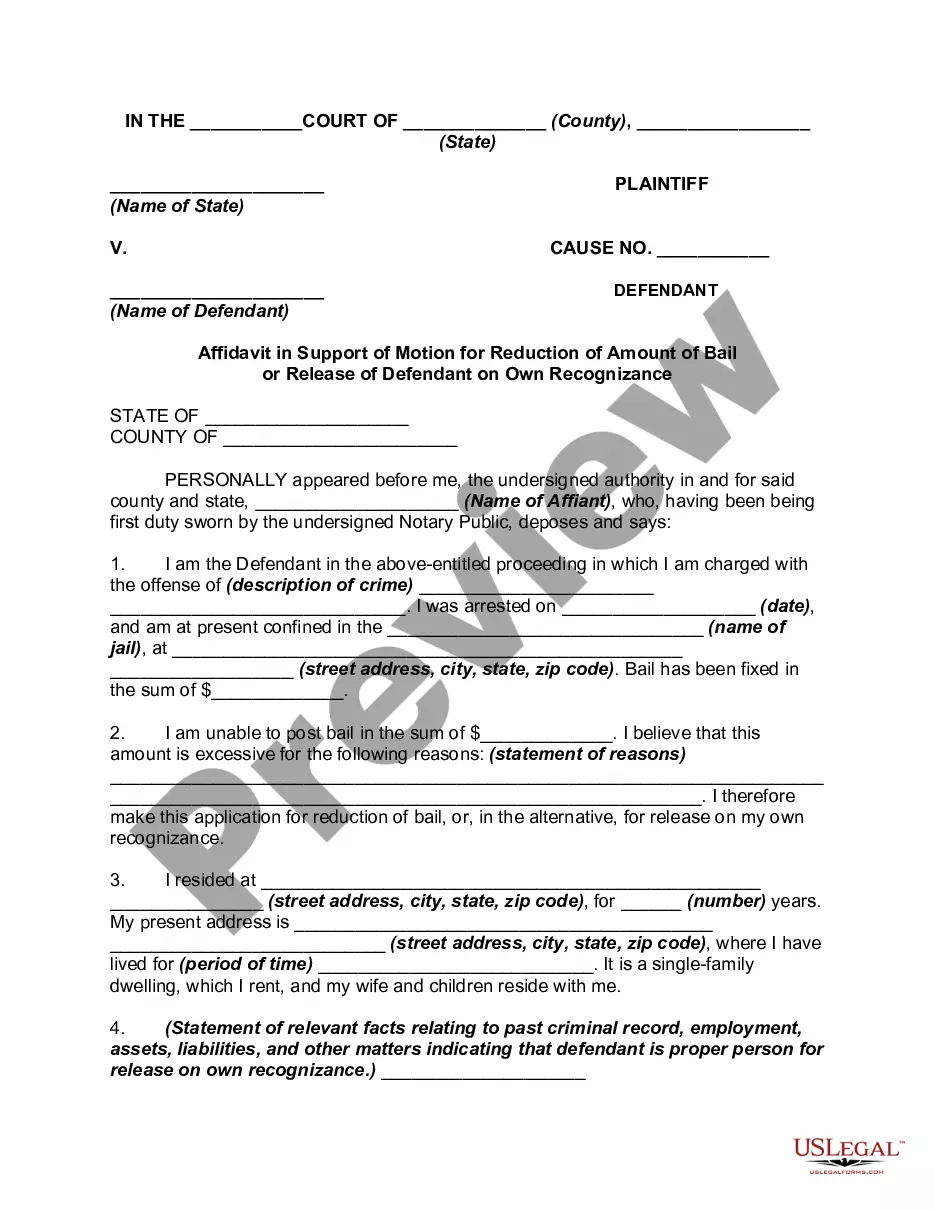
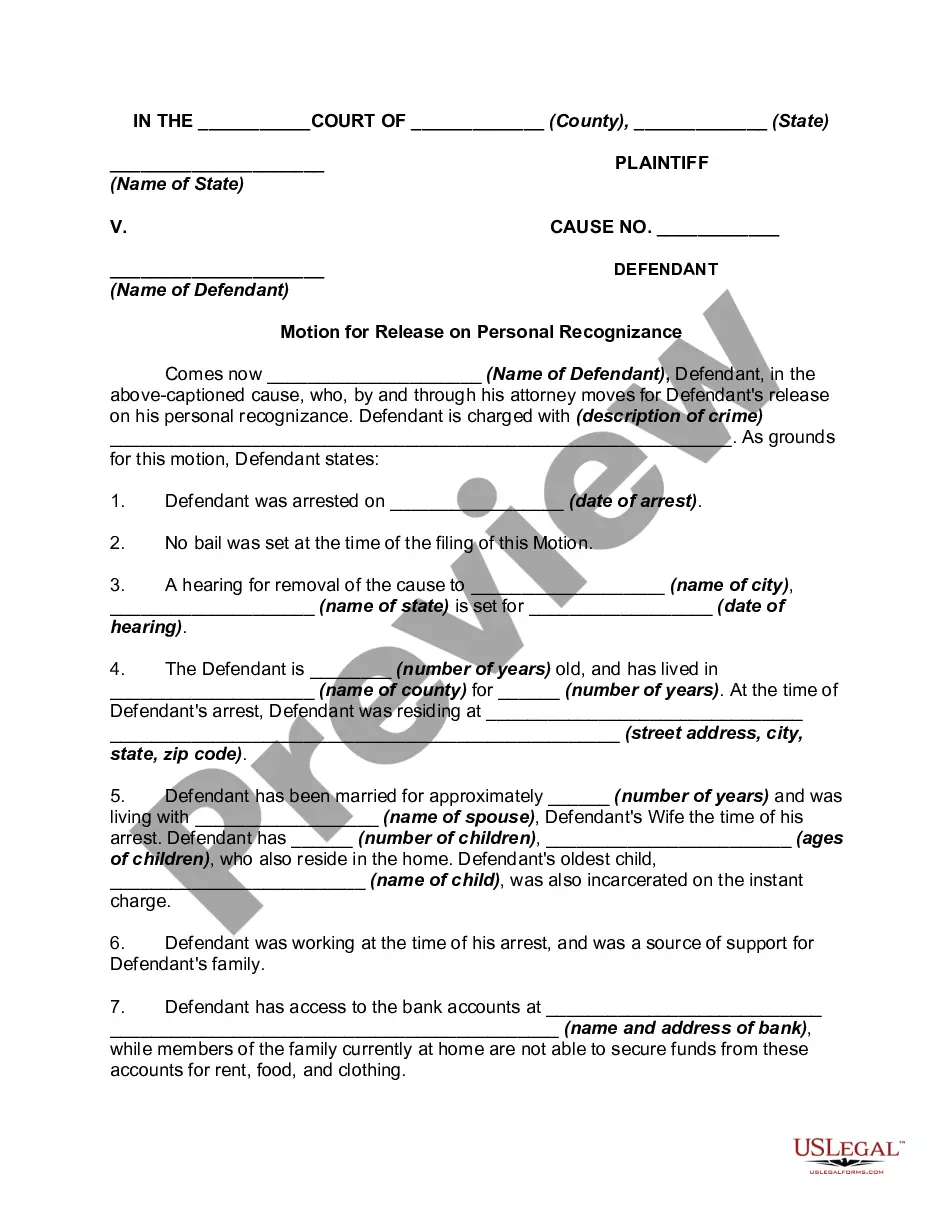
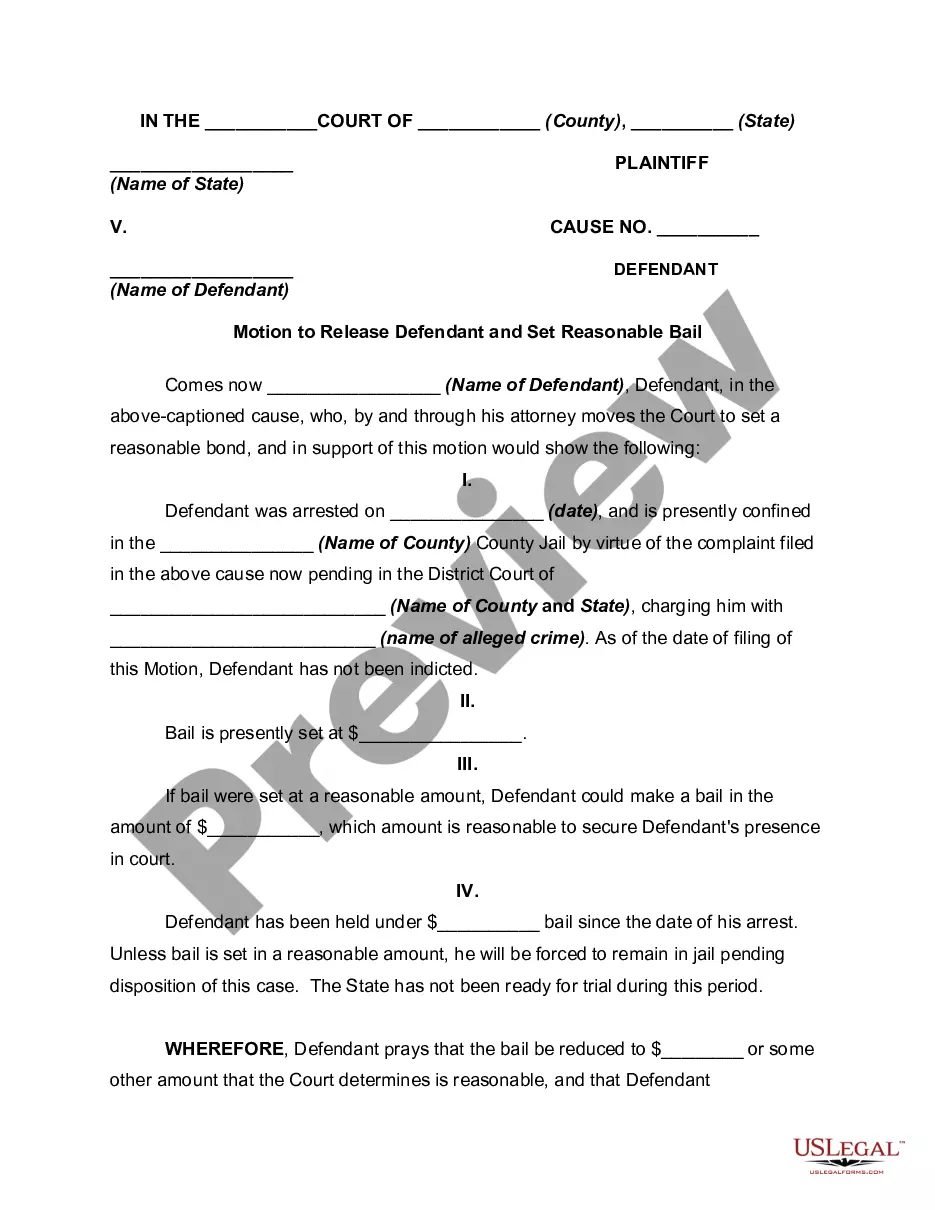
The Affidavit in Support of Motion for Reduction of Amount of Bail or Release of Defendant on Own Recognizance is a legal document that a defendant uses to request a reduction in bail or to be released on their own recognizance. This form allows the court to assess the defendant's circumstances and determine whether they can be released without posting bail, which protects both the defendant's rights and the court's integrity. It differs from standard bail applications by emphasizing the defendant's commitment to appear in court without financial obligation.
Key parts of this document
- Defendant's information, including personal details and crime charged.
- Details about the arrest date and current jail location.
- Statement regarding the inability to post bail and reasons for requesting a reduction.
- Information about the defendantâs residency and family situation.
- Relevant facts supporting the request for release on recognizance.
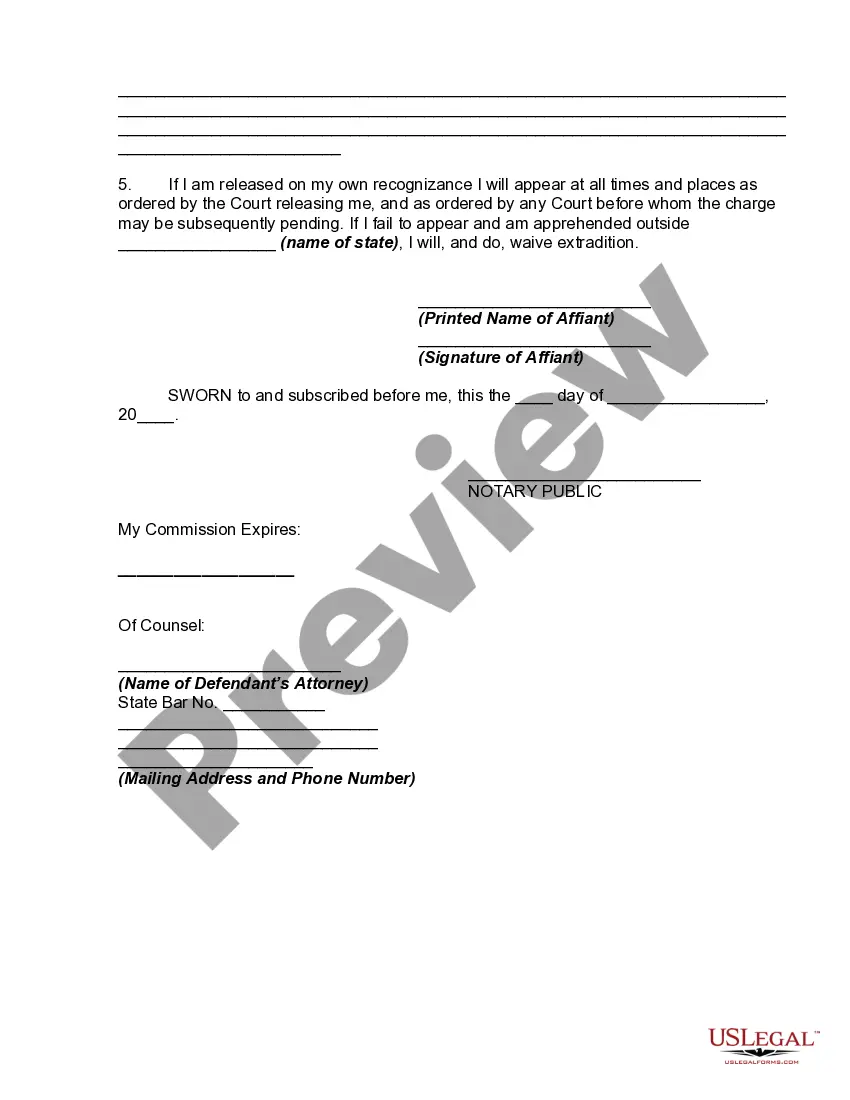
- Affidavit section signed in front of a notary public.
Situations where this form applies
This form is typically used in criminal cases where a defendant seeks to have their bail amount reduced or to be released from custody without the need to post bail. It is appropriate during pre-trial proceedings when the defendant can demonstrate that they have valid reasons for their request, such as financial hardship or community ties that assure their appearance in court.
Intended users of this form
- Defendants facing criminal charges who are currently in custody.
- Individuals unable to post the fixed bail amount set by the court.
- Anyone seeking a favorable ruling from the court regarding their release conditions.
Instructions for completing this form
- Identify the parties involved: fill in your name and the case number.
- Provide details about the arrest, including the date and location of confinement.
- State the amount of bail that has been set and explain why it is excessively high.
- Include your residential information and details about family circumstances.
- Make statements about your past criminal record, employment status, and other facts supporting your release.
- Sign the affidavit before a notary public after ensuring all information is accurate.
Notarization requirements for this form
Yes, this form must be notarized to be legally valid. It ensures that the affidavit is recognized by the court and protects the integrity of the document. US Legal Forms offers integrated online notarization services that are available 24/7 through secure video calls, making the process convenient and legally compliant without the need to travel.
Get your form ready online
Our built-in tools help you complete, sign, share, and store your documents in one place.
Make edits, fill in missing information, and update formatting in US Legal Forms—just like you would in MS Word.
Download a copy, print it, send it by email, or mail it via USPS—whatever works best for your next step.
Sign and collect signatures with our SignNow integration. Send to multiple recipients, set reminders, and more. Go Premium to unlock E-Sign.
If this form requires notarization, complete it online through a secure video call—no need to meet a notary in person or wait for an appointment.
We protect your documents and personal data by following strict security and privacy standards.

Make edits, fill in missing information, and update formatting in US Legal Forms—just like you would in MS Word.

Download a copy, print it, send it by email, or mail it via USPS—whatever works best for your next step.

Sign and collect signatures with our SignNow integration. Send to multiple recipients, set reminders, and more. Go Premium to unlock E-Sign.

If this form requires notarization, complete it online through a secure video call—no need to meet a notary in person or wait for an appointment.

We protect your documents and personal data by following strict security and privacy standards.
Mistakes to watch out for
- Leaving fields blank, particularly those related to personal details.
- Failing to provide sufficient reasons for the bail reduction request.
- Not including all required signatures and notary acknowledgment.
Why use this form online
- Convenient access to downloadable forms without needing to visit a legal office.
- Editability of the form allows users to customize it to their specific situation.
- Reliability of professionally drafted forms ensures compliance with legal standards.
Legal use & context
- This form is used in judicial proceedings to support a legal motion related to bail.
- It may impact the defendant's future court appearances and overall case outcomes.
- Properly completed forms are vital for ensuring that the court recognizes the request for modification of bail conditions.
What to keep in mind
- The affidavit is a crucial document for defendants seeking bail reductions or release on recognizance.
- Accurate completion of the form can significantly influence the court's decision regarding release.
- Consulting local laws is essential to ensure compliance and effectiveness of the affidavit.
Looking for another form?
Form popularity
FAQ
If you want your bail reduced, however, you will need to ask a judge to lower it. Your first arraignment usually takes place within 24 to 48 hours of the arrest. The court will advise you of your rights and set bail at this initial appearance, and your lawyer can make an argument about your bail.
California law also permits courts to reduce bail following a change in circumstances. Specifically, Penal Code § 1289 authorizes a court to reduce the bail if good cause is shown. succeeds in having some charges dismissed, he or she may also be able to reduce your bail.
Bail, however, is not excessive merely because a defendant cannot afford it. In a Nutshell: One can request that a judge reduce bail by explaining the individual's ties to community through employment and family, history of never failing to appear and, if applicable, tendering one's passport or visa to the court clerk.
A bail reduction hearing usually takes place within 48 hours of the request and sometimes the next day.
There is no set minimum or maximum amount of times bond can be reduced. It is something that is usually within the discretion of the judge. In general, a person has a right to a reasonable bond. If there is a set bond and a judge reduces...
Without having to post bail, and given a future date to appear in court.If that does not occur, then the defendant must post bail to be released from custody. Bail is the means used to secure a person's release from jail.
A judge has the power to lower, change, or eliminate a cash bond at anytime through the court process. However, most judges will not change a bond that has been set on a case where the defendant...
Generally, the way the defendant can request a lower bond and release from jail is by motion. A motion is a formal request directed to the judge requesting an order for one thing or the other. To get the bond amount reduced, the defendant would file a Motion to Reduce Bond (or a Motion to Reduce Bail).
Hiring an attorney for bond reductions, is often less expensive than paying a bondsman. For example, to get out of jail for a DUI, you might have to pay $500. But on a 3rd degree felony, like grand theft, the amount might be $5,000. This amount may be higher or lower, depending on the facts these are merely examples.