California Grant Deed - Husband and Wife to Individual
Understanding this form
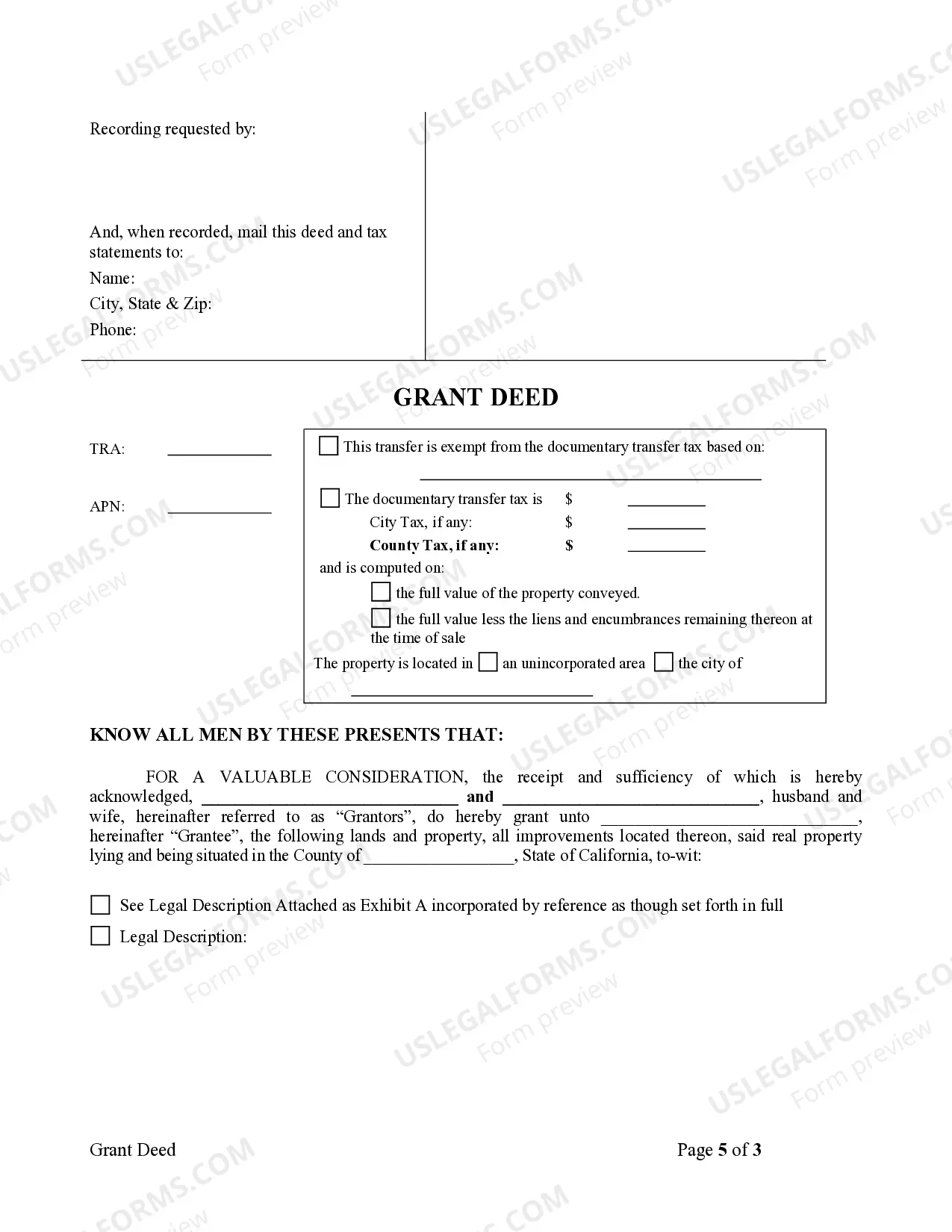
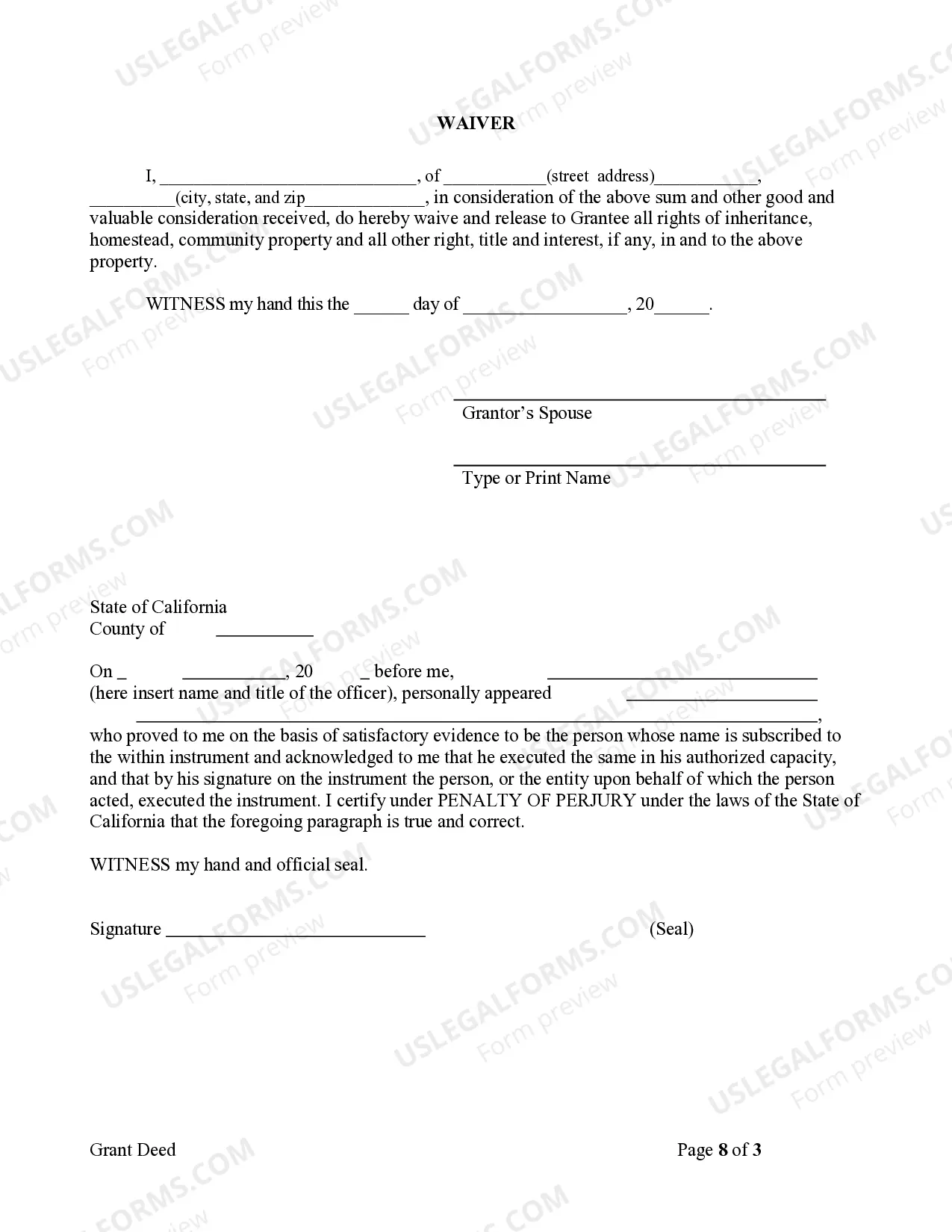
The Grant Deed - Husband and Wife to Individual is a legal document used for transferring property ownership from a married couple (the Grantors) to a single individual (the Grantee). This deed serves to convey and grant ownership rights of the specified property, ensuring compliance with state statutory laws. Unlike other types of deeds, this form specifically addresses transfers occurring between spouses and a third party, which is essential for clarifying ownership rights in real estate transactions.
Main sections of this form
- Names and addresses of Grantors (Husband and Wife).
- Name and address of the Grantee (Individual).
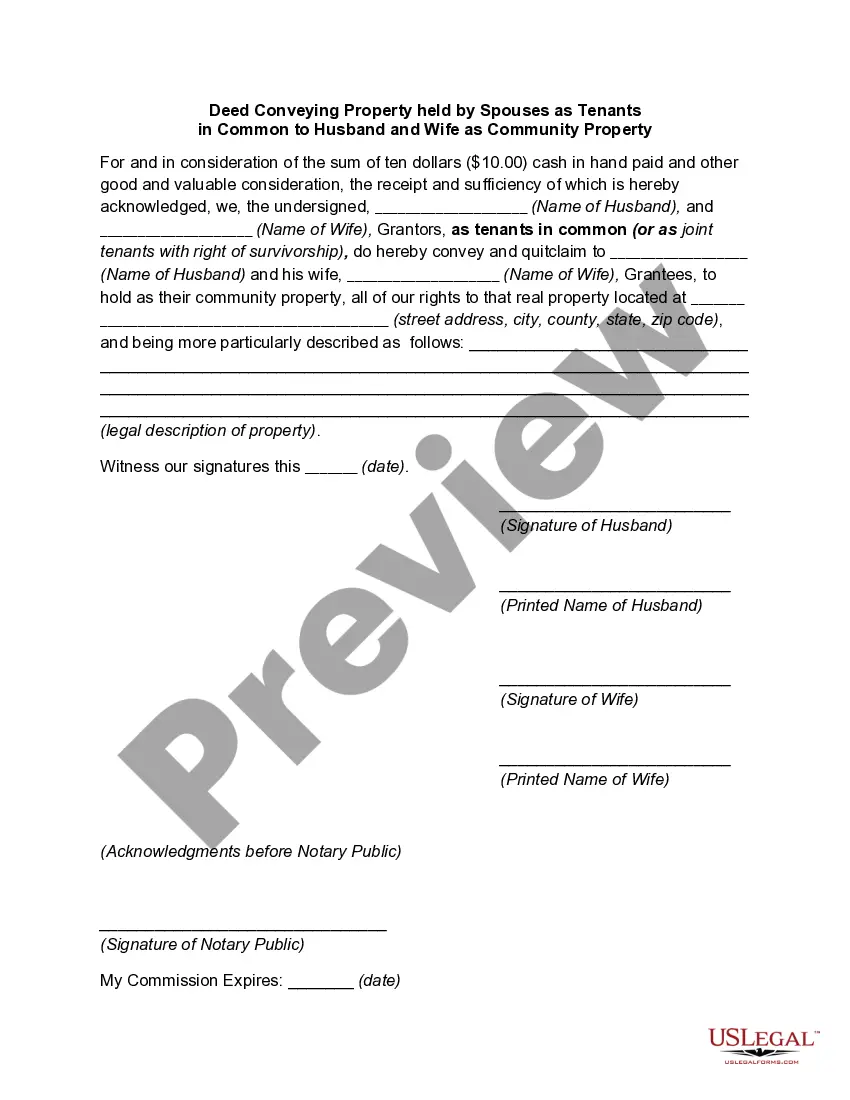
- Description of the property being transferred.
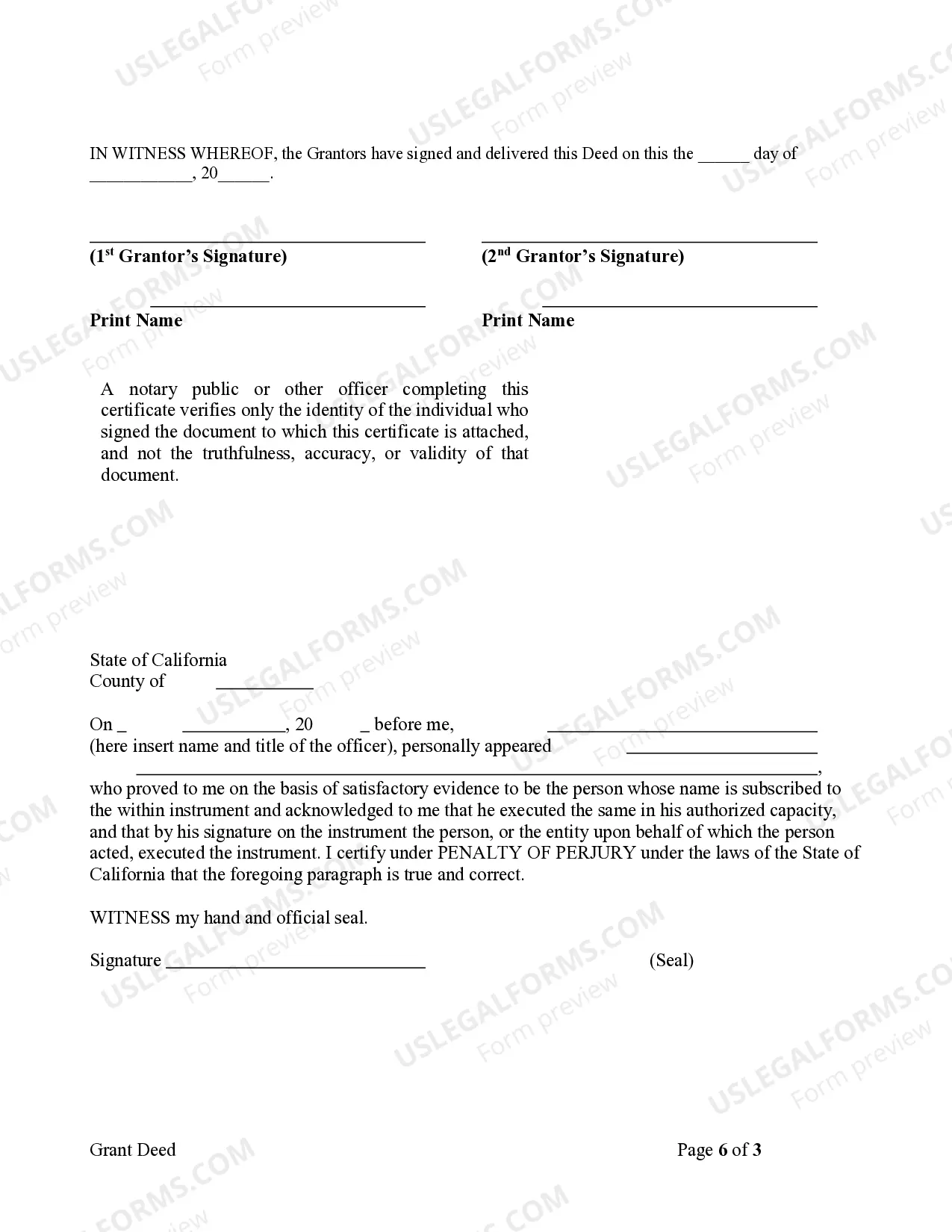
- Signature lines for Grantors.
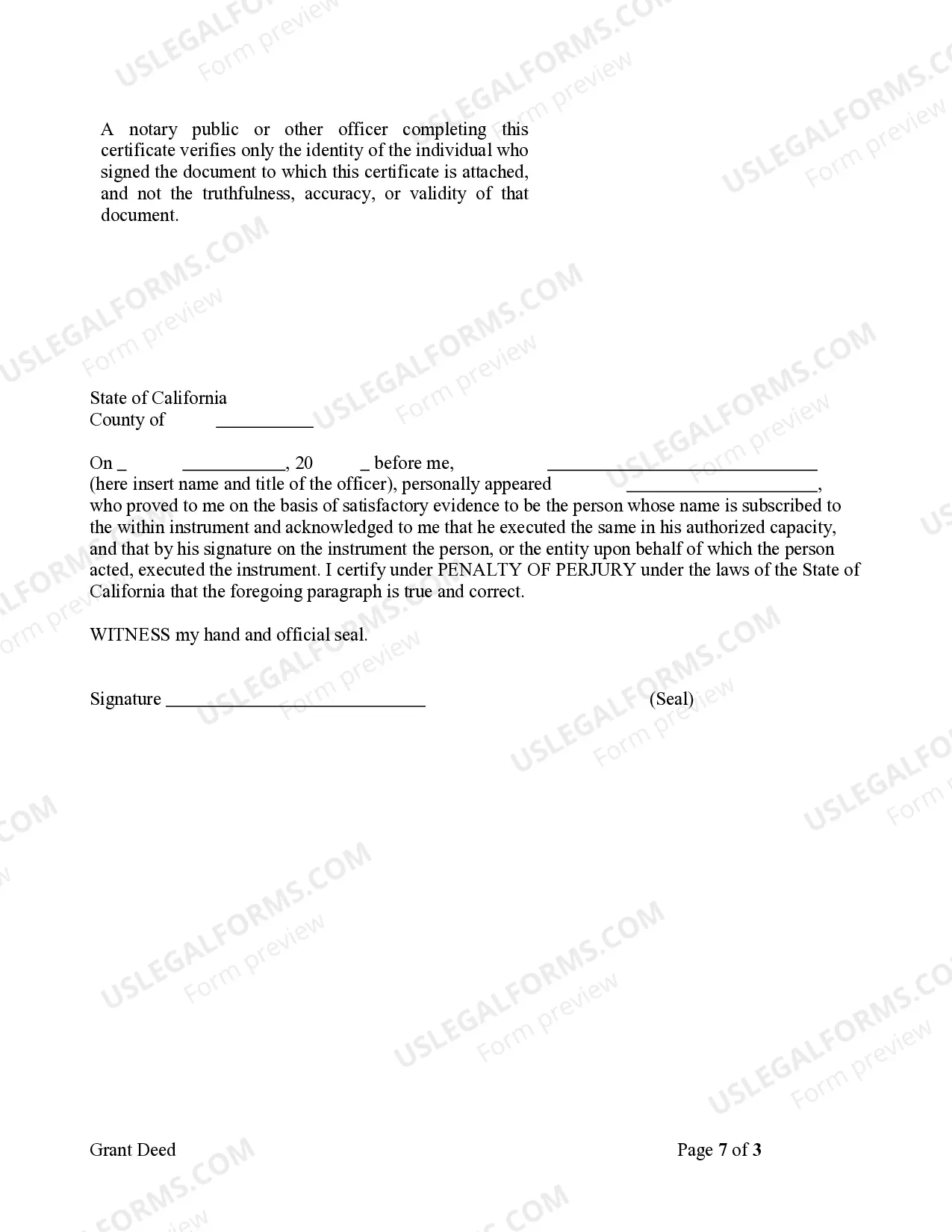
- Notary acknowledgment section (if applicable).
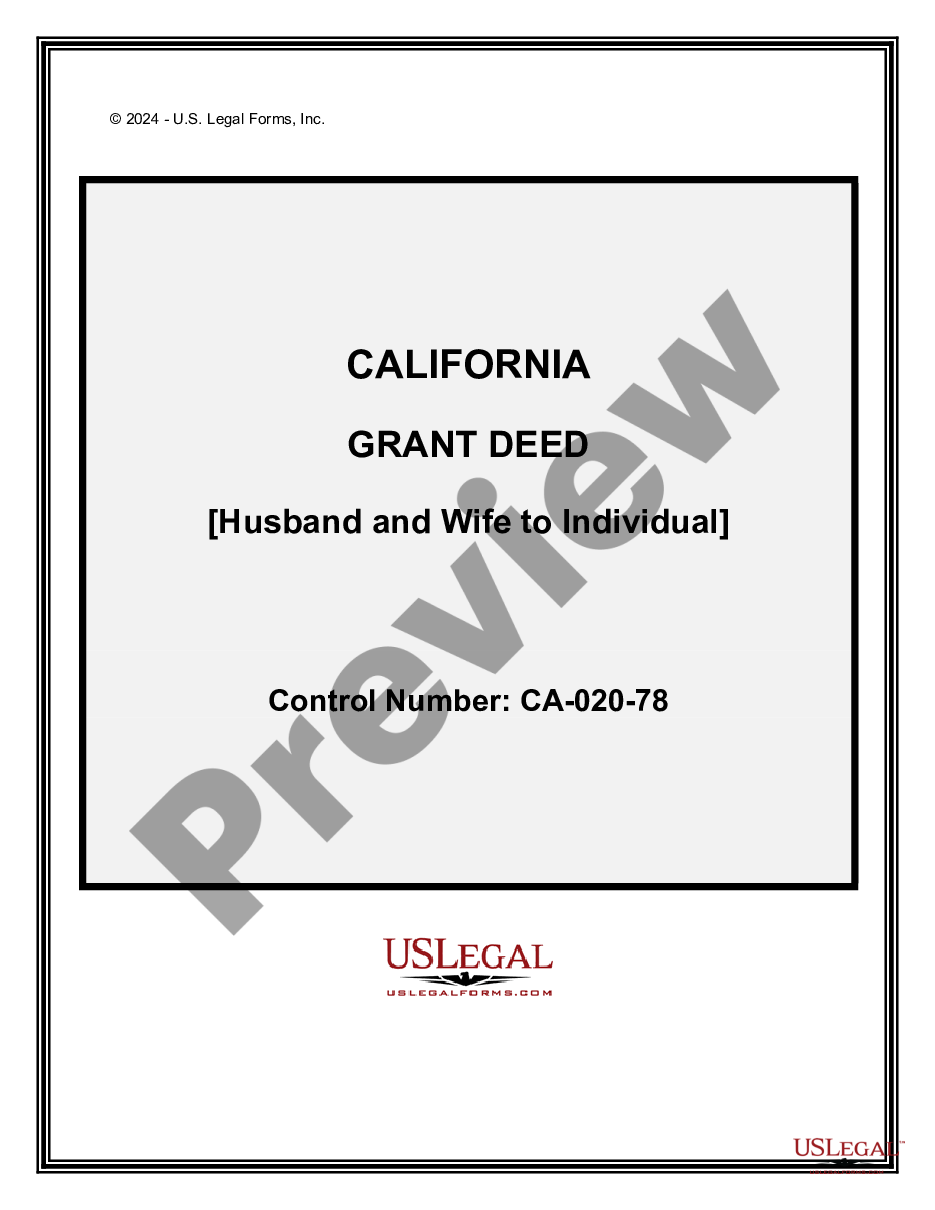
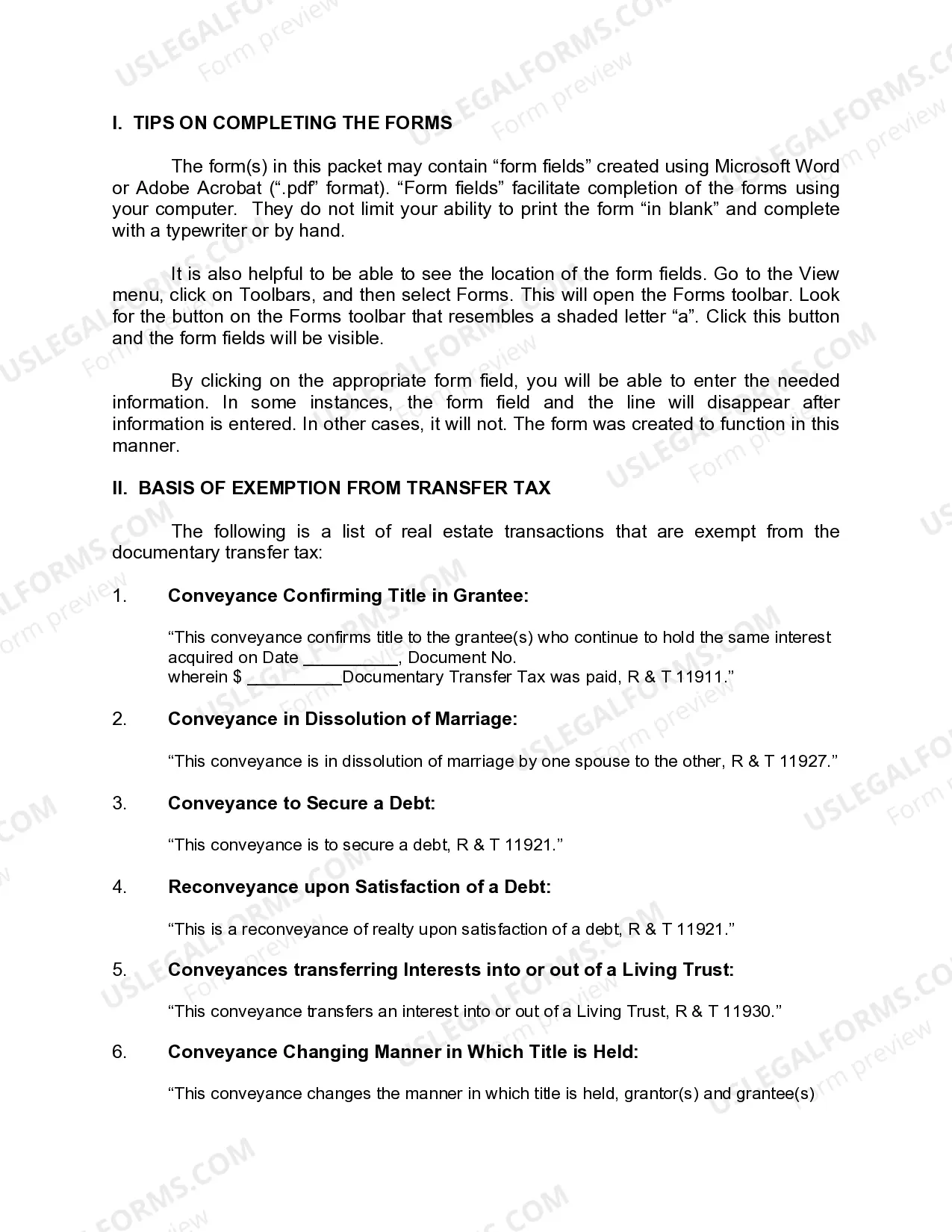
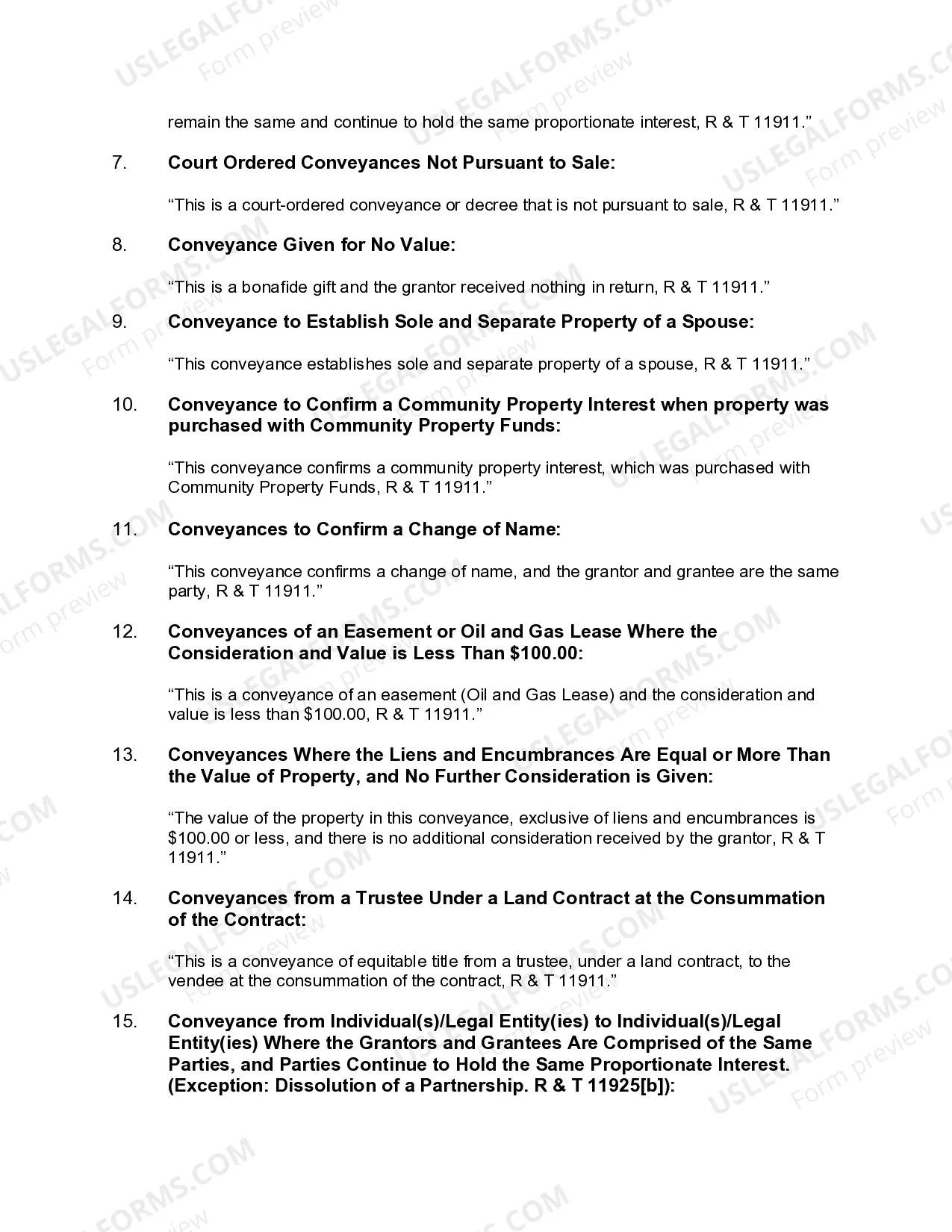
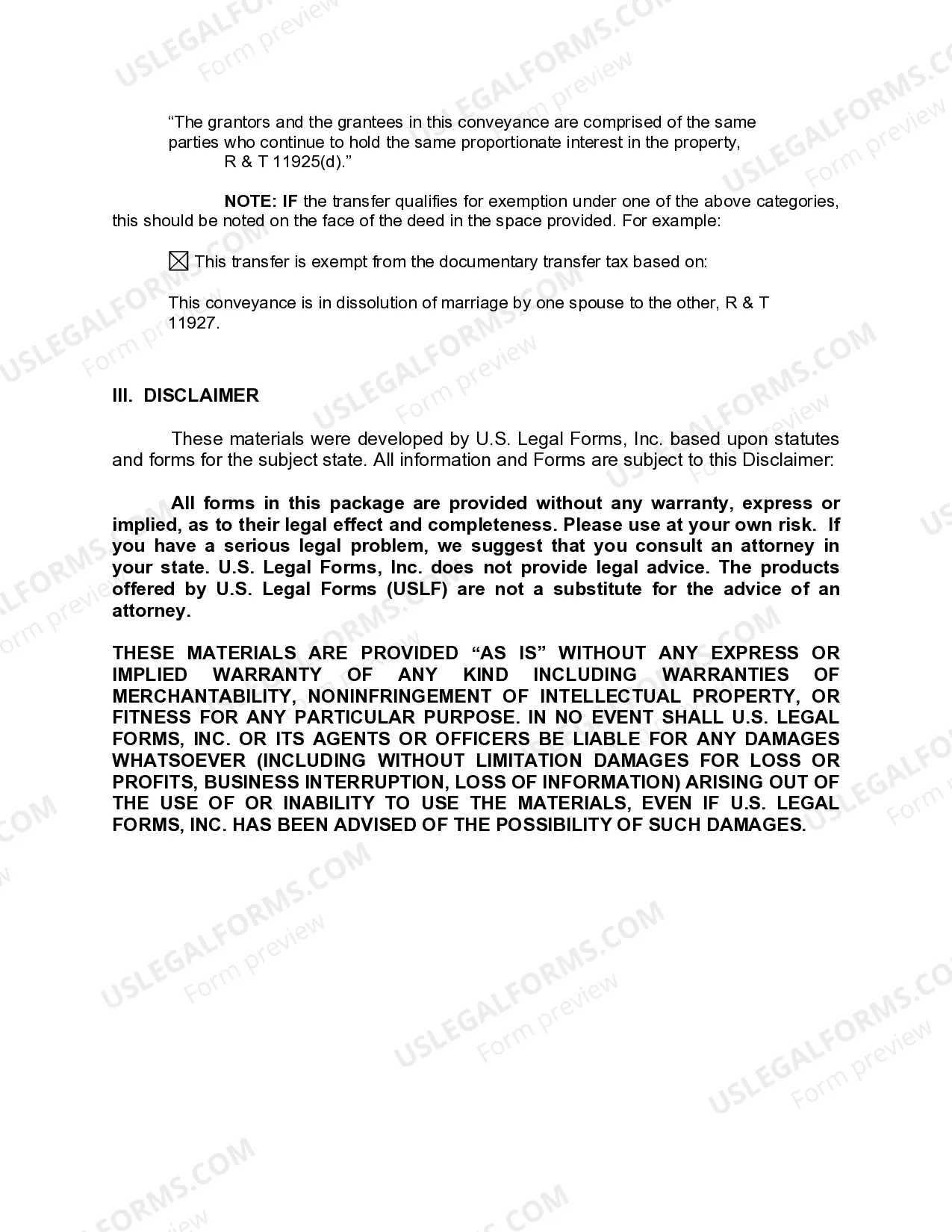
- Exemption declaration for transfer tax, if applicable.

When this form is needed
This form should be used when a married couple wishes to transfer their jointly owned property to an individual. Scenarios include situations like gifting property to a family member, confirming a property interest during or after a divorce, or when altering property rights for estate planning purposes.
Who can use this document
- Married couples looking to transfer ownership of real estate to a third party.
- Individuals handling property transfers related to divorce or separation.
- Anyone needing to document a change in property ownership status.
How to complete this form
- Identify the Grantors: Enter the full names and addresses of both Husband and Wife.
- Specify the Grantee: Enter the full name and address of the individual receiving the property.
- Describe the Property: Clearly outline the property being transferred, including any relevant descriptions or details.
- Include the transfer date: Write the date when the transfer will take effect.
- Sign the deed: Both Grantors must sign the document in front of a notary public if notarization is required.
- Complete any tax exemption declarations if applicable: Note if the transfer is exempt from any taxes as specified in the deed.
Is notarization required?
This document requires notarization to meet legal standards. US Legal Forms provides secure online notarization powered by Notarize, allowing you to complete the process through a verified video call, available 24/7.
Get your form ready online
Our built-in tools help you complete, sign, share, and store your documents in one place.
Make edits, fill in missing information, and update formatting in US Legal Forms—just like you would in MS Word.
Download a copy, print it, send it by email, or mail it via USPS—whatever works best for your next step.
Sign and collect signatures with our SignNow integration. Send to multiple recipients, set reminders, and more. Go Premium to unlock E-Sign.
If this form requires notarization, complete it online through a secure video call—no need to meet a notary in person or wait for an appointment.
We protect your documents and personal data by following strict security and privacy standards.

Make edits, fill in missing information, and update formatting in US Legal Forms—just like you would in MS Word.

Download a copy, print it, send it by email, or mail it via USPS—whatever works best for your next step.

Sign and collect signatures with our SignNow integration. Send to multiple recipients, set reminders, and more. Go Premium to unlock E-Sign.

If this form requires notarization, complete it online through a secure video call—no need to meet a notary in person or wait for an appointment.

We protect your documents and personal data by following strict security and privacy standards.
Common mistakes to avoid
- Failing to include a complete property description.
- Omitting signatures from both Grantors.
- Not addressing exemption statements for transfer taxes when applicable.
Benefits of using this form online
- Convenience of immediate access and download from home.
- Editable format that allows for customization to fit your needs.
- Reliability, as the form is drafted by licensed attorneys ensuring legal compliance.
Summary of main points
- This form is specifically for married couples transferring property to an individual.
- Ensure all information is filled out accurately to avoid complications.
- Notarization is usually necessary for legal validity.
Looking for another form?



Form popularity
FAQ
To transfer a grant deed in California, you will first need to obtain a California Grant Deed form that specifies the transfer from husband and wife to an individual. Next, fill out the form with accurate details, including the names of the current owners and the new owner. After that, both parties must sign the deed in the presence of a notary public. Finally, file the completed and notarized deed with the county recorder's office to ensure the transfer is legally recognized.
To transfer ownership from husband to wife, you can use a California Grant Deed - Husband and Wife to Individual. This involves preparing a grant deed that specifies the transfer and having both parties sign it. Ensuring clarity and correctness in the deed format is crucial, and platforms like US Legal Forms can offer the right templates and guidance.
To fill out a California grant deed, begin by identifying the grantor and grantee, including their full names. Next, include the property's legal description and any applicable transfer terms. Using online tools from US Legal Forms can help streamline this process and reduce errors.
Filling out a grant deed in California involves providing specific information about the property, the grantor, and the grantee. You should also include legal descriptions of the property to ensure clarity. Using resources like US Legal Forms can guide you in completing the document correctly and thoroughly.
To have a grant deed prepared, you can either hire a real estate attorney or use a reputable online resource like US Legal Forms. Online platforms often provide templates and guides that simplify the process. Make sure to gather all relevant information about the property and the parties involved for accurate preparation.
Typically, the grantor, who is the person transferring the property, must sign the grant deed in California. If the transfer involves a California Grant Deed - Husband and Wife to Individual, both spouses may need to sign depending on how the property is held. Ensuring all necessary parties sign can prevent complications during the transfer process.
In California, anyone can prepare a grant deed, including individuals and professionals. However, it is advisable to have a qualified attorney or a real estate professional handle the process to ensure accuracy and compliance with state laws. Using a reliable platform like US Legal Forms can simplify preparation and help you avoid potential pitfalls.
The interspousal transfer grant deed in California allows one spouse to transfer ownership of property to the other spouse without incurring transfer taxes. This deed is often used during marriage or divorce proceedings to formally update property ownership. It simplifies the process of conveying property between spouses and ensures that ownership records accurately reflect marital property rights.
When you add someone to a deed in California, there may be tax implications, especially regarding property transfer taxes and reassessments. In many cases, transferring property into joint ownership can trigger a reassessment for tax purposes. However, transfers between spouses typically qualify for exemptions. Consulting with a tax advisor or legal expert can clarify how these implications affect your specific situation.
To add a spouse to a deed in California, you will need to complete a new grant deed form that lists both of your names. Make sure to include all details about the property to ensure clarity. After signing and notarizing the document, you will need to file it with the county recorder’s office where the property is located. This action legally recognizes both individuals as owners.