Inter Vivos QTIP Trust with Principal to Donor's Children on Spouse's Death
What this document covers
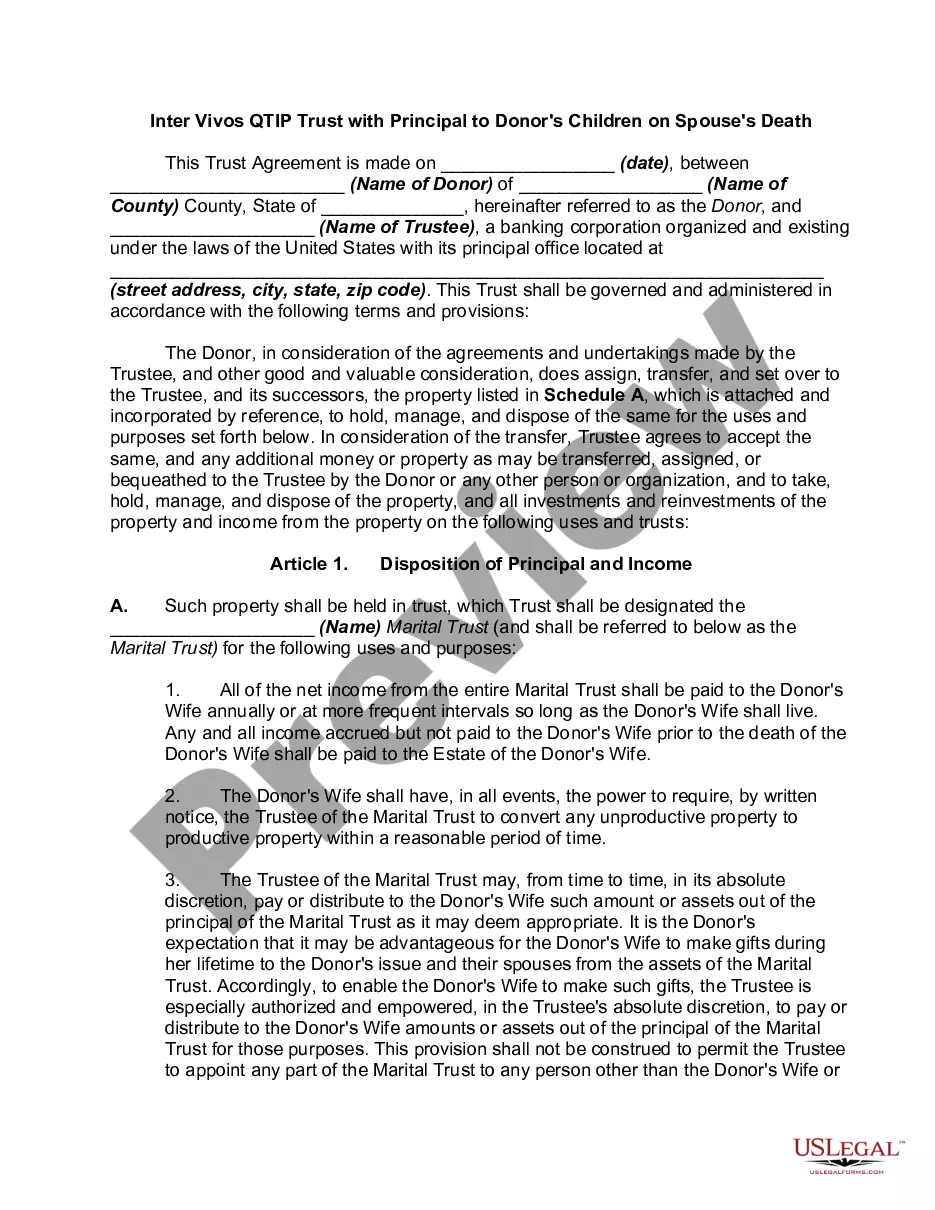
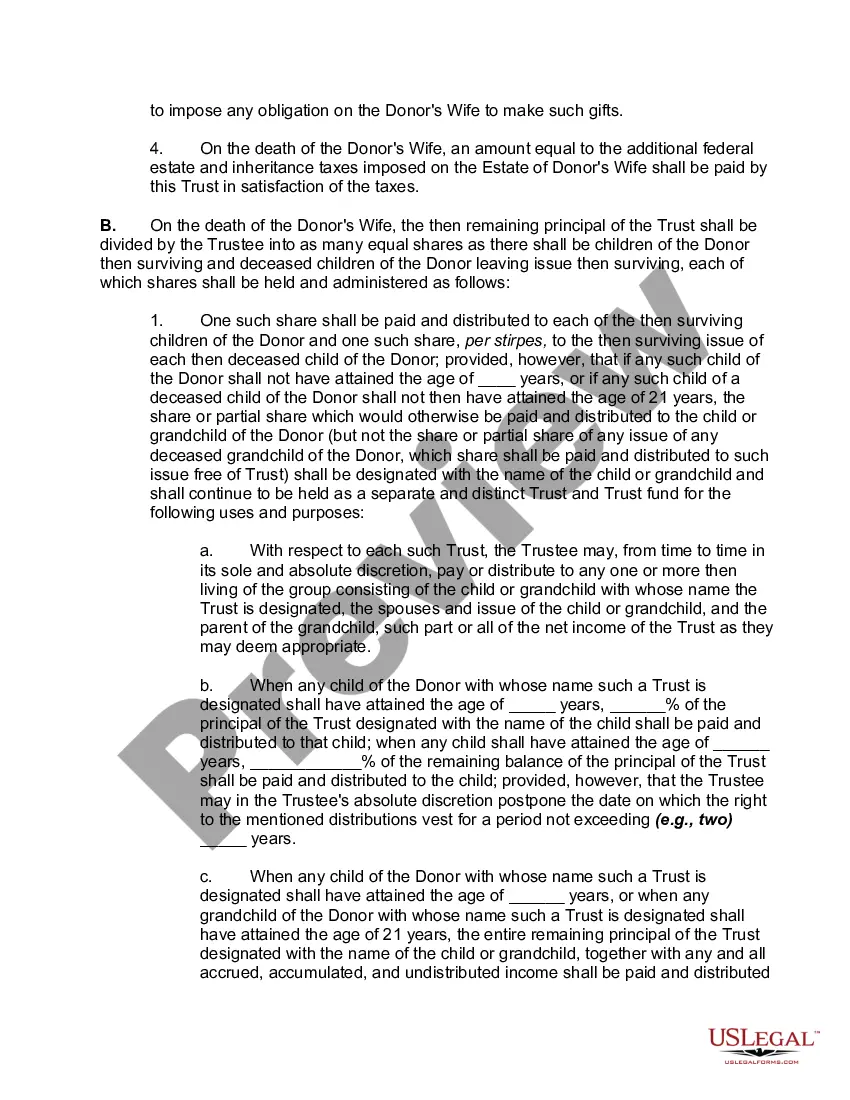
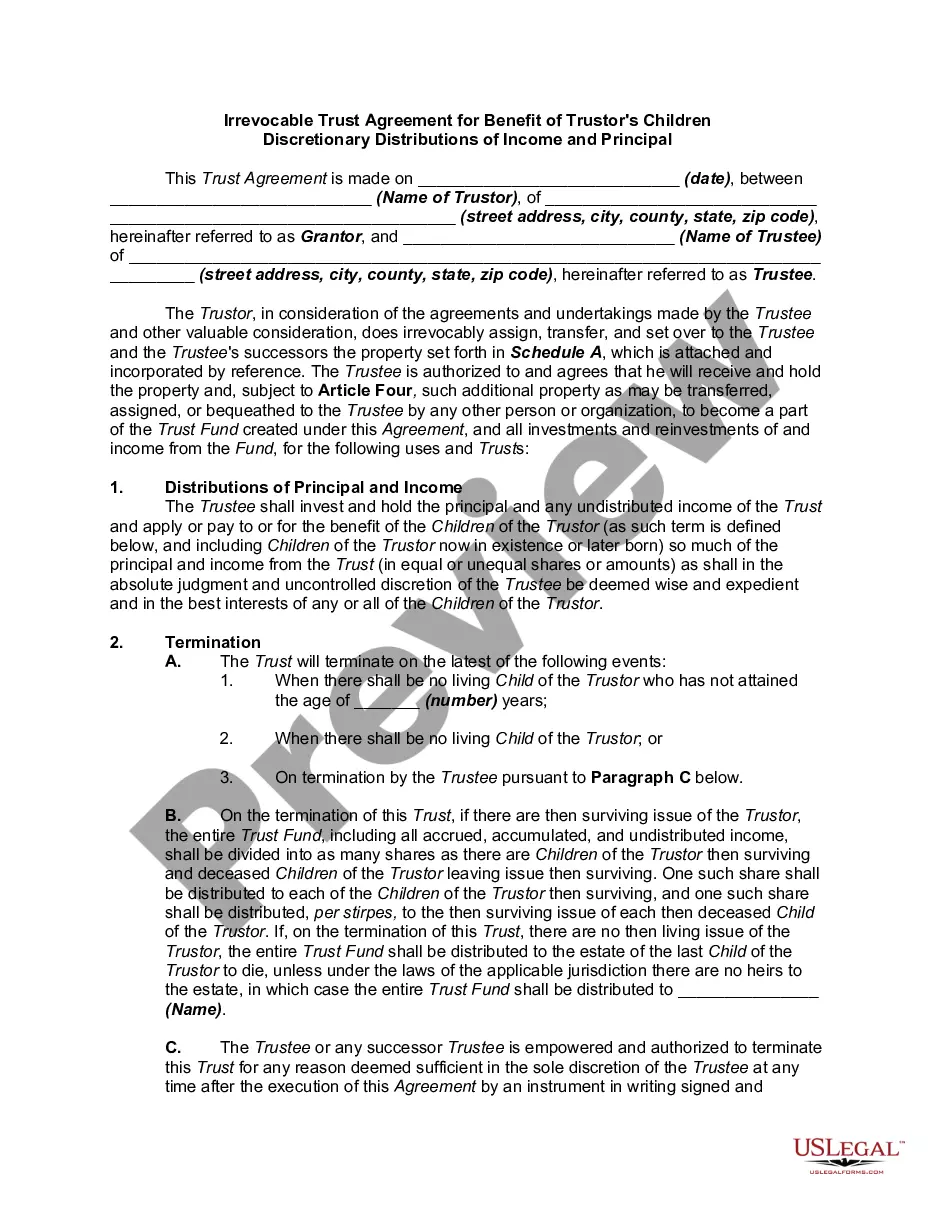
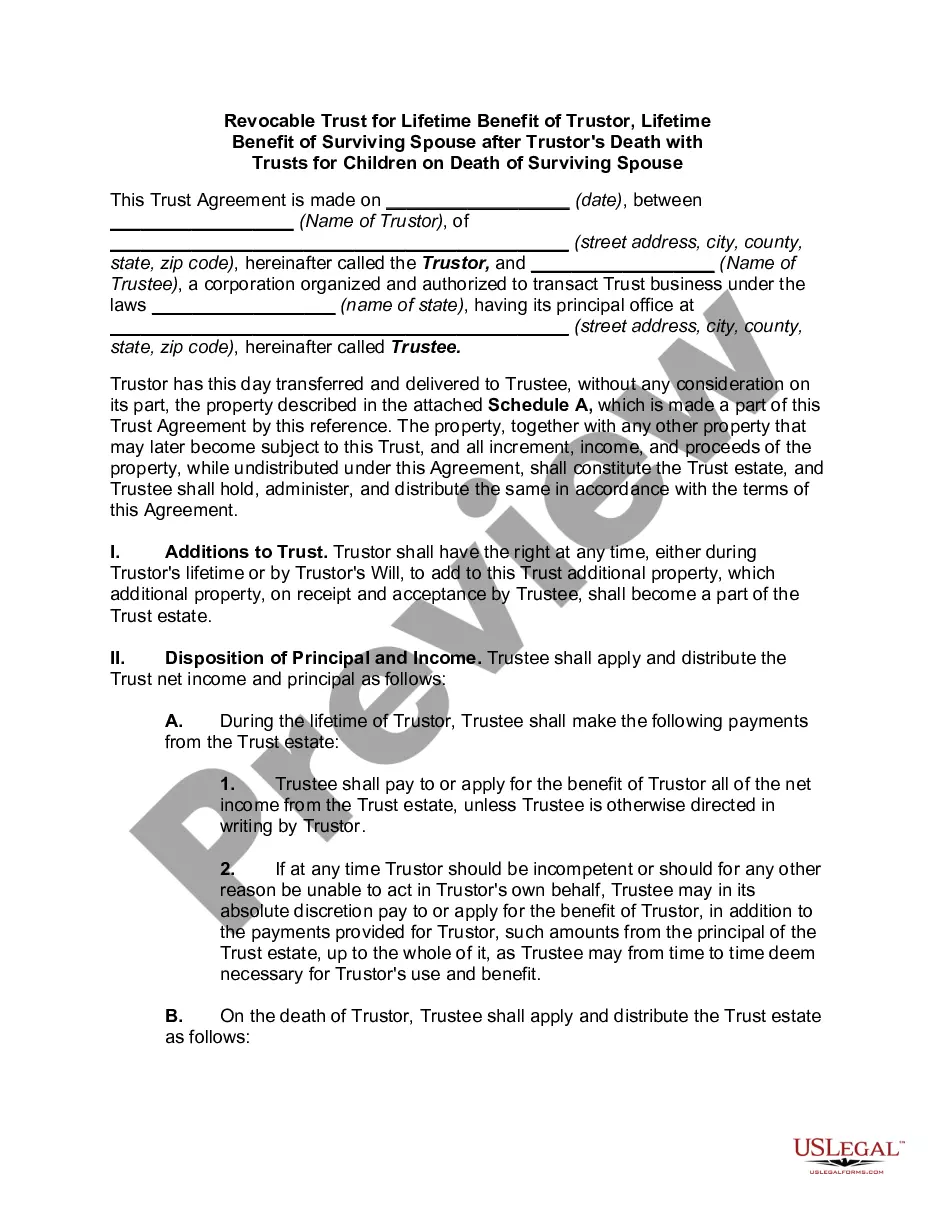
The Inter Vivos QTIP Trust with Principal to Donor's Children on Spouse's Death is a specialized estate planning tool designed to provide for a spouse during their lifetime while ensuring that the principal of the trust is ultimately passed on to the donor's children. This trust allows the donor to designate income payments to their spouse while specifying that the remaining assets will go to their children after the spouse's death. Unlike other types of trusts, this QTIP trust ensures that the assets qualify for the unlimited marital deduction for federal estate tax purposes, thereby minimizing tax liabilities during the donor's life and after their passing.
Main sections of this form
- Trust Agreement: Establishes the legal relationship between the donor and trustee.
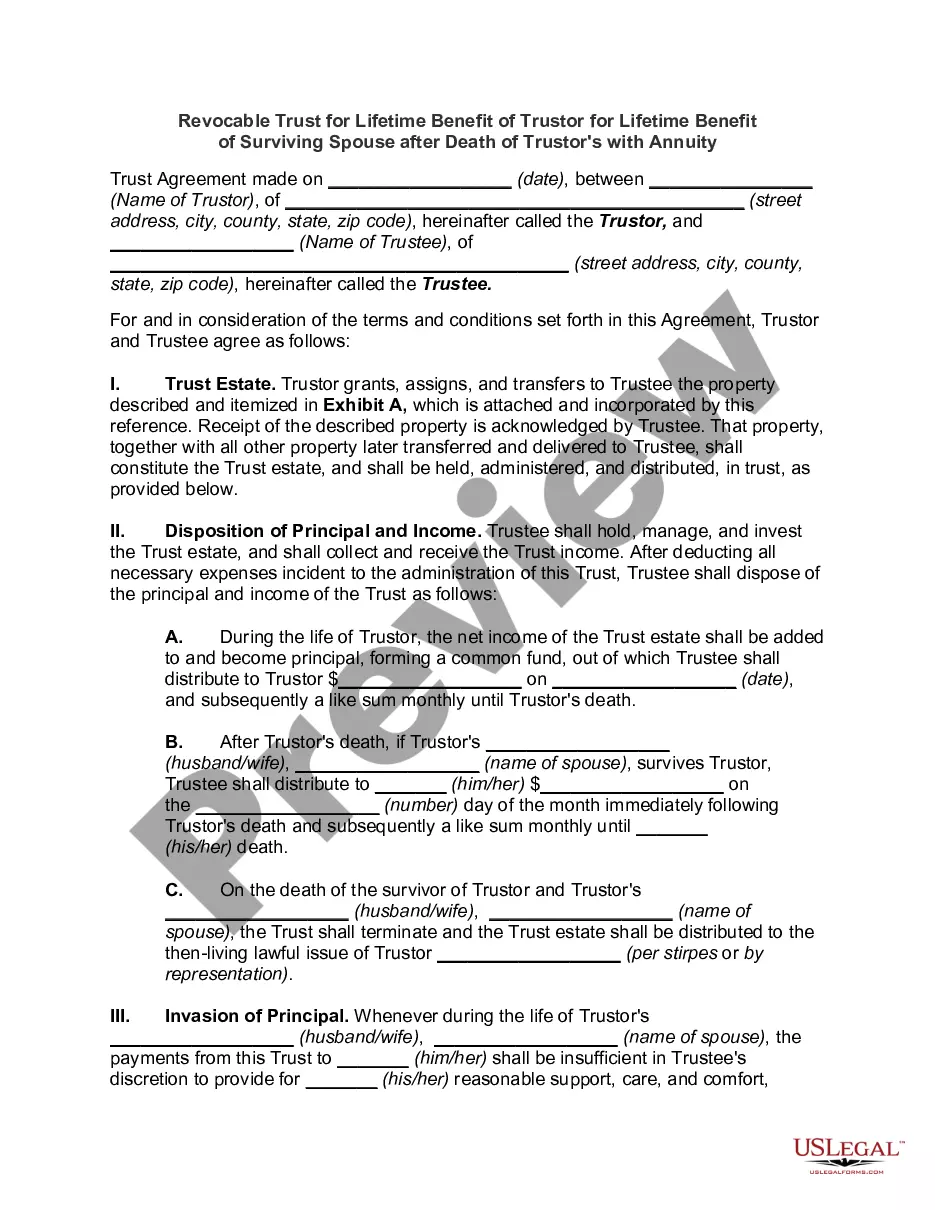
- Income Distribution: States that net income is paid to the donorâs spouse during their lifetime.
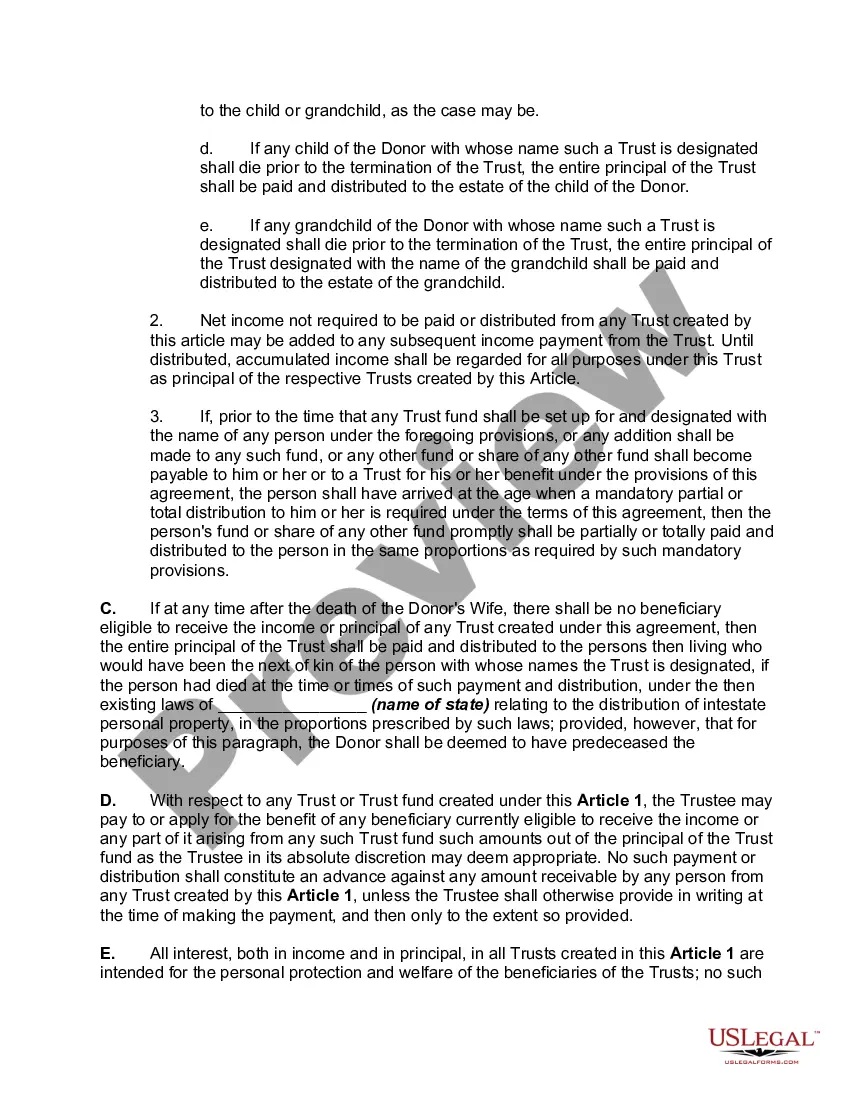
- Principal Distribution: Details how remaining trust assets are divided among the donorâs children upon the spouseâs death.
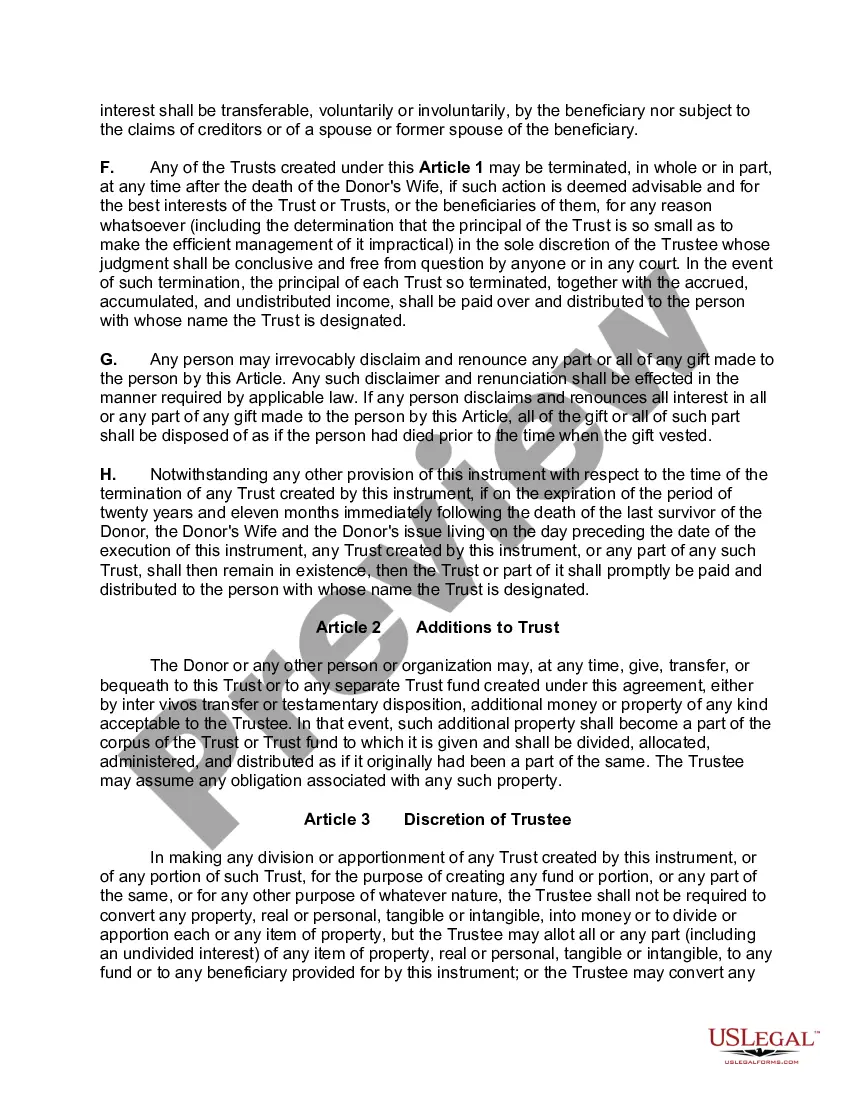
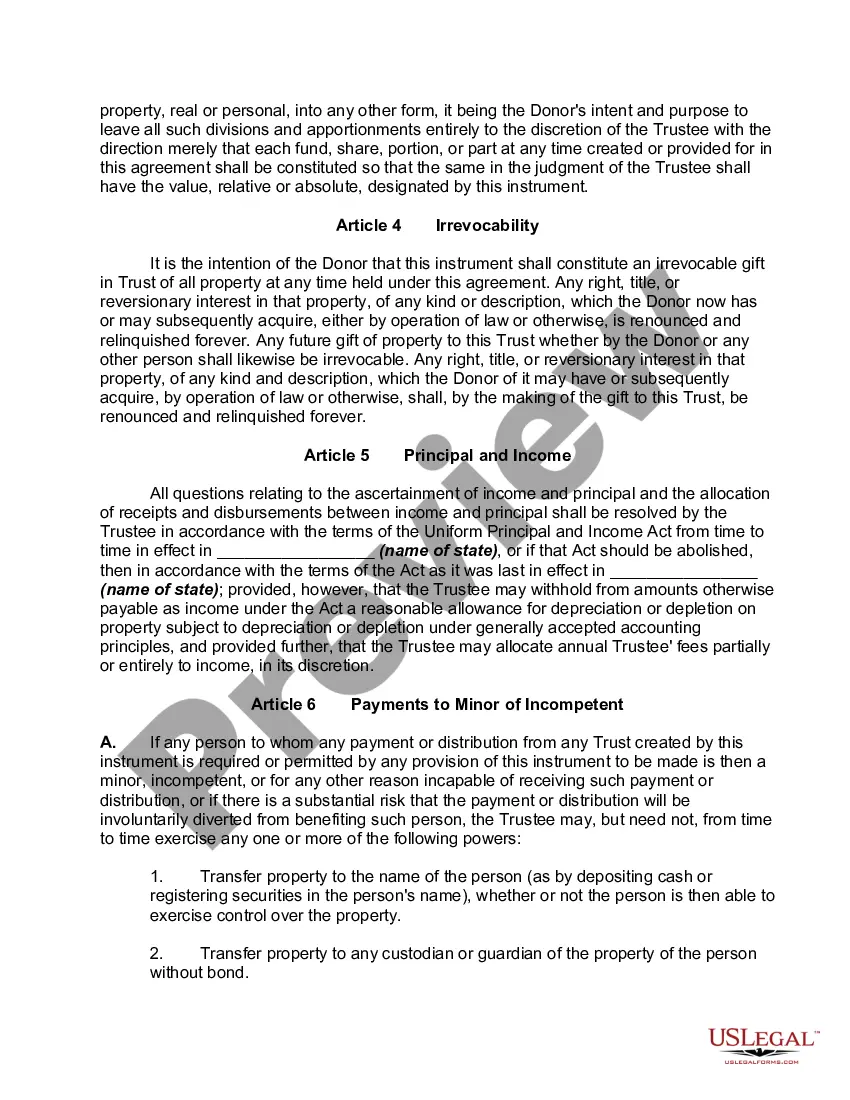
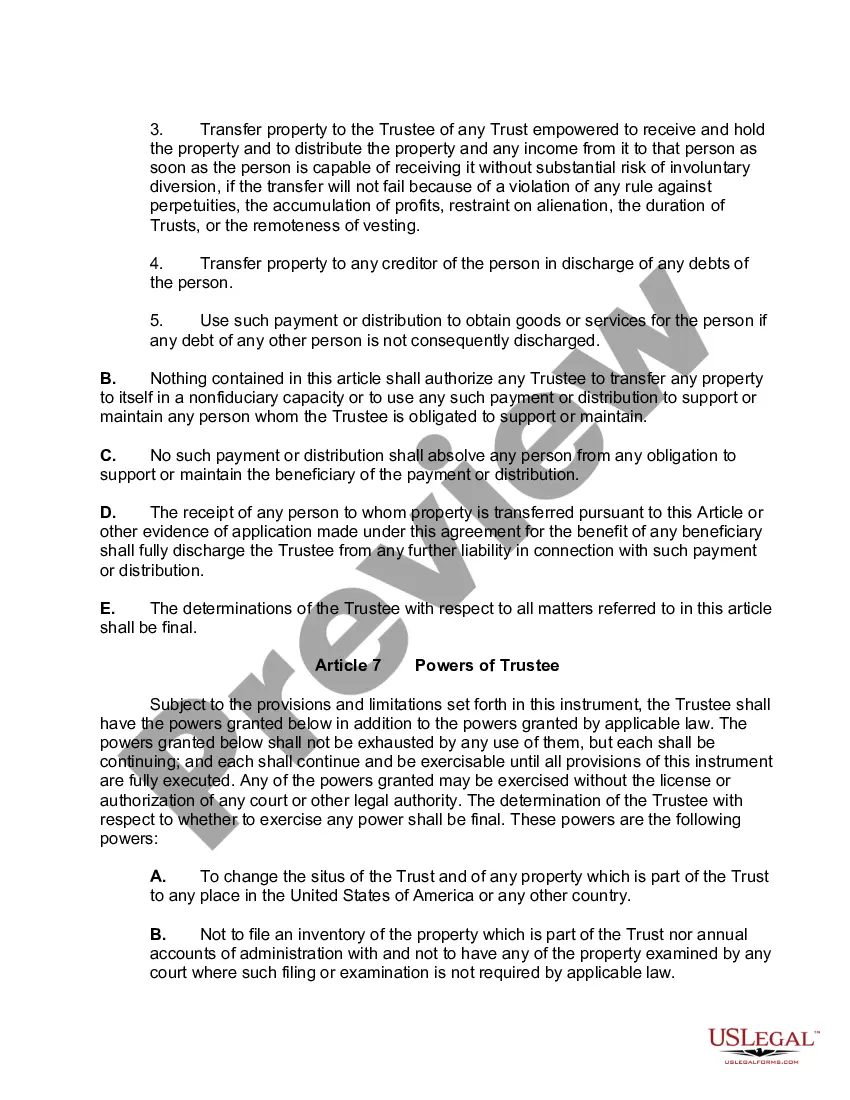
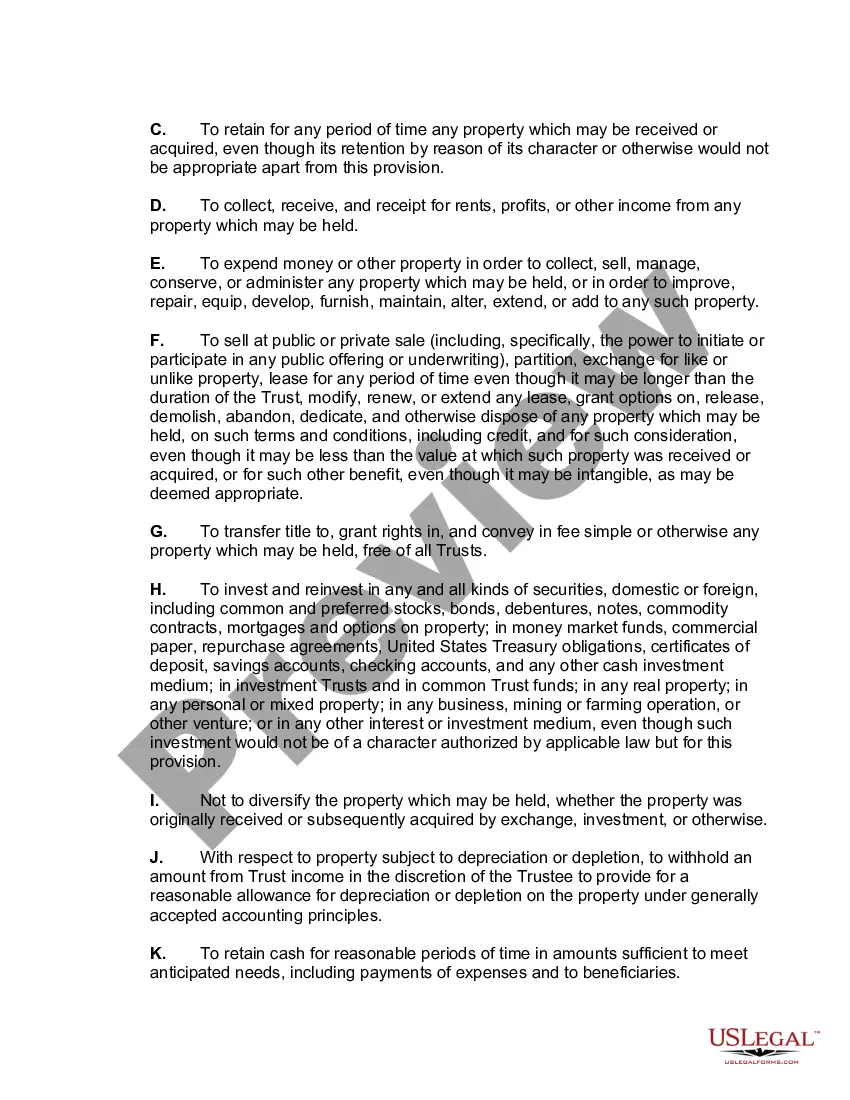
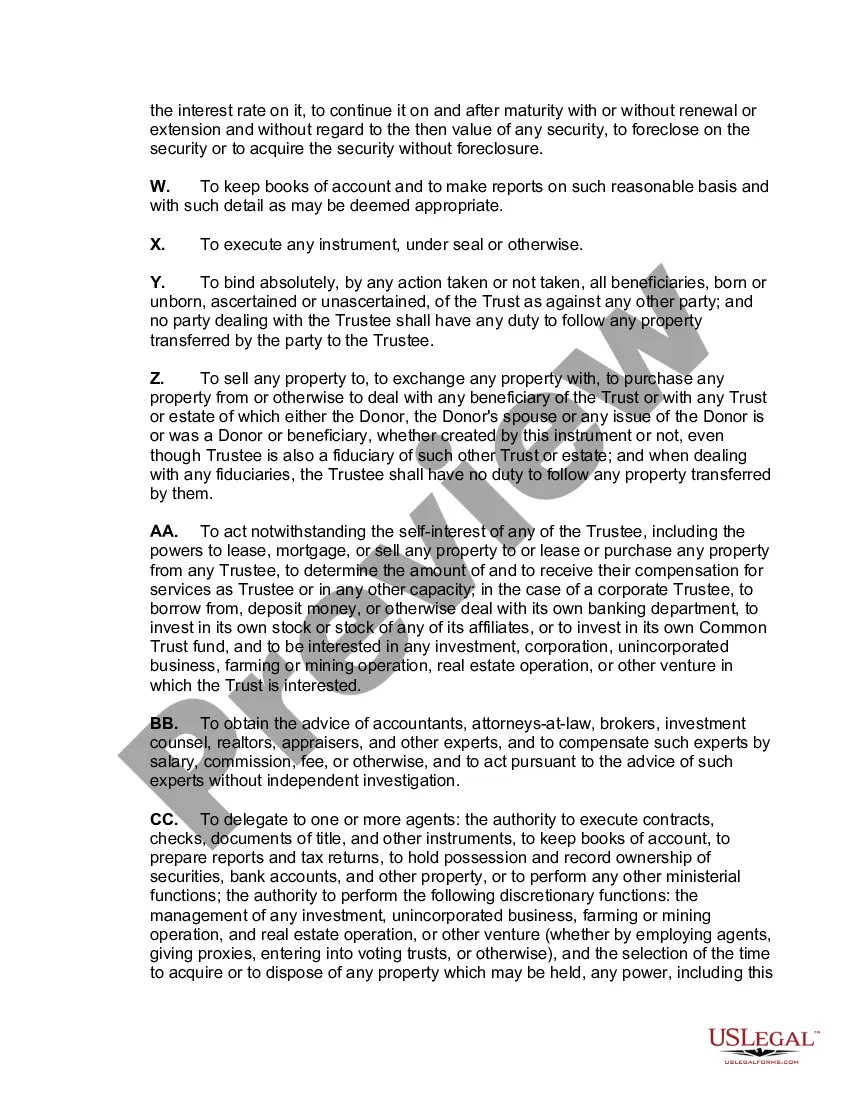
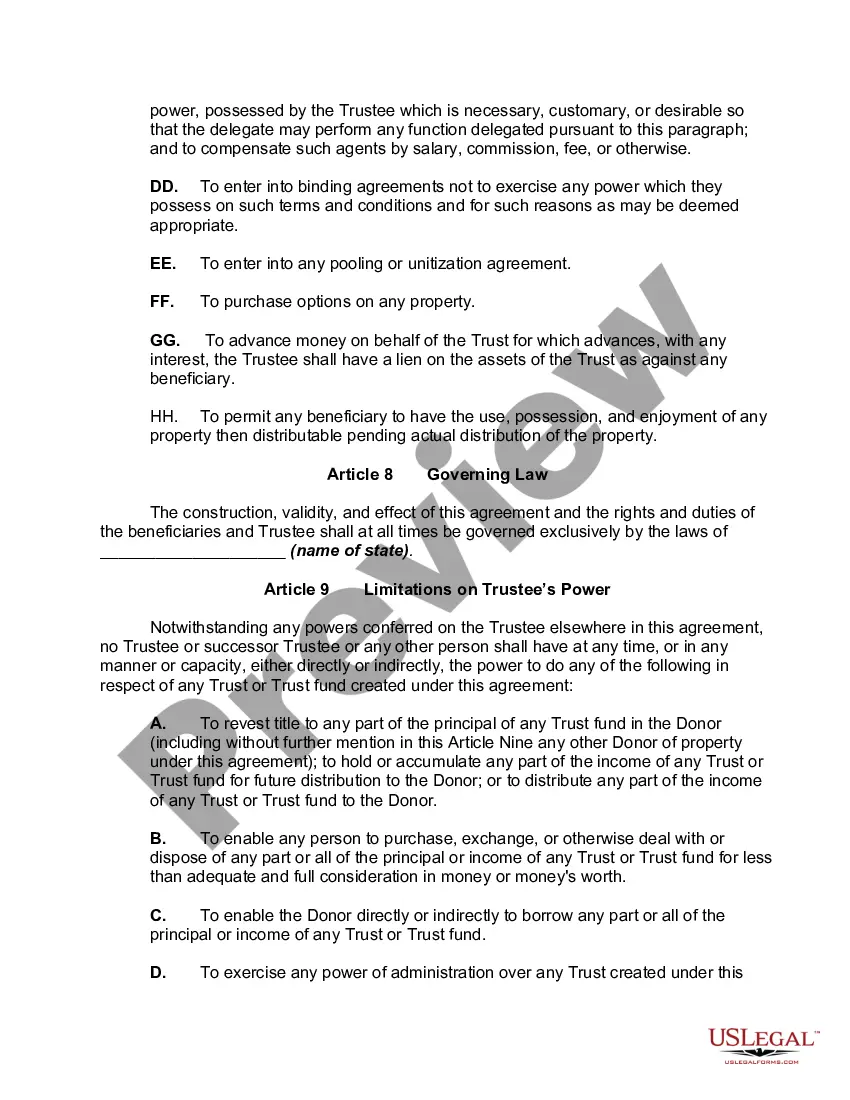
- Powers of Trustee: Enumerates the powers granted to the trustee for managing trust assets.
- Irrevocability: Establishes that the trust cannot be altered or revoked after execution.
- State of Incorporation: Specifies the jurisdiction and legal framework governing the trust.


When to use this form
This trust form should be used by individuals looking to provide for their spouse while also ensuring a secure inheritance for their children after the spouse passes away. It is particularly beneficial for those who wish to manage their estate effectively, minimize estate taxes, and control the distribution of their assets according to their wishes.
Who this form is for
Ideal Users:
- Individuals who are married and have children.
- Parents concerned about the distribution of their assets after the death of their spouse.
- People seeking to minimize estate taxes through strategic trust arrangements.
- Individuals wanting to secure financial support for their spouse during their lifetime.
Instructions for completing this form
Steps for Completing the Trust Form:
- Identify the parties involved, including the donor and the trustee.
- Specify the date the trust is created and attach Schedule A listing the property transferred to the trust.
- Define the terms for income distribution to the surviving spouse and the method of principal distribution to the children.
- Complete all necessary fields accurately, including signatures of the donor and trustee.
- Consider notarization of the document if required by local laws.
Notarization guidance
This form does not typically require notarization unless specified by local law. However, having it notarized can enhance its legal standing, particularly for estate planning documents.
Get your form ready online
Our built-in tools help you complete, sign, share, and store your documents in one place.
Make edits, fill in missing information, and update formatting in US Legal Forms—just like you would in MS Word.
Download a copy, print it, send it by email, or mail it via USPS—whatever works best for your next step.
Sign and collect signatures with our SignNow integration. Send to multiple recipients, set reminders, and more. Go Premium to unlock E-Sign.
If this form requires notarization, complete it online through a secure video call—no need to meet a notary in person or wait for an appointment.
We protect your documents and personal data by following strict security and privacy standards.

Make edits, fill in missing information, and update formatting in US Legal Forms—just like you would in MS Word.

Download a copy, print it, send it by email, or mail it via USPS—whatever works best for your next step.

Sign and collect signatures with our SignNow integration. Send to multiple recipients, set reminders, and more. Go Premium to unlock E-Sign.

If this form requires notarization, complete it online through a secure video call—no need to meet a notary in person or wait for an appointment.

We protect your documents and personal data by following strict security and privacy standards.
Mistakes to watch out for
Common mistakes to avoid:
- Failing to properly identify all beneficiaries and their respective shares.
- Not consulting legal professionals to ensure compliance with state laws.
- Leaving crucial sections of the document blank or unclear.
- Neglecting to keep the trust updated with any changes in family or financial circumstances.
Benefits of completing this form online
Benefits of using this form online:
- Convenience: Complete the form from anywhere, at any time, without needing to visit a lawyer.
- Time-saving: Quickly fill out and download the form for immediate use.
- Cost-effective: Reduces the expense of legal fees while providing a legally sound document.
- Flexibility: Easily editable for personalizing the details to fit specific needs.
Main things to remember
Key takeaways:
- The Inter Vivos QTIP Trust is designed for married individuals with children.
- It allows income to be provided to a spouse while designating assets for children post-death.
- Understanding the specific provisions and tax implications is essential for effective usage.
- Prevent common errors by verifying all details and ensuring the document is up to date.
Looking for another form?
Form popularity
FAQ
Under a QTIP, income is paid to a surviving spouse, while the balance of the funds is held in trust until that spouse's death, at which point it is then paid out to the beneficiaries specified by the grantor.
Unlike a bypass trust, the surviving spouse has complete control over the property and can spend it, bequeath it to beneficiaries, or give it away as gifts. No estate tax is imposed on this property because everything left to the surviving spouse is free from estate tax.
Assets that have been conveyed into a revocable living trust do get a step-up in basis when they are distributed to the beneficiaries after the passing of the grantor. We should point out the fact that the beneficiaries would be responsible for any future appreciation from a capital gains perspective.
The remainder beneficiary is the person who receives the trust assets upon the surviving spouse's death. QTIP trusts are irrevocable, meaning they can't be modified.
Another consequence of this QTIP election is that the assets in the QTIP trust remaining upon the surviving spouse's death are included in the surviving spouse's estate for federal estate tax purposes and, as a result, also obtain a step-up (or step-down) in income tax basis upon the surviving spouse's death (thereby
A reverse QTIP election permits the executor of the first spouse to die to elect that the QTIP trust will continue to be treated, for purposes of the GST, as property transferred by the first spouse to die, even though the trust property is otherwise treated as belonging to the surviving spouse for estate and gift tax
Conversely, a QTIP trust provides limited access to the trust assets for a surviving spouse. Although your spouse may receive income from the trust, he or she cannot decide on the ultimate disposition of the trust assets and cannot withdraw principal from the trust.
A qualified terminable interest property (QTIP) enables the grantor to provide for a surviving spouse and maintain control of how the trust's assets are distributed once the surviving spouse dies.