Consent of Emancipated Minor for Medical Care
Understanding this form
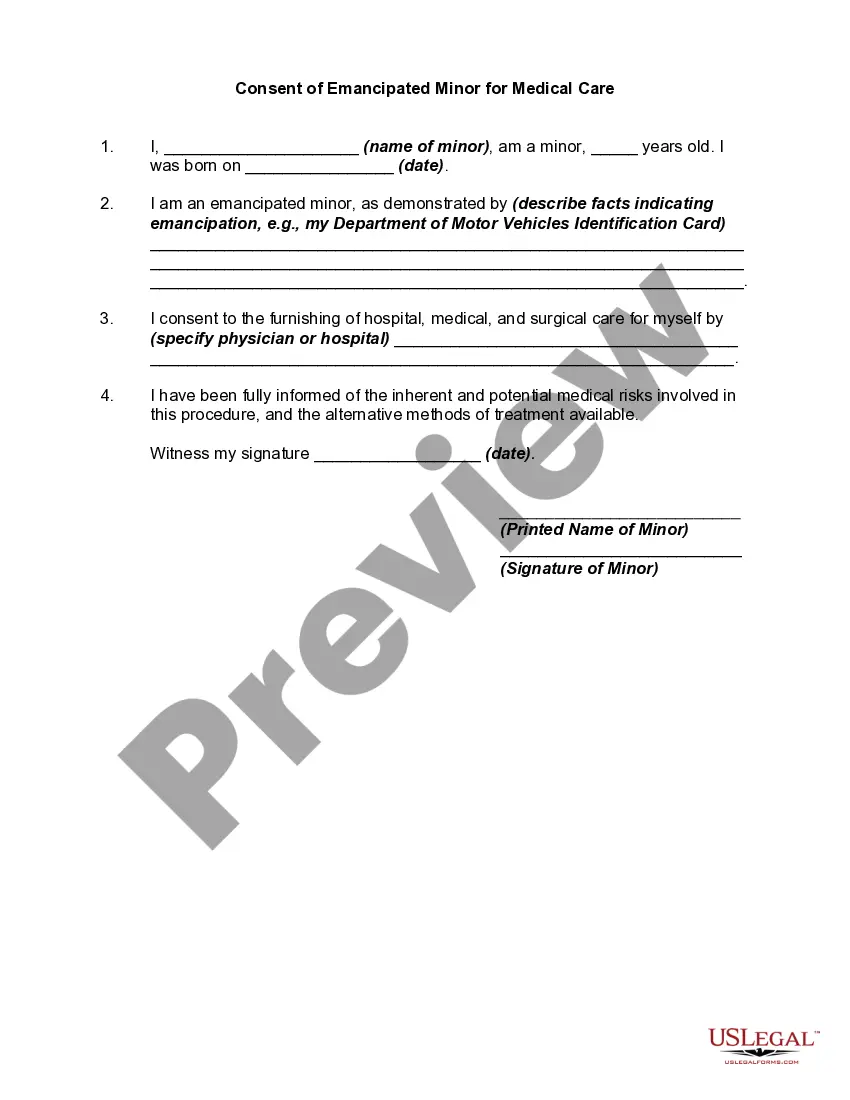
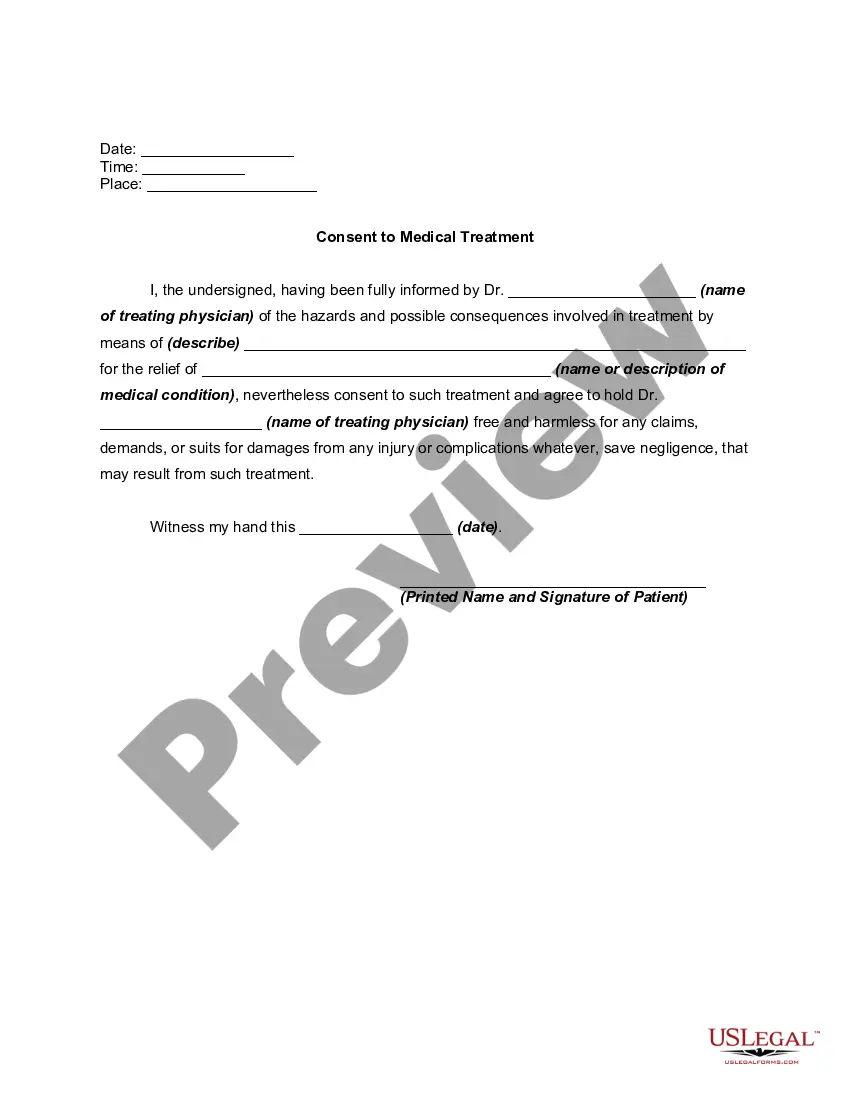
The Consent of Emancipated Minor for Medical Care form is a legal document that allows an emancipated minor to consent to their own medical treatment. This form distinguishes itself from general consent forms by specifically addressing the rights of minors who have achieved legal independence from their parents. Emancipation typically allows minors to make decisions regarding their own healthcare without needing parental approval.
Key components of this form
- Name of the emancipated minor and their age.
- Description of the circumstances leading to emancipation.
- Specific medical care provider or facility to administer treatment.
- Awareness of medical risks and alternative treatment options.
- Signature of the emancipated minor as proof of consent.
Situations where this form applies
This form is used when an emancipated minor needs to receive medical care independently. It is applicable in situations where time is of the essence, such as emergencies or when the minor requires medical attention but cannot obtain parental consent due to their emancipated status. Additionally, it is relevant in non-emergency situations where a minor seeks specific medical treatments without parental involvement.
Who can use this document
- Emancipated minors who require medical treatment without parental consent.
- Minors who have obtained a court order for emancipation.
- Minors seeking medical care in situations where parents are unavailable or unable to provide consent.
How to prepare this document
- Enter the full name and age of the emancipated minor.
- Clearly describe how emancipation was achieved.
- Specify the medical provider or facility that will administer care.
- Indicate awareness of medical risks and alternatives to treatment.
- Include the date and the minor's signature to validate consent.
Is notarization required?
Notarization is generally not required for this form. However, certain states or situations might demand it. You can complete notarization online through US Legal Forms, powered by Notarize, using a verified video call available anytime.
Get your form ready online
Our built-in tools help you complete, sign, share, and store your documents in one place.
Make edits, fill in missing information, and update formatting in US Legal Forms—just like you would in MS Word.
Download a copy, print it, send it by email, or mail it via USPS—whatever works best for your next step.
Sign and collect signatures with our SignNow integration. Send to multiple recipients, set reminders, and more. Go Premium to unlock E-Sign.
If this form requires notarization, complete it online through a secure video call—no need to meet a notary in person or wait for an appointment.
We protect your documents and personal data by following strict security and privacy standards.

Make edits, fill in missing information, and update formatting in US Legal Forms—just like you would in MS Word.

Download a copy, print it, send it by email, or mail it via USPS—whatever works best for your next step.

Sign and collect signatures with our SignNow integration. Send to multiple recipients, set reminders, and more. Go Premium to unlock E-Sign.

If this form requires notarization, complete it online through a secure video call—no need to meet a notary in person or wait for an appointment.

We protect your documents and personal data by following strict security and privacy standards.
Common mistakes
- Failing to accurately describe the emancipation circumstances.
- Omitting the name of the healthcare provider or facility.
- Not signing and dating the form where required.
- Entering inaccurate or incomplete personal information.
Benefits of completing this form online
- Convenience of downloading the form immediately.
- Editability allows for customization specific to the minor's situation.
- Reliability of having forms drafted by licensed attorneys.
Looking for another form?
Form popularity
FAQ
MINOR MUST BE EMANCIPATED (GENERALLY 14 YEARS OF AGE OR OLDER) LAW/DETAILS MAY/MUST THE HEALTH CARE PROVIDER INFORM A PARENT ABOUT THIS CARE OR DISCLOSE RELATED MEDICAL INFORMATION TO THEM? An emancipated minor may consent to medical, dental and psychiatric care.
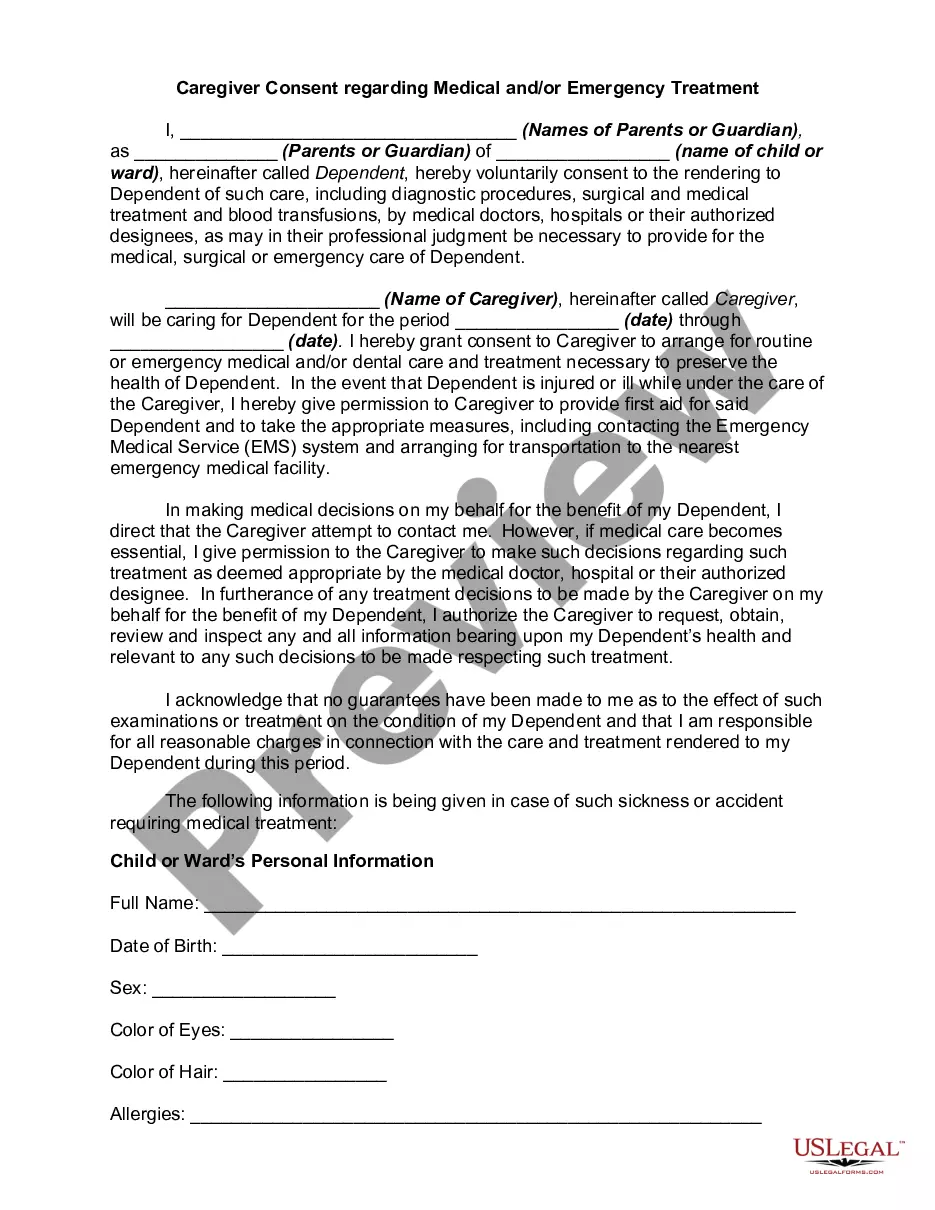
Step 1 Find a Competent Guardian. Step 2 Inform the Guardian of Child's Medical Issues (if any) Step 3 Inform the Guardian of the Child's Medications. Step 4 Determine an End Date. Step 5 Sign the Document.
A care provider may perform a routine test or treatment on a minor who is over the age of 14 without parental consent and without accompaniment, on condition that the minor him/herself gives informed consent for the medical procedure.
Children under the age of 16 can consent to their own treatment if they're believed to have enough intelligence, competence and understanding to fully appreciate what's involved in their treatment. This is known as being Gillick competent. Otherwise, someone with parental responsibility can consent for them.
Defining the legal age of majority at 18 years is an attempt to create conditions in which most patients can actuate the traditional notion of informed consent. This does not imply, however, that no one younger than 18 years can participate in their own health care decision making.
Medical, dental and health services may be rendered to minors of any age without the consent of a parent or legal guardian when, in the physician's judgment, an attempt to secure consent would result in delay of treatment which would increase the risk to the minor's life or health.