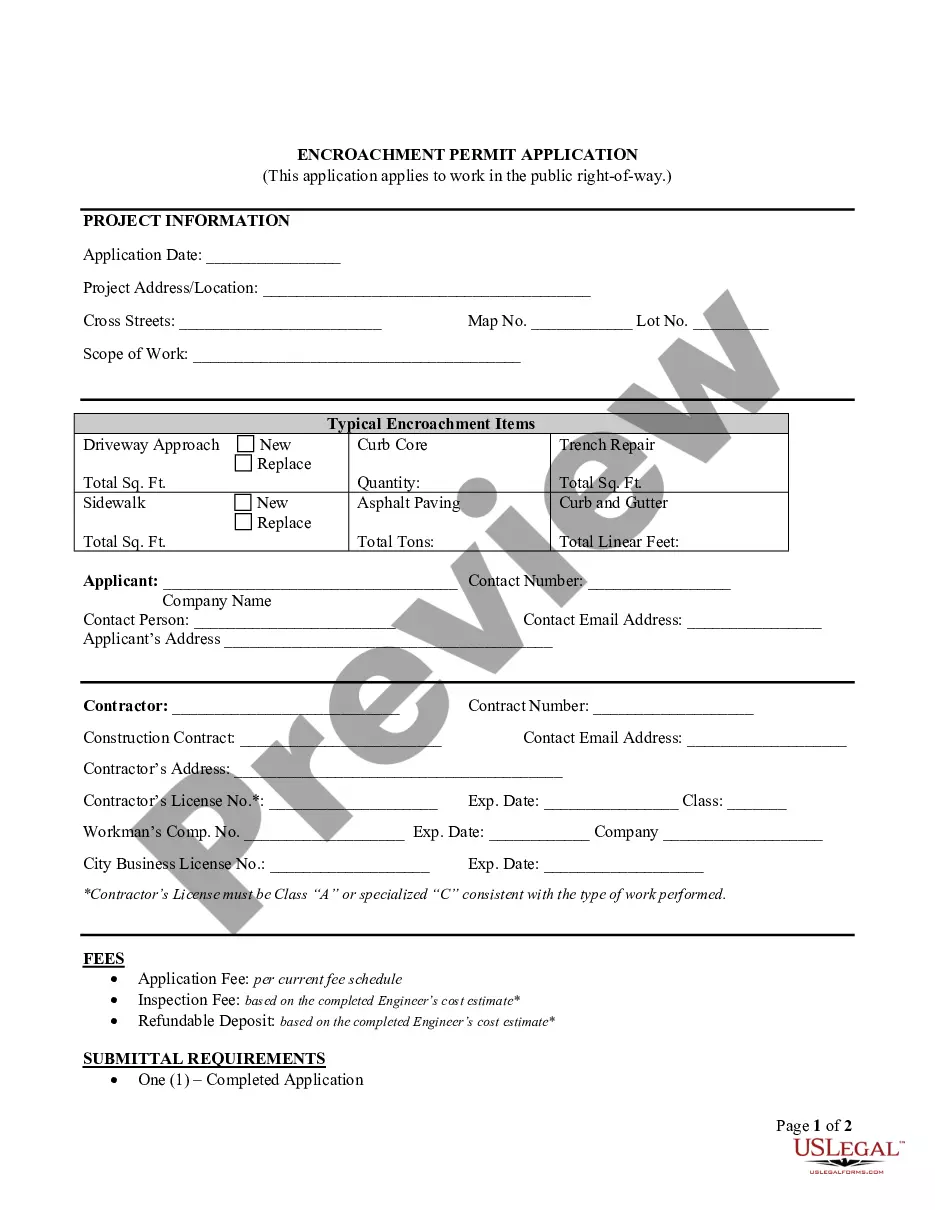
Bylaws of a Nonprofit Organization - Multistate
What this document covers
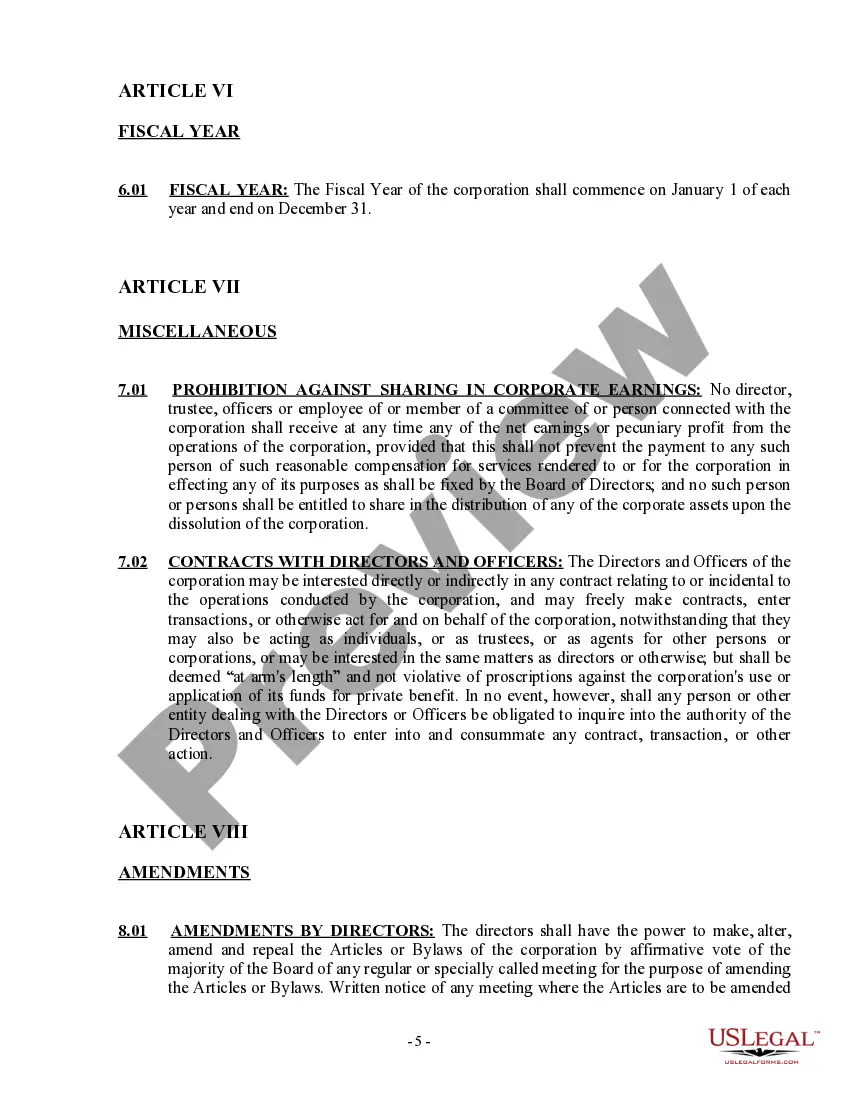
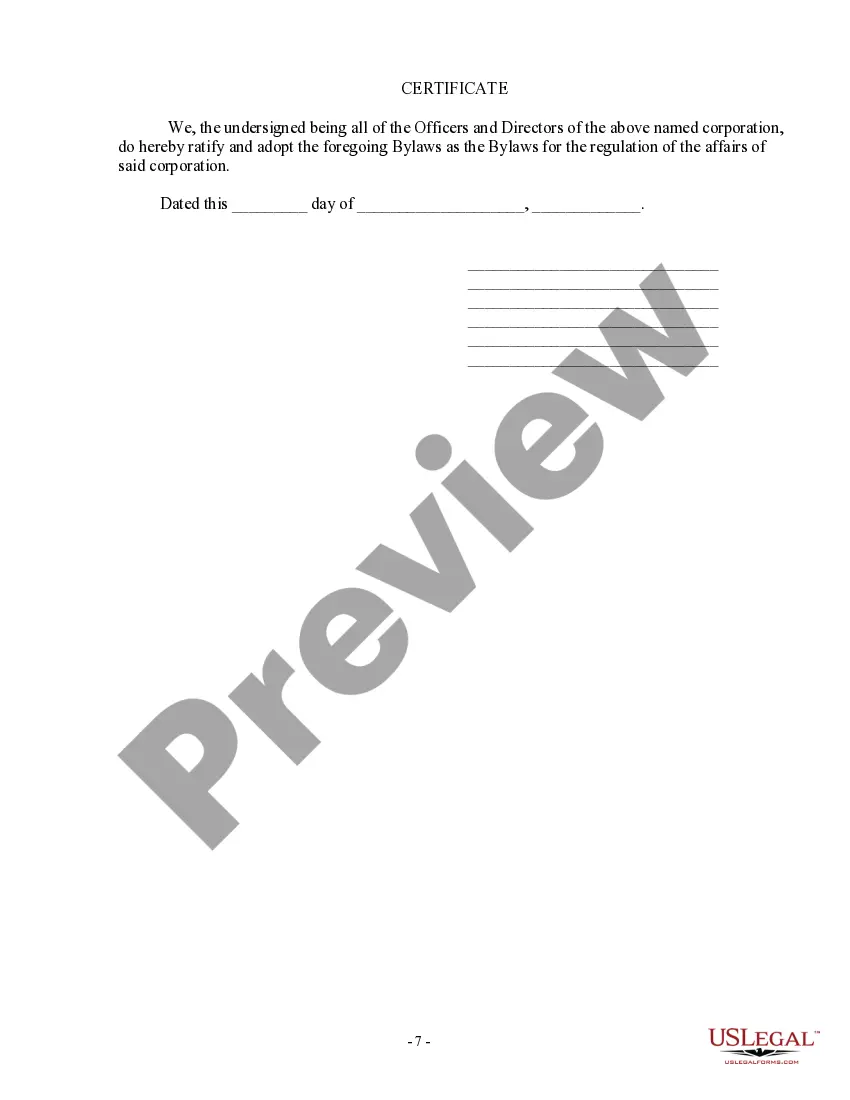
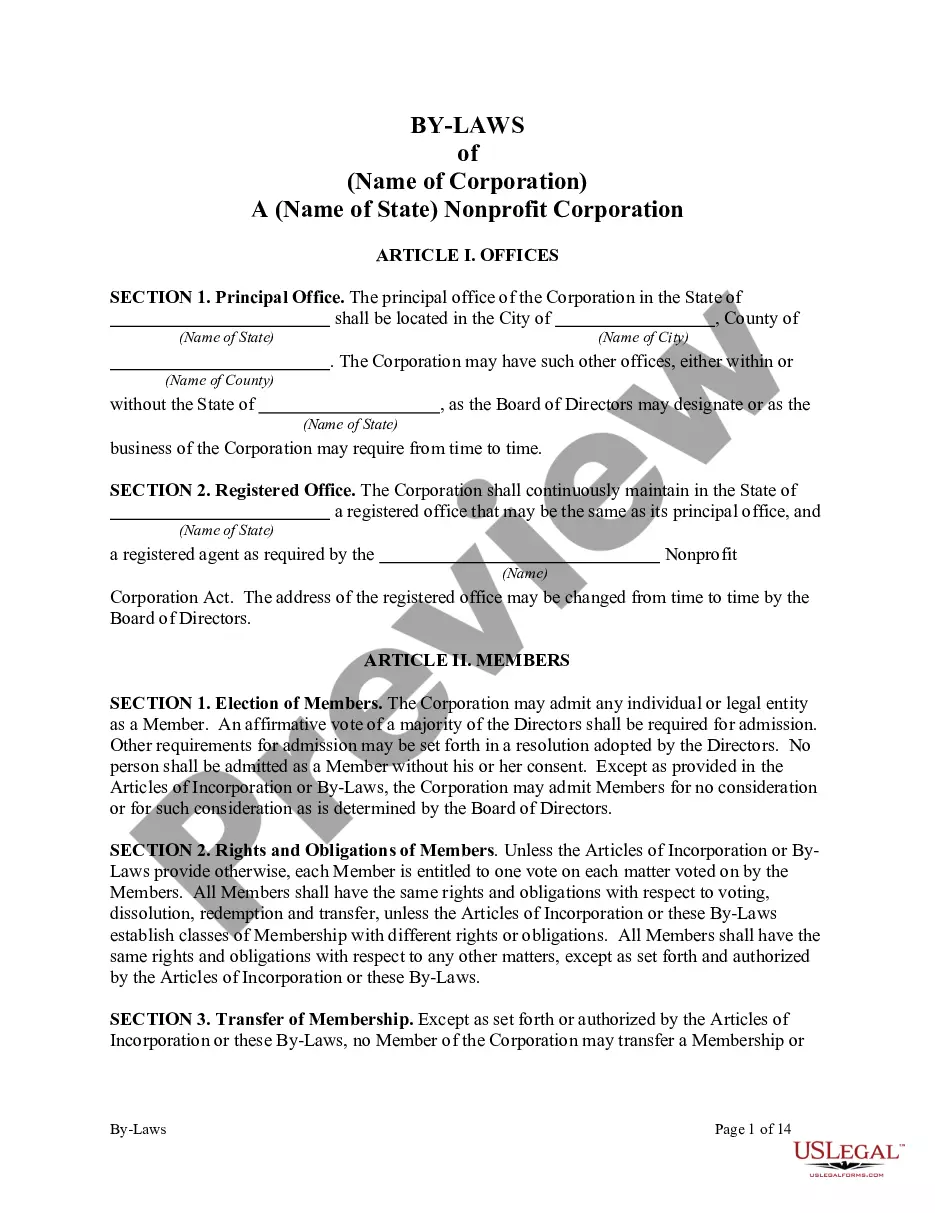
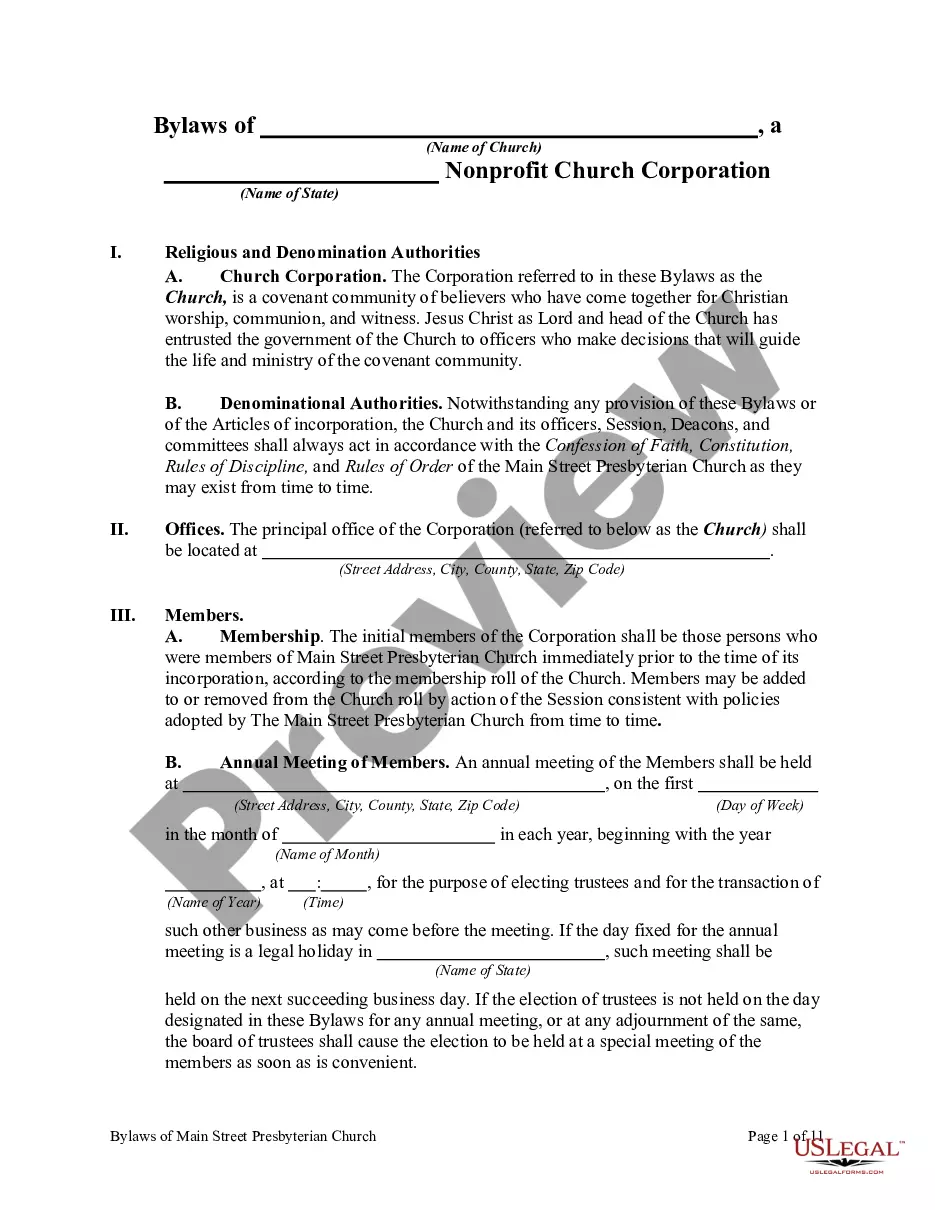
The Bylaws of a Nonprofit Organization - Multistate is a legal document that outlines the internal governance structure of a nonprofit corporation. It specifies the corporation's purpose, the roles and responsibilities of directors and officers, membership requirements, and procedures for meetings. This form is essential for any nonprofit organization aiming to operate within a legal framework while promoting transparency and accountability among its members and governing body. Unlike general bylaws, this version caters to organizations operating in multiple states, ensuring broader compliance with various jurisdictional requirements.
Form components explained
- Name and Office: Details the name and principal office of the corporation.
- Purpose: Defines the charitable, religious, educational, literary, and scientific objectives of the organization.
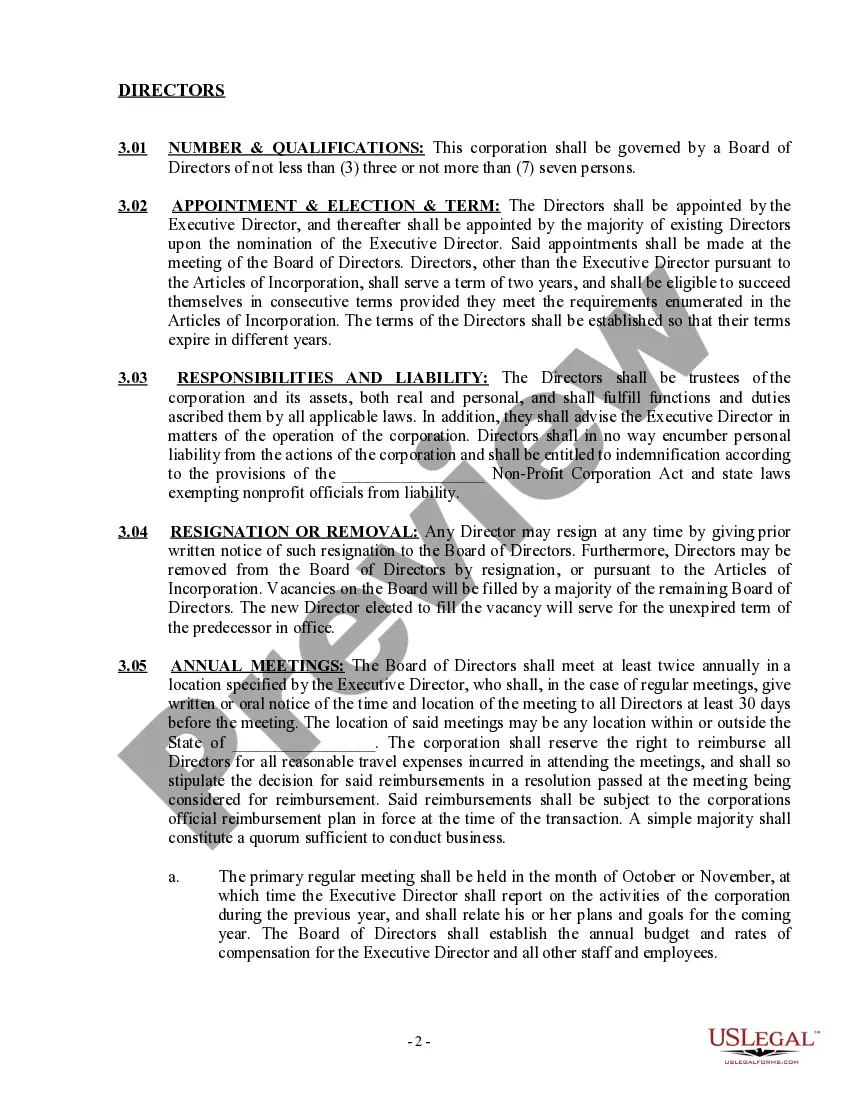
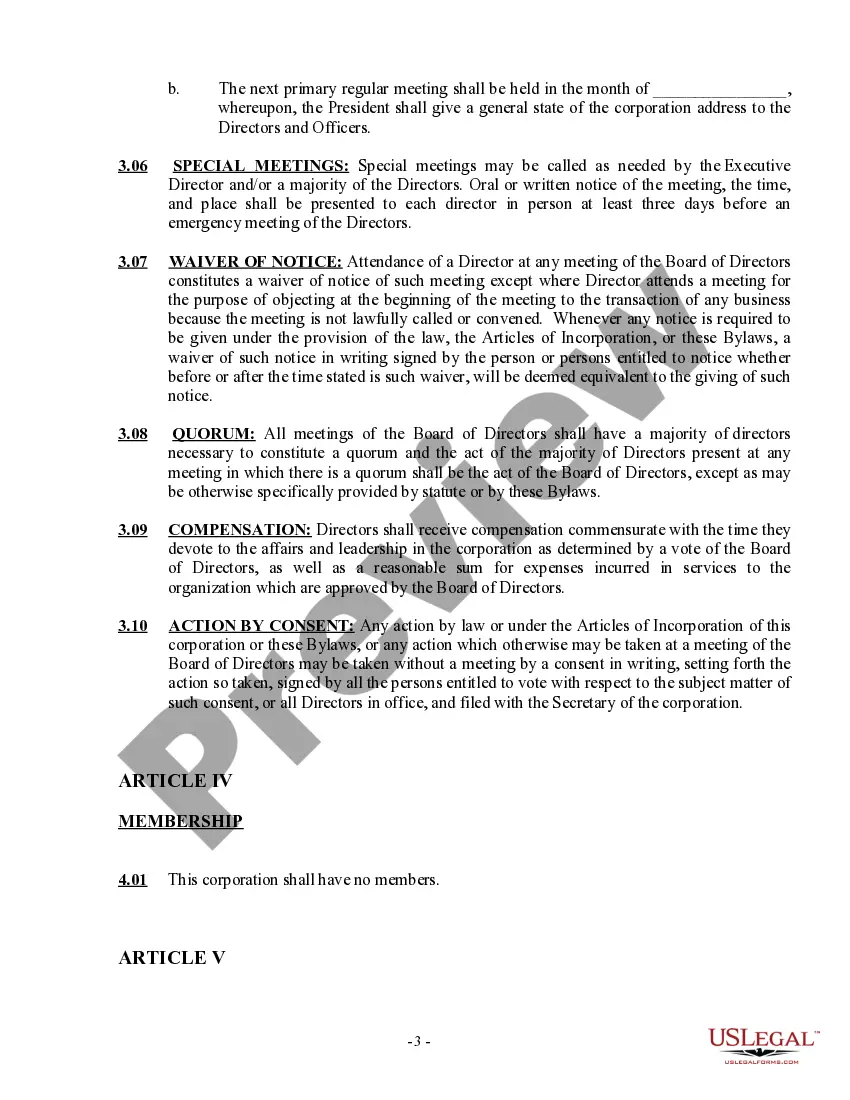
- Directors: Outlines the number, appointment, term, responsibilities, and removal processes for directors.
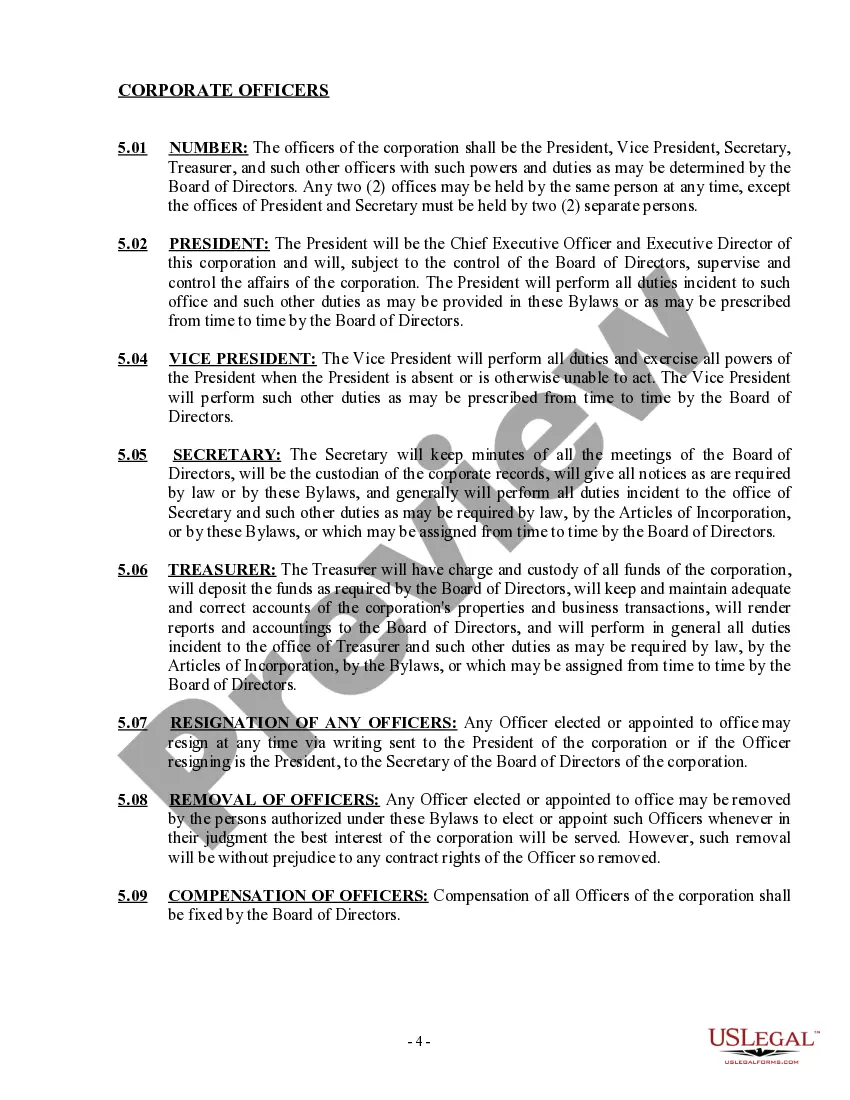
- Corporate Officers: Specifies the roles of key officers such as President, Vice President, Secretary, and Treasurer.
- Meetings: Details the frequency, notice requirements, and quorum needed for Board meetings.
- Amendments: Describes how bylaws can be amended by the Board of Directors.




When to use this document
This form should be used when establishing a nonprofit organization or when updating the governing rules of an existing corporation. It is especially important when the organization seeks to qualify for 501(c)(3) tax-exempt status or if it operates across different states, as it can address variances in state nonprofit laws.
Who should use this form
- Founders of new nonprofit organizations seeking to establish formal governance.
- Existing nonprofit boards looking to clarify or revise their organizational structure.
- Nonprofit officers responsible for ensuring compliance with state and federal regulations.
- Legal professionals assisting nonprofits with compliance documentation.
Steps to complete this form
- Identify the name of the nonprofit corporation and its principal office location.
- Clearly specify the purpose of the corporation in accordance with 501(c)(3) guidelines.
- Determine the number of directors and outline their appointment and term lengths.
- Establish the roles and responsibilities of officers, including any specific mandates.
- Document the frequency and procedures for Board meetings, including quorum requirements.
Notarization guidance
This form usually doesn’t need to be notarized. However, local laws or specific transactions may require it. Our online notarization service, powered by Notarize, lets you complete it remotely through a secure video session, available 24/7.
Get your form ready online
Our built-in tools help you complete, sign, share, and store your documents in one place.
Make edits, fill in missing information, and update formatting in US Legal Forms—just like you would in MS Word.
Download a copy, print it, send it by email, or mail it via USPS—whatever works best for your next step.
Sign and collect signatures with our SignNow integration. Send to multiple recipients, set reminders, and more. Go Premium to unlock E-Sign.
If this form requires notarization, complete it online through a secure video call—no need to meet a notary in person or wait for an appointment.
We protect your documents and personal data by following strict security and privacy standards.

Make edits, fill in missing information, and update formatting in US Legal Forms—just like you would in MS Word.

Download a copy, print it, send it by email, or mail it via USPS—whatever works best for your next step.

Sign and collect signatures with our SignNow integration. Send to multiple recipients, set reminders, and more. Go Premium to unlock E-Sign.

If this form requires notarization, complete it online through a secure video call—no need to meet a notary in person or wait for an appointment.

We protect your documents and personal data by following strict security and privacy standards.
Common mistakes
- Failing to properly define the corporation's purpose, which can jeopardize tax-exempt status.
- Inadequate notice for meetings, leading to invalid resolutions or actions taken by the Board.
- Not specifying the process for filling vacancies on the Board, causing governance gaps.
- Omitting indemnification provisions, which could expose directors to personal liability.
Benefits of using this form online
- Convenience of downloading the form with a few clicks, without the need for in-person visits.
- Editability allows users to customize the bylaws to fit their specific organizational needs.
- Access to templates prepared by licensed attorneys, ensuring legal compliance and support.
- Secure, immediate access to organization documents for future reference or modifications.
Legal use & context
- Legally binding once adopted by the Board of Directors, the bylaws govern the operations of the nonprofit.
- Bylaws not compliant with federal or state requirements risk losing tax-exempt status.
- Allows for flexibility in governance, accommodating changes in leadership and organizational structure.
Quick recap
- The Bylaws of a Nonprofit Organization is crucial for establishing a lawful framework for governance.
- Commit to thorough documentation of roles, meetings, and procedures for accountability.
- Ensure periodic review and amendments to stay compliant with evolving laws and regulations.
Looking for another form?








Form popularity
FAQ
Exemption Requirements - 501(c)(3) Organizations To be tax-exempt under section 501(c)(3) of the Internal Revenue Code, an organization must be organized and operated exclusively for exempt purposes set forth in section 501(c)(3), and none of its earnings may inure to any private shareholder or individual.
Is there a simple way to register with every state? Unfortunately not. Most states require you to complete a general information form and submit it with your last financial statement, a list of officers and directors, a copy of your originating document and your IRS-issued tax-exempt determination letter.
Basic Rules for Non-Profit OrganizationsNon-profit entities must keep good records. They must record meetings of minutes and set up a separate bank account. All profits must be used in the organization's work and non-profit organizations are not allowed to distribute profits to members for any reason.
2. Nonprofit with gross receipts of more than $50,000 in the year must file the Exempt Organization Annual Information Return (FTB Form 199) (Instructions) This is the State of California's annual return, and because of legislation we supported in 2020, there is no fee for filing this form.
Delaware. Iowa. Idaho. Indiana. Montana.
#1: Delaware. The state of Delaware is home to more than 5,500 nonprofit organizations, including more than 3,000 501(c)(3) public charities. #2: Arizona. When it comes to starting a nonprofit, Arizona is a very close second to Delaware. #3: Nevada. #4: Wisconsin. #5: Texas. #1: New York. #2: California.
Nonprofit Bylaws are internal legal document, even so that certain States require them. Saying that, you still need to have your nonprofit bylaws on hand and you have to file it with the IRS for 501c3 exemption along with your Form 1023 application.
Nonprofit organizations can operate nationwide, even though they are legally registered in one specific state as a domestic entity.To be recognized as operating in another state, your nonprofit must be actively conducting its tax exempt program(s) outside its state of domicile.