Offer to Purchase Assets of a Corporation
What this document covers
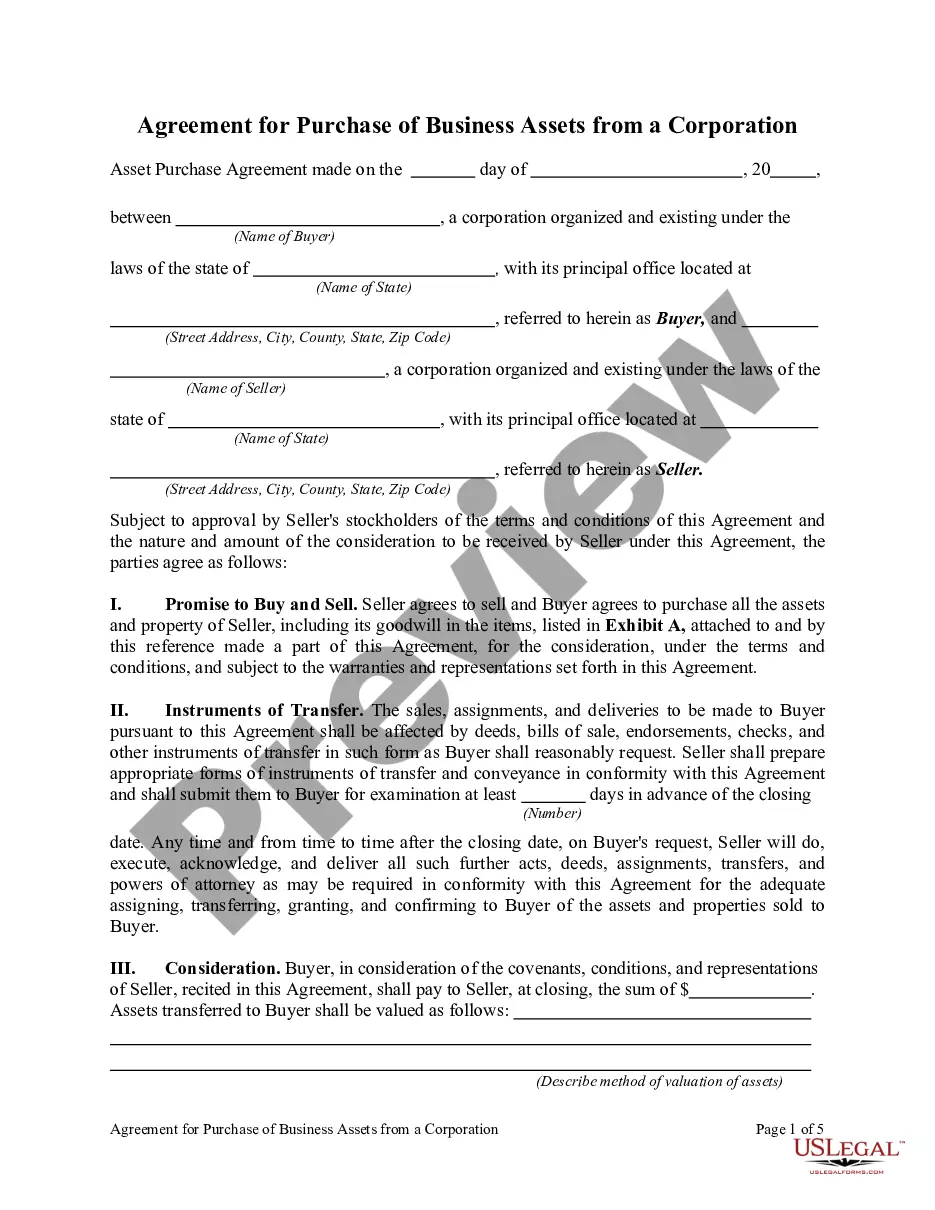
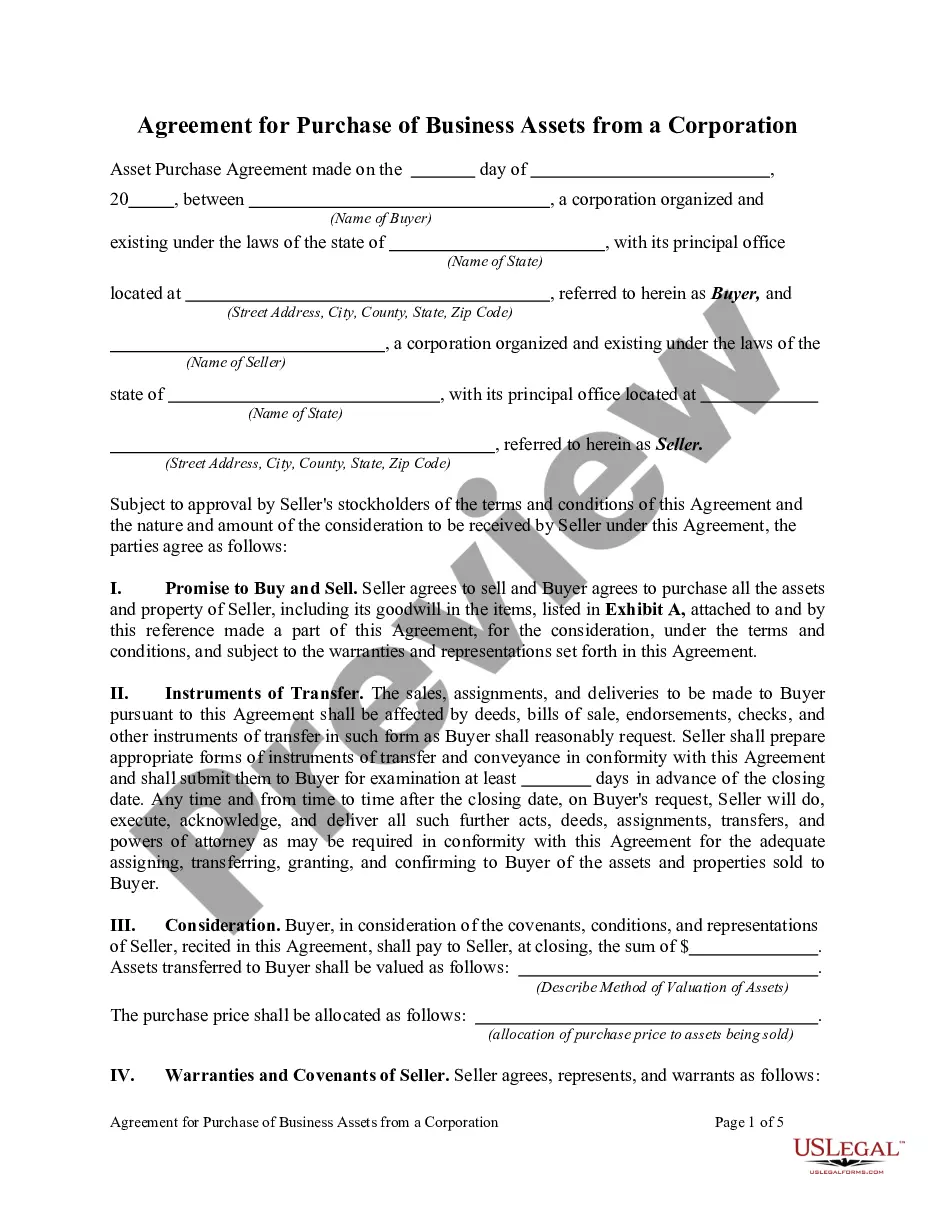
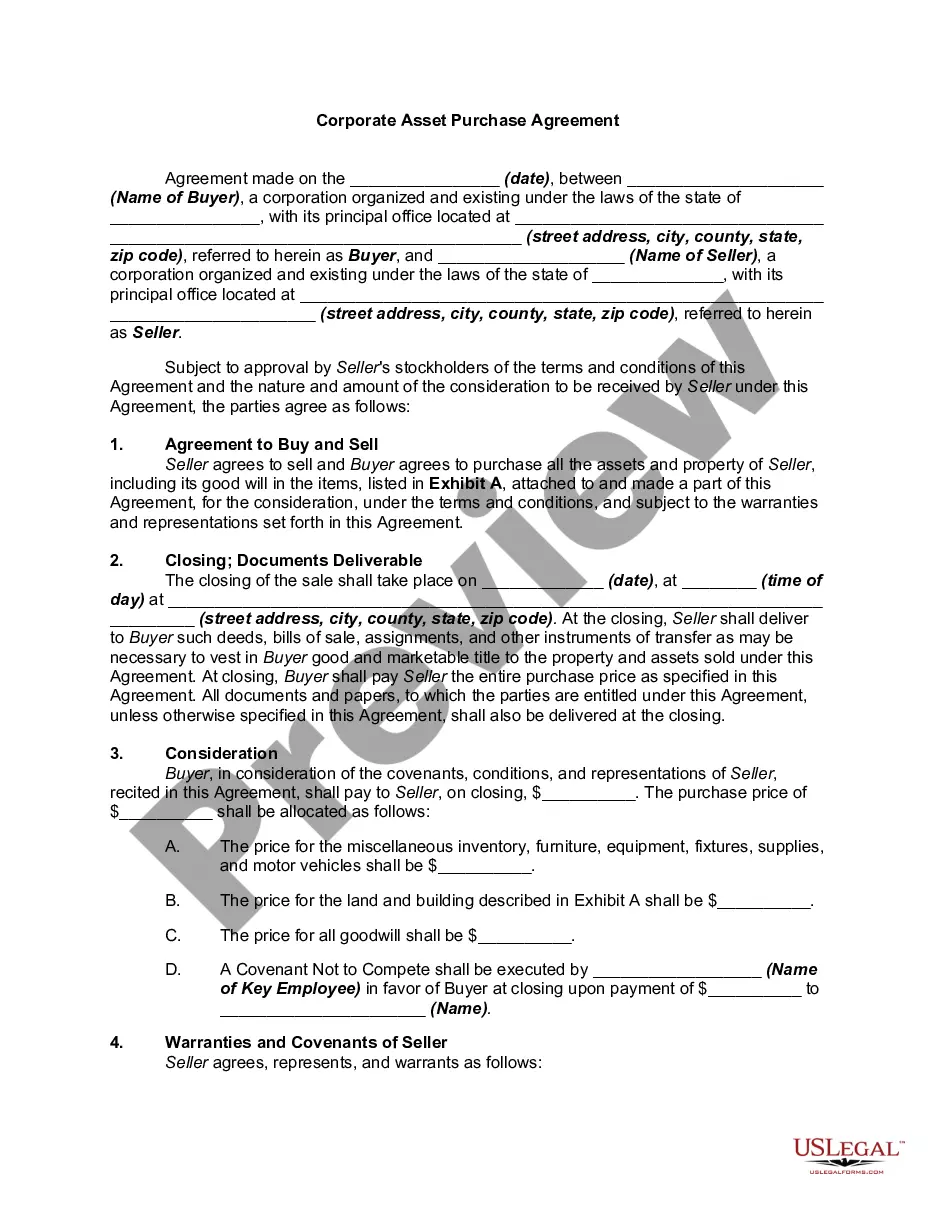
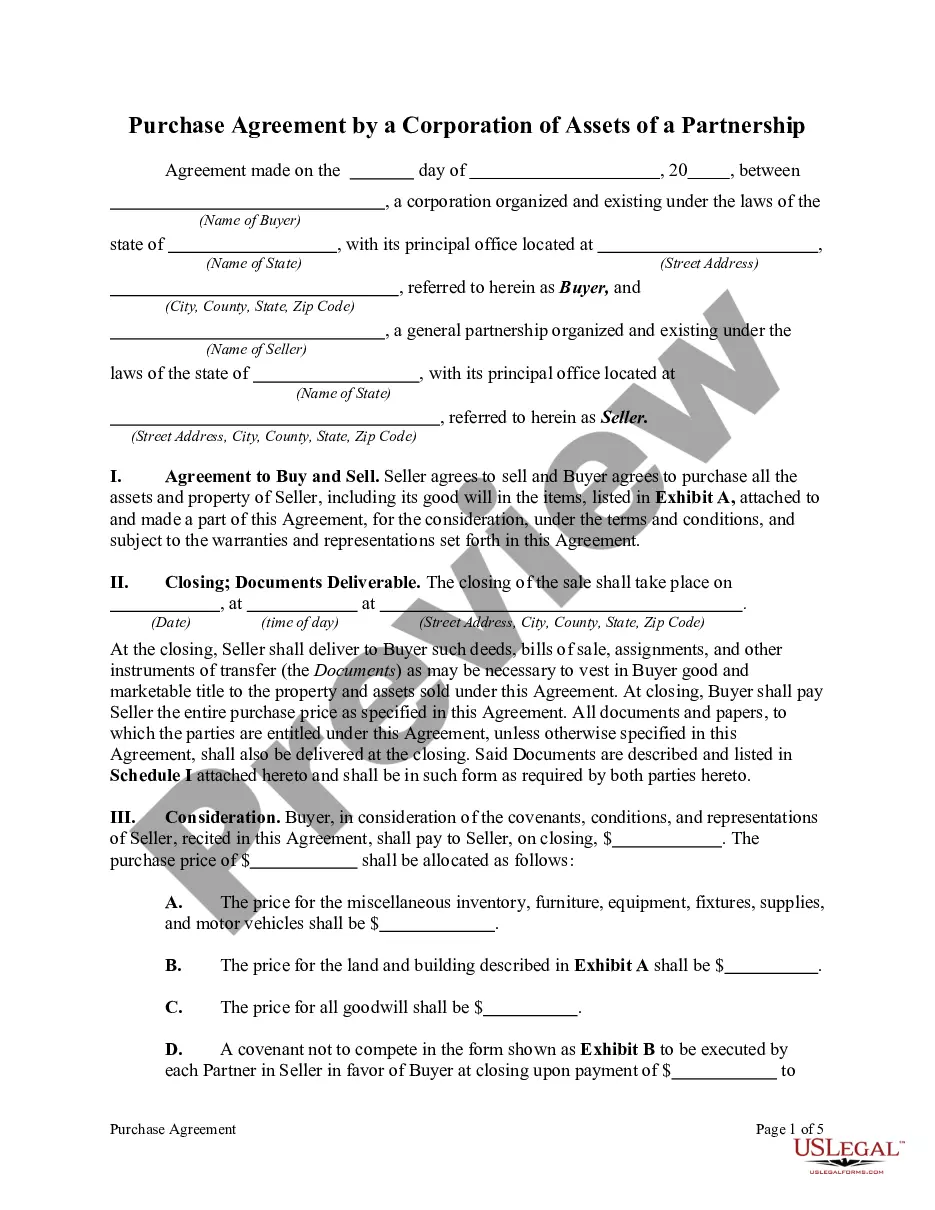
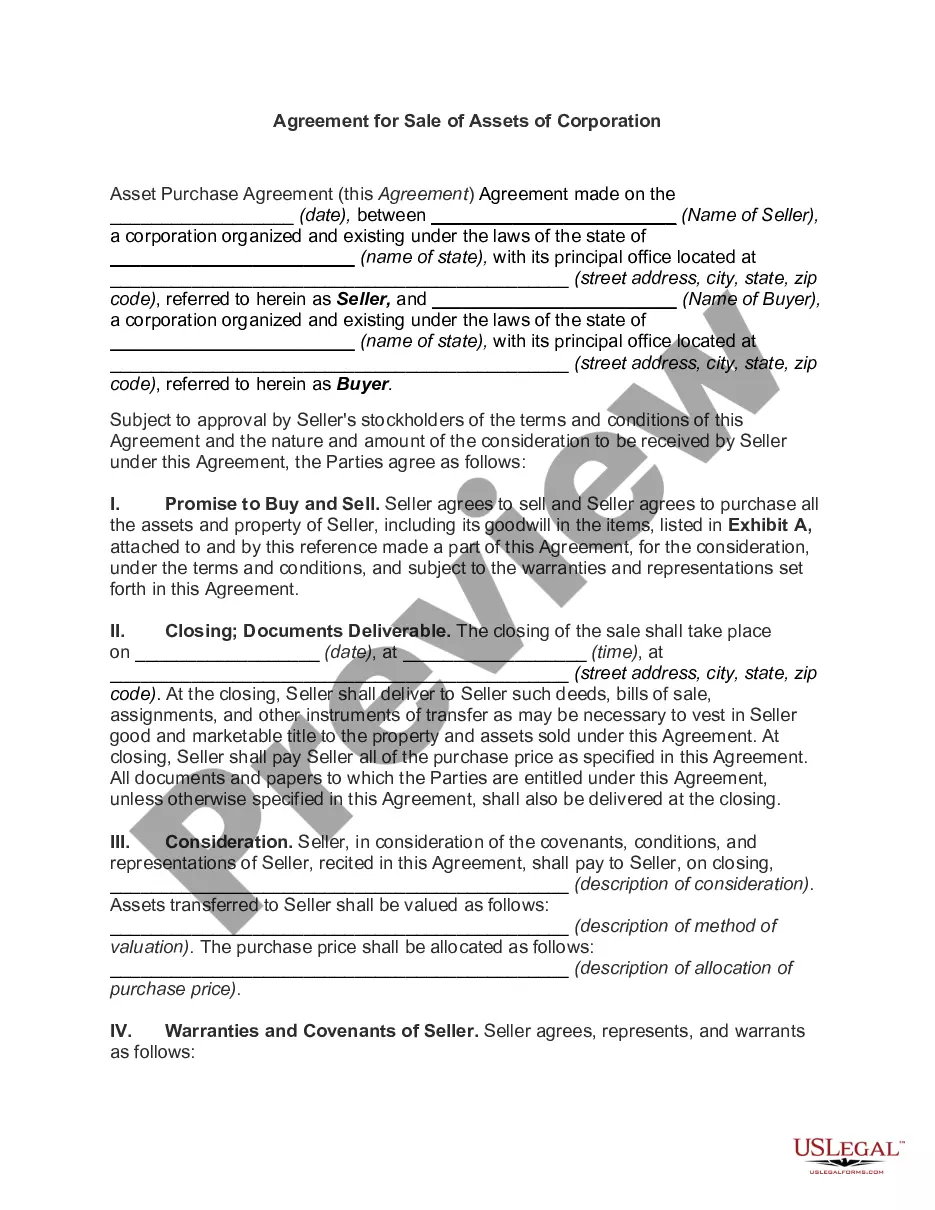
The Offer to Purchase Assets of a Corporation is a legal document used when one corporation wishes to buy the assets of another corporation. This form outlines the terms of the offer, including what assets are being purchased and the proposed payment. Unlike a merger, this document facilitates the purchase of assets without the obligations of assuming the entire corporationâs liabilities, unless specifically agreed upon. Utilizing this form ensures clarity and legal compliance in asset transactions between corporations.
Key parts of this document
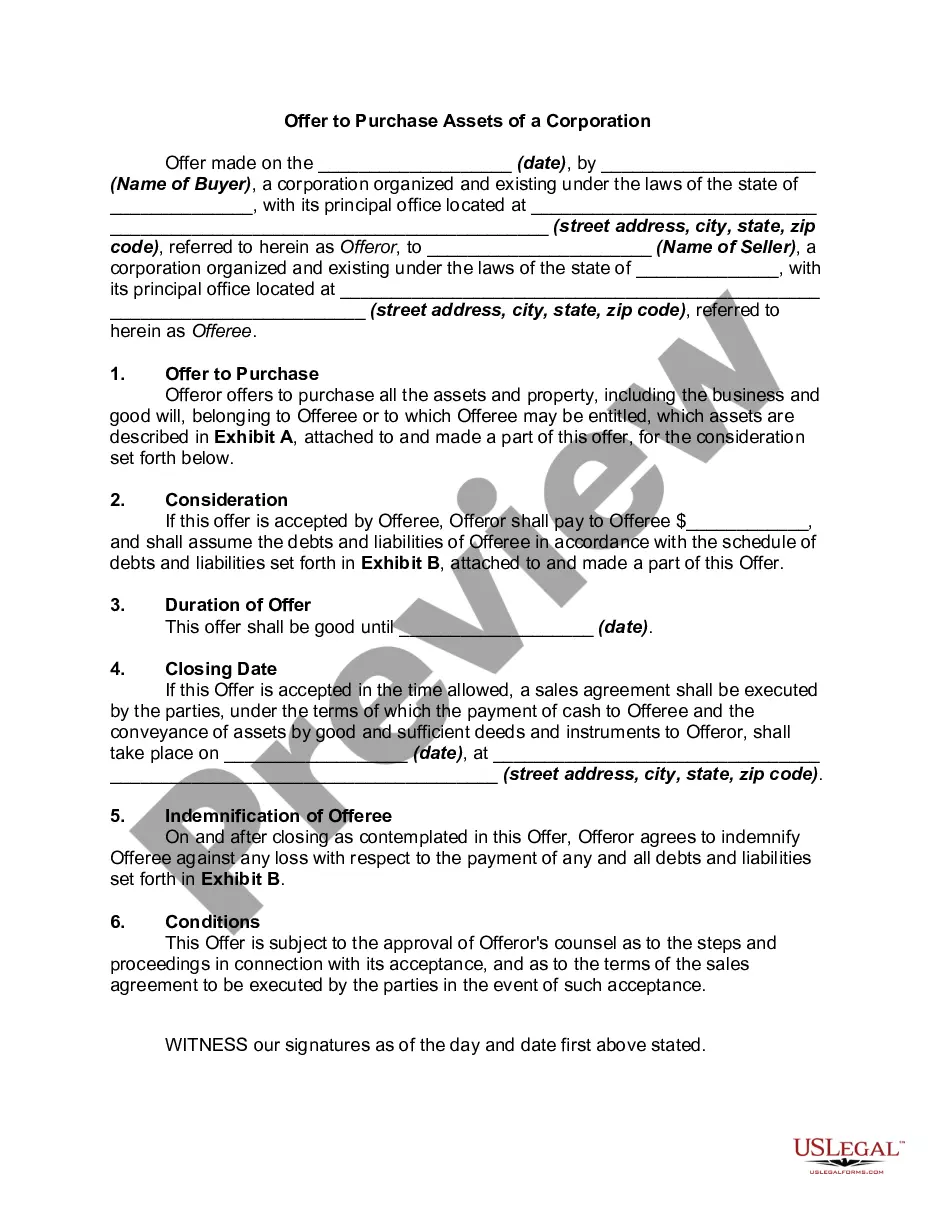
- Offer to Purchase: Details the assets being acquired by the buyer.
- Consideration: Specifies the payment amount and any liabilities assumed by the buyer.
- Duration of Offer: Indicates the timeframe in which the offer is valid.
- Closing Date: Sets the date for executing the sales agreement and transferring assets.
- Indemnification Clause: Protects the seller against any losses related to specified debts and liabilities.
- Conditions: Lists stipulations that must be fulfilled for the offer to be accepted.
Situations where this form applies
This form is commonly used in situations where a corporation intends to acquire the assets of another company without pursuing a merger. It is particularly relevant in cases where the purchasing corporation aims to gain specific operational assets or intellectual property and avoid the seller's liabilities, unless otherwise stated. This form protects the interests of both parties and formalizes the agreement for asset transfer.
Who this form is for
Eligible parties for using this form include:
- Corporations looking to acquire assets from another corporation.
- Corporate executives and officers involved in asset acquisition decisions.
- Legal professionals assisting corporations in drafting and reviewing asset purchase agreements.
How to complete this form
Steps to Complete the Form:
- Identify the parties: Clearly state the names and addresses of both the buyer and seller corporations.
- Specify the assets: List the assets to be purchased in the section designated for asset descriptions.
- Determine the consideration: Enter the amount the buyer will pay for the assets, and detail any liabilities to be assumed.
- Set the offer duration: Enter the deadline for the seller to accept the offer.
- Establish the closing date: Specify when the transfer of assets and payment will occur.
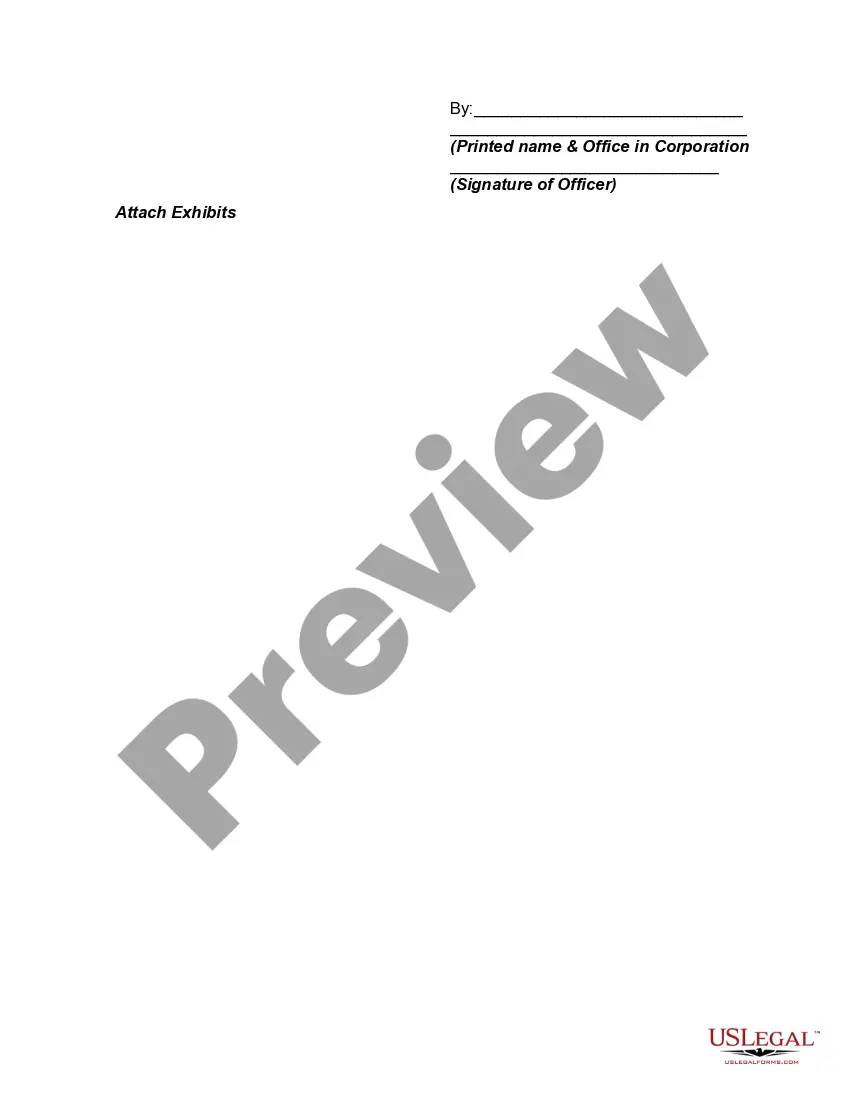
- Include signatures: Ensure that the authorized representatives of both corporations sign the document to validate the offer.
Does this form need to be notarized?
This form does not typically require notarization unless specified by local law. However, users should check their state regulations to confirm if notarization is necessary for validity.
Get your form ready online
Our built-in tools help you complete, sign, share, and store your documents in one place.
Make edits, fill in missing information, and update formatting in US Legal Forms—just like you would in MS Word.
Download a copy, print it, send it by email, or mail it via USPS—whatever works best for your next step.
Sign and collect signatures with our SignNow integration. Send to multiple recipients, set reminders, and more. Go Premium to unlock E-Sign.
If this form requires notarization, complete it online through a secure video call—no need to meet a notary in person or wait for an appointment.
We protect your documents and personal data by following strict security and privacy standards.

Make edits, fill in missing information, and update formatting in US Legal Forms—just like you would in MS Word.

Download a copy, print it, send it by email, or mail it via USPS—whatever works best for your next step.

Sign and collect signatures with our SignNow integration. Send to multiple recipients, set reminders, and more. Go Premium to unlock E-Sign.

If this form requires notarization, complete it online through a secure video call—no need to meet a notary in person or wait for an appointment.

We protect your documents and personal data by following strict security and privacy standards.
Typical mistakes to avoid
Common Mistakes to Avoid:
- Failing to clearly define the assets being purchased, which can lead to misunderstandings.
- Not specifying the duration of the offer, making it unclear how long the offer remains valid.
- Neglecting to include necessary exhibit attachments, such as the detailed list of liabilities.
- Forgetting to get signatures from authorized officers, which can render the offer unenforceable.
Benefits of using this form online
Benefits of Using This Form Online:
- Convenience: Easily fill out and download the form from anywhere, saving time on legal paperwork.
- Editability: Customize the form to fit the specifics of your transaction without hassle.
- Reliability: Access professionally drafted legal templates that meet standard requirements, ensuring legal soundness.
Legal Use & Context:
- Enforceability: The form provides a clear legal framework for asset transactions, making it enforceable in court.
- Limitations: Buyers should still conduct thorough due diligence on the seller to assess any undisclosed liabilities.
Key takeaways
Key Takeaways:
- The Offer to Purchase Assets of a Corporation is crucial for corporate asset acquisitions.
- This form protects both parties by outlining specific terms and liabilities.
- Proper completion and signatures are essential for legal enforceability.
Looking for another form?
Form popularity
FAQ
Your offer should be no more than 25% below market value, anything less can't even be excused by being cheeky! Sellers tend to accept offers 5-10% below market value, so you can maybe test the waters and offer 15% below market value initially.
Written offer (through a broker) with refundable good faith deposit of $1,000. Purchase price (subject to due diligence) Down payment (cash and/or outside financing) Terms and conditions on the balance due, which will be financed by seller.
To record the purchase of a fixed asset, debit the asset account for the purchase price, and credit the cash account for the same amount.
Well, assume that the business you want to acquire has $100,000/year in cashflow. BizBuySell suggests an average asking price of $200,000. But historical data shows some businesses that would suggest an asking price of $100,000 all the way up to nearly $500,000!
Among the terms typically included in the agreement are the purchase price, the closing date, the amount of earnest money that the buyer must submit as a deposit, and the list of items that are and are not included in the sale.
A real estate deal can take a turn for the worst if the contract is not carefully written to include all the legal stipulations for both the buyer and seller.You can write your own real estate purchase agreement without paying any money as long as you include certain specifics about your home.
Provisions of an APA may include payment of purchase price, monthly installments, liens and encumbrances on the assets, condition precedent for the closing, etc. An APA differs from a stock purchase agreement (SPA) where company shares, title to assets, and title to liabilities are also sold.
In an asset sale, the seller retains possession of the legal entity and the buyer purchases individual assets of the company, such as equipment, fixtures, leaseholds, licenses, goodwill, trade secrets, trade names, telephone numbers, and inventory.
These will include the purchase price, of course, and bills of sale, assignment and assumption agreements, intellectual property assignments, real property transfer documents and so on, as well as any legal opinions, employment agreements, escrow agreement and other ancillary documents.