Murder (First Degree)
What this document covers
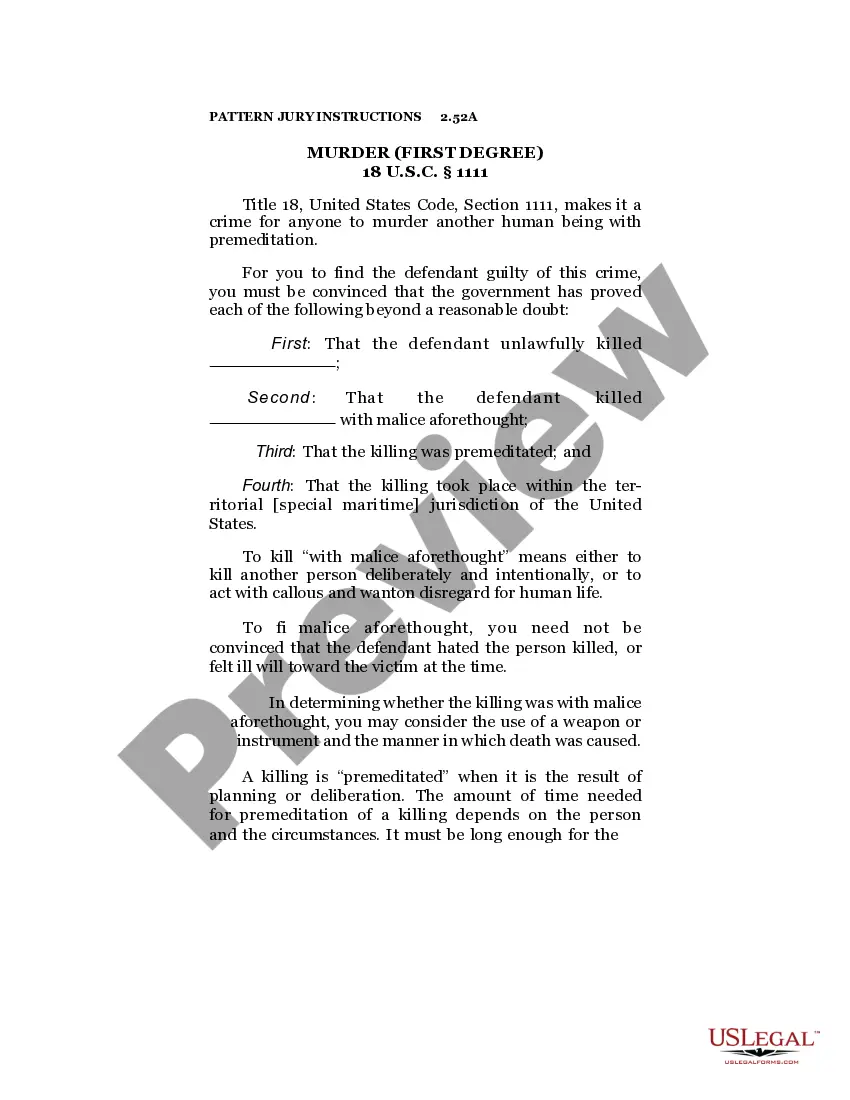
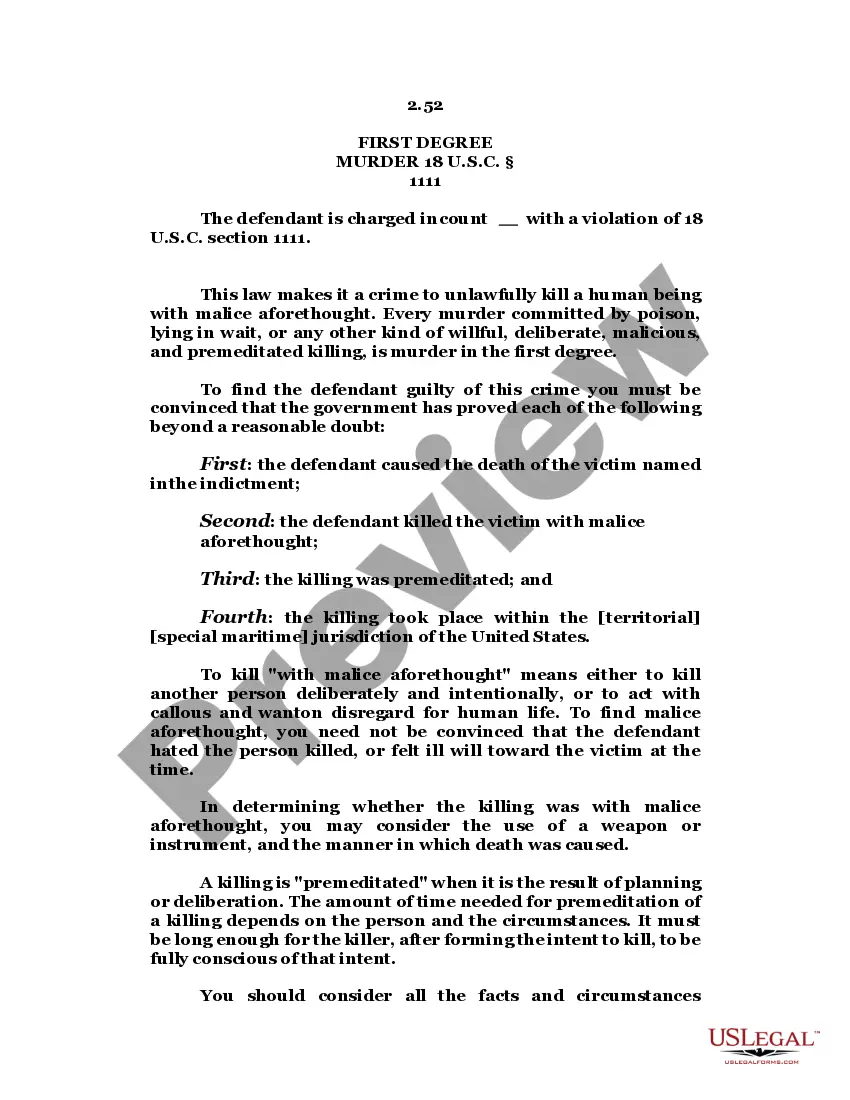
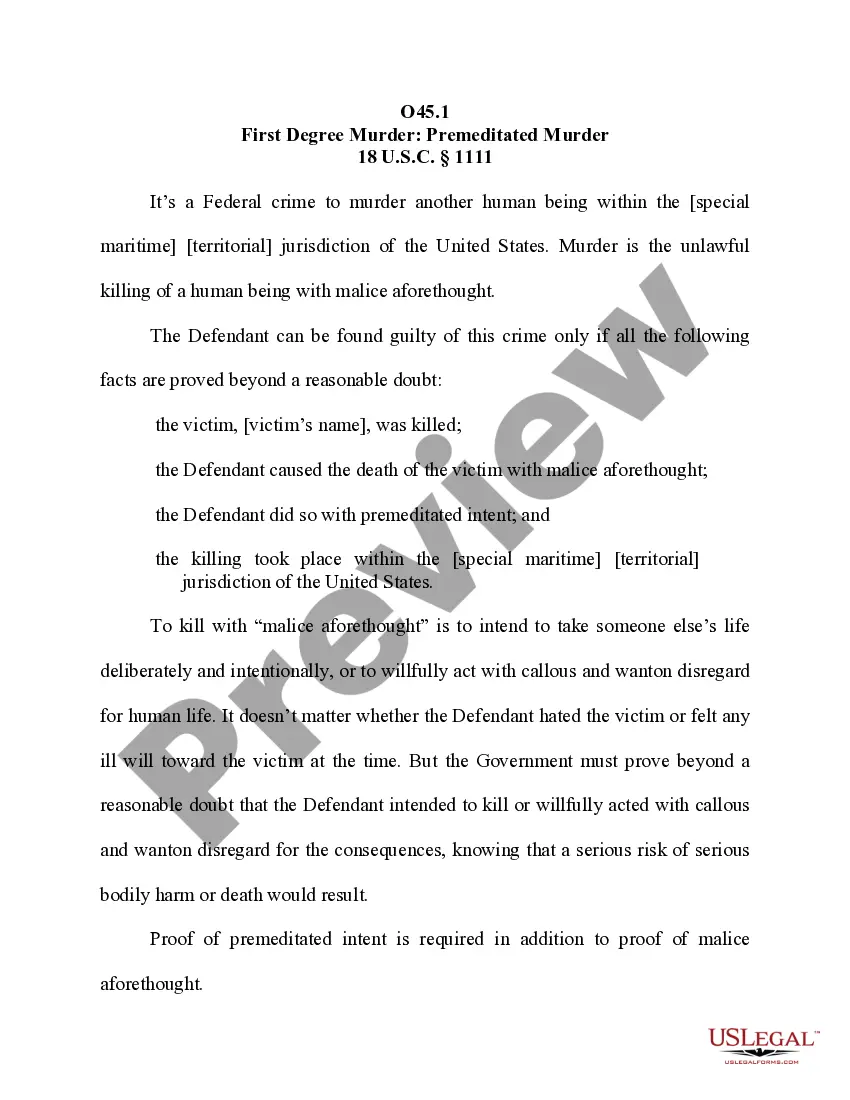
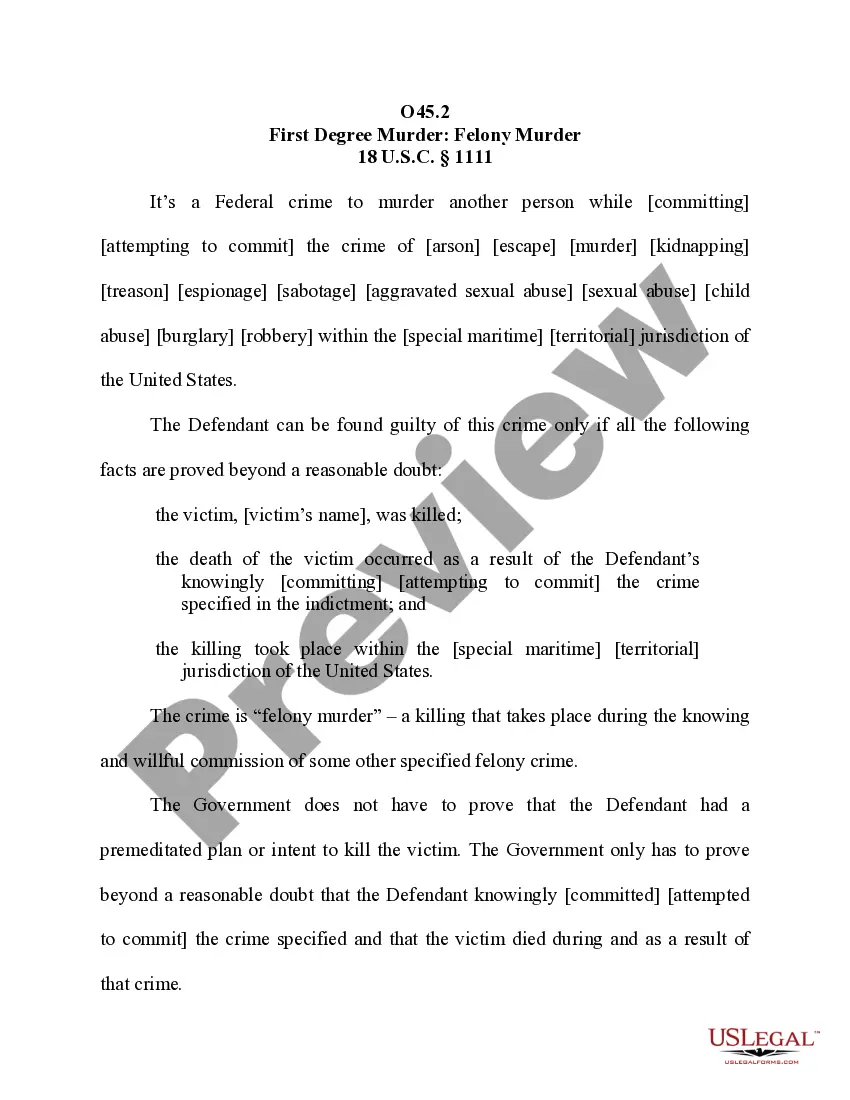
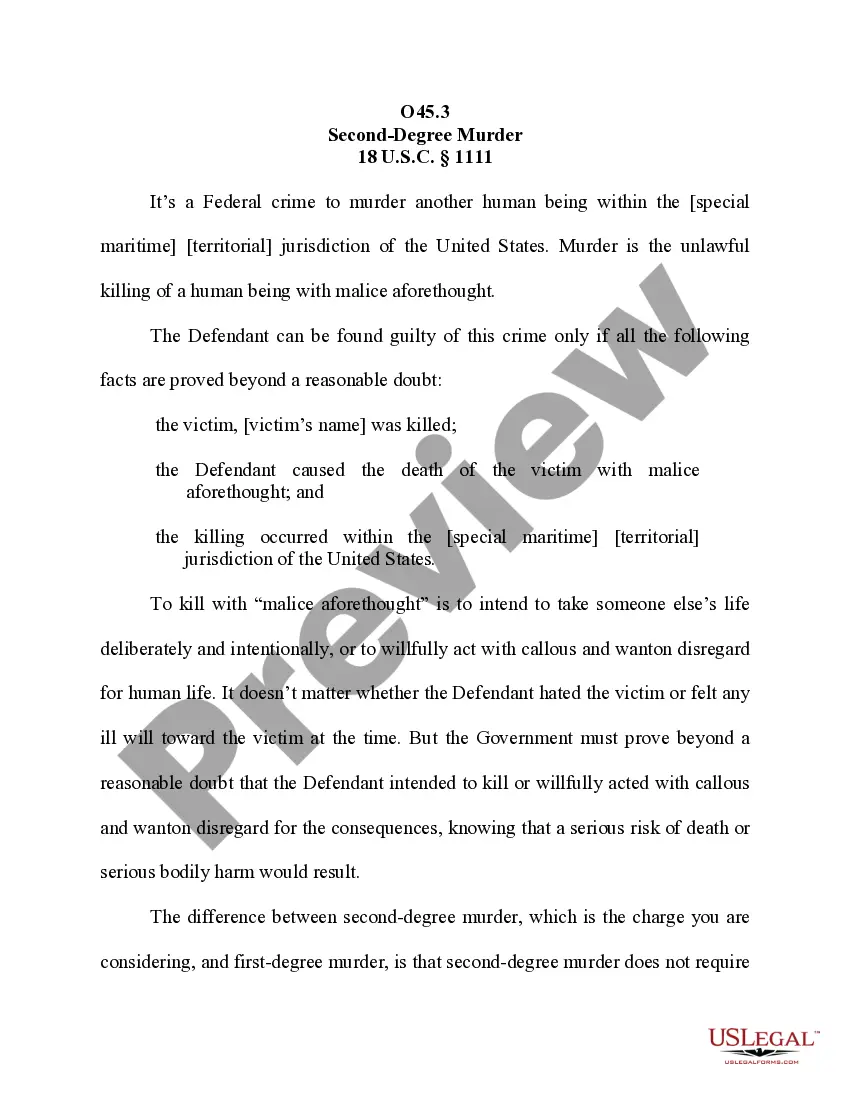
The Murder (First Degree) form is a legal document that outlines the specifics of the crime defined under 18 U.S.C. Section 1111. This form is essential for legal proceedings related to premeditated murder, differentiating it from other types of murder, such as second-degree murder or manslaughter. It details the elements that must be proven in court for a conviction, including unlawful killing, malice aforethought, premeditation, and jurisdictional requirements.
Key parts of this document
- Definition of first-degree murder as a premeditated act.
- Elements required to establish malice aforethought.
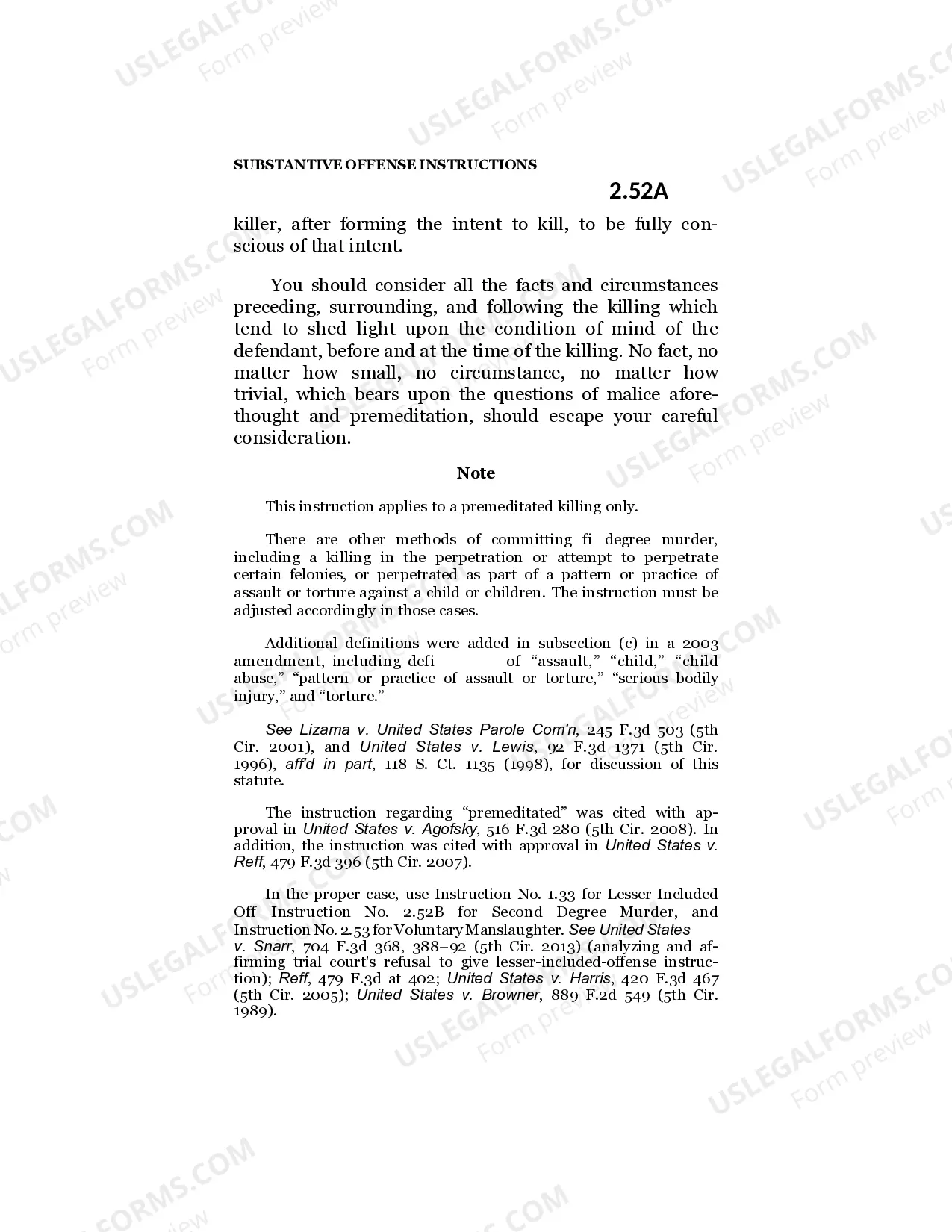
- Criteria for what constitutes premeditation.
- Jurisdictional limitations for prosecution under U.S. law.
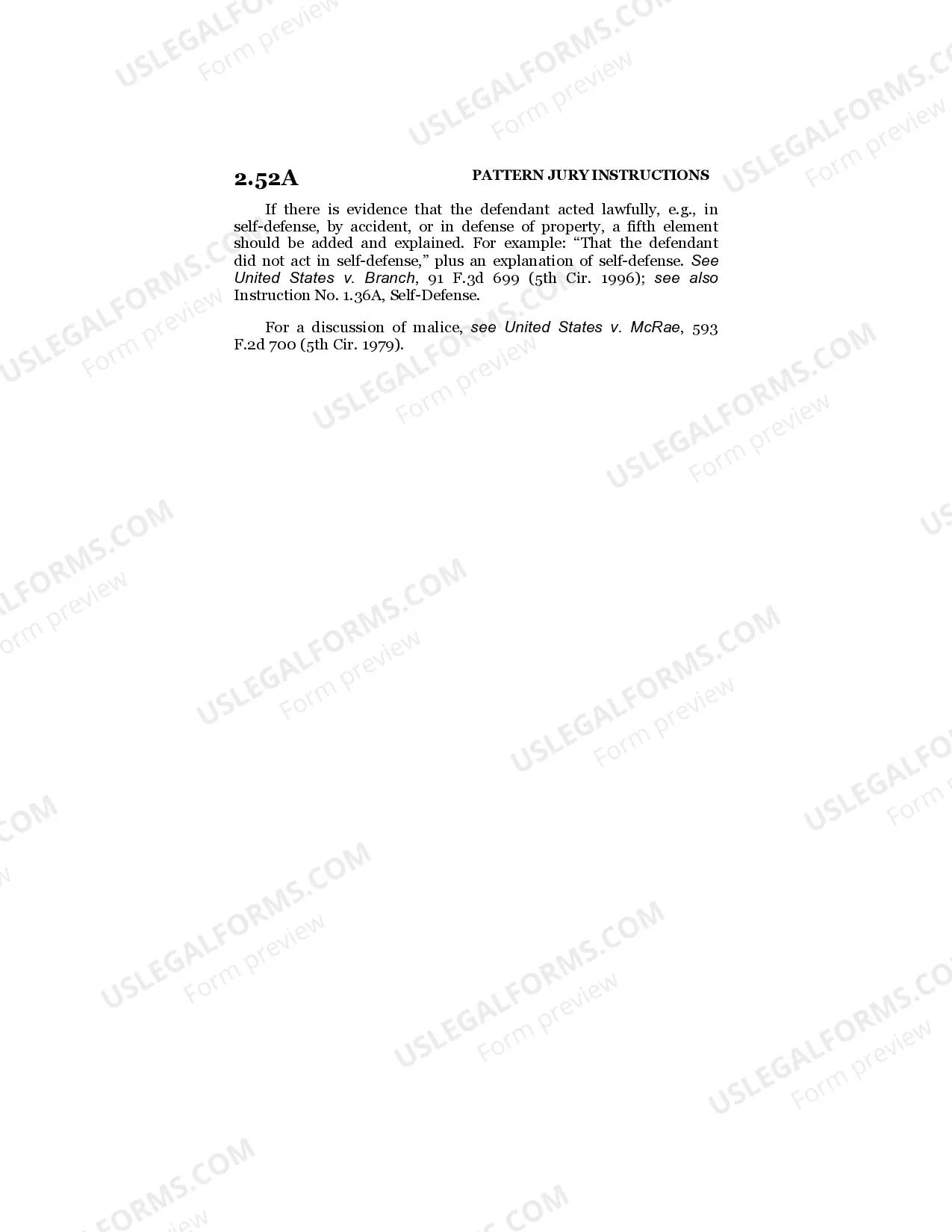
- Considerations for self-defense and lawful acts.
When to use this document
This form is used in criminal cases involving charges of first-degree murder. It should be employed by legal professionals when preparing for a trial or evaluating the defense and prosecution strategies in cases where a defendant is accused of killing another individual with premeditation and malice aforethought.
Intended users of this form
Legal professionals involved in homicide cases should use this form, including:
- Prosecuting attorneys handling murder cases.
- Defense attorneys representing clients accused of first-degree murder.
- Judges overseeing murder trials.
How to complete this form
To complete the Murder (First Degree) form, follow these steps:
- Identify and outline the defendant's actions leading to the homicide.
- Detail the evidence supporting the claim of premeditation.
- Specify the jurisdiction where the act took place.
- Gather supporting statements regarding malice aforethought.
- Include any defenses like self-defense if applicable.
Is notarization required?
This form does not typically require notarization unless specified by local law. Always consult jurisdictional requirements to ensure compliance.
Get your form ready online
Our built-in tools help you complete, sign, share, and store your documents in one place.
Make edits, fill in missing information, and update formatting in US Legal Forms—just like you would in MS Word.
Download a copy, print it, send it by email, or mail it via USPS—whatever works best for your next step.
Sign and collect signatures with our SignNow integration. Send to multiple recipients, set reminders, and more. Go Premium to unlock E-Sign.
If this form requires notarization, complete it online through a secure video call—no need to meet a notary in person or wait for an appointment.
We protect your documents and personal data by following strict security and privacy standards.

Make edits, fill in missing information, and update formatting in US Legal Forms—just like you would in MS Word.

Download a copy, print it, send it by email, or mail it via USPS—whatever works best for your next step.

Sign and collect signatures with our SignNow integration. Send to multiple recipients, set reminders, and more. Go Premium to unlock E-Sign.

If this form requires notarization, complete it online through a secure video call—no need to meet a notary in person or wait for an appointment.

We protect your documents and personal data by following strict security and privacy standards.
Typical mistakes to avoid
- Failing to establish all elements required for first-degree murder.
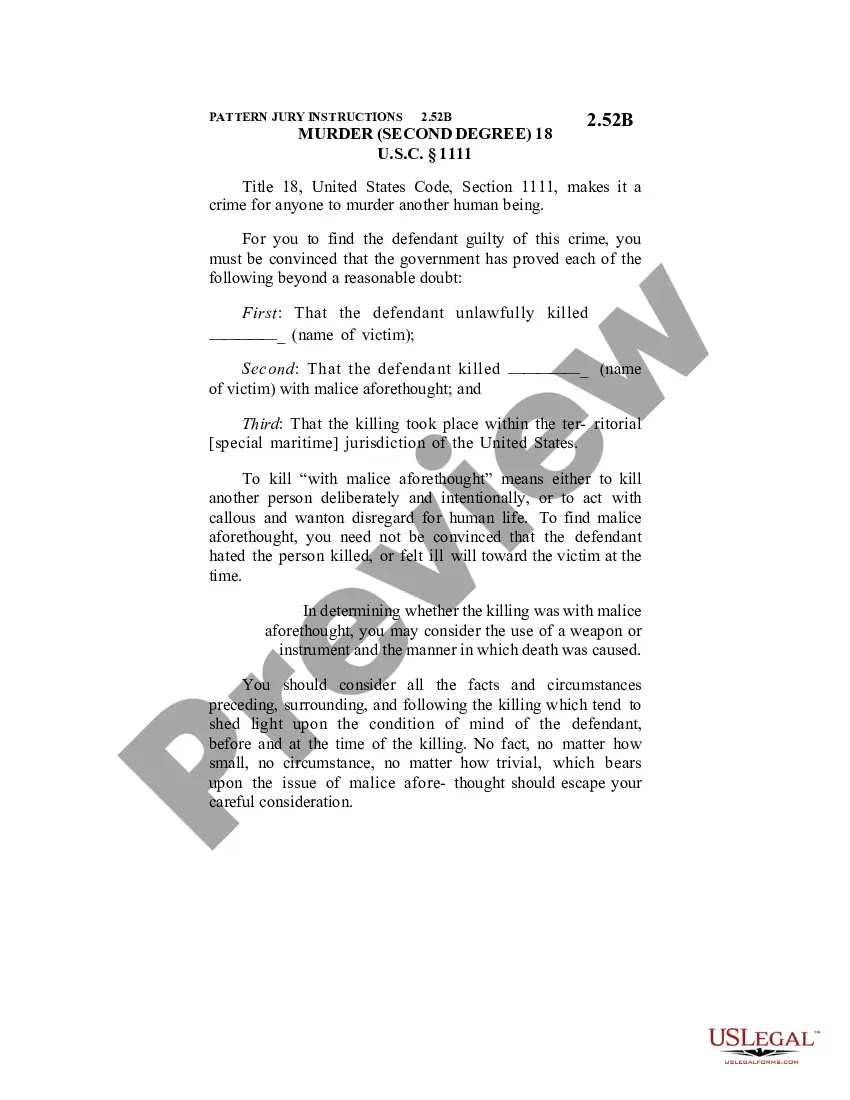
- Mixing definitions of first-degree murder with those of second-degree murder.
- Not clearly specifying the jurisdiction involved in the case.
- Overlooking potential defenses that could be applicable.
Why complete this form online
- Convenient access to legally compliant templates drafted by licensed attorneys.
- Downloadable and editable, allowing customization to suit specific case needs.
- Reliability assured through professional quality and legal accuracy.
Legal use & context
- Understanding the critical legal elements of first-degree murder.
- Application of this form in both state and federal court systems.
- The role of case law in interpreting the elements of first-degree murder.
Main things to remember
- First-degree murder requires proof of premeditation and malice aforethought.
- The form provides essential guidance for legal practitioners involved in murder cases.
- Review jurisdiction-specific requirements before using the form in legal proceedings.
Looking for another form?
Form popularity
FAQ
First-degree murder is the most serious of all homicide offenses. It involves any intentional murder that is willful and premeditated with malice aforethought. Premeditation requires that the defendant planned the murder before it was committed or was ?lying in wait? for the victim.
The severity of the crime First-degree murder is the most severe homicide crime and is always premeditated and carried out with intent. Second-degree murder is carried out with intent but with no premeditation. Finally, third-degree murder is the lowest criminal homicide with no intent to kill and no premeditation.
You fully intend to kill the other person (first-degree murder). You know your actions may result in the death of another (second-degree murder). Your behavior shows you don't care if someone dies because of your actions (voluntary manslaughter). You accidentally cause another person to die (involuntary manslaughter).
Rather than referring to different degrees of murder in Texas by degrees, the state classifies first-degree murder as capital murder and second-degree murder only as murder. It does not have laws classifying third-degree murder.
First-degree murder is the most severe homicide crime and is always premeditated and carried out with intent. Second-degree murder is carried out with intent but with no premeditation. Finally, third-degree murder is the lowest criminal homicide with no intent to kill and no premeditation.