Second-Degree Murder
Understanding this form
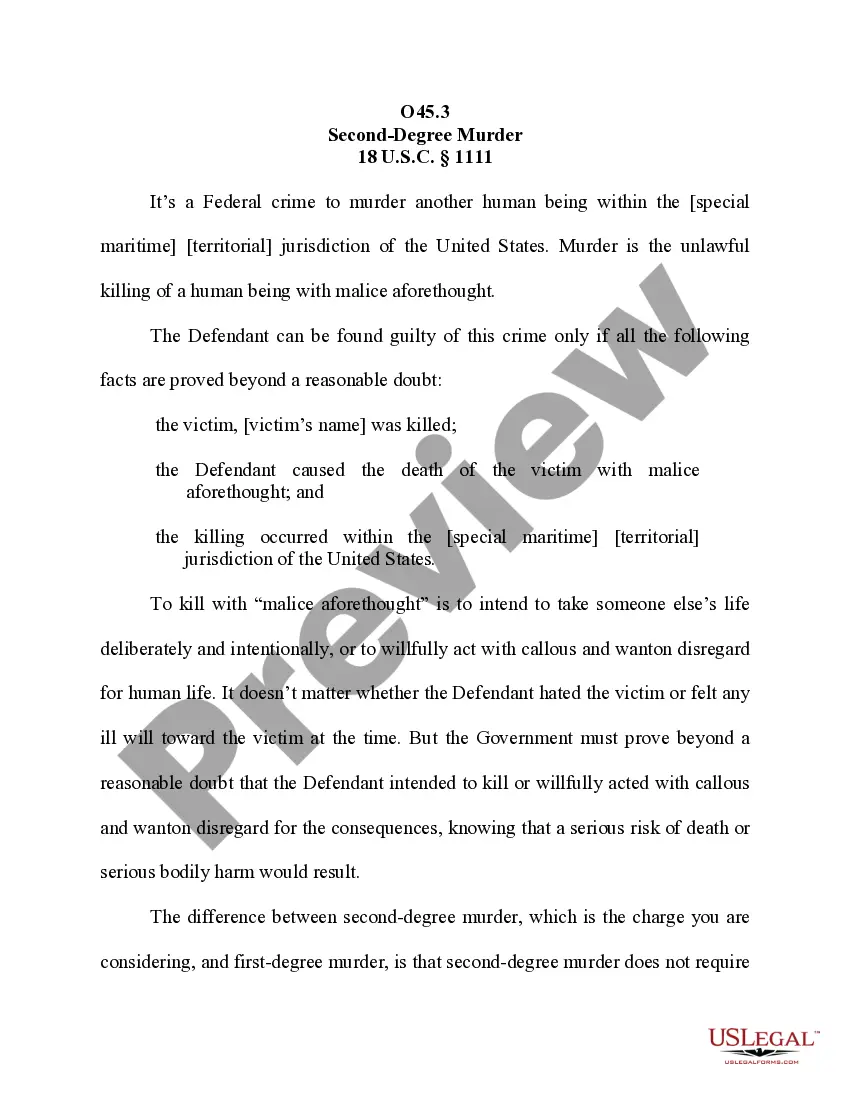
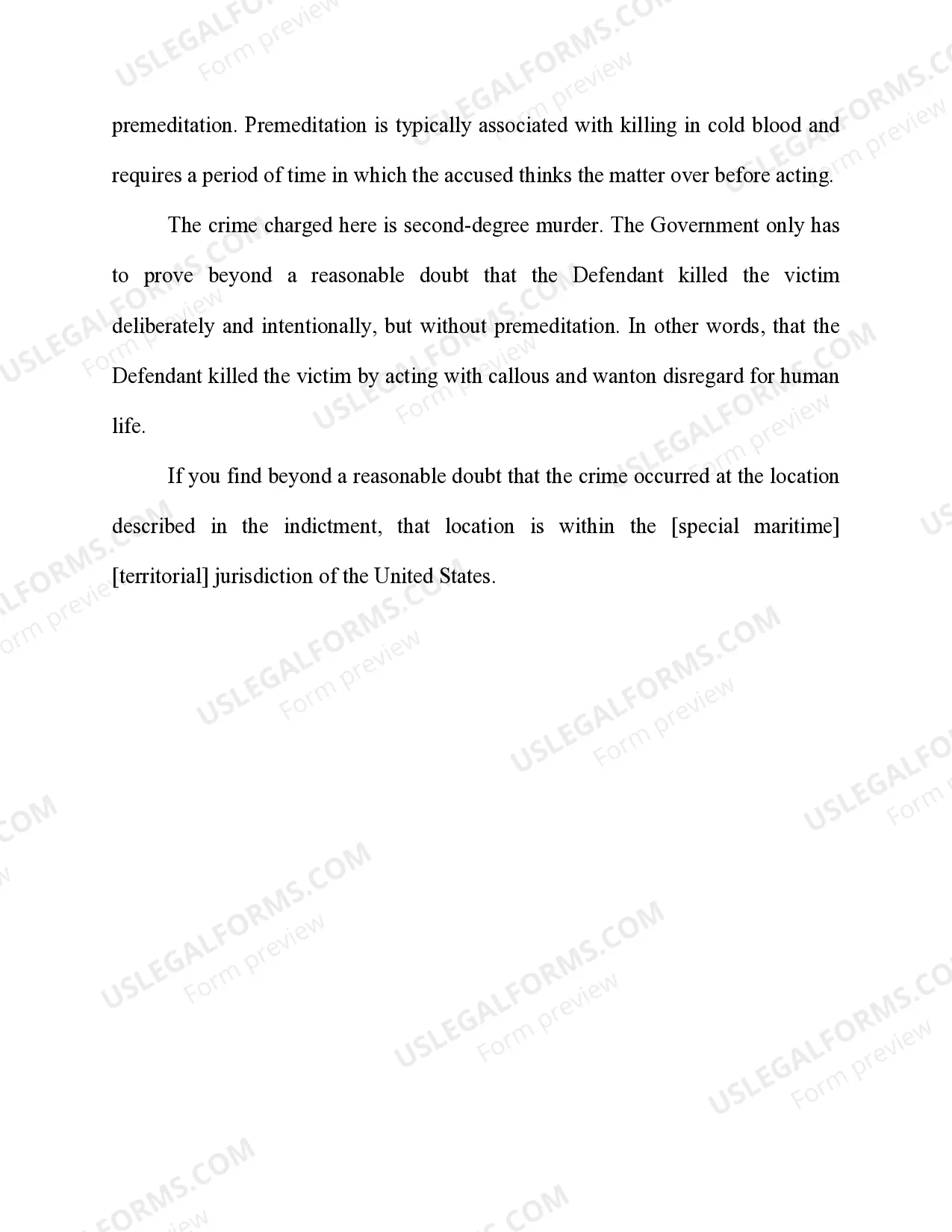
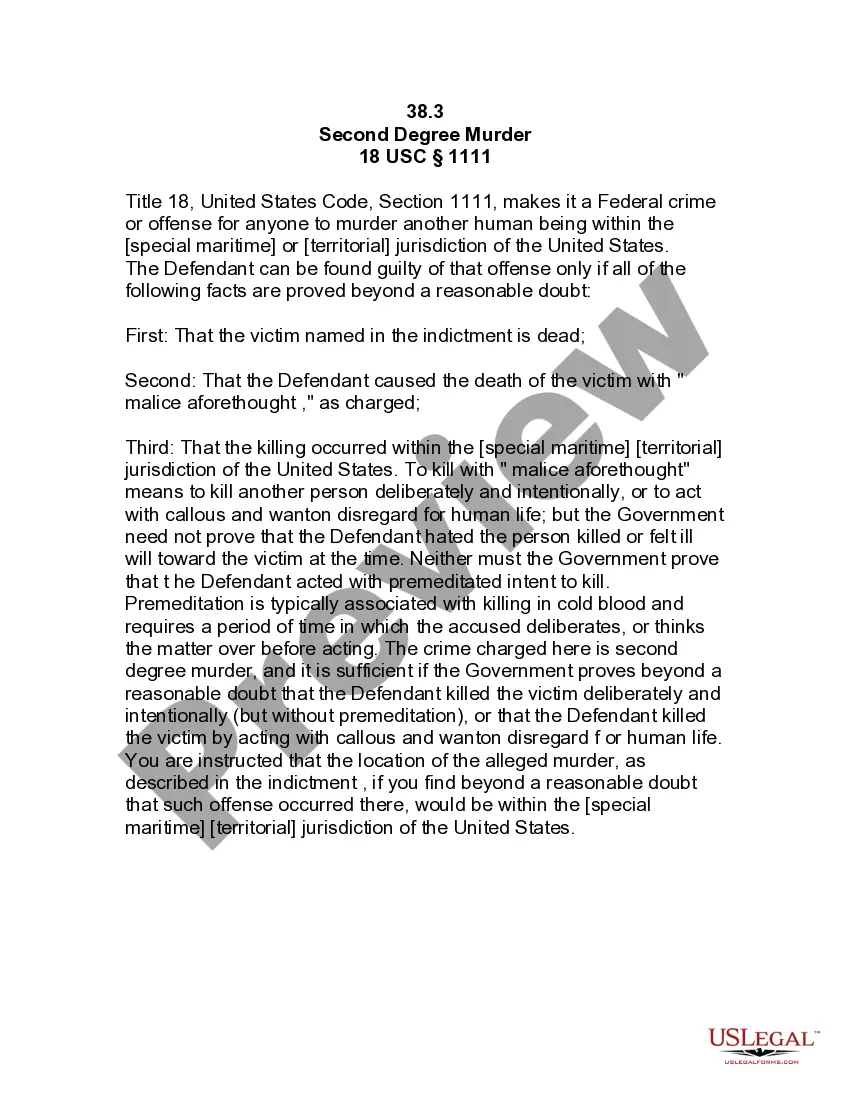
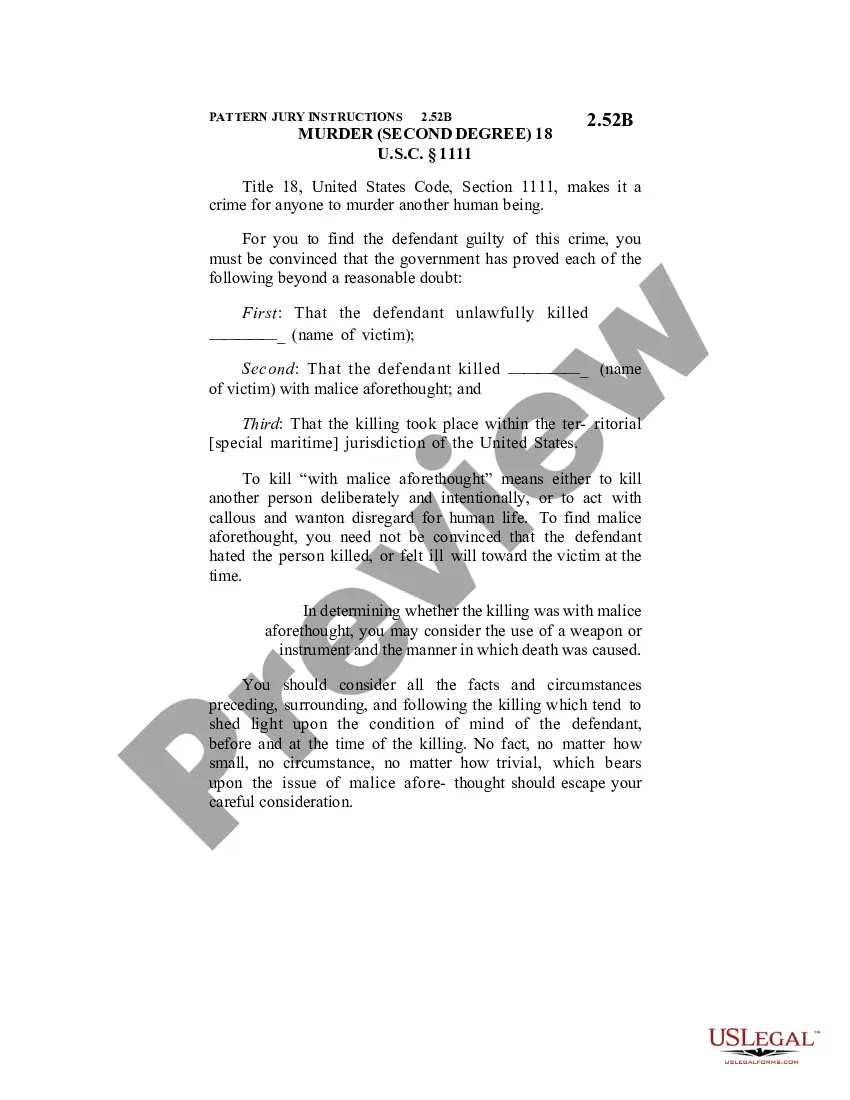
The Second-Degree Murder form provides instructions related to the legal guidelines for this serious crime in the United States. It outlines the necessary elements required to prove second-degree murder, which involves the unlawful killing of another individual with malice aforethought, but without premeditation. This form is crucial for understanding the prosecution's requirements in such cases and differs from related forms that focus on first-degree murder or other homicide classifications.
Form components explained
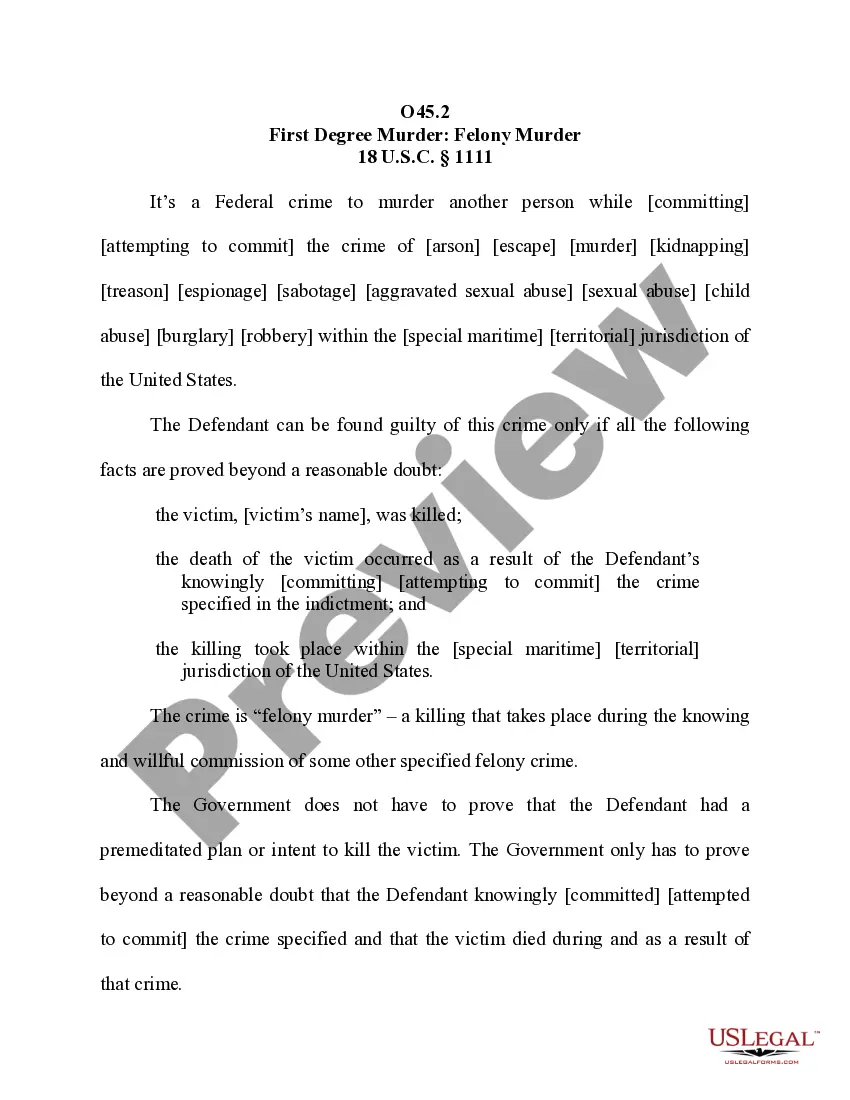
- Identification of the victim and the manner of death.
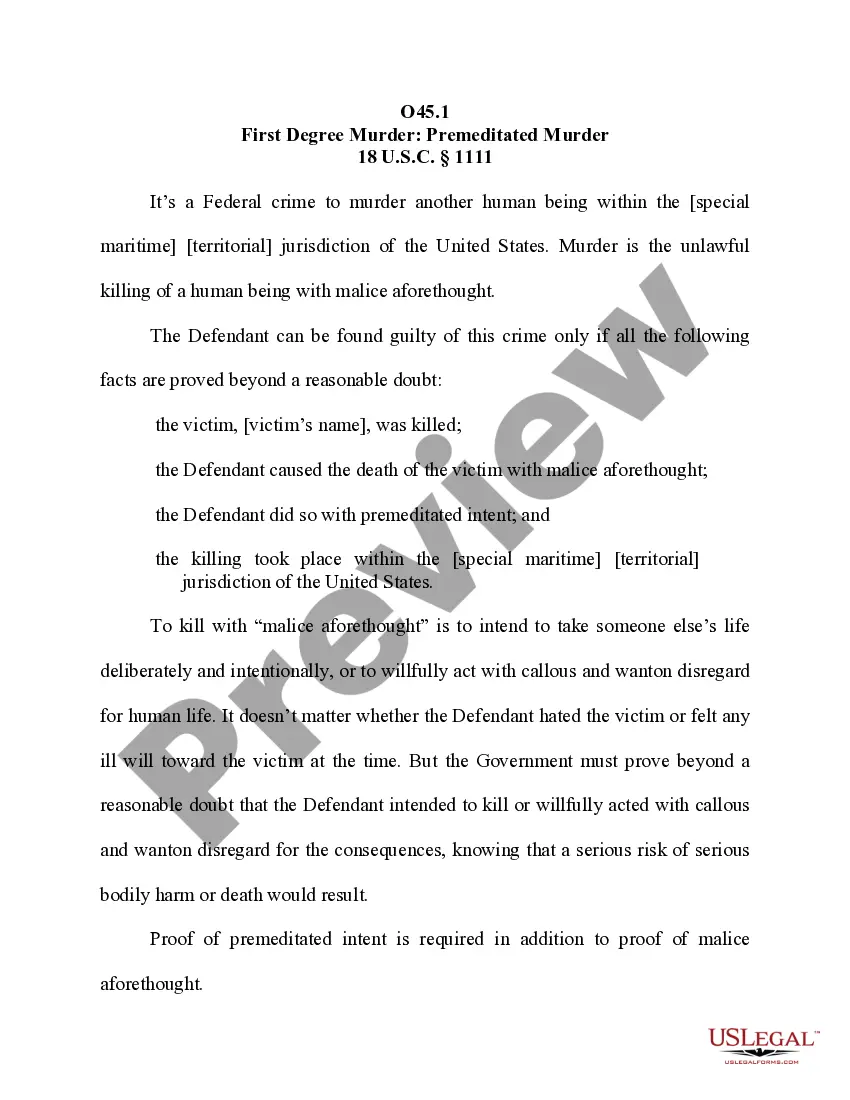
- Definition of malice aforethought and its implications for the case.
- Clarification that premeditation is not a requirement for second-degree murder.
- Jurisdictional requirements for where the crime occurred.
When to use this document
This form is used in legal proceedings where an individual is accused of second-degree murder. It helps to establish the necessary legal standards and evidence required to proceed with a trial. It is relevant in circumstances involving intent to kill or actions taken with disregard for human life that result in death.
Who should use this form
- Prosecutors handling second-degree murder cases.
- Defense attorneys preparing for trial in homicide cases.
- Legal scholars and students studying criminal law.
Instructions for completing this form
- Provide the name of the victim as identified in the case.
- Detail the circumstances surrounding the death to establish malice aforethought.
- Clearly outline the location where the incident occurred to confirm jurisdiction.
- Ensure all evidence presented meets the standard of proof beyond a reasonable doubt.
- Review all elements to ensure compliance with federal legal standards.
Does this document require notarization?
In most cases, this form does not require notarization. However, some jurisdictions or signing circumstances might. US Legal Forms offers online notarization powered by Notarize, accessible 24/7 for a quick, remote process.
Get your form ready online
Our built-in tools help you complete, sign, share, and store your documents in one place.
Make edits, fill in missing information, and update formatting in US Legal Forms—just like you would in MS Word.
Download a copy, print it, send it by email, or mail it via USPS—whatever works best for your next step.
Sign and collect signatures with our SignNow integration. Send to multiple recipients, set reminders, and more. Go Premium to unlock E-Sign.
If this form requires notarization, complete it online through a secure video call—no need to meet a notary in person or wait for an appointment.
We protect your documents and personal data by following strict security and privacy standards.

Make edits, fill in missing information, and update formatting in US Legal Forms—just like you would in MS Word.

Download a copy, print it, send it by email, or mail it via USPS—whatever works best for your next step.

Sign and collect signatures with our SignNow integration. Send to multiple recipients, set reminders, and more. Go Premium to unlock E-Sign.

If this form requires notarization, complete it online through a secure video call—no need to meet a notary in person or wait for an appointment.

We protect your documents and personal data by following strict security and privacy standards.
Common mistakes to avoid
- Failing to clearly establish the jurisdiction where the crime occurred.
- Confusing second-degree murder with first-degree murder due to misunderstandings about premeditation.
- Neglecting to provide sufficient evidence to demonstrate malice aforethought.
Legal use & context
- This form serves as essential guidance in federal prosecutions related to second-degree murder.
- It is crucial for ensuring that legal standards are met in a homicide case.
- The instructions can be referenced by judges, juries, and attorneys involved in such trials.
Quick recap
- The Second-Degree Murder form outlines essential elements necessary for prosecution.
- Understanding malice aforethought is crucial for differentiating between second and first-degree murder.
- This form is relevant in both prosecution and defense settings within homicide cases.
Looking for another form?

Form popularity
FAQ
You fully intend to kill the other person (first-degree murder). You know your actions may result in the death of another (second-degree murder). Your behavior shows you don't care if someone dies because of your actions (voluntary manslaughter). You accidentally cause another person to die (involuntary manslaughter).
Definition: A homicide that is both planned and deliberate. An example of this is a contract killing. Some homicides are automatically considered first-degree murder: The killing of an on-duty police officer or prison employee.
You fully intend to kill the other person (first-degree murder). You know your actions may result in the death of another (second-degree murder). Your behavior shows you don't care if someone dies because of your actions (voluntary manslaughter).
For instance, a wife who hits her husband in the head with a large rock, killing him, may be charged with second-degree murder even if she did not intend to kill him, as she would have known that such a blow to the head could kill him.
First-degree murder is the most severe homicide crime and is always premeditated and carried out with intent. Second-degree murder is carried out with intent but with no premeditation. Finally, third-degree murder is the lowest criminal homicide with no intent to kill and no premeditation.
The difference? A person committing second degree murder, while not premeditated, has full understanding of their actions and kills someone anyway. Manslaughter involves a circumstance that may cause a reasonable person to become emotionally disturbed or considered as a murder fueled by passion or impulse.
Second-degree murder is typically murder with malicious intent but not premeditated. The mens rea of the defendant is intent to kill, intent to inflict serious bodily harm, or act with an abandoned heart (e.g., reckless conduct lacking concern for human life or having a high risk of death).
First-degree murder is the most severe homicide crime and is always premeditated and carried out with intent. Second-degree murder is carried out with intent but with no premeditation. Finally, third-degree murder is the lowest criminal homicide with no intent to kill and no premeditation.