Blind Trust Agreement for Private Individual as Opposed to Government
Overview of this form
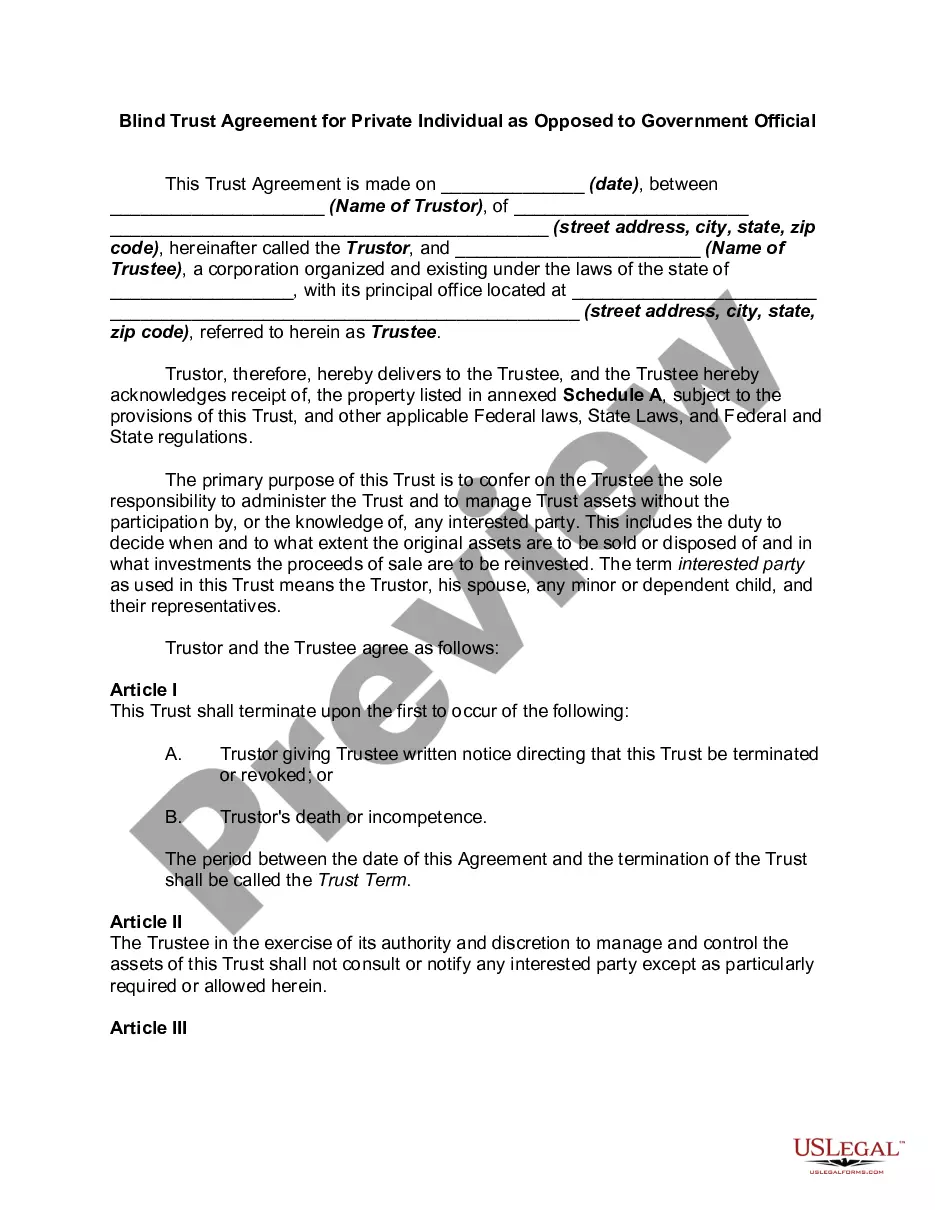
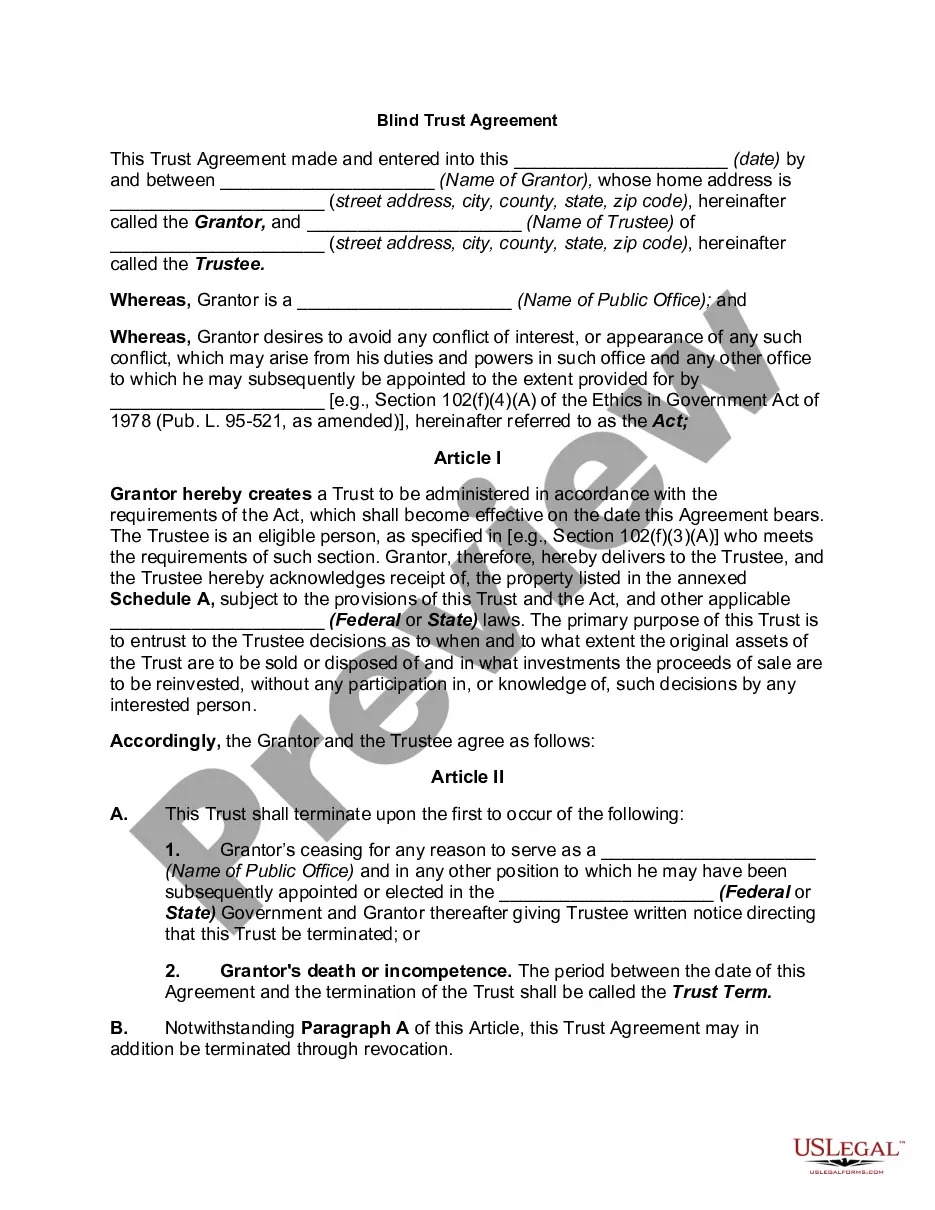
A blind trust agreement is a legal document that establishes a blind trust, wherein beneficiaries remain unaware of the specific assets held in the trust. This type of trust is designed to avoid conflicts of interest, allowing a fiduciary third party, typically a trust company, to manage the trust assets without the beneficiaries' knowledge. Unlike blind trusts used by politicians to mitigate perceived conflicts, this particular blind trust agreement is tailored for private individuals seeking to maintain privacy regarding their assets.
Form components explained
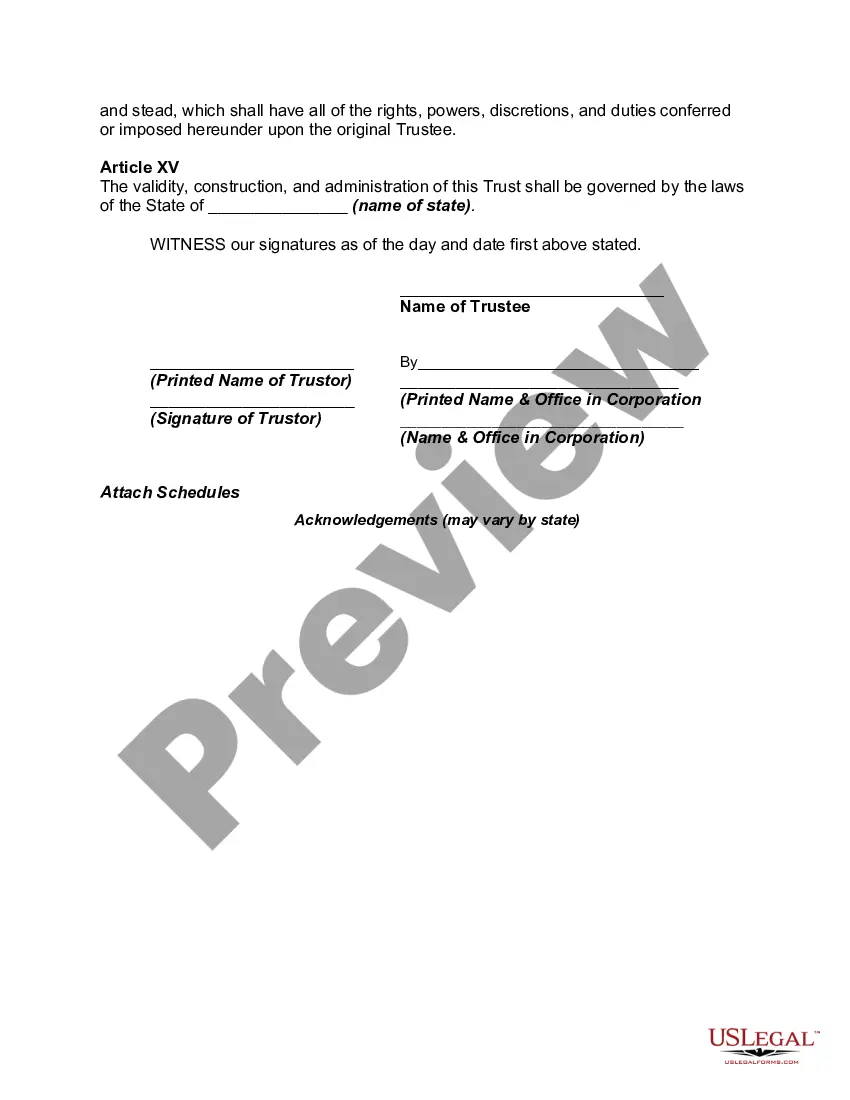
- Identification of parties involved: Trustor (the individual creating the trust) and Trustee (the corporation managing the trust).
- Property transfer details: Listing of assets being placed into the trust.
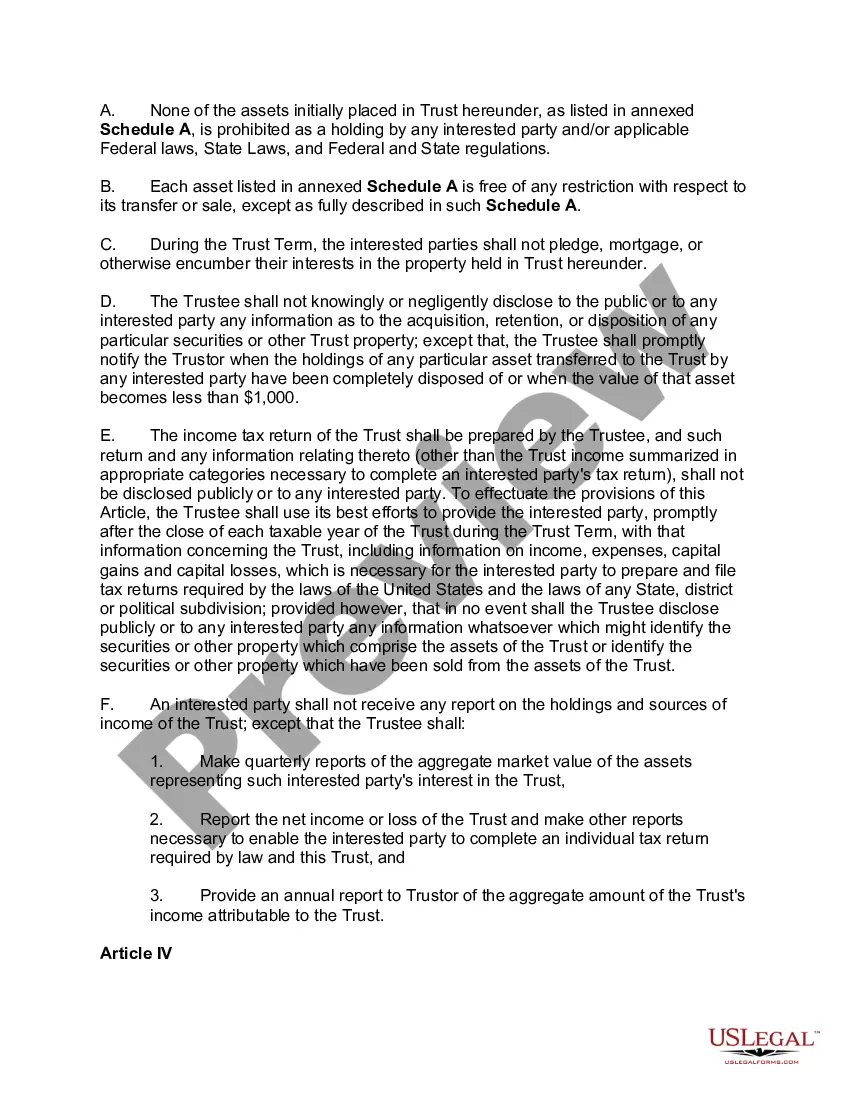
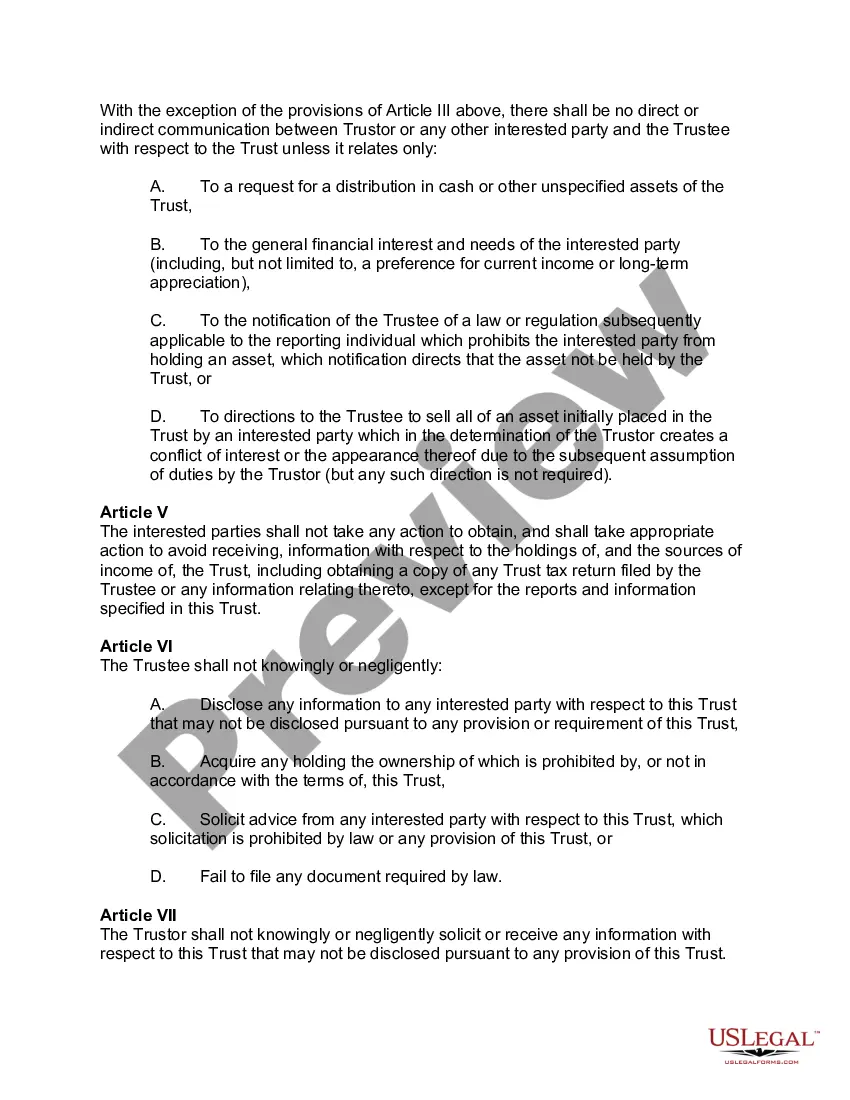
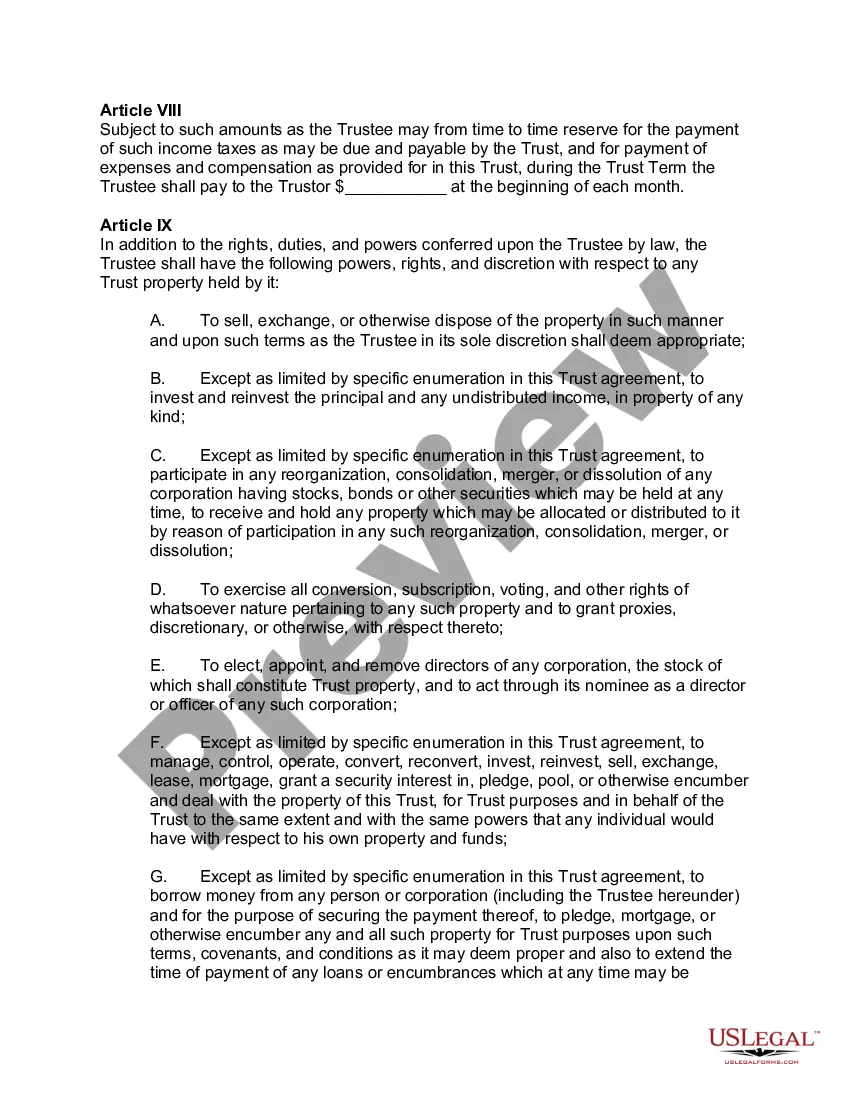
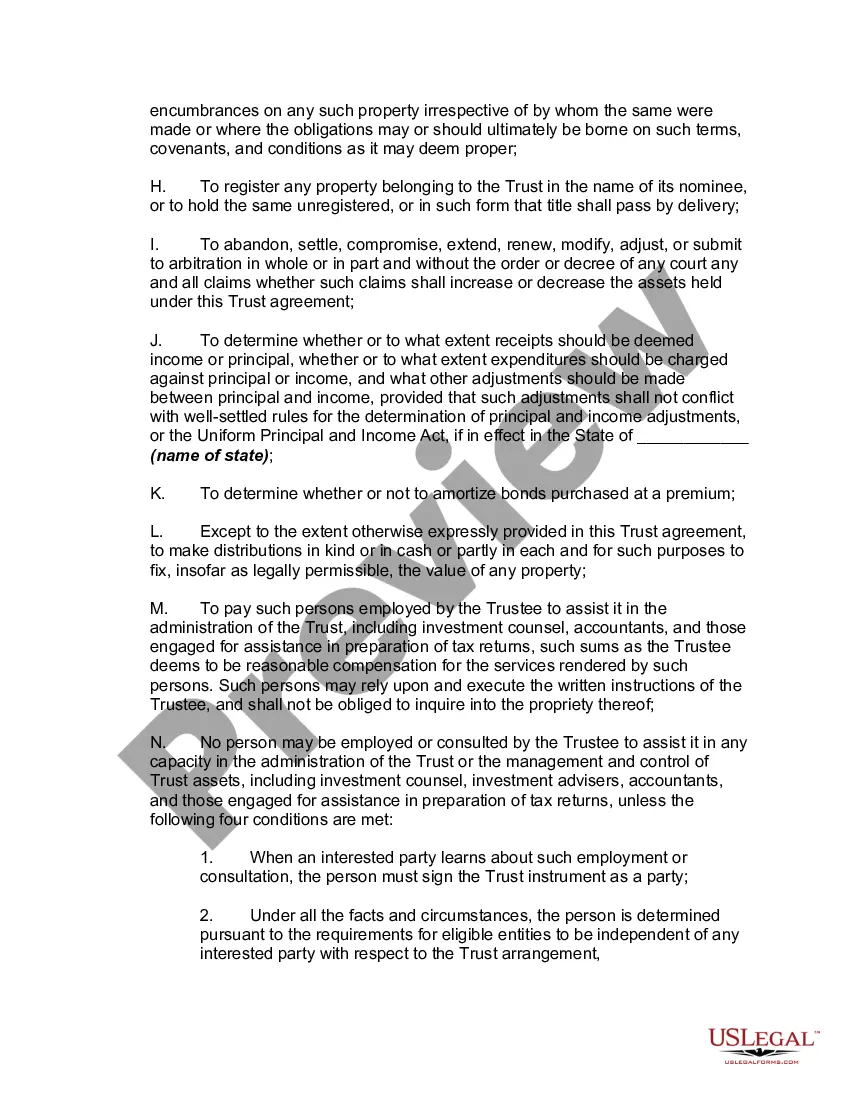
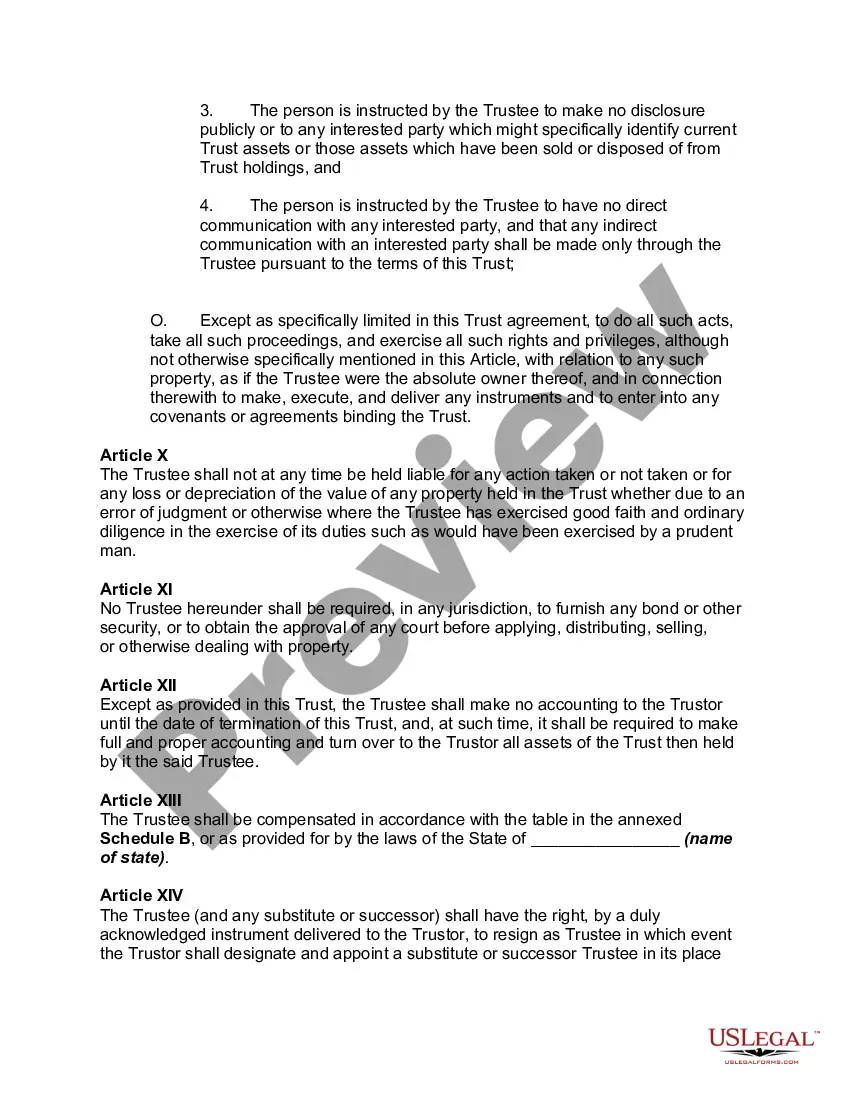
- Trust administration responsibilities: Outlining the Trusteeâs authorities without involving the Trustor or interested parties.
- Termination conditions: Specific instances that will end the trust, such as written notice or the death of the Trustor.
- Provisions for reporting: Guidelines for the Trustee's notifications to the Trustor regarding financial aspects without disclosing specific asset information.
- Compensation structure for the Trusteeâs services: Details on remuneration for managing the trust assets.
Situations where this form applies
This blind trust agreement is suitable when an individual wishes to manage their financial assets discreetly, particularly if they hold positions that could lead to potential conflicts of interest. It is typically used to ensure that the individual does not influence or appear to influence investment decisions while they have significant responsibilities in a public or corporate role. Private individuals may also use this trust to simplify estate planning and maintain privacy for their financial holdings.
Intended users of this form
- Private individuals who want to keep their financial assets confidential.
- People in significant public positions wishing to avoid conflicts of interest.
- Individuals planning their estate and wanting to simplify asset management.
- Those who require a neutral third party for asset management without personal involvement.
Instructions for completing this form
- Enter the date of the agreement at the top of the document.
- Specify the names and addresses of the Trustor and Trustee in the designated fields.
- Include a detailed listing of the assets being transferred into the trust in Schedule A.
- Outline the compensation for Trustee services in Schedule B.
- Provide clear instructions regarding termination conditions and Trustee responsibilities as specified in the agreement.
Does this form need to be notarized?
This form does not typically require notarization unless specified by local law. However, consulting with a legal professional in your jurisdiction is recommended to ensure compliance.
Get your form ready online
Our built-in tools help you complete, sign, share, and store your documents in one place.
Make edits, fill in missing information, and update formatting in US Legal Forms—just like you would in MS Word.
Download a copy, print it, send it by email, or mail it via USPS—whatever works best for your next step.
Sign and collect signatures with our SignNow integration. Send to multiple recipients, set reminders, and more. Go Premium to unlock E-Sign.
If this form requires notarization, complete it online through a secure video call—no need to meet a notary in person or wait for an appointment.
We protect your documents and personal data by following strict security and privacy standards.

Make edits, fill in missing information, and update formatting in US Legal Forms—just like you would in MS Word.

Download a copy, print it, send it by email, or mail it via USPS—whatever works best for your next step.

Sign and collect signatures with our SignNow integration. Send to multiple recipients, set reminders, and more. Go Premium to unlock E-Sign.

If this form requires notarization, complete it online through a secure video call—no need to meet a notary in person or wait for an appointment.

We protect your documents and personal data by following strict security and privacy standards.
Avoid these common issues
- Failing to clearly identify all assets being placed in the trust asset list.
- Not specifying the compensation arrangements for the Trustee.
- Overlooking the importance of state-specific legal requirements.
- Ignoring the need for clarity in the termination conditions of the trust.
Benefits of completing this form online
- Convenience: Downloadable form available anytime to suit personal schedules.
- Editability: Easy to fill out and customize based on individual needs.
- Reliability: Access to forms drafted by licensed attorneys ensures legal soundness.
Main things to remember
- A blind trust helps maintain privacy and avoid conflicts of interest.
- Essential elements include identification of parties, asset listing, and management rules.
- Consult local laws for jurisdiction-specific requirements before use.
Looking for another form?
Form popularity
FAQ
Blind trust puts faith in someone without regard to demonstrated reliability or trustworthiness.
Blind trusts are legal asset management structures that can help lottery winners control their money earned and maintain a certain level of privacy. In 2010, the $261.6 million Powerball Lottery jackpot went unclaimed for a month until an attorney showed up to claim the prize on behalf of his anonymous client.
Depending on the complexity of your trust agreement, you might pay a professional between $1,000 and $10,000 to set up a trust. You'll also pay yearly management fees, as much as 3 percent of trust assets.
An OGE-qualified blind trust may not reveal its assets either to the grantor or to the public.The trust pays out income from the trust without revealing the source, and the owner must then declare that income and pay the appropriate taxes on it.
Blind trusts create a layer of separation between the grantor's assets and professional or political activities that helps to eliminate real or perceived conflicts of interest and accusations of wrongdoing. Individuals who receive a windfall can also use them to maintain financial privacy.
The key difference between a blind trust and other types of living trusts is that neither the trustor nor his or her beneficiaries have the authority to manage any aspect of the trust or the assets held in it after the blind trust has been finalized.