Letter Demanding that Former Independent Contractor, who was Terminated for Breaching Contract, Cease and Desist from making Slanderous Comments to Customers and Potential Customers
Understanding this form
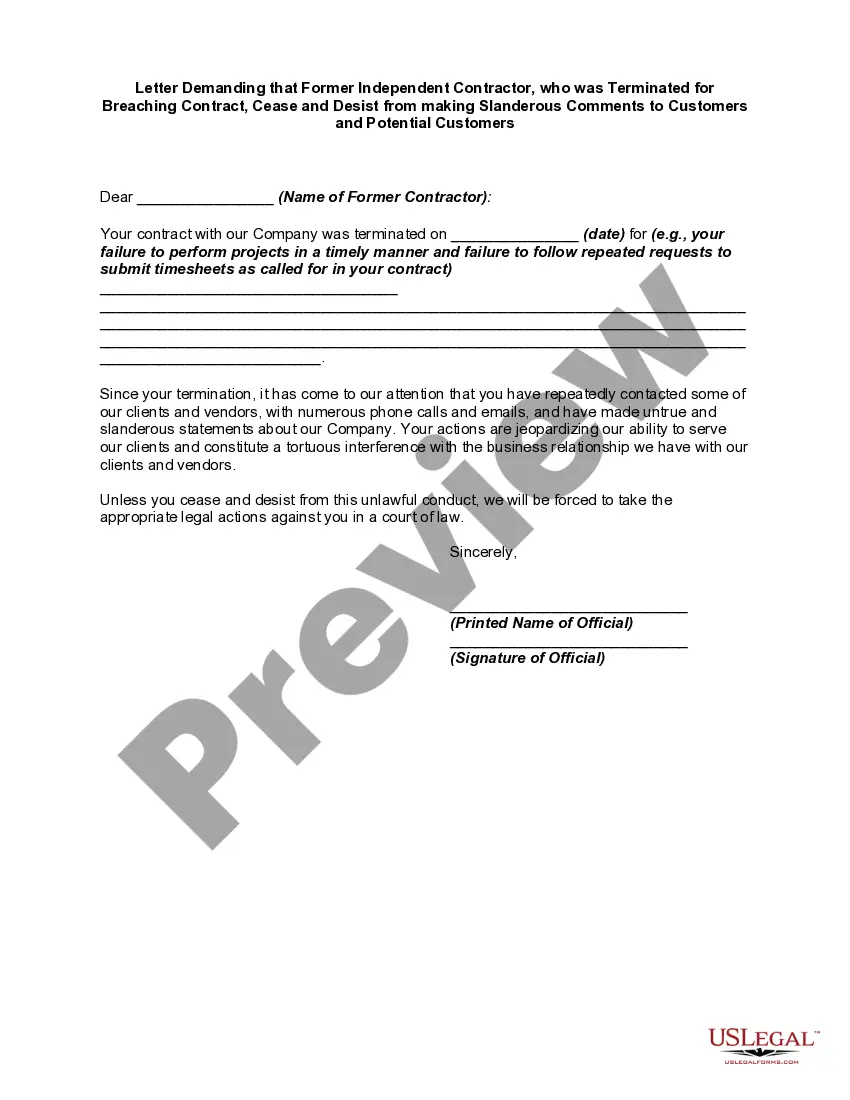
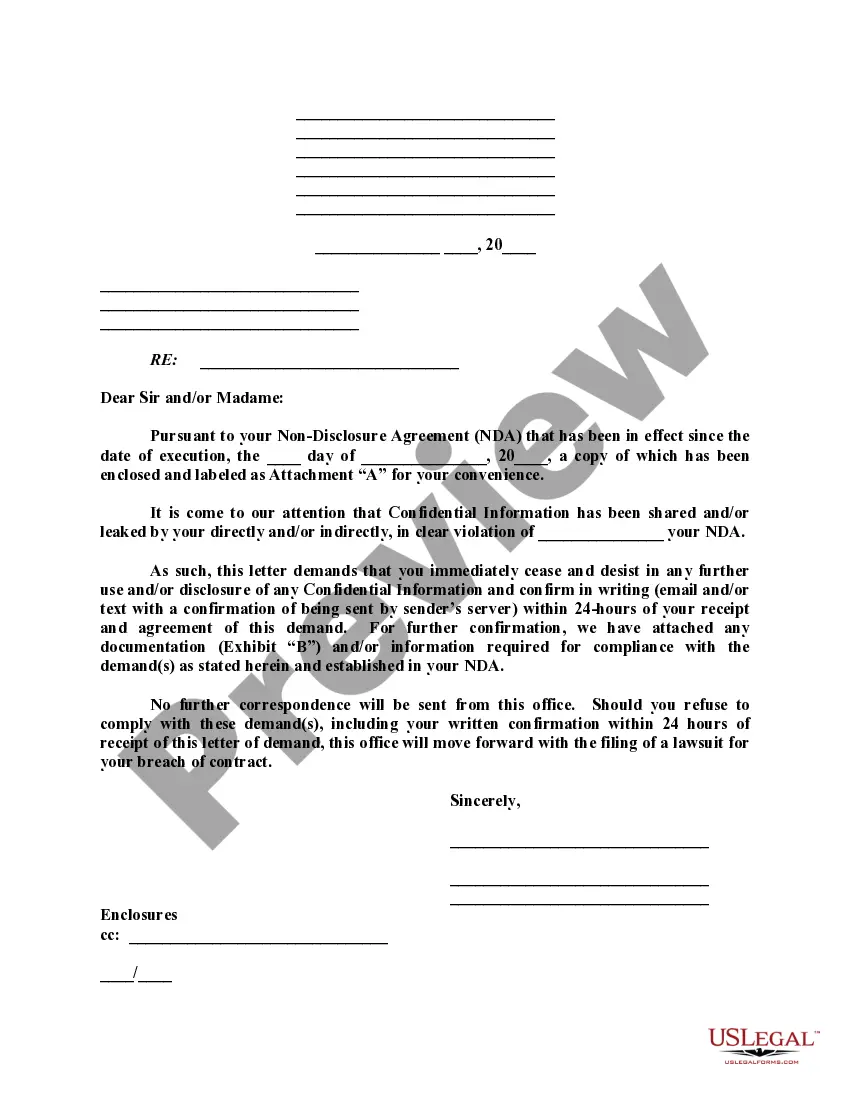
A Letter Demanding that Former Independent Contractor Cease and Desist from making Slanderous Comments serves as a formal request for an independent contractor to stop making false statements that harm a companyâs reputation. This letter outlines the grounds for the demand, including the termination of the contractor's agreement and the impact of their slanderous remarks. This form is distinct from other cease and desist letters due to its specific focus on slander and its application following the termination of a contract.
Key parts of this document
- Name of former contractor and company
- Date of contract termination
- Reason for termination, including specific breaches of contract
- Details of slanderous statements made
- Statement of potential legal action if the behavior continues
- Signature and printed name of an official

Common use cases
This form is necessary when a former independent contractor has been terminated due to violations of their contract and subsequently engages in making slanderous comments to customers or potential customers. It is used to formally notify the contractor of their unacceptable behavior and request that it ceases, protecting the companyâs reputation and business relationships.
Intended users of this form
This form is suitable for:
- Business owners who have terminated independent contractors for cause
- Managers and legal representatives dealing with slanderous actions affecting their company
- Companies seeking to maintain their reputation and client relationships
Steps to complete this form
- Identify the name of the former contractor and your company's name.
- Enter the date when the contract was terminated.
- Clearly state the reasons for termination and any specific incidents that occurred.
- Detail the untrue statements made by the former contractor.
- Specify the consequences of failing to cease the slanderous comments.
- Sign and print the name of the official sending the letter.
Is notarization required?
This form does not typically require notarization unless specified by local law. Be sure to check any specific state regulations regarding the need for notarization in cease and desist letters.
Get your form ready online
Our built-in tools help you complete, sign, share, and store your documents in one place.
Make edits, fill in missing information, and update formatting in US Legal Forms—just like you would in MS Word.
Download a copy, print it, send it by email, or mail it via USPS—whatever works best for your next step.
Sign and collect signatures with our SignNow integration. Send to multiple recipients, set reminders, and more. Go Premium to unlock E-Sign.
If this form requires notarization, complete it online through a secure video call—no need to meet a notary in person or wait for an appointment.
We protect your documents and personal data by following strict security and privacy standards.

Make edits, fill in missing information, and update formatting in US Legal Forms—just like you would in MS Word.

Download a copy, print it, send it by email, or mail it via USPS—whatever works best for your next step.

Sign and collect signatures with our SignNow integration. Send to multiple recipients, set reminders, and more. Go Premium to unlock E-Sign.

If this form requires notarization, complete it online through a secure video call—no need to meet a notary in person or wait for an appointment.

We protect your documents and personal data by following strict security and privacy standards.
Mistakes to watch out for
- Failing to provide specific examples of slanderous statements.
- Not including the exact reasons for the contractor's termination.
- Missing signatures or neglecting to include the officialâs printed name.
- Using vague language that may weaken the demand.
Benefits of completing this form online
- Quick access to a professionally drafted legal document.
- Easy customization to fit specific situations and jurisdictions.
- Convenience of downloading and using the form immediately.
- This letter serves as a formal request for the contractor to cease their defamatory actions.
- It can provide evidence of attempts to resolve the issue before pursuing further legal action.
- Enforceability may depend on following local laws regarding defamation and contract disputes.
Looking for another form?
Form popularity
FAQ
The purpose of a letter from an attorney is to threaten legal action is the behavior or activity is not stopped - and therefore you would eventually pursue a cease and desist order and financial damages accordingly. Solo Practitioner: Most solo attorneys will charge $750 - $1,200 to draft and send your demand letter.
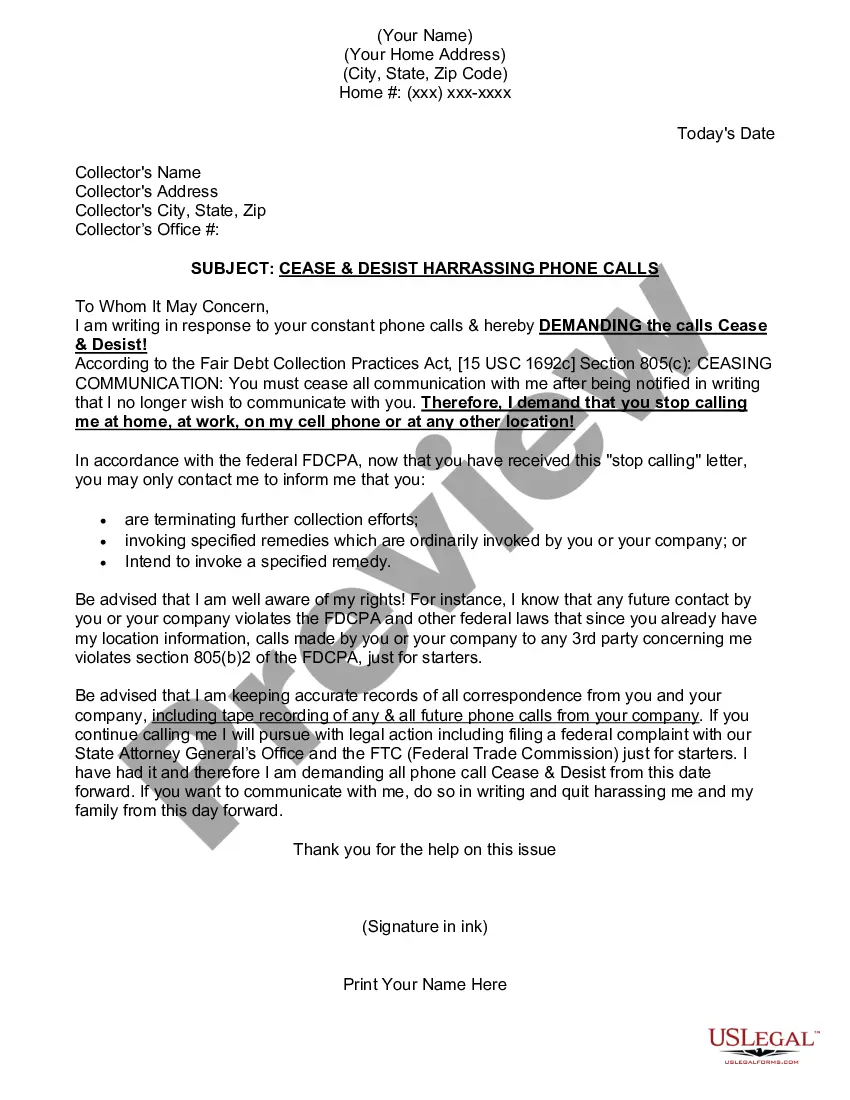
The sender and receiver's name and contact information. The date the letter was written. A clear, concise description of the infringing or harassing behavior or action.
No specified method of delivery is required for a cease-and-desist letter. Because it is not a legal document, you can write and send the letter yourself without the help of a legal professional, or you can hire an attorney to write and serve the letter for you.
A cease and desist letter is not legally binding and reflects the opinion of an individual, typically an attorney. A cease and desist letter may serve to warn an offender that legal action may take place if they don't stop the activity.
If you ignore it, the attorney who sent the letter will eventually file a lawsuit in federal court against you for trademark infringement and/or copyright infringement. This action may not happen right away. You might even think you are out of danger.
Having your attorney write a response letter to try bargaining with the other trademark owner for continued use of the name. Asking the other party for more information, including seeing their trademark to evaluate whether they have a legitimate claim.
Relax & Reflect: Cease and desist letters, whether formally served or mailed, do not legally require a response. Even if action is demanded or required by the sender, cease and desist letters are not summons and complaints.
Cease and desist letters (and texts, emails, etc) are not legally binding.Unwanted texts could be illegal under the same type of statute as unwanted phone calls and emails. But any action that can be taken will depend on local and state laws on unwanted communications and different harassment statutes.
Once you have ascertained that the communication you have received is or is likely a cease and desist letter, it is important to decide on a course of action. While there is typically no legal penalty for ignoring a cease and desist demand, doing so is generally ill-advised.