Petition of Creditor of an Estate of a Decedent for Distribution of the Remaining Assets of the Estate
About this form
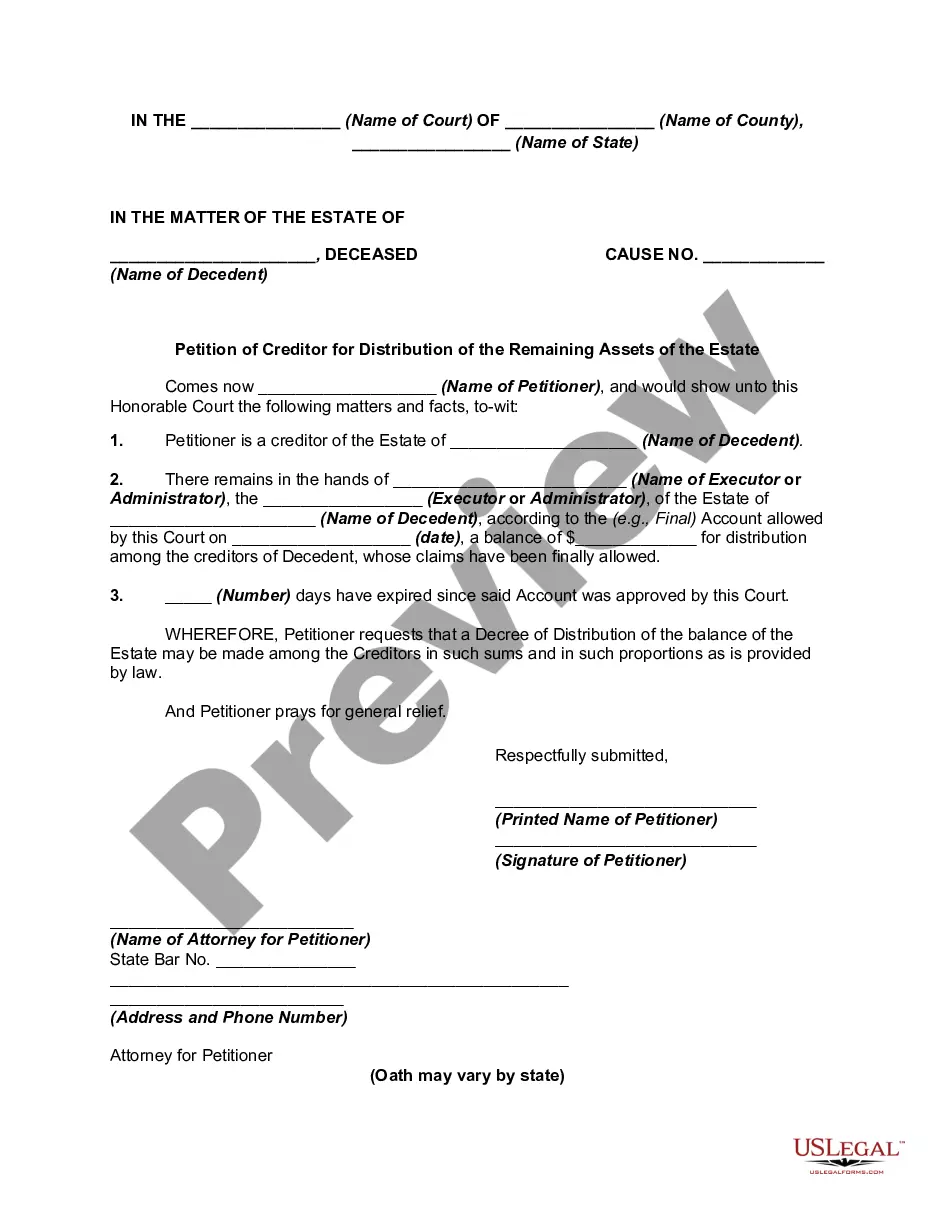
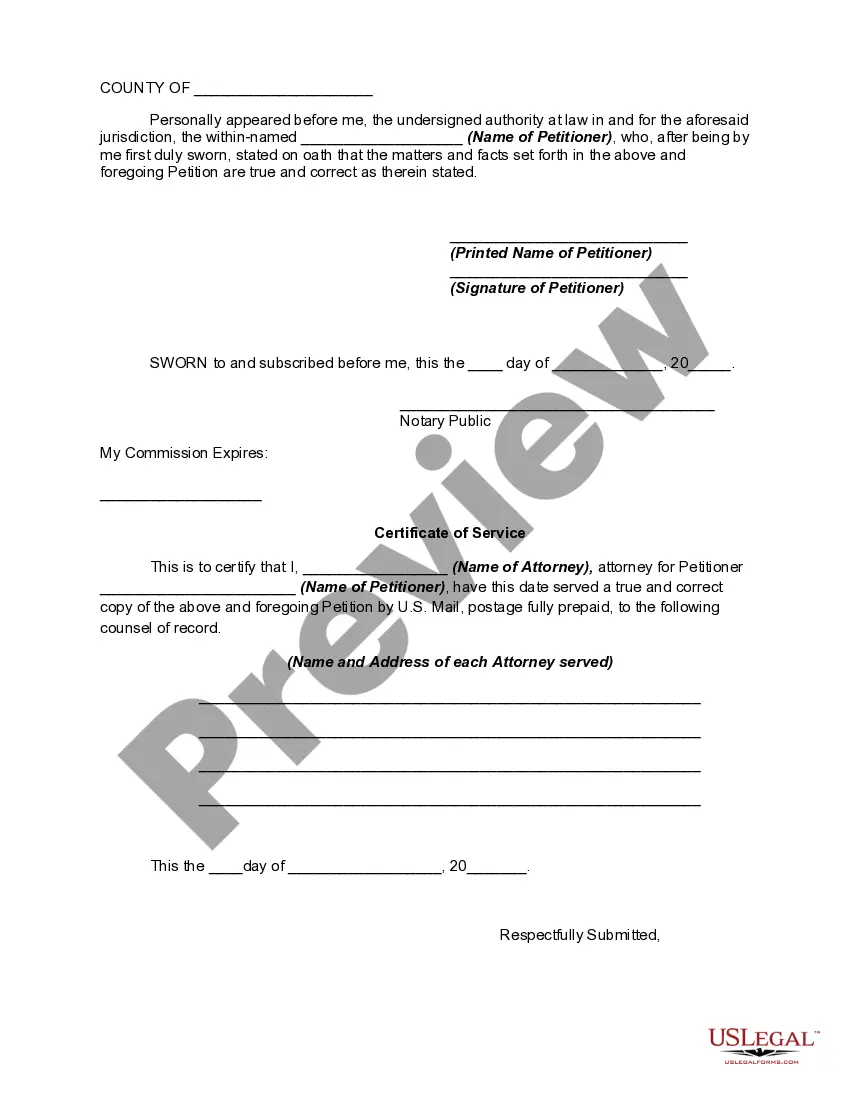
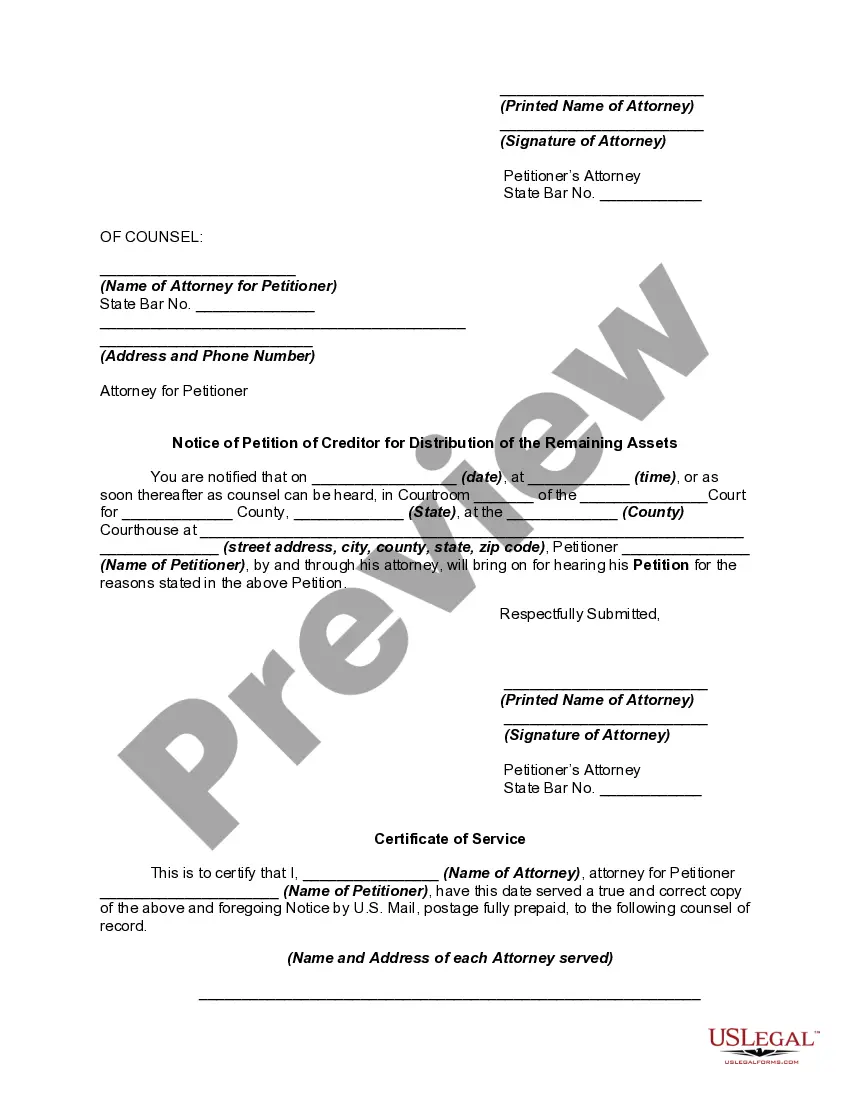
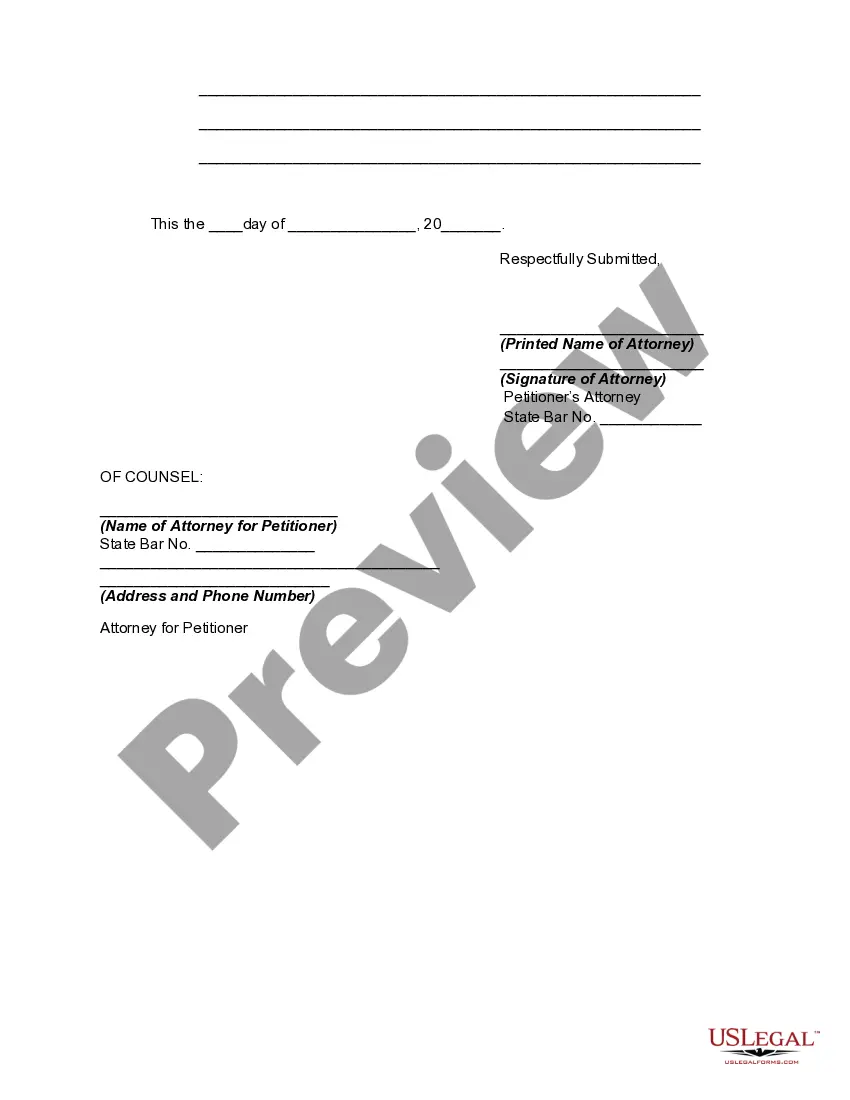
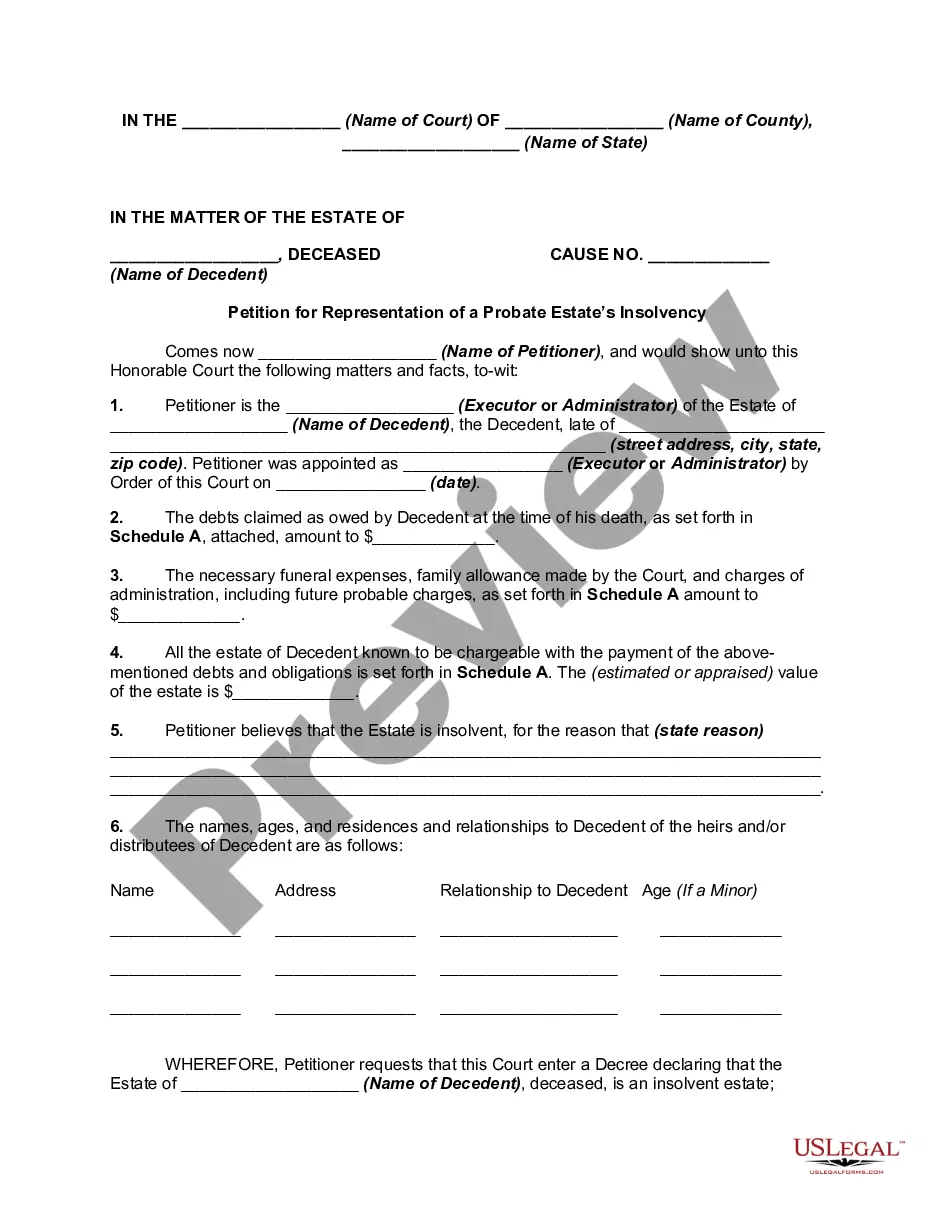
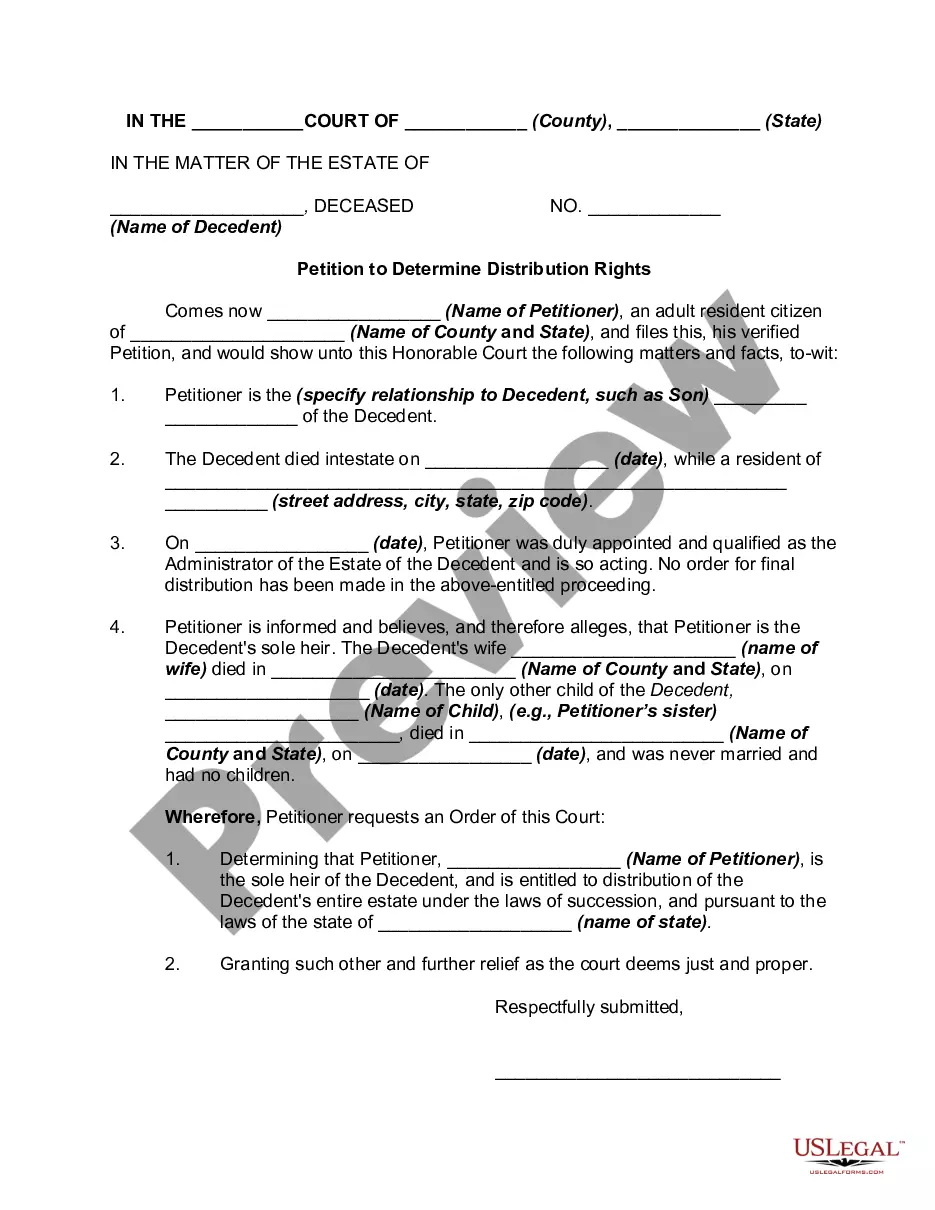
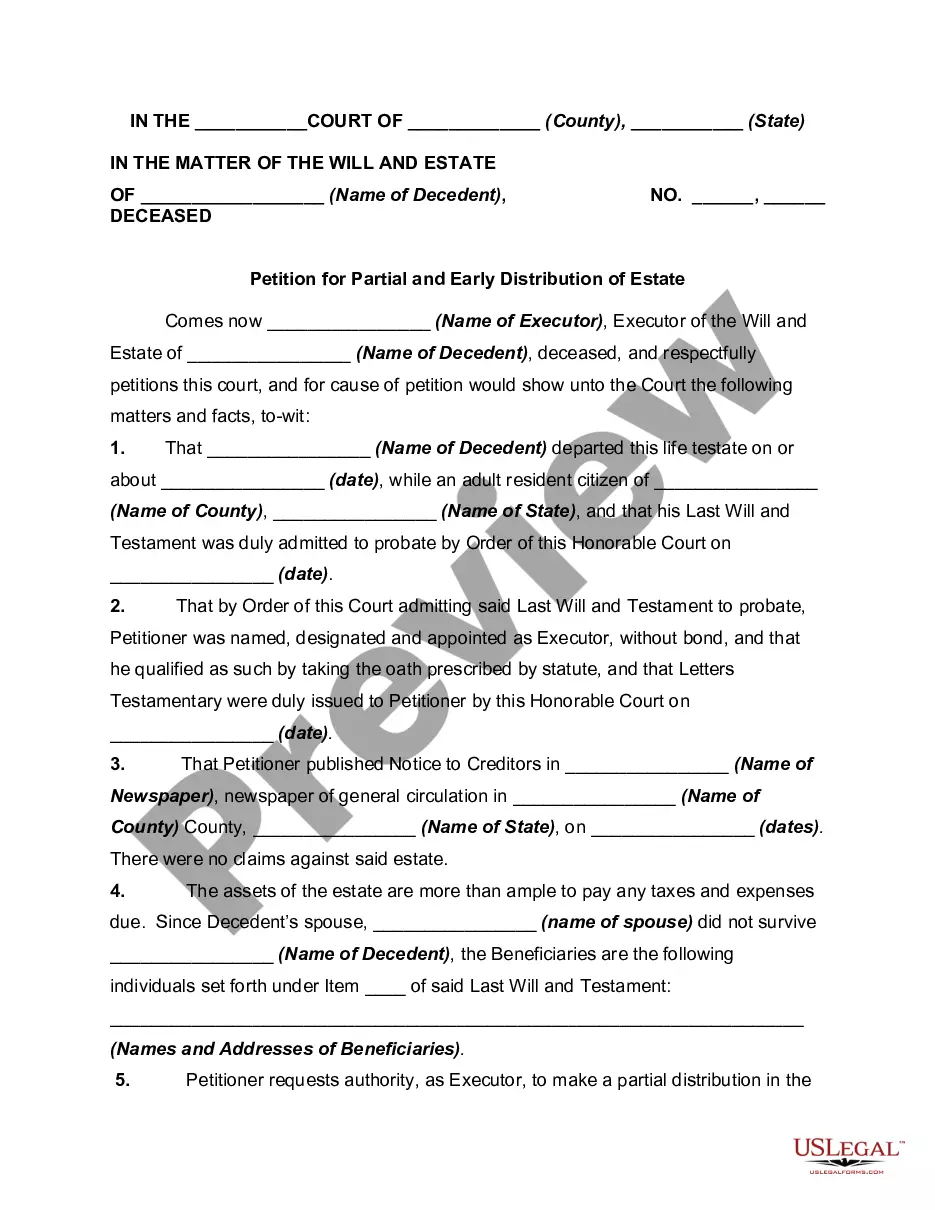
The Petition of Creditor of an Estate of a Decedent for Distribution of the Remaining Assets of the Estate is a legal document used by a creditor of a deceased person's estate to formally request the distribution of any remaining assets. This form is crucial for creditors to assert their claims and ensure they receive the debts owed to them from the estate.
Form components explained
- Name of the decedent and estate details.
- Name of the petitioner, who is the creditor.
- Details regarding the remaining balance of the estate.
- Timeframe since the estate's final accounting was approved.
- Request for decree of distribution among creditors.
When to use this document
This form is used when a creditor seeks to collect remaining debts owed from a decedent's estate after an estate has gone through probate and is ready to distribute its remaining assets. It is essential in situations where creditors need to formally present their claims to the court and facilitate the distribution process.
Intended users of this form
- Creditors who have been granted approval for their claims against a decedent's estate.
- Individuals or entities who have outstanding debts owed to them by the decedent.
- Attorneys representing creditors in probate court.
How to prepare this document
- Enter the name of the decedent and any pertinent details about the estate.
- Identify the petitioner and their relationship to the estate.
- State the remaining balance in the estate and reference the final account date.
- Indicate the number of days since the account approval.
- Sign the petition and ensure all required parties are notified.
Notarization requirements for this form
This form does not typically require notarization unless specified by local law. Ensure to verify any jurisdiction-specific requirements that could alter this requirement.
Get your form ready online
Our built-in tools help you complete, sign, share, and store your documents in one place.
Make edits, fill in missing information, and update formatting in US Legal Forms—just like you would in MS Word.
Download a copy, print it, send it by email, or mail it via USPS—whatever works best for your next step.
Sign and collect signatures with our SignNow integration. Send to multiple recipients, set reminders, and more. Go Premium to unlock E-Sign.
If this form requires notarization, complete it online through a secure video call—no need to meet a notary in person or wait for an appointment.
We protect your documents and personal data by following strict security and privacy standards.

Make edits, fill in missing information, and update formatting in US Legal Forms—just like you would in MS Word.

Download a copy, print it, send it by email, or mail it via USPS—whatever works best for your next step.

Sign and collect signatures with our SignNow integration. Send to multiple recipients, set reminders, and more. Go Premium to unlock E-Sign.

If this form requires notarization, complete it online through a secure video call—no need to meet a notary in person or wait for an appointment.

We protect your documents and personal data by following strict security and privacy standards.
Common mistakes
- Failing to include all necessary signatures and contact information.
- Not specifying the correct remaining balance of the estate.
- Missing the submission deadlines for creditor claims.
Benefits of using this form online
- Convenience of accessing and downloading the form at any time.
- Editability to customize fields according to individual circumstances.
- Reliable legal drafting based on templates reviewed by licensed attorneys.
Quick recap
- The Petition of Creditor for Distribution is vital for creditors seeking their rightful share from an estate.
- Ensure all details are accurate and the form is notarized before submission to the court.
- Check for state-specific requirements to ensure compliance with local laws.
- Utilizing online services for form preparation can save time and reduce errors.
Looking for another form?



Form popularity
FAQ
Your inventory should include the number of shares of each type of stock, the name of the corporation, and the name of the exchange on which the stock is traded. Meanwhile, you should note the total gross amount of a bond, the name of the entity that issued it, the interest rate on the bond, and its maturity date.
Generally, in California creditors of a decedent's estate have up to one year (365 days) from the decedent's death to file a timely creditor claim.Also, in the case of small estates, i.e., a total gross value under $150,000, a creditor may consider opening a probate matter within 40 days of the decedent's death.
Most assets can be distributed by preparing a new deed, changing the account title, or by giving the person a deed of distribution. For example: To transfer a bank account to a beneficiary, you will need to provide the bank with a death certificate and letters of administration.
You can get a creditor's claim form at the Forms Window in Room 112 on the first floor of the Los Angeles Superior Court at 111 North Hill Street, or any other Superior Court location. The form is also available at the Judicial Council website: http://www.courtinfo.ca.gov/forms/. It is form number DE-172.
Find the Correct Probate Court. The probate court handles issues involving a deceased person's estate, along with potential disputes regarding outstanding debts, issues with heirs, etc. Confirm the Debt. Complete the Claim Form. File the Claim Form.
Introduction. Pay the debts of the estate first. Ask each beneficiary to acknowledge receipt of the gift. Transferring company shares. Transferring real property. Draw up the accounts of the estate. Other claims on the estate. Finishing up.
The statute of limitations for filing a claim against an estate is a strict one year from the date of the debtor's death (pursuant to California Code of Civil Procedure Section 366.2). This limitation period applies regardless of whether the judgment creditor knew the judgment debtor had died!
A creditor claim must be filed with the California Probate court. A copy of the creditor claim must be served on the personal representative within the later of 30 days of the filing of the claim or 4 months after letters are issued to a personal representative with general powers.
Determine Your State's Laws Regarding Inventory Forms. Review the Instructions Provided. Identify Real Property. Identify Personal Property. Identify Bank Accounts. Identify Retirement Accounts. Identify Non-Probate Assets. File the Form With the Court.